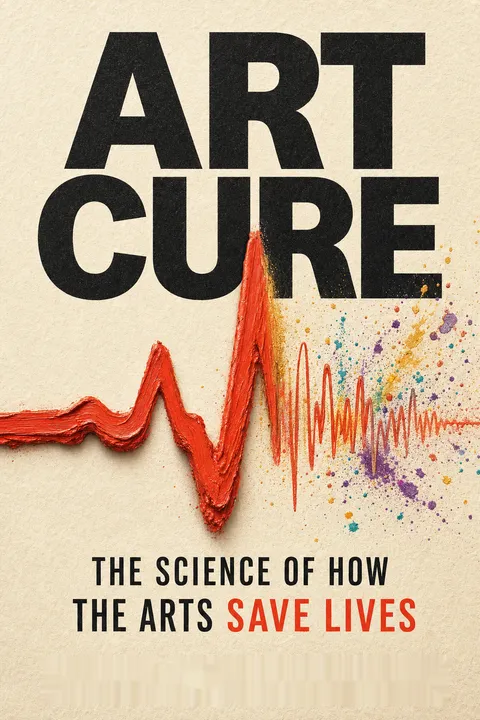

Key Takeaways
1. Art is the Forgotten Fifth Pillar of Health
If you’ve made it to the end of this book, you’re now equipped with the knowledge from the last two hundred fifty pages to make changes in your own life.
A profound realization. The author's journey, sparked by a stroke patient named Russell whose art classes "saved his life," reveals that art is not merely a luxury but an essential component of human well-being. Historically, philosophers like Aristotle and physicians like Ibn Sina recognized art's therapeutic value, a wisdom largely lost until recent scientific breakthroughs. This book aims to re-establish art as a fundamental pillar of health, alongside diet, sleep, exercise, and nature.
Universal engagement. Humans are inherently artistic, both as consumers and producers. From ancient cave paintings 40,000 years ago to modern-day doodling or humming, art is woven into every culture and expresses every emotion. Despite this universal engagement and a global cultural sector worth $4.3 trillion, the scientific consensus on art's tangible health benefits has remained a "bizarrely well-kept secret."
Beyond pleasantries. Over 30,000 empirical papers now catalog art's remarkable impact on health, moving beyond vague notions of "positive and pleasant" to concrete, measurable effects. The author, a professor of psychobiology and epidemiology and head of the first WHO Collaborating Centre for Arts and Health, bridges the gap between arts and science, demonstrating how art can improve health, stave off illness, and help us live longer, fuller lives.
2. Art's Healing Power is Biologically Hardwired
To our brains, the arts bring us the same kind of joy.
Ancient reward systems. When we engage with art—listening to music, creating, dancing, or viewing—we activate ancient emotion and reward networks in our brains, such as the amygdala, nucleus accumbens, and striatum. These are the same regions activated by essential survival needs like food and sex, indicating that the pleasure derived from art is deeply ingrained in our biology. The release of dopamine, a neurotransmitter associated with pleasure and motivation, is central to this experience.
The tension-resolution arc. Our brains anticipate pleasure, releasing dopamine even before the most pleasurable moment occurs. This "predictive coding" relies on learned schemas, but when expectations are "thwarted," it creates a tension that, upon resolution, heightens pleasure and dopamine release. This dynamic, seen in musical climaxes, narrative twists, or visual illusions, compels us to repeatedly seek out artistic experiences.
Fulfilling fundamental needs. Beyond mere happiness, art helps fulfill deeper psychological needs crucial for thriving, such as control, coherence, mastery, and purpose.
- Control: Engaging in creative activities like songwriting or ikebana provides a sense of autonomy, counteracting feelings of powerlessness.
- Coherence: Art helps process chaos, creating order and meaning, as seen in Shai's songwriting about her mother's illness.
- Mastery: Developing artistic skills, even simple ones like baking or knitting, fosters a sense of accomplishment and competence.
- Purpose: Using art to bring joy to others, like crocheting for charity, creates a virtuous cycle of meaning and engagement.
3. Art Transforms Mental Health and Emotional Regulation
Art allowed my brain to stop.
Beyond traditional treatments. Art offers significant benefits for mental health, from daily low moods to severe mental illnesses. Studies show that adding arts activities to standard care (medication, psychotherapy) can nearly double improvements in depression and anxiety symptoms, leading to faster recovery. For instance, singing groups for mothers with postpartum depression resulted in a 35% symptom decrease and recovery a month earlier than play groups.
Understanding and regulating emotions. Art is a powerful vehicle for communicating and processing emotions. We recognize emotions in art through innate cues (bright colors for happiness, angular lines for sadness) and cultural learning. Even negative emotions evoked by art, like those from a sad song or a distressing painting, can be beneficial due to "psychological distance." This allows us to:
- Contemplate and practice managing emotions without real-life consequences.
- Experience catharsis and release, as Debs did by "going berserk" on a canvas to vent her anger.
- Activate brain regions involved in emotion processing and cognitive control, providing a toolbox of regulation strategies.
Positive cognitions and identity. Mental illness often impairs cognitive functions like attention, memory, and problem-solving, narrowing "thought-action repertoires." Art helps by:
- Increasing activation in brain regions like the dorsolateral prefrontal cortex, improving attention and problem-solving.
- Broadening perspectives and fostering "broaden and build" spirals of positive emotions, cognitions, and actions.
- Facilitating self-awareness and metacognition through mindful engagement.
- Helping individuals construct a positive identity, shifting focus from "patient" to "artist," and building self-esteem and social connections.
4. Art Builds and Preserves Brain Health
Music is, in fact, a scaffolding for us to learn speech.
Shaping brain architecture from birth. Babies can perceive sounds in utero by 20 weeks and move to music by 35 weeks, recognizing songs heard before birth. Music acts as a "whole-brain workout," engaging nearly every region—from the reptilian brain to the frontal lobes, hippocampus, and language centers. This early exposure and formal musical training lead to neuroplasticity, causing visible structural changes in gray matter volume and white matter connections, preparing the brain for complex linguistic, cognitive, and social activities.
Enhancing language and neurodiversity. Music serves as a crucial "scaffolding" for speech development. In children, music training improves:
- Rhythmic abilities and phonological awareness.
- Pitch discrimination and identification of emotions in speech.
- The size and function of Broca's area, a key language region.
For autistic individuals, music can be a powerful nonverbal communication tool, reducing sensory oversensitivity and improving language, social interaction, and overall autism symptoms. For stroke patients, daily music listening can double improvements in verbal memory and attention, leading to structural reorganization in language networks.
Building cognitive reserve against dementia. While the "Mozart Effect" on general intelligence is debunked, arts engagement significantly contributes to "cognitive reserve," making the brain more adaptable and resilient to damage.
- Regular engagement in cognitive leisure activities, including arts, reduces the risk of cognitive impairment by 31%, dementia by 23%, and Alzheimer's by 34%.
- Cultural activities like visiting museums or attending concerts are linked to better preservation of memory and executive function, and a 43% lower risk of dementia.
- Neuroimaging shows arts engagement is associated with lower amyloid deposits and better white matter integrity, delaying the onset and progression of dementia symptoms.
5. Art Supercharges Physical Movement and Rehabilitation
We listen to music with our muscles.
Transforming motor function. Movement is fundamental, and art significantly enhances physical performance and rehabilitation. For children with cerebral palsy, a magic-themed therapy camp improved affected hand use by 30% in two weeks, with benefits maintained for months. For Parkinson's patients, dance programs not only halted symptom progression but improved gait, coordination, balance, and reduced pain. Even listening to music can boost physical performance, increasing running speed and gym reps.
The power of entrainment. The brain's sensorimotor coupling system causes us to instinctively synchronize with rhythms. Music provides an internal rhythmic template, improving the timing, coordination, and efficiency of movements. This "entrainment" is a powerful tool in neurological rehabilitation:
- Stroke patients walk 15 meters faster per minute with rhythmic auditory stimulation.
- Parkinson's, MS, and cerebral palsy patients show increased walking speed and mobility.
- Music acts as an "internal clock" to regulate timing deficits caused by degenerative diseases.
Holistic benefits for movement. To maximize physical performance, art combines four key ingredients: beat, musicality, familiarity, and extramusical associations. These unlock three "P" mechanisms:
- Psychological: Music makes exercise feel better, increasing motivation (dopamine, endorphins) and endurance.
- Psychophysiological: Music reduces perceived exertion by distracting the brain and inhibiting fatigue signals.
- Physiological: Music increases blood flow efficiency, oxygen intake, and kinetic efficiency, making activity less energetically costly.
Beyond these, art fosters neuroplasticity, building new neural pathways around brain damage and improving motivation by shifting focus from medical deficits to skill development and peer support.
6. Art Significantly Reduces Stress and Pain, Often Better Than Drugs
One good thing about music, when it hits you, you feel no pain.
Calming the body's stress response. Art has a profound impact on our physiological stress response. In neonatal intensive care units (NICUs), lullabies or a mother's singing can calm premature babies, reducing heart and breathing rates, increasing oxygen saturation, and decreasing critical events like apnea. This leads to tangible outcomes like faster feeding and earlier hospital discharge. Art manipulates the autonomic nervous system, shifting from sympathetic (fight-or-flight) to parasympathetic (rest-and-digest) activity, dampening adrenaline and improving heart rate variability.
Reducing stress hormones. Studies show that engaging with art, such as attending concerts or drumming, significantly decreases cortisol levels and other stress hormones. This biological relaxation is more pronounced in anxious individuals and can accumulate over time with regular engagement. In surgical settings, Brian Eno's ambient music and digital art installations reduced adult patients' anxiety and children's distress, leading to:
- A shift to parasympathetic activity in adults, even stopping panic attacks.
- 65% of children experiencing low anxiety during anesthesia, with 90% successful cannulations and 40% faster induction times.
A non-pharmacological analgesic. Art is also a powerful tool for pain management. In surgical recovery, music listeners report significantly lower postoperative pain and require less opioid medication (up to 10mg less morphine over 72 hours). For chronic pain conditions like fibromyalgia, music listening can reduce pain intensity and increase mobility. The mechanisms include:
- Distraction: Art diverts attention from pain signals.
- Relaxation: Reducing stress, which exacerbates pain.
- Analgesic pathways: Music activates brain regions that reduce pain perception and suppresses spinal cord pain signals.
- Reward circuits: Dopamine and endorphin release provide natural pain relief.
These effects are so potent that art can be as effective as, or even more effective than, benzodiazepines for anxiety and can help prevent opioid dependency, offering a safer, non-pharmacological alternative.
7. Art Cultivates Healthy Behaviors and Prosocial Societies
Sometimes reality is too complex. Stories give it form.
Influencing health behaviors through storytelling. Narrative art forms, like the TV drama "East Los High," can be powerful public health interventions. By presenting relatable characters facing real-life choices (e.g., teen pregnancy, contraception), these "edutainment" programs foster:
- Neural coupling: Viewers' brains respond as if experiencing events themselves, building empathy.
- Social learning: Characters model healthy behaviors and decision-making, influencing viewers' knowledge and actions (e.g., improved condom use, increased visits to family planning clinics).
- Transparency: Transmedia extensions (blogs, vlogs) provide resources and open dialogue, avoiding didactic lecturing.
This approach has been effective in addressing critical public health challenges, from Ebola awareness campaigns to improving vaccination rates and reducing mistrust in healthcare.
Promoting individual healthy habits. Beyond targeted interventions, everyday arts engagement fosters healthier lifestyles. Studies show that people who are more creatively and culturally engaged are nearly twice as likely to eat their "five-a-day" and meet exercise recommendations. This is due to:
- Critical reflection: Stories encourage reflection on personal choices and behaviors.
- Behavioral spillover: Improving one healthy behavior (e.g., less sedentary) often leads to others (e.g., healthier eating).
- Psychological capabilities: Art builds confidence, self-esteem, and self-efficacy, empowering individuals to make positive changes.
Reducing antisocial behaviors and fostering prosociality. Arts engagement, particularly in extracurricular activities like drama clubs or bands, is linked to lower antisocial and criminal behaviors in adolescents. Programs like "Shakespeare Behind Bars" have dramatically reduced reoffending rates.
- Moral imagination: Art cultivates creativity and imagination, helping individuals think ethically and adapt behaviors in challenging situations.
- Theory of mind: Acting out roles improves understanding of others' perspectives and empathy.
- Self-control: Arts reduce anger and frustration, leading to better emotional regulation.
Furthermore, art facilitates social bonding, reduces loneliness, and promotes altruistic behaviors, even enhancing empathy and communication skills in healthcare professionals.
8. Art Extends Health Span and Longevity
Those in the study who engaged regularly had a 31 percent lower risk of dying at any point during the follow-up period compared to those who never engaged.
A direct link to longer life. A groundbreaking study analyzing UK mortality data over 14 years revealed that adults over 50 who regularly engaged in cultural activities had a 31% lower risk of dying at any point during the follow-up, even after accounting for wealth, health, and lifestyle. This suggests that art is not just about quality of life, but quantity too.
Supporting every major organ system. The arts dynamically influence our autonomic tone, balancing sympathetic and parasympathetic nervous system activity. This has profound effects on:
- Cardiometabolic System: Daily music listening can decrease systolic blood pressure by 9-10 mmHg and diastolic by 6 mmHg, potentially reducing the risk of major cardiovascular disease by 20%, stroke by 27%, and heart failure by 28%. Dance offers similar benefits to aerobic exercise in less time, improving cholesterol, glucose, and arterial stiffness.
- Respiratory System: Singing encourages deep, controlled exhalations, strengthening respiratory muscles and optimizing lung function. This is particularly beneficial for conditions like COPD and long COVID, reducing breathlessness and improving exercise capacity.
- Immune System: Engaging in stimulating arts activities like drumming or singing provides a short-term boost in immune activity, increasing beneficial cytokines and white blood cells. Long-term engagement reduces chronic inflammation, a risk factor for numerous diseases.
Slowing biological aging and maintaining function. Art's benefits extend to our DNA, influencing gene expression and slowing the biological aging process.
- Epigenetic clocks: Arts-active adults are biologically around 9.5 months younger than those who don't engage, with this effect strengthening to a year younger for those over 40.
- Physiological aging: Regular cultural engagement is linked to being physiologically four years younger and a slower pace of subsequent aging.
- Physical functioning: Arts maintain gait speed, balance, reduce age-related disabilities, and decrease frailty, particularly through activities like dance which improve posture, bone density, and strength.
These cumulative benefits reduce the risk of chronic diseases like coronary heart disease (34% lower) and type 2 diabetes (35% lower), ultimately extending our "health span"—the time we live free from illness and functionally healthy.
9. Despite Profound Benefits, Art is Undervalued and Underfunded
We’re treating the arts as though they’re not essential, when everything I have shown you in this book shouts the opposite.
A crisis of engagement and inequality. Despite art's profound health benefits, 95% of adults report spending "zero" minutes actively engaging in the arts daily, a figure unchanged for two decades. While passive engagement (e.g., background music) is common, it misses crucial ingredients like social interaction and physical movement. This decline in active participation is exacerbated by stark inequalities: wealthier individuals engage significantly more, and access is limited by cost, geography, and fewer venues in deprived areas, where art's benefits are often most needed.
Systematic deprivation in education. The devaluation of art begins in schools, where arts education is systematically cut in favor of STEM subjects, despite no evidence of improved STEM results. This leads to a "creativity crisis," with declining arts exam entries and a shortage of qualified arts teachers. If children don't engage with art in school, they are far less likely to do so as adults, perpetuating a cycle of artistic disengagement across generations.
Abandoning artists and cultural assets. The precarious nature of an artist's career, marked by low pay (e.g., 0.2% of Spotify artists earn over $874/month), lack of job security, and the pressure of constant self-promotion, leads to higher rates of depression and anxiety among artists. This "precaritized mind" threatens the very people essential for delivering arts programs. Simultaneously, funding cuts to arts councils, library closures, and restrictions on cultural exchange degrade the community assets that enable public engagement, treating art as dispensable even during health emergencies like COVID-19.
10. Integrate Art into Daily Life Like Food for Lasting Health
Think about your diet. The same principles that we (should) apply to food are exactly those we should be following for the arts.
A personalized "arts meal plan." To harness art's health benefits, we must integrate it into our daily lives with the same intentionality as our diet. This means moving beyond sporadic "bingeing" to regular, sustained engagement, recognizing art as a "perishable commodity" that requires consistent input.
Practical guidelines for daily arts engagement:
- Five-a-day equivalent: Dedicate a small, achievable amount of time daily (e.g., 10 minutes of creative writing, listening to an audiobook).
- Energy-level alignment: Schedule arts activities to coincide with energy dips or moments of stress, using them to regulate emotions or shift mood.
- Planned "treats": Invest in weekly classes, monthly museum visits, or occasional performances to incorporate social and novel ingredients.
- Diversity is key: Mix contrasting activities (e.g., reading, dancing, painting) to expose yourself to a wide range of beneficial ingredients and avoid "hedonic treadmill" staleness.
- Experiment with flavors: Embrace moderate novelty and diverse emotions, remembering that you don't need to be an expert to enjoy the benefits.
- Mindful consumption: Savor experiences by minimizing multitasking and being fully present, whether listening to music or viewing art.
- Avoid "UPFs" (Ultra-Processed Forms): Prioritize real-life, non-screen-based arts engagement over passive screen time, which may dilute benefits or introduce unknown factors.
- No "magic pill": Resist the urge to condense art into a single, quick fix; long-term, large-scale benefits require sustained investment of time and attention.
- Identify your "chicken soup": Know which art forms provide comfort and relief during times of stress, anxiety, or illness.
11. Overcome Personal Barriers and Advocate for a Creative Society
Starting with ourselves—being the change we want to be—is a great step for our own personal health.
Discovering and dismantling personal blocks. Behavioral science models highlight three core factors influencing our arts engagement: capabilities, opportunities, and motivations. Identifying specific barriers is the first step to overcoming them:
- Capabilities: Lack of skills, illness, or fatigue. Solutions include training support (online videos, drop-in classes), starting small, and focusing on "everyday skills" (50 hours of input).
- Opportunities: Lack of artistic friends, social support, time, money, space, or local venues. Solutions involve seeking free activities, repurposing materials, "supercharging" existing routines (e.g., dance fitness), and finding peer support.
- Motivations: Lack of enjoyment, belief in benefits, or clear goals. Strategies include reminding yourself of health benefits, setting targets, keeping a diary, seeking recommendations, and setting personal goals (e.g., making all birthday cards).
Driving societal change for universal access. Individual action is crucial, but systemic change is needed to ensure everyone has access to art. This involves:
- Embedding arts in clinical care: Expanding targeted arts programs for patients (e.g., Breathe Magic, Dance for PD) and integrating "arts on prescription" into healthcare systems for prevention and management.
- Prioritizing arts in education: Reinstating arts classes in every school curriculum, ensuring equal opportunities for all children, and fostering lifelong artistic habits.
- Investing in cultural infrastructure: Funding arts venues, libraries, and community arts careers to create accessible spaces and stable employment for artists, recognizing their vital role in community well-being.
- Governmental recognition: Advocating for policies that prioritize arts access as a human right, as recognized by the UN and WHO, and supporting grassroots movements that bring art to underserved communities.
The "seat belt moment" for art. Like seat belts, healthy eating, or exercise, art's essential role in health needs its "seat belt moment"—a widespread realization of its importance. Arts deprivation is linked to increased risks of depression, dementia, chronic pain, and premature mortality, exacerbating health inequalities. By collectively campaigning, fundraising, educating, and lobbying, we can help societies embrace art, culture, and creativity, transforming health from "cradle to grave" for all.
People Also Read

Download PDF
Download EPUB
.epub digital book format is ideal for reading ebooks on phones, tablets, and e-readers.








































