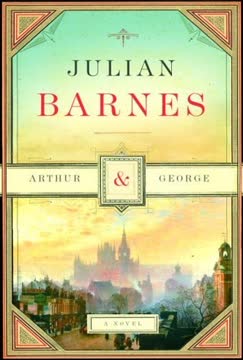
Plot Summary
Two Boys, Two Worlds
The story opens on two boys born into Victorian England—Arthur, the future creator of Sherlock Holmes, and George, a vicar's quiet, dutiful son of Indian-Scottish descent. Arthur's childhood is steeped in stories of chivalry and hardship, while George's is marked by rigid piety and gentle otherness. Despite their differences, both grapple early with notions of truth, belonging, and morality. Julian Barnes sketches their family bonds and formative experiences: Arthur, beset by poverty yet full of eagerness, dreams of grand futures for his mother and siblings; George grows into an earnest, law-abiding youth, held apart by culture and racial background. Their diverging journeys—Arthur through imagination, George through regulation—set the stage for an unexpected intersection that will trouble the boundaries between evidence and belief, myth and justice.
Law and Legend Collide
Arthur's thirst for adventure and story-living leads him to medicine and literary fame, inventing Sherlock Holmes as the paragon of deductive reason; George, meanwhile, doggedly pursues a career in law, craving order yet wary of local prejudice. Their paths seem unlikely to cross—Arthur climbs the heights of English society, finding both love and personal struggle, while George's meticulous rise is marred by isolation and silent hostilities in the English countryside. Both are, in differing ways, outsiders looking in: Arthur as the son of a struggling family and later a respected writer haunted by family dysfunction; George as the "not quite English" son, quietly enduring condescension and never allowed to forget his difference. Their lives foreshadow a collision that will challenge their faiths in the law and in stories.
Houndings and Mysterious Letters
The Edalji family's life in Great Wyrley is upended by a campaign of anonymous letters, crude threats, and strange, escalating pranks: keys appear on the doorstep; dead animals and filth are left on the lawn; letters full of malice and blasphemy torment the vicarage and neighbors alike. George, now a young solicitor, is more bemused than frightened, but his parents recoil in dread. As suspicion and local prejudice swirl, their quiet, isolated family becomes a focal point for hostility. Despite the indignities, George clings to rectitude and the law, convinced that reason and order will eventually prevail—an assumption soon to be upended in the quagmire of fate, fear, and rumor.
Outsiders in England's Heart
While Arthur's literary reputation blossoms and his personal life is buffeted by love, honor, and loss, George and his family endure not only mischievous persecution but also the insidious resentments of a rural English community. The Edaljis' steadfastness is tested as neighbors, police, and even servants eye them with mistrust—a mistrust increasingly tinged with racial and social bias. The family clings to faith, education, and principle, but George feels the subtle wounds of exclusion and "otherness." The forces mounting against them will soon become embodied in the law itself, driving George from the lonely bearing of injustice into a storm that will demand the intervention of legend.
Unrelenting Shadows Gather
The campaign against the Edaljis intensifies as pranks grow into true malice—farm tools pin dead animals to the lawn, anonymous libels fill the postbag, and local gossip morphs into institutional mistrust. Police, rather than shielding the family, begin to regard George with open suspicion, and even the chief constable casts aspersions on his character, suggesting conspiracies and mischief beneath his disciplined exterior. George, still ruled by logic, struggles with mounting frustration and isolation, unable to fathom why the law he reveres has become the vector for his family's peril. The siege grows unbearable, and soon George will be trapped not only by community hatred, but by the very legal machinery he thought would shield him.
The Onset of Persecution
As local livestock are violently mutilated, a wave of panic breaks over Great Wyrley. The Edalji home is put under covert watch, and George finds himself trailed, interrogated, and finally arrested for a crime he did not—and could not—commit. The evidence is circumstantial, manipulated, or simply fabricated: bloodstains, misinterpreted "animal hairs," and the supposed expert testimony of handwriting analysts. George's race and solitary habits are suddenly read as guilt. Despite his solid alibi—locked in his room by his father, his every move accounted for—official suspicion crystallizes into action. The machinery of justice, so long venerated by George, shows itself deeply fallible. The storm of prosecution is now at full force, and George is caught in its center.
The Cattle Maimer Strikes
The grisly mutilation of horses and cows shocks the local area, sparking moral panic and relentless scrutiny. Special constables flood the countryside; suspicion breeds more violence, and the Edalji family becomes both target and scapegoat. Letters, threats, and increasingly lurid rumors render George a pariah, his every movement scrutinized and interpreted as evidence of guilt. Even as another animal is savagely attacked while George is demonstrably elsewhere, police and public opinion remain unmoved. The hysteria drowns out reason, setting a tragic precedent for how law and community may conspire to destroy those who stand apart.
Justice in the Dark
George's arrest leads to a Kafkaesque ordeal—months of interrogation, solitary confinement, and finally a public trial. The courtroom, theoretically a bastion of English justice, is instead an arena where George's oddness, race, and innocence become all liabilities. Much of the evidence is circumstantial; witnesses contradict each other; expert testimony is flawed or discredited. Yet the weight of rumor and scapegoating prevails. The verdict—guilty, with "mercy"—is a travesty. The Edalji family is devastated; George is condemned to years of penal servitude. Official England has spoken, but the truth remains silenced and shadowed.
An Innocent Condemned
With the machinery of "justice" complete, George is sent to prison—a solitary, stolid man stripped of profession, dignity, and the life he built. His family is left to shame and ruin, church doors silent, legal avenues cut off. Appeals are denied, new mutilations occur, and the true perpetrator continues undetected. Public sentiment shifts, but official channels are unyielding. George survives through routine, memory, and the dogged hope that reason will ultimately prevail. His fate becomes a national cause célèbre—an emblem of the limits of English law and the cost demanded of innocence.
The Knight and the Case
Reeling from personal loss and the death of his first wife, Sir Arthur Conan Doyle finds himself drawn to George's plight. The appeal of a wrongly accused solicitor awakens all of Arthur's sense of honor, chivalry, and righteous fury. Seeing in George an innocent man—an "unofficial Englishman" like himself—Arthur launches an investigation worthy of Holmes: interviewing families, scrutinizing evidence, tracing suspicious local characters. His fame brings attention and critique; yet it also shakes entrenched power. In fighting for George's exoneration, Arthur finds renewed purpose and the chance to test the boundaries between legend and the law.
Sherlock Intervenes
With a blend of bravado, deduction, and carefully orchestrated public clamor, Conan Doyle brings the weight of his name, intellect, and outrage to the fight. He exposes police prejudice, shoddy investigation, and the true complexity of the crimes. As he battles Captain Anson and the Home Office, Arthur's methods—half Holmesian deduction, half relentless publicity—force a reluctant establishment to reconsider. Yet the system clings fiercely to its dignity; victory will not be total nor easily won. The partnership between Arthur and George—at first uneasy, even awkward—proves transformative for both men as their campaign shifts public opinion and legal doctrine.
The Real Culprits Revealed
Through dogged investigation, Arthur uncovers the likely real perpetrators—a local troublemaker and his brother, whose pranks and violence had escaped notice amid the rush to blame an outsider. The evidence, while circumstantial and inadequately handled by local police, mounts: local confessions, prior acts of violence, and the discovery of a peculiar, custom weapon. Yet the process is fraught—witnesses waver, officialdom is slow to admit error, and the machinery of exoneration is grinding and ambiguous. The revelation of the true culprits becomes not just a personal victory, but a demonstration of how flawed and fragile justice may be.
Beyond Guilt and Innocence
After years of struggle, George is belatedly granted a "free pardon"—yet the verdict is hedged, compensation denied, and the government quietly refuses to apologize or acknowledge systemic guilt. Public support is strong, professional dignity partially restored, but the scar of stigma, doubt, and humiliation lingers. Arthur is simultaneously triumphant and frustrated, recognizing that justice delivered too late, and with reservations, is justice only in part. The official world, eager to move on, buries its mistakes quietly. Both men are changed: George, from faith in the law to wary realism; Arthur, from righteous heroism to a more complex, even uneasy, view of his own power and the limits of reason.
Questions Without Answers
For George, vindication is partial and bittersweet: his law career resumes, but the uncertainty of public opinion and the shadow of "innocent yet guilty" remain. For Arthur, the episode exposes the limits of evidence, the power of myth, and the deep entanglement of story in legal truth. The mystery is only partly solved—other plausible culprits, belated confessions, and persistent rumors haunt the record. The law is changed, and George's case becomes a precedent, but the world's appetite for easy answers is never satisfied. The struggle, personal and societal, becomes a parable of ambiguity lingering after the facts are laid bare.
Law's Lonely Aftermath
Freed, George restarts his professional life in London with his sister Maud—a "minor celebrity" yet still haunted by past ordeal. He maintains a modest but solid career, quietly reminding society of the price demanded by prejudice and error. Arthur, meanwhile, finds fame in spiritualism, seeking solace in belief beyond the boundaries of evidence and logic. Both men, though linked by their struggle, are set adrift from the public's memory, each forced to contend in his own way with the aftermath of notoriety, and to seek meaning beyond public judgment.
Lives After the Storm
The Edalji and Conan Doyle families carry on, scarred but enduring—George in professional obscurity, Arthur through remarriage and persistent campaigns for justice. History moves forward: social change, world war, and personal grief mark both lives. Arthur's spiritual pursuits sustain him and captivate followers, even as they invite ridicule. George, never a crusader by nature, quietly upholds the law, his own case a ghostly precedent. Closure is elusive, and the two men's legacies entwine and part, leaving echoes felt long after public tempests have subsided.
Endings and Echoes
Arthur dies at Windlesham, eulogized as a knight, family man, literary titan, and tireless campaigner. A spiritualist "farewell" at the Albert Hall draws thousands—fans, believers, and skeptics—each searching for meaning across realms of faith, reason, and memory. George, quietly observing amid the crowd, reflects on the mixture of certainty and illusion, hope and fraud, that marks both justice and belief. Their intertwined story ends not with final answers, but with profound questions about truth, community, and what endures: love, innocence, skepticism, or the longing for meaning in a world forever divided by stories.
Analysis
Complicated Englishness, the limits of justice, and the hunger for meaningArthur & George is a masterful—and troubling—meditation on innocence, belonging, and the price demanded by the stories we tell about ourselves and our society. Through parallel, ultimately intersecting lives, Barnes explores the deep fault lines of English identity: race, class, and the claim to decency. The Edalji affair exposes the tragedy of prejudice armed with legal sanction, while Conan Doyle's crusading response tests the mythic power of legend against the stubborn inertia of institutions. Yet the novel resists easy triumph or resolution; for all Holmesian logic and moral fervor, the aftermath is messy and unsatisfying—George is "pardoned" but not compensated, his innocence forever doubted in official eyes; Arthur's certainty mutates into spiritualism, seeking solace where law and story fail to provide it. The real "solution" is incomplete, justice mixed with hypocrisy, and the comfort of clear answers forever deferred. In the end, Barnes suggests that both reason and faith, heroism and law, must live with ambiguity, and that—above all—there is both danger and necessity in seeking meaning where perhaps only stories, imperfect and essential, can take us.
Review Summary
Most reviewers praise Arthur & George as a richly researched, beautifully written historical novel blending biography, mystery, and courtroom drama. Barnes masterfully interweaves the lives of Arthur Conan Doyle and George Edalji, building toward their intersection with patience and precision. Recurring praise highlights Barnes' elegant prose, complex characterisation, and thoughtful exploration of racism, justice, and English identity. Common criticisms include a slow start, an overly long trial section, and an anticlimactic ending. Despite pacing issues, most found the novel compelling, particularly once the two protagonists' stories converge.
People Also Read


Characters
Arthur Conan Doyle
Arthur Conan Doyle, born into Scottish-Irish poverty and haunted by familial instability, self-forges a persona of robust optimism, practicality, and moral fervor. Initially shaped by Catholic chivalry, hardship, and the stories of his mother, Arthur gravitates from medicine to literature, transmuting personal adversity into the creation of Sherlock Holmes: genius sleuth, rationalist, and emblem of English order. Yet Arthur's life is marked by restless duality—a devotion to both scientific reason and the romantic, mystical spirit. Devastated by personal loss (his first wife's lingering illness and death), he seeks meaning through action, love (in his conflicted courtship and eventual second marriage to Jean Leckie), and, ultimately, public crusades. Drawn into George's ordeal, Arthur channels his narrative vigor and sense of knightly honor into the cause, clashing with the inertia of bureaucratic power and exposing the failure of English justice. Despite public acclaim, Arthur's story reveals the psychological limits of heroism, the ambiguities of legacy, and an increasing tilt towards spiritualism: in pursuit not only of truth, but of comfort and transcendence. His bond with George is complex—combining camaraderie, paternalism, and projection—ultimately leaving Arthur as both conqueror and questioner atop the shifting ground between myth and reality.
George Edalji
George Edalji is the son of a Parsee vicar and Scottish mother, raised in the moral and social margins of English village life. Defined by earnestness, honesty, and reserve, George seeks meaning in law, order, and regulation—a counterbalance to the quiet exclusion and suspicion his family faces. Cautious, analytical, and unworldly, George is ill-equipped for the passions and chaos that descend upon him: a campaign of anonymous threats, a horrific legal ordeal, and years of unjust imprisonment. His psyche is resilient but marked by solitude; he survives by devotion to detail, habit, and the belief that reason must eventually prevail. The intervention of Conan Doyle, while lifesaving, further alienates George from his own narrative—casting him as a symbol rather than a man. George's later years are spent in subdued dignity, his case sparking systemic reform but never yielding full personal redemption. His relationship with family, particularly his sister Maud, provides quiet solace. George comes to embody the tragic costs of otherness and the silent courage required to outlast injustice and notoriety, remaining—by his own lights—neither a martyr nor crusader, but merely a man seeking the basic rights of belonging.
Jean Leckie
Jean Leckie enters Arthur's life as an object of passion, solace, and challenge during the years of his anguish. Spirited, intelligent, and resilient, she faces years as the waiting lover, constrained by Victorian propriety and Arthur's deep sense of duty to his ill wife. After Touie's death and marriage to Arthur, Jean's strength becomes more apparent: she is not merely a prop for Arthur's redemption, but a partner with the wisdom to endure, the wit to rebuke his obsessions, and the humility to walk beside a man always drawn to public crusades. Jean's acceptance of spiritualism grows after personal loss, facilitating Arthur's later journeys. Her role is both catalyst and protector, a witness to the consolations and trials that shape Arthur's final acts.
Shapurji Edalji
Reverend Shapurji Edalji, George's father, is the converted Parsee and devoted clergyman whose earnestness, high standards, and striving for respectability shape his children's psychological landscape. A figure of quiet pride and unwavering faith, he both sustains and constrains his family: rigid in principle, unable to fully grasp the prejudices and dangers they face, yet steadfast beneath persecution. Shapurji's moral expectations for George (to be both English and other) echo the story's larger questions about inclusion and the limits of assimilation. His death closes a chapter of hopeful but ill-fated belief in the power of faith and decency to shield against the world's arbitrary suffering.
Charlotte Edalji
George's mother, Charlotte, is a Scottish parson's daughter turned vicar's wife, a quiet but formidable presence whose endurance anchors the Edalji family. Though her role is circumscribed by gender and decorum, her loyalty and understated courage sustain both George and the family amid mounting legal and social tribulation. Her Scottish matter-of-factness shields vulnerability; her faith in her son's innocence is unwavering but tinged with the resigned stoicism of the powerless wife and mother in a scandal-blasted home.
Maud Edalji
George's much-younger sister, Maud, is at first an invalid, protected and marginalized both by gender and ill health. Over the course of the ordeal, Maud matures into George's closest confidante and practical helpmate, organizing his life, offering emotional steadiness, and ultimately revealing subtle psychological insight and strength. In later years, she becomes the indispensable companion and quiet keeper of the family legacy, embodying the enduring if unheralded solidarity of women behind public suffering.
Captain George Anson
Captain Anson is the determined, blinkered, and socially privileged police head whose personal and professional biases direct the course of the investigation against George. Convinced of George's guilt on little more than gut feeling and racial/class animus, Anson reinforces the failure of both law and empathy. His self-confidence and unreflective authority are at once villainous and tragic: he is the personification of unexamined English arrogance, blind to the shifting winds of change, insistent on the infallibility of his own judgment, and ultimately unmoved by evidence of innocence.
Alfred Wood
Wood is Conan Doyle's loyal amanuensis and understated foil—a practical, modest critic who absorbs Arthur's ambitions, doubts, and eccentricities with care and muted skepticism. Constrained by role and temperament, Wood's unobtrusiveness masks a watchful intelligence. He is the keeper of secrets, the first reader, and a reminder that even heroes are flawed and, at times, blind to their own excesses. In contrast to the passionate protagonists, Wood treads a wry path of practicality and quiet loyalty.
Royden Sharp
Royden Sharp emerges as the most likely real perpetrator behind the animal mutilations and part of the anonymous campaign against the Edaljis. A figure marginalized by class, idleness, and a history of juvenile delinquency, Sharp's petty crimes and weapon possession echo the dangers of dismissing the complexity of evil in favor of convenient scapegoats. His existence is only imperfectly revealed, symbolizing both the failures of police diligence and the enduring ambiguity that haunts real-world justice.
Sir Arthur's Second Family
Jean, Denis, Adrian, and Mary Conan Doyle continue Arthur's legacy after his death, supporting his posthumous spiritualist mission and fiercely defending his reputation amid skepticism and ridicule. The unity and divisions of his blended family mirror the story's larger themes of truth, faith, and the limits of public understanding. Through their advocacy, Arthur's quest for meaning after death persists—part loyal reflection, part testament to the irreducible mystery of those we love.
Plot Devices
Parallel Biographies and Mirroring
Barnes employs dual biographies—Arthur's mythical, outwardly heroic arc set against George's quietly tragic, inward facing one. Their separate stories progress in parallel, inviting comparison and contrast at every stage: family influence, personal values, outsider status, ambitions, and losses. This mirroring sets up their later convergence, crystallizing the central question—how does Englishness, justice, and belonging treat insiders and outsiders? Each character's arc illuminates the other, exposing the limitations of both reason and faith, myth and mundane, in grappling with injustice.
Epistolary and Documentary Methods
The narrative is rich with letters, newspaper articles, legal documents, and testimony—often quoted verbatim. These fragments not only structure the investigation but deepen the realism and ambiguity: truth, as law and story, is constructed through competing voices, official verdicts, personal pleas, and media frenzies. This device also highlights the chasm between public narrative and personal suffering, between public "stories" and private realities.
Detective Fiction Structure within Historical Narrative
By blending the conventions of Sherlock Holmes stories—clues, interviews, dramatic reveals, and "solutions"—with the tragic limits of real-life justice, Barnes both indulges and interrogates detective fiction's seductions. Crucially, the reconstruction of events, search for the true culprit (Sharp, Knowles, or others), and the quest for explanations foregrounds the unsatisfactory, nonlinear, and sometimes hopeless outcome of real-world mysteries. The device exposes how the allure of deduction can both reveal and obscure the truth, and how the law's "solution" may only partially serve justice.
Ambiguous Narrative Voice and Perspective
Barnes makes use of a close third-person that alternates loyalties, sometimes aligning with Arthur's romantic certainties, sometimes with George's cautious skepticism. Emotional distance and irony are layered into the voice, tempering heroism with doubt, and reframing sympathy with dry observation. This ambiguity is heightened by the story's consistent juxtaposition of faith, logic, and institutional blindness—leaving the reader in the gray zone between clear solutions and lasting questions.
Thematic Foreshadowing and Cyclical Structure
Early events—first encounters with death, lessons in truth and propriety, alienation—echo and foreshadow later crises, while the plot's circularity (beginning and ending with endings, funerals, and assemblies) reinforces the persistence of uncertainty. Even as reforms are won, the cycle of story repeats: new victimizations, new ambiguous endings, new quests for meaning. The story's "solution" is always partial, as modern life's mysteries stubbornly refuse the neat resolutions of fiction.








































