
Plot Summary
Awakening in the Void
He floats in a void, stripped of sensation and identity, haunted by memories of loss—Sylvie's sacrifice, Tessia's fate, and his own failures. The pain of separation from loved ones is overwhelming, but the emptiness soon gives way to a desperate hunger for meaning. When sensation returns, Arthur finds himself in a strange sanctuary, his body altered and his bond with Sylvie reduced to a stone. Regis, a sentient shadow, emerges as his companion. The trauma of reincarnation and the weight of past mistakes threaten to break him, but the spark of survival and the need to protect those he loves drive him forward, even as he mourns what he's lost.
Messages from the Past
As Arthur recovers, a searing pain triggers a message from Sylvia, his bond's mother. She reveals the dark history of the asuras and the genocide of the ancient djinn mages, exposing the hypocrisy of both Indrath and Agrona. Arthur learns that fate, aether, and reincarnation are intertwined, and that the ruins of the djinn hold secrets Agrona desperately seeks. The message is both a warning and a call to action: Arthur must seek the ruins, not for vengeance, but for hope. The revelation that Sylvie is Agrona's daughter and that both sides are tainted by blood and betrayal shakes Arthur's worldview, but also gives him a new purpose.
Broken Core, New Resolve
Discovering his mana core is irreparably damaged, Arthur is forced to confront his new limitations. His body, now part-draconic, is sustained only by aether, and his bond with Regis is both a lifeline and a mystery. The arrival of Alacryan ascenders in the ruins forces Arthur to hide and observe, fueling his anger and sense of helplessness. Yet, as memories of his loved ones and his failures threaten to consume him, Arthur finds a quiet strength. He resolves to survive, to adapt, and to fight—not just for himself, but for those who sacrificed everything for him.
Bonds of Grief
In the underground refuge, Eleanor Leywin and Tessia are haunted by Arthur's disappearance. Grief, guilt, and resentment simmer between them, threatening to tear them apart. Yet, through confrontation and shared pain, they find a fragile understanding. Both realize that their strength is needed—not just for themselves, but for the people who look to them for hope. The legacy of Arthur's heroism and sacrifice becomes a burden and a beacon, pushing them to train, to fight, and to reclaim their agency in a world that has lost its protectors.
Aetheric Hunger
Facing monstrous chimeras in the ruins, Arthur discovers that consuming their aetheric essence heals and empowers him. The process is brutal and animalistic, but necessary. Regis, now a sentient weapon, grows stronger alongside Arthur, their fates intertwined. Each battle is a test of will and ingenuity, forcing Arthur to adapt his fighting style and embrace his new physiology. The hunger for aether becomes both a curse and a source of growth, driving Arthur to push beyond his limits and reclaim a measure of control over his destiny.
Trials of Survival
The ancient djinn's sanctuary is a gauntlet of deadly puzzles and monstrous guardians. Arthur's battles with the chimeras become a cycle of death and rebirth, each victory hard-won and costly. He learns to manipulate aether with increasing finesse, developing new techniques and forging a bond with Regis that is both combative and companionate. The ruins themselves seem to test not just his strength, but his resolve, forcing him to confront the darkness within and the price of survival.
The First Ascent
Through pain and ingenuity, Arthur manages to trick the aether into rebuilding his shattered core, creating the world's first aether core. This breakthrough allows him to gather ambient aether and manipulate it with growing precision. The process is transformative, both physically and spiritually, marking Arthur as something new—neither human nor asura, but a being of aether. With this power, he overcomes the fused chimera and unlocks the path forward, but the cost is a growing sense of alienation from his past and his loved ones.
The Djinn's Legacy
Guided by Sylvia's message and the trials of the ruins, Arthur learns of the djinn's mastery over aether and the true nature of the Relictombs. The djinn's legacy is one of knowledge, sacrifice, and tragedy—a civilization destroyed by the asuras out of fear and envy. Arthur's encounters with the djinn's remnants, both in memory and in spirit, challenge him to rise above the cycle of vengeance and to seek understanding. The acquisition of godrunes—manifestations of aetheric insight—marks his progress, but also sets him apart as a threat to both Agrona and Indrath.
The Four Tribes
Escaping the ruins, Arthur and Caera find themselves in a frozen wasteland ruled by four intelligent aetheric tribes: Spear Beaks, Four Fists, Shadow Claws, and Ghost Bears. Each tribe holds a piece of the portal needed to escape, but centuries of violence and mistrust make negotiation impossible. Arthur's empathy and willingness to learn from the Shadow Claws, especially his mentor Three Steps, allow him to master new aetheric techniques and glimpse the possibility of peace. Yet, the cycle of betrayal and survival persists, forcing Arthur to confront the limits of his power and the cost of intervention.
Shadows and Mirrors
Trapped in a hall of mirrors with his party, Arthur must unravel the rules of a deadly puzzle where reflections steal the souls of the living. The test is as much psychological as physical, forcing Arthur to confront the lies we tell ourselves and the nature of identity. Through insight and sacrifice, he unlocks the godrune of Aroa's Requiem, gaining the power to revert time on objects—but not on the living. The victory is bittersweet, as the cost is the lives of allies and the realization that some wounds cannot be undone.
The Price of Power
Each new godrune brings both power and peril. The Destruction rune threatens to consume Arthur's sanity, while the godrune of time offers only partial salvation. Regis, empowered by Destruction, becomes both a weapon and a liability, forcing Arthur to confront the dangers of unchecked power. The journey through the Relictombs is a crucible, forging Arthur into a leader who must balance compassion with ruthlessness, and hope with the acceptance of loss.
Allies and Betrayals
Caera's true identity as a Vritra-blooded noble is revealed, forcing Arthur to decide whether to trust or kill her. The Spear Beaks' betrayal and the cycle of violence among the tribes underscore the difficulty of forging peace in a world built on survival. Arthur's willingness to risk everything for a chance at understanding—and his refusal to become a tool for others—sets him apart, but also isolates him. The line between ally and enemy blurs, and every act of mercy carries the risk of betrayal.
The Ghost Bear's Gift
After surviving the onslaught of the wild things and the Spear Beaks' treachery, Arthur and Caera are saved by the intervention of a Ghost Bear, who gifts them the final portal piece. The act is both a gesture of gratitude and a recognition of Arthur's unique place among the tribes. The escape from the zone is hard-won, and the lessons of empathy, restraint, and the cost of violence linger as Arthur prepares to re-enter the wider world.
The Portal Reforged
With all the pieces in hand, Arthur uses Aroa's Requiem to restore the portal and escape the zone. The act is a culmination of his journey through the Relictombs, blending knowledge, power, and the willingness to accept help from unlikely sources. Yet, the victory is tempered by the knowledge that the world outside is still ruled by gods who see mortals as pawns, and that the true battle is only beginning.
Visions of Ruin
Using a relic, Arthur is shown a vision of Dicathen's devastation: Tessia's apparent betrayal, Ellie's desperate struggle, and the asuras' intervention that obliterates Elenoir. The vision is a gut-wrenching confirmation of his worst fears—the war has escalated beyond mortal control, and the gods are willing to destroy everything to maintain their power. The sense of helplessness and rage threatens to break Arthur, but also steels his resolve to challenge the cycle of destruction.
Reckoning Without Return
In a parallel narrative, Ellie disguises herself as an Alacryan soldier to rescue Tessia, only to witness her friend's public capitulation and the asuras' cataclysmic attack. The cost of hope is revealed as the price of survival—sacrifice, betrayal, and the loss of innocence. Ellie's journey mirrors Arthur's, as both siblings are forced to confront the limits of their power and the burden of responsibility in a world without easy answers.
The Cost of Hope
The destruction of Elenoir and the loss of loved ones drive home the reality that hope is not free. Every victory is bought with sacrifice, and every act of mercy carries the risk of betrayal. Arthur and Ellie, separated by worlds and fate, are united in their determination to fight on, even as the gods wage war above them. The lesson is clear: to hope is to risk everything, and to survive is to pay the price again and again.
Toward Reckoning
The journey through the Relictombs has transformed Arthur, forging him into a being of aether and will. The vision of Elenoir's destruction and the asuras' apathy crystallize his purpose: he will not be a pawn in their game. With new powers, hard-won wisdom, and the memory of those he loves, Arthur sets his sights on Agrona, Indrath, and the cycle of violence that has shaped his world. The path ahead is uncertain, but the reckoning has begun.
Analysis
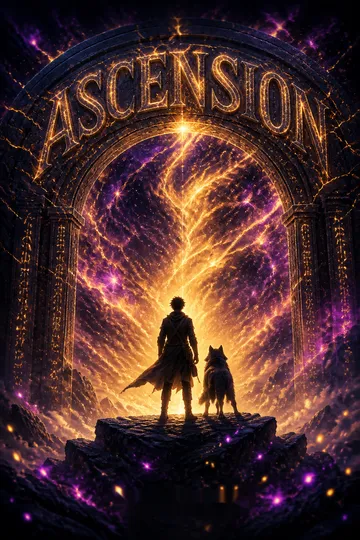
Ascension is a meditation on the cost of hope and the burden of power in a world ruled by gods and haunted by the legacy of violence. Through Arthur's journey in the Relictombs, the novel explores the limits of strength, the dangers of unchecked ambition, and the necessity of empathy in the face of betrayal and loss. The djinn's legacy—knowledge earned through suffering, not inherited by birth—serves as both a challenge and a promise: that even in a world shaped by the whims of gods, mortals can carve out their own destiny through understanding, sacrifice, and the refusal to become what they hate. The parallel narratives of Arthur, Ellie, and Tessia underscore the universality of grief, the complexity of agency, and the price of survival. In the end, Ascension is less about defeating enemies than about transcending the cycles of vengeance and despair that define both mortals and gods. The lesson is clear: true power lies not in domination, but in the courage to hope, to change, and to fight for a future that is not yet written.
Review Summary
Ascension, book 8 in The Beginning After the End series, receives mixed reviews. Many praise the character development, world-building, and humor, particularly enjoying new characters like Regis. However, some criticize the plot progression, lengthy training sequences, and abrupt shifts in relationships. The book's ending leaves readers divided, with some excited for future installments and others frustrated by another cliffhanger. Despite criticisms, most fans remain invested in Arthur's journey and the expanding universe, eagerly anticipating the next book.
People Also Read
Characters
Arthur Leywin
Arthur is a young man burdened by the weight of two lifetimes—King Grey's cold rationality and Arthur's passionate loyalty. His journey in Ascension is one of loss, adaptation, and transformation. Stripped of his mana and forced to survive on aether, Arthur's identity fractures and reforms as he confronts the limits of power, the cost of hope, and the meaning of sacrifice. His relationships—with Sylvie, Regis, Ellie, Tessia, and even his enemies—are marked by guilt, longing, and a desperate need to protect. Arthur's development is a crucible: he must learn to balance compassion with ruthlessness, to accept help, and to challenge the gods themselves. His psychoanalysis reveals a man torn between the desire for control and the inevitability of loss, ultimately choosing to fight for a future he cannot yet see.
Regis
Regis is more than a magical companion—he is Arthur's shadow, both literally and psychologically. Born from Arthur's aether, Sylvia's will, and the remnants of a Vritra retainer, Regis embodies the duality of power and vulnerability. His sardonic humor and rebellious streak challenge Arthur's authority, forcing him to confront his own flaws and limitations. Regis's journey from will-o-wisp to monstrous wolf mirrors Arthur's own struggle with Destruction: both are tempted by power, both risk losing themselves, and both must learn to trust and forgive. Regis is a symbol of the dangers and possibilities of unchecked potential, and his relationship with Arthur is a study in codependence, rivalry, and reluctant friendship.
Caera Denoir
Caera is a highblood Alacryan with a hidden lineage and a thirst for understanding. Her initial deception and pursuit of Arthur are driven by curiosity and a sense of kinship—both are outsiders, both are shaped by forces beyond their control. Caera's struggle to reconcile her heritage with her conscience is central to her development. She is fiercely intelligent, competitive, and compassionate, willing to risk everything for knowledge and connection. Her relationship with Arthur is fraught with mistrust, attraction, and mutual respect, and her presence forces Arthur to confront the possibility of alliance—and betrayal—across enemy lines.
Eleanor Leywin
Ellie is a young mage struggling to find her place in a world shattered by war and loss. Her journey is one of grief, guilt, and the search for agency. Disguised as an Alacryan soldier, she risks everything to save Tessia and reclaim her own identity. Ellie's psychoanalysis reveals a girl forced to grow up too quickly, haunted by the shadow of her brother's heroism and the expectations of those around her. Her bond with Boo is both a source of strength and a reminder of what she has lost. Ellie's development is a testament to resilience, empathy, and the cost of hope.
Tessia Eralith
Tessia's arc is one of sacrifice and transformation. Captured and manipulated by both Alacryans and asuras, she is forced to choose between her people and her own freedom. Her relationship with Arthur, Ellie, and the refugees is marked by guilt, love, and the burden of leadership. Tessia's psychoanalysis reveals a woman torn between duty and desire, struggling to maintain her identity in the face of overwhelming loss. Her eventual capitulation is both a tragedy and an act of defiance, a reminder that hope often comes at the highest price.
Sylvia
Though physically absent, Sylvia's presence is felt throughout the narrative. Her messages from the past, her sacrifice to save Arthur, and her revelations about the djinn and the asuras shape the entire arc of Ascension. Sylvia is a symbol of wisdom, compassion, and the possibility of redemption. Her psychoanalysis reveals a being who has suffered and sacrificed for love, and whose legacy is both a burden and a beacon for Arthur.
Three Steps
Three Steps is a sentient aether beast whose guidance allows Arthur to master God Step and glimpse the possibility of peace among the tribes. Her empathy, wisdom, and willingness to share memories make her a unique ally. Three Steps' psychoanalysis reveals a being shaped by loss, tradition, and the hope for understanding. Her relationship with Arthur is one of mutual respect and shared pain, and her presence challenges the boundaries between human and beast, teacher and student.
Old Broke Beak
Old Broke Beak is a symbol of the cycle of violence and betrayal that defines the frozen zone. His willingness to manipulate, poison, and sacrifice others for his tribe's survival is both pragmatic and tragic. Old Broke Beak's psychoanalysis reveals a leader shaped by scarcity, fear, and the need to protect his own, even at the cost of others. His interactions with Arthur and Caera force them to confront the limits of empathy and the dangers of trust.
Haedrig / Caera (Disguise)
Haedrig is initially presented as a skilled ascender with his own secrets and motivations. His true identity as Caera in disguise adds layers of complexity to the narrative, highlighting themes of trust, deception, and the search for belonging. Haedrig/Caera's psychoanalysis reveals a character willing to risk everything for knowledge and connection, but also haunted by the fear of rejection and the burden of heritage.
Nico (Elijah)
Nico is a complex antagonist whose actions drive much of the tragedy in Ascension. His relationship with Arthur is one of rivalry, envy, and twisted kinship—both are reincarnated, both are shaped by loss, and both are pawns in the gods' game. Nico's psychoanalysis reveals a man consumed by ambition and resentment, willing to sacrifice anything for power and recognition. His manipulation of Tessia and his role in the destruction of Elenoir make him both a personal and existential threat to Arthur.
Plot Devices
The Relictombs
The Relictombs are more than a dungeon—they are a sentient, evolving crucible designed by the djinn to challenge, teach, and ultimately judge those who enter. Each zone is a reflection of the djinn's philosophy: power must be earned, knowledge must be sought, and survival is never guaranteed. The Relictombs use a blend of physical trials, psychological puzzles, and moral dilemmas to force ascenders to confront their own limitations and the consequences of their choices. The structure of the Relictombs—interconnected zones, shifting rules, and the need for cooperation—mirrors the themes of adaptation, sacrifice, and the search for meaning in a world ruled by gods.
Godrunes and Aetheric Insight
The godrunes are manifestations of aetheric insight—unique abilities unlocked not by birthright, but by personal revelation and mastery. Each godrune represents a branch of aether (Destruction, Time, Space) and is both a source of power and a test of character. The process of unlocking a godrune is fraught with danger, requiring sacrifice, self-awareness, and the willingness to confront one's own darkness. The godrunes serve as both a narrative device for Arthur's growth and a metaphor for the journey from ignorance to wisdom.
Memory Sharing and Empathy
The ability to share memories—used by the Shadow Claws and, metaphorically, by Arthur and his companions—serves as a plot device to bridge the gap between species, cultures, and individuals. Memory sharing allows for the transmission of knowledge, emotion, and understanding in a way that transcends language and prejudice. It is both a tool for learning and a source of vulnerability, forcing characters to confront the pain and hope of others as their own.
Foreshadowing and Parallel Narratives
The narrative structure of Ascension weaves together Arthur's ascent through the Relictombs with Ellie's infiltration of Eidelholm and Tessia's captivity. The use of visions, relics, and messages from the past creates a sense of inevitability and interconnectedness, foreshadowing the convergence of personal and cosmic stakes. The parallel narratives highlight the themes of sacrifice, the cost of hope, and the burden of legacy, as each character is forced to reckon with the consequences of their choices.
The Cost of Power
Throughout Ascension, the acquisition of new powers—whether aetheric, magical, or political—comes at a price. The loss of loved ones, the risk of madness, and the temptation to become what one hates are constant threats. The narrative repeatedly asks: What are you willing to pay for hope? For survival? For victory? The answers are never simple, and the consequences are never free.
The Beginning after the End Series
About the Author
Download PDF
Download EPUB
.epub digital book format is ideal for reading ebooks on phones, tablets, and e-readers.








































