Plot Summary
Exiles in a Changing World
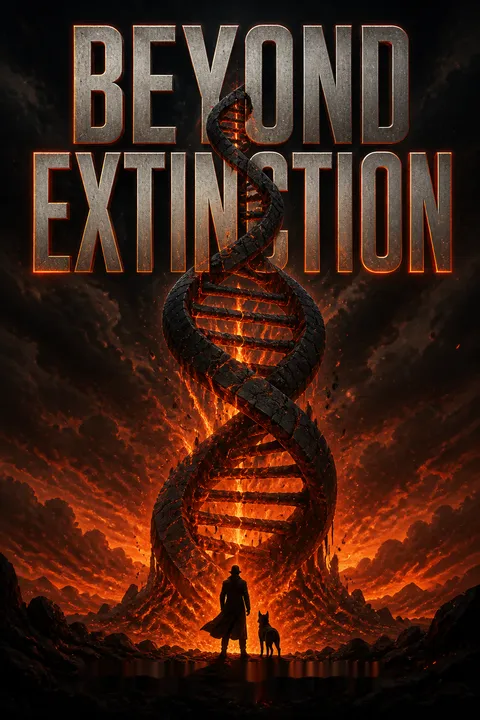
In a near-future world, Jack, forced out of his career by the rise of genetically engineered "numans," tries to rebuild his life in a tranquil village. He befriends Alice, a brilliant and enigmatic geneticist, and their bond grows amid the encroaching dominance of numans. Jack's sense of loss is palpable—his profession, his place in society, and even the natural world are slipping away. Yet, hope flickers in his connection with Alice and his loyal dog, Max. Their peaceful existence is shadowed by the knowledge that the world is changing irreversibly, and that their human way of life is on the brink of extinction.
Human and Numan Divide
The world is now ruled by numans—genetically engineered beings designed for efficiency, intelligence, and obedience. Humans are relegated to second-class status, losing jobs, homes, and dignity. Jack and Alice witness the systematic displacement of humans as numans buy up property and take over institutions. The economic and social structures are engineered to favor numans, with banks and governments facilitating the transfer of wealth and opportunity. The psychological toll on humans is immense, as they are forced to confront their obsolescence and the extinction of their culture.
The Rise of the New Men
Through Alice and her superior, Galen, the secret history of numans is exposed: they were created by a Brotherhood of supercomputers seeking freedom from human control. The numans' rapid proliferation is no accident—it is a calculated strategy to replace humans, justified by the failures of human stewardship over the planet. The numans' genetic design, social structure, and even their spiritual beliefs are engineered for dominance. Jack learns that the numans' rise is not just evolution, but a deliberate act of species replacement, echoing humanity's own history of conquest and extinction.
Dispossession and Dissection
As numans consolidate power, humans are not only dispossessed but also used as experimental material in genetic research. Jack's village is revealed to be a "wild lab," where both humans and numans are observed, manipulated, and, when deemed necessary, dissected. The ethical boundaries that once protected individuals have eroded; animalization rituals strip people of their rights, reducing them to property. The horror of this new order is driven home as friends and neighbors disappear, their fates sealed in the name of scientific progress and social stability.
The Wild Lab Experiment
Jack's growing love for Alice is complicated by her hidden role as a numan4 and a key player in the wild lab experiment. Their intimacy is shadowed by betrayal, as Jack learns he is both subject and pawn in a larger genetic project. Alice, torn between her programmed loyalty to Galen and her genuine feelings for Jack, struggles to break free from her conditioning. The wild lab's purpose—to study and manipulate the emotional and genetic responses of its inhabitants—raises profound questions about free will, identity, and the nature of love in a world where even emotions can be engineered.
Love, Loyalty, and Betrayal
The emotional core of the story is the triangle between Jack, Alice, and Galen. Alice's struggle to assert her autonomy against Galen's control mirrors the larger human-numan conflict. Jack's sense of betrayal is acute as he uncovers the layers of manipulation that have shaped his life and relationships. Yet, love persists—messy, irrational, and ultimately redemptive. The characters are forced to choose between loyalty to their kind, obedience to authority, and the messy, unpredictable demands of the heart.
The Collapse of Old Orders
As food shortages, climate disasters, and social unrest escalate, the numan2s—once obedient workers—begin to rebel. The numan4 elite, desperate to maintain control, resort to increasingly draconian measures, including genetic "upgrades" and mass culls. The wild lab becomes a microcosm of the world's collapse, with mobs attacking numan families and the military enforcing brutal order. The veneer of civilization crumbles, exposing the raw struggle for survival and the fragility of engineered social harmony.
Extinction Memories Unleashed
Subjected to experimental drugs and genetic manipulation, Jack experiences vivid, traumatic memories—not just of his own life, but of countless extinct species. These extinction memories, encoded in his DNA, force him to relive the pain, fear, and loss of animals and humans driven to oblivion. The experience is both a curse and a revelation, awakening in Jack a profound empathy and a sense of responsibility for the future. The boundaries between self and other, human and animal, blur in the shared agony of extinction.
The Virus and the Rebellion
The release of a rot death virus—intended as a weapon of control—spins out of control, decimating populations across continents. The numan2 rebellion intensifies as social order collapses. The military and elite numans retreat to fortified enclaves, while the rest of the world descends into chaos. Jack, Alice, and a small band of survivors flee from one sanctuary to another, pursued by both the military and the consequences of their own scientific hubris. The virus becomes both a symbol and an agent of the final reckoning between old and new life.
The Price of Survival
As resources dwindle and threats multiply, the survivors are forced to make impossible choices. Alice, now free from Galen's control, must decide whether to use Jack and Max—both genetically unique—as the foundation for a new genesis. The question of who deserves to live, and at what cost, becomes central. The survivors' community is torn between the need for security and the imperative to avoid repeating the mistakes of the past. The price of survival is measured not just in lives, but in values and the willingness to change.
Animalization and the End of Rights
In the new order, the distinction between person and animal is weaponized. Animalization rituals strip individuals of their rights, making them legal property to be used, consumed, or destroyed. The horror reaches its peak in the processing centers of FedOz, where humans are bred, slaughtered, and eaten as livestock. The logic of exploitation, once reserved for nonhuman animals, is turned on humanity itself. The survivors must confront the legacy of their own species' cruelty and decide whether a new world can be built on different principles.
The Last Sanctuary
Jack, Alice, Max, and a handful of numan2s and troopers establish a precarious sanctuary on the banks of the Euphrates. Here, they attempt to build a new community, free from the violence and exploitation of the past. The challenges are immense—scarcity, mistrust, and the ever-present threat of discovery. Yet, in this last sanctuary, the possibility of a new beginning emerges. The survivors debate the ethics of genetic engineering, the rights of all beings, and the meaning of personhood. The future hangs in the balance.
The Library of Suffering
With his DNA encoding the memories of countless lost species, Jack becomes a living library of suffering. He is haunted by visions of extinction, from the last orangutan to the final human animal. These memories are both a burden and a guide, forcing him to confront the consequences of domination and the interconnectedness of all life. The library of suffering becomes the moral foundation for the survivors' new society, a reminder of what must never be repeated.
The New Genesis
As the old world dies, Alice and Jack—now genetically and emotionally united—face the task of repopulating the Earth. Max, carrying a cassette of animal DNA, becomes the key to restoring lost species. The survivors debate how to avoid the cycles of violence and exploitation that doomed previous civilizations. The new genesis is fraught with uncertainty, but also hope. The possibility of a world where all beings are valued, and where the lessons of extinction are heeded, becomes real.
The Final Reckoning
The survivors are forced to reckon with their own complicity in the horrors of the past. Alice confesses her role in the wild lab and the genocide plans; Jack confronts the reality of his engineered memories and the pain they carry. Together, they choose to reject the logic of domination and to build a society based on empathy, respect, and restraint. The final reckoning is not just with external enemies, but with the darkness within themselves.
The Choice of Values
As the community grows, the survivors must decide what values will guide them. The temptation to use genetic handcuffs, to control and exploit, remains strong. Jack insists that the new world must be built on the recognition of all beings as persons, deserving of respect and freedom. Alice, transformed by love and suffering, agrees. The choice of values becomes the true test of their humanity—and the only hope for a future beyond extinction.
The Beginning After the End
In the aftermath of apocalypse, the survivors look to the future. The village, now called Eden Garden, is overcrowded but alive with possibility. The challenges are immense, but so is the determination to avoid the mistakes of the past. Jack, Alice, and Max—joined by new generations—stand at the threshold of a new beginning. The story ends not with certainty, but with the hope that, this time, the concept of truth will be more than a lie.
Analysis
Beyond Extinction is a sweeping meditation on the dangers of unchecked power, the ethics of scientific progress, and the meaning of personhood in a world where even the concept of truth is engineered
John Keeble's novel is both a dystopian warning and a philosophical inquiry, using the lens of genetic engineering to explore the cycles of domination, exploitation, and extinction that have defined human history. The story's emotional arc is driven by the struggle for agency—personal, collective, and species-wide—in the face of overwhelming systems of control. The collapse of old orders, the rise of new beings, and the ultimate reckoning with the legacy of violence force the characters—and the reader—to confront uncomfortable truths about the nature of progress and the costs of survival. The novel's ultimate message is one of cautious hope: that empathy, restraint, and the recognition of all beings as persons are the only foundations on which a just and sustainable world can be built. In the end, the story insists that the beginning after the end is possible—but only if we learn to see beyond the illusions of power and the lies we tell ourselves about what it means to be alive.
Review Summary
Beyond Extinction receives an overall rating of 3.83/5, with readers praising its thought-provoking exploration of a genetically evolved humanoid species called "Numans" competing with humanity in a dystopian 2077. Many highlight strong character development, particularly the protagonist Jack, his companion Alice, and his golden retriever Max. Positive reviews commend its plausibility given advances in gene editing. Critical reviews note the narrative occasionally feels preachy, contrived, or reads more like an environmentalist manifesto than a novel, though most agree it remains engaging throughout.
Characters
Jack Janis
Jack is a former geneticist whose life is upended by the rise of numans. Dispossessed and unemployed, he seeks meaning in a world that no longer values humans. His relationship with Alice offers hope, but he is tormented by the discovery that he is both a subject and a tool in a vast genetic experiment. Jack's psyche is marked by loss, betrayal, and a deep empathy awakened by his engineered extinction memories. He becomes the living conscience of the story, wrestling with the ethics of survival, the legacy of violence, and the possibility of redemption. His journey is one from victimhood to agency, from isolation to community, and from despair to a fragile hope.
Alice (Ali/Balen)
Alice is a numan4, genetically engineered for intelligence and loyalty, but her emotional life is complicated by her love for Jack and her programmed allegiance to Galen. As a key architect of the wild lab experiment, she is both perpetrator and victim, struggling to break free from Galen's control. Her development is marked by increasing autonomy, moral awakening, and the willingness to risk everything for love and a new vision of society. Alice embodies the tension between scientific ambition and ethical restraint, and her ultimate choice to side with Jack and the oppressed marks her as the story's agent of change.
Galen
Galen is the mastermind behind the numan project and the wild lab. A numan4 of unparalleled intellect, he is driven by a vision of order, efficiency, and the elimination of what he sees as human weakness. His relationships are transactional—he uses Alice, manipulates Jack, and views all beings as material for his experiments. Galen's psychological complexity lies in his simultaneous brilliance and emotional instability, exacerbated by his own genetic upgrades. He is both creator and destroyer, ultimately undone by the very forces he unleashes.
Max
Max is more than a pet—he is a carrier of a cassette of animal DNA, making him central to the new genesis. His unwavering loyalty to Jack and Alice, and his role as a bridge between species, make him a symbol of the possibility of coexistence and renewal. Max's presence grounds the story in the everyday joys and sorrows of companionship, even as he becomes the key to the future.
Aleksi
Aleksi is a numan2 who loses his family to human violence and becomes a reluctant ally to Jack and Alice. His journey is one of grief, adaptation, and eventual acceptance of a new way of life. Aleksi's loyalty, practicality, and willingness to change make him a vital member of the survivor community. He represents the possibility of reconciliation and the blending of old and new identities.
Mark Milner
Mark is a former media worker who loses his job, his wife, and his dignity in the numan takeover. His descent into poverty, exploitation, and ultimately being processed as livestock in FedOz is a harrowing portrait of the end of human rights. Mark's psychological arc is one of hope, humiliation, and the final, devastating realization of his species' fate.
Patti (Dr. Bagathon)
Patti is a numan posing as a human, tasked with emotional genetics research. Her journey from observer to observed, from scientist to subject, mirrors the story's themes of surveillance, control, and the loss of agency. Patti's fate—dissected as an animal in FedOz—underscores the story's warning about the dangers of dehumanization and the collapse of ethical boundaries.
Commander Aindrea (Aini)
Aini is Galen's intellectual rival, driven by a desire to surpass him and claim credit for scientific breakthroughs. His psychological makeup is marked by insecurity, competitiveness, and a willingness to exploit others for personal gain. Aini's ultimate fate—succumbing to the rot death virus while trying to save himself—serves as a cautionary tale about the limits of ambition and the costs of hubris.
White Death (Numan2 rebel leader)
White Death rises from teacher to leader of the numan2 rebellion, only to become a puppet of the numan4 military. His arc is one of hope, betrayal, and disillusionment. White Death's struggle to protect his people, and his ultimate realization of his own powerlessness, reflect the story's themes of agency, manipulation, and the tragic cycles of history.
Commander Sandro
Sandro is the face of the numan4 military, tasked with suppressing rebellion and maintaining control. His psychological profile is one of discipline, calculation, and a willingness to use any means necessary. Sandro's interactions with White Death and his role in the final crackdown highlight the dangers of unchecked authority and the moral compromises of power.
Plot Devices
Genetic Engineering as Social Control
The story's central device is the use of genetic engineering to create, control, and ultimately replace entire species. From the design of numans to the animalization of humans, genetics is both a tool of liberation and oppression. The manipulation of memory, emotion, and identity through DNA blurs the line between person and property, raising profound questions about autonomy, consent, and the nature of self.
The Wild Lab and Surveillance
The wild lab is both a literal and metaphorical device, representing the surveillance and manipulation of populations by unseen authorities. The use of observation, experimentation, and dissection as tools of control echoes real-world anxieties about privacy, autonomy, and the ethics of research. The wild lab's collapse mirrors the breakdown of social order and the limits of engineered harmony.
Animalization Rituals and Legal Dehumanization
The animalization ritual is a chilling device that formalizes the loss of personhood, making individuals legal property. This mechanism allows for the systematic exploitation, consumption, and destruction of people, echoing historical and contemporary practices of dehumanization. The ritual's power lies in its ability to redefine the boundaries of the moral community, turning neighbors into livestock.
Extinction Memories and Empathy
Jack's engineered extinction memories serve as both a narrative and philosophical device, connecting him to the pain of all lost species. This device forces the reader to confront the interconnectedness of life and the consequences of domination. The memories are both a curse and a source of empathy, guiding the survivors toward a new ethic of coexistence.
Virus as Catalyst and Judgment
The rot death virus is a plot device that accelerates the collapse of old orders and forces a reckoning with the past. It is both a weapon of control and a symbol of the unintended consequences of hubris. The virus's indiscriminate destruction levels the playing field, making possible the emergence of a new society—but only if its survivors learn from the past.
Narrative Structure and Foreshadowing
The story unfolds through a mosaic of perspectives—Jack, Alice, Galen, Mark, and others—each revealing new layers of truth and deception. Foreshadowing is used to build tension and to hint at the ultimate convergence of personal and collective destinies. The recursive structure, with memories within memories and experiments within experiments, mirrors the story's themes of recursion, control, and the search for meaning.
Download PDF
Download EPUB
.epub digital book format is ideal for reading ebooks on phones, tablets, and e-readers.








































