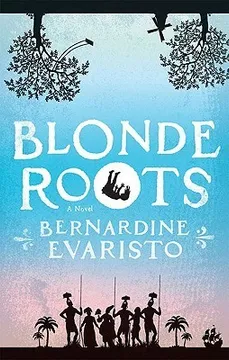
Plot Summary
1. A Note Promises Freedom
Doris, a whyte slave in the privileged household of Bwana Katamba, receives a clandestine note offering a rare chance at escape. In a world where whytes are enslaved by blak masters, Doris navigates her daily indignities and oppression, acutely aware of both the risks and the hope the note represents. In gripping detail, she weighs her longing for freedom against certain punishment if caught, ultimately deciding to risk everything. Her emotional turmoil is rendered in sharp, unsentimental prose that reveals the fierce dignity required for survival and the heavy cost of hope in such an unforgiving system. With urgency and dread, Doris sets herself on a dangerous path to reclaim her stolen life.
2. Europane Roots and Dreams
Doris reminisces about her family's humble origins as cabbage farmers in Europa (an alternate England), painting vivid, loving portraits of parents and sisters. Through pastoral images and familial rituals, she expresses the profound sense of loss and yearning that underpins her existence as a slave, her memories both a source of comfort and pain. Descriptions of festivals, dreams of silk-trading independence, and the everyday struggles of serfdom highlight the shock of her later captivity and the violence of her abduction. Despite adversity, the warmth of family bonds and dreams for a better life give Doris resilience, fueling her ongoing desire to return home.
3. Love, Loss, and Survival
As Doris prepares for escape, she recalls her crucial relationships: Frank, her lost lover—a gentle, skilled carpenter brutally punished for defying the sexual predations of a mistress—and the children she bore and lost to the slave system. Each loss is recounted intimately, marking her psyche with grief, guilt, and a quiet rage that powers her survival. Bonds with fellow slaves like Yomisi and Sitembile offer moments of solidarity and fleeting joy, standing in stark contrast to the cruelty of their Ambossan owners. Through small stolen pleasures and shared suffering, Doris's resilience amid heartbreak becomes a cornerstone of her humanity.
4. The Underground Gospel Train
Guided by hope, Doris undertakes a perilous journey through the city's abandoned subway—an Underground Railroad for whyte slaves—guided by a sympathetic Ambossan. As she races against time and the threat of betrayal, her experiences unveil the complex web of complicity, resistance, and desperation among both slaves and the poor of Ambossa. The atmosphere is thick with suspense and fear, every step marked by the collective memory of brutality and the longing for freedom. This episode magnifies the psychological toll of living in constant danger, as trust becomes scarce, and the possibility of home feels both tantalizingly close and impossibly distant.
5. Capture and Dislocation
Doris relives her abduction: the violence of being snatched as a child, marched with others in chains, and sold like livestock across the continent. The terror and shock of initial captivity give way to numbness as identities are stripped and bodies assessed solely for their economic value. Through Doris's eyes, we see the diversity of those enslaved—farmers, peasants, even royalty—whose individual stories blur into a larger narrative of commodification. The relentless journey to the coast, the cruelty of the guards, and the betrayals by neighbors all serve to crush resistance, fostering a hard-earned maturity and a cold pragmatism for survival.
6. The Middle Passage Horror
Crammed below decks in a slaver bound for New Ambossa, Doris confronts the full violence of the Middle Passage. The searing heat, deprivation, death, and routine sexual abuses are described in visceral, unflinching detail, making each day a struggle to maintain not just life but sanity. Relationships with bunkmates become surrogate familial bonds, and failed escapes lead to deadly reprisals, including the execution of fellow captive Garanwyn. The dehumanizing brutality of slavers and the callous calculations of "profit" over life underscore how such trauma leaves physical and emotional scars that last for generations.
7. Lessons in Mastery
In a chilling satirical inversion, sections reveal the slave owner Bwana's rationalizations—from pamphlets on "The Flame" to his personal journey from humble hunter to successful slave baron. Bwana's voice justifies his actions through a pseudo-scientific racism, claiming the inferiority of the Caucasoi and masking brutality as civilization's "gift." His self-aggrandizing reminiscences, justifications for sexual predation, and pride in his family's ascendancy highlight both the intellectual corruption and human cost of the system. In contrast to Doris's voice, the master's narrative reads as both ridiculous and horrifying—a dark mirror of historical rationalization.
8. Tragedy and Trauma in the New World
On New Ambossa, Doris is bought as a companion for Little Miracle, the daughter of plantation royalty. In the strange world of the Great House, she is taught, tamed, and even cherished, but always as property—a living doll reflecting her mistress's whims. Their relationship is fraught, oscillating between affection, jealousy, and deep-seated power dynamics. A moment of rebellion leads to accidental tragedy, which in turn precipitates Doris's transfer to a new master and the resumption of her role as exploited servant. Emotional attachment, betrayal, and trauma intertwine, leaving Doris with ever more fragile trust in herself and others.
9. Friendship, Betrayal, Sisterhood
After being sold again, Doris navigates the toxic dynamics of another Ambossan household, where alliances with fellow slaves and brief moments of kindness offer respite from relentless toil and cruelty. Especially important are her bonds with field worker Ye Memé and the eventual reunion with her own sister, Sharon (now her master's mistress). The discovery that Sharon has embraced survival over resistance is both a comfort and a source of pain, forcing Doris to confront the compromises and costs embedded in sustaining family under slavery. Through loyalty, self-sacrifice, and hidden teaching, these women carve out small spaces of agency.
10. Plantation Life and Resistance
Life on the plantation is marked by a daily rhythm of work, violence, camaraderie, and moments of joy. Characters like Ye Memé exemplify both endurance and resistance, as she juggles motherhood, relentless labor, and the ever-present threat of her children being sold. The slave quarter becomes a world of its own—full of gossip, rituals, communal meals, and even laughter—but is inescapably shadowed by arbitrary punishment and sexual violence. Whispered stories of maroon rebel communities in the mountains kindle dreams of freedom and alternative ways of living, fueling the next phase of Doris's journey.
11. Memory, Identity, Escape
Doris finds purpose in clandestinely educating Ye Memé's son Yao, transmitting not just reading and arithmetic but the memory of lost homelands and other ways of being. These acts become a subtle form of rebellion, knitting together a fragile lineage of knowledge and defiance. Yet, each day brings new reminders of all she has lost—her children, her lover Frank, her own identity—as she struggles to believe in the possibility, or the worth, of freedom. The psychological legacy of trauma becomes evident: escape plans emerge against the backdrop of exhaustion, resignation, and flickers of stubborn hope.
12. Secrets, Allies, and Audits
As master Bwana prepares to visit the plantation, suspicion and unease grip the household. Doris is drawn into the world of plantation accounting, encountering unstable heirs, corrupt oversight, and the ever-present threat of exposure. She must balance her knowledge of upcoming sales (including the planned shipment of her friend's sons) with her loyalty to others and the chance for personal freedom. Conflict between the master's sons, Nonso and Bamwoze, threatens chaos for everyone on the estate. Doris's clandestine allies within the house and quarter, especially King Shaka, become essential to the success of any escape plan.
13. Plans, Losses, and Loyalties
With the audit looming, Doris and her allies orchestrate a daring plan to spirit away Yao, Dingiswayo, and others—using the confusion of festival time and secret routes through the river and forest. Heart-wrenching farewells evoke the cost of resistance—not only for those who leave but for those left behind, who face reprisals and loss. Sharon, risking her own precarious position, helps coordinate the escape, reaffirming bonds of sisterhood. The reality of the price of liberty and the impossible calculations required under slavery—trust, betrayal, and who gets to go—are made painfully clear.
14. Homecoming and Reckoning
The escape is fraught with danger, but Doris's group—joined by Qwashee, King Shaka's aid, and her nephew Ndewele—make their way toward the Maroon camps. Moments of memory, grief, and resolve punctuate the perilous journey, as they evade mantraps and patrols and mourn what and whom they cannot save. For others on the plantation, the repercussions are severe: Ye Memé is tortured and mutilated for refusing to betray friends; King Shaka is exiled in disgrace; Sharon, for a time, escapes consequence. The cost of freedom is marked on bodies and psyches as surely as on social order.
15. The Long Road to Freedom
Living with the Maroons, Doris and the children she helped save find not triumph but further adjustment: communities are fractured, lovers and families lost, alliances tested. Doris's former lover Frank, now "Magik," is changed by his own years of hardship—less available, less hers. Some escapees struggle with their new roles or succumb to their wounds. Yet, Yao, who becomes a man and teacher, embodies the legacy of hope through education and community. Doris, aging and marked by experience, emerges as matriarch, finding small, sustaining joys in survival, memory, and the possibility of generational change.
16. Aftermaths and Endings
In the book's coda, emancipation eventually comes, but not as justice or reparations—only as a grim accounting. Doris and her circle see hard-won freedoms but also pervasive loss: families are splintered, trauma endures, the wealthy masters flourish, and the formerly enslaved must struggle on for dignity and survival. The narrative turns self-reflective, asking what remains after so much suffering and what constitutes home, family, or freedom. The inversion of history's racist logic remains a powerful satire and critique. Ultimately, Doris's story is not of simple redemption, but of continuity—of pain and love, loss and small triumphs, for those who survived.
Analysis
"Blonde Roots" is a masterful satire, employing historical inversion to illuminate the constructed nature of race and the universality of suffering under oppressive systems. By mapping the horror of the Atlantic slave trade onto whyte Europeans enslaved by blak Africans, Evaristo compels readers to confront the absurd logics and enduring trauma of racialized brutality without recourse to easy empathy or voyeuristic consumption. The novel interrogates the psychology of both oppressed and oppressor: it exposes the seductive rationalizations of power; the psychic fragmentation endured by the enslaved; and the complex calculus of loyalty, survival, and dignity. Through potent characterization, lush description, and biting irony, Evaristo demonstrates how identity is deformed yet never wholly destroyed under such regimes. The emotional arc is one of bittersweet survival: triumphs are intimate and communal, losses are incalculable, and history's scars endure. "Blonde Roots" ultimately demands that we question not only the stories we are told, but the structures that determine who tells them—reminding us that empathy, justice, and truth are ongoing struggles, never final victories.
Review Summary
People Also Read


Characters
Doris (Omorenomwara)
Doris, ripped from her humble Europane peasant roots and thrust into a brutal system of slavery, is the novel's emotional and narrative anchor. Her journey from hopeful child to traumatized, resilient adult is marked by endurance, loss, and ongoing self-questioning. She is fiercely loyal—to lovers, friends, her lost children, and eventually to community—and her hope for escape never quite extinguishes, even as hardship shatters all illusions. Psychoanalytically, Doris moves from compliant adaptation to a kind of existential agency, learning when to trust, to deceive, to teach, and to resist. Her evolving identity reflects both the scars of history and the stubborn persistence of personal dignity.
Frank ("Magik")
Frank, Doris's first love, begins as a quietly principled, skilled carpenter taken by slavery but holding on to hope through his love for Doris and the memory of home. His resistance to sexual exploitation costs him dearly, and the pain of their separation marks them both. As "Magik," he eventually becomes a Maroon leader—changed, hardened, his capacity for romantic connection with Doris diminished but his influence enduring through communal leadership and protection. Frank embodies both loss and the transformative (sometimes limiting) power of trauma, showing how oppression may turn tenderness into militancy.
Ye Memé
Ye Memé, a field slave and Doris's closest friend on the plantation, is a tower of strength—nursing children, teaching survival, and providing covert resistance to the regime. Her open-heartedness is matched by a pragmatic, fierce sensibility that prioritizes care but resists false hope. She is emotionally honest, sometimes volatile, and fiercely protective, yet deeply marked by her inability to shield her children from the slave system's cruelties. Her flaying for withholding knowledge of escape is a devastating symbol of both the risks of solidarity and the system's brutal logic. Ye Memé represents motherhood, mourning, and enduring courage.
Sharon (Iffianachukwana)
Doris's older sister, Sharon, is emblematic of those who survive by assimilation. Having adopted the name and role her master bestowed, she secures relative privilege as Bwana's mistress, raising mulatto sons and accepting (on the surface) the identity imposed on her. Her reunion with Doris exposes a fissure between affection, guilt, and self-protective numbness, and her decision to risk all for her sister marks a reclamation of agency and sisterly love. Sharon's journey highlights the psychological cost of survival strategies and complicity under slavery, as well as the possibility of reconciliation and sacrifice.
Bwana (Chief Kaga Konata Katamba I)
Bwana, the wealthy Ambossan plantation owner and slave baron, exemplifies the cruelty of power naturalized. His internal monologues and pamphlets are both chilling and farcical, rationalizing every abuse with a self-concocted "science" and paternalism. He treats people as property—women for sexual domination, men for labor—and his emotional detachment is masked by claims to benevolence. Psychologically, Bwana is marked by a need for domination, a refusal of empathy, and an internalization of empire's mendacities. His relationships—to family, to Sharon/Iffianachukwana, to Doris—are transactional, never permitting real connection.
King Shaka (Arthur Williams)
King Shaka, once Arthur Williams from Margate, is the wise, resourceful commodity man on the plantation, the key to clandestine knowledge and escape. Having spent sixty years in slavery, he practices survival through humility but nurses the irreparable wound of separation from his own family, bringing deep empathy to Doris and the boys he aids. His role as an orchestrator of resistance is double-edged: his aid saves lives, but he is scapegoated and outcast. King Shaka embodies quiet subversion, the endurance of trauma, and the ache of unhealed longing.
Nonso Katamba
Bwana's eldest son, Nonso, is a portrait of the inheritor unfit for power—emotionally stunted, alcoholic, and threatened by the presence of both slaves and siblings. Caught between the expectations of his father and the realities of plantation life, Nonso is led to increasing paranoia and violence, scapegoating, and ultimate ruin. Psychoanalytically, he is both victim and perpetrator, his self-deprecation masking entitlement, his acts of petty kindnesses outweighed by self-pity and cruelty. Nonso serves as a warning about the rot at the heart of inherited privilege.
Yao
Ye Memé's son, Yao, is a child born into slavery but capable of hope and transformation, particularly through Doris's secret education. His intelligence and sensitivity make him both a target and a symbol of potential: his escape with Doris serves as one of the novel's rare victories. Psychoanalytically, Yao is a locus for lost generational continuity—his later role as the first whyte schoolteacher after emancipation offers a fragile beacon of healing and possibility within the fractured world left by slavery.
Qwashee
Qwashee, a fellow slave who becomes Doris's lover and later her escape companion, represents the quieter forms of masculinity and partnership overlooked under violence. Though less daring than Frank, his love is steadfast, and his eventual decision to risk all for freedom is a testament to the quiet heroism necessary for survival. In the Maroon community, he suffers from displacement and alienation, revealing the lingering difficulties former slaves face integrating into new worlds and the complex demands of freedom.
Bamwoze Katamba
Bwana's second, favored son, Bamwoze, is the consummate operator: he both benefits from and rebels against his father's system, at one point attempting to elope with a mixed-race lover but returning to the fold when ambition demands it. He is self-pitying, manipulative, and ultimately becomes the hard-nosed manager who leads the estate to new heights of profit. Bamwoze stands as a mask of adaptation—where personal desires and resistance are only fleeting, always giving way to the siren song of power and legacy.
Plot Devices
Narrative Inversion and Satire
The novel's primary device is its inversion of the Atlantic slave trade, making blak Africans the enslavers and whyte Europeans their victims. This bold satirical structure exposes the contingent, constructed nature of race-based oppression and forces readers to reconsider inherited narratives and assumptions about history, identity, and legitimacy. The satirical voice is heightened through parodic pamphlets ("The Flame"), deliberate abuses of pseudo-science, and the subversive mimicry of historical justifications for slavery—all of which underscore the arbitrariness and violence of such logics.
Multiperspectival Structure
"Blonde Roots" employs shifting narrative perspectives—alternating between Doris's first-person recollections, present tense escape, and the self-justifying voice of Bwana. This structure allows a nuanced exploration of both victim's trauma and oppressor's delusion, while highlighting complicity, resistance, and the fractured nature of all identities in the context of trauma. The interweaving of "official" and "unofficial" histories—through epistolary records, ledgers, oral storytelling, and communal memory—further drives home the gap between power's narrative and the lived realities of the enslaved.
Foreshadowing and Tragic Irony
The narrative is saturated with foreshadowing—every moment of hope is tinged with the risk of betrayal, every reunion with the specter of loss. The reader knows, often before Doris, that freedom is hard-won, and that few will survive intact. Tragic irony infuses the presentation of family, love, and escape—what seems like liberation is often only partial or temporary, and rare victories are coupled with great costs. The fate of various characters (especially the lost children, Ye Memé, and King Shaka) is signaled through their dialogue and the inexorable logic of the slave system.
Symbolic Geography and Objects
Landmarks like the underground railway, the "Chocolate Cities" and "Vanilla Suburbs," and the rivers and forests serve as both obstacles and sites of yearning, embodying the distances (real and psychic) between freedom and captivity. Objects—tattoos, brandings, dolls, handcrafted benches, quilts—are imbued with layered meanings, standing both for loss and the effort to reclaim identity. Food, hair, and ritual also become battlegrounds of cultural encounter and self-definition.
Intertextual Echoes and Meta-Narrative
Reference to hymns, nursery rhymes, familiar "old world" songs, and explicit allusion to historical slave narratives connect Doris's struggle to a broader tradition while simultaneously satirizing and revising it. The inclusion of direct authorial commentary, pamphlets, and "case study" scientific racism allows Evaristo to both parody and indict the narrative and ideological structures that justify slavery—making the reader complicit in the work of seeing, remembering, and judgment.
Download PDF
Download EPUB
.epub digital book format is ideal for reading ebooks on phones, tablets, and e-readers.








































