
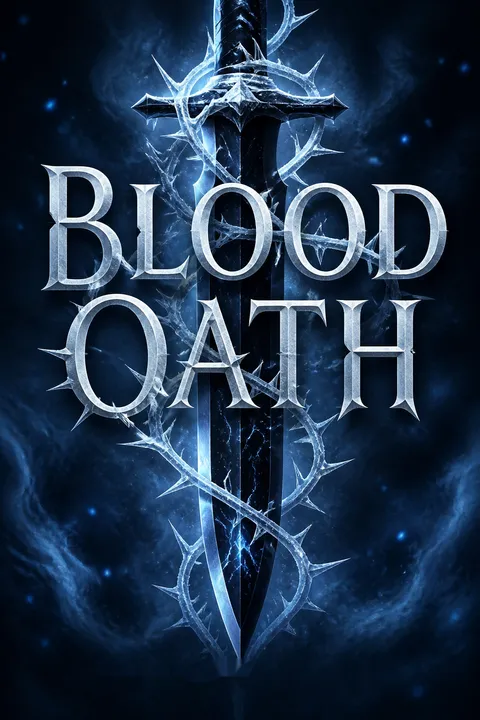


Plot Summary
The Asscaster With Secrets
At gothic Everbound University, interim headmaster Gibbons8 welcomes Maven Oakley1 as an atypical caster, a human-blooded girl whose magic surfaced a week ago. He warns that legacies, descendants of monsters, will see weakness in her. Maven1 cares for none of it. Her real interest is the absent headmaster, Hearst,13 a member of the Immortal Quintet.
Minutes later a vampire corners her on a stairwell, threatening assault. Touch triggers something violent in her, and she buries an adamantine dagger in his heart, leaving the corpse without remorse. She intends to stay invisible, attend classes, and wait for Hearst13's return. Her gloved hands, baggy clothes, and flat affect hide a trained assassin biding time inside a castle full of predators.
The opening inverts the fish-out-of-water trope: the seemingly weak newcomer is the deadliest thing in the room. Lee establishes dramatic irony as Maven performs frailty while harboring lethal competence. The lepidoptery framing (pinned butterflies) signals her aesthetic of beautiful death and her own pinned, displayed condition. Her aversion to touch and refusal of an emergency contact gesture toward trauma and isolation, the psychological spine of the book. The world's logic, monsters domesticated into weapons against a worse hell, frames violence as institutional. Maven's casual murder reads less as villainy than survival conditioning, inviting readers to sympathize with a protagonist whose moral compass has been brutally recalibrated.
A Roommate Like Lillian
Maven1's assigned roommate, Kenzie,6 a bubbly lion shifter who cannot yet shift because of her curse, looks unnervingly like someone Maven1 lost named Lillian.12 That resemblance stays Maven1's hand; instead of driving Kenzie6 off, she tolerates and slowly warms to her. Kenzie6 tours the castle, gossips about the Four Houses, and points out Baelfire Decimus,2 the last dragon shifter, and the legend of the Nightmare Prince,4 an incubus spotted nearby.
Maven1 learns about the Seeking, the ceremony where gods reveal soul-bound quintets that break each legacy's curse. She also notices Kenzie6 flinching at mention of a vampire bully.7 Quietly, Maven1 hexes the tormentor7 and binds herself, against her own rules, to the only person who feels like home.
Kenzie functions as Maven's tether to humanity, a surrogate for the grief named Lillian that haunts her. The displacement is psychologically precise: Maven cannot protect the dead, so she protects the living echo. The chapter also performs worldbuilding through gossip, an efficient device that mirrors how outsiders actually learn social hierarchies. The curse mythology introduces the central romantic engine, soulmate quintets as enforced interdependence, while Maven's cynicism toward fated love foreshadows her resistance. Her covert hex on Kenzie's bully reveals a protective moral streak beneath the assassin, complicating the killer introduced moments earlier. Connection, the thing she most fears, is already forming despite her resolve.
Matched, Then Rejected
At the Seeking, Maven1 unexpectedly glows as a keeper, the leader of a quintet. To her horror the gods reveal four matches, all high-profile: Crypt DeLune,4 the unhinged incubus Nightmare Prince;4 Everett Frost,5 an icy ex-model professor from the wealthiest legacy family; Baelfire,2 the charismatic dragon; and Silas Crane,3 the cutthroat blood fae apprentice to the Garnet Wizard.
Each is among the most powerful legacies alive, the opposite of the anonymity Maven1 craves. The prophetess Pia14 whispers that she knows Maven1 better than Maven1 knows herself. Once the ceremony ends, Maven1 gathers the stunned men in a private alcove and flatly rejects the quintet, telling them to appeal the gods for a better keeper. Then she walks away.
The Seeking weaponizes destiny against a control freak. For a woman whose entire survival depends on invisibility, being publicly anointed leader of four legends is the cruelest possible fate. Lee stages the reverse-harem premise as a problem rather than a fantasy, which is the book's smartest structural choice. Maven's rejection is not coyness but genuine self-protection: she believes intimacy will get them all killed. The men's spectrum of monstrousness, paranoia, bloodlust, sociopathy, emotional frost, mirrors the wounded archetypes of the genre, but their introduction as a unit she actively refuses generates tension from withholding rather than wish-fulfillment. Fate here is an antagonist.
The Wager Over Maven
Refusing to accept rejection, the men respond by competing. Baelfire2's dragon bonds instantly and aches; Silas3 proposes a wager among them, each naming a prize to claim from the others, the winner being whoever Maven1 chooses first.
Baelfire2 wants Frost5 mountain land; Silas3 covets Baelfire2's rare dragon scales; Crypt4 is asked for a blood oath to stay out of dragon dreams. Everett5 initially refuses to gamble, then later joins. Crypt,4 who can vanish into the dream plane called Limbo, begins stalking Maven1 invisibly.
Silas3 crafts her a dreamcatcher and reinforces her dorm. Baelfire2 shadows her everywhere, snarling off anyone who approaches. Their gifts pile at her door: Luka7's snapped-off fang, Chinese takeout, a blood-fae dreamcatcher. Maven1 finds their inability to take no maddening.
The wager is the book's moral landmine, planted early to detonate later. It reframes the men's devotion as partly transactional, seeding the betrayal that will fracture the third act. Yet Lee complicates it immediately: their pursuit also manifests as genuine protection and care, so readers cannot cleanly condemn them. The competition externalizes the quintet's internal dysfunction, four alphas who grew up as rivals now forced into intimacy. Crypt's Limbo stalking literalizes the surveillance fantasy common to the genre while flagging consent as a live question. The chapter studies male possessiveness as both threat and tenderness, refusing to resolve the ambivalence, which is precisely what makes the romance feel dangerous rather than safe.
Telum's Hidden Oath
Alone, Maven1 endures agonizing episodes: searing chest pain that she shortcuts by drinking dark vials, which knock her unconscious and deliver coded visions. One word recurs, Telum, alongside images of falling snow counting down days and of Lillian12 being tortured to pieces. She decodes the message: she has until the winter solstice, fourteen days, to complete a first task.
Maven1 is bound by a blood oath, the most unbreakable magic that exists, transcending even the gods. Her presence at Everbound is a mission, not an accident, and the four men constantly hovering threaten to expose her. She drafts a Make Them Hate Me list, planning to drive away her matches by boring, annoying, and emotionally manipulating them before her time runs out.
This is the engine room of the plot, where romance reveals itself as a thriller in disguise. The vials and visions externalize Maven's split existence: a body that performs normalcy and a buried directive that overrides everything. Telum (Latin for weapon) names her as an instrument rather than a person, the dehumanization at the heart of her trauma. Lillian's torture vision supplies emotional stakes, grief weaponized into duty. The solstice ticking clock imposes thriller propulsion onto a slow-burn romance, and the Make Them Hate Me list is brilliant comedic-tragic characterization: a woman so deprived of love she must consciously engineer rejection. Her cruelty is a defense mechanism with a deadline.
Make Them Hate Me
Maven1 executes her list. She bores Silas3 with relentless botanical facts in the greenhouse, only to fascinate rather than repel him. She proposes a fake flirtation to Everett,5 the one match who actually keeps his distance, hoping to ignite jealousy among the others. Everett5 reluctantly plays along, brushing a cool kiss to her forehead in the dining hall, which sends Baelfire2 and Silas3 into silent fury.
Maven1 also goads three high-ranked girls, led by the redhead Sierra,9 who claims to have slept with Baelfire2 and Silas3 and vows to steal them. Maven1 dares her to try, hoping the chaos will splinter the quintet. Underneath the scheming, she notices her own breath catching, an unwelcome jealousy she refuses to name.
Maven's campaign keeps backfiring, a structural joke that doubles as character revelation: every attempt to seem unlovable makes her more compelling because authenticity leaks through performance. Lee uses jealousy as a litmus test, exposing that Maven, the self-declared emotionless weapon, is not immune to possessive feeling. The greenhouse scene quietly bonds her with Silas through shared knowledge and shared orphanhood, undermining her own sabotage. Everett's restraint marks him as the wildcard, the only man honoring her stated wishes, which paradoxically draws her. The chapter dramatizes the impossibility of manufacturing indifference when desire is real, and it sets up Sierra as the petty antagonist whose pride will soon meet Maven's hidden violence.
The River Nearly Wins
During a forest combat exercise, Maven1 dismantles Sierra9 in brutal hand-to-hand, breaking arm, wrist, and knee, sparing her life only out of restraint. Sierra9 retaliates with elemental fire; Maven1's clothes ignite and she plunges into the freezing river, nearly drowning before Silas3 hauls her out. The blaze leaves her baggy disguise in tatters, briefly exposing her body and the pale scar bisecting her chest.
The three men, ravenous and protective, demand to know who hurt her while Baelfire2 offers his shirt. Then, consumed by sudden jealousy over Sierra9's boasts, Maven1 plants her feet and punches Baelfire2 square in the face. The blow stuns everyone, including herself, as her carefully maintained composure cracks in front of all of them.
Violence and vulnerability collide here. Maven's effortless destruction of Sierra confirms her lethality while the river strips her literal armor, the oversized clothes hiding the body and the scar that will later prove central. The exposure is metaphor made flesh: her secrets keep surfacing despite her control. The punch is the chapter's psychological pivot, the first time emotion (jealousy) overrides her trained blankness, signaling that the men are dismantling her dissociation faster than she can rebuild it. Lee stages the wound-tending ritual, a romance staple, but routes it through Maven's haphephobia, making care itself a site of conflict. Desire and terror of touch now war openly inside her.
Good Boy on the Bed
Guilty and pursued, Baelfire2 offers himself as her free-use plaything, promising not to touch her unless told. In the quintet apartment Maven1 sets a single rule: she may touch him, he may not touch her. She teases the dragon2 to a desperate edge, praising him as a good boy and her pet, and discovers a dynamic that thrills her, dominance that lets her be intimate without surrendering control.
Baelfire,2 undone, climaxes and instinctively clutches her, breaking the rule. The skin contact triggers Maven1's conditioned panic; she bolts in silence. Back in her dorm she cannot find release alone, frustrated and shaken. The encounter reveals both her buried sexuality and the depth of her trauma: closeness she craves remains physically unbearable.
This scene reframes kink as trauma negotiation rather than mere titillation. Maven's need to dominate and to forbid being touched is a coherent psychology: control substitutes for the safety her past destroyed. The praise dynamic gives Baelfire what his bloodthirsty, attention-starved curse craves while giving Maven authorship over her own body. The rule's violation, however gentle, demonstrates that desire cannot simply override conditioning; her nervous system overrules her wishes. Lee handles consent with unusual structural seriousness, making the broken promise a genuine rupture rather than a swoon. The aftermath, solitary, unsatisfied frustration, underscores that Maven's wound is not prudishness but a deep dysregulation between wanting and tolerating connection.
A Heart for Powder
Maven1's mission requires nightshade root powder, an outlawed dark-magic ingredient. Through a Halfton bar she tracks down Melchom,10 a black-market demon who recognizes her as the legendary Telum.
His price for a gram: the still-beating heart of Orson Lykoudis, a corrupt wolf-shifter pack alpha with a history of assault. Maven1 agrees, planning research before deciding he deserves death. Meanwhile the campus erupts over a grotesque display: four headless corpses burned on pyres dressed as the Immortal Quintet, with the message that monster spawn deserve to die.
Gibbons8 suspects Maven1 because of her human origins. Separately, a girl named Harlow11 recruits her into a quiet support circle of atypical casters who fear becoming scapegoats if anti-legacy violence escalates.
The demon bargain externalizes Maven's moral code: she kills, but only those who deserve it, a self-imposed ethics that preserves her humanity inside her weaponhood. Lykoudis as a predator-victim target lets readers cheer the coming violence without queasiness. The burning pyres introduce a political subplot, escalating human-legacy tension, and conveniently misdirect suspicion toward Maven, raising the thriller temperature. Melchom's instant recognition of Telum builds her mythic reputation, deepening the mystery of who she truly is. The atypical-caster solidarity thread enriches the worldbuilding's class politics, the human-born underclass within a monster aristocracy, while keeping Maven characteristically aloof. Multiple ticking threats now converge on her single concealed agenda.
Snowed In Together
Needing to slip away to kill Lykoudis, Maven1 invents a Pennsylvania wedding and borrows Kenzie6's car. The men learn of the trip and ambush it: Crypt4 shadows her through Limbo and takes the wheel, Everett5 conjures a blizzard, and they divert her to a lavish inn Everett5 has rented entirely. Trapped by snow, Maven1 concedes a single day of authenticity.
They tour the nearby town of Hope Falls, the greenhouse, the wintry square; Baelfire2 cooks, and Maven1 tastes ice cream for the first time, a small wonder that exposes how alien an ordinary human childhood is to her. Slowly, guardedly, she lets the four men see glimpses of her real, morbid, dryly funny self while still planning to vanish.
The forced-proximity getaway converts antagonists into a tentative found family. Lee uses the human town as a mirror: the wholesomeness sickens Maven precisely because it indexes everything stolen from her, deepening the trauma backstory without exposition. The ice cream beat is deceptively powerful, a tiny sensory pleasure that reveals deprivation more vividly than any flashback. The men's coordinated scheme, blizzard, Limbo travel, rented inn, shows them finally cooperating, the quintet's first functional act. Maven's negotiated one day is a controlled experiment in vulnerability; she frames joy as a borrowed chapter she must return. The romance breathes here, but the borrowed-time framing keeps dread humming beneath the warmth.
Dreams and Surrender
That night Crypt4 senses Maven1 trapped in a nightmare, a memory of her younger self, beaten and pleading at a faceless tormentor's feet. He cannot fix scars, but he banishes the horror and spins a new dream of the five of them together, easy and loving, which she half-accepts before waking.
The next evening, cornered by her own arousal and their relentless tenderness, Maven1 finally confesses she made a blood oath that makes a normal life impossible. When the men insist they do not care what she swore, even believing she might be anti-legacy, she surrenders. She sleeps with Silas3 while Baelfire2 and Crypt4 worship her; Everett5 watches, frozen, from the hallway. Afterward, intimacy's afterglow tips into a trauma flashback and she vomits.
Crypt's dream intervention is the book's most intimate consent act, repairing rather than exploiting her subconscious, recasting the Nightmare Prince as her gentlest protector. The withheld trauma memory finally surfaces in fragments, confirming systematic childhood abuse without spelling it out. Maven's confession reframes her rejection as sacrifice, not disdain, and the men's refusal to flinch, even at supposed anti-legacy treason, is the emotional climax of the romance: unconditional acceptance is the one thing her conditioning cannot counter. The post-coital flashback is clinically honest, intimacy reactivates buried horror, refusing the fantasy that love instantly heals. Pleasure and panic remain neurologically entangled, keeping her arc psychologically truthful.
The Bet Revealed
Terrified of his own curse and the danger he poses, Everett5 deliberately wounds Maven1 to push her away. He tells her the men's affection was driven by their wager over who would bed her first, reducing the night to a contest. Maven1's face flickers with rare, naked pain before she ices over completely; she hurls a dagger that buries itself beside Everett5's head and walks out.
Enraged, Crypt4 hurls Everett5 through a window and Silas3 and Baelfire2 condemn him, recognizing he may have destroyed their only chance with their keeper. Everett,5 gutted by self-loathing, admits he sabotaged what he wanted most. Maven,1 believing she was merely a prize in their old rivalry, retreats fully into her assassin self to finish her mission.
The wager's detonation pays off the third-act betrayal seeded in chapter four. Everett's self-sabotage is tragic rather than villainous: he chooses cruelty to forestall a curse he fears will hurt her, the same protective logic Maven uses, making them mirror images. The revelation reactivates her core wound, the belief that she is an object, never a person worth keeping, collapsing the trust the inn so carefully built. Lee weaponizes the genre's competitive trope against the characters, showing how the men's immature rivalry endangers genuine love. Maven's dagger and retreat dramatize regression: the moment she feels used, she abandons feeling entirely and becomes Telum again, the weapon she was made to be.
Death That Doesn't Stick
Maven1 assassinates Lykoudis, carves out his still-beating heart, and trades it to Melchom10 for the nightshade powder. She poisons her adamantine dagger and scales the castle to kill her true target: the returned Headmaster Hearst.13
But she finds him already murdered, his unkillable amulet shattered. An attacker wearing Kenzie6's face ambushes her, fighting with brutal, un-Kenzie-like skill; Maven1 realizes it is a changeling. In the struggle she is stabbed through the heart with her own poisoned blade and dies.
Crypt,4 searching Limbo, finds her corpse, then watches in disbelief as her wounds knit and she breathes again. Delirious, she murmurs her secret: her deaths do not stick. The other three burst in to find their keeper resurrecting, her impossible nature finally exposed.
The climax fuses thriller and revelation: the mission Maven guarded all book culminates in someone beating her to the kill, suggesting a larger conspiracy and a rival hand. The changeling wearing Kenzie's face turns her one safe attachment into a weapon against her, the cruelest possible violation of trust. Her death and resurrection retroactively reframes every episode, vial, and the chest scar: she is something beyond legacy or human, an undying weapon. Crypt's grief-to-shock arc rewards his obsessive devotion with the truth no one else has earned. Lee ends on maximum destabilization, the secret out, the target stolen, the resurrection witnessed, converting a romance into a mystery whose real questions have only just begun.
Analysis
Blood Oath disguises a thriller as a reverse-harem romance, and its cleverest move is making fated love an obstacle rather than a reward. Maven1 inverts the genre's passive heroine: she is the deadliest figure in the castle, performing weakness to stay invisible while a blood oath drives a clandestine assassination. The book's emotional core is trauma's grip on the body. Maven1's haphephobia, dissociation, and compulsive self-sabotage are rendered with clinical seriousness, so that intimacy becomes a negotiation between craving and panic rather than a fantasy of instant healing. Her Make Them Hate Me campaign is the perfect externalization of attachment injury: a person so convinced she is unlovable that she must manually engineer rejection, only to be undone because authenticity leaks through performance. The four men function as a typology of wounded masculinity, paranoia, bloodlust, emotional numbness, frozen loneliness, each cursed in a way that mirrors and answers a facet of Maven1's damage. Lee complicates their devotion with the wager, refusing to let possessiveness read as purely romantic; the bet's eventual detonation indicts the men's immature rivalry as the very thing that endangers love. Consent recurs as a structural concern, from Baelfire2's broken touch-promise to Crypt4's dream incursions, giving the spice genuine ethical weight. The worldbuilding's class politics, human-born underclass within a monster aristocracy, supply a political subplot (anti-legacy violence, the burning pyres) that pressures Maven1's hidden identity. The final twist, death that does not stick, recasts everything: the vials, the scar, the codename Telum, the dissociation, reframing Maven1 as an undying weapon and converting romance into mystery. The lesson the book circles is that being made into an instrument, dehumanized into pure function, is itself the deepest curse, and that the riskiest, most radical act for such a person is to want to be kept.
Review Summary
Blood Oath receives mostly positive reviews, praised for its engaging reverse harem storyline, intriguing world-building, and compelling characters. Readers particularly enjoy the dynamic between the strong-willed female protagonist and her persistent suitors. Some criticize the slow pacing and lack of character development, while others find the writing style and dialogue cringe-worthy. The book's similarities to popular series like "The Bonds That Tie" are noted, with many readers eager for the sequel. Overall, it's a divisive but largely enjoyable paranormal romance that has garnered a dedicated fanbase.
People Also Read

Characters
Maven
Secret assassin keeperA human-born atypical caster posing as a forgettable wallflower, Maven is in truth a meticulously trained killer operating under a binding blood oath. Raised in brutal isolation by a strict adoptive father, she presents a flawless poker face, wears gloves and shapeless clothes, and cannot bear skin contact without panic, the residue of severe childhood abuse. She loved someone named Lillian12, whose loss fuels her grief and duty. Maven is morbid, dryly funny, fiercely self-reliant, and convinced she deserves no happy ending, so she actively engineers her own rejection. Beneath the dissociated weapon lies a starved capacity for connection she fears will doom anyone close to her. Her defining tension is wanting intimacy while being neurologically and morally certain she must refuse it.
Baelfire
Devoted golden dragonBaelfire Decimus is the youngest son of the last dragon-shifter family, a charismatic, shameless flirt whose warmth runs as hot as his hundred-and-five-degree skin. His curse drives an inner dragon toward possessiveness and bloodlust, forcing him to hunt and kill to stay in control. Of the four matches he bonds to Maven1 most instantly and openly, calling her his mate and showering her with food, protection, and relentless affection. Domestic, loyal, and emotionally transparent in a way the others are not, he hides genuine pain beneath his swagger. His arc tests whether unconditional devotion can survive a woman determined to be unlovable, and whether his impulsive heat can learn the patience her trauma demands.
Silas Crane
Paranoid blood faeSilas is the cutthroat blood-fae apprentice of the Garnet Wizard, who raised him after most of his family killed one another, an event he witnessed at thirteen. His curse is creeping paranoia: voices in his head, hallucinated threats, an inability to trust anyone, soothed only by a bleeding crystal he clutches constantly. Brilliant, calculating, and dangerous, he cannot lie, which makes his confessions land with force. He craves order, secures Maven1's spaces with obsessive wards, and finds his paranoia eerily silenced in her presence. His attraction blends hunger for her magical blood with longing for the peace she alone provides. Beneath the ruthless strategist is a man terrified of losing his mind and being betrayed.
Crypt DeLune
The Nightmare PrinceCrypt is the infamous illegitimate son of an Immortal Quintet member, an incubus who feeds on dreams and roams the unseen dream plane called Limbo. Branded a sociopath, he left Everbound years ago after slaughtering a courtroom and has felt nothing for so long that obsession with Maven1 hits him like an addiction. Tattooed, pierced, unpredictable, and casually lethal, he is also, surprisingly, her gentlest protector, hunting predators in their nightmares and refusing to violate her boundaries. He claims no loyalty to anyone but her, declaring he would let the world burn to keep her. His arc explores whether a man who feels nothing can be redeemed by feeling everything for one person.
Everett Frost
Frozen wildcard professorEverett is an ice-elemental ex-model turned Everbound professor, heir to the wealthiest legacy family, and the only match who initially honors Maven1's wish to be left alone. Coldly aloof in public, he is in truth lonely and feeling far too much; his frost blooms whenever emotion overwhelms his control. He carries a curse and a private prophecy he dreads, which drives him to push people away precisely because he wants closeness most. Excluded as a child by the other three, he secretly yearns for the safety of a true quintet. His glacial composure is armor over a starved, vulnerable interior, making him both the most restrained and the most self-destructive of Maven1's matches.
Kenzie
Warm-hearted roommateA bubbly, sexually liberated lion shifter who cannot shift until her curse breaks, Kenzie becomes Maven1's roommate and unlikely best friend. Her chatter, gossip mastery, and relentless kindness slowly thaw Maven1, partly because she resembles Maven1's lost Lillian12. Matched in her own incomplete quintet, including her former bully7, Kenzie embodies the open-hearted belief in fated love that Maven1 rejects. She is the emotional anchor tying Maven1 to ordinary life and friendship.
Luka
Reformed bully vampireA vampire who tormented Kenzie6 before being matched to her quintet, Luka is arrogant and cruel until matching forces self-reflection. Maven1 hexes him impotent as punishment. He gradually attempts to atone, revealing buried pain behind his bullying, and edges toward genuine connection with Kenzie6.
Gibbons
Anxious interim headmasterThe fussy, easily scandalized warlock serving as interim headmaster while Hearst13 is away. He registers Maven1, oversees the Seeking, and later investigates the anti-legacy pyres, suspecting Maven1 because of her human background. A bureaucratic bootlicker who fawns over powerful students like Silas3.
Sierra
Jealous fire elementalA high-ranked, vain fire-elemental student who slept with Baelfire2 and Silas3 and resents Maven1's match. She threatens to steal the men and confronts Maven1 repeatedly, escalating to a brutal combat-training fight that ends with her thoroughly outclassed and humiliated.
Melchom
Black-market demon dealerA crude, talkative demon who supplies outlawed ingredients and recognizes Maven1 as the legendary Telum. He trades her rare nightshade root powder in exchange for a still-beating heart, providing the dark resource her mission requires and confirming her fearsome underworld reputation.
Harlow
Atypical caster recruiterA confident student whose mother was an atypical caster, Harlow respects Maven1's combat prowess and recruits her into a covert support circle of human-born casters who fear becoming scapegoats amid rising anti-legacy violence. She is pragmatic, blunt, and quietly subversive.
Lillian
Maven's lost loved oneA bright, kind figure from Maven1's past, now dead, whose tortured image recurs in Maven1's visions. Lillian is the emotional wellspring of Maven1's grief and the reason she tolerates Kenzie6, who resembles her. Her fate fuels Maven1's oath-bound mission.
Hearst
Absent powerful headmasterHeadmaster of Everbound and member of the Immortal Quintet, reputed unkillable thanks to a soul-bonded amulet. Absent for most of the story, his return is the target Maven1 has waited for, making him the silent objective driving her entire mission.
Pia
All-knowing prophetessA veiled, glowing high prophetess of the goddess of light who divines quintets at the Seeking. Her gentle touch does not trigger Maven1's aversion, and she unsettlingly implies she knows Maven1's true nature better than Maven1 does herself.
Plot Devices
The Seeking and quintets
Forced-bond romance engineThe gods cursed legacies to remain incomplete until bound into a quintet drawn from all Four Houses, with a keeper at its center; only this soul-binding breaks their individual curses. The Seeking ceremony reveals matches publicly. This device manufactures the reverse-harem premise non-negotiably: Maven1 does not choose her four men, destiny assigns them, and her status as keeper makes her both their keystone and a target for rival legacies. Because the bond promises to cure each man's torment (paranoia, bloodlust, emptiness, frozen loneliness), Maven1's rejection carries genuine cost for everyone. The mechanism transforms a romance fantasy into a moral dilemma, pitting fated love against Maven1's conviction that intimacy will destroy them all.
Make Them Hate Me list
Self-sabotage as character studyMaven1 writes a literal checklist of tactics, boring, ignoring, being mean, playing head games, exploiting curses, designed to make her matches reject her so she can complete her mission unwatched. The list structures several chapters as a campaign that comically backfires, since authenticity keeps leaking through her performance and making her more compelling. It externalizes her psychology: a woman so deprived of love she must consciously engineer rejection. The device also becomes a turning point when one of the men secretly discovers it, reframing his understanding of her from contrary to deliberately self-sabotaging. As a structural spine it lets Lee track Maven1's failing defenses chapter by chapter, each crossed-off tactic marking another crack in her armor.
Limbo dream-walking
Surveillance and intimacy toolCrypt4, an exceptionally powerful incubus, can slip into Limbo, an unseen plane overlapping reality, to move invisibly through walls, observe the waking world, and enter sleepers' dreams. The device enables his constant stalking of Maven1, which she alone can faintly sense, prompting her to use dreamcatchers as defense. It doubles as the book's most intimate mechanism: Crypt4 can both inflict nightmares and repair them, weaving lucid dreams. Lee uses Limbo to raise consent questions, to track Maven1 during her road trip and mission, and to position Crypt4 uniquely to witness pivotal events others cannot. It is simultaneously the creepiest and tenderest tool in the narrative, embodying the dangerous-protector duality.
The men's wager
Buried betrayal time bombEarly on Silas3 proposes a bet among the four matches: each names a prize to claim from the others, and the winner is whoever Maven1 chooses or beds first. Crypt4 ignores it, Everett5 initially refuses then joins. Planted as seemingly minor rivalry, the wager functions as a concealed explosive that detonates in the third act when it is revealed to Maven1, reframing the men's pursuit as partly transactional and reactivating her deepest wound, the fear of being an object rather than a person. The device exposes the quintet's immature competitiveness as the force that nearly destroys their bond, and it converts a tender turning point into a devastating betrayal with a single confession.
Telum and unsticking death
Identity mystery and climax twistMaven1 suffers recurring agonizing episodes she shortcuts with dark vials that deliver coded visions, including the recurring name Telum (weapon) and a solstice countdown. A pale scar bisects her chest, and her body resists ordinary harm. These breadcrumbs, scattered as symptoms throughout, pay off at the climax when she is stabbed through the heart, dies, and then heals and revives, murmuring that her deaths do not stick. The device retroactively recontextualizes her entire arc, the blood oath, the assassin reputation, the dissociated affect, revealing her as an undying instrument beyond human or legacy classification. It transforms the book's genre from romance into supernatural mystery at the final page, leaving her true nature the central unanswered question.
FAQ
Synopsis & Basic Details
What is Blood Oath about?
- Atypical Caster's Journey: The story follows Maven Oakley, an atypical caster who unexpectedly manifests magic and is thrust into the world of legacies at Everbound University.
- Fated Quintet Rejection: Maven is chosen as a keeper in a fated quintet but rejects her matches, setting off a chain of events that challenge the established order.
- Hidden Mission & Secrets: Maven harbors a secret mission and a mysterious past, navigating dangerous alliances and rivalries while trying to fulfill a blood oath.
Why should I read Blood Oath?
- Unique Paranormal Romance: It offers a fresh take on the reverse harem genre with a strong, independent female lead and complex, morally gray male characters.
- Intriguing World-Building: The story is set in a richly detailed world of legacies, curses, and hidden agendas, creating a compelling and immersive reading experience.
- Emotional Depth & Tension: The narrative explores themes of identity, destiny, and the struggle for autonomy, with plenty of emotional depth and romantic tension.
What is the background of Blood Oath?
- Legacy World: The story is set in a world where legacies, descendants of mythical creatures, live alongside humans, separated by a magical Divide.
- Legacy Curse: The Legacy Curse was created by the gods to ensure peace between the Houses, forcing legacies to bind their souls in quintets to break their curses.
- Everbound University: Legacies attend Everbound University to train, study, and find their fated quintet matches, preparing them to protect the mortal world from the Nether.
What are the most memorable quotes in Blood Oath?
- "Lepidoptery is a beautifully morbid hobby.": This opening line sets the tone for Maven's dark and analytical perspective, highlighting her fascination with the macabre.
- "You don't want to test me. Move.": This quote showcases Maven's hidden strength and defiance, revealing her willingness to stand up to those who underestimate her.
- "I reject your rejection.": Baelfire's declaration encapsulates his possessive nature and refusal to accept Maven's rejection, highlighting the central conflict of the story.
What writing style, narrative choices, and literary techniques does Morgan B. Lee use?
- First-Person Perspective: The story is told from Maven's point of view, allowing readers to delve into her thoughts, emotions, and motivations, creating a strong sense of intimacy.
- Dark and Morbid Tone: The writing style is characterized by a dark and often morbid tone, reflecting Maven's personality and the dangerous world she inhabits.
- Foreshadowing and Symbolism: Lee uses subtle foreshadowing and recurring symbols to hint at future events and deepen the story's themes, adding layers of complexity.
Hidden Details & Subtle Connections
What are some minor details that add significant meaning?
- Maven's Gloves: Maven's constant wearing of gloves, initially presented as a quirk, later hints at her aversion to touch and a deeper trauma.
- The Dreamcatchers: The dreamcatchers, especially the one made by Silas, symbolize the characters' attempts to protect Maven from the Nightmare Prince and the dangers of the Nether.
- The Broken Phone: Maven's broken phone and reluctance to get a new one highlight her desire to remain disconnected from the modern world and her past.
What are some subtle foreshadowing and callbacks?
- The Dead Vampire: The vampire's death in the stairwell foreshadows the violence and danger that Maven is capable of, and the fire that consumes the body hints at Baelfire's involvement.
- Lillian's Hair: Kenzie's hair, described as being similar to Lillian's, foreshadows the importance of Maven's past and her connection to her deceased sister.
- The Limp Dick Hex: The limp dick hex Maven casts on Luka is a callback to her earlier comment about gagging him with a knife, showcasing her dark sense of humor and willingness to use magic for revenge.
What are some unexpected character connections?
- Maven and Lillian: The connection between Maven and her deceased sister, Lillian, is a driving force behind her actions and her aversion to touch, adding a layer of emotional depth.
- Silas and Baelfire: The shared understanding of their curses creates a unique bond between Silas and Baelfire, despite their constant bickering and rivalry.
- Maven and Crypt: The connection between Maven and Crypt is unexpected, as they are both outsiders with a dark side, creating a unique dynamic that challenges the typical reverse harem trope.
Who are the most significant supporting characters?
- Kenzie: Maven's roommate, Kenzie, serves as a foil to Maven's stoicism, providing a source of humor and emotional support, and highlighting the importance of female friendships.
- Professor Gibbons: The interim headmaster, Mr. Gibbons, provides insight into the world of legacies and the dangers of Everbound, acting as a source of exposition and a foil to Maven's rebellious nature.
- The Changeling: The changeling, disguised as Kenzie, reveals the dangers of the world outside of Everbound and the lengths that enemies will go to in order to harm Maven.
Psychological, Emotional, & Relational Analysis
What are some unspoken motivations of the characters?
- Maven's Self-Preservation: Maven's rejection of her quintet stems from a deep-seated need for self-preservation, driven by her past trauma and a desire to protect herself from further pain.
- Baelfire's Possessiveness: Baelfire's possessiveness is rooted in his shifter nature and a deep-seated fear of losing his mate, driving his need to protect and control Maven.
- Silas's Paranoia: Silas's paranoia is a result of his curse and past trauma, making him distrustful of others and constantly on edge, driving his need to control his surroundings.
What psychological complexities do the characters exhibit?
- Maven's Trauma: Maven's past trauma manifests as a fear of touch, a need for control, and a tendency to push others away, creating a complex and compelling character.
- Crypt's Detachment: Crypt's detachment and seeming lack of empathy are a result of his incubus nature and his past experiences, making him a mysterious and unpredictable character.
- Everett's Repression: Everett's aloofness and repression of his emotions stem from his family's expectations and his own fear of losing control, creating a complex and conflicted character.
What are the major emotional turning points?
- Maven's Rejection: Maven's rejection of her quintet is a major emotional turning point, highlighting her desire for autonomy and her fear of vulnerability.
- Baelfire's Confession: Baelfire's confession about his fear of losing Maven and his desire to protect her reveals his vulnerability and his genuine feelings for her.
- Maven's Vulnerability: Maven's vulnerability when she reveals her fear of touch and her past trauma to Baelfire marks a significant emotional shift, showing her willingness to trust him.
How do relationship dynamics evolve?
- Initial Distrust: The initial relationship dynamics are characterized by distrust and conflict, as Maven tries to push her matches away and they try to understand her.
- Growing Intimacy: As the story progresses, the relationships evolve, with moments of vulnerability and intimacy that challenge the characters' preconceived notions.
- Shifting Power Dynamics: The power dynamics shift as Maven begins to assert her own agency and the quintet members start to acknowledge her strength and independence.
Interpretation & Debate
Which parts of the story remain ambiguous or open-ended?
- Maven's Past: The details of Maven's past and the events that led to her blood oath remain ambiguous, leaving readers to speculate about her true origins and motivations.
- The Anti-Legacy Movement: The extent of the anti-legacy movement and its potential impact on the world of legacies is left open-ended, hinting at future conflicts and challenges.
- The Nature of the Curse: The exact nature of the Legacy Curse and its effects on each legacy are not fully explained, leaving room for further exploration in future books.
What are some debatable, controversial scenes or moments in Blood Oath?
- Maven's Rejection: Maven's rejection of her fated quintet is a controversial act that challenges the established order and raises questions about free will and destiny.
- The Power Dynamics: The power dynamics between Maven and her matches are complex and often uncomfortable, raising questions about consent and control in relationships.
- The Violence: The graphic violence and morally gray actions of the characters can be controversial, challenging readers to question their own moral compass.
Blood Oath Ending Explained: How It Ends & What It Means
- Maven's Near-Death Experience: Maven's near-death experience and miraculous healing reveal her unique nature and hint at a deeper mystery surrounding her origins and abilities.
- The Betrayal: Everett's revelation of the bet shatters Maven's trust and forces her to confront the true intentions of her matches, leading to a major shift in the story's dynamics.
- The Unresolved Conflict: The ending leaves many questions unanswered, setting the stage for future conflicts and challenges as Maven grapples with her blood oath and her feelings for her quintet.
Cursed Legacies Series


Download PDF
Download EPUB
.epub digital book format is ideal for reading ebooks on phones, tablets, and e-readers.








































