Plot Summary
Exiles and Oaths
In a land where immortal Hesperines and mortal Tenebrans are separated by centuries of bloodshed, the fragile peace is maintained by the Equinox Oath—a treaty renewed at rare Summits. Lio, a young Hesperine ambassador, yearns for the return of the Summit, not just for peace, but to reunite with Cassia, the king's illegitimate daughter and secret traitor. As the Hesperines migrate north, Lio's longing for Cassia is matched only by his sense of duty. The Oath, once a promise of sanctuary and mercy, now feels like a chain, binding both peoples to old fears and new dangers. The story opens with hope and dread entwined, as the beacon that signals peace remains unlit, and the threat of war looms ever closer.
Divided Hearts, Divided Lands
Lio's divided mind mirrors the fractured world around him. Torn between his devotion to Cassia and his obligations to his family and people, he struggles with the Craving—a physical and emotional withdrawal from his Grace's blood. His uncle, Argyros, senses his turmoil, warning him that divided hearts make for dangerous diplomats. Meanwhile, Cassia, living under her father's tyranny, orchestrates subtle acts of rebellion, manipulating Tenebra's nobility to resist the king's alliance with the Mage Orders. Both Lio and Cassia are isolated by their secrets, their longing for each other growing as the world around them edges toward chaos.
The King's Daughter's Secret War
Cassia, the king's bastard daughter, is invisible in her father's court but wields quiet power. She sabotages the king's plans, unites the fractious free lords, and keeps hope alive for peace with Orthros. Her greatest weapon is her anonymity; even as her father arranges her betrothal to Flavian, a popular lord, Cassia maneuvers behind the scenes. The king's court is a nest of vipers, with Cordian mages arriving to cement an alliance that would spell doom for the Hesperines. Cassia's war is fought with rumors, alliances, and the ever-present threat of discovery—a war she cannot win alone.
Hunger and Withdrawal
Lio's Craving for Cassia's blood is more than longing—it is a physical torment that no substitute can ease. He tries to fill the void with animal blood, but it only makes him sicker. His friends, Mak and Lyros, recognize the symptoms and force him to confront the truth: Cassia is his Grace, the one person whose blood and love can sustain him. The pain of withdrawal is matched by the pain of inaction, as Lio is forbidden from returning to Tenebra. Both he and Cassia are trapped by their choices, their bodies and hearts betraying them as the world closes in.
Bonds of Blood and Grace
Lio finally confides in his closest friends and family, revealing the depth of his bond with Cassia. The revelation is met with understanding and support, but also fear—his suffering is a mirror of the legendary Hylonome, who died of grief and starvation after losing her Grace. Lio's parents and friends urge him to act, to rescue Cassia if her life is truly in danger. Meanwhile, Cassia's own memories of loss—her sister Solia's brutal death at the hands of rebels and her father's indifference—fuel her determination to never be powerless again. Their bond is both a source of strength and a potential curse.
The Brave Gardener's Legacy
Cassia's acts of mercy—saving orphaned children, smuggling medicine, and crafting charms—become legend among those she helps. To Zoe, a rescued child, Cassia is the Brave Gardener, a hero whose kindness offers solace in a cruel world. Lio keeps Cassia's memory alive through stories, even as he fears for her safety. The legacy of mercy and rebellion intertwines, as Cassia's small acts ripple outward, giving hope to the hopeless and reminding Lio of what is at stake. Their love is not just personal, but a force that could change the fate of nations.
The Autumn Greeting's Price
The Autumn Greeting, Tenebra's sacred festival, becomes the stage for Cassia's potential doom. Forced to dance with Flavian, she faces the prospect of a loveless marriage or death, just as her sister did years before. The king's machinations and the arrival of Cordian war mages raise the stakes, as Cassia's every move is watched. Lio, powerless to intervene, is tormented by visions of Cassia's fate. The festival is both a celebration and a sentence, marking the moment when personal and political destinies collide.
The Summit That Wasn't
The hoped-for Equinox Summit is denied; the king refuses to light the beacon, choosing war over peace. Cassia's efforts to sway the nobility are not enough to overcome her father's will or the Cordian mages' ambitions. Lio, desperate, proposes a radical new plan: if Tenebra will not come to the Summit, Orthros will invite Tenebra to theirs. The Solstice Summit is born—a gamble that could bring peace or destruction. Both lovers are forced to risk everything, knowing that failure means not just personal loss, but catastrophe for their peoples.
The Last Resort
As the king's threats close in and Chrysanthos, the Cordian Dexion, begins a witch hunt, Cassia prepares her last resort—a plan that could save or doom her. She salvages a sacred glyph stone from a destroyed shrine, carrying with her the last vestige of Hespera's magic. Lio, meanwhile, faces his own breaking point, nearly losing control of his power in a battle with heart hunters. Both are pushed to their limits, forced to confront the darkness within and without. Their only hope lies in each other and the possibility of reunion.
The Solstice Gambit
Lio's audacious proposal to host the Solstice Summit in Orthros is met with skepticism and fear, but also with the support of his friends, family, and the Queens. The Firstblood Circle debates the risks and rewards, ultimately voting in favor of the plan. Cassia is chosen as Tenebra's representative, her secret deeds finally recognized. The embassy's journey to Orthros is fraught with peril—betrayal, avalanches, and attacks by heart hunters—but Cassia survives, aided by Lio's intervention and the Sanctuary magic she carries. The stage is set for a new era, if they can survive the night.
The Vote for the Future
The Firstblood Circle's vote is a turning point, as Orthros must decide whether to risk everything for the chance at peace. Lio's confession of his bond with Cassia sways the elders, and the Queens give their blessing. The embassy crosses into Orthros, but not without loss—many are nearly killed in an avalanche orchestrated by the king's agents. Cassia's survival is a testament to her resilience and the power of hope. The future of both peoples hangs in the balance, as old wounds and new alliances are tested.
Avalanche and Betrayal
The embassy's passage through Martyrs' Pass is sabotaged by heart hunters and a mage of dreams, acting on the king's orders. Cassia is buried in snow, rescued only by her loyal hound and Lio's desperate magic. The attack is a brutal reminder of the dangers they face, and the cost of betrayal. Lio's power is pushed to its limits, nearly breaking him, but his love for Cassia and the support of his friends bring him back. The survivors reach the Sanctuary of Waystar, where old wounds begin to heal and new bonds are forged.
The Sanctuary's Threshold
Cassia and the embassy are welcomed into Orthros, a land of peace, beauty, and abundance. The contrast with Tenebra is stark—here, mercy and sanctuary are not just ideals, but lived realities. Cassia is awed by the warmth of Lio's family and the kindness of the Queens. Her legend as the Brave Gardener precedes her, and she finds herself embraced by those she once saved. The Sanctuary magic she carries protects her, and for the first time, she begins to imagine a future free from fear.
Reunion in the Dark
In the safety of Orthros, Lio and Cassia are finally reunited, their bond stronger than ever. The physical and emotional hunger that tormented them is sated in a night of passion and vulnerability. They confess their fears, hopes, and desires, finding solace in each other's arms. The darkness that once threatened to consume them is transformed into a sanctuary, a place where they can begin to dream of happiness. Their reunion is not just personal, but symbolic—a promise that love can endure even the longest night.
The Queen's Invitation
Cassia is welcomed by the Queens of Orthros, who recognize her courage and offer her sanctuary. She learns the true history of the Hesperines, the sacrifices that built Orthros, and the power of Sanctuary magic. The Queens' invitation is more than hospitality—it is an offer of belonging, a chance to become part of a new family and a new world. Cassia's past wounds begin to heal as she finds acceptance and purpose among those who value her for who she is.
The New Home
Lio brings Cassia into his home, introducing her to his family and the rhythms of Hesperine life. Cassia bonds with Zoe, the child she once saved, and finds joy in simple acts of kindness and love. The house, once empty and cold, becomes a place of warmth and laughter. Together, Lio and Cassia plant the seeds of a new future—literally and figuratively—nurturing hope in a world that once seemed barren. Their love is no longer a secret or a rebellion, but the foundation of a new beginning.
The Endless Night
As polar night envelops Orthros, Lio and Cassia settle into a life of peace, passion, and purpose. The dangers of the past are not forgotten, but they are no longer insurmountable. Surrounded by family, friends, and the endless sky, they find the strength to face whatever comes next. The story ends not with an ending, but with a beginning—a promise that love, mercy, and sanctuary can endure, even in the darkest of times.
Analysis
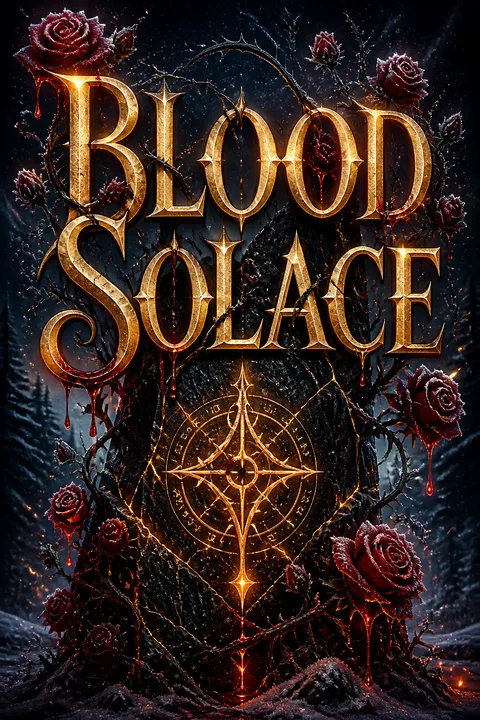
Blood Solaceis a sweeping fantasy romance that explores the intersections of love, trauma, and political upheaval. At its heart, the novel is about the search for sanctuary—both literal and emotional—in a world defined by exile and violence. Through the intertwined journeys of Lio and Cassia, the story examines the costs of loyalty, the pain of longing, and the courage required to choose hope over fear. The Craving and Blood Union serve as powerful metaphors for the ways in which love can both wound and heal, making the personal stakes as high as the political ones. The novel's rich worldbuilding, with its detailed rituals, history, and social structures, grounds the fantastical elements in emotional reality. Ultimately, Blood Solace
argues that true power lies not in domination or isolation, but in the willingness to risk vulnerability, to offer mercy, and to build new bonds across old divides. The lessons are clear: healing is possible, but only through honesty, compassion, and the relentless pursuit of connection. In a modern context, the book resonates as a call to resist cycles of violence and to believe in the transformative power of love and community.
Review Summary
Blood Solace receives mixed reviews, averaging 4.02 stars. Fans praise the intricate world-building, political intrigue, and the deeply romantic connection between Lio and Cassia. Many adore the Hesperine culture and found-family dynamics. Critics, however, find the pacing painfully slow, noting that little plot actually occurs, with Lio's prolonged suffering feeling repetitive. Several readers DNF'd or abandoned the series, citing excessive fluff and an overly perfect Hesperine society. The spicy scenes, particularly one involving feet, divided readers considerably.
Characters
Lio (Deukalion Komnenos)
Lio is a young Hesperine ambassador whose life is defined by the tension between duty and desire. As the son of a legendary bloodline, he is trained in diplomacy and mind magic, but his heart belongs to Cassia, the mortal woman who is his Grace. Lio's psychological journey is marked by the agony of withdrawal from Cassia's blood, a torment that mirrors his emotional isolation. His loyalty to family and people is unwavering, but his love for Cassia drives him to risk everything, even his own life. Lio's development is a study in vulnerability and courage, as he learns to trust others, accept help, and ultimately choose love over fear. His relationships—with Cassia, his family, and his friends—are the anchors that keep him from being consumed by the darkness within and without.
Cassia Basilis
Cassia is the illegitimate daughter of King Lucis, living in the shadows of her father's court. Outwardly powerless, she is in fact a master of subtle rebellion, manipulating the nobility and sabotaging the king's plans to protect the innocent and resist tyranny. Cassia's psyche is shaped by trauma—her mother's death, her sister's murder, and her own constant danger—but she refuses to be a victim. Her love for Lio is both a source of strength and a vulnerability, as she risks everything for a chance at happiness. Cassia's journey is one of self-discovery, as she learns to accept love, trust others, and imagine a future beyond survival. Her legacy as the Brave Gardener is a testament to her resilience and her belief that small acts of mercy can change the world.
Argyros (Silvertongue)
Lio's uncle and mentor, Argyros is one of the most powerful mind mages in Orthros. He is a figure of authority and wisdom, but also of deep regret—haunted by the consequences of his own power and the mistakes of the past. His relationship with Lio is complex, marked by pride, disappointment, and ultimately forgiveness. Argyros's development is a meditation on the limits of control and the necessity of compassion, both for others and for oneself.
Komnena
Lio's mother, Komnena, is a mind healer whose compassion and wisdom anchor her family. She is a survivor of trauma, having fled Tenebra and built a new life in Orthros. Komnena's role is both nurturing and empowering—she supports Lio and Cassia, helps newcomers adjust, and embodies the values of mercy and sanctuary. Her relationship with Cassia is especially poignant, as she offers the acceptance and maternal care Cassia has always lacked.
Apollon
Lio's father, Apollon, is a legendary figure in Hesperine history—a founder, architect, and former warrior. His strength is both physical and moral, providing a model of courage and integrity for his children. Apollon's relationship with Lio is one of mutual respect and love, tempered by the pain of past losses. He is a protector, but also a believer in letting his children make their own choices and mistakes.
Mak and Lyros
Mak and Lyros are Lio's closest friends and confidants, warriors in the Stand and partners in life. Their relationship with Lio is a source of humor, support, and tough love. They challenge him to face his fears, accept help, and fight for what matters. Their own bond is a model of partnership and devotion, offering a counterpoint to Lio and Cassia's more tumultuous romance.
Cassia's Allies (Perita, Callen, Benedict)
Perita, Cassia's handmaiden, and Callen, her bodyguard, are more than servants—they are her chosen family, sharing in her struggles and victories. Benedict, Flavian's loyal knight, is a friend and protector, embodying the best of Tenebran honor. Their loyalty and courage are vital to Cassia's survival and success, providing the support she cannot find in her own blood.
The Queens (Alea and Soteira)
The Queens of Orthros are both symbols and active agents of hope. Their love, wisdom, and power have shaped Hesperine society, offering a model of partnership and leadership. They welcome Cassia as one of their own, recognizing her courage and offering her the sanctuary she has always sought. Their presence is a reminder that true power lies in compassion and the willingness to embrace change.
Rudhira (First Prince)
The First Prince, Rudhira, is a figure of restless energy and relentless pursuit. As the leader of the Charge, he is dedicated to finding and rescuing lost Hesperines, embodying the values of mercy and loyalty. His relationship with Lio is both paternal and fraternal, offering guidance and support while challenging him to grow. Rudhira's own losses and regrets mirror those of the other characters, making him a complex and sympathetic figure.
Chrysanthos and Skleros
Chrysanthos, the Cordian Dexion, and Skleros, the Gift Collector, are the embodiment of the threats facing Orthros and Tenebra. Their power, cunning, and ruthlessness make them formidable adversaries. They are not just obstacles, but reflections of the darkness that can arise when power is divorced from compassion. Their presence forces the protagonists to confront the limits of their own strength and the necessity of unity.
Plot Devices
Dual Narrative Structure
The novel employs a dual narrative, alternating between Lio's and Cassia's perspectives. This structure allows readers to experience the emotional and political stakes from both sides of the conflict, deepening empathy and tension. The parallel arcs of longing, sacrifice, and growth mirror the divided world, while their eventual convergence in Orthros symbolizes the possibility of healing and unity.
The Craving and Blood Union
The Craving—a supernatural withdrawal experienced by Hesperines separated from their Grace—serves as both a plot device and a metaphor for longing, addiction, and the costs of love. The Blood Union, an empathic connection, heightens the stakes, making emotional wounds literal and forcing characters to confront their vulnerabilities. These devices drive character decisions, create tension, and underscore the theme that true connection requires risk and sacrifice.
Political Intrigue and Foreshadowing
The story is rich with political maneuvering, secret alliances, and betrayals. Cassia's clandestine war against her father, the king's machinations, and the arrival of Cordian mages create a web of intrigue that propels the plot. Foreshadowing is used to build suspense—hints of the king's last resort, the threat of the Departure, and the dangers lurking in Martyrs' Pass keep readers on edge, anticipating disaster and hoping for salvation.
The Sanctuary and Mercy Motifs
The recurring motifs of sanctuary, mercy, and the garden (especially the rose) symbolize the possibility of healing and new beginnings. Cassia's role as the Brave Gardener, the Sanctuary magic she carries, and the acts of mercy performed by Hesperines are not just plot elements, but thematic anchors. They remind readers that even in a world scarred by violence, compassion can take root and flourish.
Rituals and Ceremonies
The novel is structured around rituals—Summits, dances, blood ceremonies, and family gatherings. These events serve as turning points, marking shifts in relationships, power, and identity. They also provide opportunities for characters to express love, make promises, and claim new homes. The tension between old rituals (the Equinox Oath) and new ones (the Solstice Summit) reflects the struggle between tradition and change.








































