
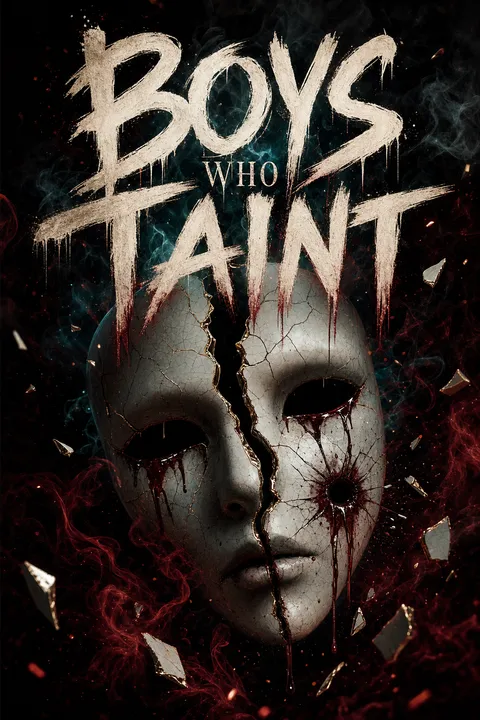


Plot Summary
Prologue
Aspen1 lies pinned to a bed, Levi's2 fingers around her throat while Apollo3 and Grey4 shackle her wrists. She calls them her friend, her lover, her sworn enemy, three vicious boys obsessed with owning her. She was supposed to kill her sister's5 murderer, and they were supposed to help.
Instead they lied, cheated, and betrayed her, and she walked willingly into their hands again and again until her mind and morals lay in ruin. Masked and merciless, they order her to beg, and she does. Craving these Phantom boys is the worst thing she has ever done, and she never imagined hatred could feel so good, or that being wanted this badly could break them all.
The prologue is a flash-forward that frames the novel as a confession of willing corruption. By opening at the erotic and moral nadir, the author converts the whole book into a suspense engine: how does a grieving avenger become a kneeling supplicant to the very men she vowed to destroy? The language of ownership, hatred braided with desire, signals the genre's central fantasy, submission as agency. Crucially, Aspen names three masks but distinguishes them by role (killer, sinner, liar), seeding the identity mystery. The prologue also weaponizes trust, echoing the author's note, priming readers to expect a reveal that reorganizes everything they think they understand about affection and guilt.
Death Below Lake Verity
A camping trip on the mountain above Lake Verity turns fatal. Levi Torres,2 secretly obsessed with childhood friend Aspen Caruso,1 goads the group into cliff diving. That night a scream wakes Aspen,1 and she finds her fearless half-sister Mavis Rivera5 dead on the rocks below the ledge, skull bleeding into the sea.
Apollo Torres3 hauls the body ashore and pumps her chest, but nothing brings her back. Levi,2 frozen and hollow, only manages an apology. When the parents arrive, Aspen's mother Penelope8 refuses to trust outsiders and blames the Torres clan on the spot, cracking open a war between rival families. Hidden in the trees, a pale figure4 films everything on his phone, smiling, already scheming to turn the tragedy into a way to win Aspen's1 heart.
The inciting death is staged as spectacle and surveillance at once, establishing the book's obsession with watching and being watched. Mavis, who claimed to see ghosts and feared nothing, becomes the story's founding ghost, her absence the vacuum every character organizes around. The refusal to call an ambulance exposes these families as extralegal, self-policing dynasties for whom death is a political problem, not a legal one. Penelope's instant blame shows grief metabolizing into tribal warfare. The unseen recorder introduces the novel's governing irony: the truth of Mavis's death exists on film from the first page, yet withholding it drives every subsequent cruelty. Tragedy here is not an accident but an opportunity for the predatory.
The Villain Volunteers
At home, Levi's2 family interrogates him. He swears Mavis5 simply fell but cannot explain what happened on the ledge, and the clan senses the Riveras will demand a scapegoat. Rather than tell the truth, Levi2 decides that if they need a villain, he will be one, and he shoulders the blame. Weeks later the Torres family crashes Mavis's5 funeral reception to pay respects.
Aspen's half-brother Silas6 snarls that Levi2 is a murderer; fathers Dylan and Kai10 nearly come to blows over the casket photo. Penelope8 orders them out and forbids her family from ever speaking to Levi2 again. Aspen1 reaches for the boy who was once her best friend,2 their fingers brushing, but he is dragged away and erased from her life in a single afternoon.
Levi's self-condemnation is the novel's tragic hinge, a martyrdom disguised as guilt. He accepts monstrousness as penance and as camouflage, choosing to be hated rather than expose a truth he believes would destroy Aspen. The funeral, meant for grieving, becomes a territorial standoff, illustrating how these families cannot mourn without weaponizing loss. The excommunication ritual, Penelope forbidding contact, formalizes a Montague-Capulet architecture that the romance will strain against. Aspen's instinctive reach, immediately denied, encodes the yearning that survives beneath her coming hatred. The scene builds the emotional debt the reader will want repaid: someone is lying nobly, and the cost of that lie will compound until it nearly kills him.
Hate Me and Live
At Spine Ridge University, Levi2 is the infamous campus killer, shunned by all but his cousin Apollo.3 When Aspen1 begs him to talk, he coldly confirms he murdered Mavis5 and warns that if she values her life she will hate him forever. His venom lands, and her grief hardens into a vow of vengeance.
Moments later Silas6 ambushes Levi2 in a hallway, beating him bloody while Levi2 refuses to strike back. Aspen1 throws herself between them, unable to explain even to herself why she cannot let her brother6 finish him. Watching from the sidelines, Apollo,3 all swagger and blackout tattoos, offers to train Aspen1 to fight, slyly planting the seed that she could make Levi2 pay with her own hands.
This section dramatizes cruelty as a love language turned inside out. Levi's push-away is protective aggression, a man engineering the very hatred that will let him die guilt-free, which the reader half-senses through his refusal to defend himself. Aspen's inability to let Silas kill him betrays a body and heart that have not received the memo her mind issued. The hallway becomes a public theater of shame where reputation is currency. Apollo's entrance reframes revenge as physical empowerment and courtship simultaneously, blurring protection and predation. The chapter's psychology is about displaced grief: Aspen cannot resurrect Mavis, so she reaches for a target, and the boys around her are all too willing to become the object of her fire.
The Boy at the Graves
Visiting Mavis's5 grave at Crescent Vale Cemetery, Aspen1 meets Grey Westbrook,4 a pale, snowy-haired stranger mourning his own dead parents nearby. He listens without hollow condolences and, over coffee, gives her permission to be furious, telling her she deserves to destroy the heart of the boy who destroyed hers.2
Charmed, Aspen1 lets Grey4 into her life, and soon they are inseparable on campus, holding hands past Levi's2 simmering glare. Grey4 seems the sweetest soul she has ever met, arriving precisely when she needed rescuing from her own despair.
What she cannot see is how carefully this gentle stranger4 studies her, how rehearsed his tenderness feels, and how unnervingly much he already seems to know about her, her sister,5 and the Torres family.
Grey is introduced as balm and mirror, a fellow orphan of grief, but the narration quietly flags manufacture: rehearsed smiles, suspicious knowledge, calculated encouragement. His genius is to validate rage rather than soothe it, positioning himself as the permission-giver for the vengeance the plot requires. The cemetery, threshold between living and dead, is the perfect meet-cute for a romance built on necrophilic obsession with a lost sister and a lost self. Aspen's loneliness makes her legible and manipulable, and the reader watches seduction operate as data collection. The section interrogates how predators exploit mourning, offering not comfort but a shared darkness that feels, to the bereaved, like being finally, fully seen.
A Pencil and a Note
Levi2 drags Aspen1 into an empty classroom, demanding to know who Grey4 is. She stabs his arm with a pencil; he pins her, touches her intimately, and threatens to destroy Grey4 if she keeps seeing him. She flees, more disturbed by her own body's response than his menace.
That night pebbles strike her window and a masked figure with glowing red eyes leaves a typed note on her desk: he will kill Levi Torres,2 and the price is her body, come to the bonfire. Meanwhile a student is found dead in a campus bathroom, and Agent Foley15 warns the dean, Felix,9 that a killer stalks Spine Ridge. Aspen1 understands her Ghost is real, and the temptation to accept a murder for hire terrifies and thrills her.
Three predatory offers converge: Levi's possessive threat, the Ghost's transactional bargain, and the institutional threat of Foley's investigation. The pencil stabbing establishes Aspen as an active combatant, not a victim, while her arousal complicates consent into a murkier register of desire the book keeps probing. The Ghost's note transforms her grief into a contract, externalizing the revenge she cannot execute herself and offering to launder her guilt. The dead student and Foley introduce a procedural pressure that reminds us these are killers hiding bodies. The section's psychology centers on outsourced violence: Aspen wants Levi dead without becoming a murderer, and the Ghost offers exactly that moral loophole, at the cost of her body and autonomy.
The Auditorium Bargain
At the bonfire near the cliff called The Edge, Aspen1 places the note on the stool, sealing the pact, then bolts as the red-eyed stalker chases her onto campus. He corners her in the darkened auditorium, presses a blade to her throat, and takes her against the lectern, promising Levi's2 death in exchange for her body. She loathes how completely she surrenders.
When he finishes, he ties her to the lectern and vanishes, leaving her humiliated until Levi's brash half-sister Sunny12 wanders in and cuts her loose. Aspen1 swears the Ghost will die too, once he honors the deal. Unknown to her, Grey4 watched the entire encounter through hidden footage, saving the video to a private collection like a trophy pinned beneath glass.
This is the point of no return, where Aspen consummates her deal with the devil and crosses from mourner to willing participant in her own degradation. The auditorium, a place of performance, literalizes the theme of being made into spectacle without knowing the audience. Her hatred of her own pleasure dramatizes the genre's dark fantasy of desire that overrides moral will. The reveal that Grey filmed it retroactively converts even her most private violation into content for a hidden watcher, escalating the surveillance motif into predation. Sunny's rescue introduces casual violence as normalcy in this world. The bargain binds body to bloodshed: she cannot get revenge without being consumed, and consumption is beginning to feel like craving.
The Piercing Clue
Grey4 and Aspen1 finally kiss, and Levi,2 spying from the library stacks, unravels into jealous frenzy. When Aspen1 and Grey4 grow physical, she discovers Grey4 is pierced exactly like her masked Ghost, and like Apollo,3 whom she already confronted in his room. Apollo,3 endlessly flirtatious, neither confirms nor denies being the stalker, savoring her suspicion.
Levi2 warns Aspen1 he watched Grey4 walk out of a Bonesmen Brotherhood club and then murder a bound man in a parking lot, but she dismisses it as the jealous lie of a confessed killer. Three men now circle her, each pierced, each capable of slaughter, each a plausible candidate for the Ghost who promised to erase Levi2 from the world. The mystery tightens into paranoia.
The matching piercings function as a brilliantly cheap and effective red herring, multiplying suspects while eroticizing the clue itself. The section formalizes the love quadrangle as an epistemological trap: Aspen cannot trust any testimony because every man lies, watches, or threatens. Levi's accurate warning about Grey is disbelieved precisely because he wears the murderer's mask he chose, a tragic consequence of his earlier self-condemnation. The library voyeurism doubles Grey's, suggesting all three men relate to Aspen through obsessive observation. Psychologically, the chapter maps how gaslighting flourishes in a field of competing manipulators: truth and lie become indistinguishable, and Aspen learns to trust only her body, which is itself being weaponized against her judgment.
Kneeling for Protection
Terrified Levi2 will kill Grey,4 Aspen1 begs Apollo,3 the one person Levi2 listens to, to protect him. Apollo3 names his price: she must get on her knees for him in the gym locker room. She agrees, betraying Grey4 in order to save him, and Apollo3 devours her afterward too. What she does not know is that Grey4 hides in the showers, watching, aroused rather than wounded.
Apollo3 catches him and christens him a subby voyeur. Grey4 then ambushes Apollo3 with an application to the Phantom Society, demanding entry as the true price of Apollo3 sleeping with his girlfriend. He wants the fraternity's ironclad rule, that no Phantom may ever harm another Phantom, which would make Levi2 legally unable to touch him ever again.
Aspen's bargain reprises the auditorium contract in a new key: sex as currency for safety, her body a resource to be spent for love. The revelation of Grey's arousal at watching reframes the entire scene, converting apparent betrayal into a gift to his hidden kink, which the narrative will name explicitly. Apollo's transactional hedonism weaponizes desire while pretending to be generosity. Grey's pivot to seeking Phantom immunity is strategic brilliance, turning the fraternity's protective code into a legal shield, revealing his ruthlessness beneath the sweetness. The chapter's psychology is about how these characters convert intimacy into leverage, and how Grey reframes voyeurism, betrayal, and danger into pleasure, foreshadowing the polyamorous resolution built on shared kink.
Initiation in Blood
Grey4 endures a savage Phantom hazing run by Apollo:3 electric shocks, freezing water, a warehouse in the dark. Ordered to prove loyalty, he shoots a fleeing recruit without flinching, and Apollo3 executes another, sealing Grey's4 membership and his shield against Levi. Grey4 returns to Aspen1 drenched in blood, confessing nothing while she silently washes his ruined clothes, recognizing violence she has lived beside her whole life.
Later Levi2 breaks into her sorority room and finds hidden cameras, realizing Grey has been filming her, including the intimate footage he mailed to taunt Levi.2 The gentle boyfriend4 stands exposed as an obsessive surveillance stalker, and Levi's2 rage over Grey4 touching Aspen1 hardens into a plan for retaliation.
The initiation literalizes the cost of belonging in this world: your soul for protection, murder as membership dues. Grey's cold execution shatters the sweet-boy facade the reader has been given, confirming the darkness Levi warned of. Aspen's wordless laundering of blood reveals her own normalization of killing, a chilling intimacy of shared monstrousness that binds them. Levi's discovery of the cameras is the mechanism that will unravel Grey, converting private stalking into evidence. The section is about facades cracking under pressure, and about how these lovers recognize one another not through tenderness but through capacity for violence. Belonging here is baptismal and bloody, and love is measured by tolerance for one another's atrocities.
Red Room and Gunfire
At a Phantom party where every guest wears a mask identical to the Ghost's, the stalker pulls Aspen1 into a red playroom for another punishing encounter, again vowing to hurl Levi2 off the cliff for her. The night explodes when Silas6 storms in with the Skull and Serpent Society, guns and knives flying to smoke Levi2 out.
Apollo3 kills a Serpent by crushing his skull against a table; the dean Felix9 arrives to bury both the body and the scandal. Aspen1 realizes the identical masks mean her Ghost is a Phantom, or at least moves among them. The families' cold war heats toward open combat, while Agent Foley's15 shadow over campus lengthens with every corpse the Riveras and Torreses must quietly make disappear.
The uniform masks are a masterstroke of misdirection, hiding the stalker in plain sight by making everyone a suspect and eroticizing anonymity itself. Silas's armed raid escalates the family feud from cold to hot, converting personal grief into paramilitary vendetta. Apollo's casual lethality reasserts that these are not merely kinky college students but hereditary killers. Felix's cover-up exposes institutional corruption: the dean is a mob father protecting his own. Foley functions as the return of the repressed law, the outside world these dynasties cannot fully bury. Psychologically the section fuses eros and death drive, the red room and the gunfight, staging desire and slaughter as two expressions of the same ungovernable intensity that governs this world.
The Boy on the Chair
After Grey4 sends Levi2 a photo proving the hidden cameras, Levi2 and Apollo3 kidnap him, bind him to a chair in the woods, and stage a punishment meant to shatter Aspen's1 faith in him. When Aspen1 races to free Grey,4 the two masked men force a degrading scene while Grey4 watches, unmistakably aroused. They reveal Grey4 is a Phantom and possesses naked footage of her, that her perfect boyfriend is a practiced liar.
Bewildered about who is truthful, Aspen1 cuts Grey4 loose and they flee together. The encounter fuses all four in shared depravity even as it deepens her distrust of everyone. Afterward Levi2 seethes to learn Apollo3 secretly slept with Aspen1 behind his back, cracking the fragile alliance between the cousins.
This set piece stages truth-telling as sexual violence, an interrogation conducted through humiliation, where Levi tries to expose Grey by weaponizing Aspen's body. The perverse irony is that Grey thrives on the degradation, so the punishment becomes his pleasure, defeating its purpose. Aspen's confusion crystallizes the novel's epistemic nightmare: she is surrounded by liars competing to control her narrative. Freeing Grey is an assertion of loyalty against manipulation. The revelation of Apollo's secret betrayal fractures the male alliance, showing that shared possession breeds jealousy even among conspirators. The scene explores how these characters cannot distinguish domination from devotion, and how the pursuit of truth, when conducted by predators, becomes just another arena for control.
Killing Feels Good
Aspen1 tails Grey4 into Bonesmen Brotherhood territory and watches him murder a bound man. Cornered, he confesses the Brotherhood killed his parents, and he pays them to hand over their own so he can slaughter them one by one. When the target sneers, Aspen1 seizes the knife and stabs him again and again, discovering a horrifying thrill in vengeance.
A stray shot wounds Grey,4 so they turn to Apollo,3 whose price for stitching him is a kiss that ignites a four-way encounter. Apollo3 kisses Grey4 too, and Grey's4 craving to watch and be dominated is laid bare as his defining kink. Slowly, warily, the rivals begin to share Aspen1 rather than destroy one another, though Levi2 still burns to erase Grey4 entirely.
Grey's backstory recasts him from villain to avenging orphan, complicating the moral field: he is a monster with a wound. Aspen's first kill is the section's dark climax of character, her transformation from would-be avenger into active killer, and her thrill confirms she belongs to this violent lineage. The murder becomes a perverse courtship, blood as the shared language of intimacy. Apollo's kiss with Grey advances the queer dimension of the harem and normalizes shared possession as the group's evolving structure. The section theorizes vengeance as addiction, once tasted, insatiable, and reframes the polyamory not as romance but as mutual recognition among people whose capacity for cruelty finally makes them feel understood.
Fire, Whiskey, and Rescue
Enraged by all three boys, Aspen1 hurls fireworks through the Phantom house windows, trying to burn it down; they barely douse the flames and disarm her. She flees to a seedy bar, drinks herself blind, and is dragged into an alley by Bonesmen who recognize the redhead who butchered one of their own.
Her masked Ghost appears and slaughters them, then carries her home, cleans her, and whispers that he loves her and always has. The tenderness contradicts everything about the monster who ravished her. Waking clear-headed, she notices the cemetery pebbles left beneath her window match the ones the Ghost first threw, tightening the noose around the question of who has truly haunted her all along.
Aspen's arson is self-destruction disguised as retaliation, an attempt to torch the men and the corruption she cannot escape. Her near-assault exposes the real-world consequences of the killings she has joined, the Brotherhood's memory as long as her own. The Ghost's rescue and whispered love fracture the reader's model of him: a rapist who protects, a monster who adores. This contradiction is the emotional pivot toward the reveal, planting the possibility that the stalker's cruelty was itself a twisted devotion. The matching pebbles are the detective's clue, tying the Ghost to the cemetery and to grief. The chapter meditates on how tenderness and terror can inhabit one person, and how love in this world always arrives armed.
The Ghost Unmasked
Aspen1 lures Grey,4 Apollo,3 and Levi2 to Mavis's5 grave to smoke out her Ghost, and all three arrive masked and red-eyed. In the confrontation she strips away the masks one by one: Grey,4 then Apollo,3 and finally the boy who kissed her, Levi,2 her stalker from the very beginning. Grey4 plays the video he secretly filmed the night Mavis died.
It shows no murder. Levi2 and Mavis5 had made a suicide pact to jump together and forget the people who never loved them back. At the ledge a blue butterfly reminded Levi2 of Aspen;1 he froze, released Mavis's5 hand mid-leap, and she fell. He let the world believe him a killer so Aspen1 would hate him enough to let him die.
The reveal reorganizes the entire narrative, exposing the Ghost as an elaborate self-punishment: Levi built a monster to be hated because he could not be loved, and to give Aspen a villain to relieve her guilt for wishing him dead. The suicide pact recontextualizes Mavis not as victim of murder but of shared despair, deepening the tragedy into a story about unrequited love on both sides. The butterfly, established at the opening bonfire, pays off as the image of Aspen that saved and doomed everyone. Grey's video, present since page one, finally speaks. The section is a study in guilt as identity: Levi so thoroughly internalized blame that villainy became his only remaining way to stay close to her.
The Leap and the Truth
Shattered by the confession, Levi2 walks to the ledge to finish what guilt began, spreading his arms to fall. Aspen1 sprints and jumps with him, refusing to let him die alone, and they plunge into the sea and survive against the rocks. On the beach she pounds his chest in fury, then kisses him, choosing the boy she once secretly pined for2 over her vow of revenge.
When Grey4 and Apollo3 arrive a brawl erupts, but Aspen1 forces a truce and the three rivals agree to share her rather than kill each other, sealing it in a red-room foursome. She abandons her plan to avenge Mavis,5 choosing instead to love the three damaged men who ruined and remade her.
The double leap is the romantic climax rendered as literal life-and-death choice: Aspen answers Levi's death drive by binding her survival to his, transforming his suicide into a shared rebirth in water, a baptism. Her kiss on the beach resolves the central romance by admitting the desire hidden beneath her hatred since childhood. The pivot from vengeance to love completes her arc: she cannot avenge a sister who chose to jump, so she chooses life and connection instead. The truce and foursome formalize the why-choose fantasy, converting rivalry into collective devotion. The section argues that forgiveness here is not moral absolution but a decision to stop the cycle of destruction, at least among the four of them.
Blood in the Woods
Still bent on avenging Mavis5 and dragging the families into war, Silas6 tracks Levi2 by a hidden bike tracker, abducts him to an abandoned shack, and tortures him, texting the carnage to every relative. Apollo,3 Aspen,1 Grey,4 and their cousins converge to free him, and both clans descend on the mountain road in a shooting, stabbing melee.
Aspen1 crashes her car trying to drive Levi2 to safety, and in the woods Silas6 nearly finishes him as Penelope's8 bullet tears into his gut. Aspen1 throws herself over Levi's2 bleeding body, declares that she loves him, and finally tells the assembled families the truth of the suicide pact. Weapons lower. The feud born on the cliff where Mavis5 died collapses into stunned, grieving silence.
Silas embodies grief that has metastasized into a death cult, seeking not justice but war itself as catharsis. His broadcast of the torture weaponizes family loyalty, forcing the dynasties into the collision they have long avoided. The battle is the external climax mirroring the internal one: the truth must be spoken over gunfire to matter. Aspen's human shield gesture reprises her cliff leap, her body again the only argument strong enough to stop annihilation. Penelope's bullet dramatizes the tragedy of protective violence turned against love. The section resolves the feud not through vengeance satisfied but through vengeance exhausted, and through a mother recognizing that more blood cannot restore her daughter. Truth, finally public, disarms the war that concealment armed.
Filled Bellies, Buried Hatchets
Levi2 survives at Penelope's8 private clinic, and Silas,6 unable to bear losing more family, grudgingly apologizes and accepts Aspen's1 choice. The parents gather, and Penelope,8 moved by Levi's2 remorse over Mavis,5 forgives him, while the fathers reluctantly promise to stop trying to kill each other, at least over dinner.
Aspen's1 relationship with Levi,2 Apollo,3 and Grey4 is openly accepted, mirroring the parents' own unconventional polyamorous bonds. Agent Foley15 keeps circling the mounting body count the families must explain away, and Grey4 continues hunting Bonesmen with his lovers, Aspen1 killing beside him.
The dynasties that shattered on the cliff begin, tentatively, to heal, stitched back together by the fiery girl1 three boys fought to the death to possess.
The reconciliation dinner domesticates the epic feud into black comedy, cutlery jokes over old knife fights, suggesting these families have always been mirrors of one another: violent, polyamorous, fiercely loyal. Peace arrives not through justice but through emotional exhaustion and a mother's mercy, framing forgiveness as pragmatic survival rather than virtue. The parallel between Aspen's harem and her parents' polycule normalizes her choice within the family's own logic, resolving the taboo. Foley's lingering threat and the ongoing Bonesmen killings signal that the world remains lawless and the peace fragile. The section closes the romantic arc while insisting the moral universe stays dark: healing here means agreeing to point the violence outward rather than at one another.
Epilogue
Weeks later the reunited families gather at the ledge where Mavis5 died to give her the memorial she deserved, laying black roses and speaking to her ghost. Heath13 breaks down, weeping for the friend who secretly loved him. Aspen1 scatters her petals to the wind rather than the ground, telling Mavis5 to fly high.
At an end-of-summer party her father sets off an enormous fireworks display, and Aspen1 lights it with childlike joy, tangled together with all three of her boys. But the celebration curdles when the family realizes Sunny Reed,12 Levi's2 half-sister, has been missing for a full week, unreachable, her bed untouched. Levi's2 phone slips from his hand as dread takes hold: Sunny12 is not on a secret vacation. She is simply gone.
The epilogue closes one grief and opens another, converting Mavis from murder victim into mourned sister, the memorial finally honest. Scattering petals to the wind rather than the grave releases the guilt that fueled the entire plot, a gesture of acceptance replacing the earlier hunger for vengeance. The fireworks, echoing Aspen's earlier arson, transmute her destructive fire into celebration, marking her transformation. Yet the book refuses closure: Sunny's disappearance reignites the ghost motif that framed the story, promising the cycle of loss and hunting will continue in a sequel. The final image, Levi's dropped phone, rhymes with his frozen silence at the opening cliff, suggesting that in this world every peace is merely the pause before the next vanishing.
Analysis
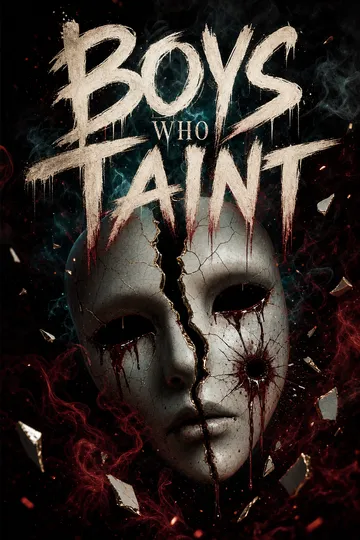
Boys Who Taint stages grief as an engine of both violence and desire, asking what a mourner will trade to be relieved of guilt. Aspen's1 governing wish is not really to kill Levi2 but to be freed from the moral weight of wishing him dead, which is precisely why a masked stranger offering to do the killing for her is so seductive. The novel's cleverest structural move, flagged in the author's note, is that the whole book can be read twice: once as a revenge story about a murderer, and once, after the reveal, as a tragedy about a boy so consumed by unrequited love2 and guilt that he manufactures his own villainy to earn the right to die. The butterfly, the withheld video, and the chosen-villain motif reward rereading. Thematically the book fuses eros and death drive relentlessly. Sex and slaughter share the same grammar of intensity, and the harem resolution frames polyamory not as romance but as mutual recognition among people whose capacity for cruelty finally makes them feel understood. Consent is rendered deliberately murky, the genre's dark fantasy of desire overriding will, which will alienate some readers and thrill its intended audience. The parallel between Aspen's1 quartet and her parents' polycules domesticates the taboo, suggesting these dynasties reproduce their own structures of loyalty, violence, and unconventional love across generations. The feud plot operates as Shakespearean pastiche, two houses whose hatred can only be disarmed by a truth spoken over gunfire and a body offered as shield. Ultimately the book argues that healing in a lawless world means not the end of violence but its redirection, outward toward the Bonesmen rather than inward at one another. The unresolved disappearance of Sunny12 insists that peace here is always provisional, a held breath before the next vanishing.
Review Summary
Boys Who Taint is a dark romance novel that has received mostly positive reviews. Readers praise its intense storyline, complex characters, and steamy scenes. The book follows Aspen and her relationships with three men: Levi, Apollo, and Grey. Many reviewers found the plot engaging, with twists and turns that kept them guessing. Some criticisms include the book's length and occasional inconsistencies. Overall, fans of the Spine Ridge University series seem to enjoy this latest installment, although a few readers found it less compelling than previous books.
People Also Read


Characters
Aspen Caruso
Grieving, vengeful heroineA fiery, freckled college student whose half-sister's5 death detonates her world and her family's fragile peace. Raised among killers and polyamorous parents, Aspen is fierce, stubborn, and prone to destructive impulses she inherited from her arsonist father and lethal mother8. Grief hardens her into an avenger, and she strikes a deal with a masked stalker to have her sister's5 supposed murderer killed. Beneath her rage lives a long-buried tenderness, a childhood crush she dyed her hair red to escape. She is torn between three obsessive men, each pierced, each dangerous, and gradually discovers her own appetite for violence and depravity. Her arc bends from vengeance toward a chosen, defiant love, and toward accepting the darkness that always lived in her.
Levi Torres
Childhood friend, chosen villainThe scorpion-tattooed boy who has loved Aspen1 since childhood and cannot stop watching her. Once her best friend, he grows into a brooding, muscular loner obsessed to the point of self-destruction. After the cliff tragedy he deliberately makes himself the campus killer, absorbing everyone's hatred, refusing to defend himself even when beaten. His cruelty toward Aspen1 is inverted devotion, a man engineering his own damnation because he believes he deserves it. Haunted, guilt-drowned, and quietly suicidal, Levi would rather be despised than lose the girl entirely, and would rather die than live without her love. His nickname for her, Firefly, carries the whole weight of a yearning he has never dared to speak aloud.
Apollo Torres
Hedonistic, muscle-bound cousinLevi's2 cousin, a shameless, tattooed hedonist who treats his own body as a monument and everyone else as a plaything. Officially neutral in the family feud, Apollo inserts himself into Aspen's1 life with relentless flirtation, blackmail, and bottomless appetite. He runs the Phantom Society, kills without remorse to protect his own, and delights in provocation, calling Aspen1 Freckles and pursuing her boyfriend4 as eagerly as he pursues her. Beneath the arrogance lies genuine loyalty and a strategist's mind: he engineers the group's uneasy sharing and stops the men from destroying one another. Openly bisexual and dominant, he is the glue and the chaos, the one character honest about wanting everything and refusing to feel shame.
Grey Westbrook
Sweet boyfriend with secretsA pale, snowy-haired newcomer who meets Aspen1 mourning at the cemetery and becomes her devoted boyfriend. He presents as gentle, thoughtful, and endlessly forgiving, an orphan who understands grief. Behind the tenderness hides a meticulous obsessive: he studies Aspen1, encourages her rage, and harbors kinks and secrets he fears would drive her away. Driven by a private war against the Bonesmen Brotherhood who killed his parents, Grey channels rage into ritual killing. His defining desire is to watch, to share, to be dominated, a hunger he only slowly admits. Sweet-faced and quietly ruthless, he embodies the book's warning that the kindest mask can hide the most calculating heart.
Mavis Rivera
The sister who fellAspen's1 fearless, morbid half-sister who claimed to see ghosts and joked she was scared of nothing, not even death. Rebellious and dark-humored, she loved skulls, inverted crosses, and midnight scares. Her death on the cliff above Lake Verity is the wound around which the entire novel and both families organize their grief and war. In life she was Aspen's1 confidante and the only tolerable Rivera to her rivals, a bright, strange soul whose absence haunts everyone.
Silas Rivera
Bloodthirsty avenging brotherAspen's1 sadistic half-brother, a knife-obsessed killer who loves violence for its own sake. Consumed by grief over Mavis5, he fixates on Levi2 as the target for his rage and repeatedly attempts to torture and kill him. Fiercely protective of his sisters, he masks devastating loss beneath cruelty, and his refusal to let go threatens to drag both families into open war. Beneath the menace hides a brother terrified of losing more family.
Xavier Caruso
Aspen's loyal twinAspen's1 food-stealing, wisecracking twin brother, protective to the point of interference. He insists twins keep no secrets and inserts himself into her dangerous entanglements to guard her heart, distrusting Grey4 and the Torres men. Beneath the teasing lies genuine fear of losing another sibling after Mavis5, and a fierce, if bumbling, devotion to keeping Aspen1 safe from the boys circling her.
Penelope
Aspen's lethal motherAspen's1 formidable mother, matriarch of a criminal empire built on robbing mobsters, and partnered with three men. Grief over Mavis5 makes her a vengeful force who blames the Torres clan and will kill to protect her remaining children. Fierce, purple-haired, and terrifying when crossed, she is also the source of Aspen's1 fire, and ultimately the one whose capacity for mercy can end the war.
Felix Rivera
Grieving dean and fatherMavis's5 father and the dean of Spine Ridge University, a hardened man who wields campus power to cover up the families' bodies. Sunken-eyed and rage-filled after his daughter's death, he battles Agent Foley's15 investigation while struggling to restrain Silas6. His grief runs cold and controlled, but his authority makes him both protector and threat to everyone entangled in the feud.
Kai Torres
Levi's scarred fatherLevi's2 one-eyed father, scarred from an old knife war with Aspen's1 father Dylan. Fiercely defensive of his son, he forbids Levi2 from contact with Aspen1 to protect him from the Carusos' wrath, and stands ready to fight when the feud reignites.
Lana Rivera
Levi's ferocious motherLevi's2 mother, sister to Felix9, and partnered in a polycule with Kai10, Nathan, and Milo. Explosive and protective, she will pull a butcher's knife or gun to defend her son, and her love for Levi2 drives some of the story's most dangerous escalations.
Sunny Reed
Levi's brash half-sisterLevi's2 confident, dangerous half-sister, a self-professed killer who scouts locations for her victims and speaks with unbothered swagger. She frees Aspen1 from the lectern, keeps Aspen's1 secret, and adores her brother2 fiercely enough to threaten anyone who harms him. Her whereabouts become a looming concern by story's end.
Heath
Loyal cousin, secret mournerApollo's3 half-brother and Silas's6 best friend, caught between loyalties as the feud escalates. Easygoing and quick to fight for those he loves, he shares Ivy16 with others and carries a private grief that ties him more deeply to Mavis5 than anyone suspected.
Melody
Fragile artist half-sisterAspen's1 soft-spoken, sickly half-sister who paints and moves through crowds unnoticed. Gentle and fragile in health, she latches onto muses and offers rare calm amid the family's violence, a tender counterweight to the bloodshed around her.
Agent Foley
Relentless campus investigatorAtreus Foley, head of the Crescent Vale police and heir to a grudge against the Riveras, who investigates the growing pile of campus corpses. He represents the outside law the families must perpetually outmaneuver, a persistent threat to their buried secrets.
Ivy
Aspen's friend, peacemakerAspen's1 friend, involved with Silas6, Heath13, and Max, who repeatedly tries to defuse the escalating violence. Loyal and level-headed amid chaos, she pleads for restraint when the families and lovers turn on one another.
Cecelia
Apollo's spoiled sisterApollo's3 pampered younger sister, whose birthday party becomes a flashpoint for the family feud. Fond of luxury and cupcakes, she later joins the fray to help save Levi2, revealing loyalty beneath the glamour.
Plot Devices
The masked Ghost
Anonymous stalker and driverA hooded figure in a white mask with glowing red contact lenses who stalks Aspen1, throws cemetery pebbles at her window, and leaves a note offering to kill Levi2 in exchange for her body. The Ghost anchors the novel's central mystery, appearing at the bonfire, the auditorium, the Phantom party, and a bar rescue, each time both terrorizing and, disturbingly, protecting her. His whispered speech, hidden face, and refusal to be seen sustain suspense while eroticizing anonymity. Because multiple men in Aspen's1 orbit are pierced and violent, any of them could be him. The Ghost personifies the book's fusion of terror and devotion, and his eventual unmasking reorganizes every prior scene and relationship.
Grey's hidden recordings
Surveillance and blackmail engineGrey4 secretly films Aspen1 obsessively, from footage taken before they ever met to cameras hidden throughout her sorority room and bathroom. He captures her most private violations and hoards them like trophies, even mailing one to taunt a rival. Crucially, a stranger's phone recorded the night Mavis5 died from the woods, and this video becomes the story's ultimate evidence and weapon, wielded as blackmail and, finally, as the proof that unravels the entire tragedy. The recordings dramatize the novel's obsession with watching and being watched, turning intimacy into content and love into possession. What the camera saw on the cliff has existed since the first page, its withholding the source of every subsequent cruelty.
The suicide pact and butterfly
Hidden truth of the deathOn the fatal night, Mavis5 and Levi2 privately agreed to jump from the cliff together to forget the people who never loved them back. At the ledge a blue butterfly, the same kind that had settled near Aspen1, reminded Levi2 of her; he froze and let go of Mavis's5 hand mid-leap, and she fell. This concealed truth is the engine of the entire plot: Levi's2 guilt, his chosen villainy, the families' war, and Aspen's1 revenge all flow from a death everyone misreads as murder. The recurring butterfly motif ties Aspen1 to the moment of loss, and the pact reframes the tragedy as mutual despair rather than violence, transforming villain into martyr.
Phantom Society immunity
Rule that protects a rivalThe Phantom Society, the fraternity Apollo3 leads, enforces an absolute code: no Phantom may ever harm another Phantom, sealed through a brutal, murderous initiation. Grey4 exploits this rule by joining, deliberately acquiring immunity from Levi2, who has vowed to kill him. The device converts a fraternity bylaw into a legal shield that reshapes the power dynamics among the three men, forcing rivals to coexist even when they crave one another's blood. It also establishes the ritual violence and hierarchy of this world, where belonging costs a soul and protection is purchased with murder. The rule ultimately constrains the men into their uneasy sharing rather than fatal rivalry.
Matching intimate piercings
Suspect-multiplying red herringAspen1 notices that her masked Ghost is pierced, and then discovers, one by one, that Levi2, Apollo3, and Grey4 all share the same intimate piercing. This physical detail becomes a deliberate red herring, ensuring that any of the three could plausibly be her stalker and stoking her paranoia. The device sustains the identity mystery through the novel's midsection, letting the author misdirect while heightening the erotic charge of the guessing game. It embodies the book's larger theme that every man surrounding Aspen1 is interchangeable in danger and desire, and that clues in this world illuminate nothing cleanly, only deepen suspicion and blur the line between lover, protector, and predator.
Spine Ridge University Series



About the Author
Other books by Clarissa Wild
Download PDF
Download EPUB
.epub digital book format is ideal for reading ebooks on phones, tablets, and e-readers.








































