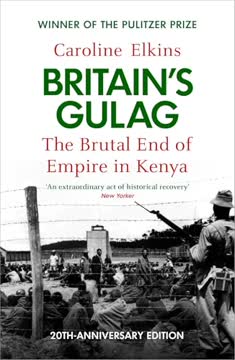
Key Takeaways
1. The British "Civilizing Mission" Masked Brutal Colonial Exploitation
The expansion of Europe during the last century has been the story of crime and violence against backward peoples under the cloak of protective civilisation.
Colonial justification. Britain presented its presence in Kenya as a "civilizing mission," aiming to uplift "backward heathens" through Christianity, commerce, and Western values. This rhetoric, however, served to mask the true motives of exploitation and control, particularly over land and labor. Early colonial figures like Sir Charles Eliot and Captain Richard Meinertzhagen openly advocated for the elimination of resisting Kikuyu, demonstrating a violent foundation to the supposed civilizing efforts.
Early violence. The construction of the Uganda Railway, dubbed the "Lunatic Express," exemplified this brutal expansion, costing over £6.5 million and thousands of Indian laborers' lives. British military "punitive expeditions" against the Kikuyu, combined with disease and natural disasters, decimated the local population and facilitated land expropriation for white settlers. This established a pattern of virulent racism and white violence that became socially acceptable within the colony.
Economic imperative. The railway's debt repayment necessitated attracting British settlers to develop cash crops, leading to aggressive land alienation in the fertile highlands, now called the White Highlands. This dispossession, coupled with coercive labor laws like the hut tax, poll tax, and the hated kipande (pass system), forced Kikuyu into exploitative wage labor, directly contradicting any claims of benevolent trusteeship.
2. Mau Mau Arose from Deep-Seated Land Grievances and Oppression
When someone steals your land, especially if nearby, one can never forget. It is always there, its trees which were dear friends, its little streams. It is a bitter presence.
Land as identity. The Kikuyu, Kenya's largest ethnic group, suffered immense land alienation, losing over sixty thousand acres to settlers, particularly in fertile Kiambu. For the Kikuyu, land was not merely an economic resource but fundamental to their social and cultural identity, essential for manhood, family, and community. Its loss created profound bitterness and a sense of social death.
Post-war disillusionment. After World War II, returning Kikuyu soldiers, who had fought for self-determination, found their conditions worsening. The colonial government's "Second Colonial Occupation" intensified agricultural exploitation in the reserves, forcing unsustainable farming practices and unpaid communal labor, predominantly by women. This exacerbated the land crisis and fueled widespread discontent.
Oathing for unity. The Mau Mau uprising, launched in 1952, emerged from these legitimate grievances, not from "primitive terror" as portrayed by the British. It was a rational response to systemic injustice, uniting Kikuyu through traditional oathing ceremonies transformed into powerful pledges for "ithaka na wiyathi" (land and freedom). This collective commitment, often enforced by force, became a formidable challenge to colonial authority.
3. Kenyatta's Rigged Trial Fueled Mau Mau's Radicalization
You, Jomo Kenyatta, stand convicted of managing Mau Mau and being a member of that society. You have protested that your object has always been to pursue constitutional methods on the way to self-government for the African people, and for the return of land which you say belongs to the African people. I do not believe you.
Political scapegoat. Governor Evelyn Baring, newly arrived in Kenya, declared a State of Emergency and, despite lacking direct evidence, orchestrated the arrest and trial of Jomo Kenyatta and five other leaders in Operation Jock Scott. The trial, held in the remote Kapenguria, was a political spectacle designed to decapitate the movement and justify the Emergency, but it was fundamentally rigged. Baring himself influenced witnesses and bribed the special magistrate, Ransley Thacker, to secure a conviction.
Backfiring strategy. Kenyatta's conviction, based on fabricated evidence and a compromised judiciary, transformed him into a martyr and a potent symbol of resistance for hundreds of thousands of Kikuyu. Far from collapsing, Mau Mau became more violent as leadership passed to younger, more radical militants who had been pushing for armed resistance. This miscalculation by Baring and Colonial Secretary Oliver Lyttelton inadvertently strengthened the movement.
Settler hysteria. The trial unfolded amidst escalating Mau Mau attacks on settlers, such as the brutal Ruck family murders, which intensified European fear and demands for draconian justice. Settlers, already prone to an "eliminationist mentality," called for wholesale extermination of the Kikuyu, further pressuring the colonial government to adopt extreme measures and disregard due process.
4. Systematic Torture and Dehumanization
There is only one way of improving the Wakikuyu [and] that is wipe them out; I should be only too delighted to do so, but we have to depend on them for food supplies.
"Screening" as interrogation. The British colonial government implemented "screening" as a widespread interrogation technique to extract confessions and intelligence from Mau Mau suspects. This process, often conducted by European settlers appointed as temporary district officers and African loyalists, quickly devolved into systematic torture. Methods included:
- Beatings with clubs, whips, and rifle butts
- Electric shock, burning with cigarettes, and fire
- Sexual violence: bottles, gun barrels, knives, snakes, vermin, and hot eggs thrust into orifices
- Castration and mutilation of genitals
Dehumanizing rhetoric. The "Emergency mentality" among settlers and officials fueled this brutality, portraying Mau Mau adherents as "vermin," "animals," or "homicidal lunatics." This dehumanization justified extreme violence, as seen in the boasts of officers like Christopher Todd, who claimed to identify Mau Mau by their "aura of evil." This ideology allowed perpetrators to believe their actions were necessary to cleanse the colony of "filth."
Loyalist complicity. Kikuyu loyalists, empowered by the British, actively participated in screening, often settling old scores. They became notorious for their ruthlessness, using hooded informants to identify suspects and inflicting severe torture. This collaboration deepened the civil war within Kikuyuland, as loyalists were rewarded with land and privileges for their active support against their own people.
5. The "Pipeline" of Detention Camps Was a Vast System of Forced Labor and Degradation
The British colonial government’s works camps in Kenya were not wholly different from those in Nazi Germany or Stalinist Russia; they functioned on what Wolfgang Sofsky called “the economy of waste.”
Mass incarceration. Operation Anvil in April 1954, which purged Nairobi of its Kikuyu population, led to the rapid expansion of a vast system of detention camps and prisons, collectively known as the "Pipeline." Thousands of Mau Mau suspects were rounded up and sent to reception centers like Langata, Manyani, and Mackinnon Road, where they endured dehumanizing intake procedures:
- Strip-searches and cavity searches
- Forced cattle dips in disinfectant, leading to drownings
- Issuance of yellow shorts and numbered wristbands, replacing personal identity
- Constant beatings and psychological degradation
Forced labor and disease. Detainees were subjected to grueling forced labor on colonial infrastructure projects, such as the Embakasi airport and the Mwea irrigation scheme, in violation of international conventions. Camps were severely overcrowded, lacked sanitation, and were plagued by infectious diseases like typhoid, tuberculosis, and dysentery, as well as nutritional deficiencies. Death rates were high, with bodies often disposed of in mass graves.
Resistance and survival. Despite the brutal conditions, detainees developed their own internal social order, forming committees, establishing codes of conduct, and creating clandestine communication networks like "speaking to the wire" and the "Manyani Times." They also organized "rehabilitation" classes, teaching literacy and survival skills. This collective resistance aimed to preserve their dignity and outlast the colonial government's attempts to break their will.
6. "Villagization" Imprisoned Over a Million Kikuyu in Barbed-Wire Settlements
It is obviously not practical politics to incarcerate a million and a half Kikuyu who are admitting freely to having taken the illegal oath.
Mass confinement. In June 1954, the War Council mandated forced "villagization," relocating over a million Kikuyu women, children, and elderly into 804 barbed-wire villages across Central Province. These settlements, inspired by similar tactics in Malaya, functioned as de facto detention camps, designed to sever supply lines to forest fighters and control the civilian population. The process involved:
- Homes being torched by Home Guards
- Families separated, with many children lost or killed
- Confiscation of livestock and property
- Construction of huts and defensive trenches under duress
Forced labor and starvation. Villagers were subjected to relentless forced communal labor, digging trenches and building infrastructure, often under the supervision of brutal Home Guards and British officers. Food shortages were endemic, with the colonial government deliberately neglecting relief efforts and blaming Kikuyu mothers for malnutrition. This led to widespread starvation, disease, and death, particularly among children and the elderly.
Sexual violence and terror. The villages were sites of pervasive sexual violence, with women and girls routinely raped by white and black security forces. Public torture, including burning people alive in sacks, mutilation, and parading dead bodies, was used to instill fear and force confessions. Officers like "YY" (the One Who Walked Naked) and "Kiboroboro" (the Killer) became notorious for their sadistic cruelty, operating with impunity and often hunting villagers for sport.
7. Official "Rehabilitation" Was a Deceptive Facade for Coercion
Whatever you say the Kikuyu will not be satisfied that they have been treated justly.
A hollow promise. The official "rehabilitation" program, championed by Thomas Askwith, was publicly touted as a benevolent effort to re-educate Mau Mau suspects and prepare them for a peaceful, multiracial Kenya. However, this program was severely underfunded, understaffed, and consistently undermined by the punitive nature of the detention system. Askwith's liberal vision was marginalized by hardline officials who prioritized coercion over genuine reform.
Confession as the core. Rehabilitation's central tenet was the forced confession of the Mau Mau oath, based on the flawed belief that it was a "mind-destroying disease" that could be purged. This focus on confession, often extracted through torture, was a psychological assault aimed at breaking individual and collective resistance, rather than addressing the legitimate grievances that fueled the uprising.
Systematic brutality. The "dilution technique," spearheaded by Terence Gavaghan and John Cowan at the Mwea camps, epitomized this coercive approach. It involved systematically brutalizing detainees through "bucket fatigue," beatings, and psychological torment until they confessed. This "violent shock" was officially sanctioned, demonstrating that "rehabilitation" was merely a euphemism for institutionalized violence.
8. The British Government Systematically Covered Up Atrocities
There had been some abuses, he admitted, but the Governor of Kenya was correcting them. We must not forget the horrors of Mau Mau and so on. There was no need for him to publish Colonel Young’s report.
Denial and obfuscation. From the outset, the British government, led by Colonial Secretary Alan Lennox-Boyd and Governor Evelyn Baring, engaged in a systematic campaign of denial and obfuscation regarding atrocities in Kenya. They dismissed allegations as "isolated incidents," blamed Mau Mau's "savagery," and refused independent inquiries, despite mounting evidence from:
- Colonel Arthur Young, former police commissioner, who resigned in protest
- Eileen Fletcher, a former rehabilitation officer, who detailed widespread abuses
- Captain Philip Meldon, another former officer, who provided specific accounts of torture
- Numerous letters smuggled out by detainees themselves
Silencing dissent. The government used the Official Secrets Act to prevent leaks, discredited whistleblowers by attacking their character, and controlled information flow to the press. When allegations became public, Lennox-Boyd masterfully deflected criticism in Parliament, often resorting to "legal doublespeak" and outright lies to protect officials and maintain the image of British colonial benevolence.
Public apathy. Despite extensive press coverage, including lurid tabloid accounts, the British public largely remained silent. The pervasive stereotype of Mau Mau as "savage terrorists" and the focus on post-war economic recovery in Britain contributed to a lack of outrage. This public apathy emboldened the government, leading them to believe their policies of repression were tacitly endorsed.
9. The Hola Massacre Exposed the Lies and Forced a Policy Shift
In each case death was found to have been caused by shock and haemorrhage due to multiple bruising caused by violence.
The breaking point. On March 3, 1959, ten detainees at Hola Camp were beaten to death by guards after refusing to work, a tragedy initially blamed on contaminated water. This "Hola Massacre" became a pivotal moment, as D.N. Pritt, a left-wing QC, exposed the truth of "multiple bruising caused by violence" from autopsy reports. This revelation finally validated years of allegations and shattered the government's narrative of isolated incidents.
Official culpability. The subsequent internal inquest, led by Senior Resident Magistrate W. H. Goudie, confirmed the deaths were due to violence but controversially absolved all senior British officials of direct responsibility. Goudie's report, however, implicitly acknowledged that the "Cowan Plan" (a systematic use of force to compel work) had government approval, making it a "recipe for disaster" where "someone might get hurt or even killed."
Political fallout. The Hola massacre triggered a major political crisis in Britain, with the Labour Party demanding a full public inquiry. Prime Minister Harold Macmillan and Lennox-Boyd worked desperately to control the damage, fearing the scandal could bring down the government. While they managed to avoid an independent inquiry, the incident irrevocably damaged Britain's international reputation and accelerated the timeline for decolonization in Kenya.
10. Kenyatta's Strategic Reinvention Prioritized Forgiveness Over Justice
Let this be the day on which all of us commit ourselves to erase from our minds all the hatreds and the difficulties of those years which now belong to history. Let us agree that we shall never refer to the past.
From captive to president. Jomo Kenyatta, after eight years of detention, was released in 1961, a move forced by African nationalist demands and the changing geopolitical landscape. Despite being demonized by the British as a "leader to darkness and death," Kenyatta strategically reinvented himself as a figure of forgiveness and reconciliation, famously declaring, "Father forgive them, for they know not what they do."
"Forgive and forget." Upon independence in 1963, Kenyatta actively suppressed the memory of Mau Mau atrocities, promoting a narrative of "Harambee" (pulling together) where "we all fought for freedom." This served to prevent civil backlash against loyalists and to unite a diverse nation, but it effectively erased the suffering of Mau Mau veterans and denied them recognition or compensation.
Consolidating power. Kenyatta's new government, ironically, continued some colonial practices, including signing detention orders for those deemed threats to the new democracy. Former loyalists, many of whom had profited from the Emergency, were integrated into positions of power, further cementing socioeconomic divisions. This outcome, where British interests and settler landholdings were largely protected, was a twisted fulfillment of the colonial government's long-term vision.
11. The Mau Mau War Left Hundreds of Thousands Dead and a Legacy of Unaddressed Trauma
By the end I would say there were several hundred thousand killed. One hundred easily, though more like two to three hundred thousand. All these people just never came back when it was over.
Unaccounted casualties. The book concludes that the official British figure of 11,503 Mau Mau killed is a gross underestimation. Demographic analysis, comparing Kikuyu population growth rates to other ethnic groups, suggests between 130,000 and 300,000 Kikuyu are unaccounted for, likely due to deaths from torture, forced labor, starvation, disease, and a suppressed birthrate. This makes the Mau Mau war one of the bloodiest decolonization conflicts.
Lingering silence. Despite the immense human cost, there has been no official reconciliation or public accounting for the crimes committed during the Emergency in Kenya. No monuments exist for Mau Mau, children are not taught this history, and survivors live with profound physical, psychological, and economic damage. The British government, after Hola, chose to "draw a veil over the past," avoiding any investigation into its culpability.
Unresolved hatred. The forced silence has perpetuated deep-seated hatreds between former Mau Mau adherents and loyalists, with many survivors expressing a desire for public mourning and acknowledgment. The lack of justice and the continued privilege of former loyalists and settlers underscore the enduring trauma and the unfulfilled promise of true freedom for many Kikuyu.
Review Summary
Britain's Gulag receives a solid overall rating of 4.17 out of 5 stars based on 12 reviews on Goodreads. The reader reviews indicate generally positive reception, with ratings hovering around 4 to 4.5 out of 5 stars. This suggests that readers find the book to be compelling and well-researched, though the limited review data provided doesn't offer detailed insights into specific aspects that readers appreciated or criticized about the work.








































