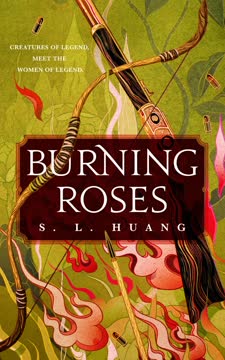
Plot Summary
Two Women at Twilight
On a creaking porch, Rosa and Hou Yi meet the sunset and the ghosts of their history. Both women, tired of violence, yearn for rest, but unrest stirs: a sense of unfinished business haunts their quiet. Their banter is sharp but affectionate, a way of holding pain at bay. Beneath the camaraderie, each is pursued by a sense of loss and longing for forgiveness—Hou Yi for her wife in the moon, Rosa for a family torn apart by her own intolerance. A messenger's plea drags them from retirement, calling them once more into crisis. Old wounds fester, and mutual need binds them: Rosa seeks purpose, Hou Yi seeks penance. Together, they rise determinedly from the porch toward looming trouble.
Smoke Across the Fields
Rosa and Hou Yi respond to the runner's news: monstrous firebirds are ravaging nearby farms. Their skills—Rosa's marksmanship, Hou Yi's bow—are immediately called into service. Racing across fields, they navigate the chaos and smoke, meeting terrified villagers and grundwirgen—magical animal folk—fleeing alike. The duo's partnership blends utility and mutual recognition of each other's brokenness. Each step toward the burning remains is a march deeper into their own scars; facing this new threat is as much about atonement as heroism, a way for both to stave off despair, if only for another day.
Sunbirds Descend
Infernal sunbirds—magical, godlike birds of fire—descend, burning homes and land. Rosa and Hou Yi split to confront them, each using hard-won mastery to battle creatures of myth. The fight is brutal; fire and death everywhere. Memories of loved ones color Rosa's vision as she sights her rifle. The battle is desperate and nearly fatal—the stakes whisper finality. Amid the chaos, mortality weighs heavily: both women realize this struggle could easily become their last. In violence, memory and present merge, and the choice to stand and fight is suffused with the ache of who they have been and hoped to become.
Old Scars, Fresh Flames
After the battle, their injuries force painful reflections. Both women question why they keep fighting: Hou Yi's compulsion is duty, while Rosa's is guilt. The sunbirds are not merely beasts but symbols of old traumas—Hou Yi's betrayal, Rosa's prejudice and violence. Latent secrets hover. Hou Yi's former apprentice, Feng Meng, is named as the likely puppeteer behind the attacks. For Rosa, every scar, physical or emotional, is a reminder of who she has lost to her failings. For Hou Yi, the pursuit is personal, a chase as much after redemption as after a dangerous foe.
Flight from the Past
In pursuit of the remaining sunbird, Hou Yi tries to dismiss Rosa—insisting this is her battle alone, shaped by old betrayals. Rosa refuses; loneliness and shame bond them. Both share stories in the sickly light of a campfire: tales of friends they broke, lovers they lost, and the persistent echo of self-loathing. Rosa recounts a childhood shaped by bigotry; Hou Yi, the bitterness of being left by her wife and apprentice. In each other, they glimpse the truth that running from the past never wholly succeeds. Their trek is more than a hunt—it's a reckoning.
Ghosts of Grandmothers
Rosa is driven back into a childhood of woods, hunting lessons, and the suffocating love of her grandmother, who taught both riflecraft and compassion. Her mother's prejudice against grundwirgen—animal folk who could be villain or victim—coils like a shadow in Rosa's psyche, haunting every choice. The conflict between filial love and inherited hate is sharpened as Rosa replays the fateful errand to her grandmother's cottage: a journey soon consumed by violence and trauma that will ripple across her life.
Wolves and Red Cloaks
Rosa's famous story unfolds: a young girl in a red cloak, a polite but deadly wolf, a moment where empathy and fear collide. The scene turns feral—a fight for survival, a child's hands blistered as she defends herself, a beloved grandmother found dead. The rifle—her inheritance and trauma—becomes the instrument of both defense and ruin, initiating a cycle of violence and self-judgment. Rosa's legacy, the red cloak, becomes both shield and reminder of her first fatal decision, launching her on a path of vengeance and guilt that will never fully release her.
Blood on the Snow
Rosa's pain hardens into mission—hunt the dangerous, protect the innocent. A chance encounter—Goldie, a child thief, and three bears—sparks her next trauma. Rosa kills reflexively, believing she's rescuing Goldie, but the line between victim and perpetrator blurs. Guilt and justification intertwine, and Goldie, saved, becomes Rosa's friend and eventual betrayer. Each time Rosa acts in the name of justice, she leaves wreckage in her wake. The snow and blood fuse in memory—the simplicity of stories is gone; only tangled consequences remain.
Bonds Forged and Broken
Rosa and Goldie's relationship is tender, fraught, and ultimately tragic. Goldie—likewise broken, mischievous, and manipulative—eggs Rosa on; together, they hunt, love, and wound. Even as Rosa finds love with Mei—a woman ensnared by her own torment with a Beast—they cannot escape cycles of dependence and abandonment. Fundamental misunderstandings and the inability to leave old roles behind drive wedges between friends, lovers, and potential families. Deep inside, Rosa fears she cannot change; her relationships mirror battles between guilt and grace, and hurt is both a weapon and a bond.
Apprentices and Exiles
Hou Yi's own past plays out in parallel: once a hero, then a tyrant, revered, then rejected. Her apprentice, Feng Meng—treated as a son and legacy—betrays her, seeking her power and immortality. Hou Yi's desperation for permanence, love, and redemption becomes self-defeating, alienating those closest to her. The circularity of pain becomes clear—betrayal begets exile, exile breeds more need for validation. Both women recognize themselves in the other; each struggles with a legacy they can neither fully reclaim nor renounce.
Journeys into Memory
As Hou Yi and Rosa doggedly pursue Feng Meng, ghosts intrude: enchanted dreams, visions of family, loved ones far away, and the country left behind. The present quest is shot through with the ache of regret, rekindled longing, and the possibility of faint hope. Shared suffering begins to heal old rifts: confessions become easier, laughter among wounds is possible, and both women inch closer to forgiving themselves—though neither yet dares to trust they deserve it.
The Hare's Enchantment
A mysterious hare shadows their steps, a trickster presence with uncanny powers, conjuring vivid dream-visions and exposing intimate secrets. The hare's silent, inexorable following unsettles both women and blurs the boundary between hunter and hunted, reality and magic. Encounters with the hare amplify the pain and possibility of reconciliation: Rosa's imagined reunions with Mei and Xiao Hong, Hou Yi's dream of her apprentice-son. The hare is at once tormentor and redeemer, pushing each woman toward confronting the truths they'd buried, and hinting at miracles as yet just out of reach.
Family Lost and Found
Through enchanted visions, Rosa sees her family searching for her, driven by love, not blame. The revelation shatters her self-pity; her exile was never just sacrifice but a painful wound she inflicted in trying to spare them more pain. Hou Yi, in contrast, faces the truth that her own quest for immortality, not parental love, helped drive her loved ones away. Both women are forced to rethink what family means: not a prize won, but a broken, persistent hope to rebuild.
Truth in the Moonlight
The hare, revealed as a celestial envoy—perhaps Hou Yi's wife, Chang E—offers one last chance through miracle: a fruit from the moon, the means for new life and renewal. Confronted with death, Hou Yi and Feng Meng are offered the choice to begin again, not to forget, but to do the work of forgiveness over eternity. Rosa, too, must reckon with her place in the world—as both destroyer and caretaker. The possibility of redemption is neither simple nor costless: the way forward is through acknowledgment, not erasure.
Crossing the Water
To reach the island and face Feng Meng, both women must undergo magical transformation—becoming for a time the very thing Rosa once feared, a grundwirgen. This forced empathy shocks Rosa into letting go of her own internalized hatred and recognizing the grace and pain of living another's story. The physical challenge echoes the emotional: change is terrifying, but standing still is more so. Old boundaries between human and other, righteous and damned, blur as they arrive at the final confrontation.
The Last Confrontation
On the enchanted island, a bitter showdown occurs: Rosa, Hou Yi, and Feng Meng circle, weapons drawn, wounds exposed. Accusations, grief, and blame fly. The cycle of violence, revenge, and self-justification comes to a head. No one's account is pure; every hero is also a villain in someone's eyes. Even as arrows and bullets fly, the defining weapon is confession: both Hou Yi and Rosa admit the depth of their failures. Mortality and magic are no longer a reprieve, only a crucible.
Forgiveness or Forever
As Hou Yi and Feng Meng bleed out—parent and child, equally broken—a miracle is offered: the peach of immortality, fruit of the moon. The possibility of starting anew, of doing the hard, long work of forgiveness and earning back trust, is neither denied nor seized lightly. It is not a cure, but a challenge: to choose each day to do better, to heal even wounds that may never fully close. Rosa, seeing this, must choose too: to seek out Mei and Xiao Hong, to risk pain and rejection for another chance at family.
Promises in the Morning
With Hou Yi and Feng Meng reconciled and gone, Rosa catches sight of her loved ones drawing near—Mei and Xiao Hong, found by perseverance and love. As night cedes to morning, Rosa is left with the lesson forged through pain: redemption is not erasure, but work; family is not a reward, but a commitment to try again and again. As she prepares to step forward, Rosa's promise to Hou Yi—to find her family, to offer herself to love rather than run—becomes the story's true conclusion.
Analysis
Burning Roses is a deft meditation on guilt, aging, and the long work of making amends—less a fantasy adventure than a reckoning with the complexity of living after our worst mistakes. By bringing together Rosa (Red Riding Hood, reimagined as an exiled, middle-aged queer sharpshooter) and Hou Yi (the mythic Chinese archer, equally scarred and equally searching), S.L. Huang creates an arena where legends must re-encounter reality and responsibility. The book's central lesson is that happy endings are not granted by magic or might, but forged endlessly by taking responsibility, opening oneself to vulnerability, and offering grace to oneself and others. Family—chosen and blood—cannot be mended by fleeing, nor by martyrdom, nor by violence, but by the hard, repetitive, sometimes painful labor of returning, confessing, and asking forgiveness. Violence is never simply heroic or evil; power and care are forever in tension. In a modern world hungry for swift redemption, Burning Roses insists that healing requires honesty, courage, and the humility to try—again and again—to make things right, even when we fear it is too late. Ultimately, it is a story for anyone who has hurt and been hurt, and who, in the aftermath, dares one more time to hope.
People Also Read
Characters
Rosa (Red Riding Hood)
Rosa is a storied figure, both legendary and haunted. She is woman marked by childhood traumas: loss, violence, and inherited prejudice. Her skill with a rifle and reputation as "Blood Red" made her both savior and monster. Underneath, Rosa is wracked by regret for the people she's hurt—her grandmother, friends, lovers, and especially her partner Mei and daughter Xiao Hong. She is tormented by self-hatred, yearning for absolution yet certain she doesn't deserve it. Her arc is one of gradual self-forgiveness: understanding that exile isn't penance enough. Her journey with Hou Yi and exposure to grundwirgen magic force her to confront her own capacity for change and the radical nature of seeking, and accepting, forgiveness.
Hou Yi (The Archer)
Hou Yi is a legendary archer from Chinese myth, famed for shooting down suns and monsters. Shadowed by loss—her wife Chang E drifted away into godhood, and her apprentice-son Feng Meng turned against her—Hou Yi is driven by a need for redemption as burning as her skill with a bow. She dwells on the mistakes of pride and ambition, knowing her pursuit of immortality cost her what mattered most. With Rosa, she finds a mirror for her own failings and a companion in the search for mutual absolution. Her story is about the cost of heroism, the pain of lost family, and discovering that only through honest effort—not magic—can broken bonds hope to be mended.
Mei
Mei, Rosa's beloved, emerges from her own tale of suffering: sold as a child into a beast-prince's captivity and ultimately developing complex bonds of affection and pity for her captor. Her intelligence, resilience, and warmth eventually draw Rosa out of her life of violence. However, Mei must bear the fallout of Rosa's violent past and struggle for her own autonomy. As a mother to Xiao Hong and partner to Rosa, she demands honesty and the right to make her own choices. Mei's love offers both sanctuary and a challenge—a beacon of what Rosa might reclaim through courage.
Xiao Hong
Xiao Hong is the daughter of Mei and, in every way but blood, Rosa. Strong-willed, moral, and deeply hurt by the eventual revelations of Rosa's crimes, she embodies the next generation's hope for integrity and healing. Her heartbreak at Rosa's abandonment is matched only by her determination to seek the truth and, ultimately, forgiveness. She is both the future Rosa terrified to lose and the judge Rosa must answer to; her capacity to seek and grant forgiveness is vital to Rosa's own redemption.
Goldie (Goldilocks)
Goldie, once Rosa's closest friend, is a study in charisma and manipulation. A mirror of Rosa's penchant for self-justification and thrill-seeking, she alternates between support and rivalry. Their friendship, deep as it is, ends in betrayal and destruction—Goldie's jealousy, Rosa's desperation. Their final confrontation—where Rosa curses Goldie to animal form and lies to her lover—crystallizes Rosa's guilt and inability to relinquish her destructive past. Goldie's presence haunts Rosa as a symbol of friendship's fragility and the cost of mercy denied.
Feng Meng
Once Hou Yi's cherished pupil, Feng Meng is both victim and villain, his devotion curdled by neglect and envy. His attempt to steal immortality from his mentor's family—and his subsequent campaign of revenge—reverberate with pain and twisted logic. He cannot forgive Hou Yi for loving imperfectly and sees his violence as justified retaliation. Feng Meng's arc is tragic yet essential: only by standing together, confronting their mutual hurt, and accepting the hard, slow work of forgiveness, can he and Hou Yi escape the curse of unending blame.
Chang E (The Moon Goddess)
Once Hou Yi's wife, Chang E becomes a figure of absence and longing, ascending to the moon after an act of desperate self-defense and transformation. Her lingering love—and magical intervention via the hare—suggest the possibility of reconciliation if only her family can accept the work of repair over the gift of perfection. She embodies the otherworldly cost of desire for eternity: her presence haunts the story with both sorrow and a quietly sustaining hope.
The Hare
The hare, silent and persistent, is both a trickster and a redeemer, driving the protagonists to confront their rawest truths through visions and subtle manipulation of reality. An agent of Chang E, the hare's magic blurs the line between delusion, memory, and possibility. It is a test: only by accepting the full weight of their histories can Rosa and Hou Yi move forward. The hare invites not trust nor fear, but humility in the face of mystery and grace.
The Sunbirds
All-devouring, almost divine birds of fire, the sunbirds are both literal and metaphorical threats. As the manufactured crisis that reignites the journey, they represent the cyclical nature of violence, the ever-renewing forces that threaten peace, and the perils of ego unchecked.
Puss (Puss in Boots)
In Goldie's orbit, Puss is cunning, amoral, and opportunistic, embodying the ambiguous morality of many fairy tale creatures. A minor but memorable reflection of the story's blurred lines between hero and villain.
Plot Devices
Cross-cultural Fairy Tale Fusion
The novella ingeniously blends European and Chinese folktales, drawing old roles—Red Riding Hood, Goldilocks, the Archer, Moon Goddess—into unexpected relation, reshaping classic icons as aging, queer women. By unmasking fairy tales' grim undertones, it turns mythic simplicity into adult complexity, reframing happily-ever-after as a process, not a destination.
Nonlinear, Episodic Narrative with Flashback
Rarely is the tale told in a linear march forward—frequent flashbacks blur cause and effect, forcing readers to piece together layers of grief, love, betrayal. Critical information (Rosa's crimes, Hou Yi's exile, Mei's backstory) emerges gradually, echoing the process of confession and memory.
Metafiction, Self-Awareness, and Intertextuality
The characters reference, invoke, and challenge their own legends, inviting reflection on how tales shape identity. This self-consciousness surfaces in their banter, squabbles, and retellings, alluding to "what the stories say" and how reality complicates narrative justice.
Parallel Character Arcs
Both Rosa and Hou Yi embody the cycle of hurt and hope—each experiences guilt for deserting (or seeming to desert) a child; each has been hero and villain; each must confront the limits of repentance and the possibility (not guarantee) of forgiveness.
Magical Realism and Liminality
Border passages—dream visions, shapeshifting, enchanted fruit—function as rites of passage, liminal spaces where identity shifts are possible. The borderland geography, the omnipresent hare, and the moon's magic collectively insist that change depends on acceptance of ambiguity.
Foreshadowing via Hallucination and Visions
Early visions forced by the hare signal that true resolution is not victory, but self-revelation and the honest offer of reconciliation. The final miracles are earned by emotional, not martial, triumphs.








































