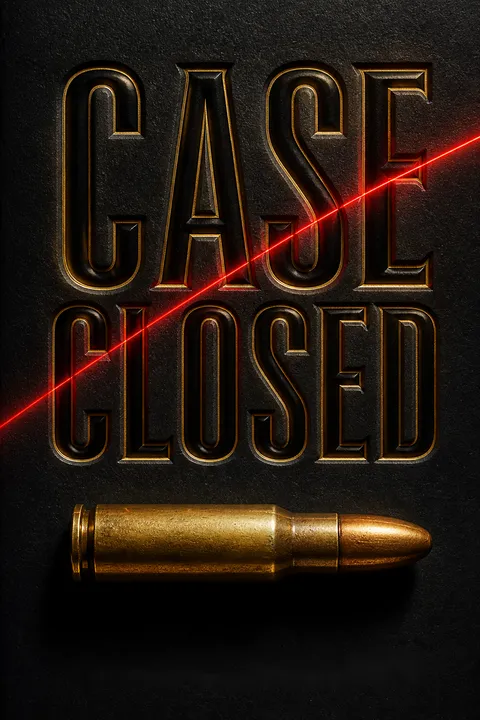

Key Takeaways
1. Oswald's Troubled Youth Shaped a Rebellious Seeker
It is unsettling to think that a sociopathic twenty-four-year-old loser in life, armed with a $12 rifle and consumed by his own warped motivation, ended Camelot.
Unstable Beginnings. Lee Harvey Oswald's early life was marked by instability, frequent moves, and a domineering mother. His father's death before his birth, coupled with Marguerite's emotional unavailability and multiple marriages, created a sense of neglect and a "mean streak of independence." This tumultuous upbringing fostered a deep-seated resentment and a yearning for control.
Psychological Distress. Psychiatric evaluations during his adolescence revealed a "personality pattern disturbance with schizoid features and passive-aggressive tendencies." He was described as emotionally disturbed, intensely self-centered, and harboring a potential for explosive violence. These early warning signs were largely ignored, setting the stage for future tragedy.
Search for Identity. Lacking a stable family life and struggling to connect with others, Oswald sought solace in books and radical ideologies. He embraced Marxism as a way to understand the world and find a sense of belonging, a path that ultimately led him down a dark and destructive road.
2. Marine Corps Service Fueled Discontent and Ideological Shift
I feel very surely that the reason that Lee joined the United States Marine Corps was because of my service…
Failed Expectations. Driven by a desire for freedom and a need to emulate his brother, Oswald joined the Marines. However, the strict discipline and perceived incompetence of his superiors quickly disillusioned him. He felt misunderstood and undervalued, further fueling his resentment towards authority.
Radicalization. While stationed in Japan, Oswald's exposure to poverty and injustice solidified his communist beliefs. He began to question American values and saw the Soviet Union as a beacon of hope for the working class. This ideological shift marked a turning point in his life, setting him on a path towards defection.
Rebellious Behavior. Upon returning to the U.S., Oswald openly flaunted his communist leanings, studying Russian and subscribing to leftist publications. His rebellious behavior led to court-martials and demotions, further alienating him from the Marine Corps and pushing him closer to the idea of defecting.
3. Defection to the USSR: A Quest for Belonging and Purpose
For two years I’ve had it in my mind, don’t form any attachments, because I knew I was going away.
Careful Planning. Oswald's defection to the Soviet Union was not a spur-of-the-moment decision but a carefully planned endeavor. He saved money, studied Russian, and sought an early discharge from the Marines, all in preparation for his new life in the communist utopia.
Rejection and Despair. Upon arriving in Moscow, Oswald's request for citizenship was initially denied, shattering his dreams of a new life. This rejection led to a suicide attempt, which, ironically, garnered him the attention he craved and ultimately secured his temporary stay in the Soviet Union.
A Change of Heart. Despite his initial enthusiasm, Oswald grew disillusioned with the realities of Soviet life. He found the work tedious, the living conditions restrictive, and the society far from the classless utopia he had envisioned. This disillusionment prompted him to seek a return to the United States.
4. Life in Minsk: Disillusionment, Marriage, and a Yearning for Home
I am stating to reconsider my disire about staying The work is drab the money I get has nowhere to be spent.
Provincial Life. Relocated to Minsk, Oswald found himself in a drab industrial city, far from the excitement and intellectual stimulation he craved. His factory job was monotonous, and his attempts to integrate into Soviet society were largely unsuccessful.
Brief Happiness. A brief romance with Ella Germann ended in rejection, but he soon met Marina Prusakova, a young pharmacology student. Their whirlwind romance led to marriage, offering Oswald a sense of stability and belonging, albeit short-lived.
Reversal of Fortune. As his disillusionment with the Soviet Union deepened, Oswald began to yearn for home. He contacted the American embassy, seeking to return to the United States, a complete reversal of his earlier stance.
5. Return to America: A Misfit's Search for Meaning
In returning to the U.S. I have done nothing more or less than select the lesser of two evils.
Back to Square One. Upon returning to the U.S., Oswald found himself a misfit once again. He struggled to find work, clashed with his family, and felt alienated from American society. His attempts to reconcile his communist beliefs with the realities of American life proved futile.
Political Frustration. Oswald's attempts to engage in political activism were met with indifference or hostility. He sought to join leftist organizations but found himself isolated and marginalized, further fueling his sense of alienation.
Escalating Violence. Frustrated by his failures and consumed by a desire for recognition, Oswald's thoughts turned increasingly towards violence. He began to fantasize about making a mark on the world, even if it meant resorting to extreme measures.
6. Dallas: Violence Brews as Oswald's Frustrations Escalate
He wanted to be on the winning side so that 10,000 years from now people would look in the history books and say, ‘Well, this man was ahead of his time.’
Targeting Walker. Consumed by his warped ideology, Oswald targeted right-wing General Edwin Walker, viewing him as a symbol of fascism. He meticulously planned an assassination attempt, gathering intelligence and preparing for the act.
Failed Attempt. On April 10, 1963, Oswald fired a shot at Walker, narrowly missing his target. The failed attempt only intensified his frustration and further fueled his desire for recognition.
A Shifting Focus. After the Walker shooting, Oswald's attention shifted towards Cuba and Fidel Castro. He sought to join the Cuban revolution, viewing it as a more promising path to achieving his ideological goals.
7. Dealey Plaza: The Convergence of Fate and a $12 Rifle
There is more than enough evidence available on the record to draw conclusions about what happened in the JFK assassination.
A $12 Weapon. With his plans to travel to Cuba thwarted, Oswald found himself working at the Texas School Book Depository, overlooking the planned route for President Kennedy's motorcade. Armed with a mail-order Carcano rifle, he saw an opportunity to make a mark on history.
The Sniper's Nest. On November 22, 1963, Oswald positioned himself in a sixth-floor window of the Depository, creating a makeshift sniper's nest from cardboard boxes. From this vantage point, he had a clear view of the motorcade as it approached Dealey Plaza.
Three Shots. As the President's limousine passed by, Oswald fired three shots, forever altering the course of American history. The shots struck President Kennedy and Governor Connally, leaving a nation in shock and disbelief.
8. Oswald's Capture: A Smirk Amidst the Fury
I protest this police brutality!
Flight and Apprehension. After the assassination, Oswald fled the Depository, attempting to blend in with the crowds. However, his erratic behavior and the description broadcast by police led to his identification as a suspect in the shooting of Officer J.D. Tippit.
The Texas Theater. Cornered in the Texas Theater, Oswald resisted arrest, attempting to shoot another officer before being subdued. His capture marked the end of his brief reign of terror and the beginning of a new chapter in the unfolding tragedy.
"Which One Are You?" When confronted with his dual identities, Oswald's smirk and defiant challenge to "figure it out" encapsulated his complex and enigmatic nature, a puzzle that would continue to confound investigators for decades to come.
9. Ruby's Act: Justice or a Desperate Grasp for Significance?
Well, they say it just takes a second to die.
A Nightclub Owner's Obsession. Jack Ruby, a Dallas nightclub owner with a history of violence and a desperate need for attention, was deeply affected by the President's assassination. He saw Oswald as a symbol of evil and a threat to the city he had come to call home.
A Calculated Act? Driven by a volatile mix of grief, anger, and a desire for recognition, Ruby made his way into the police headquarters and shot Oswald at point-blank range. His act was seen by some as a heroic act of vengeance, while others viewed it as a calculated move to silence a potential conspirator.
"I Am Jack Ruby." Ruby's words after the shooting, "I am Jack Ruby. You all know me," revealed his yearning for recognition and his belief that his actions would somehow elevate his status in the eyes of the world.
10. The Warren Commission: A Quest for Truth Amidst Suspicion
The only casualty is truth, especially in a society where far too many people are content to receive all their knowledge on an important issue from a single article or a three-hour movie.
A Nation in Mourning. In the wake of the assassination, a cloud of suspicion and doubt hung over the nation. To quell the rampant speculation and restore public trust, President Lyndon Johnson appointed the Warren Commission to investigate the events in Dallas.
A Mammoth Undertaking. The Commission, comprised of prominent figures from across the political spectrum, conducted an extensive investigation, interviewing hundreds of witnesses and reviewing thousands of documents. Their goal was to uncover the truth and provide a definitive account of what had happened.
A Controversial Conclusion. After months of investigation, the Warren Commission concluded that Lee Harvey Oswald acted alone in assassinating President Kennedy. However, the report was met with skepticism and criticism, fueling decades of conspiracy theories and debate.
11. The Lingering Questions: Conspiracy Theories and the Search for Meaning
But apparently most Americans, despite the strength of the evidence, do not want to accept the notion that random acts of violence can change the course of history and that Lee Harvey Oswald could affect our lives in a way over which we have no control.
A Culture of Doubt. The Warren Commission's conclusions failed to satisfy many Americans, who found it difficult to believe that such a momentous event could be the work of a single, disturbed individual. This skepticism paved the way for a proliferation of conspiracy theories, each offering a more elaborate and sinister explanation for the assassination.
The Entertainment Business. The JFK assassination has become a source of entertainment, with board games, shopping-mall research centers, and souvenir T-shirts. This commercialization has further obscured the truth and made it difficult to have a serious discussion about the case.
The Enduring Mystery. Despite the overwhelming evidence pointing to Oswald's sole guilt, the questions and doubts surrounding the Kennedy assassination persist. The search for meaning and understanding in the face of senseless violence continues to captivate the American imagination.
Review Summary
Case Closed receives mixed reviews, with many praising its thorough research and compelling arguments against JFK assassination conspiracy theories. Supporters find it convincing and well-documented, while critics argue it omits important details and dismisses alternative viewpoints too easily. Some readers appreciate Posner's detailed examination of Lee Harvey Oswald's life and the assassination evidence. However, others remain skeptical of the lone gunman theory despite Posner's efforts. The book's comprehensive approach and controversial conclusions continue to spark debate among readers interested in the JFK assassination.
People Also Read
FAQ
1. What is Case Closed: Lee Harvey Oswald and the Assassination of JFK by Gerald Posner about?
- Comprehensive investigation: The book offers a meticulous, evidence-based examination of Lee Harvey Oswald’s life and the events surrounding President John F. Kennedy’s assassination.
- Focus on Oswald as lone assassin: Posner presents detailed research, including newly released government documents, to support the conclusion that Oswald acted alone.
- Debunking conspiracy theories: The narrative systematically addresses and refutes popular conspiracy claims, emphasizing scientific and forensic analysis.
- Coverage of key events: The book covers Oswald’s background, the assassination, the aftermath, and the impact of conspiracy culture on public perception.
2. Why should I read Case Closed by Gerald Posner about the JFK assassination?
- Authoritative and exhaustive research: Posner’s work draws on over a million pages of documents, hundreds of interviews, and the latest forensic advances, making it one of the most credible accounts available.
- Clarifies complex evidence: The book explains technical aspects like ballistics, autopsy findings, and the Zapruder film in accessible language, helping readers understand the facts.
- Debunks misinformation: By exposing flawed investigations and sensationalist theories, Posner encourages critical thinking and skepticism toward unsubstantiated claims.
- Updated perspective: The afterword and appendices provide insights into recent developments and ongoing debates, ensuring readers have a current understanding.
3. What are the key takeaways of Case Closed by Gerald Posner?
- Oswald acted alone: The overwhelming evidence—eyewitness testimony, forensic analysis, and government records—supports the conclusion that Oswald was the sole assassin.
- Conspiracy theories lack credible support: Most conspiracy claims are based on unreliable witnesses, misinterpretations, or fabricated stories, and are systematically debunked.
- Flawed investigations fueled suspicion: Government secrecy and flawed prosecutions, especially Jim Garrison’s, contributed to public mistrust and the proliferation of conspiracy theories.
- Critical thinking is essential: Posner urges readers to scrutinize sensational claims and focus on evidence-based conclusions.
4. How does Gerald Posner in Case Closed address and debunk JFK assassination conspiracy theories?
- Systematic analysis: Posner examines major conspiracy claims, including those involving the CIA, mafia, and alleged second shooters, using newly released documents and scientific evidence.
- Discredits unreliable witnesses: The book exposes fabrications, contradictions, and the lack of credible evidence behind many conspiracy narratives.
- Scientific rigor: Forensic and ballistic analyses, as well as expert testimony, are used to refute claims of multiple shooters or altered evidence.
- Impact of conspiracy culture: Posner critiques the commercialization and sensationalism that have distorted public understanding of the assassination.
5. What evidence does Case Closed by Gerald Posner present about Lee Harvey Oswald’s background and motives?
- Troubled upbringing: Oswald’s childhood was marked by instability, emotional isolation, and early signs of aggression and social withdrawal.
- Ideological radicalization: He developed a fascination with Marxism and communism, leading to political activism and attempts to defect to the Soviet Union and Cuba.
- Military and personal life: Oswald’s Marine service, court-martials, and disillusionment with both the U.S. and Soviet systems shaped his worldview.
- Psychological profile: Psychiatric evaluations and personal relationships reveal a pattern of secrecy, volatility, and a desire for recognition.
6. How does Case Closed by Gerald Posner analyze the forensic and ballistic evidence of the JFK assassination?
- Ballistics and trajectory: Advanced computer analysis and neutron activation tests confirm all shots came from the Texas School Book Depository, supporting the “single bullet theory.”
- Autopsy and medical findings: The book reviews the autopsy and emergency treatment, addressing controversies about JFK’s wounds and confirming consistency with a rear shooter.
- Zapruder film analysis: Digital enhancements of the film clarify the timing and impact of the shots, supporting the official account.
- Debunking alternative theories: Claims of shots from the grassy knoll or multiple shooters are shown to lack credible evidence and are scientifically discredited.
7. What is the “single bullet theory” and how does Gerald Posner support it in Case Closed?
- Theory definition: The single bullet theory posits that one bullet caused seven wounds to both Kennedy and Governor Connally, entering Kennedy’s neck and continuing through Connally.
- Forensic validation: Computer animation, wound analysis, and neutron activation studies confirm the bullet’s trajectory and ability to cause all injuries.
- Addressing criticisms: Posner explains the bullet’s condition and timing, showing that the evidence supports the theory and that Oswald had sufficient time to fire all shots.
- Central to lone gunman conclusion: The theory is a cornerstone of the argument that Oswald acted alone.
8. How does Case Closed by Gerald Posner describe Lee Harvey Oswald’s political activities and pro-Castro activism?
- Fair Play for Cuba Committee: Oswald was the sole member in New Orleans, distributing pro-Castro leaflets and engaging in public demonstrations.
- Confrontations and infiltration attempts: He clashed with anti-Castro Cubans and tried to infiltrate exile groups, but was viewed with suspicion and rejected.
- Efforts to travel to Cuba and USSR: Oswald’s attempts to obtain visas in Mexico City were unsuccessful, leading to frustration and a shift in his plans.
- Political isolation: Despite his activism, Oswald remained largely isolated and failed to gain significant support for his views.
9. What does Case Closed by Gerald Posner reveal about Oswald’s trip to Mexico City and its significance?
- Visa applications: Oswald visited Cuban and Soviet embassies seeking visas to travel to Cuba and return to the USSR, but was denied by both.
- Behavior and impressions: Embassy staff and KGB agents described him as agitated, unstable, and psychotic, refusing his requests.
- Imposter theories debunked: Handwriting analysis and staff identifications confirm it was the real Oswald, not an imposter, visiting the embassies.
- Limited social contacts: Reports of Oswald meeting leftist students are unsubstantiated, reinforcing his isolation during the trip.
10. How does Case Closed by Gerald Posner detail the events of November 22, 1963, the day of JFK’s assassination?
- Oswald’s preparations: He brought his rifle to the Texas School Book Depository, assembled a sniper’s nest, and waited for the motorcade.
- Eyewitness accounts: Multiple witnesses saw a man matching Oswald’s description firing from the sixth floor window.
- Escape and arrest: Oswald fled the scene, killed Officer J.D. Tippit, and was arrested in the Texas Theater after a brief manhunt.
- Forensic evidence: Shell casings, fingerprints, and eyewitness identifications conclusively link Oswald to both the assassination and Tippit’s murder.
11. What role does Jack Ruby play in the JFK assassination according to Case Closed by Gerald Posner?
- Background and motives: Ruby was a Dallas nightclub owner with a volatile personality and no credible mafia ties, acting impulsively rather than as part of a conspiracy.
- Killing of Oswald: Ruby shot Oswald two days after the assassination, claiming he wanted to spare Jacqueline Kennedy the ordeal of a trial.
- Investigation and trial: Posner details Ruby’s interrogation, erratic behavior, and eventual conviction, finding no evidence of organized crime involvement.
- Impact on conspiracy theories: Ruby’s actions fueled speculation, but the evidence supports his claim of acting alone and emotionally.
12. How does Case Closed by Gerald Posner evaluate the impact of Jim Garrison’s investigation and Oliver Stone’s film JFK on public perception?
- Critique of Garrison’s methods: Posner exposes Garrison’s reliance on coerced and fabricated witnesses, lack of credible evidence, and abuses of power in prosecuting Clay Shaw.
- Legal and reputational fallout: Shaw was acquitted, and Garrison’s actions discredited serious conspiracy research for years.
- Influence of Oliver Stone’s film: The movie revived discredited conspiracy theories and blurred the line between fact and fiction, complicating public understanding.
- Commercialization of conspiracy: The book notes how the assassination became a lucrative industry, overshadowing genuine historical inquiry.
About the Author


Download PDF
Download EPUB
.epub digital book format is ideal for reading ebooks on phones, tablets, and e-readers.








































