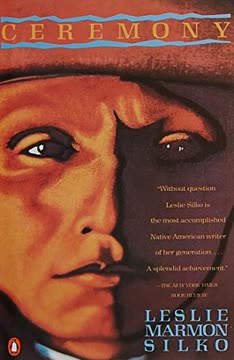
Plot Summary
War-Torn Homecoming
Tayo, a young Laguna Pueblo man, comes home from World War II shattered by trauma and grief. He is plagued by memories of the jungle, the death of his cousin Rocky, and the loss of his uncle Josiah. The land he returns to is parched by drought, mirroring his own inner desolation. Tayo's mixed heritage leaves him feeling alienated from both his family and his community, and he struggles to find a place where he belongs. His nights are restless, filled with feverish dreams and voices that blur the boundaries between past and present, war and home. The world he once knew seems irreparably changed, and he is left searching for meaning amid the ruins.
Tangled Memories, Fractured Self
Tayo's mind is a labyrinth of memories, where the horrors of war and the pain of loss are inextricably tangled with his childhood and family. He is haunted by visions of Josiah's death, Rocky's broken body, and the faces of Japanese soldiers who look too much like his own people. The boundaries between reality and hallucination dissolve, leaving Tayo adrift in a fog of guilt and sorrow. He feels invisible, a hollow outline moving through a world that no longer recognizes him. The white doctors call it "battle fatigue," but their medicine cannot reach the depths of his suffering. Only the old stories and ceremonies offer a glimmer of hope for healing.
The Drought and the Land
The drought that grips the reservation is more than a backdrop; it is a living reflection of the community's spiritual malaise. The animals grow gaunt, the crops wither, and the people's hope dries up. Tayo blames himself for the drought, believing his prayers in the jungle cursed the rain away. The land's pain is inseparable from his own, and he feels responsible for its suffering. The elders remember times when the rain came, when the world was in balance, but now everything seems broken. The drought becomes a symbol of the loss of tradition, the erosion of identity, and the wounds left by war and colonization.
Broken Brotherhoods
Tayo's relationships with other returning veterans—Harley, Leroy, Emo—are fraught with pain and misunderstanding. They seek solace in alcohol and stories of wartime glory, trying to recapture a sense of belonging they felt in uniform. But beneath the laughter and bravado lies a deep sense of betrayal and loss. The war promised equality and respect, but back home, racism and poverty remain. Tayo's mixed blood makes him a target for Emo's resentment, and the camaraderie of the platoon dissolves into suspicion and violence. The brotherhood that once sustained them is shattered, leaving only isolation and bitterness.
The Pull of Ceremony
As Tayo's condition worsens, his grandmother insists on calling Ku'oosh, the old Laguna medicine man. The white doctors' treatments have failed, and only the ancient ceremonies offer hope. Ku'oosh's language is dense with meaning, each word woven into a web of stories and responsibilities. The ceremony he performs is incomplete, unable to address the new wounds inflicted by modern warfare. Yet it marks the beginning of Tayo's journey back to himself, a journey that will require new stories and new ceremonies to heal the fractures in his soul and his community.
Stories as Survival
The elders teach that stories are not mere entertainment—they are the foundation of survival. Stories carry the wisdom of the people, the memory of balance and harmony, and the instructions for restoring what has been lost. The witchery that threatens the world seeks to destroy or confuse the stories, leaving the people defenseless. Tayo learns that to fight despair and death, he must remember and honor the stories, even as he struggles to find his own place within them. The act of storytelling becomes an act of resistance and renewal.
The Old Ways Tested
The ceremonies and rituals that once sustained the people are strained by the realities of colonization, war, and cultural change. The old ways are powerful, but they must adapt to new circumstances. Tayo's healing cannot be accomplished by tradition alone; it requires innovation and the courage to weave new patterns from old threads. The elders debate the proper course, wary of change but aware that survival depends on flexibility. The tension between preservation and adaptation becomes a central theme in Tayo's quest for wholeness.
The Witchery Unleashed
Through stories, Tayo learns that the world's suffering is not solely the result of white oppression, but of a deeper witchery that manipulates all people. The creation of white people is itself a product of indigenous witchcraft gone awry, unleashing forces of destruction, fear, and separation. The witchery thrives on division, violence, and forgetting. It is present in the atomic bomb, in racism, in the loss of ceremony, and in the self-hatred that plagues the community. Recognizing the true nature of the enemy is essential for healing and survival.
Healing in Fragments
Tayo's path to healing is not linear or complete; it is a journey through fragments—of memory, of tradition, of self. He seeks out Betonie, a Navajo medicine man whose ceremonies blend old and new, Indian and white, order and chaos. Betonie's hogan is filled with calendars, phone books, and bundles of herbs, reflecting a world in flux. Through Betonie's guidance, Tayo learns that ceremonies must change to meet new challenges, and that healing is a process of gathering scattered pieces into a new pattern. The vision Betonie shares sets Tayo on a quest to recover Josiah's lost cattle, a quest that becomes a ceremony of restoration.
The Vision of Betonie
Betonie's ceremony is a turning point for Tayo. It is a ritual of transformation, drawing on Navajo, Laguna, and even white elements. The ceremony acknowledges the reality of change and the necessity of adaptation. Betonie teaches that evil cannot be defeated by clinging to the past; it must be met with creativity and resilience. The vision he imparts—of stars, cattle, a woman, and a mountain—becomes a map for Tayo's journey. The ceremony is not an escape from the world's pain, but a way of engaging with it, finding meaning and hope amid chaos.
The Woman in the Hills
In the hills, Tayo encounters Ts'eh, a mysterious woman who embodies the spirit of the land and the wisdom of the old stories. Their relationship is both sensual and spiritual, offering Tayo comfort, love, and guidance. Ts'eh teaches him about plants, ceremonies, and the interconnectedness of all things. She helps him see that healing is not just personal, but communal and ecological. Through her, Tayo reconnects with the land, the cattle, and the cycles of nature. Their time together is a sanctuary, a space where the boundaries between past and present, human and spirit, dissolve.
The Cattle Quest
Tayo's search for Josiah's stolen cattle becomes a quest for restoration—of family, tradition, and self. The cattle, descendants of Mexican breeds, symbolize resilience and adaptability. Their recovery requires Tayo to cross boundaries, confront danger, and rely on both old knowledge and new insight. The journey is fraught with obstacles—hostile white ranchers, treacherous terrain, and the threat of violence from within his own community. Yet it is through this quest that Tayo enacts the new ceremony, weaving together the fragments of his life into a pattern of healing.
Betrayal and Temptation
As Tayo nears the completion of his quest, he is betrayed by those he once called friends. Harley and Leroy, manipulated by Emo and the witchery, lure Tayo into a trap. The temptation to retaliate, to enact violence against Emo, is strong. The witchery seeks to ensnare Tayo in a cycle of revenge and destruction, to make him another casualty of its endless hunger. Tayo's struggle is not just against external enemies, but against the darkness within himself—the anger, the despair, the desire for vengeance.
The Ceremony Continues
In the climactic confrontation, Tayo faces a choice: to kill Emo and fulfill the witchery's design, or to resist and break the cycle. He chooses restraint, refusing to become the destroyer. This act of self-mastery is the final step in the ceremony, the moment when the pattern is completed and the witchery is turned back on itself. Tayo's refusal to hate, to kill, to be consumed by bitterness, is an act of profound healing—not just for himself, but for his people and the land.
The Trap of Violence
The violence that claims Harley, Leroy, and Pinkie is the result of forgetting the stories, of succumbing to the witchery's lies. Their deaths are tragic, but they serve as a warning of what happens when the people lose their way. The community mourns, but the ceremony offers a path forward—a way to remember, to restore, to survive. Tayo's journey is a testament to the power of stories, ceremonies, and love to overcome even the deepest wounds.
The Pattern Revealed
With the ceremony complete, Tayo returns to his community, carrying the knowledge and healing he has gained. He shares his story with the elders, who recognize the significance of his journey. The drought ends, the rain returns, and the land begins to heal. The pattern that emerges is not the old one, but a new wholeness—one that honors the past while embracing change. Tayo's healing is inseparable from the healing of his people and the land.
The Return of Rain
The return of rain signals the restoration of balance, the renewal of hope, and the affirmation of life. The land, the people, and Tayo himself are transformed by the ceremony. The old stories are remembered, new stories are born, and the cycle of destruction is broken. The community is not saved all at once, but the possibility of survival and renewal is affirmed. The rain is both literal and symbolic—a blessing, a promise, a sign that the world can be made whole again.
Sunrise, Story's End
As the sun rises, Tayo offers his story to the dawn, completing the ceremony and beginning anew. The journey has been long and difficult, but the healing is real. The power of stories, ceremonies, and love endures, offering hope in the face of suffering and loss. The world is fragile, but as long as the stories are remembered and honored, the people will survive. The ceremony is never truly finished; it continues in every act of remembrance, every telling, every sunrise.
Analysis
Ceremony is a profound meditation on trauma, healing, and the power of story
Leslie Marmon Silko's novel is both a personal and communal journey, exploring the wounds inflicted by war, colonization, and cultural dislocation. Through Tayo's quest, Silko demonstrates that healing is not a return to a lost past, but a creative act of weaving together fragments—of memory, tradition, and self—into a new pattern. The novel challenges Western notions of linearity, individualism, and progress, offering instead an indigenous vision of interconnectedness, cyclical time, and the enduring power of stories. Ceremony insists that survival depends on remembering and honoring the stories, adapting ceremonies to new realities, and resisting the witchery that thrives on division and forgetting. In a world marked by violence and loss, Silko offers hope—not in easy answers, but in the ongoing work of ceremony, storytelling, and love. The novel's lessons resonate today, reminding us that healing is possible, but never easy, and that the stories we tell shape the world we inhabit.
Review Summary
Ceremony receives mostly positive reviews, praised for its poetic prose, exploration of Native American themes, and powerful storytelling. Readers appreciate Silko's portrayal of PTSD, cultural identity, and healing through traditional ceremonies. Some find the non-linear narrative and abstract elements challenging. The book is lauded for its vivid imagery and deep symbolism, though a few critics struggle with its pacing and character development. Overall, it's considered a significant work of Native American literature, offering profound insights into trauma, culture, and interconnectedness.
People Also Read
Characters
Tayo
Tayo is a young Laguna Pueblo man of mixed ancestry, whose return from World War II leaves him shattered by trauma, grief, and alienation. His psychological journey is marked by guilt over the deaths of his cousin Rocky and uncle Josiah, and by a profound sense of not belonging—caught between cultures, between past and present, between sanity and madness. Tayo's healing is gradual and nonlinear, requiring him to confront the witchery that afflicts both himself and his people. Through ceremony, storytelling, and his quest to recover Josiah's cattle, Tayo reclaims his identity and restores balance to his world. His transformation is both personal and communal, embodying the resilience and adaptability necessary for survival.
Ts'eh (The Woman in the Hills)
Ts'eh is a mysterious woman who appears in the hills, offering Tayo love, guidance, and spiritual sustenance. She is both a real person and a symbolic figure—an embodiment of the land, the old stories, and the feminine principle of renewal. Ts'eh teaches Tayo about plants, ceremonies, and the interconnectedness of all things. Her presence is healing, grounding Tayo in the rhythms of nature and the wisdom of tradition. She is both lover and teacher, helping Tayo complete his ceremony and find his place in the world. Her departure is bittersweet, but her influence endures.
Josiah
Josiah is Tayo's uncle and surrogate father, a source of wisdom, love, and stability. He is deeply connected to the land and the old ways, yet open to innovation—his plan to breed resilient Mexican cattle reflects his adaptability. Josiah's death during Tayo's absence is a profound loss, leaving Tayo unmoored. Yet Josiah's teachings and memory guide Tayo throughout his journey, serving as a touchstone for healing and restoration. Josiah represents the best of tradition—compassionate, practical, and rooted in the land.
Rocky
Rocky is Tayo's cousin and adoptive brother, a star athlete and scholar who embraces white values and dreams of success beyond the reservation. His ambition and assimilation create distance between him and his family, especially Tayo. Rocky's death in the war is a devastating blow, symbolizing the cost of cultural dislocation and the failure of the American dream for Native people. Rocky's memory haunts Tayo, fueling his guilt and grief, but also motivating his quest for healing and belonging.
Emo
Emo is a fellow Laguna veteran whose bitterness, self-hatred, and violence make him an embodiment of the witchery that afflicts the community. He resents Tayo's mixed blood and becomes a ringleader in the cycle of drinking, violence, and despair that traps many veterans. Emo's manipulation and cruelty are both personal and symbolic—he is a tool of the deeper evil that seeks to destroy the people from within. Tayo's refusal to kill Emo is a crucial act of resistance, breaking the cycle of violence and turning the witchery back on itself.
Harley
Harley is one of Tayo's childhood friends and fellow veteran, whose humor and good nature mask deep wounds. He seeks escape in alcohol and reckless behavior, unable to find meaning or belonging after the war. Harley's eventual betrayal of Tayo is both a personal tragedy and a symptom of the larger sickness afflicting the community. His death is a warning of the consequences of forgetting the stories and succumbing to despair.
Betonie
Betonie is a Navajo medicine man whose ceremonies blend tradition and innovation, Indian and white, order and chaos. His hogan is filled with calendars, phone books, and bundles of herbs, reflecting a world in flux. Betonie's wisdom lies in his recognition that ceremonies must change to meet new challenges, and that healing requires creativity and resilience. He guides Tayo through a transformative ceremony, imparting a vision that becomes the map for Tayo's quest. Betonie represents the possibility of survival through adaptation and the power of stories to heal.
Ku'oosh
Ku'oosh is the old Laguna medicine man who performs the initial ceremony for Tayo. His language is dense with meaning, and his approach is rooted in tradition. Ku'oosh's ceremony is unable to address the new wounds of modern warfare, but his willingness to seek help from Betonie reflects a recognition of the need for change. Ku'oosh embodies the tension between preservation and adaptation, and his support is crucial to Tayo's journey.
Auntie
Auntie is Tayo's maternal aunt, who raises him and Rocky after his mother's abandonment. She is fiercely protective of her family's reputation, burdened by shame over Tayo's mixed blood and his mother's choices. Auntie's love is conditional and often expressed through criticism and distance. Her relationship with Tayo is fraught with pain, but her actions are motivated by a desire to protect her family from gossip and disgrace. Auntie represents the internalization of colonial values and the struggle to reconcile tradition with survival.
Old Grandma
Old Grandma is the matriarch of Tayo's family, blind but deeply perceptive. She is a keeper of stories and traditions, insisting on the importance of ceremony and the power of the old ways. Her wisdom is quiet but profound, and her support is essential to Tayo's healing. Old Grandma represents the endurance of the people and the resilience of memory.
Plot Devices
Ceremony as Narrative Structure
The novel's structure itself is a ceremony—a cyclical, nonlinear journey that mirrors the process of traditional healing. The narrative weaves together past and present, prose and poetry, personal and communal, creating a tapestry that reflects the complexity of trauma and recovery. The ceremony is both literal and metaphorical, encompassing Tayo's quest, the recovery of the cattle, and the restoration of balance to the land and the people. The structure resists Western linearity, embracing indigenous concepts of time, story, and transformation.
Storytelling and Intertextuality
The novel is rich with embedded stories—myths, legends, personal memories, and communal histories. These stories are not mere background; they are active agents in the narrative, shaping characters' actions and offering models for survival. The interweaving of Laguna and Navajo cosmology with contemporary events blurs the boundaries between myth and reality, past and present. Storytelling becomes both a plot device and a thematic core, emphasizing the power of narrative to heal, resist, and renew.
Foreshadowing and Symbolism
The novel employs recurring symbols—rain, drought, cattle, mountains, stars, and animals like the mountain lion and hummingbird—to foreshadow key events and signal moments of transformation. The loss and recovery of Josiah's cattle, for example, mirrors Tayo's own journey from fragmentation to wholeness. The return of rain and the blooming of the land symbolize the restoration of balance. These symbols are deeply rooted in indigenous cosmology, reinforcing the novel's themes of interconnectedness and renewal.
The Witchery as Metaphor
The concept of witchery operates on multiple levels—as a mythic force, a metaphor for colonialism and internalized oppression, and a psychological reality. The witchery thrives on division, violence, and the destruction of stories. It is present in the atomic bomb, in racism, in the cycle of violence that traps the veterans. Recognizing and resisting the witchery is essential for healing, and the novel's climax hinges on Tayo's refusal to enact its destructive script.
Adaptation and Innovation
The novel foregrounds the necessity of adapting tradition to new circumstances. Betonie's ceremonies blend old and new, Indian and white, order and chaos, reflecting the reality of a world in flux. The plot device of the evolving ceremony underscores the theme that survival depends on creativity, resilience, and the willingness to weave new patterns from old threads.








































