Plot Summary
Newsie's Perilous Run
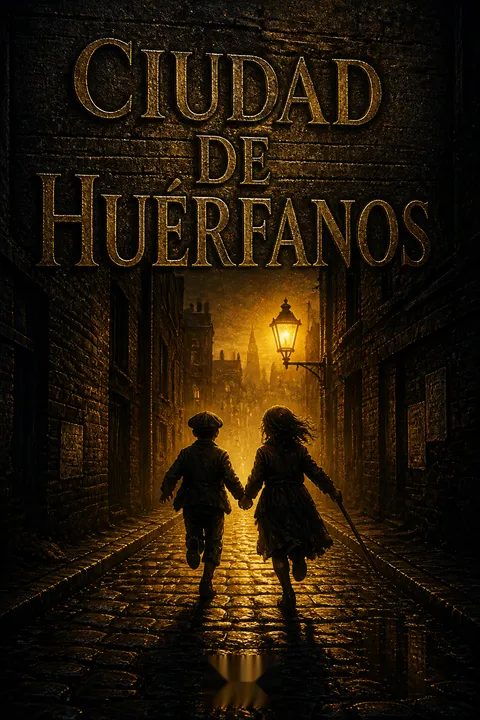
Thirteen-year-old Maks Geless, a Danish immigrant newsboy in 1893 New York, hustles to sell his last paper, desperate to earn his family's share of the rent during the Great Panic. But the city's streets are perilous, especially for newsies like Maks, who are targeted by the brutal Plug Ugly Gang led by the menacing Bruno. When Maks is cornered in an alley by Bruno and his gang, he's forced to fight for his hard-earned pennies. The city's chaos, poverty, and corruption are palpable, and Maks's struggle is not just for money, but for his family's survival. The tension and fear of being caught, robbed, or worse, set the tone for the challenges Maks faces daily.
Alley Rescue and New Friend
Just as Maks is about to be beaten by the Plug Uglies, a mysterious, ragged girl named Willa leaps from the shadows, wielding a stick with fierce determination. She drives off the gang, saving Maks. Grateful but wary, Maks learns Willa is homeless, living in a fenced-off alley, surviving by her wits and toughness. Their conversation reveals both the harshness of street life and the unspoken codes among the city's children. Maks, feeling indebted, invites Willa to his home for a meal, forging a tentative bond. This chance encounter marks the beginning of a partnership that will test both their resilience and trust as they navigate the city's dangers together.
Home's Hard Realities
Maks brings Willa to his crowded tenement, introducing her to his hardworking immigrant family. The Gelesses, like many, live in poverty, scraping by on meager earnings from factory work, laundry, and Maks's newsie wages. The family dynamic is loving but strained by illness, hunger, and the constant threat of eviction. Willa's presence, with her dirt and streetwise manner, unsettles Maks's mother, but gratitude for her help tempers judgment. The tenement's cramped quarters, shared with boarders and siblings, reflect the broader immigrant struggle—community, sacrifice, and the hope for a better life amid adversity.
Emma's Arrest
The family's fragile stability shatters when a policeman arrives with devastating news: Emma, Maks's beloved older sister and a maid at the prestigious Waldorf Hotel, has been arrested for allegedly stealing a guest's gold watch. The accusation is unthinkable—Emma is honest and hardworking. The shock plunges the family into panic and despair, as the prospect of Emma facing prison or deportation looms. Maks's sense of helplessness is acute, but his loyalty and determination ignite a resolve to clear his sister's name, setting the stage for a desperate quest for justice.
Family in Crisis
The Geless family reels from Emma's arrest, each member coping with fear and uncertainty. Papa and Agnes, already facing layoffs at the shoe factory, scramble to find a lawyer, but money is scarce. Mama is paralyzed by worry, unable to navigate the American legal system. Maks volunteers to visit Emma in the notorious Tombs prison, vowing to do whatever it takes to help. Willa, sensing the family's pain, chooses to stay, her own loneliness echoing their distress. The crisis exposes both the vulnerability and resilience of immigrant families, who must rely on each other when the world turns hostile.
Willa's Place in the World
As Maks prepares to visit Emma, Willa's own story unfolds. Orphaned by illness and abandonment, she has survived alone, hardened by necessity but yearning for connection. The Gelesses' offer of shelter stirs conflicting emotions—gratitude, shame, and fear of rejection. Willa's memories of her mother's death and her father's disappearance haunt her, fueling a deep sense of loss and unworthiness. Yet, the kindness shown by Maks's family begins to thaw her defenses, and she tentatively accepts their invitation, hoping for a place to belong.
The Plug Ugly Threat
The Plug Ugly Gang's reign of terror intensifies, targeting newsies with beatings and thefts, emboldened by corrupt protection from shadowy city bosses. Maks and Willa remain vigilant, knowing Bruno seeks revenge for his humiliation. The gang's violence is not random—it's part of a larger scheme to control the city's newsboys and, by extension, the flow of information. The threat is ever-present, forcing Maks and Willa to navigate the streets with caution, their friendship deepening as they face danger together.
Seeking Help, Finding Donck
Realizing the family cannot afford a lawyer, Maks seeks out Bartleby Donck, a deaf, ailing, and eccentric private detective known for helping the poor. Donck is initially dismissive, jaded by years of seeing children's suffering and the city's corruption. But Maks's persistence and Willa's blunt honesty win him over. Donck agrees to advise them, challenging Maks to become his "boy detective" and find the real thief. He teaches them the basics of investigation: observe, connect clues, and question everything. The children's hope is rekindled, but the odds remain daunting.
The Detective's Challenge
Under Donck's guidance, Maks infiltrates the Waldorf Hotel as a bellboy, tasked with uncovering evidence to exonerate Emma. Willa, meanwhile, supports the family and continues to sell papers, her courage and loyalty shining. Maks's experiences at the Waldorf expose him to a world of opulence and power, but also to the indifference and prejudice of the wealthy. He learns to navigate the hotel's labyrinthine halls, seeking clues about the theft, while Donck pushes him to think critically and trust his instincts. The investigation is fraught with setbacks, but Maks's determination never wavers.
The Waldorf's Secrets
Maks's sleuthing reveals that Emma was framed: a guest, Mr. Brunswick, asked for her name under the guise of complimenting her, then planted the stolen watch chain under her pillow. Maks also discovers that Brunswick is connected to both the city's political corruption and, shockingly, to Willa—he is her long-lost father. The revelation is devastating for Willa, who must confront the truth about her past and her father's criminal life. Meanwhile, the Plug Uglies, manipulated by Brunswick's associate, continue their campaign of violence, culminating in Willa's kidnapping.
Willa's Past Unveiled
As Maks races to rescue Willa from the Plug Uglies, her memories and pain resurface. She recalls her mother's death, her father's abandonment, and the years of loneliness that followed. The discovery that her father is alive—and a villain—shatters her fragile sense of self. Yet, the Geless family's unwavering support offers her a lifeline, and she begins to accept their love as her own. Willa's journey from isolation to belonging is marked by courage, vulnerability, and the healing power of chosen family.
The Trap is Set
Bruno kidnaps Willa, using her as bait to lure Maks into a deadly trap. Maks, refusing to face the gang alone, rallies the city's newsies for a daring rescue. The boys, armed with sticks and stones, storm the Plug Uglies' hideout, igniting a chaotic battle that ends in a catastrophic fire. Maks rescues Willa from the burning building, and the gang is scattered, their reign broken. The episode cements the bond between Maks and Willa, and the newsies' solidarity becomes a symbol of resistance against oppression.
Fire and Rescue
The fire at the Plug Uglies' lair is both destructive and redemptive. Maks and Willa's harrowing escape, aided by firemen and the newsies, marks the end of Bruno's threat. The city's indifference to the suffering of its children is laid bare, but so too is the power of collective action. The trauma lingers—Willa is shaken, Maks is haunted by guilt—but the ordeal forges a deeper sense of purpose. The family, reunited and safe, faces the future with renewed hope, even as new challenges loom.
The Truth Emerges
Maks and Willa return to the Waldorf, determined to confront Brunswick and clear Emma's name. Willa, trembling, faces her father for the first time since his disappearance. At the same moment, Bruno, desperate and deranged, storms the hotel, seeking revenge on Brunswick. In a violent confrontation, Brunswick is killed, Bruno is shot by the hotel detective Packwood, and the stolen watch is recovered. The truth of Emma's innocence is finally revealed, but the cost is high—Willa loses her father forever, and the scars of violence remain.
Confrontation in the Waldorf
The Waldorf lobby becomes a stage for tragedy and resolution. Willa's reunion with her father is brief and heartbreaking, overshadowed by Bruno's attack and the chaos that ensues. The deaths of Brunswick and Bruno bring an end to the immediate threats, but leave Willa grieving and adrift. Packwood, guided by Donck's insights and Maks's detective work, presents the evidence that exonerates Emma. The family's ordeal is over, but the emotional toll is profound, especially for Willa, who must find a way to heal and belong.
Loss, Justice, and Family
In court, the truth prevails: Emma is declared innocent, thanks to the combined efforts of Maks, Willa, and Donck. The family celebrates, their unity and perseverance rewarded at last. Willa, though mourning her father, is embraced as a true member of the Geless family. She offers her mother's ring to help Agnes see a doctor, symbolizing her acceptance and love. The family's survival is a testament to their resilience, compassion, and the bonds forged through adversity.
New Beginnings
Life slowly returns to normal. Agnes recovers and finds meaningful work; Emma resumes her job at the Waldorf; Maks continues to help support the family; and Willa, now a newsie and student, discovers the joy of learning and belonging. The city's hardships remain, but the family endures, strengthened by their trials. The memory of Donck, the lessons of justice and kindness, and the enduring power of hope shape their future. The story closes with the recognition that, in a city of orphans, family is not just blood, but the people who choose to stand by you.
Analysis
City of Orphans is a vivid, emotionally charged exploration of survival, justice, and belonging in Gilded Age New York
Avi crafts a narrative that is both a gripping mystery and a social commentary, illuminating the struggles of immigrant families, the resilience of children, and the corrosive effects of poverty and corruption. The novel's heart lies in its depiction of chosen family—how bonds of loyalty, kindness, and shared hardship can transcend blood and circumstance. Maks and Willa's journey from isolation to connection, from powerlessness to agency, mirrors the broader immigrant experience and the universal quest for dignity. The story's use of coincidence and interconnected fates reflects the chaotic, often arbitrary nature of urban life, while the detective framework empowers young readers to question, observe, and act. Ultimately, City of Orphans is a testament to hope, courage, and the enduring power of community in the face of overwhelming odds—a lesson as relevant today as it was in 1893.
Review Summary
City of Orphans receives mostly positive reviews, with readers praising its engaging historical setting, compelling characters, and suspenseful plot. Many appreciate Avi's ability to vividly portray 1890s New York City and the struggles of immigrant families. The story of Maks and Willa solving a mystery while evading gangs captivates readers. Some criticize the pacing and dialect, but overall, reviewers find it an enjoyable and educational read for middle-grade students interested in historical fiction.
Characters
Maks Geless
Maks is the thirteen-year-old protagonist, a Danish immigrant boy whose life revolves around supporting his struggling family by selling newspapers. He is fiercely loyal, especially to his sister Emma, and driven by a deep sense of justice and responsibility. Maks's journey is one of growth—from a streetwise survivor to a courageous "boy detective" willing to challenge corruption and risk everything for those he loves. His empathy and quick thinking allow him to forge alliances, inspire others, and navigate the city's dangers. Maks's psychological resilience is rooted in his love for family and his refusal to accept injustice, making him both a product of his environment and a beacon of hope.
Willa Brunswick
Willa is a homeless, orphaned girl with a mysterious past and a tough exterior. Her survival instincts are honed by years on the streets, but beneath her bravado lies profound loneliness and longing for family. Willa's journey is marked by trauma—her mother's death, her father's abandonment, and the revelation of his criminality. Her friendship with Maks and acceptance by the Geless family offer her healing and a sense of home. Willa's psychological arc is one of vulnerability, courage, and the gradual opening of her heart to trust and love, culminating in her selfless acts for her new family.
Emma Geless
Emma, Maks's older sister, is the catalyst for the story's central conflict. Accused of theft at the Waldorf Hotel, she becomes a symbol of the immigrant's vulnerability to injustice. Emma's character is defined by her honesty, kindness, and strength under pressure. Her ordeal in prison tests the family's unity and spurs Maks's transformation. Emma's relationship with Maks is especially close, and her eventual exoneration is both a personal victory and a restoration of the family's honor.
Bruno
Bruno is the teenage leader of the Plug Ugly Gang, embodying the dangers and moral ambiguities of street life. His aggression is fueled by poverty, manipulation by corrupt adults, and a desperate need for power and respect. Bruno's psychological complexity is revealed in his moments of vulnerability and rage, particularly as he becomes a pawn in larger schemes. His downfall is both a consequence of his choices and a reflection of the city's failure to protect its most vulnerable children.
Bartleby Donck
Donck is a deaf, ailing private detective who has seen the worst of the city's injustices. Initially cynical and dismissive, he is moved by Maks and Willa's determination, becoming their mentor and guide. Donck's psychological depth lies in his blend of bitterness and hope—he despises the city's corruption but cannot resist helping those who remind him of his own lost ideals. His mentorship empowers Maks and Willa, and his death is a poignant reminder of the costs of caring in a harsh world.
Papa Geless
Papa is the family's anchor, a shoemaker struggling to provide amid economic hardship and cultural displacement. His love for his children is unwavering, but he is often at a loss in the face of American bureaucracy and injustice. Papa's psychological struggle is one of pride, helplessness, and the challenge of adapting to a new world while holding onto old values. His eventual acceptance of Willa and reliance on his children's resourcefulness reflect the shifting dynamics of immigrant families.
Mama Geless
Mama is the emotional heart of the family, her strength manifesting in small acts of care and sacrifice. She is deeply affected by Emma's arrest and Agnes's illness, often overwhelmed by fear and uncertainty. Yet, her willingness to accept Willa and her faith in her children's abilities reveal a quiet resilience. Mama's psychological arc is one of learning to trust and let go, allowing her children to take risks and grow.
Agnes Geless
Agnes, the family's "smart one," aspires to rise above factory work through education. Her struggle with illness (tuberculosis) adds urgency to the family's financial woes. Agnes's ambition and practicality balance Maks's impulsiveness, and her support is crucial in navigating legal and social challenges. Her eventual recovery and success symbolize hope and the possibility of upward mobility.
Mr. Packwood
Packwood is the Waldorf's detective, responsible for Emma's arrest but also instrumental in her exoneration. His relationship with Donck and his own sense of duty create internal conflict, as he navigates loyalty, justice, and the pressures of his position. Packwood's willingness to listen and act on new evidence reflects the potential for integrity within flawed institutions.
Gustav Brunswick
Willa's father, revealed as Mr. Brunswick, is a man entangled in crime and corruption. His abandonment of Willa and involvement in framing Emma make him both a villain and a victim of circumstance. Brunswick's psychological complexity lies in his dual roles as father and criminal, and his death is both a reckoning and a release for Willa, forcing her to choose her own path.
Plot Devices
Intertwined Fates and Coincidence
The story relies heavily on the interconnectedness of characters and the role of coincidence—Maks's chance meeting with Willa, Willa's connection to the true thief, and the convergence of personal and political corruption. These plot devices underscore the unpredictability of urban life and the thin line between survival and disaster. The narrative structure alternates between Maks's and Willa's perspectives, deepening emotional engagement and highlighting parallel struggles. Foreshadowing is used to build suspense, particularly regarding Bruno's escalating violence and Willa's hidden past. The use of a detective story within the story (The Bradys and the Missing Diamonds) serves as both inspiration and meta-commentary, guiding Maks's transformation and the unfolding investigation.
Download PDF
Download EPUB
.epub digital book format is ideal for reading ebooks on phones, tablets, and e-readers.








































