
Key Takeaways
1. Economic Inequality in America is Real and Soaring
The sharp and rapid increases in economic inequality that we have experienced since the 1970s—with wage stagnation or decline for most Americans accompanied by enormous gains for top income earners—might have been expected to ignite class warfare.
A stark reality. The United States has witnessed a dramatic and undeniable surge in economic inequality since the 1970s, reaching levels not seen since the highly unequal 1920s. While the super-rich have accumulated fortunes beyond imagination, the economic standing of middle- and working-class Americans has largely stagnated or declined. This widening gap is not a matter of opinion but a fact meticulously documented by nonpartisan economists and government agencies.
Three key shifts. This economic re-slicing of America's pie is characterized by:
- Record-breaking pay gap: Real hourly wages for most Americans have fallen or stagnated, while high-income earners have seen sharp, uninterrupted hikes.
- Concentration at the very top: The wealthiest 1% of households have experienced an explosion in income, far outpacing even the rest of the top 10%.
- Even larger wealth gap: The concentration of wealth (assets like real estate, stocks) is even more extreme than income, with the top 1% controlling a disproportionate share.
Beyond the averages. While some argue that "average wages are rising," this metric can be misleading, as extreme outliers like billionaires can skew the average without improving the typical person's situation. The focus should be on the widening disparities between the middle and the super-rich, a trend acknowledged by figures across the political spectrum, from President George W. Bush to Federal Reserve Chairman Ben Bernanke.
2. Americans Are Deeply Aware and Concerned About Inequality
Most Americans are aware of high and increasing economic inequality. Most are unhappy about it.
Not "out of sight, out of mind." Contrary to the notion that Americans are indifferent or unaware of economic disparities, the public has a keen and reasonably accurate perception of the vast differences in income and wealth. They observe these disparities in their daily lives, from the struggles of low-wage workers to the conspicuous consumption of the ultra-rich. This awareness fuels a widespread sense of unease.
Perceiving the gaps. Americans readily estimate the annual incomes of various occupations, recognizing that doctors and corporate executives earn significantly more than ordinary workers. While they tend to underestimate the astronomical earnings of CEOs (perceiving $500,000 instead of the actual $14 million+ for S&P 500 CEOs), they clearly grasp that the gap is substantial and growing. Similarly, they estimate that the richest 1% hold about 50% of the nation's wealth, which is close to the actual 34-42%.
A shared sentiment. This awareness translates into widespread concern. Surveys consistently show that about three-quarters of Americans believe that "differences in income in America are too large." A significant majority also rejects the idea that the current distribution of money and wealth is "fair," instead advocating for a more even distribution. This sentiment is not confined to any single demographic but is broadly shared across different income levels and political affiliations.
3. The Public Rejects Extreme Wealth Disparities
Nearly three quarters (72 percent) of Americans agree that “differences in income in America are too large.”
Beyond mere observation. Americans don't just notice inequality; they actively disapprove of its current extent. This disapproval is not about eliminating all differences—they acknowledge that some inequality can motivate hard work—but rather about the excessive and growing chasm between the top and the rest. They recoil at what they perceive as a new "Gilded Age."
Desire for rebalancing. When asked about ideal income levels, Americans consistently favor:
- More for the bottom: Sales clerks and factory workers should earn significantly more than their perceived current wages.
- Less for the top: Corporate titans' incomes should be cut by more than half, from a perceived $500,000 to a desired $200,000.
- Modest increases for professionals: Even general-practice doctors, already seen as well-off, are slotted for a slight increase.
No "class war" in public opinion. Despite the rhetoric of politicians and pundits, the public's desire to reduce inequality does not translate into a divisive "class war." Instead, there's a striking consensus: majorities of Republicans, high-income earners, and the middle class agree with Democrats and lower-income groups that income differences are too large and that wealth should be more evenly distributed. This broad agreement challenges the narrative of deep societal divisions.
4. Americans Blend Conservative Philosophy with Pragmatic Liberalism
Most Americans are both philosophically conservative and operationally liberal.
A nuanced worldview. The American public defies simple categorization into "liberal" or "conservative" camps. They hold a complex set of beliefs that, at first glance, appear contradictory but are deeply rooted in their understanding of the American Dream and practical realities. This unique blend is what defines them as "conservative egalitarians."
Conservative inclinations. Americans deeply believe in:
- Individual self-reliance: The idea that hard work and talent should lead to success.
- Free enterprise: Support for a market-based economic system.
- Distrust of government: Skepticism about government competence, waste, and potential overreach.
- Acceptance of some inequality: Acknowledging that pay differences can motivate effort.
Pragmatic liberalism. Simultaneously, Americans are pragmatic. When faced with real-world challenges that threaten their well-being or block opportunities, they turn to government for solutions. They recognize that certain forces are beyond individual control and require collective action. This operational liberalism is evident in their support for specific government programs designed to foster opportunity and provide security.
5. Government Action is Desired for Opportunity and Security
They turn to government to maintain or expand opportunities for individuals to pursue the American Dream and to provide minimal economic security for those who are left behind.
Beyond abstract distrust. While Americans express general distrust of government and prefer individual initiative, this philosophical stance gives way to pragmatic demands for government intervention when it comes to concrete problems. They reject a society where government does nothing but provide national defense and police protection, instead believing it "must see that no one is without food, clothing, or shelter."
Empowering individuals. The public views government's role not as a "nanny state" providing handouts, but as an enabler of the American Dream. They expect government to:
- Open pathways to success: By ensuring access to quality education and job training.
- Protect against life's setbacks: By providing a safety net against illness, old age, or disability.
- Ensure fair play: By setting minimum standards for wages and working conditions.
A broad consensus. This pragmatic turn to government is not a partisan issue. Large majorities of Republicans, high-income earners, and the middle class, alongside Democrats and lower-income groups, support a wide range of government programs aimed at expanding opportunity and economic security. This widespread agreement underscores a collective desire for a society where everyone has a fair shot.
6. Education is Seen as the Foremost Gateway to Opportunity
Overwhelming majorities—more than eight out of ten—of all Americans, of Republicans, and of the affl uent believe that the federal government should “spend whatever is necessary to ensure that all children have really good public schools they can go to.”
A foundational belief. Americans overwhelmingly view education as the primary pathway to equal opportunity and economic advancement. This belief transcends political and socioeconomic divides, forming a bedrock of consensus for government intervention. They see quality education as an investment in individual potential and societal prosperity.
Broad support for educational initiatives:
- Early childhood education: More than three-quarters of all Americans, including Republicans and the affluent, favor using tax money for kindergarten and nursery school, with majorities willing to pay more taxes for this purpose.
- College access: Over seven in ten Americans, Republicans, and high-income earners believe the federal government should ensure everyone who wants to go to college can, and a majority supports using tax money for those who can't afford it.
- Worker retraining: Three-quarters or more of all Americans, Republicans, and the affluent favor using tax dollars for retraining displaced workers, even when acknowledging potential program inefficiencies.
Unheeded public will. Despite this consistent and overwhelming public support for expanding educational opportunities, federal and state funding often falls short. This disconnect highlights a significant gap between public priorities and policy outcomes, raising questions about why politicians fail to act on such broadly supported initiatives.
7. Ensuring Jobs and Fair Wages is a Core Government Responsibility
Some six out of ten of all Americans, of Republicans, and of higher-income earners believe that the government in Washington should “see to it” that everyone who wants to work can fi nd a job.
The right to work. Americans believe in individual responsibility and working one's way up, but they also expect the opportunity to work and earn a living to be genuinely available. This leads to strong support for government intervention to ensure employment and fair compensation, recognizing that market forces alone may not always provide these opportunities.
Government's role in employment:
- Job guarantee: A solid majority of Americans, including Republicans and high-income earners, believe the government should ensure everyone who wants to work can find a job.
- Direct government hiring: Remarkably, a narrow majority of Americans, including half of all Republicans, now support the federal government providing jobs for those unable to find private employment.
- Job training: Over three-quarters of all Americans, Republicans, and the affluent favor using tax dollars for retraining workers whose jobs have been eliminated.
Fair compensation. Beyond just providing jobs, Americans also expect government to help ensure that work pays a living wage:
- Minimum wage: More than two-thirds of all Americans, Republicans, and high-income individuals favor setting the minimum wage high enough to keep full-time workers above the poverty line.
- Earned Income Tax Credit (EITC): About half of Americans want to increase EITC help, and majorities across all groups favor expanding it to single workers.
8. Americans Demand Health and Retirement Security from Government
Substantial majorities of Americans overall, of Republicans, and of the affl uent expect the federal government and/or “all employers”—presumably mandated by government—to take responsibility for ensuring that everyone has health insurance.
Beyond individual control. Americans recognize that illness, old age, and disability are often beyond individual control and can derail even the most diligent efforts to achieve the American Dream. This understanding drives widespread support for government intervention to provide a safety net for health and retirement. The tragic disparities in health outcomes and the erosion of employer-sponsored benefits underscore the urgency of these concerns.
Health care as a right:
- Universal coverage: Majorities across all groups expect government or employers (mandated by government) to ensure everyone has health insurance.
- National health insurance: Nearly two-thirds of Americans, a majority of high-income earners, and almost half of Republicans favor a national health insurance system financed by taxes.
- Single government plan: A majority of Americans (54%), including significant minorities of Republicans and the affluent, now favor a single government plan for insurance, a notable shift.
- Expanding existing programs: Over three-quarters of all groups favor expanding SCHIP for children and Medicare for the uninsured under 65.
Dignified retirement:
- Employer responsibility: Majorities of all Americans, Republicans, and the affluent believe employers should provide retirement benefits.
- Social Security expansion: More than half of all Americans and Republicans, and nearly half of the affluent, favor expanding Social Security, with very few wanting cuts.
- Progressive funding: Majorities support modest adjustments to Social Security, such as allowing benefits to grow slower for high-income individuals and raising or eliminating the payroll tax cap.
9. The Public is Willing to Pay Taxes for Essential Programs
Most Americans see through the fi ction that lower taxes are com-patible with needed government action on education, health care, and national security.
Beyond the anti-tax rhetoric. Despite well-funded anti-tax campaigns and a general dislike of paying taxes, most Americans are pragmatic enough to understand that government programs require funding. They are not "tax haters" unwilling to bear the burden for policies they value. This realism contrasts sharply with the political narrative often presented by pundits.
Support for using tax dollars:
- Broad consensus: Very large majorities (70-81%) across all parties and income groups favor using their tax dollars for early-childhood education, worker retraining, assistance to the poor, and universal health coverage.
- Targeted priorities: Americans prioritize spending on education, health care, and social security over defense or foreign aid, demonstrating a thoughtful approach to public finance.
- Willingness to pay more: About six in ten Americans are willing to pay higher taxes specifically for universal health coverage and early-childhood education.
Rejecting general tax cuts. When asked in general terms, fewer than one-third of Americans favor decreasing taxes; two-thirds prefer to keep them the same or increase them. This indicates a significant disconnect between public sentiment and the persistent political push for across-the-board tax reductions.
10. Progressive Taxation is Widely Supported Across All Groups
Fifty-four percent of Americans said in our survey that people with high incomes should pay a larger or much larger share of their income in taxes than those with low incomes.
Fairness in contribution. Americans believe in the principle of progressive taxation, where those with higher incomes contribute a larger proportion of their earnings. This sentiment is not limited to lower-income groups or Democrats but extends significantly into Republican and affluent segments of the population, challenging the notion that the wealthy are uniformly opposed to higher taxes on themselves.
Specific progressive tax preferences:
- Estate tax: Only 14% of Americans favor abolishing the estate tax, with the average American preferring a tax of about 25% on estates worth $100 million or more. This contradicts the "death tax" narrative.
- Payroll tax cap: A solid majority (58%) wants to raise or eliminate the cap on income subject to Social Security payroll taxes, which would make the system more progressive.
- Corporate income tax: Six out of ten Americans identify the corporate income tax as one the government should rely "a lot" on for revenue, perceiving it as paid more heavily by higher-income individuals.
Wealthy voices in agreement. Prominent billionaires like Warren Buffett and Bill Gates, Sr., publicly advocate for higher taxes on the rich, arguing that their wealth is partly a product of societal infrastructure and opportunities, and that they should "give back." This perspective aligns with the broader public's desire for a more equitable tax system.
11. A "New Silent Majority" Agrees on Egalitarian Policies
There is, in fact, a new silent majority. A consensus exists across parties and across income groupings that individuals ought to do their best to care for themselves, but that government ought to foster opportunities and protect individuals against threats that might impede their actual exercise of opportunity.
Beyond partisan divides. The most striking finding is the profound agreement among ordinary Americans across the political spectrum. Despite the fierce partisan battles among elites, a "new silent majority" exists, united by a shared vision of conservative egalitarianism. This consensus is often overlooked or deliberately obscured by political actors.
Cross-cutting agreement:
- Republicans and the affluent: Majorities of these groups, often assumed to be anti-government and anti-tax, support using tax dollars for early-childhood education, job retraining, assistance to the poor, and even welfare benefits for children of single teenage mothers.
- Progressive taxation: Many Republicans and affluent individuals agree that the government should redistribute wealth through heavy taxes on the rich and that higher-income people should pay a larger share of their income in taxes.
- Willingness to pay more: Solid majorities of Republicans and the affluent are willing to pay more taxes for kindergarten, nursery schools, and universal health insurance.
A shared American Dream. This broad agreement stems from a collective belief in the American Dream and a pragmatic understanding that government plays a crucial role in ensuring genuine opportunity and economic security for all. The public's views are far more nuanced and unified than the polarized rhetoric suggests.
12. Political Inequality Thwarts the Will of the People
We believe it is chiefl y the political power of these money givers, special interests (particularly the owners and managers of large corporations and fi nancial fi rms), and party activists that have repeat-edly thwarted the will of ordinary Americans to enact conservative egalitarian programs.
The democratic disconnect. Despite clear and consistent public support for policies that would reduce economic inequality, these policies have largely been ignored or rejected by policymakers for decades. This disconnect is not due to public ignorance or indifference, but rather to systemic political inequalities that amplify the voices of a few at the expense of the many.
Sources of political inequality:
- Constitutional design: Unequal state-based representation in the Senate gives disproportionate power to citizens in smaller states.
- Separation of powers: The complex system of checks and balances often leads to stalemate and inaction, especially when different parties control branches of government.
- Money in politics: Campaign contributions, lobbying, and public relations efforts by wealthy donors and corporations exert immense influence, often overriding popular will.
- Special interests: Well-organized corporate and financial interests actively resist policies that might increase their costs or taxes.
- Unrepresentative party activists: Small groups of ideological activists often control candidate nominations, leading to the selection of candidates whose views are more extreme than the average voter.
Reclaiming democratic responsiveness. To bridge this gap, citizens must become more active and engaged. This involves:
- Raising awareness: Ensuring the public and politicians are aware of policy choices and public preferences.
- Organizing and making a ruckus: Creating visible, organized pressure to hold officials accountable.
- Punishing non-responsive officials: Using electoral power to reward those who listen and remove those who don't.
Review Summary
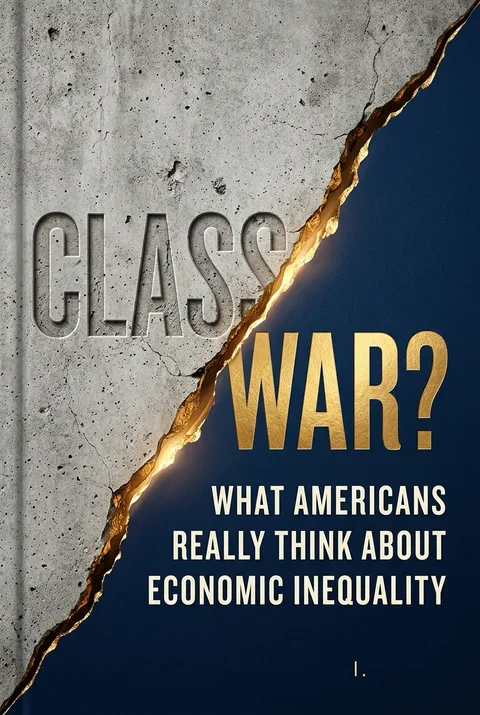
Reviewers of Class War? generally found the book's central argument—that Americans across political and economic lines support a social safety net and progressive taxation—interesting but not groundbreaking. Most praised the subject matter as timely and accessible, while criticizing the book for being repetitive and better suited as a shorter article. Some noted methodological limitations in the survey data, and a few felt the authors allowed bias to creep into their analysis. Overall, readers appreciated the hopeful message but wished for more rigorous and thorough presentation.
Download PDF
Download EPUB
.epub digital book format is ideal for reading ebooks on phones, tablets, and e-readers.








































