
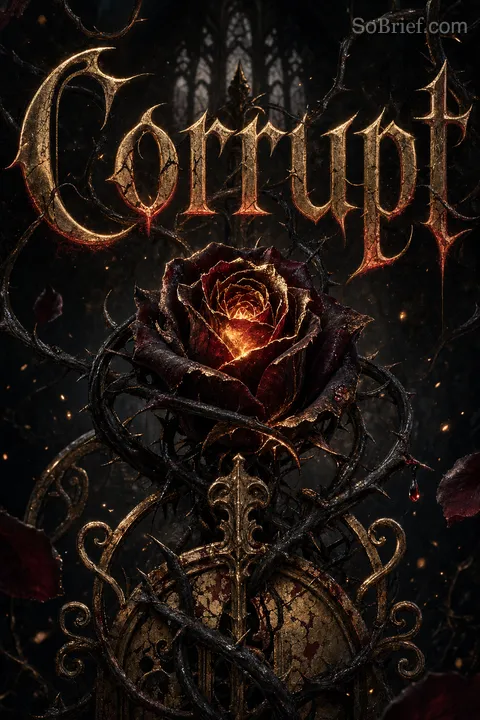


Plot Summary
Prologue
On the eve of leaving her sheltered life in Thunder Bay, nineteen-year-old Erika Fane1 attends a farewell party for Trevor Crist,3 the boyfriend she has already left behind. She dodges his groping insistence, catches the silent, hostile stare of his older brother Michael,2 and flees home.
There she finds a candle burning in her bedroom window and a crate containing an ornate Damascus dagger with an unsigned note: beware the fury of a patient man. When she looks up, three men in black hoodies and gouged masks stand motionless on her lawn, staring. By the time security arrives, they have vanished. She recognizes those masks. She just cannot understand why the Horsemen would return for her after three years.
The opening weaponizes anticipation rather than action. Douglas frames Rika as a girl swaddled in wealth and other people's protection, hungry to test whether she has any self beneath the family name. The dagger and Dryden quotation announce the novel's controlling logic: patience as predation. By withholding motive, the prologue installs dread as narrative engine and signals that Rika's craving for danger will be answered in ways she cannot yet imagine. The masks convert the familiar into the uncanny. Crucially, her simultaneous fear and fascination establish the book's central erotics, in which terror and desire are not opposites but the same current running through the same nerve.
The Horsemen Return to School
Three years earlier, on the day before Halloween, Thunder Bay Prep buzzes when its legendary graduates reappear to haze the basketball team. Sixteen-year-old Rika1 has spent years watching Michael Crist2 from a distance, thrilled and terrified by the four masked boys who rule the town.
Rather than watch from her desk, she lies to her teacher, sneaks into the parking lot, and hides in Michael's2 SUV, riding unnoticed to the abandoned St. Killian's cathedral. She overhears the boys admit she is getting harder to ignore. Creeping toward a broken window, she discovers Michael2 already knows she is there. Instead of sending her home, he studies her with an interest no one has ever shown her, and something long dormant in her stirs awake.
The flashback establishes Rika's foundational psychology: invisibility as wound. Orphaned emotionally by a dead father and a sedated mother, she idolizes the Horsemen not to possess them but to become them, to feel the freedom of people who never apologize. Douglas builds desire out of surveillance, and the reversal (being seen after years of watching) is intoxicating precisely because recognition has been scarce. The cathedral setting fuses the sacred and the transgressive, foreshadowing that Rika's awakening will be ritualistic. Her trespass is characterologically decisive: she is not passive prey but an active seeker courting danger, a distinction the entire novel will interrogate.
Blindfolded in the Catacombs
Beneath the cathedral, Michael2 blindfolds Rika1 with her own necktie and pushes her forward, ordering her to prove what she is made of. In the dark she is groped by Damon Torrance,4 the most menacing Horseman, until Kai Mori5 intervenes. Refusing to remove the blindfold or tap out, Rika1 stands her ground.
Michael2 leads her deeper, past a room where a couple is having semi-public sex, and whispers his creed: own who you are, or it will own you. Pressed against a wall, he begins to touch her before Trevor3 bursts in, hauls her away, and warns Michael2 off. The night plants a seed neither will forget, and the abrupt interruption leaves the connection unfinished and raw.
Michael's pedagogy of cruelty (refusing to be her savior so she learns to save herself) is both liberating and grooming, and Douglas deliberately blurs that line. The blindfold is a masterstroke of the book's sensory philosophy: stripping sight to heighten every other feeling, teaching Rika that fear sharpens rather than diminishes. Damon's assault plants a threat that will detonate later, while Kai's rescue codes him as the group's conscience. Trevor's interruption crystallizes the fraternal triangle: two brothers circling one girl, one who wants her as property and one who recognizes her as a mirror. The catacombs become the novel's psychic home, a womb of transformation.
Neighbors in the Dark Tower
In the present, Rika1 arrives in Meridian City to attend Trinity College and discovers the building the Crists steered her toward, Delcour, is theirs. She is upgraded to a penthouse she never rented, one floor below Michael.2 On her first night she hears a woman's terrified cries next door, flees down a stairwell, and slams into Michael2 returning with a paid escort.
He escorts her up, condescends to her about how brittle her privilege makes her, and calls her Little Monster, a name unheard since that Devil's Night. From his own floor, Michael2 watches her paint her walls red at two in the morning and reveals to Kai,5 Will,6 and Damon4 that everything (her isolation, her building, her missing neighbors) is engineered. They mean to ruin her.
The chapter converts romance-genre luxury into carceral architecture. Rika believes she has escaped the umbrella of her caretakers; in fact she has been transplanted into a gilded trap. Douglas exploits dramatic irony hard: the reader now knows Rika is quarry, which retroactively poisons every tender exchange with menace. Michael's dual narration exposes the split between his contempt and his obsession, the classic dark-romance hero divided against himself. The escort and the red paint operate as doubled portraits of transactional versus authentic passion. Naming her Little Monster reactivates their private mythology, betraying that his revenge is inseparable from longing.
Avenging the Spiked Drink
Returning to the past, Rika1 joins the Horsemen for Devil's Night: burning a filthy crack house, blocking roads so police cannot reach the fire, and finally reaching the bar Sticks. There she confesses that Miles Anderson12 and his girlfriend Astrid drugged and nearly assaulted her at a party, and that Evans Crist9 buried it to protect a business deal.
Michael2 forces her to decide the punishment herself. Rika1 lures Miles12 to a bathroom, fights back with a soap dispenser spout, and the Horsemen finish the job, returning to the car with a tooth and a fistful of red hair. When a cop nearly unmasks the boys, Rika1 smashes her own family's jewelry store to draw him away. That reckless loyalty makes her, briefly, one of them.
This flashback is the emotional keystone, explaining why Rika mourns a friendship that later curdles into vengeance. Douglas reframes the Horsemen from villains to a brutal justice system for a town where wealth launders crime, complicating easy moral reading. Rika's self-sabotage (destroying her own inheritance to shield them) is the ecstatic climax of belonging for a girl who has only ever been protected, never chosen. The trophies of violence disturb even as they thrill, foreshadowing the group's capacity for irreversible harm. Crucially, this is the night before the arrests, so the reader now stands at the fault line where love and catastrophe converge.
Classroom Terror, Cave Seduction
Back in the present, Will6 and Damon4 enroll in Rika's1 anthropology class and box her in, groping her and threatening to kill her mother8 if she leaves. Refusing to flee, Rika1 fights back verbally and holds her ground. Later, coerced into attending a teammate's pool party, she drinks with Alex,7 an escort who becomes an unlikely friend.
In a secret cave behind a waterfall, Damon4 corners her until Michael2 intervenes, then Michael himself feeds her liquor, coaxes her to touch herself, and goes down on her while Kai5 watches with cold detachment. Rika1 climaxes, humiliated and exhilarated, realizing the men's game has escalated. Kai's5 parting warning lingers: run all she wants, they are faster.
The escalation dramatizes coercion dressed as courtship, the genre's most ethically fraught engine. Douglas refuses to sanitize it: Damon's maternal threat is naked terrorism, while Michael's seduction is possession masquerading as pleasure. Kai's spectatorship introduces the group's collective sexual economy and the surveillance motif that will culminate later. Alex functions as the novel's rare horizontal relationship, a woman who owns her transactions and mirrors Rika's search for self-authored identity. Rika's arousal amid degradation is the book's uncomfortable thesis: that owning desire, even when it endangers you, is a form of power she was never permitted. The predators are also, disastrously, the only people who see her.
Seizing the Fane Fortune
Michael2 visits his father Evans,9 ostensibly to join the family business, and maneuvers to become trustee of Rika's1 entire estate: her house, the FANE jewelry company, her money. During the meeting Evans9 reveals the long game the Thunder Bay families have engineered: Trevor3 is meant to marry Rika,1 breed a Crist heir, and absorb the Fane fortune.
If Trevor3 cannot, Evans9 coldly volunteers himself or Michael2 to do it. Michael2 secures power of attorney, learning his father9 considers him too volatile to be trusted with her happiness. He walks out having quietly resolved that neither his father9 nor Trevor3 will ever possess her, even as his stated plan remains to strip her of everything and break her.
The scene exposes the patriarchal machinery beneath the romance: women as property to be bred and merged, daughters as mergers. Evans embodies transactional masculinity stripped of affect, the very future Michael fears becoming. Douglas stages the father-son mirror explicitly, suggesting Michael's cruelty is inherited software he is trying to overwrite through defiance. The revelation that Rika's whole life has been arranged deepens her tragedy and clarifies her instinct to flee to a city where no one owns her. Michael's possessiveness sharpens here into something protective, though still monstrous, marking the first crack in his revenge and the emergence of a competing appetite: to keep her from everyone, including himself.
Her House in Ashes
Will6 and Damon4 jump the plan and burn the Fane house to the ground, enraging Michael,2 who had wanted it seized, not destroyed. Rika1 races to Thunder Bay and sobs over her ruined childhood home, saved only because her mother8 is supposedly abroad. Michael2 pulls her from the smoke and takes her not to comfort exactly but to Sticks.
Over beers she mourns her father's water-damaged matchbox collection, insisting the irreplaceable things are the only ones with value. To distract her, Michael2 invents a game, matching bar patrons to songs, and finally asks about himself. She lists a wall of bands and admits he is in all of them. He realizes she watched him her whole life.
Fire, the Horsemen's signature, now consumes Rika directly, collapsing the boundary between chaos as play and chaos as ruin. The matchboxes crystallize her grief theology: love resides in the unrepeatable, a value system opposite to the Crists' interchangeable fortunes. The song game is the book's most disarming intimacy, courtship conducted sideways because neither can bear it head-on. When Rika confesses Michael saturates her entire inner soundtrack, she surrenders the last of her armor. Douglas lets tenderness and predation coexist in the same booth, the destabilizing move that keeps the reader complicit. His dawning recognition of her lifelong devotion begins eroding the vengeance he has nursed for years.
The Mask and the Vault
At the Crist mansion, Rika1 confesses that Michael's2 mask and the fear it triggers arouse her, and he takes her against a wall in his red Army of Two mask, finally consummating what began three years earlier. He drives her, dressed in her old school uniform, back to the St. Killian's catacombs, binds her wrists, and they have sex a second time in the dark, role-play and terror fused into pleasure.
Afterward he watches her sleep in his bed, torn between the woman he wants and the plan he cannot abandon. His resolve calcifies. He picks up his phone and sends Kai5 two words: finish it. The night that felt like union is, for him, the trigger to complete her destruction.
The consummation is a genre payoff engineered as a trap for the reader's sympathy. Douglas makes the sex genuinely fusional (mask, uniform, catacombs all callbacks to their origin) so that the pivot to betrayal lands as visceral whiplash. Michael's internal war stages the sadist's paradox: intimacy intensifies rather than dissolves his need to punish, because vulnerability feels like defeat. The uniform regresses Rika to the sixteen-year-old he first denied, letting him repossess the moment he cowardly relinquished. The two-word command converts postcoital tenderness into instrumental cruelty, dramatizing how trauma weaponizes love. It is the darkest hinge in the novel, love and annihilation issued from the same hand.
The Warehouse Rejection
The past resolves the wound at the story's root. After Devil's Night, at a warehouse party, Michael2 follows Rika1 upstairs, kisses her, and admits he wants her. But he imposes rules: they must hide the relationship from his family, and he will not truly have her until she turns eighteen, fearing his father9 will pressure her while he is away at college.
Rika,1 insulted at being made a secret and a plaything, throws Trevor3 in his face. Michael's2 insecurity ignites into cruelty. He grabs her, tells her she is nothing, just a body, not special, and storms off, ordering the others to drive her home. Devastated, she flees into the rain, unaware of what will happen next.
This flashback supplies the tragic engine: a boy so terrified of his own vulnerability that he detonates the thing he wants most. Michael's rules, framed as protection, are really control, an attempt to cage the very freedom he preaches. His fatal cruelty is projection; calling her nothing is what his father calls him. Douglas locates the novel's whole catastrophe in a moment of adolescent cowardice, insisting that the cruelest wounds are self-inflicted by fear. The scene reframes three years of vengeance as a colossal misreading born of shame. Rika's flight into the storm is the pivot on which every subsequent tragedy turns, love mistaken for betrayal.
Empty Accounts, Public Reckoning
Back in the present, Rika's1 cards die at a bookstore and she discovers every account emptied. Michael,2 now her legal trustee, has liquidated her life. She storms into Hunter-Bailey, the men-only club, and rips the tablecloth from under the Horsemen's dinner. They calmly inform her that her house is gone, her fortune theirs, and her mother8 is somewhere she cannot reach.
She belongs to them now, they say, and will earn money only by pleasing them. Michael2 orders her to their Thunder Bay house within the hour. Trapped, with no one to call and her mother's8 safety in question, Rika1 realizes that submitting is the only path to answers, and she refuses to run.
The plot's screws finally tighten into full captivity, the ordinary-world securities Michael mocked in chapter three now systematically stripped. Douglas literalizes economic abuse as domination, exposing how wealth, the thing that protected Rika, becomes the leash. The public tablecloth stunt shows how far she has traveled from the demure girl of the prologue; she now performs defiance rather than shrinks. Yet her decision to walk into the trap is not surrender but strategy, reframing victimhood as chosen risk. The scene weaponizes the genre's power imbalance to its extreme while quietly insisting Rika retains agency: she returns because she cannot abandon her mother, and because she refuses to be prey.
Ambush and the Hidden Blade
Rika1 arrives at the darkened Crist house armed with a decoy bat and the Damascus dagger taped to her forearm. Masked men seize her, tossing her between them in the black, mocking her, promising to make her Horsemen property. When Damon4 pins her to the floor and tries to force her legs apart, she rips the dagger free and stabs him in the side, then bolts into the night.
Reaching the cliffs with nowhere to run, she confronts the truth: there is no one to save her but herself. She turns around and walks back inside, chin up, demanding to know where her mother8 is. She will not flee, and she will not be their victim.
The prologue's dagger pays off as both weapon and metaphor: the inheritance of her father's teachings (fencing, self-preservation) literally saving her body. Douglas stages the ambush as the crucible that completes Rika's transformation from watched girl to woman who fights. Her decision to return, refusing the false safety of flight, inverts the warehouse night three years earlier when she ran and lost everything. This is the thematic hinge of self-authorship: fear as teacher, not enemy. Michael's off-page intervention (pulling Damon off her) signals his plan collapsing under love. The scene's brutality is uncompromising, forcing reader and character alike to reckon with how far this game has escalated toward genuine violation.
The Man in the Mask
Inside, the Horsemen accuse Rika1 of leaking the Devil's Night videos that sent them to prison, since she left the warehouse in Will's6 sweatshirt with the incriminating phone. Rika1 insists she never did it, then recounts how that night Damon4 and a man in Kai's5 mask drove her into the woods and terrorized her, someone who quoted a phrase about the devil having his back.
Michael2 recognizes the line: his father9 says it. So does Trevor.3 The truth cracks open. Trevor3 wore Kai's5 mask, assaulted her, found the dropped phone, and uploaded the videos to destroy his brother.2 Damon4 confesses he conspired with Trevor3 to scare Rika1 away. Michael2 turns on Damon,4 choosing Rika1 over his oldest friend.
The revelation is a structural detonation, retroactively rewriting every act of vengeance as tragedy built on a lie. Douglas plays fair; the sweatshirt and phone were seeded in the flashback, so the twist rewards attention rather than cheating. Trevor emerges as the true monster precisely because he hid in plain sight, the safe brother weaponizing the family's trust. The moment Michael sides with Rika against Damon fractures the Horsemen brotherhood, dramatizing that loyalty built on shared trauma cannot survive shared error. The scene relocates culpability from the wounded girl to the resentful heir, cleansing the romance enough to proceed while exposing how misplaced blame metastasizes into years of cruelty.
Three Bodies in the Steam
After a night sneaking Rika1 into Hunter-Bailey disguised as a man to fence, Michael2 follows her worked-up energy into the steam room, where Kai,5 broken by prison and untouched by anyone in three years, sits watching. Moved by his loneliness, Rika1 draws Kai5 in, and the three come together, Michael2 consenting, even directing, as an act of shared healing rather than betrayal.
Afterward, spent and honest, Rika1 tells Michael2 she loves him. He goes rigid and says nothing. She dresses and asks whether he will ever let himself be vulnerable, whether he will ever fear losing her, then leaves to meet him outside, aching from his refusal to answer the one question that matters.
The threesome is engineered not as titillation but as radical intimacy and communal repair, Rika extending grace to a man hollowed by incarceration while Michael watches his greatest fear (sharing her) become an act of love rather than loss. Douglas uses transgression to test the couple's foundation: possession that can tolerate generosity. Yet the scene's true drama is verbal, not physical. Rika's declaration and Michael's silence expose the remaining wound, his terror that naming love is surrender. Her demand for his vulnerability reframes the entire power dynamic: she has learned to fight, and now insists that his openness, not her submission, is the real test of equality between them.
Blocks Over the Edge
Damon4 kidnaps Rika1 from her apartment and delivers her to Trevor3 aboard the family yacht, miles offshore. Trevor,3 having drowned in resentment his whole life, plans to kill Michael2 and Rika1 so the Fane fortune reverts to the Crists. When Michael,2 Will,6 and Kai5 speed to the rescue, Trevor3 beats Kai,5 ties Will6 to cinder blocks and drops him into the ocean, and forces Michael2 to choose whom to sacrifice.
Michael2 shoots Trevor,3 dives after Will,6 and frees him from the sinking weights. Trevor,3 wounded, shoves the bound Rika1 overboard, but she has cut herself loose with a glass shard. Michael2 and Kai5 find her rising through the black water, and drag her back to life.
The climax externalizes the entire novel's psychology into physical peril: drowning as the literal enactment of Michael's recurring dread of losing her to darkness he cannot reach. Trevor's motive, pure envy of the brother who finishes what he cannot start, reveals him as the shadow-self of every Crist ambition, patriarchy's poison distilled. Douglas structures the sequence as forced-choice moral horror, then denies the choice by having Rika save herself, the payoff of her arc from rescued girl to self-liberating woman. The glass shard mirrors the dagger, self-preservation as her father's true inheritance. The sea's blackness makes the abstraction (irreversible loss) unbearably concrete, raising the emotional stakes to their absolute peak.
Choosing to Let Him Drown
With Trevor3 bleeding on deck, Michael2 plants his foot and shoves his brother3 into the pool, refusing to help as Trevor3 sinks and dies. Only when Rika1 nearly vanished into the ocean does Michael's2 armor finally shatter. In the yacht's cabin, unable to stop fussing over her cold skin, he breaks down and tells her he loves her, has always loved her.
They report Trevor's3 crimes to the police, and Damon4 flees to Russia rather than fail a third time. Michael2 grieves not for the brother who tried to murder them but for the mother10 who will mourn him. The near-drowning accomplished what years could not: it made Michael2 afraid, and therefore honest.
Fratricide as moral resolution is the book's most transgressive claim, that some bonds forfeit protection, and Douglas refuses to soften it. Michael's confession arrives only through terror, confirming Rika's thesis from the steam room: he can love only what he fears losing. The reversal completes his arc from the boy who called her nothing to the man undone by her absence, vulnerability finally reframed as strength rather than surrender. Damon's flight leaves the brotherhood permanently altered, the cost of their shared descent. By letting Michael mourn his mother's grief rather than Trevor, Douglas preserves his humanity within the horror, insisting that choosing Rika required him to become someone capable of unbearable choices.
Epilogue
At Thanksgiving, Rika's1 mother8 returns from rehab healthier than she has been in years, and Michael2 openly defies his father,9 who now schemes to fold Rika into the family through him. Michael drives Rika1 to St. Killian's, which he is secretly restoring into a home, and proposes with a ring built from the very jewels she stole from her own store on Devil's Night.
She says yes. A final flashback reveals the true origin of everything: at sixteen, Michael2 picked up thirteen-year-old Rika1 from soccer, mercy-killed a dying dog with his own hands, cruelly wounded her, then found her asleep on her father's grave. Carrying her home, he confessed his fear of being no one, and she told him he was always the first person she noticed.
The proposal ring, forged from stolen jewels, literalizes the novel's ethic: value lives in the transgressive and irreplaceable, not the pristine. Restoring the cathedral converts their site of corruption into a shared home, sanctifying rather than erasing their dark origin. The final flashback recontextualizes the entire book as a love story that predates its cruelty, the dog's mercy-killing revealing young Michael's terrible tenderness and his inherited fear of powerlessness. Rika's childhood words (that he was always the first person she saw) answer the invisibility that drove them both. Douglas closes by insisting their damage was mutual formation, corruption as a kind of authorship, two people who made each other unfit for anyone else.
Analysis
Corrupt operates as a revenge thriller wearing the skin of a romance, and its power lies in how completely it collapses the two. Douglas structures the novel as a braided timeline, alternating a poisoned present with a golden, doomed past, so that every act of cruelty carries the ghost of tenderness and every tenderness carries dread. The central mechanism is a tragic misreading: years of engineered vengeance built on false blame, which lets Douglas indict the very logic of retribution while keeping her lovers redeemable. The book's most provocative idea is that fear and desire share a nerve. Rika's1 arousal amid terror is not incidental but thematic, part of her larger project of self-authorship, of learning what she is beneath a name that has always shielded her. Her arc, from watched girl who flees to woman who stabs, talks back, and demands equality, is the novel's genuine spine, and it complicates easy readings of victimhood without excusing the men's coercion. Douglas is also writing about class and inherited rot. Thunder Bay is a town where wealth launders crime, where daughters are bred into mergers and predators are protected by real estate deals. The Horsemen's chaos reads partly as vigilante justice against a system that failed Rika,1 even as they become abusers themselves. Michael's2 arc dramatizes the terror of vulnerability in men raised to equate feeling with defeat; he can only confess love once he has nearly lost her to the literal dark. The recurring motif, who is going to stop us, articulates a seductive and dangerous freedom, the belief that other people's rules are illusions. The novel neither fully endorses nor condemns this creed, leaving readers implicated in the same corruption it names.
Review Summary
Corrupt by Penelope Douglas receives mixed reviews. Many readers find it addictive and intense, praising the author's writing style and character development. However, others criticize the problematic relationships, lack of consequences for the male characters' actions, and unrealistic plot elements. The book's dark themes and sexual content are divisive, with some readers enjoying the edgy romance while others find it disturbing. Overall, the novel elicits strong reactions, both positive and negative, from its audience.
People Also Read


Characters
Rika (Erika Fane)
Watched heiress seeking selfA nineteen-year-old diamond heiress orphaned by her father's death and neglected by a pill-dependent mother8, Rika has spent her life cushioned by other people's protection and consumed by longing to know what she is worth without it. Beneath her dutiful, dress-code-perfect exterior burns a craving for chaos, danger, and the freedom she sees in the Horsemen. A lifelong fencer, she carries her dead father's teachings about strategy and self-preservation like a second spine. Her defining wound is invisibility, especially to Michael2, whom she has watched and wanted since childhood. Across the novel she transforms from a girl who flinches and flees into a woman who fights back, talks back, and demands to be met as an equal rather than possessed as a prize.
Michael Crist
Cold prince, patient predatorThe elder Crist son, a rising NBA star for the Meridian City Storm and unofficial leader of the Four Horsemen, Michael is beautiful, controlled, and privately at war with himself. Raised by a contemptuous father9 who tried to mold him and once struck him, Michael turned his rage into invincible defiance, refusing to explain or apologize to anyone. He preaches freedom and self-ownership while terrified that his own vulnerability equals defeat. Toward Rika1 he practices a deliberate cruelty (denying her, ignoring her, testing her) that masks an obsession stretching back to her infancy. He believes she betrayed his friends and nurses a patient plan of revenge, yet every moment near her erodes it. His arc is the slow, brutal education of a man learning that love requires fear.
Trevor Crist
The overlooked younger brotherMichael's2 younger brother and Rika's1 former boyfriend, polished, possessive, and desperate to escape his sibling's shadow. He mistakes ownership for love, treating Rika1 as a prize he is entitled to reclaim. Beneath his clean-cut Annapolis midshipman surface festers a lifetime of envy toward the brother who finishes everything he cannot start2, and toward the girl who never looked at him1 the way she looked at Michael2. His resentment makes him dangerous precisely because no one suspects it.
Damon Torrance
The unpredictable, dangerous oneThe most volatile Horseman, son of a media mogul, with dead black eyes and no visible limits. Damon acts on impulse and treats women as objects to be used, a coldness rooted in horrific childhood abuse hinted at through the story. Prison hollowed out what little heart he had, leaving hatred as his only reliable emotion. He is the group's loose cannon, the one whose antics repeatedly threaten to shatter their rules, and the member most eager to make Rika1 suffer.
Kai Mori
The brooding moral centerA Horseman and son of a banker and socialite, once the thoughtful, reasonable one who reined in the others. Prison changed him profoundly, leaving him withdrawn, joyless, and unable to let anyone in or touch a woman in three years. He carries spent shotgun shells from the last time he felt like a child. Guarded and formidable, he becomes an unexpected confidant to Rika1 and a reluctant conscience within the group's descent.
Will Grayson
The charming, wounded hedonistA Horseman and senator's grandson, shorter than the others but just as strong, all cocky grin and boisterous energy. Behind the charm he copes with prison's damage through alcohol and recklessness. His impatience drives him to act ahead of the plan. Fiercely loyal, he harbors a long, complicated fixation on a girl who cannot stand him, revealing tenderness beneath the swagger.
Alex
The unashamed escort friendA college student and paid escort living in Delcour who becomes Rika's1 first genuine friend in Meridian City. Confident, blunt, and unapologetic about her work, she owns her choices and dreams of self-made wealth. She mirrors Rika's1 hunger for self-authorship from the opposite social pole, offering solidarity, candor, and a model of a woman who answers to no one's judgment but her own.
Christiane Fane
Rika's fragile, absent motherRika's1 Dutch South African mother, once beautiful and vibrant, now dependent on tranquilizers and drowning in depression since her husband's death. Her incapacity forced Rika1 into premature self-reliance and into the Crists' orbit, making her both a source of guilt and the leverage others use against her daughter1.
Evans Crist
Cold, calculating patriarchMichael2 and Trevor's3 father, a real estate developer and Rika's1 estate trustee. Emotionally absent, serially unfaithful, and obsessed with control, he keeps his family tucked away like assets. He engineers marriages as mergers and views people, including his sons and Rika1, as instruments of wealth and legacy. He is the future Michael2 dreads becoming.
Delia Crist
Warm, oblivious matriarchMichael's2 mother and Rika's1 surrogate parent, elegant, kind, and willfully blind to the darkness in her household. She decorated a bedroom for Rika1 and treats her as a daughter, yet never peels back the curtain on her family's cruelties, a denial her sons both resent and protect.
Noah
Rika's protective old friendRika's1 loyal high school best friend, who once saved her from being assaulted at a party by breaking down a door in time. Steady and genuinely caring, he represents the safe, ordinary affection Rika1 ultimately finds too tame for the fire she craves.
Miles Anderson
Predatory team captainThe arrogant basketball captain who inherited Thunder Bay Prep's team after the Horsemen left, and who, with his girlfriend Astrid, drugged and nearly assaulted Rika1 at a party, escaping justice through family connections. He embodies the town's protected predators.
Plot Devices
The Horsemen's Masks
Anonymity, fear, and arousalThe gouged Army of Two style masks (red for Michael2, silver for Kai5, white with a red stripe for Will6, black for Damon4) let the Four Horsemen commit chaos without accountability, protected by wealth and connections. For Rika1 they become an erotic trigger, terror and desire fused into one current. The masks also drive the central mystery: because faces are hidden, an impostor can wear one undetected. Douglas uses them to explore identity as performance, how power flows from being feared and unknowable, and how the same disguise that grants freedom enables the deepest betrayal. Their reappearance at Rika's1 window in the prologue announces the entire threat that follows.
Devil's Night
Ritual of sanctioned chaosThe night before Halloween when Thunder Bay looks away and its privileged youth wreak havoc: fires, vandalism, road-blocking, hazing. The Horsemen each perform a prank, a rite of freedom and belonging. It is the setting of the origin story, the night Rika1 joins them and the night everything shatters. Douglas uses the tradition to explore how communities license transgression for the wealthy, and how one night of impulsive cruelty can cost years of freedom. Devil's Night becomes shorthand for the couple's whole relationship: exhilarating, dangerous, and irreversible. The ritual also frames the novel's thesis that self-discovery lives on the far side of breaking rules.
The Recorded Phone
The engine of false blameA single phone the Horsemen used to film their Devil's Night exploits, including a statutory rape and a beating of a corrupt cop. When the videos surface online, three of them go to prison. Because Rika1 ended the night wearing Will's6 sweatshirt, which held the phone, they conclude she leaked the footage in revenge, and build years of vengeance on that belief. In truth the phone fell during a struggle and was recovered by another party who uploaded it. Douglas plants the sweatshirt and phone early so the eventual revelation rewards attention rather than cheating, making the device both mystery and tragic misunderstanding that powers the entire plot.
The Damascus Dagger
Inheritance turned lifesaverAn ornate steel Damascus blade left anonymously for Rika1 in the prologue, echoing her father's belief that a well-rounded person masters fencing for self-preservation. She keeps it, suspecting the Horsemen sent it. Later she tapes it to her forearm walking into the ambush, and uses it to stab Damon4 and escape. The gift, and its note about the fury of a patient man, foreshadows both the danger stalking her and the resilience she will need. Douglas turns an heirloom of her dead father into the instrument of her self-rescue, literalizing the theme that Rika's1 survival depends on the inner steel her father tried to give her.
The Matchbox Collection
Grief and irreplaceable loveRika's1 dead father collected matchboxes from his travels, and she carries one for the smell of sulfur that reminds her of him and of Christmas mornings. When the house burns, the water-ruined collection becomes the emblem of everything precious that cannot be replaced. Douglas uses the matches to articulate Rika's1 entire value system, which stands opposed to the Crists' interchangeable fortunes: worth resides in the singular, the remembered, the loved. The device deepens Rika1 beyond a romance heroine into a person defined by loss and memory, and quietly indicts the wealth around her, where houses and money can be liquidated and rebuilt, but a father's small souvenirs cannot.
FAQ
Synopsis & Basic Details
What is Corrupt about?
- Forbidden desires ignite: The story centers on Rika Fane, a young woman drawn to the enigmatic Michael Crist, her ex-boyfriend's older brother, despite their complicated history and the disapproval of those around them.
- A web of secrets and danger: As Rika seeks independence, she becomes entangled in a dangerous game involving Michael and his friends, known as the Horsemen, which leads to a series of betrayals and revelations.
- A journey of self-discovery: Rika's journey is marked by her struggle to reconcile her desires with her need for autonomy, forcing her to confront her past and the people she thought she knew.
Why should I read Corrupt?
- Intense emotional journey: The novel offers a deep dive into the complex emotions of its characters, exploring themes of forbidden love, betrayal, and the struggle for self-discovery.
- Dark and thrilling plot: The story is filled with suspense, unexpected twists, and dangerous situations, keeping readers on the edge of their seats as they navigate the characters' tumultuous world.
- Complex character dynamics: The relationships between Rika, Michael, and the other characters are fraught with tension, unspoken desires, and hidden agendas, creating a compelling and unpredictable narrative.
What is the background of Corrupt?
- Small-town East Coast setting: The story is set in the fictional town of Thunder Bay, a small, close-knit community with a history of wealth and power, which creates a sense of claustrophobia and hidden secrets.
- Elite social circles: The characters come from affluent families with deep-rooted connections, which adds layers of complexity to their relationships and the power dynamics at play.
- Cultural context of Devil's Night: The story incorporates the tradition of Devil's Night, a night of mischief and mayhem, which serves as a catalyst for the unfolding drama and the characters' descent into chaos.
What are the most memorable quotes in Corrupt?
- "Own who you are.": This quote, spoken by Michael to Rika, encapsulates a central theme of the novel, urging her to embrace her true self and desires, regardless of societal expectations.
- "You're not a victim, and I'm not your savior.": This line highlights Michael's complex relationship with Rika, emphasizing her need for self-reliance and his refusal to be her rescuer.
- "We wanted her in Meridian City, and she's here. With no friends and no roommates. We wanted her in this building with all of us, and there she is. All that separates her from us is a door. She's a sitting duck, and she doesn't even know it.": This quote reveals the calculated nature of the Horsemen's plan and their desire to control Rika.
What writing style, narrative choices, and literary techniques does Penelope Douglas use?
- Dual perspective with limited third person: The story is primarily told from Rika's perspective, allowing readers to experience her internal struggles and desires, while also offering glimpses into Michael's thoughts and motivations through limited third-person narration.
- Intense and evocative language: Douglas uses vivid and descriptive language to create a sense of atmosphere and tension, immersing readers in the characters' emotional turmoil and the dangerous situations they face.
- Foreshadowing and symbolism: The novel employs subtle foreshadowing and recurring symbols, such as the color red and the mask, to hint at future events and deepen the thematic resonance of the story.
Hidden Details & Subtle Connections
What are some minor details that add significant meaning?
- The scar on Rika's neck: This physical detail, a result of a car accident that killed her father, serves as a constant reminder of her past trauma and vulnerability, influencing her interactions with others, especially Trevor.
- The recurring mention of the color red: This color is associated with Michael, his mask, and the paint Rika uses, symbolizing passion, danger, and the intense emotions that drive their relationship.
- The significance of the matchboxes: Rika's collection of matchboxes, a memento of her father, represents her longing for connection and her desire to hold onto the past, contrasting with her need for independence.
What are some subtle foreshadowing and callbacks?
- The John Dryden quote: The quote "Beware the fury of a patient man," found in the box with the dagger, foreshadows the calculated and vengeful nature of the Horsemen's plan and Michael's long-term strategy.
- The mention of the catacombs: The catacombs, a place where Rika and Michael first connected, become a recurring motif, symbolizing their shared desires and the dark undercurrents of their relationship.
- The recurring phrase "Little Monster": This nickname, used by Michael, hints at his awareness of Rika's hidden desires and her capacity for rebellion, foreshadowing her transformation throughout the story.
What are some unexpected character connections?
- The shared history between Rika and the Horsemen: Rika's past interactions with the Horsemen, particularly Michael, are revealed to be more significant than initially suggested, highlighting the complex web of relationships in Thunder Bay.
- The connection between Alex and Michael: Alex's role as an escort and her connection to Michael's world reveal the hidden underbelly of the elite social circles and add another layer of complexity to the story.
- The link between Trevor and Damon: Trevor and Damon's alliance, driven by jealousy and a shared desire for revenge, reveals the dark side of their characters and their willingness to manipulate others for their own gain.
Who are the most significant supporting characters?
- Kai Mori: Kai's role as a voice of reason and a loyal friend to Michael, while also harboring his own internal struggles, makes him a significant supporting character, highlighting the complexities of the Horsemen's dynamic.
- Will Grayson III: Will's charm and wit provide a counterbalance to the darker aspects of the story, and his loyalty to his friends, despite his own flaws, makes him a crucial character in the narrative.
- Alex Palmer: Alex's presence as a complex and independent woman, who challenges Rika's perceptions and adds another layer of intrigue to the story, makes her a significant supporting character.
Psychological, Emotional, & Relational Analysis
What are some unspoken motivations of the characters?
- Michael's need for control: Michael's actions are driven by a deep-seated need for control, stemming from his past and his desire to protect those he cares about, even if it means pushing them away.
- Rika's desire for validation: Rika's actions are motivated by a desire for validation and acceptance, as she seeks to prove her worth and independence, often putting herself in dangerous situations to test her limits.
- Trevor's jealousy and resentment: Trevor's actions are fueled by a deep-seated jealousy and resentment towards Michael, as well as a desire to control Rika, stemming from his own insecurities and feelings of inadequacy.
What psychological complexities do the characters exhibit?
- Michael's internal conflict: Michael struggles with his desire for control and his growing feelings for Rika, creating a complex internal conflict that drives his actions and makes him both alluring and dangerous.
- Rika's need for self-discovery: Rika's journey is marked by her struggle to reconcile her desires with her need for autonomy, leading her to make impulsive decisions and challenge the expectations placed upon her.
- Damon's self-destructive tendencies: Damon's actions are driven by a self-destructive impulse, stemming from his past trauma and his inability to cope with his own demons, making him a volatile and unpredictable character.
What are the major emotional turning points?
- Rika's realization of Michael's control: Rika's growing awareness of Michael's manipulative tendencies and his attempts to control her life leads to a turning point in their relationship, forcing her to challenge his authority.
- Michael's vulnerability with Rika: Michael's moments of vulnerability with Rika, where he reveals his fears and insecurities, mark a significant shift in their dynamic, allowing her to see beyond his hardened exterior.
- The betrayal by Trevor: Trevor's betrayal of both Rika and Michael serves as a major emotional turning point, forcing them to confront the depth of his hatred and the fragility of their relationships.
How do relationship dynamics evolve?
- Rika and Michael's power struggle: The relationship between Rika and Michael is marked by a constant power struggle, as they both try to assert their dominance and control, creating a dynamic that is both intense and volatile.
- The shifting alliances among the Horsemen: The relationships between Michael, Kai, Will, and Damon evolve throughout the story, as they grapple with their past and their individual desires, leading to shifting alliances and internal conflicts.
- Rika's growing independence: Rika's journey is marked by her growing independence, as she learns to rely on her own strength and make her own choices, challenging the expectations placed upon her by her family and society.
Interpretation & Debate
Which parts of the story remain ambiguous or open-ended?
- The true nature of Michael's feelings: While Michael declares his love for Rika, his actions and motivations often remain ambiguous, leaving readers to question the depth and sincerity of his feelings.
- The long-term consequences of the characters' actions: The ending of the story leaves some questions unanswered, particularly regarding the long-term consequences of the characters' actions and the future of their relationships.
- The extent of Damon's redemption: Damon's character arc remains somewhat open-ended, leaving readers to wonder if he will ever truly overcome his demons and find redemption.
What are some debatable, controversial scenes or moments in Corrupt?
- The power dynamics between Rika and Michael: The power dynamics between Rika and Michael are often debated, with some readers questioning the nature of their relationship and the extent to which it is healthy and consensual.
- The portrayal of violence and manipulation: The novel's portrayal of violence and manipulation, particularly in the actions of the Horsemen, has been a source of debate, with some readers questioning the glorification of such behavior.
- The ending and its implications: The ending of the story, with its focus on Rika and Michael's relationship, has been a source of debate, with some readers questioning whether it adequately addresses the complexities of their past and the challenges they face.
Corrupt Ending Explained: How It Ends & What It Means
- Rika and Michael's commitment: The ending sees Rika and Michael finally acknowledging their love for each other, with Michael making a grand gesture by restoring the old church and offering her a ring, symbolizing their commitment to a future together.
- The ambiguity of the future: While the ending offers a sense of closure for Rika and Michael, it also leaves some questions unanswered, particularly regarding the long-term consequences of their actions and the challenges they will face.
- A new beginning: The ending suggests a new beginning for Rika and Michael, as they embrace their love and their shared desire for freedom, but it also acknowledges the complexities of their past and the challenges they will face in the future.
Devil's Night Series

About the Author
Other books by Penelope Douglas





Download PDF
Download EPUB
.epub digital book format is ideal for reading ebooks on phones, tablets, and e-readers.








































