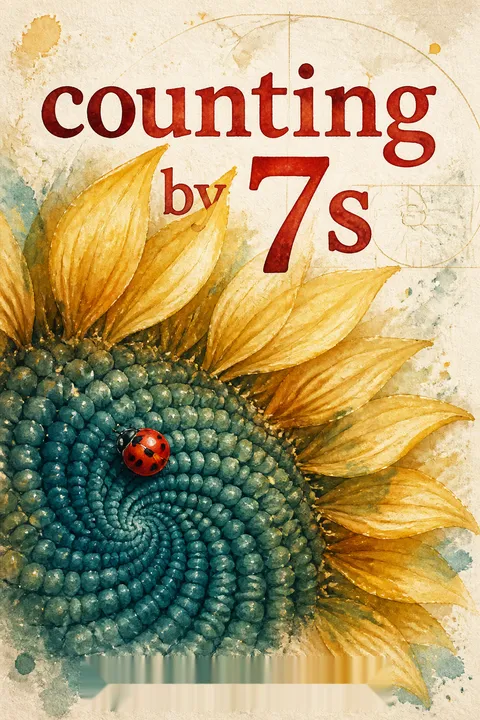

Plot Summary
Genius in the Garden
Willow Chance, a twelve-year-old adopted genius, finds solace in her backyard garden and the world of plants, numbers, and medical facts. Her parents, Roberta and Jimmy, love her deeply, and though she is an outsider at school, Willow's curiosity and intelligence set her apart. She counts by 7s to calm herself, studies diseases, and finds comfort in the order of nature. Her garden is her sanctuary, a place where she feels in control and at peace. Despite her parents' efforts to help her fit in, Willow's uniqueness makes her both isolated and self-sufficient, preparing her for the unexpected upheaval that will soon shatter her carefully constructed world.
Catastrophe Strikes Home
After a seemingly ordinary day, Willow returns home to find police officers waiting. She learns that her parents have died in a car accident, and her world collapses. The shock is immediate and overwhelming; Willow's sense of order is obliterated, replaced by a void of grief and confusion. With no close relatives or family friends to turn to, she is thrust into the care of strangers. The loss is total—her home, her parents, her sense of belonging. Willow's emotional numbness and inability to process the tragedy leave her adrift, and she must now navigate a world that feels hostile and unfamiliar, with only her intellect and resilience to guide her.
The Unlikely Counselor
Willow is assigned to Dell Duke, a disorganized and uninspired school counselor who categorizes students into types: misfits, oddballs, lone wolves, and weirdos. Dell is ill-equipped to handle someone as extraordinary as Willow, but her presence unsettles and eventually inspires him. Their sessions are awkward, filled with word games and silence, but a strange bond forms. Dell's own life is stagnant and cluttered, but Willow's intelligence and vulnerability begin to awaken a sense of responsibility and purpose in him. He is both challenged and changed by her, setting the stage for an unlikely alliance that will shape both their futures.
Vietnamese Connections
Through Dell, Willow meets Mai Nguyen and her older brother Quang-ha, Vietnamese-American siblings with their own struggles. Mai is compassionate and assertive, while Quang-ha is rebellious and distant. Their mother, Pattie, runs a nail salon and works tirelessly to provide for her children. Mai quickly befriends Willow, drawn to her intelligence and vulnerability, and the two form a bond that transcends age and background. The Nguyen family's warmth and resilience offer Willow a glimpse of belonging, even as she remains an outsider. Their connection becomes a lifeline as Willow's world continues to unravel.
The Ice Cream Pact
After a tense day, Dell takes Willow, Mai, and Quang-ha for ice cream, an outing that marks the beginning of their makeshift family. The simple act of sharing cones and conversation in public is transformative for Willow, who feels included and seen. The group's dynamic is awkward but genuine, and the experience becomes a cherished memory. This moment of connection, though fleeting, plants the seeds for deeper relationships and mutual support. It is a turning point, signaling that even in the midst of loss, new bonds can form and offer hope.
Temporary Shelter, Temporary Family
With no relatives to claim her, Willow is taken in by the Nguyen family, who live in a cramped garage behind the nail salon. Pattie, though initially reluctant, recognizes Willow's need and steps up to provide care. The arrangement is makeshift and precarious, but it offers Willow safety and a sense of routine. She struggles with grief and displacement, but the Nguyens' kindness and Mai's friendship help her begin to heal. The temporary nature of her stay looms over everything, but for the first time since the accident, Willow experiences the comfort of being part of a household, however unconventional.
The Weight of Grief
Willow's grief is profound and isolating. She withdraws, unable to eat, sleep, or speak without effort. The routines of the Nguyen household provide some stability, but the pain of her parents' absence is ever-present. She is haunted by memories and the knowledge that her time with the Nguyens is limited. The threat of being placed in foster care or an institution hangs over her, intensifying her anxiety. Yet, in her silence and suffering, Willow begins to observe the small acts of care around her—Mai's concern, Pattie's quiet strength, and even Quang-ha's grudging tolerance—each a thread pulling her back toward life.
The Nail Salon Sanctuary
At the nail salon, Willow finds a role for herself, helping Pattie with organization, health standards, and even business improvements. Her analytical mind and attention to detail make her invaluable, and she gains a sense of agency and accomplishment. The salon becomes a sanctuary, a place where she can contribute and feel needed. Through her efforts, the business thrives, and Willow's confidence grows. The experience teaches her the power of small acts and the importance of community, even as she remains uncertain about her future. The salon is both a refuge and a reminder of the impermanence of her situation.
The Library Escape
Overwhelmed by uncertainty, Willow escapes to the public library, her true sanctuary. Surrounded by books, she finds comfort and a sense of belonging. The library is a place where she can disappear, observe, and think without judgment. It is here that she reflects on her losses, her identity, and the possibility of starting anew. The act of reading and learning becomes a form of self-care, helping her process grief and imagine a future beyond her current pain. The library represents both the continuity of her old life and the potential for transformation.
A New Routine Emerges
As weeks pass, Willow, Mai, Quang-ha, and Dell settle into a new routine. They share meals, chores, and even television time, gradually forming a patchwork family. Willow helps Quang-ha with schoolwork, Mai decorates their shared room, and Dell, inspired by Willow's presence, begins to improve his own life. The group's interactions are often awkward, but moments of laughter and cooperation signal growing trust. The temporary arrangement becomes more stable, and Willow starts to hope that she might belong somewhere again. Yet, the threat of separation and the need for a permanent solution remain ever-present.
Seeds of Change
Willow's passion for plants inspires a project to transform the drab courtyard of their apartment complex into a vibrant garden. With help from her new family, she organizes the removal of red lava rock, prepares the soil, and plants sunflowers and other cuttings. The process is laborious and messy, but it brings the group together and gives Willow a renewed sense of purpose. The garden becomes a symbol of hope and regeneration, mirroring Willow's own journey from despair to possibility. As the sunflowers grow, so does the sense of community among the residents, and Willow begins to imagine a future where she can thrive.
The Gardens of Glenwood
The garden project galvanizes the apartment community, drawing in neighbors and even the building's management. Dell is appointed building representative, and the once-neglected courtyard becomes a source of pride and beauty. Willow's leadership and vision are recognized, and the act of nurturing living things helps her heal. The garden is a testament to resilience, cooperation, and the power of small acts to create lasting change. It also becomes a metaphor for Willow's own growth, as she learns to accept help, trust others, and let herself be cared for.
The Sunflower Project
As the sunflowers bloom, Willow faces new challenges: the threat of being moved to foster care, the loss of her rooftop nursery to a maintenance mishap, and the uncertainty of her legal status. Yet, each setback is met with support from her chosen family—Dell, Pattie, Mai, and even Quang-ha. The community rallies to help her, and unexpected allies, like Jairo the taxi driver, step forward. The garden flourishes despite obstacles, and Willow learns that resilience is not about avoiding pain, but about finding meaning and connection in the midst of it.
Bureaucracy and Belonging
As Willow's court date approaches, the adults in her life—Pattie, Dell, and Jairo—work behind the scenes to secure her guardianship. Bureaucratic hurdles and legal complexities threaten to separate her from the only family she has left. Willow, meanwhile, continues to contribute to the household, helping with finances, schoolwork, and the ongoing garden project. The uncertainty is agonizing, but the collective determination of her friends and guardians offers hope. The struggle to belong becomes a shared mission, uniting the group in purpose and love.
The Power of Small Acts
Throughout her ordeal, Willow discovers that small acts of kindness—helping with homework, organizing the salon, planting seeds, or simply listening—can have profound effects. The people around her, each flawed and struggling in their own way, rise to the occasion, offering support, acceptance, and even love. The transformation of the garden mirrors the transformation of their lives, as each person grows, heals, and finds a place in the world. Willow learns that family is not defined by blood, but by the willingness to care for and stand by one another.
The Courtroom Gathering
On the day of her custody hearing, Willow is surprised to find her entire chosen family—Pattie, Jairo, Dell, Mai, and Quang-ha—waiting for her in the judge's chambers. Pattie and Jairo have petitioned for joint guardianship, and the judge, moved by their commitment, grants it. The moment is emotional and cathartic; Willow is overwhelmed by the realization that she is wanted and loved. The legal recognition of her new family is both an ending and a beginning, marking the start of a new chapter in her life, rooted in acceptance and hope.
Guardianship and Goodbyes
With guardianship secured, Willow settles into her new life at the Gardens of Glenwood. The garden flourishes, the household finds stability, and each member of the group continues to grow and change. Willow reflects on the journey that brought her here—the losses, the pain, the unexpected friendships—and recognizes that she is no longer alone. She counts the seven people who matter most to her, understanding that family is chosen as much as given. As she plants her lucky acorn in the garden, Willow embraces the uncertainty of the future, confident that, whatever comes, she is surrounded by love and possibility.
Analysis
Counting by 7s is a luminous exploration of grief, resilience, and the transformative power of community. Through the eyes of Willow Chance—a brilliant, eccentric outsider—the novel examines what it means to lose everything and still find the courage to begin again. The story's heart lies in its celebration of found family: the idea that love, support, and belonging can be built from the most unlikely materials and people. Sloan's narrative structure, rich symbolism, and multidimensional characters invite readers to reflect on the ways small acts of kindness can ripple outward, changing lives and creating new possibilities. The garden at the center of the story is more than a physical space; it is a living metaphor for healing, growth, and the interconnectedness of all things. In a world often defined by loss and uncertainty, Counting by 7s offers a hopeful vision: that even in the aftermath of catastrophe, we can root ourselves in new soil, nurture each other, and bloom again. The novel's lesson is clear—family is not just who we are born to, but who we choose, and every act of care, no matter how small, counts.
Review Summary
Reviews for Counting by 7s are largely positive, averaging 4.14/5. Many readers adore protagonist Willow's unique voice, humor, and emotional depth, praising the book's heartwarming themes of found family, grief, and resilience. Critics raise valid concerns, including Willow's implausibly vast genius, an overly convenient ending involving sudden wealth and a lottery win, inconsistent characterization of Pattie, and Dell's problematic counseling methods going largely unchallenged. Some find the writing style—heavy on single-sentence paragraphs—tiresome. Despite flaws, most agree it's a moving, memorable middle-grade read.
People Also Read







Characters
Willow Chance
Willow is a twelve-year-old genius, adopted and "different" from her peers, with obsessions for plants, medical conditions, and the number 7. Her world is shattered by the sudden death of her parents, plunging her into profound grief and dislocation. Willow's intelligence is both her shield and her burden, making her an outsider but also giving her the tools to survive. She is deeply introspective, analytical, and struggles with social connection, but her journey is one of gradual opening—learning to trust, accept help, and form bonds with her new surrogate family. Through loss, she discovers the power of community, resilience, and the possibility of belonging.
Mai Nguyen
Mai is a fourteen-year-old Vietnamese-American girl who becomes Willow's first real friend after the tragedy. Mature beyond her years, Mai is fiercely protective of her family and quickly extends that care to Willow. She is practical, resourceful, and unafraid to challenge authority, often acting as the glue that holds the group together. Mai's empathy and leadership help Willow navigate her grief and find a place in the world. Through her friendship with Willow, Mai also learns vulnerability and the importance of letting others in, deepening her own sense of identity and belonging.
Quang-ha Nguyen
Quang-ha, Mai's older brother, is initially sullen, resistant, and dismissive of Willow. He struggles with authority and feels overshadowed by his sister's competence. Over time, however, Quang-ha reveals hidden depths—artistic talent, intelligence, and a capacity for empathy. His relationship with Willow evolves from annoyance to grudging respect and, eventually, acceptance. Quang-ha's journey mirrors Willow's in many ways: both are outsiders, both have experienced loss, and both find healing through unexpected connections and shared projects, like the garden.
Pattie Nguyen
Pattie is Mai and Quang-ha's mother, a Vietnamese immigrant who runs a nail salon and supports her family through sheer determination and hard work. Initially reluctant to take in Willow, Pattie's sense of responsibility and compassion prevail. She becomes a surrogate mother to Willow, providing structure, care, and eventually, legal guardianship. Pattie's strength lies in her practicality and her ability to make the best of difficult circumstances. Her journey is one of opening her heart, not just to Willow, but to the possibility of a larger, chosen family.
Dell Duke
Dell is a school counselor who initially sees his job as a burden and his students as problems to be categorized. Meeting Willow disrupts his complacency, forcing him to confront his own shortcomings and capacity for change. Through his involvement with Willow and the Nguyens, Dell evolves from a passive observer to an active participant in their lives. He becomes more responsible, healthier, and even finds a sense of belonging. Dell's arc is one of redemption, showing that even the most unlikely people can grow and make a difference.
Jairo Hernandez
Jairo is a taxi driver who enters Willow's life by chance but is profoundly affected by her. Her encouragement leads him to pursue education and a new career, and he becomes a steadfast supporter and eventual co-guardian. Jairo's journey is one of self-discovery and transformation, inspired by Willow's resilience and belief in him. He represents the power of small encounters to change lives and the importance of kindness and faith in oneself.
Roberta and Jimmy Chance
Willow's adoptive parents are devoted, nurturing, and central to her sense of security and identity. Their sudden death is the catalyst for the novel's events, and their absence haunts Willow throughout her journey. Through memories and flashbacks, their love and influence remain a guiding force, shaping Willow's values and her capacity to love and trust others.
Lenore Cole
Lenore is the social worker assigned to Willow's case. She is professional, compassionate, but constrained by the limitations of the system. Lenore's interactions with Willow highlight the challenges faced by children in foster care and the importance of advocacy and persistence. Though not a central figure, her role is crucial in navigating the bureaucracy that threatens to separate Willow from her new family.
Cheddar the Cat
Cheddar, Dell's cat, is a recurring presence and a symbol of survival and adaptation. Lost and found, Cheddar mirrors Willow's own journey—abandoned, vulnerable, but ultimately finding a place in a new home. The cat's presence offers comfort, companionship, and a sense of continuity amid upheaval.
The Gardens of Glenwood Residents
The residents of the apartment complex, though mostly background figures, represent the broader theme of community and the potential for transformation through collective effort. Their gradual involvement in the garden project and acceptance of Willow and her new family underscore the novel's message that belonging is built, not given.
Plot Devices
Nonlinear Narrative and Multiple Perspectives
The novel employs a nonlinear structure, moving between past and present, and occasionally shifting perspectives among Willow, Dell, Mai, and others. This approach allows readers to experience the emotional impact of events from multiple angles, deepening empathy and understanding. Flashbacks to Willow's life before the accident provide context for her grief, while glimpses into the thoughts of Dell, Mai, and Pattie reveal their own struggles and growth. The structure mirrors the chaos and unpredictability of grief, while also highlighting the interconnectedness of the characters' journeys.
Symbolism of Plants and Growth
Plants, gardens, and the act of cultivation serve as central metaphors throughout the novel. Willow's obsession with plants reflects her need for order and control, while the transformation of the apartment courtyard into a garden symbolizes the possibility of renewal and growth after loss. The process of planting, nurturing, and watching things bloom parallels the characters' emotional journeys, illustrating that healing is gradual, collaborative, and often messy. The sunflower project, in particular, embodies hope, resilience, and the power of small acts to create lasting change.
Found Family and Community
The plot is driven by the formation of a "found family"—a group of unrelated individuals who come together to support and care for one another. This device challenges traditional notions of family and highlights the importance of acceptance, kindness, and mutual aid. The gradual transformation of strangers into a cohesive unit underscores the novel's message that belonging is not about blood, but about commitment and love.
Bureaucratic Obstacles and Social Systems
The novel foregrounds the challenges of navigating social services, foster care, and legal systems. Bureaucratic hurdles threaten to separate Willow from her new family, creating tension and urgency. The characters' collective efforts to overcome these obstacles demonstrate the importance of advocacy, persistence, and solidarity. The depiction of these systems is both critical and hopeful, acknowledging their flaws while celebrating the individuals who work to make them more humane.
Humor and Wordplay
Despite its heavy themes, the novel employs humor, word games, and quirky observations to lighten the narrative and reveal character. Willow's literal-mindedness, Dell's awkwardness, and the group's misadventures provide moments of levity that make the story accessible and emotionally resonant. This balance of humor and pathos is essential to the novel's appeal and its message of hope amid hardship.
Download PDF
Download EPUB
.epub digital book format is ideal for reading ebooks on phones, tablets, and e-readers.








































