



Plot Summary
Crowned Over a Fresh Grave
Elara,1 a commoner who handles corpses for a living, lowers King Kael7 into palace soil beside her trembling mother,6 hiding the slash she carved across his throat beneath dried marigolds. A golden crown sits fused to her skull, pulsing like living bone. Before he died, Kael7 forced the blade into her hand and named her the realm's only hope of breaking a curse that rots the land, yet explained nothing.
Miss Hampshire,4 the housekeeper, confirms he kept his plans secret and mentions a messenger who never arrived.5 Her brother Daron3 lies dying of the same rot, her mother's neck6 already darkening with it. Alone among the headstones, Elara1 holds a crown, a curse, and no instructions whatsoever.
The opening inverts fairytale ascension: a coronation that feels like another burial. Zander grounds her heroine in deathwork, making Elara uniquely unafraid of the grave, which later becomes her power rather than her doom. The fused crown literalizes obligation as bodily violation, a debt carried in the skull. Marigolds masking a murdered throat introduce the book's central tension between mercy and lie, beauty and rot. Crucially, Elara begins powerless in knowledge, not nerve. Her competence with bodies contrasts sharply with her cluelessness about rule and curse, establishing the engine of the plot: a woman handed catastrophic responsibility and forced to reverse-engineer her own salvation.
Death Comes to Collect
The scent of carnations announces Vale,2 the handsome guise Death wears among mortals. He accuses Elara1 and Kael7 of conspiring to cheat him, citing the suspicious timing of her crowning and the throat-cutting, and reminds her that when a mortal outwits Death,2 Death must grant a wish. Just as clueless as he is, Elara1 seizes the misunderstanding and pretends it was all deliberate.
She first demands the curse lifted; he refuses, since the crown rests on an older binding he cannot contradict. She asks him to resurrect Kael,7 and his refusal explodes into a jealousy that reads less like an outwitted god and more like a scorned lover. Moonlight strips his disguise to bare bone before he vanishes in shadow.
The wish-debt establishes the book's bargaining logic, where rules bind even gods, giving a mortal leverage against the infinite. Elara's instant decision to bluff reveals her gravedigger pragmatism: she reads Death like a grieving client, calm where others panic. The chapter's richest move is emotional misdirection. Vale's fury at the thought of Kael as her lover betrays an attachment he cannot name, planting the romance long before either admits it. The moonlight unmasking introduces shame as his governing wound. He hides his true form not to spare mortals but to spare himself their revulsion, a vanity that is really terror of being seen and rejected.
The Messenger's Mad Rite
Kael's confidant,7 Corvin Hale,5 ambushes Elara1 and hauls her through palace tunnels, insisting that stillness lets Death2 overhear them. He reveals the curse was meant to pass through a ruler, but priests altered ancient translations to bind it to kings alone. By crowning Elara,1 Kael7 shifted the debt onto Death's lover.2
To shatter the gold, she must perform the full coronation rite upon Death2 himself: wed him, bed him, crown him, then bleed him over the metal. Worst of all, the rite demands love. Corvin5 flees before Death2 can sense him, abandoning her in Queen Maeryn's greenhouse with an impossible task. Elara1 concludes she cannot persuade a god2 to marry her, so she resolves to demand it using the wish she is owed.
The rite weaponizes romance tropes into literal ritual: wedding, bedding, and crowning become mechanical steps toward regicide-as-salvation. The demand for love is the cruel hinge, transforming a tactical seduction into a genuine emotional ordeal. Corvin embodies institutional cowardice, dropping a theology of impossible tasks and running, a recurring pattern where men hand Elara burdens and vanish. The altered translations critique how power launders scripture, men editing prophecy to keep crowns on male heads. Elara's pivot from persuade to demand is characteristically her: she does not seduce so much as conscript. The greenhouse setting, full of things struggling to grow amid rot, mirrors the fragile possibility she is being asked to cultivate.
Wishing for a Husband
Elara1 climbs into a freshly dug grave and lies corpse-still to summon Death,2 who joins her in the cramped earth. She attempts seduction, grinding against him to begin the bedding the rite requires, but Vale2 sees through the scheme. He pins her and spends himself against her without ever entering her, mocking her clumsy strategy and leaving her furious and unsatisfied.
Then she plays her real card and wishes for him to marry her. Bound by his own laws and unable to find a loophole that would let him refuse, Vale2 seethes but consents. In return he promises a cruel bargain: he will play husband for a few decades, watch her wither and rot, then drag her soul to the deepest, darkest pit when she finally dies.
The grave as seduction-stage is the novel's signature image, intimacy and mortality folded into one trench. Elara's comfort lying among worms while propositioning Death dramatizes her thesis that she belongs with the dead, foreshadowing her eventual peace with mortality. Vale's refusal to penetrate her while still pleasuring himself is psychologically telling: he grants his body but withholds the act that would advance her plan, asserting control through deprivation. His threat of an eternal pit reads as wounded bravado, the over-promise of a being protecting itself by performing villainy. The marriage wish is a masterstroke of leverage logic, turning his binding rules into the chain she fastens around him.
A Wedding Laced With Venom
In a palace chapel, a nervous priest binds Death2 and his gravedigger queen1 with a ceremonial cord that cinches strangely tight against Vale's2 chest. From his perspective, something already stirs beneath his ribs, an unfamiliar ache he blames on the rope. Elara's weary mother6 quietly asks him to be kind to her daughter, or at least useful.
When Elara1 arrives in deep green silk, her hair pinned plain and unadorned, Vale,2 primed to mock her, instead finds himself wordless. They hiss their vows like insults, she vowing to sleep and bathe in the crown, he promising she will regret every second, yet both speak the binding words. Ancient law tightens around him, and he grasps that she has turned the rite meant for kings against a god.2
Zander stages matrimony as combat, every endearment a dagger, which paradoxically reveals genuine feeling through the intensity of denial. The cord that constricts Vale's chest is the first physical symptom of his reviving heart, a somatic metaphor for love experienced as suffocation. His speechlessness at Elara's plainness is the tell: he is moved not by ornament but by her unvarnished self, which resembles death, his own domain. The mother's plea introduces a moral conscience the god cannot dismiss. By making the wedding adversarial, the author lets us watch two people fall toward each other while insisting they are doing the opposite, the enemies-to-lovers engine running at full throttle beneath the venom.
The Queen at Her Desk
Forced to actually govern, Elara1 leans on Miss Hampshire4 to manage a burst dam, ordering the eastern dikes opened and rotting corpses dumped into a depleted salt mine to contain the pestilence. Desperate crowds mass at the palace gates begging for hope.
That night Vale2 materializes in her chamber, taunting her with whether she loves him yet. Their quarrel turns carnal: he bends her over the desk, spanks and pleasures her while demanding her love, yet still denies the actual bedding the rite needs.
Elara1 registers his fierce resistance as a tell, reasoning that wherever he fights hardest is where the real power must lie. Then he notices, with sudden wariness, that she has begun to bleed, a complication for any thought of conceiving a child.
The dual workload, statecraft and seduction, shows Elara learning to rule by transferring graveyard logic to a kingdom: keep the rot from the living, handle the dead without ceremony. Miss Hampshire functions as institutional memory and quiet feminist counterweight. The erotic power-play encodes the book's deeper negotiation about control and surrender, but Elara reads it analytically, converting passion into intelligence-gathering. Her insight that resistance marks value is the strategic heart of the romance: his refusals map his vulnerabilities. The bleeding detail seeds the pregnancy question that later terrifies him, threading biological consequence through desire and reminding us this fantasy keeps one foot in mortal bodies and their stubborn realities.
Unmasking Death
Poring over the curse documents, Elara1 realizes the rite hinges on love and gambles a second wish, admitting in the moonlit woods that she never truly plotted with Kael.7 The confession does not dissolve the marriage, so her wish stands.
Instead of demanding a bedding, she wishes to explore his true form. Vale2 steps into the moonlight and lets the illusion tear away: half pale man, half exposed skull, ribs, and glistening tendon. Rather than recoil, Elara1 touches him, tracing bone and sinew with fascination, even reaching into the open cage of his chest.
There she finds his heart strung by ruined heartstrings, one of which looks startlingly healed. He jerks back, insists he cannot feel love, and calls an existence without it the only sane one.
This is the romance's true consummation, intimacy of recognition rather than sex. Elara's refusal to flinch reverses the rejection Vale has braced for across eons, and her curiosity where others see horror redefines monstrosity as merely the unloved self. The half-and-half body literalizes his divided nature: a man yearning beneath the god enforcing distance. The heartstrings externalize emotional capacity as anatomy, letting the abstract become tactile. Her noticing the unexpectedly healed string is dramatic irony at its sharpest, she sees what he is desperate to deny. His insistence that lovelessness equals sanity frames love as madness, the defense of a being who once measured grief and decided never to risk it again.
Death Cuts Out His Love
Alone before a mirror, Vale2 confronts the truth he has been dodging: a severed heartstring has knitted itself whole, and with it returns the love he buried centuries ago. He traces the contagion back through every quiet moment with Elara,1 the grave, the tower, his jealousy over Kael,7 and panics at what a single restored thread does to him.
Refusing to feel more, he carries her sleeping body to bed with aching gentleness, then drives his own sharpened finger-bone into his chest and tears the mended string back down to a single trembling fiber. The agony is immense, but he tells himself it is nothing beside the grief that loving a mortal would one day demand of him. He chooses self-mutilation over surrender.
A rare interior chapter from Death's view, exposing the machinery of avoidance. Self-harm becomes literal here: he physically rips out his own capacity for feeling, the most extreme depiction of emotional self-protection imaginable. The tenderness of carrying her sleeping body undercuts his stated resolve, betraying that the damage is already done. Zander dramatizes attachment as something that heals against the will, the body insisting on connection the mind forbids. His reasoning, that present love is not worth future grief, is the thesis the entire novel will dismantle. The mirror scene frames denial as a fight with one's own reflection, a god unable to outrun what he sees becoming true inside his ribs.
Tenderness at the Orphanage
To project a stable crown to the realm, Elara1 brings Vale2 to an orphanage, where he visibly aches at a dying boy's bedside before slipping away. She finds him perched on a tiny stool, gently telling a red-haired girl8 that he takes broken things away rather than fixing them. The child insists he try anyway, repeating her matron's9 wisdom that now is all anyone is ever given.
Disarmed, Vale2 passes the broken wooden bird to Elara,1 calling her exasperatingly talented at mending things that ought to stay destroyed. In the corridor afterward he cradles her face and kisses her, soft and frightened and nothing like his earlier cruelty, before retreating behind his cold mask. Elara1 feels a warmth bloom in her chest she had sworn was impossible.
The orphanage reframes Death from punisher to reluctant caretaker, and the red-haired girl delivers the book's governing philosophy: presence over permanence. Her insistence on playing with a doomed toy models the courage Vale lacks, embracing now despite certain breakage. His remark about Elara mending what should stay broken is self-referential confession, she is healing his heart against his will. The first gentle kiss marks the turn from transactional contact to genuine vulnerability, and its frightened quality signals that for him intimacy is terror, not triumph. Elara's surprised warmth tracks her own arc: a woman who weaponized seduction discovering, inconveniently, that the feeling she was faking has begun to grow real.
The Brother's Last Breath
In the greenhouse Vale2 confesses he has twice strained against his own nature to steal Daron3 extra days, and now no time remains: her brother is dying at this very moment. Elara1 shatters, pounding his chest, begging him to break the curse, screaming that she only needs more time to learn to love him.
In blind panic she slashes his throat with a pruning knife, again and again, then rips the crown from her own head and slams it onto his, attempting the rite in raw desperation. The attempt fails. Daron3 dies. Only later, at the funeral, does Elara1 learn from her grieving mother6 that Vale,2 freshly wounded and bleeding, dragged himself to Daron's3 bedside to sit with him and soothe his fear as he passed.
The novel's devastating midpoint collapses Elara's tactical control into pure grief-driven violence. Her attack on Vale is both botched ritual and emotional truth, she wounds the thing she is beginning to love because it cannot save what she loves most. That the rite fails confirms its real requirement is not blood but love, which neither possesses yet. The revelation that Vale comforted Daron recasts the antagonist as quietly self-sacrificing, performing tenderness off-page where pride cannot be wounded. Grief here is shown as love with nowhere to go, a theme Daron himself articulated. The chapter punishes the reader's hope precisely to make the eventual reconciliation earned rather than given.
The Truth in the Old Tongue
A priest delivers the unaltered translation, and it guts her: the curse breaks not through her love but through Death's2 own shattered heart learning to feel it. Vale2 never lied when he said he could not break it. Grieving in the snow, Elara1 stops blaming him.
He sits beside her and finally explains his terror, recounting a farmer who murdered his brother over love, a mother who drowned herself and her infants for a husband who left, and the death of his ferryman friend Eamon, the loss that first taught him to tear out his own capacity to love. When Elara1 collapses against him, he wraps her in his cloak and warmth, and through his exposed ribs she glimpses two heartstrings straining once more to mend.
The corrected prophecy reverses the burden of the entire plot: salvation depends on the god, not the girl, transforming Elara from agent to witness and Vale from obstacle to the one who must change. His catalogue of love-born tragedies functions as case studies in why he equates love with annihilation, a trauma-informed worldview built from millennia of collecting its wreckage. Eamon names the originating grief. Elara's release of blame marks her moral maturation, she grants him the compassion of understanding without surrendering her conviction that the cost of refusal is unbearable. The straining heartstrings, glimpsed against his will, insist the body keeps voting for connection even as the mind recites its evidence against it.
Snow, Stable, and Vanishing
Elara1 hurls a snowball at Vale,2 igniting a giddy courtyard chase that ends with them tangled and laughing, grief briefly outshone by play. In the stable they finally complete the bedding, slow and reverent, Death2 fully unveiled as she touches bone and healing heartstrings.
Afterward, realizing his seed might have made a child, he vanishes mid-apology, terrified. That night he returns and confesses the fear beneath everything: as an immortal he would watch her die, then any child of theirs, then generation after generation, suffering an eternal, compounding grief with a whole and unguarded heart. Elara1 answers that love and grief are two faces of one coin, and that he must choose to truly live rather than merely persist as a beautiful corpse.
The snowball fight is structurally vital comic relief that also enacts the thesis, joy is worth having precisely because it melts. The stable union completes the literal rite while sealing the emotional one, sex finally meaning surrender rather than strategy. Vale's flight from possible fatherhood escalates his fear from losing a wife to losing endless descendants, the math of immortal grief. Elara's coin metaphor crystallizes the novel's argument against emotional avoidance: you cannot excise grief without excising the love that gave it meaning. Her distinction between living and persisting indicts his whole existence, reframing eternal life without love as a more total death than mortality, the corpse that breathes but does not feel.
Crown Me Yours
Digging a guard's grave alone in frozen soil, Elara1 forces a reckoning, threatening divorce and a mortal husband and arguing that living for someone is harder and braver than dying for them. Shaken, Vale2 finally chooses her, vowing to break the curse and bear the whole heart it costs. In the throne room she crowns him, names him hers, and lets him reveal his true form.
With a violently trembling hand he cuts her throat as the rite demands, and molten gold spins his third heartstring whole. As her soul drifts toward a peaceful, welcoming rest, his wrecked sob hooks her back; he refuses to let her pass through and pulls her into life. She wakes two days later to a healed mother,6 retreating rot, and crocuses splitting the frost.
The climax fuses sacrifice and trust: Elara offers her throat to the very thing she once feared, and Vale must kill what he loves to keep it. The act inverts the original curse, blood and love now restoring rather than binding. Her near-surrender to death's peace tests whether he has truly chosen life, and his refusal, calling her back, is the final renunciation of his avoidance: he commits to grief by insisting on love. The title line, crown me yours, completes the rite's reversal, possession reframed as devotion rather than debt. The blooming crocuses externalize internal thaw, a realm and a god learning simultaneously that renewal requires risking loss.
Epilogue
With the curse undone, Elara1 and Vale2 build a life equal parts ordinary and impossible. A hillside picnic reveals her pregnancy, and Death2 weeps over the seed he never believed he could plant. He delivers their daughter himself, and three children follow.
Across decades he treasures every new wrinkle and silver hair as proof of a life fully lived, and when Elara1 finally dies of old age, he holds her, carries her soul to rest, and is gathered into the arms of their grieving children. Generations later he stands beside a descendant surgeon named Sera, helping her pull new life into the world, a god who once only collected souls now choosing, again and again, the brief and shining now.
The extended coda is the payoff of the novel's central wager: Vale chooses love knowing grief is guaranteed, and the book honors that choice by actually depicting the loss he feared. Rather than a tidy happily-ever-after, Zander insists on mortality, letting Elara age and die while Death endures, which gives the romance unusual emotional integrity. The pregnancy and lineage transform his terror of compounding goodbyes into a legacy of recurring hellos. Sera, carrying Elara's stubborn mouth across centuries, embodies continuity as consolation. The final image, Death aiding birth rather than reaping, completes his arc from soul-collector to life-bringer, proving the thesis that now, however fleeting, is the only thing worth keeping.
Analysis
Crown Me Yours stages a deceptively simple argument inside a dark fantasy romance: that a life without grief is not safety but a kind of death. Its central irony is that Death2 himself is the character most terrified of loss, having spent millennia collecting the wreckage of love and concluding that feeling is madness. Zander externalizes this avoidance through anatomy, the severed heartstrings he can literally tear out, so that emotional repression becomes visceral self-mutilation and recovery becomes a body healing against its owner's will. The romance works because it inverts power repeatedly: a calloused gravedigger,1 fluent in the dead, holds leverage over an immortal precisely because she does not flinch at what others cannot bear to see. Her fearlessness around corpses, framed early as ghoulish, is revealed as the rare quality capable of loving a half-skeletal god without revulsion, and ultimately of facing her own mortality with peace. The book's thesis is delivered most cleanly by the dying brother3 and a red-haired orphan:8 grief is love with nowhere to go, pain proves we are alive, and now is all anyone is ever given. This philosophy is tested rather than merely stated. The extended denouement refuses an easy ending, depicting the heroine's1 aging and death and the god's resulting sorrow, which retroactively validates his fear while affirming his choice. By showing that the cost was real and the choice still worth it, the narrative earns its emotional argument instead of asserting it. Thematically it also critiques institutional power, priests editing prophecy to keep crowns on men, and reclaims domesticity, mending toys, snowball fights, childbirth, as the true miracles a death-god learns to value. The result is a romance about consenting to impermanence: choosing to live, and love, precisely because everything melts.
Characters
Elara
Gravedigger turned cursed queenA commoner who spent her life burying the dead, Elara is calloused in hand and blunt in speech, more at ease among headstones than thrones. Crowned against her will and saddled with a curse she does not understand, she fights for one consuming reason: to save her dying brother3 and rotting mother6. Her comfort with death, which others find ghoulish, becomes her greatest strength, letting her face a god2 without breaking. Pragmatic, stubborn, and tactically cunning, she treats seduction and statecraft like grave work, jobs to finish with steady arms. Beneath the grit runs deep tenderness and a fierce loyalty to family. Her arc tests whether a woman who fakes feeling can survive discovering it has become real.
Vale (Death)
Lonely god of endingsDeath walks among mortals as Vale, an arrogant, beautiful man in midnight velvet, a mask hiding a body that is half pale flesh, half exposed bone. Ancient and weary, he guides souls to rest and can nudge the dying toward or from their last grain of sand. Bound by inviolable laws, he owes wishes to those who outwit him. Centuries of witnessing love curdle into murder, suicide, and madness taught him to tear out his own heartstrings rather than risk grief again. Sardonic, possessive, and proud, he covers terror with cruelty. His core wound is the conviction that to love is to invite annihilation, making his journey toward feeling the most dangerous thing he has ever attempted.
Daron
Dying, witty younger brotherElara's1 beloved brother, slowly consumed by the rot that eats his lungs and skin. Even bedridden and fading, Daron jokes about death, teases his sister1 about her crown and her husband2, and refuses self-pity. He becomes the moral voice of the book, articulating that grief is simply love with nowhere left to go, and that pain proves one is still alive. His courage in the face of decay models the philosophy his sister1 and her god2 must learn.
Miss Hampshire
Pragmatic palace housekeeperA housekeeper with missing fingers and a tongue dry as old parchment, Miss Hampshire has served blood-crowned kings and slaughtered queens for decades. She becomes Elara's1 unlikely ally, feeding her the words to manage floods and crowds, locating hidden documents, and steadying her through grief. Unshaken even by the sight of Death2 unmasked, she embodies institutional memory and a quiet, stubborn competence that keeps a collapsing realm functioning.
Corvin Hale
Kael's secret confidantA mud-streaked messenger and the late king's7 only confidant, Corvin risks torture and death to deliver the secret of the curse. Jittery and convinced that stillness lets Death2 overhear, he hauls Elara1 through tunnels to explain the rite she must perform, then flees, claiming the less he knows the safer they all are. He represents the cowardice of men who burden Elara1 with impossible tasks and disappear.
Elara's Mother
Rot-stricken, weary motherA worn woman whose neck already shows the dark veins of rot, Elara's1 mother lost a husband and clings to her surviving children. Hollow-eyed but unbroken, she works graves alongside her daughter1 and quietly asks the god2 marrying into the family to be kind, or at least useful. Her grief and endurance anchor the human stakes of the curse.
King Kael
The late cursed kingThe previous bearer of the cursed crown, dead before the story's present, who spent years unrolling scrolls to decode the curse. Half-mad with hope, he crowned Elara1 and forced the blade into her hand, believing she was the key to breaking it, then took most of his knowledge to the grave. His secrecy and his evident fondness for Elara1 haunt both her and the jealous god2.
The red-haired orphan
Wise child with broken toyA small orphan girl who hands Death2 a broken wooden bird and insists he try to fix it, repeating that now is all anyone is ever given. Her simple wisdom pierces the god's2 defenses and seeds the book's central philosophy about cherishing the fleeting present.
Sister Merin
Struggling orphanage matronThe weary caretaker of a crumbling orphanage who shelters sick and starving children with almost nothing. She greets the queen1 and her husband2 with nervous gratitude, embodying the grinding human cost of the realm's pestilence and poverty.
Plot Devices
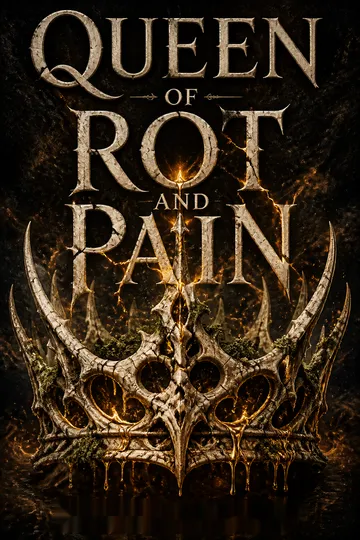
The fused crown
Binds curse to its bearerA golden crown that fuses to the wearer's skull, biting bone and pulsing with life, immovable except by the bearer's own hands. It is the physical anchor of an ancient curse that spreads rot across the realm, and it contains one of Death's2 severed heartstrings. Originally engineered so the debt passed through kings, it now binds Death's lover2 instead. The crown is both prison and instrument: it must be placed on the proper head and bled upon to complete the rite that could shatter it. Its constant hum and bite keep the stakes literally pressed against the protagonist's1 mind throughout the story.
The wish-debt
Mortal leverage over a godBy immutable law, when a mortal outwits Death2, Death must grant that mortal a wish, though he cannot contradict a prior binding. This rule gives a powerless gravedigger1 leverage over an immortal. The protagonist1 exploits a misunderstanding to claim her first wish and later confesses the truth to test a second, using each to maneuver the god2 into positions he would never freely take. The device drives much of the plot's bargaining and supplies the mechanism by which a marriage, and an unmasking, are forced upon a reluctant deity2.
Death's heartstrings
Externalized capacity to loveDeath's2 heart hangs in an exposed ribcage, held by three heartstrings, two broken and one trapped within the cursed crown. These strings are the literal anatomy of his ability to feel, especially love, which he abandoned after eons of witnessing love end in tragedy. As the story progresses, strings mend or are deliberately torn, making the god's2 emotional state visible and tactile. The condition of these threads becomes the true measure of whether the curse can ever break, since the prophecy hinges on Death's2 heart, not the queen's1.
The mistranslated stanza
Hidden key to the curseThe original terms of the bargain between the first king and Death2 were deliberately altered by priests, swapping ruler for king and consort for bride so the curse would travel through men. The protagonist1 commissions an honest retranslation, suspicious of inherited interpretations. The corrected verse reveals the true, far harder condition for breaking the curse, overturning everyone's assumptions and reframing who must change for salvation to be possible. It dramatizes how power edits truth and how revisiting the source can upend a doomed strategy.
The rot
Realm-wide ticking clockA creeping pestilence born of the curse, rotting flesh, fields, forests, and the dead alike, spreading famine and floods of contaminated corpses across the kingdom. It afflicts the protagonist's1 brother3 and mother6, giving her a personal deadline, while burst dams and gate-thronging mourners give her a political one. The rot is the external pressure that makes inaction impossible, forcing every bargain and risk. Its eventual retreat, marked by crocuses breaking through frost, signals the curse's resolution and the land's renewal.



Download PDF
Download EPUB
.epub digital book format is ideal for reading ebooks on phones, tablets, and e-readers.








































