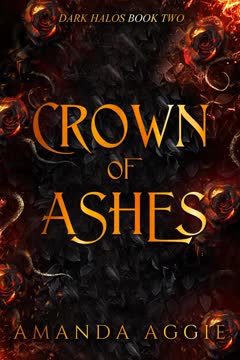
Plot Summary
1. Premonitions and Power Surges
Alice, newly powerful and still learning to control her magic, is plagued by disturbing premonitions and sleepwalking episodes. Her visions are violent and cryptic, hinting at a future where she loses control and becomes a threat. The pressure of her growing power is overwhelming, and she fears she may follow the tragic path of other nephilim before her. Supported by Finn, her loyal friend and trainer, Alice seeks answers in magic and ritual, desperate to understand her fate and whether she can change it. The emotional weight of her isolation and the burden of destiny set the tone for her journey through Hell's treacherous realms.
2. Training, Secrets, and Sleepwalking
Alice's days are filled with relentless training, both physical and magical, as she tries to master her abilities and prove herself worthy of freedom. Finn, her steadfast companion, pushes her to her limits, while Kai, her lover and the prince, is often absent, consumed by royal duties. Alice's frustration grows as she feels caged, both by the castle's walls and by the secrets surrounding her parents' fate. Her sleepwalking episodes and magical surges become more frequent, signaling a dangerous instability. The emotional distance between Alice and Kai deepens, and her longing for agency and answers intensifies.
3. Purgatory's Blood and Bone
To help Alice channel her volatile magic, Finn takes her to Purgatory's underground fight club, where prisoners battle for freedom. Alice's first real fight is brutal and raw, forcing her to confront the darkness within herself. She defeats a notorious criminal, but the victory is sobering—she realizes how close she is to losing control and how unprepared she is for the looming war. The experience is both empowering and terrifying, as Alice grapples with the moral ambiguity of violence and the thin line between justice and vengeance in Hell's unforgiving world.
4. Reunion in the Forest
After weeks apart, Kai returns to Hell Hold, and his reunion with Alice is charged with longing and unresolved tension. Their relationship is tested as they spar—both physically and emotionally—each trying to prove their strength and independence. The forest becomes a backdrop for their push-and-pull dynamic, blending desire with competition. Despite their love, trust issues simmer beneath the surface, fueled by secrets and the ever-present threat of war. Their connection is passionate but fraught, as both struggle to reconcile personal desires with the demands of destiny and duty.
5. Rabbit Holes and Whisps
During a training chase, Alice falls into a rabbit hole, landing in a lagoon filled with magical whisps—cunning spirits that tempt and bargain. Kai's protective instincts clash with Alice's need for autonomy, leading to a heated, intimate encounter that blurs the line between love and power. The episode underscores the unpredictable dangers of Hell's landscape and the constant testing of boundaries—both magical and emotional. Alice's bond with her familiar, Luri, is highlighted, as is the ever-present risk of losing control in a world where monsters lurk in every shadow.
6. Curfews and Catastrophes
The castle and town are placed under curfew after a violent incident involving Luri, Alice's cat, who is accused of attacking a village. The political climate grows tense as village masters and lords gather to debate the threat posed by Alice and her familiar. Kai and Finn struggle to protect Alice from the fallout, but secrets and mistrust fester. The curfew becomes a symbol of Alice's confinement and the kingdom's fear of her power. The emotional stakes rise as Alice is forced to confront the consequences of her actions and the precariousness of her place in Hell.
7. Conclaves and Confessions
Finn confesses to Kai that he's been taking Alice to illegal conclaves to help her manage her magic. The revelation sparks conflict, as Kai feels betrayed and fears for Alice's safety. Meanwhile, Alice's own secrets—her hidden magical experiments and her relentless search for her parents—come to light. The trio's bonds are tested as they navigate the complexities of love, loyalty, and survival in a world where every choice has dire consequences. The emotional landscape is fraught with guilt, resentment, and the desperate need for understanding.
8. The Village Masters' Verdict
The village masters demand action against Luri and, by extension, Alice, fearing her growing power and unpredictable nature. The council debates whether to exile or execute Luri, and some even suggest banishing Alice to the prison world. Kai and Finn fight to protect her, but the political machinations of Hell's ruling class threaten to tear them apart. The tension between personal loyalty and public duty reaches a breaking point, forcing Alice to make impossible choices. The emotional toll is immense, as Alice faces the reality of being seen as a monster by those she hoped to call home.
9. Boundaries and Betrayals
In a desperate attempt to keep Alice safe—and under control—Kai brands her with a magical mark that binds her to the castle grounds. The act is both protective and possessive, shattering Alice's trust and sense of agency. The emotional fallout is devastating, as Alice feels betrayed by the man she loves and isolated from those she thought were allies. The brand becomes a symbol of her captivity and the lengths to which others will go to control her power. The chapter is a turning point, marking the beginning of Alice's rebellion against the constraints imposed on her.
10. The Brand and the Break
Unable to bear her confinement, Alice enlists Clamara's help to remove the brand, enduring excruciating pain to regain her freedom. The act is both a literal and symbolic breaking of chains, as Alice asserts her autonomy at great personal cost. Her escape sets off a chain reaction, as Kai and Finn scramble to find her before she can intervene in the hunt for Luri. The emotional stakes are heightened by the sense of impending disaster and the realization that love, in Hell, is as much about survival as it is about devotion.
11. Escape and the Forest of Lost Souls
Alice braves the Forest of Lost Souls, battling ghosts and her own fears as she races to save Luri from execution. The journey is harrowing, filled with supernatural threats and the echoes of her own premonitions. The bond between Alice and Luri is tested as they both endure pain and near-death experiences. The forest becomes a crucible, forging Alice's resolve and forcing her to confront the darkness within herself. The emotional intensity is matched by the physical danger, as Alice risks everything for the sake of loyalty and love.
12. Sabotage in Disguise
Disguised as villagers, Kai and Finn sabotage the hunting party sent to capture Luri, using magic and cunning to protect Alice's familiar. Their efforts are both comedic and tense, highlighting the lengths they will go to for those they care about. The operation is a race against time, as they struggle to outwit their enemies and prevent tragedy. The chapter blends action with humor, underscoring the camaraderie and resourcefulness that define their friendship. The stakes are high, and the outcome uncertain, as the lines between heroism and deception blur.
13. The Hunt and the Rescue
Alice tracks Luri to Purgatory, where she confronts the men responsible for her familiar's capture. The rescue is brutal and bloody, as Alice unleashes her full power to save Luri and punish those who threatened her. The act is both a rescue and a declaration of war, signaling to Hell's rulers that Alice is not to be underestimated. The emotional aftermath is raw, as Alice grapples with the cost of violence and the weight of her choices. The bond between Alice and Luri is reaffirmed, even as the world around them grows more dangerous.
14. Fury on the Battlefield
The High King's forces invade, bringing monsters and magic to Hell's doorstep. Alice, Kai, and Finn join the battle, fighting alongside Lucifer and the kingdom's defenders. The battlefield is chaos—furies, collared beasts, and sorcerers clash with Hell's army. Alice's power becomes a weapon of mass destruction, but the cost is high. The emotional toll of war is palpable, as friends fall and the line between victory and defeat blurs. The chapter is a crescendo of action and emotion, setting the stage for the ultimate confrontation.
15. The Sword and the Spell
Alice wields a legendary sword capable of killing immortals, a symbol of her worthiness and the burden of destiny. The weapon's history is intertwined with the fate of Hell, and its power is both a blessing and a curse. As the battle rages, Alice and Finn target the sorcerers controlling the enemy's monsters, using magic and strategy to turn the tide. The interplay of ancient spells and modern warfare highlights the complexity of Hell's politics and the ever-present danger of unchecked power. The emotional stakes are heightened by the realization that every victory comes at a cost.
16. The Fall of Asmodeus
Asmodeus, Kai's estranged brother, emerges as a formidable foe, wielding dark magic and commanding the dead. Alice faces him in a brutal duel, drawing on every ounce of her strength and skill. The fight is both physical and psychological, as Alice confronts the legacy of betrayal and the weight of prophecy. In a climactic moment, she defeats Asmodeus, but the victory is bittersweet—she is left questioning the nature of heroism and the price of survival. The emotional aftermath is one of exhaustion, grief, and the sobering realization that Hell's greatest threats often come from within.
17. Aftermath and Revelations
In the wake of battle, the survivors regroup and reckon with the consequences of their actions. Kai learns the truth about his parentage and the deals that shaped his destiny, while Alice uncovers the secrets of her own lineage. Lucifer's manipulations come to light, revealing the extent to which fate and free will are intertwined in Hell. The emotional landscape is one of betrayal, forgiveness, and the search for meaning in a world where nothing is as it seems. The chapter is a turning point, as old alliances fracture and new ones are forged in the crucible of truth.
18. The Devil's Bargain
Lucifer offers Alice a deal: help him secure the future he desires, and he will reveal the secrets she seeks. The bargain is fraught with risk, as Alice must weigh her loyalty to Kai against the demands of destiny. The emotional stakes are heightened by the realization that every choice has far-reaching consequences—not just for herself, but for the fate of Hell. The chapter explores the nature of power, the limits of trust, and the cost of ambition in a world where every promise is a double-edged sword.
19. The Prison World Gambit
Determined to rescue Finn and assert her agency, Alice uses a magical artifact to trap the entire castle—and its inhabitants—in a prison world, buying herself time to act. The gambit is bold and dangerous, pitting her against Lucifer and the court. As she escapes with Luri, Alice embraces her role as both hero and villain, willing to defy the rules of Hell to save those she loves. The emotional climax is one of liberation and loss, as Alice sacrifices her place at Kai's side for the greater good.
20. Ashes and Ambitions
With the castle trapped and her enemies contained, Alice sets out to rescue Finn and confront the High King. The chapter is one of transformation, as Alice embraces her power and her destiny, determined to earn her place in Hell on her own terms. The emotional arc comes full circle, as Alice moves from captive to conqueror, forging a new identity from the ashes of betrayal and ambition. The story ends on a note of defiance and hope, as Alice prepares to face whatever comes next—no longer a pawn, but a queen in the making.
Analysis
Amanda Aggie's Crown of Ashes is a dark, lush, and emotionally charged fantasy that interrogates the nature of power, destiny, and agency in a world where every choice is fraught with consequence. At its heart, the novel is a story of transformation—of a heroine who moves from pawn to player, forging her own path through betrayal, love, and war. The narrative's use of prophecy and magical constraint reflects the psychological realities of trauma, control, and the longing for freedom. The relationships—romantic, platonic, and adversarial—are rendered with nuance, exploring the ways in which love can both heal and harm. The political intrigue and shifting alliances mirror real-world questions of legitimacy, leadership, and the cost of ambition. Ultimately, Crown of Ashes is a meditation on the price of survival and the courage required to claim one's place in a hostile world. Its lessons are both timeless and timely: that true power lies not in domination, but in the willingness to fight for those we love—even when the world would cast us as villains.
Review Summary
Crown of Ashes receives mixed reviews, averaging 4.12/5. Fans praise Alice's fierce character growth, Finn's lovable personality, unexpected plot twists, and immersive worldbuilding. Critics frequently cite a poorly handled one-year time jump between books, significant character personality changes, lack of relationship development between Kai and Alice, and numerous editing/grammar errors. Many readers feel more chemistry between Alice and Finn than the main couple. Despite frustrations, most invested readers plan to continue the trilogy.
People Also Read

Characters
Alice Whittaker
Alice is a half-witch, half-nephilim thrust into the heart of Hell's political and supernatural turmoil. Her journey is one of self-discovery, as she grapples with overwhelming power, prophetic destiny, and the expectations of those around her. Alice's relationships—with Kai, Finn, and Luri—are central to her development, shaping her sense of loyalty, love, and agency. Psychologically, she is torn between the desire for freedom and the fear of losing control, haunted by visions of her own potential for destruction. Over the course of the story, Alice evolves from a pawn in others' games to a force in her own right, willing to defy gods and devils alike to protect those she loves.
Malikai "Kai" Morningstar
Kai is the charismatic, battle-hardened heir to Hell's throne, burdened by the legacy of his parents and the expectations of his people. His relationship with Alice is passionate but fraught, marked by both deep devotion and possessive protectiveness. Kai's psychological complexity lies in his struggle to balance personal desire with public duty, and his fear of repeating the mistakes of his father. As secrets about his lineage and the deals that shaped his fate come to light, Kai is forced to confront the limits of his power and the true meaning of leadership. His arc is one of growth, as he learns to trust, let go, and fight for a future of his own making.
Finn
Finn is Kai's right hand and Alice's steadfast ally, serving as both trainer and confidant. His easy humor and unwavering loyalty mask a deep well of pain and sacrifice. Finn's role is that of the unsung hero, willing to risk everything for the sake of those he loves. Psychologically, he is driven by a sense of duty and a desire to atone for past failures. His willingness to put himself in harm's way—culminating in his self-sacrifice to save the kingdom—underscores the story's themes of loyalty, honor, and the cost of heroism.
Lucifer Morningstar
Lucifer is the enigmatic ruler of Hell, whose motives are as complex as his history. He is both a loving husband, desperate to reclaim his lost wife, and a ruthless strategist, willing to manipulate fate and family to achieve his goals. Psychologically, Lucifer is driven by grief, ambition, and a belief in his own vision for Hell's future. His relationship with Kai and Alice is fraught with tension, as he oscillates between mentor, adversary, and puppet master. Ultimately, Lucifer embodies the story's central question: can power ever be wielded without corruption?
Luri
Luri is Alice's magical cat familiar, a creature of immense power and attitude. Their bond is both emotional and supernatural, providing Alice with strength, companionship, and a link to her witch heritage. Luri's actions—defending Alice, attacking villages, and enduring exile—mirror the story's themes of loyalty, sacrifice, and the blurred line between monster and protector. Psychologically, Luri represents the untamed aspects of Alice's own nature, challenging her to embrace both her light and her darkness.
Asmodeus
Asmodeus is Kai's estranged brother, cast into the prison world after a violent confrontation with Lucifer. His return as an enemy is marked by pain, resentment, and a desperate bid for survival. Psychologically, Asmodeus is shaped by betrayal and abandonment, his actions driven by a need for recognition and revenge. His duel with Alice is both a literal and symbolic reckoning with the past, forcing all involved to confront the consequences of power, family, and fate.
Clamara
Clamara is the castle's head maid and an empath, providing emotional grounding for Alice and the others. Her own history of captivity and liberation mirrors Alice's journey, and her willingness to help Alice remove the brand is an act of quiet rebellion. Psychologically, Clamara represents resilience and the power of compassion in a world defined by violence and ambition.
The High King
The High King is the ruler of the Realm of Monsters and the story's looming antagonist. His ability to mimic powers and command armies of monsters makes him a formidable foe. Psychologically, he is driven by a desire for dominance and a willingness to exploit the weaknesses of others. His machinations set the stage for the war that engulfs Hell, forcing all the characters to confront their own limits and loyalties.
Persephone
Persephone, Kai's mother, is preserved in a glass coffin, her visions shaping the destinies of those left behind. Her memories and sacrifices haunt the narrative, providing both guidance and warning. Psychologically, she embodies the cost of foresight and the burden of love in a world where every choice has consequences.
Eva
Eva is a princess of the enemy's court, imprisoned alongside Finn. Her resilience and resourcefulness hint at a deeper role to play in the unfolding conflict. Psychologically, she represents the possibility of unexpected alliances and the hope that even in Hell, redemption and connection are possible.
Plot Devices
Prophecy and Premonition
The story is structured around prophecies and premonitions—Alice's visions, Persephone's foresight, and Lucifer's knowledge of possible futures. These glimpses of what might be create tension and foreshadowing, driving characters to act (or refrain from acting) in ways that shape the plot. The interplay between fate and free will is a central device, as characters struggle to break or fulfill the destinies laid out before them.
Magical Boundaries and Brands
The use of magical brands, barriers, and prison worlds serves as both literal and metaphorical obstacles. These devices confine, protect, and isolate characters, forcing them to confront the limits of their power and the consequences of their choices. The breaking and remaking of boundaries—whether personal, magical, or political—mirrors the characters' internal struggles for autonomy and agency.
Duality and Mirrors
The narrative is rich with dualities: Alice and Kai, Kai and Asmodeus, Lucifer and the High King, love and power, freedom and control. These mirrored relationships and events create a sense of symmetry and tension, highlighting the ways in which characters are both shaped by and rebel against their circumstances. The use of doubles and opposites deepens the psychological complexity of the story.
Political Intrigue and Council Votes
The machinations of Hell's court—the village masters, lords, and council—provide a backdrop of political intrigue. Votes, debates, and betrayals are as deadly as any sword, and the outcome of these power struggles determines the fate of kingdoms and individuals alike. The interplay of public duty and private loyalty is a recurring motif, underscoring the story's exploration of leadership and legitimacy.
Magical Artifacts and Rituals
Bloodstones, enchanted swords, prison watches, and ritual paints are more than props—they are catalysts for transformation and conflict. These artifacts and rituals serve as focal points for the characters' struggles, enabling or constraining their actions and symbolizing the deeper forces at work in Hell's world.








































