
Plot Summary
Orphan's Shadowed Beginnings
Sorrel, a shunned orphan in the village of Greensward, survives by tending the sick in secret, hiding her forbidden healing magic beneath a Pox cloak. She is haunted by the mystery of her birth and the constant threat of banishment. Her only solace is Mare, an exiled noblewoman, and the fleeting gratitude of villagers who otherwise despise her. Sorrel's days are a cycle of servitude and secrecy, her nights filled with dreams of wild horses and a freedom she cannot name. The village's ancient wall and the Fulcrum's distant magic are her only protection from the darkness gathering beyond.
Demons Breach the Wall
A series of brutal animal killings and strange omens unsettle Greensward. When a bloodied milkman bursts into the pub, warning of demons and the Fulcrum's weakening, panic spreads. Sorrel senses the truth behind the hysteria: something unnatural is hunting them, and the villagers' fear is turning inward. As suspicion and violence mount, Sorrel's precarious safety is threatened. She is forced to break more laws to save lives, risking exposure as a magic-wielder. The village's isolation becomes a trap, and the darkness outside the wall is mirrored by the cruelty within.
The Forbidden Healer
Sorrel's healing is both a gift and a curse. Called to a desperate birthing, she saves a dying woman and her daughters, but her actions deepen her isolation. The villagers' hypocrisy is clear—they need her, but would destroy her if they could. Sorrel's compassion is her rebellion, and each life she saves is a silent act of defiance against a world that would see her burned. Her connection to the suffering around her is both her strength and her undoing, as she is drawn ever closer to the heart of the village's secrets and her own.
Stranger of War and Secrets
A mysterious, battle-scarred mercenary arrives at the pub, unsettling everyone. Sorrel is drawn to him, sensing both danger and kinship. Their first encounter is charged with suspicion and unspoken longing. The mercenary, known only as Merc, is searching for something—or someone. His presence stirs old wounds and new possibilities. Sorrel's dreams of wild horses and distant shores intensify, and she begins to suspect that her fate is tied to this stranger's in ways she cannot yet understand.
The Mercenary's Bargain
Sorrel and Merc are forced into an uneasy alliance. When a mob blames Sorrel for the village's misfortunes, she must flee or die. Merc offers his protection—for a price. Their bargain is fraught with mistrust and desire, each hiding truths from the other. Together, they escape through a secret tunnel, pursued by both human and supernatural threats. The journey ahead is perilous, and the cost of survival is higher than either imagined.
Mare's Last Gift
Before fleeing, Sorrel visits Mare, her only friend, who gives her a pouch of royal coins and a plea to choose her own future. Mare's death at the hands of the mob is a devastating loss, fueling Sorrel's resolve. The coins are more than money—they are a symbol of hope, a link to a past Sorrel never knew, and a key to her destiny. Mare's final words echo in Sorrel's heart: "There comes a time to choose yourself."
The Fulcrum's Failing Light
Outside the village, Sorrel and Merc witness the Fulcrum's decay. Black snow falls, and the magical barrier that once held back the Dark King's evil is unraveling. Demons slip through, and the land itself is sickening. Sorrel's visions intensify, and she realizes her own magic is connected to the Fulcrum's fate. The journey becomes a race against time, as the darkness spreads and hope dwindles.
The Dragon's Rescue
Attacked by the Fulcrum's corrupted magic, Sorrel is saved by a dying dragon. In a desperate act, she uses her forbidden power to resurrect the beast, forging a bond that will change her fate. The dragon's flight is a vision of freedom and power, but also a warning: the old magic is not gone, and Sorrel's role in the coming war is greater than she knows. The miracle is witnessed by a golden knight, Julion, who recognizes Sorrel as the key to Anathos's salvation.
Mob Justice and Betrayal
Back in the village, the mob's fear turns to bloodshed. Sorrel's healing is twisted into evidence of witchcraft, and she is hunted as a scapegoat. Merc's own secrets come to light as he kills to protect her. The cost of survival is innocence, and the line between justice and vengeance blurs. Sorrel is forced to confront the darkness within herself, and the truth that kindness is never safe in a world ruled by fear.
The Tunnel of Fears
Sorrel and Merc escape through an ancient tunnel, pursued by memories and monsters. The journey is a crucible, stripping away illusions and forcing them to face their deepest fears. In the darkness, Sorrel's panic and Merc's pain are laid bare. Their alliance is tested by danger, desire, and the secrets they keep from each other. The tunnel is both a passage and a grave, and only by choosing to move forward can they hope to survive.
Blood, Fire, and Flight
Emerging from the tunnel, Sorrel and Merc face a gauntlet of horrors: balas in the moat, ogres in the wild, and the monstrous appetites of men. Each victory is bought with blood and sacrifice. Sorrel's power grows, but so does her sense of alienation. The world is revealed as a place of endless conflict, and every act of mercy is a risk. Their journey is a flight from death, but also a search for meaning in a world unraveling.
The Outpost's Dark Bargains
At the Outpost, a den of vice and violence, Sorrel and Merc find uneasy refuge. They navigate a web of bargains with thieves, whores, and warlords. Sorrel's healing is both a blessing and a curse, drawing the attention of those who would use her for their own ends. Merc's past catches up with him, and their relationship is tested by jealousy, betrayal, and the ever-present threat of death. The Outpost is a crucible where only the ruthless survive.
Maidens, Monsters, and Mercy
Sorrel's compassion leads her to intervene in the suffering of others: a beaten maid, a desperate healer, a stable girl with a gift. Each act of mercy is a rebellion against the darkness, but also a step closer to her own undoing. The Outpost's ruler, Thale, is both enemy and ally, and Sorrel must bargain with him for the lives of the innocent. The cost is blood, and the lesson is clear: kindness is never wasted, but it is never safe.
The Crown and the Compass
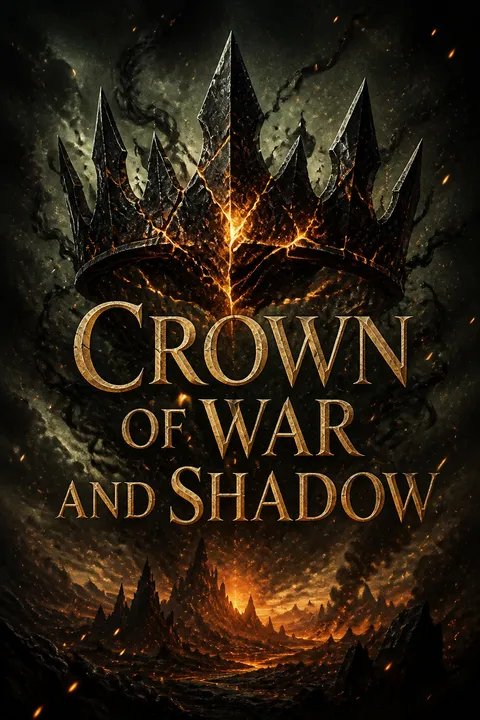
Sorrel discovers two ancient artifacts: a magical compass that guides her path, and a crown of black crystal, the key to Anathos's salvation. The compass leads her through mist and monsters, while the crown is sought by queens and kings alike. Both are tied to her mysterious heritage, and both are coveted by forces of light and darkness. Sorrel's journey becomes a quest not just for survival, but for the truth of who she is.
The Crystal Gate Shatters
At the impassable Crystal Gate, Sorrel unites the voices of the oppressed to shatter the barrier. The act is both miracle and omen: the old world is ending, and a new war is beginning. The path to the Kingdom of the South is open, but the cost is high. Sorrel's power is revealed to all, and she is marked as both savior and threat. The journey becomes a march toward destiny, and the war for Anathos begins in earnest.
The Queen Who Sees No One
In the southern kingdom, Sorrel confronts the reclusive warrior queen, pleading for aid against the Dark King. The queen refuses, paralyzed by pride and fear. Sorrel's quest seems doomed, and her hope is shattered. The truth of her bloodline is hinted at, and the crown is rejected. Sorrel is forced to reckon with the limits of power and the loneliness of leadership. The world's salvation will not come from thrones or armies, but from the courage to face the darkness within.
The Truth of Bloodlines
Returning home, Sorrel finds her village destroyed—not by men, but by the Dark King's demons. The truth is revealed: she is the daughter of the Savior and the Dark King, the vessel of both light and shadow. Merc, her lover and protector, is a demon sent to deliver her to her father, but has chosen love over duty. Sorrel's power is both a gift and a curse, and the final battle is not just for Anathos, but for her own soul.
The War for All Souls
At the Fulcrum's altar, Sorrel confronts her father, the Dark King, in a battle of wills and magic. She is tempted with love, power, and the return of all she has lost. But it is the souls she has saved, the kindness she has given, that become her true army. With their help, she defeats the Dark King, resealing the Fulcrum and saving Anathos—for now. The war is not over, but Sorrel claims her destiny as the true warrior queen, uniting kingdoms and forging a new path forward. Love, not vengeance, is her greatest weapon.
Analysis
Crown of War and Shadow is a sweeping dark fantasy that interrogates the nature of power, trauma, and redemption through the lens of a reluctant heroine. At its heart, the novel is about the struggle to reconcile the darkness within ourselves and our world with the possibility of mercy and change. Sorrel's journey—from orphaned outcast to warrior queen, from healer to destroyer to savior—mirrors the psychological process of confronting and integrating trauma. The story's world is one where kindness is dangerous, and every act of compassion is a rebellion against the cycles of violence that define society. The novel's lesson is that true power lies not in domination or vengeance, but in the courage to choose love and mercy, even when the world offers only pain. The magical artifacts, the unreliable reality, and the cycles of prophecy and violence all serve to reinforce the central theme: that destiny is not a prison, but a challenge to become more than what we were made to be. In the end, Sorrel's acceptance of her dual nature—her willingness to fight for others, even as she confronts her own darkness—is what saves Anathos, if only for a time. The war for all souls is ongoing, but hope is found in the smallest acts of kindness, and in the refusal to let fear define our fate.
Characters
Sorrel
Sorrel is an orphaned outcast, marked by forbidden magic and a mysterious past. Her compassion is both her strength and her curse, driving her to heal those who would see her burned. Psychoanalytically, Sorrel is torn between her longing for belonging and her fear of her own power. Her journey is one of self-discovery, as she learns she is the daughter of both the Savior and the Dark King, embodying the potential for both destruction and redemption. Her relationships—with Mare, Merc, and the suffering around her—are fraught with longing, loss, and the hope that kindness can change the world. Sorrel's arc is a crucible of pain and mercy, culminating in her acceptance of her true nature and her choice to fight for love over vengeance.
Merc (The Mercenary)
Merc is a battle-scarred mercenary with a hidden past and a soul claimed by darkness. Sent by the Dark King to deliver Sorrel, he is torn between duty and love. His relationship with Sorrel is a study in trust, betrayal, and the possibility of redemption. Merc's psychological complexity lies in his self-loathing and his yearning for connection, even as he believes himself unworthy. His transformation—from tool of evil to self-sacrificing ally—mirrors Sorrel's own struggle with her dual nature. Their love is both a weapon and a wound, and Merc's ultimate choice is an act of defiance against the fate written for him.
Mare
Mare is Sorrel's only friend and the closest thing to a mother she has known. Once a noblewoman, now a frail outcast, Mare's wisdom and love are Sorrel's anchor. Her psychoanalytic role is that of the nurturing anima, guiding Sorrel toward self-acceptance and courage. Mare's death is a catalyst, her final gift of coins and advice propelling Sorrel toward her destiny. Her legacy is the lesson that choosing oneself is not selfish, but necessary for survival and change.
Julion
Julion is a noble warrior, heir to Prosperitus, whose quest for a miracle intertwines with Sorrel's fate. He is both ally and symbol of the world's longing for salvation. Julion's psychological struggle is between duty and desire, love and leadership. His recognition of Sorrel's power and his willingness to kneel to her mark the possibility of unity across kingdoms. He represents the hope that even those in power can change, if they are willing to listen and follow.
Thale
Thale is the cunning ruler of the Outpost, a man who trades in vice and violence but is not without honor. His relationship with Sorrel is transactional, yet he is moved by her compassion and courage. Thale's psychoanalytic role is that of the shadow—he embodies the world's cynicism, but is capable of change when confronted with true mercy. His grudging respect for Sorrel and his aid in her quest show that even the hardest hearts can be touched.
The Queen Who Sees No One
The Queen of the South is a warrior haunted by past tragedy, paralyzed by pride and fear. Her refusal to join the fight is both a personal and political failing, a mirror to Sorrel's own struggle with power and responsibility. Psychoanalytically, she is the wounded mother, unable to heal herself or her people. Her arc is a warning: isolation and pride are as deadly as any demon.
The Dark King
The Dark King is the embodiment of corruption, vengeance, and the hunger for souls. As Sorrel's father, he is both her greatest enemy and the source of her power. His psychological role is that of the devouring shadow, tempting Sorrel with love, power, and the return of all she has lost. His defeat is not just a magical victory, but a rejection of the cycle of violence and the embrace of mercy.
The Savior (Sorrel's Mother)
Though never seen directly, the Savior's legacy shapes Sorrel's journey. She is the creator of the Fulcrum, the one who sacrificed everything to imprison the Dark King. Her voice is the warning in Sorrel's mind, her magic the shield that hides her daughter. Psychoanalytically, she is the archetype of the self-sacrificing mother, whose love is both protection and loss. Her absence is a wound, but also a challenge: Sorrel must choose what kind of legacy she will leave.
Lalah and Emma
Lalah, the abused maid, and Emma, her twin, represent the suffering and resilience of the powerless. Their liberation is a turning point, showing that cycles of pain can be broken. Psychoanalytically, they are the anima and animus, the feminine and masculine energies that must be united for healing. Their voices shatter the Crystal Gate, proving that even the smallest can change the world.
The Sooth
The Sooth is the oracle who reveals the true nature of the war and Sorrel's destiny. She is the voice of the unconscious, the one who names the darkness and points the way forward. Her role is to strip away illusions and force Sorrel to confront the reality of her bloodline and her power. The Sooth's gift—a simple stone—becomes the key to survival, a reminder that wisdom is often found in the overlooked and the humble.
Plot Devices
Duality of Light and Shadow
The novel's central device is the duality within Sorrel: healer and destroyer, orphan and heir, human and demon. This duality is mirrored in the world—villages that are both sanctuary and prison, magic that heals and corrupts, love that saves and wounds. The narrative structure uses foreshadowing (Sorrel's visions, the recurring motif of "hide," the dreams of horses) to build tension and reveal the truth of her bloodline. The Fulcrum itself is both barrier and prison, a symbol of the world's fragile balance. The story's progression from micro (village, personal relationships) to macro (kingdoms, war, cosmic battle) reflects Sorrel's journey from self-denial to acceptance of her power and responsibility.
The Magical Compass and Crown
The compass and crown are classic quest objects, but their true function is to reveal Sorrel's identity and guide her toward her fate. The compass responds to her will and need, not geography, symbolizing the importance of inner direction over external maps. The crown is both a burden and a key, rejected by those who fear power and finally claimed by Sorrel when she accepts her role as leader. These objects are plot engines, but also metaphors for self-knowledge and agency.
The Unreliable World
Throughout the novel, what is real is constantly in question: visions, dreams, and magical phenomena blur the line between truth and illusion. Sorrel's inability to see her own death, her shifting appearance, and the world's changing landscapes all serve to destabilize the reader and protagonist alike. This device heightens suspense and mirrors the psychological journey of confronting trauma and reclaiming agency.
Cycles of Violence and Mercy
The plot is structured around cycles: of violence (mob justice, demon attacks, betrayals) and of mercy (Sorrel's healing, the souls she saves, the dragon's return). The breaking of these cycles—through acts of kindness, forgiveness, and self-sacrifice—is the true magic of the story. The final battle is won not by power, but by the collective force of lives touched by compassion, turning the tide against evil.
Foreshadowing and Prophecy
From the opening, the story is laced with prophecy: the mural, the Sooth's warnings, the recurring motif of "always forward, never back." These devices create a sense of inevitability, but also challenge the characters to choose how they will meet their fate. The fulfillment of prophecy is not passive, but an act of will—Sorrel must claim her destiny, not simply inherit it.








































