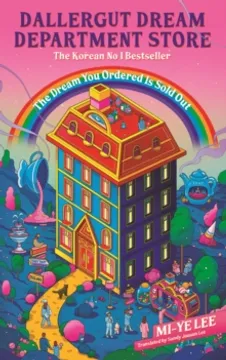
Plot Summary
Entering the Dream World
Penny, a young woman from a city famed for its dream industry, is invited to interview at the legendary Dallergut Dream Department Store. The city itself is a fantastical marketplace for those asleep—a place where pajama-clad people, furry guardians called Noctilucas, and shopkeepers coexist. Penny's nerves and self-doubt plague her as she contemplates her qualifications. Her friend Assam—a wise Noctiluca—encourages her, lending her a childhood book describing the mythic origins of their dream-based world. The tale of the Time God and three disciples shows how sleep, with its freedom from past regrets and future anxieties, became a gift. Penny's childhood wonder is rekindled, filling her with hope and a sense of destiny as she steps toward her uncertain future.
Interview Among Shadows
The mysterious Dallergut, seeming both storied and down-to-earth, personally interviews Penny. The meeting is intimate, filled with cookies that induce calm and a candid exchange about dreams' purpose. Penny, flustered, admits what sets dreams apart: their irreplaceable role as reprieve—not reality, but a necessary pause. She recalls the foundational myth, impressing Dallergut with her reflections. He challenges her, always seeking depth rather than surface-level answers. Through their exchange, Penny's humility and willingness to grapple with uncertainty shine through. Recognizing her spirit and insight, Dallergut welcomes her to join the department store, setting her on a life-changing path.
Floors and Their Guardians
On her first day, Penny tours the five-storeyed department store, each level overseen by a unique manager and offering dreams tailored for different longings: nostalgia, adventure, everyday pleasures, rest, and leftover bargains. She meets Weather, the kindly first-floor manager; the precise and imposing Vigo Myers; the exuberant, youthful Mogberry; the energetic Speedo; and Motail, the gregarious fifth-floor clerk. Each floor has its own culture, clientele, and philosophy. As Penny winds her way up and down the bustling, fantastical floors, she discovers that dreams are handled with care—each manager balancing customer needs and the sometimes unpredictable side effects of dreams.
Penny's Awakening
Penny observes the quirks and flaws of each role before realizing where she belongs. Instead of striving for prestige or fun, she chooses the front desk, a post typically overlooked but vital to the store's heartbeat. Here, she works side by side with Weather and Dallergut, learning nuances of customer service, the importance of the Eyelid Scales (which track regulars' sleep rhythms), and the store's beloved principle: dreams are a service, not an escape. Penny's empathy and diligence earn her a sense of belonging and self-worth that eluded her before.
Bottled Emotions
Penny is entrusted for the first time with the Dream Pay System—a mechanism ensuring customers "pay" for their dreams by returning emotions. She is overwhelmed by the colorful bottles of joy, sadness, and especially Flutter (the sweetness of unrequited love). Penny loses one bottle to a clever swindler and faces her mistake with guilt. Dallergut responds with understanding, emphasizing lessons over losses. Through encounters with customers seeking dreams of love or closure, Penny witnesses how dreams influence waking emotions and relationships, sparking change in subtle yet profound ways.
Romantic Delusions
Penny notices a customer, Ah-young, purchasing the same romantic dream—meeting her crush—again and again. The store's approach is compassionate yet clear: dreams can amplify yearning but should not substitute real-life courage. When Flutter reaches painful excess, Dallergut creates an opportunity for reality to shift—by feeding it back to her crush, helping both parties move beyond unresolved longing. The cycle proves the store's ethos: dreams echo real desires but must ultimately serve awakening, not avoidance.
Dream Payments and Truth
Dream payments flow in as emotions: Flutter, Confidence, Wonder. Penny learns that dreams only collect payment when their effect lingers—when a dream inspires, heals, or helps someone grow. This rule protects customers from exploitation and upholds the store's gentle ethics. When dream payments peak, the store's moral compass is tested by the Leprechauns—cunning merchants of shoes and dreams—who try to boost profit using unsettling dreams. The staff must defend the integrity of their trade, reinforcing that the true profit of the dream business lies in sincere emotional change.
Night Terrors and Healing
A new product line from Maxim—a reclusive "nightmare" dreammaker—causes controversy. Customers flock to return their grief-filled "Overcoming Trauma" dreams, yet it emerges these dreams were not designed to torment but to help heal old wounds. Dallergut gently guides the angry crowd, revealing the dreams' intent: to revisit pain so the dreamer's waking self can transcend it. Those who persevere through nightmares find genuine confidence and self-acceptance, and Maxim's payment comes in a rare, precious form: healing. Penny witnesses the restorative power of even the darkest dreams.
Revelation and Forgiveness
Penny discovers the store's secret service: creating and delivering bespoke dreams for dying patrons who wish to leave messages for loved ones. She participates in crafting a dream where the living can meet those who have passed on. The process is intimate and moving—recipients are offered a dream encounter, not for closure but for connection, forgiveness, and final farewells. Penny is forever changed by this service's delicacy and humanity, realizing that dreams, at their best, are acts of love stretching beyond the boundary between life and death.
Precognitive Whispers
When Babynap Rockabye, a grand old dreammaker, delivers her rare "precognitive dreams," the store is besieged by hopefuls seeking glimpses of their futures. Dallergut, shrewdly selective, steers such dreams to those who need them, not those who merely crave spoilers. Most customers dismiss their fleeting glimpses as déjà vu, never realizing their significance. Penny comes to understand that foreknowledge offers little; it is living awake to the present and embracing uncertainty that infuses life with wonder.
The General Assembly
Penny and Dallergut attend the annual gathering of dreammakers and sellers—Santa Claus (Nicholas), Wawa Sleepland, Yasnoozz Otra, Bancho, Leprechaun chiefs, Babynap, Maxim—who together debate mounting challenges: customer "no-shows," unethical sales tactics, and profit-sharing tensions. Through dialogue, humor, and candid confession, the community reaffirms its highest value—making dreams that are so beautiful or meaningful that people choose sleep over waking distractions. Despite business concerns, camaraderie and love for the craft triumph.
Santa Claus in December
December transforms the store into a wonderland, with Nicholas (Santa Claus) supplying fantastically marketed, child-centric dreams. Penny sees firsthand how dreams fulfill the deepest longings of children and parents—to be loved, to be noticed, to feel magical. As the sales peak, Nicholas's humility and insight shine; despite his profits and fame, it is his legacy of kindness and generosity that persists. Penny's admiration grows as she realizes each customer's holiday wish—sometimes, as simple as a quiet family evening—is equally valuable.
The Bestseller Upset
As the dream industry's year-end ceremony approaches, the perennial "Bestseller" prize seems certain for Nicholas. Yet, to everyone's delight, Bancho—the humble maker of animal dreams—wins for his simple but deeply necessary "Taking a Walk" dream, providing comfort to lonely pets abandoned during holiday gatherings. The upset restores perspective on what matters most: the overlooked, the small joys, and the creatures whose needs are silent yet profound. Bancho's heartfelt acceptance speech unites the whole community, staff and customers alike.
Dreams as Inspiration
An exhausted musician seeks an "inspiration dream," believing this is the key to artistic success. Dallergut provides not a mystical product but Sleep Candy, and the real magic emerges from rest itself. The musician's big break comes not from instant genius but from the slow, subconscious synthesis of his years of yearning, practice, and agony—validated in dream. Dallergut reminds Penny that inspiration, miracles, and change brew slowly inside ordinary lives, and that rest is as essential as ambition.
Lives Through Others
Yasnoozz Otra, a legendary dreammaker, crafts "Lives of Others," a trial dream allowing customers to experience the reality of someone they envy. Penny delivers the first version to a bored office worker who dreams he is a new pop idol, enduring the hardship behind the scenes of stardom. Upon waking, he realizes both lives carry burden and joy; self-acceptance dawns. The restorative power of perspective is affirmed, hinting at the store's future evolution toward dreams that reconcile people with their own lives.
Death's Last Loving Gift
Penny helps a dying customer custom-design dreams for her loved ones to receive after her death, using the talents of Doje, dreammaker of "Meeting with the Dead." The experience is both bittersweet and beautiful—dreams become vessels for unspoken love, apologies, and gentle goodbyes. When the recipients awaken, they are changed: sorrow softened, gratitude awakened. Penny finds herself deeply moved, understanding her work as a sacred trust—helping others remember love instead of loss.
Secret Sorrow
Staff misadventures—Penny's lost Flutter bottle, Speedo's comic banking escapades, Myers's complicated past—come to the fore. Forgiveness, support, and humor pervade the workplace. As the staff celebrate a recovered Flutter bottle, Penny reflects on how everyone makes mistakes and that the most precious thing about their community is how it meets failure or sorrow not with shame, but with laughter and a helping hand. The store endures because it forgives.
Renewal and Hope
As another customer enters searching for rest, Penny welcomes them with hope. The seasons turn, dreams are sold, new dreamers join, and the cycle repeats. Penny knows that in this wondrous store, every ending seeds a new beginning, and every night promises another chance to be made whole through dreaming.
Analysis
The Dallergut Dream Department Store is a radiant modern fable about longing, healing, and the overlooked beauty of everyday existence, reimagined as a magical sleep marketplace. It speaks to a generation beleaguered by burnout, comparison, and silent grief, presenting dreams not as means of escape, but as subtle guides back to ourselves. Through Penny's humble, sometimes bumbling journey, the novel asserts that ordinary lives—fraught with regret, ambition, loneliness, or loss—are deserving of attention, compassion, and wonder. The deferred payment device is a brilliant narrative conceit, allowing deep questions to surface: What emotional debts are we paying each day? Can joy, self-acceptance, forgiveness, or closure ever be purchased? The book honors mystery, the wisdom of sleep, the resilience found in community, and the possibility that the miraculous lies dormant in the mundane. In a world obsessed with results, Dallergut and his staff offer a gentler lesson: that life's true meaning comes not from what we achieve awake, but from how we mend and cherish our souls—one dream at a time.
Review Summary
Characters
Penny
Penny is the protagonist—a relatable, self-doubting young woman seeking purpose and belonging in the bustling city of dreams. As she navigates the quirky, fantastical, and sometimes difficult world of the Dallergut Dream Department Store, Penny's compassion and open-mindedness shine. Her psychological growth is marked by moments of insecurity, mistake, and perseverance, but also flashes of insight and empathy. Penny's journey is less about ambition and more about finding her value in service, connection, and humility. Her relationships form the heart of the story, especially as she learns from her coworkers, seeks meaning in everyday labor, and gradually sees herself as both beneficiary and benefactor of the miracle of dreams.
Dallergut
Dallergut, head of the Dream Department Store, is both mythical and utterly human—a descendant of the fabled Third Disciple, heir to the wonder and burden of crafting sleep's miracles. Beneath his unassuming manner and cluttered office, he embodies wisdom, humility, and compassion, guiding customers and staff alike through the complexities of sleep, loss, and longing. Dallergut's great gift lies in knowing when to intervene and when to let others learn, allowing both dreams and people to reveal their purpose at their own pace. His relationship with Penny is one of mentorship, and his underlying melancholy hints at a life spent bridging waking and sleeping worlds.
Weather
The first-floor manager, Weather is a practical, wry, experienced presence who keeps the store's unruly gears running. She juggles family and work, diffusing tension with humor and warmth, guiding Penny and others through mishaps with patience. Psychologically, Weather is the anchor—she has endured the repetitive grind and learned to find joy in small victories and camaraderie. Her character reveals the invisible labor behind magic: perseverance, accountability, and care for both customers and coworkers.
Vigo Myers
The manager of the second floor, Myers is all discipline, knowledge, and high standards, often intimidating both staff and customers with his demand for excellence. Underneath, Myers is haunted by personal failures, an expulsion during his dreammaker studies, and unrequited love for a lucid dreamer. His development reveals the scars of regret and the slow process of self-acceptance. Despite his rigid exterior, Myers is loyal and secretly tender, devoting himself to the smooth running of his floor as a form of penance and hope.
Mogberry
As third-floor manager, Mogberry is all flair—breaking rules, customizing uniforms, airing grievances, and energizing the team with her spirited idiosyncrasies. She is both comic relief and shrewd judge of character, quick to size people up and never above mischief (especially with Leprechauns). Her leadership style is inclusive but direct. Mogberry's outward playfulness belies insecurities about comparisons and the pressure to keep innovating in a competitive marketplace. Her dynamic chemistry with staff adds warmth and lightness to the story.
Speedo
Manager of the nap-dream-packed fourth floor, Speedo lives at high velocity, treating every moment as a race. His jumpsuits, lunchbox economics, and relentless drive amuse and exasperate those around him. Yet Speedo's energy hides insecurities about value and belonging—he wants recognition, hates waste, and struggles with the unpredictable side of dreams. His good intentions sometimes cause chaos, but his dedication and ultimately kind heart endear him to his colleagues.
Motail
Fifth-floor worker and Penny's high school friend, Motail is a born salesman—full of charisma, self-promotion, and sly maneuvering. He bends rules (sometimes absconding with leftovers) but possesses an uncanny intuition for finding the next big trend. Despite his mercenary surface, Motail cares for the team and helps others find hidden gems. His character explores the tension between commercial ambition and genuine service.
Assam and the Noctilucas
The Noctilucas, with Assam as the most memorable, are dreamland's watchful spirits—tasked with preserving the dignity of sleep (and nightwear). Assam's wry humor and local wisdom make him a beloved confidant for Penny, offering perspectives on tradition, gossip, and what makes a good life. Psychologically, they represent community caretakers who accept their own eccentric place in the larger machinery of dreaming.
Babynap Rockabye
One of the Legendary Big Five, Rockabye is a dreammaker specializing in conception and precognitive dreams. Her roots reach back to the First Disciple, giving her gifts of intuition and foresight. Characterized by humility, generosity, and an otherworldly presence, she provides dreams that foretell life's beginnings—a source of awe and mystery for the staff. Rockabye's presence bridges myth and modernity, the miraculous and the everyday.
Maxim
Maxim is a reclusive but deeply sensitive craftsman of so-called "nightmare" dreams, focused on healing trauma instead of merely fright. His lonely workshop and emotional vulnerability mark him as an outsider—his creative calling is both a burden and a passion. Through Maxim, the narrative explores darkness as a part of healing, and the necessity of facing suffering in order to overcome it.
Plot Devices
The Dream Department Store Structure
The layered, fantastical store serves as the central narrative device, mirroring emotional hierarchy—from nostalgic longings in the "Memories" section (second floor) to unfulfilled ambition, escapism, and healing. The store's organization provides Penny (and readers) a guided journey toward understanding the complexity of dream-need—from daily comfort to transformative reckoning—making the act of dream-shopping a metaphor for self-exploration.
Deferred Dream Payment System
Customers only pay for dreams using the emotions they experience upon waking, reinforcing the idea that dreams have value only if they change us. The plot leverages this system to explore economic and ethical issues—supply and demand, profit and exploitation, sincerity and cynicism—while also providing a foundation for comedy (bottled emotions), conflict (swindled Flutter), and reconciliation (healing and forgiveness).
Legendary Big Five and Dreammakers
The constellation of famous dreammakers (Rockabye, Kick Slumber, Sleepland, Otra, Doje) act as plot anchors—representing every facet of dreamcraft: prophecy, healing, art, perspective-shifting, and contact with the dead. They serve as both symbols and flesh-and-blood mentors, their industry gatherings (General Assembly) creating opportunities for world-building and philosophical debate.
Foreshadowing and Circularity
The opening myth of the Time God and disciples frames every event, with echoes and reversals (Penny as a "Third Disciple," Rockabye's precognition, dreams spanning past and future, the gift of sleep carrying customers through struggle). Events and characters return with altered meaning: the dream of meeting the dead is first tragic, then redemptive; recurring "nightmares" prove healing. Time itself acts as a subtle loop, with closure offered through dreams that bridge what was left unsaid.
Narrative Structure
The story unfolds episodically, through Penny's journey, staff backstories, and a patchwork of customer tales. Each chapter brings forward a new aspect—love, ambition, envy, loss—while the connective tissue remains the dream store. This makes the plot a collection of emotional slices rather than a linear progression, yet it achieves cumulative emotional depth.
Humor, Whimsy, and Gentle Satire
Through playful details—the Leprechauns' business schemes, the Noctilucas' dress code, Speedo's obsessive time-saving, Motail's cunning—the story parodies contemporary anxieties about success, rest, love, and work. At the same time, the tone remains warm and unironic, never undercutting the emotional sincerity at its core.
Download PDF
Download EPUB
.epub digital book format is ideal for reading ebooks on phones, tablets, and e-readers.








































