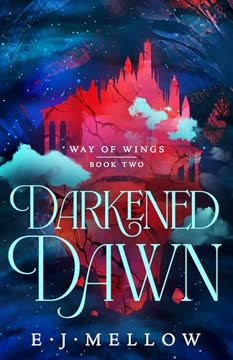
Plot Summary
Prologue: Wings Clipped, Vow Forged
A woman exiled on a savage, storm-lashed island gazes into the abyss, her amber wings clipped as penance for defying a godlike king. She is weighted down by loss and regret, yet she steadies herself with a quietly burning hope. A vow arises—revenge not only for herself, but for every woman and mother wronged, every daughter and splintered family. Change, she senses, is coming at last, carried on the wind and tides.
Peace Parley's Shattering Rifts
The hope for peace between the divine-blooded Volari and oppressed Mütra shatters inside a tent. Tanwen, a Mütra woman masking as Süra, confronts her people's persecutors. The peace meeting collapses as her identity is exposed; allies and enemies are unmasked, including Prince Zolya, who reveals a cold, cunning practicality beneath his beauty. Hope for dialogue dissolves beneath centuries of prejudice, as power, intimidation, and old wounds drown the gathering in distrust.
Lovers' Secret, Rebels' Pact
Night finds Tanwen and Zolya reunited in secrecy. Amid monsters and divided loyalties, their desperate passion is a balm to the violence threatening their worlds. They confess dreams, fears, constraints—and conspire for revolution. Yet secrets fester between them, and both are haunted by the knowledge that power, parentage, and legacy may soon sunder them, no matter the plans or longing that bind their hearts.
Betrayals and Forced Reckonings
Tanwen's confessions of complicity in royal poisoning devastate Zolya, who is forced to confront not only the breach but the reflection of his own burdensome secrets. Their stolen moments collapse under the weight of unspoken truths. Elsewhere, insurgent plots brew as old grievances bubble among the Rebellion, and dangerous bargains are brokered with gods and monsters—alliances formed, not out of trust, but mutual need and barely-dammed vengeance.
Family Scars, Hope Rekindled
Tanwen's return to her refugee den finds parents estranged by the loss of her brother Thol and a lifetime dodging persecution. Guilt and exhaustion compound, but love pushes through. As the Rebellion strategizes to free the monsters of Both and unite the clans, Tanwen and Huw, her closest friend, seek to bridge the chasms within and around them—gathering strength from the possibility that their suffering might forge something greater than pain.
Monsters of Both Unleashed
Braving grotesque dangers, Tanwen and the Rebellion reach Both Island, discovering survivors—monsters, outcasts, innocents born in exile—ruled by the fiercely wounded Lady Callia. Faces from the past force reckonings. A pact is struck: in exchange for land and a future, Both's "monsters" will fight for freedom. Battle lines are redrawn, not simply between Volari and rebels, but new unions of pain, purpose, and hope.
Gods Meddle, Thrones Tremble
Zolya becomes king through mother and goddess—his father murdered under divine orders. Nocémi and Ré's apathetic celestial drama reveals mortals as pawns in an endless cycle. Zolya seizes the crown, swiftly upends the old council, and strives for real compromise—but new power is fragile. Mother's machinations, courtly distrust, and scheming from below and above threaten every advance. Across the divide, Tanwen's efforts breed both progress and peril.
The Sword Versus the Future
Galia's palace becomes both sanctuary and crucible as rebels and Volari confront prejudices and common ground. The Mütra law's repeal marks a watershed, yet fear and violence linger, embodied by Zolya's embittered friend Osko. Zolya is forced to choose between loyalty, progress, and love when violence erupts; the death of Osko, by Zolya's own hand defending Tanwen, signals the old world's violent demise and shapes a new, uncertain future.
Banished Bloodline's Vindication
Lady Callia and Azla emerge to claim justice—no longer ghosts, but arbiters of new realities. The lost, the miscast, the condemned demand recognition and reward. In negotiation, land and rights are exchanged for peace, gems, and amnesty. As the Rebellion and palace grind through formalities and reconciliations, Tanwen's and Zolya's private joy is perpetually at odds with public peril, while old power lines blur and new communities are born.
Unions Prohibited, Love Persists
Even after treaties and tribunals, love between Zolya and Tanwen remains forbidden—in law, faith, and tradition. The queen dowager's suspicions stoke anxiety; friends alternately betray and support. Incidents of bigotry and violence—stoked by Kidar Terz, the epitome of Volari zealotry—prove that no decree can legislate hearts or dissolve hatred overnight. For Tanwen and Zolya, secrecy and self-sacrifice wrestle with the longing to claim life openly, unafraid.
Trial by Pantheon's Judgment
Divine intervention explodes earthly tension as the pantheons convene for a reckoning. Zolya and Tanwen, now legendary for their subversive love, are placed at the center of the grand arena, ringed by all: allies, adversaries, and the gods themselves. The immortal siblings Ré and Maryth force their will—demanding a choice between family and beloved, between high and low devotion. Mortal suffering is played as cosmic spectacle.
The Choice No Heart Can Bear
The gods' judgment materializes as the ultimate cruel dilemma: save one's lover or family. As columns descend toward the irrevocable Eternal River, Tanwen is asked to choose, but refuses to divide her heart. Zolya, with clarity and courage, leaps into the river, offering his life—shattering the gods' framework for devotion. Both agony and hope are laid bare.
The Twin Pantheons Reconciled
Zolya's self-sacrifice, Tanwen's refusal, and their pleas ignite change even in gods. Maryth's cold wisdom and Ré's grudging acknowledgment lead to an unheard-of verdict: unity between sky and soil, high and low gods, reflected in mortals' reconciliation. Pantheons are to be worshipped together. Tanwen and Zolya's love, once taboo, becomes the cornerstone of a new world order—one where devotion multiplies, not divides.
New Dawn in New Spira
Time leaps forward. Freed Mütra, Süra, Volari, and Both's exiles build New Spira, a bustling emblem of possibility and healing, governed by council and graced by the presence of former queens and monsters. Old wars recede as new customs, trades, and traditions bloom. This city, prophesied and hard-won, embodies the dream that so many died for—unity, prosperity, and second chances.
Home Forged of Healing
In the shade of trees and the bustle of clinics, families, lovers, and friends chart their new normal—free to laugh, quarrel, and love without fear. Tanwen and Zolya build a home fit for wing and horn, healing old wounds and making space for new joys. The work of care, teaching, and creating new life is as sacred as any rebellion, solidifying all that has been gained in day-to-day blessings.
Love Survives Gods' Schemes
Alone together in their den, Zolya and Tanwen celebrate victories not just political or celestial, but profoundly personal. They savor small, hard-won freedoms: shared meals, unashamed passion, the simple act of resting safe in each other's arms. Their love, once condemned and battered by gods and mortals alike, now flourishes freely, rooted in the soil of mutual sacrifice and forgiveness.
Endings, Gathered at One Table
As dusk falls, the extended circle of family and friends—rebels, monsters, royalty, once-lost kin—gather in Tanwen and Zolya's home, laughter and affection echoing where anxiety once dwelled. The ghosts of old battles and losses linger, but are outweighed by gratitude and hope. Old patterns are quietly replaced by new rituals, and the enduring power of reunion proves itself the truest form of healing.
Hope's Legacy, Forever Rising
The world, reshaped by rebellion, sacrifice, and the breaking of chains, pulses with possibility. Children dance on new streets. Temples for all gods rise side by side. The dead are remembered with tears and pride; the living find purpose not in vengeance, but in shared creation. As the story closes, the future remains unwritten—its only certainty the enduring flight of hope, built on wings once clipped but now spread wide.
Analysis
Darkened Dawn is a resplendent narrative of resistance, transformation, and hope forged in the crucible of trauma and love. E.J. Mellow constructs a world where politics, myth, and romance collide—where individual suffering, especially at the intersection of race, class, and gender, is neither minimized nor glorified but becomes the ground for a revolutionary reimagining of belonging. The love story at its center is not escapism, but fierce refusal—refusal to let the past dictate the future, to allow division to become destiny. By taking the forbidden union of Tanwen and Zolya as both literal and symbolic, the novel interrogates the meaning of progress: Is pain merely endured, or can it be transformed into a foundation for flourishing? The intervention of the gods, once actors of cruelty, ultimately reframes power structures—readers are challenged to recognize where "divine" prejudice persists in our own world. The ending's emphasis on chosen family, ongoing healing, and the enduring, iterative work of building new traditions resonates with contemporary conversations around justice, reconciliation, and the sanctity of otherwise marginalized joy. Darkened Dawn's chief lesson is that real peace comes not from victory but from the courage to hope, forgive, and relentlessly choose one another—across every boundary of blood, grief, or fate.
Review Summary
Characters
Tanwen Heiro
Born Mütra—of forbidden Volari and Süra union—Tanwen is a constant fugitive, her very existence outlawed. Bearing a ripped family and the trauma of her brother's murder, she channels grief into grit. Her psychoanalytic core is marked by oscillation between longing for belonging and refusal to be erased. Her care for animals and healing is both literal (as meddyg) and symbolic: she mends both wounds and divides. The impossible love for Zolya deepens her narrative from rebel to symbol of unity, her choices forcing her to the epicenter of cosmic and political remaking. By the conclusion, Tanwen has woven her wounds into wisdom, channeling her stubborn hope to unite worlds, soothe gods, and found peace for all.
Zolya Ajno Diusé
Volari prince and later king, Zolya balances the cold calculation required of his royal station with a tenderness he reveals only to a select few. Scarred by his father's tyranny and groomed for power, he is psychoanalytically tormented by inherited violence and a yearning for change. His forbidden relationship with Tanwen catalyzes a profound transformation: from distant, duty-bound heir to a king willing to sacrifice everything for love and a future he believes in. Zolya's arc is one of painful growth—embracing empathy, risking condemnation, and ultimately offering himself as a martyr for peace. His eventual resurrection and embrace of unity (divine and mortal) place him as a linchpin in reshaping the world.
Habelle, Queen Dowager
Once queen under a despotic king, Habelle is both survivor and strategist, her compassion hidden beneath layers of palace caution. Her love for Zolya drives every decision, even those laced with manipulation or fear; psychoanalytically, she carries maternal wounds and internalized class anxieties. Her arc traces a struggle to support her son's vision while reckoning with her complicity in old cruelties, ultimately releasing the past, mending with estranged sister Callia, and blessing the union she once most feared.
Lady Callia
Callia, once rival and sister to Habelle, becomes first a prisoner, then leader of Both's exiles. Her clipped wings and scarred visage mask a mind sharpened by suffering. Fiercely pragmatic and unyielding, she is both the architect of monster-army vengeance and—through reunion with her daughter and former enemies—a surprising vessel for the possibility of reconciliation and home. Callia's development is a journey through vengeance toward growth, embracing leadership not through cruelty but mutual healing.
Azla
Azla's journey from cosseted palace innocent to fugitve instigator echoes the span from suffering to defiance. Her early trauma, forbidden love for Lady Esme, and complicity in rebellion shape her into a figure wrestling with guilt and resolve. Her arc is psychoanalytically focused on the transformation of victimhood into agency—ultimately choosing honest, vulnerable engagement with her estranged mother, forging a new, exiled future beyond royal confines.
Huw Lew
Huw masks trauma with irreverent wit and mischief, his invisibility magic both metaphor and shield. Caring but self-protective, he navigates fear of belonging, cycles of abandonment, and the reluctance to risk for bigger causes. Over the story, his loyalty to Tanwen matures from anxious dependence to active support, including tolerance and respect for her forbidden love. Huw's own journey toward trust, connection, and vulnerability parallels the healing he helps foster in others.
Gabreel Heiro
As Tanwen's father, Gabreel embodies the costs of forbidden love and loss—his wings ripped away, his children pursued and slaughtered. A brilliant mind dulled by trauma, he is perpetually haunted by failures to protect his family. His slow reconciliation with Aisling, pride in his daughter, and instrumental role in both political and literal constructions of a new world reflect a psychoanalytic struggle to reclaim agency after prolonged victimhood.
Aisling Heiro
Aisling's psychoanalytic complexity lies in the grief that nearly destroys her love and her ability to mother. Though scarred by loss, she becomes a touchstone for Tanwen and Gabreel, her reconciliation with both signifying crucial emotional turning points. As healer and mediator, her contributions to New Spira's welfare and to the larger arc of forgiveness underscore the value of resilience and the quietly transformative power of compassion.
Kidar Osko Terz
Osko is Zolya's oldest companion, bound by tradition and belief in racial purity and hierarchy. His arc, from trusted protector to nemesis, is driven by the psychological terror of change and displacement. His inability to adapt or cede power becomes fatal; his violence toward Tanwen and rebellion against Zolya results in his own death at the king's hands—a necessary but devastating rupture with the old guard.
The Pantheons: Ré, Maryth, and the Gods
The High and Low Gods are at once forces of terror, arbiters of fate, and reflections of mortal struggle. Their psychoanalytic complexity derives from personifying irreconcilable difference, cycles of punishment, and the eventual—hard-won—admission of the need for unity, atonement, and humility. Their intervention, though self-serving, is a recognition (and institutionalization) of mortal wisdom.
Plot Devices
Secret, Forbidden Romance
At the core, the clandestine affair between Zolya and Tanwen is a potent plot device—their union both an act of defiance and the engine for social (and cosmic) upheaval. It personalizes systemic oppression, raises stakes, and ultimately provides the model for reconciliation offered at the story's climax. The lovers' repeated forced separations, reunions, and risks are structured to reflect greater thematic dichotomies—duty versus desire, law versus justice, past versus future.
Parallel and Cyclic Histories
The narrative structure mirrors cycles—family wounds repeating across generations (Callia/Habelle; Zolya/gods); social structures crumbling and reforming. The uncovering of lost histories, especially King Lexi's multiracial council and Mütra's origins, foreshadow and legitimize present change, giving personal rebellion historical gravitas and eventual hope.
Duality and Blending
The entire story is built on the interplay of dichotomies: sky and soil, Volari and Süra, gods and mortals, love and obligation, tradition and revolution. Mütra as literal and symbolic synthesis—impossible, outlawed, and yet ultimately the key to unity—drive twists and thematic revelations.
Divine Intervention and Judgment
The pantheons' direct involvement escalates drama, but also reframes mortal struggles as echoes of immortal wounds. Their judgment, initially arbitrary and cruel, becomes the ultimate crucible—testing not just protagonists' love but the larger world's capacity for change. The Judgment Scene/Trial structure focuses the resolution and delivers the gods' learning, not merely the mortals'.
Sacrifice and Chosen Family
Both primary and supporting characters are shaped by monumental sacrifices—parents for children, lovers for each other, friends for the cause. The community forged at the end is not imposed but chosen, healing wounds through collective effort and ritual (shared meals, new city, public temples).
Foreshadowing and Mirror Scenes
Early scenes—Tanwen's vow, clipped wings, forbidden meetings—are mirrored and transformed in later chapters: prophesied unity, new rituals, shared homes. The structure is built with echoes, ensuring that each arc resonates with what came before.








































