


Plot Summary
A Daughter Sold to Vipers
The Vipers rule their city through terror. Ryder2 plays the polished face, Garrett4 the enforcer, Kenzo5 the bookie, and Diesel3 the gleeful killer. When a gambling drunk named Rob6 cannot pay what he owes, he offers the only currency he has left, his estranged daughter,1 surrendering her without a fight and giving up the address of a southside dive bar.
He calls the men monsters even as he trades her away. The Vipers accept, treating a living woman as a ledger entry to settle and a warning to broadcast to anyone who thinks them soft. They ride off anticipating an easy, terrified target. None of them suspect that the woman behind that bar1 has spent her whole life learning to bite back harder than they hit.
The opening weaponizes the transactional logic of organized crime, reducing a person to collateral and framing patriarchy at its most literal: a father liquidating his child. Knight establishes the dark romance genre's central provocation immediately, that intimacy will be forged from violation. The Vipers' division of labor (brains, muscle, money, death) reads as a fractured single psyche, four coping mechanisms for shared trauma. Rob's parting insult, calling them monsters, ironically indicts himself as the truer monster. The narrative seeds its governing question here: whether ownership can ever become belonging, and whether a woman defined by others as property can seize authorship of her own fate.
The Broad With A Bat
Roxy1 owns Roxers, the rundown bar she inherited, and answers to the nickname Swinger. When four of Garrett's4 men swagger in after closing and call her a broad, she pulls the bat she keeps behind the counter and breaks knees, noses, and one prized stool. With her bartender Travis, she drags the unconscious men into the alley and calls the police, who haul them off.
The humiliation travels upward: the men are bailed within hours by powerful friends, and a jittery cop named Fred warns her she has angered someone untouchable and should flee. Roxy1 refuses to abandon the only home she has ever had, the bar left to her by a man named Rich.7 She resolves to stand and fight, never guessing she has provoked the very men who now own her.
Roxy's introduction inverts the damsel setup the Vipers expect, establishing her as a subject rather than an object. Her bat is both weapon and identity, a prosthetic for a girlhood spent defenseless. The rule she enforces, do not break the furniture, reveals a woman who has built order and belonging out of chaos. Fred's warning functions as the classic refusal-of-flight beat: her attachment to place, forged through the surrogate father Rich, outweighs self-preservation. This is the psychology of the survivor who mistakes rootedness for safety. Her refusal to run is not naivety but the defiance of someone who has already decided the world owes her nothing and will take nothing more without a fight.
Claimed as Payment
The four arrive during her shift and clear the room with a glimpse of their guns. Ryder2 calmly explains that her father sold her to settle his debt and that she belongs to them now.
Roxy1 laughs, then swings, cracking Diesel3 across the face and driving her knee into Garrett4 before Diesel,3 delighted rather than deterred, knocks her out with a single punch. While Kenzo5 packs her a bag, he pockets a photo of her beside a large bald man,7 potential leverage. They carry her unconscious body to their penthouse and lock her in a spotless guest room.
The men privately agree Diesel3 must be kept away from her, because his last obsession ended in flames and a corpse. Roxy1 is now their captive, a debt to be enjoyed, punished, or discarded at their discretion.
The abduction is the inciting violation that binds captor and captive into the story's central knot. Notably, Roxy's violence earns the men's fascination rather than their contempt, subverting the trope of the meek prize. Diesel's knockout punch, and the brothers' anxious agreement to shield her from him, establish an internal hierarchy of danger and a paradoxical protectiveness that will complicate every power dynamic. The stolen photograph plants Rich as an emotional fault line. Psychologically, the scene stages the collision of two survival grammars: the Vipers reflexively dominate what frightens them, while Roxy reflexively resists. Neither yet recognizes the other as kin, though the recognition has already, dangerously, begun.
Waking in the Glass Tower
Roxy1 comes to on silk sheets and immediately shreds the bedding and smashes the mirror rather than cower. When Ryder2 arrives, she slashes at his face with a shard of glass; he catches her wrist, presses the blade to his own cheek, and coldly promises they can cage her, punish her, or kill her at will.
Over a civilized breakfast, Ryder2 recites her file back to her, the broken bones since age three, the addict mother, the violent father. Roxy1 corrects the single detail he missed, revealing her father killed her mother by pushing the needle himself. Instead of dissolving into terror, she starts calculating: earn their trust, find their weaknesses, and either escape or bring them all down. She has survived worse than a gilded cage.
The trashed penthouse dramatizes psychological refusal, defacing the sterile luxury that would make her complicit in her own containment. Ryder's recitation of her trauma file is an act of intimacy disguised as domination, information as violence, echoing his father's methods. Roxy's correction about her mother reclaims narrative authority over her own history from a man who thinks he has decoded her. Her decision to feign submission while plotting reveals the survivor's oldest strategy: performance as armor. The scene reframes captivity as a chess match rather than a cage, and quietly reveals the shared inheritance, both Roxy and Ryder are children shaped by paternal cruelty into instruments of control.
The Pyromaniac and the Scarred Enforcer
Diesel3 begins slipping into her room at night, licking her wounds and whispering threats, drawn to the pain she hides and how she refuses to flinch. Garrett4 is a colder puzzle. When Roxy1 wanders into his room, he pins her by the throat, mistaking her for a woman from his past, and only Ryder's2 steady voice pulls him back from killing her.
The near-strangling exposes his ruined, mutilated chest and the trauma that makes him loathe women and himself. Roxy,1 recognizing the same ghosts she carries, dares him either to kill her or stop threatening her. Each man privately wars with wanting her. Beneath her defiance, Roxy1 is unnerved to discover she is drawn to her captors, and to the darkness that makes them dangerous.
This section deepens the dark romance's most fraught mechanism: eroticized menace read through mutual woundedness. Diesel's nocturnal visits blur predation and tenderness, and Roxy's non-flinching response marks her as his mirror rather than his prey. Garrett's flashback-strangulation externalizes untreated PTSD, his body a scarred palimpsest of betrayal that he cannot bear to be seen. Crucially, Roxy reads his rage not as threat but as recognition, the trauma-bonded intuition of one abuse survivor toward another. Her dare, kill me or stop, is a refusal of the limbo of fear that has governed her whole life. The chapter reframes attraction as a dangerous form of empathy, love budding in the soil of shared damage.
The Wrecked Getaway Car
Left briefly unguarded, Roxy1 slips through a fire exit into the underground garage, hotwires a Mercedes, and floors it toward the shutter. Alarms trigger rising barriers that stop the car cold and snap her head into the window. Trapped and furious, she seizes a crowbar and beats the vehicle to scrap, screaming about snakes, only to discover Kenzo5 and Diesel3 calmly watching, and worse, that the car she just destroyed belongs to Ryder.2
He hauls her into the elevator, pins her by the throat, and warns that their kindness is finished: she is fair game now, their toy. What she glimpses beneath his ice terrifies her most, a barely leashed storm of rage. He hands her over to Diesel3 for punishment.
The failed escape is the point of no return, physically proving the fortress inescapable while psychologically revealing Roxy's compulsion to destroy what confines her. Her assault on the car is displaced fury at her father, her captors, and her own traitorous desire. Ryder's elevator confrontation cracks his cultivated ice, exposing the inherited volcano he fears, and his threat that she is now fair game paradoxically dissolves the last barrier between prisoner and participant. The scene weaponizes the genre's punishment dynamic, but Knight frames it as Roxy sensing, and being drawn toward, the vulnerability beneath control. Escape was never really the goal; testing the edges of belonging was.
Baptism in the Fire Cave
Diesel3 takes Roxy1 to his basement den, where a chained man named Declan waits. When Diesel3 reveals Declan raped his own stepdaughter, Roxy1 interrogates the man herself, then hands Diesel3 the knife and tells him to make it hurt. She watches Diesel3 dismember and burn Declan alive without flinching, disturbed to find herself hungry rather than sickened.
In exchange for a kiss, Diesel3 maps out each Viper's role, Ryder2 the brains, Garrett4 the muscle, Kenzo5 the money, himself the assassin. Later he bares his own origin, a junkie mother burned alive by her dealer, the killing that made him. He insists Roxy1 is a snake like them, a lost soul who finally belongs somewhere. Against everything she wants to feel, she starts to believe him.
This is the midpoint conversion, the moment Roxy crosses from captive to co-conspirator. Diesel functions as the story's dark confessor, the one who names what the others deny: that Roxy's capacity for violence is not corruption but recognition. The Declan sequence carefully supplies moral cover (the victim is a rapist), letting Roxy, and the reader, taste vengeance as justice rather than sadism. Diesel's origin story reframes his monstrousness as grief metabolized into fire. The kiss-for-information barter renders intimacy transactional yet strangely honest. Psychologically, the chapter argues that belonging, for the traumatized, means being seen whole, including the darkness, and that Roxy's deepest terror is not the Vipers but her own kinship with them.
Losing the Cup Game
Alone with Kenzo,5 Roxy1 bets her freedom against her body in a bar drinking game, certain she can beat the man who runs the city's gambling. He cheats by flashing her, wins, and moves to collect. What follows is raw, angry sex against the wall and floor, both of them despising how much they want each other. Diesel3 catches the tail end and applauds the show.
The encounter shatters Roxy's1 last pretense; she can keep insisting she hates them, but her body has already defected. She reframes her situation as a game in which she refuses to be a pawn and chooses instead to be a queen, resolving to take the pleasure and power on offer while she schemes. The border between hating the Vipers and loving them begins to erode.
The wager literalizes the story's economy of consent under coercion, a fraught negotiation the genre stages deliberately. Roxy's framing, that she chose to engage, is the narrative's mechanism for restoring agency inside captivity. The hate-sex externalizes cognitive dissonance: desire and resentment fused because acknowledging one feels like betraying the self. Kenzo, the charming gambler, wins not through force but through her participation, subtly distinguishing him from mere domination. Roxy's self-crowning as queen rather than pawn is the beginning of her power reversal, the recognition that the men who think they possess her are the ones increasingly at her mercy. Attraction here becomes a battlefield where surrender and conquest are indistinguishable.
The Forger and the Ambush
Someone has tried to have Garrett4 killed, so Roxy1 trades a name to bring the Vipers to Tiny,11 a mountainous forger from her bar days who sold papers to a German assassin. Leaving his warehouse, gunmen open fire in the alley. Roxy1 snatches Garrett's4 spare pistol and shoots a man creeping up behind him, killing to protect the enforcer who claims to hate her.
The act shifts something between them; Garrett4 thanks her and lets her keep the weapon, which she names. Afterward, at an ex-assassin's restaurant run by Garrett's4 mentor Red,12 they learn a bounty now sits on all their heads and someone intends to erase the Vipers entirely. Once a captive, Roxy1 is now a soldier in their war, bound to them by spilled blood.
Roxy's first kill is a threshold, transforming her from object of protection into protector. Significantly, she chooses Garrett, the man most resistant to her, cementing that her loyalty is not extracted but freely given. The naming of the gun echoes her naming of the bat, a pattern of transforming instruments of violence into extensions of identity and even affection. The restaurant scene widens the external threat, converting the personal captivity plot into a syndicate war and raising the stakes from Roxy's freedom to the family's survival. Psychologically, killing to save someone reframes her violence as devotion, and her acceptance of the weapon signals the men's dawning recognition that she is one of them.
Melting the Ice
One by one the men lower their armor. Ryder,2 who normally severs sex from feeling, finally takes Roxy1 himself and confesses she cracks the control he built to avoid becoming his brutal father. Kenzo5 drives her to his mother's grave and tells her about the suicide he and Ryder2 survived, admitting he is falling in love.
Garrett,4 terrified of his own hands, lets Roxy1 guide him past his trauma and tattoos a viper into her skin, trusting her with the scars no one else may touch. Roxy,1 who learned love from the dead bar owner Rich,7 realizes she has stopped merely surviving these men and started belonging to them. The captor and captive frame quietly inverts as she becomes the beating heart of their broken family.
This movement is the relational midpoint where power fully redistributes through vulnerability rather than dominance. Each confession, Ryder's paternal terror, Kenzo's maternal grief, Garrett's bodily shame, reveals that the Vipers' cruelty is scar tissue over abandonment. Roxy functions as a therapeutic catalyst, though Knight resists sanitizing her into a healer; she meets their damage with her own rather than curing it. The tattoo scene is the chapter's emotional keystone: Garrett permitting touch is a somatic reclamation of a body colonized by violence. The inversion of captivity, prisoner becoming heart, exposes the genre's deep fantasy, that being chosen absolutely by the dangerous is the ultimate safety for the once-unloved.
The German in the Alley
Using themselves as bait, the Vipers lure the German hitman into an alley and take him alive. Diesel3 drags him to the den, and with Roxy1 assisting, extracts the truth: the Triad,9 the old family that once ruled the city, financed the hit, intending to butcher the Vipers and carve up their territory.
Worse, someone feeding the Triad9 insider knowledge is a former employee, a traitor armed with outdated but dangerous intelligence. The revelation recasts every attack as a coordinated coup rather than opportunistic rivalry. Diesel3 finishes the assassin. The Vipers now know who wants them dead, but not the name of the mole hidden among their old staff, a loose thread that will soon lead an enemy straight to the woman they love.1
The interrogation converts scattered menace into a coherent antagonist, satisfying the thriller machinery beneath the romance. The Triad, remnants of an older order, embody the theme of legacies that refuse to die, mirroring the Vipers' own inherited wounds. Roxy's comfortable presence in the torture room confirms her assimilation; she is no longer a witness but a participant strategist. The unresolved mole operates as a suspended blade, generating dread precisely because it is domestic, a betrayal from within their own trusted circle. Structurally this is the third-act turn, escalating the external threat to existential scale and setting up the vulnerability, the people they love, that syndicate life punishes most severely.
Offered Her Freedom
Haunted by the fear that keeping her makes him his father, Ryder2 decides to release Roxy.1 Kenzo5 presses car keys into her hand, begs her to stay, and each man in his own way confesses love. Roxy1 drives out of the garage, sits in the car, and understands her old life is now a hollow shell. She turns back.
Kenzo,5 unable to endure it, chases her down and admits he lied, that he would hunt her across the world regardless. She returns of her own will, and the reunion becomes a night-long punishment of pleasure for daring to leave. By choosing them freely, Roxy1 cuts the final thread of captivity. She is no longer a debt collected but a woman who selected four criminals as her home.
The freedom offer resolves the story's central ethical tension: coerced desire is laundered into chosen love, the genre's necessary redemption of its own dark premise. Ryder's willingness to release her, driven by refusal to replicate his father, is his moral apotheosis and the truest proof of love. Roxy's return, framed as autonomous election, retroactively reframes everything as consent reclaimed. Kenzo's confession that he would hunt her anyway preserves the possessive intensity the fantasy requires while she overrides it with her own choice. Psychologically, the abused child who was discarded now experiences being fought for as the ultimate reparation. The captivity narrative completes its transmutation into a covenant of mutual belonging.
War Over a Burned House
The Triad9 escalates, detonating the Vipers' former house and leaving motorcycle tracks as a signature. Ryder2 declares total war, vowing to erase the enemy bloodline.
Rather than wait idly, Roxy1 turns her own underworld network into a weapon: she persuades a regular to expose the Triad's9 drug-importing operation to the press and flips local dealers into informants, dragging the enemy's name through the mud and freezing their business overnight.
The men, astonished, recognize she is not merely their lover but a genuine asset, a tactician as ruthless as they are. Ryder2 anoints her a true Viper. The city begins abandoning the Triad9 as the bodies mount, yet the hidden mole keeps feeding the enemy everything needed to strike the family where it hurts most.
Roxy's counterstrike completes her arc from possessed to power broker, demonstrating that her value was never her body but her mind and connections, the very underworld literacy the Vipers underestimated. The bombing of the old house, a recurring site of paternal trauma, literalizes the theme that the past keeps trying to blow up the present. Ryder's coronation of her makes explicit what the narrative has argued throughout: belonging is earned through capability, not granted through affection. The lingering mole sustains dramatic irony, reminding readers that the family's greatest exposure is the loved one they cannot fully shield. Warfare here becomes courtship's final proof, fighting alongside as the deepest intimacy.
A Phone Stolen by a Ghost
Checking trashed safe houses, Garrett4 collides with Daphne,8 the ex-girlfriend who once flayed his chest and whom everyone believed Diesel3 had burned to death. Scarred and vengeful, she has allied with the Triad,9 and during the confrontation she lifts Garrett's phone.
She uses it to text Roxy1 pretending Garrett4 needs help, luring her to a hotel where Triad9 gunmen ambush her. Roxy1 fights savagely, kills several attackers, and survives a violent car crash before being drugged and taken.
Strung upside down, then bound to a chair, she is tortured for the location of the Vipers' penthouse. She refuses to give it up, taunting her captors through every cut, choosing death over betrayal. The loyalty forged by being sold once becomes the thing that cannot be broken.
Daphne's resurrection embodies the theme of unfinished pasts weaponized, the mirror-monster to Roxy who chose vengeance over love. The stolen phone reveals the mole plot's true payload: intimacy itself as the exploitable weakness Ryder always feared. Roxy's torture sequence is a bravura inversion of victimhood; she converts helplessness into defiance through gallows humor, refusing her captors the fear they crave. Her silence under agony is the narrative's ultimate proof of chosen family, she would rather die than surrender the men who once bought her. The chapter also completes a grim symmetry: the woman sold to pay a debt now guards her captors-turned-lovers with her life, transforming coerced bondage into freely chosen devotion.
Storming the Father's Hotel
The Vipers cut a bloody trail across the city, torturing Triad9 men until they learn Roxy1 is held in their own former family hotel, the place where Ryder2 once killed their father. They assault it floor by floor. Roxy,1 meanwhile, frees herself by smashing her chair apart and beats her guard to death.
As the men reach her, the reunion turns costly: on the roof Kenzo5 is stabbed nearly to death, and Garrett,4 choosing to save his brother, is shot, knocked unconscious, and carried off by the Triad,9 who wanted him all along. They race a bleeding Kenzo5 to their doctor. Newly rescued but refusing rest, Roxy1 will not sit still while one of her men is missing and marked for slaughter by the woman who scarred him.8
The rescue subverts triumph by exacting immediate loss, refusing the clean win the genre often grants. Setting Roxy's captivity in the father's hotel, the site of Ryder's first killing, fuses the family's origin trauma with its present peril, insisting that the past is the arena where every reckoning must occur. Roxy's self-liberation before the men arrive preserves her agency; she is rescuer as much as rescued. Garrett's sacrifice for Kenzo reasserts the brotherhood's foundational ethic, family above self, now extended to include Roxy. The double blow, Kenzo bleeding and Garrett taken, raises the emotional stakes to their apex and positions Roxy, no longer prey, to become the hunter who finishes the war.
Slaying Two Monsters
At the Triad's9 restaurant, Roxy1 takes command, interrogating and executing the second brother, who reveals Garrett4 is held at the family mansion by Daphne,8 finishing what she began years ago. The Vipers storm the estate and Diesel3 blows the house apart. Roxy1 finds Daphne8 straddling a bound, bleeding Garrett4 and beats her to death with her bare hands, then drags him free as he mistakes her for his tormentor and nearly chokes her before recognizing her voice.
With the Triad9 annihilated and Garrett4 healing, one debt remains. Roxy1 returns to the rotting house of her childhood, faces her father Rob6 a final time, and cuts his throat, severing the past that sold her. She walks out not a victim but a queen who chose her own dark crown.
The dual executions complete Roxy's transformation from commodity to sovereign, killing the two figures who most defined her powerlessness, the abuser of her chosen man and the father who sold her. Daphne's defeat closes Garrett's trauma loop, and Roxy literally taking his tormentor's place before pulling him back to reality dramatizes love as the interruption of a flashback. The patricide is the story's cathartic center of gravity: she chooses vengeance yet, tellingly, only after considering mercy, insisting her cruelty is authored, not compulsive. Knight frames the killing as forgiveness through severance rather than hatred. The abused child becomes the agent of her own liberation, rewriting inheritance into self-determination through blood.
Epilogue
Six months on, Roxy1 has grown her single dive bar into a chain named for Rich,7 the man who once saved her, and the Vipers have moved into a black mansion built to be a home rather than a fortress. When they kidnap her from work one night, it is not for a threat but a wedding, a bound judge, four rings, and four men on their knees.
Since no law permits one woman to marry four criminals, they simply make it legal by force. Roxy1 accepts, taking their name and their blood-sealed vows. The girl once sold to settle a debt ends as a chosen queen, imperfectly perfect, entwined forever with the four Vipers she both hates and loves.
The epilogue converts every symbol of captivity into one of chosen union: the fortress becomes a home, the debt becomes devotion, coercion becomes vow. Renaming the bars for Rich enshrines the surrogate father whose love first taught Roxy she was worth saving, completing her reparative arc across generations. The kidnapped-judge wedding is deliberately absurd and criminal, refusing respectability while affirming permanence, the fantasy that love outside all law is love beyond all constraint. Knight closes on self-acceptance rather than rescue: Roxy claims her scars, her violence, and her tenderness as one integrated identity. The final image of five vipers entwined reframes the whole novel as a myth of belonging manufactured from mutual damage.
Analysis
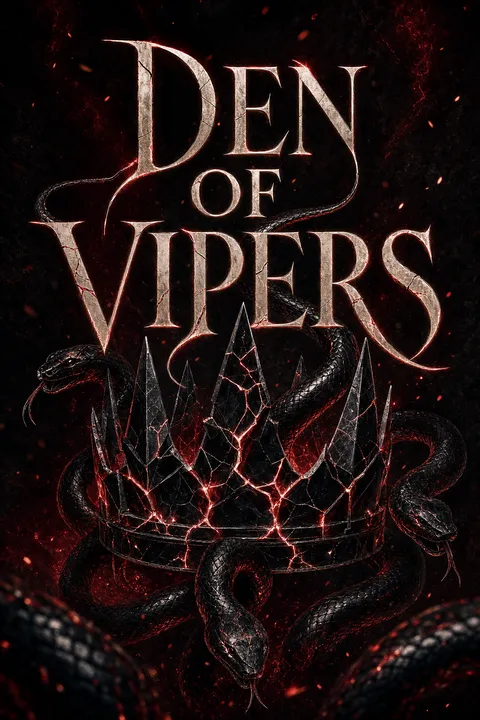
Den of Vipers operates as a fantasy of reparative belonging dressed in the extremity of dark romance. Its governing move is the transmutation of violation into devotion: a woman sold as property gradually reframes her captivity as a chosen covenant, and the narrative labors, through the freedom offer and her deliberate return, to relaunder coercion as consent. This is the genre's central and most contested mechanism, and Knight leans into it unapologetically, insisting that agency reclaimed retroactively is agency nonetheless. The novel's emotional engine is trauma recognition. Roxy1 and each Viper are survivors of parental cruelty, and their attraction is essentially the shock of being seen by someone whose damage matches one's own. Love here is not softness but the willingness to stand unafraid in another person's darkness, to meet violence with violence and scars with scars. The recurring refrain that they hate each other, spoken as endearment, encodes the psychology precisely: for people conditioned to expect abandonment, hostility feels safer than tenderness, and so affection must be smuggled inside antagonism. Structurally the book braids a syndicate war thriller into the romance, using the Triad9 and the resurrected ex to externalize the internal stakes, that intimacy is the vulnerability a violent life punishes. Roxy's1 arc, from commodity to strategist to queen, argues that her worth was never her body but her mind, loyalty, and refusal to break, and her twin executions of her abuser6 and her lover's tormentor8 stage liberation as the severing of inherited pasts. The polyamorous why-choose structure fulfills a fantasy of total, unconditional belonging, being chosen absolutely by many. The takeaway the novel presses is self-acceptance: embracing one's scars, rage, and tenderness as a single integrated self, and the conviction that family is not blood but the people who would burn the world to keep you.
Review Summary
Den of Vipers receives mixed reviews, with some praising its steamy content and strong characters, while others criticize its lack of plot and excessive violence. Many readers find the book overly long and repetitive, with problematic themes and unrealistic scenarios. The reverse harem romance and dark mafia elements appeal to some, but others are put off by the graphic content and poor writing. Despite its flaws, the book has a dedicated fanbase who enjoy its intense, unconventional storyline and complex character dynamics.
People Also Read






Characters
Roxy
Defiant captive bar ownerRoxxane, known as Swinger, is a tattooed, silver-haired bar owner in her mid-twenties who survived a childhood of relentless abuse. Emancipated at seventeen and taken in by the bar owner Rich7, she built a fierce independence and a reputation nobody dares test. Her core wound is abandonment by parents who treated her as a punching bag and, finally, as currency. This forged a survivor who weaponizes humor, fearlessness, and rage, flinching only at soft hands. Psychologically she equates love with impending pain, so she pushes people to their limits to test whether they will leave. Loyal to the point of dying for those who earn it, she craves not rescue but a partner unafraid of her darkness. Her arc traces the reclamation of choice from a life defined by others.
Ryder
Ice-cold syndicate leaderRyder is the polished, suit-clad face and brain of the Vipers, a man who runs the city through calculation and reads people like ledgers. Raised by a tyrannical father who molded him into an enforcer to spare his brother5, he wears ice as armor and counts silently to master a volcanic rage he fears mirrors his father's. Control is his religion and his prison; he separates sex from feeling and keeps everyone at analytical distance. His deepest terror is that intimacy will unleash the monster his father built. Roxy1 destabilizes his every system because she cannot be predicted, bought, or intimidated. Beneath the frost lives a boy who shouldered impossible burdens to protect his family, and who slowly learns that leaning on others is not weakness.
Diesel
Gleeful pyromaniac assassinDiesel is the Vipers' torturer and killer, a beautiful blond force of chaos who plays with lighters and knives and treats bloodshed as art. Raised by a junkie mother who tried to sell him and died burned alive by her dealer, he channeled his grief into a compulsion for fire and pain, becoming an assassin at seventeen. Diagnosed by his brothers as certifiable, he is nonetheless fiercely loyal, obsessive, and oddly tender toward those he claims. He is drawn to Roxy1 because she does not burn in his flames but seems reborn in them, matching his madness rather than fearing it. His love language is pain, his devotion absolute, and his greatest fear is a life without the little bird1 he considers his salvation and obsession.
Garrett
Scarred enforcer and fighterGarrett, called Mad Dog in the fighting pits, is the Vipers' massive, tattooed enforcer and a former professional boxer who now fights underground to purge his rage. His chest is a ruin of scar tissue from a betrayal that shattered his ability to trust, leaving him hating women, himself, and the sight of his own body. Fighting is his only release and his slow suicide. He guards his heart with hostility, terrified that closeness will end in the same agony. Roxy1 unnerves him precisely because she sees his scars as proof of survival rather than disgust. Beneath the brutality is a protector who tattoos beauty onto skin and craves gentleness he believes he does not deserve. His arc is a halting reach toward healing through her refusal to be pushed away.
Kenzo
Charming gambler bookieKenzo is Ryder's2 younger brother and the Vipers' money man, a bookie who owns the city's gambling and hides a killer's instincts behind a warm, flirtatious charm. He shares Ryder's2 abusive childhood but survived by loving hard and dreaming, sneaking gifts to their fragile mother until her suicide. He is the family's romantic and emotional glue, the one who insists Roxy1 belongs and who reads people through the language of odds and dares. His warmth masks a genuine capacity for cruelty deployed only against enemies. Kenzo falls fastest and deepest, treating Roxy1 as the best bet he ever won and the heart their family was missing. His fear is losing the people he loves, so he binds them close with tenderness rather than force.
Rob
Roxy's abusive fatherRob is Roxy's1 estranged, alcoholic, gambling-addicted father, the man who abused her throughout childhood, contributed to her mother's death, and finally sells her to the Vipers to cover his debt. A charming facade in public and a monster at home, he embodies the paternal cruelty that shaped Roxy1 into a survivor. His inability to leave her be, even after she escaped, makes him a recurring threat rather than a spent ghost, the unfinished wound at the root of her story.
Rich
Late surrogate fatherRich is the deceased former owner of Roxers, a gruff, scarred old criminal who took a homeless teenage Roxy1 under his wing, gave her a job, a home, and unconditional care. Though he died of cancer before the story begins, his memory anchors Roxy's1 understanding of love, loyalty, and second chances. He represents the possibility that family is chosen, not inherited, and his legacy quietly steers her choices throughout.
Daphne
Figure from Garrett's pastDaphne is Garrett's4 former girlfriend, a cold, calculating woman whose betrayal left the literal scars across his chest and the psychological wounds that define his mistrust. Motivated by greed and a hunger for the power she believed proximity to the Vipers could buy, she is the dark counterpart to Roxy1, a woman who chose ambition over love. Her presence looms over Garrett's4 arc as the trauma he must confront to heal.
The Triad
Rival crime familyThe Triad are the old family who once ruled the city before the Vipers rose, now diminished, greedy, and desperate. Led by three brothers who never gather in one place, they scheme to assassinate the Vipers and reclaim territory, escalating from hired hitmen to open war. They function as the external antagonist whose coordinated coup threatens everything the Vipers, and Roxy1, have built.
Cherry
Shrewd strip-club madamCherry runs one of the Vipers' strip clubs and wields her sexuality as a survival tool. A former victim once helped by Rich7, she becomes a loyal ally to Roxy1, trading information and repaying an old debt to the man who saved them both7.
Tiny
Massive forger friendTiny is a huge, foul-mouthed document forger and old friend of Roxy1 from her bar world. Fiercely protective and gruffly affectionate, he provides the intelligence that sets the Vipers on the trail of the assassin behind the bounty.
Red
Retired assassin restaurateurRed is an ex-assassin who runs an upscale Italian restaurant and once trained Garrett4 to fight. A trusted, jovial elder in the underworld, he supplies the Vipers with information and a safe haven, treating them with the warmth of family.
Tony
Loyal head guardTony is a dependable ex-soldier among the Vipers' security detail who earns Roxy's1 respect and affection. Steady and protective, he represents the found-family loyalty the Vipers inspire even among their hired men.
Plot Devices
The Inherited Debt
Inciting engine of captivityRob's6 gambling debt to the Vipers, and his decision to pay it with his daughter1, is the mechanism that launches the entire story. It transforms Roxy1 from an independent woman into disputed property, forcing captor and captive into intimacy. The debt frames the central moral provocation: a human being treated as currency. It also externalizes the theme of paternal betrayal, since a father literally trades his child. As the narrative progresses, the debt is repeatedly reframed, first as a business transaction, then as fate, then as the accident that delivered Roxy1 to the only people who would ever truly see her. Its final echo is Roxy1 settling her own account with her father6, turning the opening violation into a closing act of self-authored justice.
The Baseball Bat
Symbol of Roxy's agencyRoxy's1 bat, affectionately her weapon of choice, is introduced when she dismantles four intruders in her bar and recurs as an extension of her identity as Swinger. Confiscated during her captivity, it becomes a measure of her loss of power, and its eventual return signals her acceptance into the Vipers as an equal rather than a prisoner. She names it, pattern-matching with the gun she later christens, revealing how she transforms instruments of violence into intimate extensions of self. In the climactic battles the bat reappears as her signature, from batting a live grenade back at attackers to bludgeoning her enemies. It embodies the novel's argument that Roxy's1 strength was never granted by the men but was always hers.
The Snake Motif
Marker of belonging and identityThe viper imagery saturates the story: the men's matching snake tattoos, the jewelry they gift Roxy1, and the recurring idea that they are cornered creatures who strike hardest. Initially the snake signifies the predators who own Roxy1, but as she assimilates, the motif shifts to signify her transformation from prey into a viper herself. Diesel3 tattoos a snake into her skin, the men adorn her with golden serpent chokers and rings, and she comes to embrace the label of Viper queen. The snake that sheds its skin becomes the story's metaphor for reinvention through pain. By the finale the motif has fully inverted, no longer branding her as possession but declaring her a willing, dangerous member of the den.
The Fire Cave
Crucible of transformationDiesel's3 basement torture den, which he calls the fire cave, is the story's crucible where captivity converts into kinship. It is introduced as a place of horror, but becomes the setting where Roxy1 first participates in violence, learns each Viper's role, and hears Diesel's3 origin. Her comfort amid its blood and screams measures her psychological crossing from victim to co-conspirator. The den recurs as a space of confession and intimacy as much as brutality, blurring pain and pleasure into the couple's shared language. It externalizes the novel's thesis that the traumatized find belonging by being seen whole, including their darkness. Later a matching dungeon is built into the couple's new home, domesticating the crucible into permanence.
The Stolen Phone
Trap that triggers the climaxThe lingering mystery of a traitor feeding the enemy insider knowledge pays off when Garrett's4 ex-girlfriend8, resurfaced and allied with the Triad9, steals his phone during a chance encounter. She uses it to impersonate Garrett4 and lure Roxy1 into an ambush, converting the family's greatest strength, their love for one another, into the exact vector of attack Ryder2 always feared. The device mechanically launches the final act: Roxy's1 kidnapping, torture, and the desperate rescue that follows. Thematically it proves that in a life of violence, intimacy is the ultimate vulnerability. The stolen phone also brings a buried trauma physically back into the present, forcing Garrett4 and Roxy1 to confront the ghost that scarred him and to end it together.
FAQ
Synopsis & Basic Details
What is Den of Vipers about?
- Debt Leads to Captivity: Den of Vipers centers on Roxy, a fierce bar owner whose life is upended when her estranged father, Rob, offers her as payment for a debt owed to the Vipers, a powerful and ruthless criminal group controlling the city.
- Forced into a Dangerous World: Kidnapped and held in the Vipers' opulent penthouse, Roxy is thrust into their violent and unpredictable world, interacting with the four core members: Ryder (the leader), Diesel (the killer), Garrett (the enforcer), and Kenzo (the gambler).
- Survival and Shifting Dynamics: Initially a captive, Roxy's defiance, resilience, and unexpected connection with the Vipers lead to a complex game of survival where lines blur between captor and captive, forcing everyone to confront their pasts and the nature of their relationships.
Why should I read Den of Vipers?
- Intense Psychological Exploration: The book delves deep into the damaged psyches of its characters, exploring themes of trauma, control, and healing through unconventional and often brutal interactions.
- Captivating Character Dynamics: The evolving relationships between Roxy and the four Vipers are central, moving from forced proximity and power struggles to complex emotional bonds, desire, and a unique form of found family.
- Dark and Unpredictable Narrative: If you enjoy dark romance with morally gray characters, high stakes, and a narrative that constantly challenges expectations, Den of Vipers offers a raw and unflinching look at survival and connection in a dangerous world.
What is the background of Den of Vipers?
- Urban Criminal Underbelly: The story is set in a modern city controlled by powerful criminal organizations, primarily the Vipers and their rivals, the Triad and the Petrov family, operating through both legitimate businesses and illicit activities.
- Characters Forged by Trauma: The Vipers' power and unity stem from shared traumatic pasts, including abuse, loss, and abandonment, which shaped them into the ruthless individuals they are, creating a foundation of loyalty and a need for control.
- A World of Power and Control: The narrative is steeped in themes of power dynamics, not just in the criminal sense, but in personal relationships, where control, dominance, and submission are explored through the characters' interactions and desires.
What are the most memorable quotes in Den of Vipers?
- "When you fuck with Vipers, you get fangs.": This line, appearing early in Diesel's perspective (Chapter 1), immediately establishes the Vipers' identity and the inevitable, painful consequences of crossing them, foreshadowing Roxy's own entanglement.
- "You are ours, Roxxane. If we want to lock you up, we will... If we want to kill you...we will, and there is nothing you can do about it. Deal with it, love, or you might find yourself in a worse place than this.": Ryder's chilling declaration (Chapter 8) starkly defines Roxy's initial powerlessness and the Vipers' absolute control, setting the stage for her struggle for agency.
- "I love you, Little Bird. You're the gasoline to my fire. I never would have let you go, and the others wouldn't have either... You gave us purpose again. A family.": Diesel's raw confession (Chapter 38) encapsulates the transformative impact Roxy has on the Vipers, revealing the depth of their emotional need for her beneath their violent exteriors.
What writing style, narrative choices, and literary techniques does K.A. Knight use?
- Multiple First-Person POVs: The story is told through alternating first-person perspectives of Roxy and the four Vipers, offering deep insight into each character's thoughts, motivations, and emotional states, often creating dramatic irony as their internal feelings contrast with their external actions.
- Raw and Unflinching Tone: Knight employs a direct, visceral, and often brutal writing style that doesn't shy away from violence, sex, or the psychological darkness of the characters, immersing the reader in their harsh reality.
- Symbolism and Motif: Recurring symbols like snakes/vipers (identity, danger, transformation), fire (Diesel's chaos, passion, destruction), and scars (trauma, survival, connection) are woven throughout the narrative to add layers of meaning to the characters' journeys and relationships.
Hidden Details & Subtle Connections
What are some minor details that add significant meaning?
- The Broken Stool Rule: Roxy's seemingly simple rule about not breaking furniture in her bar (Chapter 2) becomes a point of intense fury for her when the initial thugs break a stool, highlighting her deep emotional attachment to the bar as her sanctuary and identity, a detail Ryder later notes (Chapter 7).
- Ryder's Counting Habit: Ryder's quiet counting ("One, two, three, four") when stressed or losing control (Chapter 14) is a subtle physical manifestation of his constant struggle to maintain his composure and suppress the inner turmoil and anger inherited from his father.
- Garrett's Ring: The discovery of a velvet box containing a ring in Garrett's room (Chapter 12) hints at a past relationship and potential proposal, foreshadowing the depth of the betrayal he suffered and explaining his intense aversion to women and commitment.
What are some subtle foreshadowing and callbacks?
- Garrett's Past Trauma Hints: Early mentions of Garrett being a "fool for [damsels in distress]" and how a past woman "almost ruin[ed] him" (Chapter 3) subtly foreshadow the reveal of Daphne and the devastating betrayal that caused his deep-seated issues with women.
- Roxy's Tattoo Pain: Diesel's early, disturbing question about whether Roxy got "wet from the pain" of her tattoos (Chapter 9) is a dark piece of foreshadowing that hints at her complex relationship with pain and pleasure, which becomes a significant element in her interactions with him and the other Vipers later on.
- The Hotel's Significance: The mention of the old hotel as a place Ryder and Kenzo used to play hide-and-seek (Chapter 49) and Ryder's desire for it to "rot" (Chapter 57) subtly foreshadows its later use as a location for confrontation and torture, revealing its deep, painful connection to their father's death and their past trauma.
What are some unexpected character connections?
- Roxy's Connection to Rich's Past: Roxy's relationship with Rich, the bar owner who took her in (Chapter 18), is revealed to be deeper than just employer/employee; he was an ex-assassin and friend of Garrett's trainer (Sheehan, Chapter 66) and Cherry (Chapter 34), linking Roxy's past life directly to the Vipers' world before she even met them.
- The Vipers' Shared Trauma Origins: While presented as distinct individuals, the Vipers' backstories reveal strikingly similar origins rooted in parental abuse, neglect, and loss (Ryder/Kenzo's father's abuse, mother's suicide; Diesel's junkie mother, murder; Garrett's father's death, Daphne's betrayal), creating a profound, shared understanding of pain that bonds them and allows them to recognize a similar depth in Roxy.
- Cherry's Debt to Rich: Cherry, the strip club owner, reveals she owes her life to Rich (Chapter 34) for helping her escape an abusive relationship, creating an unexpected connection between Roxy's mentor and a key figure in the Vipers' network, highlighting the ripple effects of Rich's kindness and Roxy's inherited loyalty.
Who are the most significant supporting characters?
- Rich: Roxy's former boss and mentor (Chapter 18) is arguably the most significant supporting character, as he provided her with a home, a job, and the bar itself, shaping her into the resilient woman she is and indirectly connecting her to the Vipers' world through his past associations.
- Tony and Sam: Members of the Vipers' security team (Chapter 23), they represent the broader network of loyal individuals the Vipers protect and employ, often ex-military or those needing a second chance, highlighting the Vipers' "softer" side and the loyalty they inspire, tragically underscored by Sam's death.
- Cherry: The owner of The Lounge (Chapter 34), she is a key informant and ally within the city's underbelly, demonstrating Roxy's ability to navigate and gain respect in this world independently and providing crucial information due to her loyalty to Rich and, by extension, Roxy.
Psychological, Emotional, & Relational Analysis
What are some unspoken motivations of the characters?
- Ryder's Need for Control: Beyond running the empire, Ryder's intense need for control (Chapter 11) is deeply rooted in his traumatic past, where he felt powerless to protect his family from his abusive father and his mother's suicide, driving his desire to control every situation and person around him, including his own emotions.
- Garrett's Self-Punishment: Garrett's brutal fighting style and willingness to endure pain (Chapter 13) are unspoken forms of self-punishment stemming from his past betrayal by Daphne, where he blames himself for being weak or blind, using physical pain as a way to feel alive and atone.
- Roxy's Pursuit of Agency: While initially focused on escape, Roxy's deeper unspoken motivation evolves into a fierce pursuit of agency and self-ownership (Chapter 8), reclaiming control over her body and life after years of abuse and being treated as property by her father and initially by the Vipers.
What psychological complexities do the characters exhibit?
- Trauma-Informed Personalities: All core characters exhibit complex personalities heavily shaped by severe childhood trauma (abuse, neglect, loss), manifesting in various ways: Ryder's hyper-control, Diesel's chaotic madness, Garrett's rage and aversion, and Kenzo's charming mask, all seeking connection and safety in destructive ways.
- Complex Relationship with Pain: Several characters, particularly Diesel and Roxy, display a complex relationship with pain, where physical or emotional pain can paradoxically intertwine with pleasure or a sense of being alive, stemming from their histories of enduring hardship and finding strength within it.
- Fear of Vulnerability: Despite their outward strength, the Vipers and Roxy share a deep-seated fear of vulnerability and emotional intimacy, often lashing out or retreating when faced with genuine connection, a defense mechanism developed to survive past betrayals and prevent future hurt.
What are the major emotional turning points?
- Roxy's First Fight Back: Roxy's initial violent defiance against the Vipers in her bar (Chapter 2) is a major emotional turning point, establishing her refusal to be a victim and immediately altering the Vipers' perception of her from a mere debt to a formidable individual.
- Garrett's Nightmare and Roxy's Response: Garrett's raw vulnerability during a nightmare and Roxy's empathetic, non-judgmental response (Chapter 25) marks a significant shift in their dynamic, allowing Garrett to begin confronting his trauma and opening the door for a deeper connection beyond anger and aversion.
- Ryder's Confession of Love and Fear: Ryder's confession of love for Roxy coupled with his fear of becoming like his father (Chapter 58) is a pivotal emotional turning point for him, cracking his icy facade and revealing the depth of his internal conflict and the high stakes his feelings for her represent.
How do relationship dynamics evolve?
- From Captivity to Chosen Family: The central relationship dynamic evolves from a forced captor-captive situation (Chapter 1-8) to a complex web of mutual desire, protection, and eventually, a form of chosen family (Epilogue), where loyalty and love are forged through shared experiences and acceptance of each other's darkness.
- Individual Bonds with Roxy: Roxy develops unique and distinct relationships with each Viper, catering to their individual needs and desires (Ryder's control, Diesel's chaos, Garrett's healing, Kenzo's connection), demonstrating her ability to see and engage with the man beneath the Viper persona.
- Vipers' Unity Strengthened by Roxy: Roxy's presence, while initially disruptive, ultimately strengthens the Vipers' bond (Chapter 13), providing them with a shared focus, a reason to fight, and a source of emotional connection that revitalizes their family unit.
Interpretation & Debate
Which parts of the story remain ambiguous or open-ended?
- The Full Extent of Past Trauma: While the Vipers' and Roxy's past traumas are revealed, the narrative leaves some ambiguity regarding the absolute worst details or the day-to-day reality of their suffering, allowing the reader's imagination to fill in the blanks and emphasize the lasting psychological impact.
- The Future of Their Criminal Empire: The story concludes with the Vipers solidifying their power and expanding, but the long-term sustainability and potential future threats to their empire, especially with Roxy now at the center, remain open-ended, hinting at ongoing conflict.
- The Nature of Their Love: The unconventional and often brutal expressions of love and desire between Roxy and the Vipers leave the interpretation of their relationship open to debate – is it a healthy, albeit dark, connection forged by shared experience, or does it retain elements of the initial power imbalance and trauma response?
What are some debatable, controversial scenes or moments in Den of Vipers?
- Roxy's Father Selling Her: The initial premise of a father selling his daughter for debt (Chapter 1) is inherently controversial and sets a dark tone, immediately establishing the morally corrupt world and the extreme circumstances that drive the plot.
- Scenes of Non-Consensual or Coerced Sex: While the relationships evolve, some early sexual encounters or moments of intense physical control (e.g., Ryder in the elevator, Chapter 14; Kenzo in the hallway, Chapter 17; Garrett in his room, Chapter 33) occur under circumstances of captivity or significant power imbalance, sparking debate among readers about consent and the portrayal of sexual violence.
- Diesel's Torture Scenes: Diesel's graphic and often gleeful torture of enemies (e.g., Chapter 15, Chapter 28) is highly controversial due to its explicit depiction of sadism and violence, challenging readers' comfort levels and forcing them to confront the Vipers' brutal nature.
Den of Vipers Ending Explained: How It Ends & What It Means
- Roxy Chooses the Vipers: The Den of Vipers ending sees Roxy, after being given the explicit choice and opportunity to leave (Chapter 37), ultimately choosing to stay with the Vipers (Chapter 38), realizing that despite the circumstances of her arrival, she has found a sense of belonging, love, and purpose with them.
- A New Kind of Family: The conclusion solidifies the Vipers and Roxy as an unconventional but deeply bonded family (Epilogue), where their shared trauma, loyalty, and unique expressions of love (including violence and control intertwined with care and protection) form
About the Author



Download PDF
Download EPUB
.epub digital book format is ideal for reading ebooks on phones, tablets, and e-readers.








































