Key Takeaways
1. God's Will is a Relationship, Not a Burden
Instead, he invites us to embrace the will of God as we know it for today Along the way he provides enormously helpful categories: we should be willing but not willful; we should explore our true desires, not dismiss all desire as bad; we should realize that God's will has less to do with a particular decision and more to do with the most important decision we will ever make-to pursue God.
Beyond specific decisions. Many Christians mistakenly view God's will as a complex puzzle to solve, primarily concerning major life choices like career, marriage, or avoiding sin. This narrow perspective reduces God's love to a set of impersonal laws or isolated decisions, making God seem irrelevant to daily life. The author argues that God's will is far more personal and relational, deeply intertwined with His Spirit and constant presence.
Pursuing God. The true essence of God's will is not about figuring out a divine blueprint for every single action, but about pursuing God Himself. It's a continuous, moment-by-moment choice to engage in a loving friendship with the Divine. This shift in focus moves us from an obsession with "what to do" to a profound engagement with "who to be" in relationship with God.
Daily existence. God is intensely interested in you, not just your job or marital status. His dreams for us extend to every rhythm of our daily existence, longing for our friendship and an abiding sense of His presence. Understanding God's will means recognizing His constant availability and our invitation to live in conscious awareness of His love.
2. Willpower Alone Leads to Spiritual Rigidity and Pride
But while the capacity to choose and follow through is essential for both psychological and spiritual maturity, willpower is easily overrated.
The dark side of willfulness. Our natural inclination is to approach challenges, including spiritual ones, with sheer willpower and grim determination, much like making New Year's resolutions. While discipline is crucial for responsible living and achieving goals, relying solely on willpower in our spiritual journey can lead to rigidity and pride. It can make choosing God feel like taking "bitter medicine" rather than embracing abundant life.
Malignant willfulness. Unchecked willpower can become "malignant willfulness," a stubborn, self-originating force that resists letting go and letting be. Like Captain Ahab's obsessive pursuit of Moby Dick, it can lead to self-enslavement and destruction. This kind of willfulness is often more against something (quitting, failure) than for something (God's Spirit, life).
Rigidity and pride. When discipline is overvalued and not balanced by love, it produces a soul-damaging rigidity that chokes vitality. This can manifest as an inability to embrace spontaneity or an over-control that extends to others. Furthermore, highly disciplined individuals are prone to secret pride and a smug sense of superiority, judging those they perceive as lacking in self-control. This pride alienates us from others and fosters an illusory sense of self-sufficiency, blocking true intimacy with God and others.
3. The Fundamental Choice: Kingdom of Self vs. Kingdom of God
The choice is not whether to pray. The choice is which prayer to pray.
Two prayers, two kingdoms. At its core, life presents only two fundamental prayers: "My name be hallowed, my kingdom come, my will be done" (the liturgy of the kingdom of self) or "Thy name be hallowed, thy kingdom come, thy will be done" (the liturgy of the kingdom of God). The former is natural, driven by independence and willfulness; the latter is supernatural, requiring surrendered autonomy and willingness, achievable only through divine grace.
Subversive surrender. To truly pray the Lord's Prayer is a subversive act, demanding the death of the kingdom of self and a choice to take up our cross. It begins with "Our Father," immediately shifting focus from "my" to "our," reminding us that God is community and desires to expand that community of love. This communal approach challenges our egocentric tendencies and invites us into a shared relationship with God and fellow humans.
God's grand plan. Praying "Thy kingdom come" involves falling in love with God's majestic plan of cosmic restoration—a reign of love that conquers injustice, suffering, and even death. When we grasp the grandeur of this divine agenda, surrendering our will becomes less an act of forced volition and more an impulse of love. Our ambivalence about surrender stems from the illusory security of the kingdom of self versus the perceived risk of God's kingdom, but true freedom lies in giving ourselves to God's love.
4. Love Transforms Willfulness into Willingness
Love tempers all things, transforms all things. Without love, life is a cacophony of booming gongs and clashing cymbals (i Corinthians 13:1).
Love as the antidote. Willpower without love is a twisted, self-centered demonstration of character, leading to mechanical, rationalistic, and moralistic living. It makes us boringly predictable and devoid of vitality. Love, however, transforms willfulness into willingness, softening the will and redirecting it to serve life, connecting us to others and to God.
Love-shaped willing. Jesus' spiritual disciplines, like his regular prayer in the mountains, were not acts of grim determination but flowed from his deep love for God and desire to fulfill His Father's will. His obedience was a family matter, an act of love. This "love-shaped willing" has a softness and spontaneity that mere determination can never mimic, opening us up and making us more alive.
Willingness as consent. Willfulness is a stubborn "no" against something, often leading to inner conflict and exhaustion. Willingness, in contrast, is a loving "yes" to God, motivated by love rather than guilt or obligation. It's about making space for God, allowing His love to soften our hearts, and transforming our actions into acts of consent. Joseph, Jesus' father, exemplified this, willingly accepting God's interruptions and plans for his life with immediate obedience and trust.
5. Choosing God Means Attending to Divine Presence
What's absent is awareness.
God's will and presence. God's will is not an impersonal code but is deeply personal, relational, and inextricably linked to His Spirit and presence. Jesus sent the Holy Spirit so we wouldn't be orphans, longing to banish our loneliness with the gift of divine presence. Learning to will God's way begins with learning to attend to this constant, abiding presence.
Cultivating awareness. It is possible to know God's presence throughout the day, not just in religious activities, but in the ordinary moments of life. Brother Lawrence, washing dishes, and Frank Laubach, seeking God for one second every minute, both demonstrated how consistent, loving attention can lead to an almost constant awareness of God. This practice transforms life into prayer and prayer into life, making words often unnecessary in the comfortable communion with God.
Receptive openness. Choosing God is not about willing His presence, but allowing love to draw us into it. It's an act of receptive openness and attentiveness, inviting God into our moment and then turning that moment over to Him. God is not an object of curiosity but a Person to be engaged with personal openness. When we seek God for God's own sake, not just for specific favors, we become aware of His presence, for God is always seeking and attentive to us.
6. Aligning Will with Purified Desire
Ultimately, the human will is incapable of choosing God's will over ours unless it operates in partnership with desire.
Choosing with the heart. Naked willpower, while useful for many tasks, is insufficient for aligning with God's will. It tends to produce rigidity and impoverish the soul. True surrender comes from "heart-choosing," where our will is led by our deepest desires, purified and focused on God. The Hebrew psalmists exemplify this, expressing deep longing and delight in God's commands, where determination follows devotion.
The journey of desire. Our spiritual journey is profoundly shaped by our deepest desires. Christian spirituality is not about crucifying desire itself, but about distilling and focusing it, leading us to desire nothing more than God. When will and desire are balanced and transformed by Perfect Love, our seeking of God flows from a deep, Love-shaped place within us, a thirst for Living Water.
Purifying disordered desires. Most of us are unaware of our deepest desires, often mistaking superficial wants for ultimate longings. Our core needs for love, safety, identity, and significance are spiritual, ultimately met only in God. Disordered desires, which are idolatrous attempts to find fulfillment apart from God, diminish our humanity. We cannot purify our own desires; instead, we must sit in God's presence, allowing Him to sort and transform them through prayer, revealing that our deepest desire is God alone.
7. Embracing the Cross Leads to Resurrection Life
For anyone who wants to save his life will lose it; but anyone who loses his life for my sake will find it.
The path of self-renunciation. Jesus was brutally clear: following Him demands self-renunciation and taking up our cross. This isn't just about the physical cross to Calvary, but the many "inner crosses" Jesus bore—loving those who persecuted Him, dealing with His disciples' lack of faith, and living intimately with Judas. These were choices to bear in love what He would never naturally choose, leading to the crucifixion of His willful self.
Taking up your cross daily. Our crosses are not merely minor annoyances, nor are they always grand acts of martyrdom. They are the small, daily choices of self-renunciation that lead to a loss of our "kingdom of self." It's accepting whatever affliction we experience—physical illness, loneliness, or injustice—and inviting Christ to walk alongside us. This means accepting the realities of our life that we wish were otherwise, embracing what we instinctively want to eliminate, and choosing God's way over our own in the midst of suffering.
The foolishness of the cross. Paul's "thorn in the flesh" became his greatest boast because through it he learned the "paschal mystery": life comes from death, strength from weakness. Our crosses, when embraced and carried in response to Christ's invitation, become the very places where we encounter divine power and transformation. The Way of the Cross is filled with "little deaths and little resurrections," leading to the abundant life of the Kingdom of God, a kingdom reached only through the death of our self-sufficiency.
8. Developing a Discerning Heart: Reading Consolation and Desolation
Discernment is knowing the heart of our beloved.
Beyond decisions. God's will isn't just about major decisions; it's about becoming the person we're destined to be—our true self-in-Christ. This journey demands a discerning heart, which, like intimacy in human relationships, involves attending to the presence, needs, and deepest longings of our Beloved. Discernment is primarily about our "heart allegiances," our fundamental life orientation towards God.
Emotions as spiritual signals. Emotions are not mere distractions but crucial guides in spiritual discernment. St. Ignatius of Loyola taught that the core task is to attend to how we are affected by turning toward or away from God. "Consolation" refers to feelings of deep peace, well-being, love for others, and vitality that arise when our heart is aligned with God. These are gifts of God's gracious presence, assuring us we are held in Everlasting Love.
Desolation as a divine nudge. Conversely, "desolation" encompasses feelings of self-preoccupation, negativity, drained energy, anxiety, or irritability that signal a turning away from God. This spiritual turbulence can be a divine nudge, indicating either that a particular choice does not hold life for us, or that a "disordered desire" (something loved more than God) has displaced God from our heart's center. Learning to recognize these subtle movements helps us quickly re-align with God's loving will.
9. God's Ultimate Desire: Our Wholeness and Intimacy
God's dream for you is that you become whole and holy as you find your identity and fulfillment in mystical union with the Lord God.
Transformation, not just compliance. God's deepest desire for us is not merely our compliance with His will, but our complete transformation. He longs for us to become whole and holy, finding our identity and fulfillment in mystical union with Him. Everything else—jobs, spouses, daily choices—is secondary, significant only as it facilitates or impedes this profound journey of intimacy.
Life over death. Choosing God is fundamentally choosing life. St. Irenaeus reminds us that the glory of God is human beings fully alive. God is the source of all life, and Jesus came to bring us abundant, overflowing life that points back to God, giving Him glory. This is a choice between "life and prosperity, death and disaster," as Moses presented it to Israel.
Consent, not willpower. We cannot simply will God or force our way into His kingdom. Instead, we must give our consent, opening ourselves to receive the trust God offers, allowing our lives to be a "yes" to His initiatives of divine love. This means letting go of the illusion of self-control and mastery, and instead, falling into the hands of the living God, knowing that in our weakness, His power is perfected. This is the truly abundant and vital life in Christ.
Review Summary
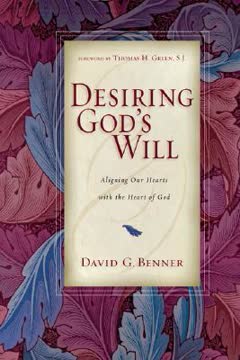
Reviewers widely praise Desiring God's Will as a powerful conclusion to Benner's spiritual trilogy, celebrating its fresh, contemplative approach to aligning human desire with God's will. Readers appreciate its psychological depth, accessible writing, and practical exercises like the Examen and Lectio Divina. Many found it transformative, emphasizing that surrender to God's love—rather than willpower—is central to spiritual growth. Some critics noted occasional repetitiveness and a lack of scriptural grounding, but most highly recommend the book, particularly alongside the other two trilogy installments.
People Also Read
 Immersive