Plot Summary
Family Curse, Daughter's Duty
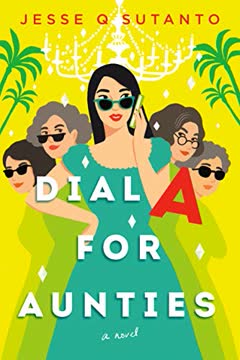
Meddelin "Meddy" Chan grows up in a tight-knit Chinese-Indonesian family in California, shadowed by a "curse" that drives away the men in her family, leaving the women fiercely bonded but overbearing. Meddy's sense of duty keeps her from pursuing her own dreams, especially after her father's disappearance. She chooses to stay close, attending UCLA instead of Columbia, and becomes the only cousin to join the family's wedding business. Her mother and three aunts, each with strong personalities and broken English, dote on her and meddle in every aspect of her life, especially her love life. Meddy's filial piety is both her pride and her prison, setting the stage for the chaos to come.
Blind Date Catastrophe
Pressured by her mother, Meddy agrees to a blind date with Jake, a hotelier her mom has been catfishing on her behalf. The date starts awkwardly and quickly turns sinister when Jake becomes aggressive, ignoring Meddy's refusals and driving her to a deserted area. In a panic, Meddy uses her Taser in self-defense, causing Jake to crash the car. When she comes to, Jake is dead. Overwhelmed by fear and guilt, Meddy's instincts and filial anxiety kick in—she can't call the police, fearing they'll blame her, and she can't bear to shame her family. Instead, she drags Jake's body into her trunk, setting off a chain of events that will entangle her entire family.
Aunties to the Rescue
Meddy confesses the accident to her mother, who, instead of panicking, immediately calls in the three aunts. The aunties' response is pragmatic, loving, and darkly hilarious—they treat the crisis as another family project. Over fruit and herbal tea, they debate the best way to dispose of the body, cycling through superstitions, sibling rivalries, and practicalities. Their banter and bickering reveal deep bonds and old wounds, but also a willingness to do anything for Meddy. They decide to hide the body in a cooler at Big Aunt's bakery, planning to deal with it after the high-profile wedding they're working that weekend.
Corpse in the Cooler
The aunties and Meddy struggle to move Jake's body, wrapping it in blankets and stashing it in a bakery cooler, all while prepping for the biggest wedding of their careers. The logistics are both farcical and tense—dodging neighbors, arguing over the best hiding spot, and worrying about the smell. The family's immigrant experience surfaces in their trilingual, fractured communication and their obsession with saving face. Meanwhile, Meddy's guilt grows, and the pressure of the upcoming wedding—where the body must not be discovered—mounts. The family's unity is tested as they juggle business, secrets, and survival.
Wedding Weekend Chaos
The wedding weekend begins on a private island resort, with Meddy's family providing all services. The body, accidentally shipped with the wedding supplies, ends up in the resort's walk-in fridge. Meddy is shocked to discover the hotel owner is Nathan, her college sweetheart and the one who got away. Old feelings resurface amid the chaos. Meanwhile, the aunties' attempts to move the body are repeatedly thwarted by nosy staff, suspicious guests, and logistical nightmares. The wedding's opulence contrasts with the family's frantic cover-up, and Meddy's anxiety peaks as the corpse's discovery seems inevitable.
Old Flames Rekindled
Nathan's unexpected presence throws Meddy into emotional turmoil. Their history—college romance, heartbreak, and unresolved longing—flares up as they work together on the wedding. Nathan senses something is off but is drawn to Meddy's vulnerability and strength. Their chemistry is undeniable, but secrets and misunderstandings threaten to keep them apart. As the wedding chaos intensifies, Meddy must choose between honesty and self-preservation, all while navigating her family's expectations and her own desires.
Groomsmen Gone Wild
In a bid to hide the body, the aunties disguise it as a passed-out groomsman, dressing Jake in a tux and sunglasses. Meanwhile, Fourth Aunt and Ma accidentally drug the real groomsmen with absinthe and herbal "medicine," rendering them useless and hilariously out of control. The wedding ceremony devolves into slapstick as the groomsmen stagger, vomit, and ultimately carry the corpse onto the altar, mistaking it for one of their own. The farce escalates, and Meddy's worst fears come true as the body is exposed in front of hundreds of guests.
The Stolen Tea Ceremony
Amid the wedding chaos, the bride's tea ceremony gifts—jewelry and cash—are stolen. Meddy discovers the thief is Maureen, the maid of honor, who is secretly in love with the bride and plotted the theft with Jake (the dead man) to sabotage the wedding. Maureen tries to frame Meddy, leading to a tense game of cat and mouse. Meddy must clear her name, recover the gifts, and keep the body hidden, all while the wedding teeters on the brink of disaster.
Maureen's Betrayal Unveiled
Meddy confronts Maureen, who takes the family hostage at gunpoint, demanding the tea ceremony gifts in exchange for silence about the body. In a tense standoff, Meddy realizes Maureen's actions are driven by heartbreak and jealousy, not greed. Jacqueline, the bride, bursts in and confesses her own love for Maureen. The confrontation ends in catharsis and forgiveness, as the women choose love and honesty over revenge and shame. The family is freed, and the stolen gifts are returned.
Dead Body on Display
The corpse's discovery at the wedding altar brings police and media attention. The family's carefully constructed cover story is put to the test as they are questioned by the bumbling local sheriff. Meddy faces the possibility of arrest, public disgrace, and the destruction of her family's business. The aunties' unity is strained, but their love for Meddy and each other prevails. Nathan is arrested as a suspect, forcing Meddy to confront her own responsibility and the limits of family loyalty.
Sheriff's Blundering Justice
The local sheriff, more interested in glory than truth, fixates on Nathan as the prime suspect. Meddy, channeling her aunties' cunning and her own newfound courage, poses as Nathan's lawyer and dismantles the sheriff's case with quick thinking and bravado. The family and wedding guests collaborate to spin a plausible story: the dead man was a hired groomsman who accidentally suffocated in a cooler after a night of debauchery. The sheriff, eager for a quick resolution, accepts the tale, and Nathan is released.
Meddy's Confession
In the aftermath, Meddy confesses everything to Nathan—her role in Jake's death, her family's involvement, and her lifelong struggle between duty and desire. Nathan's response is unconditional love and understanding. He reveals he suspected the truth but chose to protect her. Meddy realizes she can no longer live solely for her family's expectations. She chooses honesty, love, and her own happiness, breaking the cycle of sacrifice that has defined her life.
Love, Lies, and Liberation
The family confronts their patterns of guilt, obligation, and overprotection. Meddy asserts her independence, expressing her love for her family but also her need for freedom. The aunties, after initial hurt, accept her decision and express pride in her courage. The wedding business survives, and the family's bonds are stronger for having faced the crisis together. Meddy and Nathan, finally free of secrets, commit to building a life together on their own terms.
Family, Forgiveness, Freedom
Meddy moves out, starts her own photography business, and maintains close ties with her family. The aunties learn to let go, supporting Meddy's choices and celebrating her successes. The family's immigrant experience, language struggles, and cultural clashes are reframed as sources of strength and resilience. Meddy's journey from filial daughter to independent woman is complete, and the family finds a new equilibrium built on mutual respect and love.
Happily Ever After Dim Sum
The story ends at a noisy dim sum restaurant, with Meddy, Nathan, and the aunties gathered around a table, celebrating their survival and growth. Nathan proposes in a way that honors both Meddy's heritage and their shared future. The family's quirks, meddling, and love are on full display, but now Meddy embraces them with gratitude and humor. The curse is broken—not by magic, but by honesty, forgiveness, and the courage to choose one's own path.
Analysis
A darkly comic meditation on family, identity, and liberationDial A for Aunties is more than a madcap murder mystery; it's a heartfelt exploration of the immigrant experience, the burdens of filial piety, and the messy, redemptive power of love. Jesse Q. Sutanto uses farce and satire to expose the contradictions of family loyalty—how the same bonds that nurture can also suffocate. The novel's humor is rooted in specificity: the fractured language, the cultural superstitions, and the relentless meddling are both affectionate and incisive. Meddy's journey from dutiful daughter to self-possessed woman is the emotional core, mirroring the struggles of many first-generation immigrants caught between worlds. The story's resolution—where honesty, forgiveness, and self-acceptance triumph over shame and secrecy—offers a hopeful vision of family as a source of strength, not just obligation. In a world obsessed with perfection and appearances, Dial A for Aunties reminds us that true happiness comes from embracing imperfection, telling the truth, and choosing our own path—even if it means hiding a body or two along the way.
Review Summary
Dial A for Aunties receives mixed but generally positive reviews, averaging 3.68 stars. Many readers praise its hilarious family dynamics, rich Indo-Chinese cultural representation, and chaotic comedic energy, often comparing it to Crazy Rich Asians and Weekend at Bernie's. The audiobook format is frequently recommended. Common criticisms include underdeveloped romance, one-dimensional characters, plot holes, and an inconsistent genre blend. Readers who embrace its intentional absurdity tend to love it, while those seeking realistic fiction or cohesive storytelling find it frustrating. The aunties are almost universally celebrated as the story's greatest strength.
People Also Read






Characters
Meddelin "Meddy" Chan
Meddy is the only daughter in a Chinese-Indonesian immigrant family, raised in California by her mother and three aunts after her father's disappearance. Torn between filial piety and personal ambition, she sacrifices her dreams to support the family wedding business. Meddy is anxious, self-deprecating, and deeply loyal, but her passivity masks a sharp wit and a longing for independence. Her accidental killing of Jake forces her to confront her own limits and the cost of always putting family first. Through crisis, she discovers her own strength, learns to set boundaries, and ultimately chooses love and self-acceptance over guilt and obligation.
Mama (Natasya Chan)
Meddy's mother is the emotional center of the family—loving, meddlesome, and hilariously blunt. Her broken English and trilingual confusion reflect the family's immigrant journey. She is both a source of comfort and frustration for Meddy, embodying the contradictions of sacrifice and control. Mama's willingness to help Meddy hide a body reveals her unconditional love, but also her inability to let go. Her rivalry with Fourth Aunt and her pride in Meddy's "goodness" drive much of the family's drama. Ultimately, Mama learns to accept Meddy's independence, finding pride in her daughter's courage.
Big Aunt (Da Jie)
The eldest aunt, Big Aunt is the de facto leader of the family and the wedding business. Majestic, commanding, and deeply traditional, she is both nurturing and intimidating. Her need for control and her rivalry with Second Aunt create constant tension, but her competence and loyalty are unquestioned. Big Aunt's pride in her work and her family masks a vulnerability—fear of irrelevance and loss of respect. She evolves from rigid authority to supportive mentor, learning to trust Meddy's judgment and celebrate her autonomy.
Second Aunt (Er Jie)
Second Aunt is the family's hair and makeup artist, known for her emotional volatility and rivalry with Big Aunt. She is quick to take offense, obsessed with "losing face," and prone to dramatic outbursts. Her insecurity drives her to seek validation through her work and her children's achievements. Despite her flaws, Second Aunt is fiercely loyal and resourceful in a crisis. Her journey is one of learning to collaborate, let go of grudges, and appreciate the strengths of her sisters and niece.
Fourth Aunt (Si Mei)
The youngest aunt, Fourth Aunt is a former singer with a flair for drama and a penchant for big hair and sequins. Her English is the best among the sisters, which she wields as both a weapon and a shield. She is often at odds with Mama, embodying the family's generational and cultural tensions. Fourth Aunt's irreverence and creativity are invaluable in the family's schemes, and her willingness to break rules helps Meddy find her own voice. She is both a disruptor and a unifier, teaching the family to laugh at themselves.
Nathan Chan
Nathan is Meddy's college sweetheart, a Chinese-British hotelier whose ambition and warmth make him both a dreamer and a doer. His breakup with Meddy is rooted in her fear of abandoning her family, but his reappearance at the wedding reignites their connection. Nathan is patient, understanding, and willing to risk everything for Meddy's happiness. His presence challenges Meddy to confront her own desires and fears. Nathan's support is unwavering, but he also demands honesty and equality, helping Meddy break free from her self-imposed limitations.
Maureen Halim
Maureen is Jacqueline's best friend and the wedding's maid of honor. Outwardly loyal and efficient, she is secretly in love with Jacqueline and conspires with Jake to steal the tea ceremony gifts, hoping to sabotage the wedding. Her betrayal is rooted in heartbreak and jealousy, not malice. Maureen's arc is one of confession, vulnerability, and redemption. Her confrontation with Jacqueline leads to forgiveness and a new, honest relationship, mirroring Meddy's own journey toward truth and self-acceptance.
Jacqueline Wijaya
Jacqueline is the beautiful, wealthy bride at the center of the wedding chaos. She embodies the pressures of family, tradition, and public image, but beneath her poise is a longing for authenticity and love. Her friendship with Maureen is deep and complicated, and her willingness to forgive and embrace her own feelings is a turning point in the story. Jacqueline's arc parallels Meddy's—both must choose between duty and desire, and both find liberation in honesty.
Jake / Ah Guan
Jake is the man Meddy accidentally kills on her blind date. Initially presented as a charming hotelier, he is revealed to be predatory and manipulative, with ties to Maureen's plot. His death is both a crime and a catalyst, forcing the family to confront their own limits and loyalties. Jake's role as both victim and villain complicates the family's moral calculus, and his presence haunts the narrative as a symbol of danger, guilt, and the unpredictability of life.
Sheriff McConnell
The local sheriff is a blustering, self-important figure whose incompetence and prejudice threaten to derail the family's cover-up. Obsessed with glory and resistant to reason, he fixates on Nathan as a suspect and bungles the investigation at every turn. Sheriff McConnell's blunders provide both tension and comic relief, highlighting the family's resourcefulness and the absurdity of bureaucracy. He is ultimately outwitted by Meddy and the aunties, serving as a foil for their ingenuity.
Plot Devices
Farce and Escalating Chaos
The novel's structure is built on escalating farce—each attempt to solve one problem creates a bigger one. The accidental death, the body's repeated rediscovery, the aunties' superstitions, and the wedding's mounting disasters create a relentless pace. The use of slapstick, misunderstandings, and cultural miscommunication heightens both humor and anxiety, keeping readers invested in the outcome.
Flashbacks and Dual Timelines
The narrative weaves flashbacks to Meddy's college years and romance with Nathan into the present-day crisis. These interludes provide emotional context, reveal the roots of Meddy's fears, and build anticipation for their reunion. The dual timelines mirror Meddy's internal conflict between past loyalty and future possibility.
Immigrant Family Dynamics
The family's trilingual, fractured communication is both a source of comedy and a symbol of their immigrant experience. The tension between filial piety and personal ambition drives the plot, as does the pressure to save face and uphold tradition. The aunties' meddling, rivalry, and love are both obstacles and assets, complicating every decision and solution.
Romantic Comedy Tropes
The rekindling of Meddy and Nathan's romance follows classic rom-com beats—missed opportunities, misunderstandings, and grand gestures. The mistaken identity of the corpse, the farcical cover-up, and the eventual public proposal all play with genre conventions, subverting expectations with dark humor and emotional depth.
Satire of the Wedding Industry
The novel lampoons the excesses and anxieties of modern weddings—over-the-top ceremonies, impossible standards, and the commodification of love. The family's business is both a source of pride and a trap, mirroring the larger theme of balancing tradition and individuality.
Foreshadowing and Irony
Early references to the family curse, Meddy's reluctance to leave home, and the aunties' resourcefulness foreshadow later events. Irony abounds—Meddy's attempts to avoid shame lead to greater chaos, and the family's efforts to protect her force her to finally assert her independence.