Plot Summary
Oxford's Promise, World's Reality
James Drayton arrives at Oxford, expecting a crucible of intellect, but finds the reality is more about social games and performative mediocrity. He outpaces his peers, but the thrill of victory is hollow, leaving him isolated. His relentless drive is fueled by a need to prove himself, but the system rewards conformity over originality. As graduation nears, James faces the existential question of what all his striving is for, realizing that the ladders he's been climbing may lead nowhere meaningful. The world outside Oxford is less meritocratic than he hoped, and the first cracks of disillusionment appear, setting the stage for his search for purpose beyond academic achievement.
The Homeless Banquet
At a corporate recruitment event, James, frustrated by the emptiness of elite careerism, orchestrates a subversive prank: he invites local homeless men to feast on the untouched spread meant for privileged students. The act is both a protest and a cry for meaning, earning him notoriety and a reputation for unpredictability. This moment crystallizes his alienation from the world of easy privilege and signals his yearning to disrupt the status quo. The fallout ripples through the university and local press, but for James, it's a fleeting sense of agency in a world that feels increasingly scripted and hollow.
Roland's Japanese Detour
Roland Mackenzie, James's contemporary, dreams of adventure and cultural immersion, aiming for Japan but missing the application deadline. Instead, he drifts through Oxford, then India, always chasing the next big experience but rarely following through. His journey is marked by impulsiveness and a lack of discipline, yet he's buoyed by charm and a knack for making friends. In Tokyo, he's both awed and out of his depth, his attempts at cross-cultural connection ending in embarrassment. Roland's story is one of yearning for significance but being repeatedly undone by his own distractibility and the randomness of life.
Careers, Choices, and Consequences
As university ends, James and Roland face the daunting transition to adulthood. James, ever the planner, weighs his options with clinical precision, ultimately choosing management consulting as the surest route to influence. Roland, less certain, stumbles into teaching in India, more by accident than design. Both are haunted by the sense that their choices are less about passion and more about avoiding regret. The world of work proves less meritocratic and more arbitrary than either expected, and the gap between youthful ideals and adult reality widens. Their friendship, once incidental, becomes a lifeline as they navigate the uncertainties of early careers.
India, Ambition, and Drift
Roland's stint as a teacher in rural India is both humbling and frustrating. He's confronted by the limits of his own impact—helping a handful of children, but unable to scale his efforts. Meanwhile, James, back in London, channels his analytical prowess into a report on Indian education, seeking scalable solutions. Their paths cross again as James's ideas, sparked by Roland's stories, gain traction in the consulting world. The contrast between Roland's messy, lived experience and James's abstract, data-driven approach highlights the tension between idealism and pragmatism, and between individual action and systemic change.
Corporate Ladders and Crises
James's ascent at McKinsey is rapid but fraught with existential doubt. The financial crisis of 2008 upends the world he's been trained to master, exposing the fragility of institutions and the limits of individual agency. Roland, now back in London, is swept up in the chaos, his own career path as uncertain as the markets. The crisis forces both men to confront the emptiness of corporate striving and the human cost of economic "efficiency." Layoffs, restructurings, and the relentless pursuit of "value" leave them questioning what, if anything, is worth building in a world that can collapse overnight.
The Great Recession Unfolds
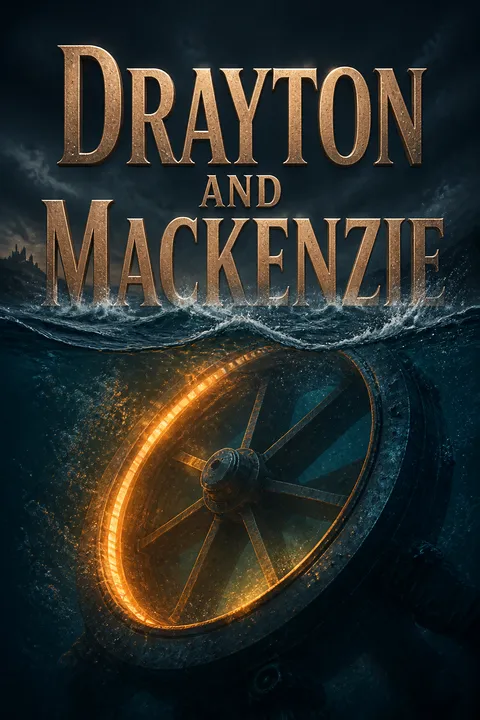
As the recession deepens, James and Roland are tasked with executing layoffs in the oil industry, becoming agents of other people's misfortune. The work is grueling and morally ambiguous, eroding their sense of self. Yet, in the crucible of crisis, a new idea emerges: to build something of their own, something that might outlast the cycles of boom and bust. The decision to found a tidal energy company is both an act of desperation and hope—a bid to create meaning in a world that seems to reward only destruction. Their partnership, forged in adversity, becomes the foundation for a new chapter.
Friendship, Rivalry, and Reinvention
The early years of Drayton–Mackenzie Ltd are marked by struggle, improvisation, and the constant threat of failure. James's relentless drive and Roland's improvisational charm are both assets and liabilities. Their friendship is tested by the pressures of leadership, the demands of investors, and the ever-present risk of betrayal. As the company grows, so do the stakes, and the line between personal and professional blurs. Success brings new challenges: envy, rivalry, and the temptation to abandon the mission for easier rewards. Yet, through it all, their bond endures, shaped by shared hardship and mutual respect.
Building Something Real
Turning a fragile idea into a functioning tidal energy machine requires more than technical skill—it demands sacrifice, resilience, and the ability to inspire others. The team grows, each member bringing their own hopes and fears. Setbacks are frequent, and the line between visionary leadership and reckless obsession is thin. James's health suffers under the strain, while Roland grapples with his own limitations and the consequences of past choices. The company's first real success is bittersweet, achieved at great personal cost. The dream of changing the world is no longer abstract—it's a daily, grinding reality.
Tidal Dreams, Human Costs
As Drayton–Mackenzie Ltd becomes a leader in its field, the personal toll mounts. James's relationship with Alice, and Roland's with both Alice and the company, become entangled in a web of loyalty, guilt, and longing. The pursuit of greatness leaves little room for happiness, and the sacrifices required are never evenly distributed. Illness, betrayal, and the relentless demands of the mission force each character to confront what truly matters. The company's success is real, but so are the wounds it inflicts—on friendships, families, and the founders themselves.
Love, Loss, and Betrayal
The triangle between James, Roland, and Alice comes to a head, testing the limits of forgiveness and the possibility of starting over. James's stoic acceptance of loss masks a deeper loneliness, while Roland and Alice struggle to build a life together in the shadow of what's been lost. The company, now a juggernaut, is both a source of pride and a reminder of the costs of ambition. As new generations arrive, the past is never far away, and the question of legacy—what is left behind, and for whom—becomes ever more pressing.
The Price of Success
The arrival of the covid-19 pandemic brings the story full circle, confronting the characters with the ultimate limits of control. James's illness and death are both a personal tragedy and a reckoning for the company and its founders. Roland, thrust into leadership, must decide what to preserve and what to let go. The pandemic exposes the fragility of all human endeavors, but also the enduring power of love, memory, and the drive to build something that lasts. In grief, the characters find a new kind of clarity, and the company's future is recast in the light of loss.
Pandemic Reckoning
James's death leaves a void that cannot be filled, but also a legacy that endures. Roland, now CEO, must navigate the company through lawsuits, betrayals, and the shifting tides of the post-pandemic world. The team, battered but unbroken, rallies around a new vision, transforming the company into a leader in hydrogen technology. The memory of James—his brilliance, his flaws, his relentless drive—becomes both a burden and a source of strength. In the end, the company's survival is a testament to the power of collective effort, and to the ways in which the dead continue to shape the living.
Legacy, Memory, and Flight
Decades later, the impact of Drayton–Mackenzie Ltd is visible in the transformed landscape of energy and technology. Roland, now an elder statesman, reflects on the journey from youthful ambition to hard-won wisdom. The company's achievements are real, but so are the scars. The next generation inherits both the fruits and the burdens of the past, and the question of what it all means remains open. As a rocket bearing James's name lifts off into space, the story closes on a note of both melancholy and hope—a reminder that every human endeavor is both fleeting and part of something larger.
Analysis
Drayton and Mackenzie is a sweeping, incisive meditation on ambition, friendship, and the search for meaning in a world defined by uncertainty and change. Through the intertwined lives of its protagonists, the novel interrogates the promises and pitfalls of meritocracy, the allure and emptiness of success, and the enduring human need for connection and legacy. The story is both a satire of contemporary work culture and a deeply felt exploration of what it means to build something real—whether a company, a relationship, or a life. The author deftly balances irony and empathy, exposing the absurdities of modern striving while honoring the genuine hopes and fears that drive it. Ultimately, the novel suggests that fulfillment is found not in achievement alone, but in the messy, imperfect bonds we forge with others, and in the willingness to keep striving—even, or especially, when the outcome is uncertain. The lessons are both timely and timeless: that greatness is always provisional, that every success is built on sacrifice, and that the true measure of a life is not what we accumulate, but what we leave behind.
Review Summary
Drayton and Mackenzie receives widespread praise for its portrayal of an unlikely but deeply moving male friendship between James Drayton and Roland Mackenzie, tracing their lives from Oxford through McKinsey and into a renewable energy startup. Readers consistently highlight the rich character development, accessible treatment of finance and business, and emotionally devastating ending. Common criticisms include the novel's considerable length, occasional pacing issues, and the inclusion of real-world figures feeling forced. Overall, most reviewers found it a rewarding, beautifully written read.
Characters
James Drayton
James is the archetype of the high-achieving outsider: brilliant, disciplined, and driven by a need to prove himself in a world that often feels shallow and arbitrary. His early triumphs at Oxford leave him isolated, and his career in consulting is marked by both rapid ascent and existential doubt. James's greatest strength is his analytical mind, but it is also his curse—he struggles to connect emotionally, and his relationships are often transactional or strained. As a founder, he is visionary but demanding, inspiring loyalty and resentment in equal measure. His journey is one of seeking meaning through work, but ultimately confronting the limits of ambition, the inevitability of loss, and the possibility of grace in letting go.
Roland Mackenzie
Roland is James's foil: impulsive, affable, and perpetually searching for purpose. His life is a series of near-misses and unfinished projects, from his failed attempt to reach Japan to his accidental career in India. Roland's gift is his ability to connect with others, to bring warmth and humor to even the bleakest situations. Yet, his lack of discipline and tendency to avoid hard choices often leave him adrift. As co-founder, he is both ballast and saboteur, alternately grounding James and undermining him. Roland's arc is one of gradual maturation, as he learns to shoulder responsibility, confront his own limitations, and find meaning in commitment—to people, to work, and to the future.
Alice Winsloe
Alice is the embodiment of modern competence: successful, self-aware, and keenly attuned to the social dynamics around her. Her relationship with James is marked by mutual respect but also a fundamental mismatch—she seeks warmth and spontaneity, while he offers steadiness and ambition. With Roland, she finds a more natural fit, but the shadow of James lingers. Alice's journey is one of negotiating the demands of career, love, and family, and of learning that happiness is as much about acceptance as achievement. Her pragmatism is both her shield and her vulnerability, and her story is a meditation on the costs and rewards of choosing a life that is "good enough."
Alan Forbes
Alan is the indispensable craftsman, the builder whose steady hands turn dreams into reality. He is skeptical of grand visions but loyal to those who earn his trust. Alan's motivations are grounded in family and tradition, and he is wary of risk for its own sake. His relationship with James and Roland is complex—he admires their ambition but resents their recklessness. Alan's arc is one of reluctant heroism: he endures setbacks, absorbs the frustrations of others, and ultimately becomes the moral center of the company. His pride in his work is matched by a deep humility, and his legacy is measured not in headlines but in the quiet satisfaction of a job well done.
Mary-Rose
Mary-Rose enters the company as an ambitious assistant but quickly becomes its moral compass. Coming from a background far removed from privilege, she is both grateful and critical, pushing the founders to consider the ethical dimensions of their work. Her relationship with James is one of mutual challenge—she refuses to be overawed by his intellect, and he, in turn, learns to value her dissent. Mary-Rose's journey is about finding her voice, claiming authority, and insisting that success must be measured by more than profit or prestige. She represents the possibility of change from within, and her presence ensures that the company never loses sight of its human dimension.
Eleni
Eleni is a former colleague and confidante, whose own career in the energy sector parallels and intersects with James's. She is fiercely intelligent, ambitious, and unafraid to speak uncomfortable truths. Her relationship with James is marked by mutual respect and occasional rivalry; she is one of the few who can match him in argument and challenge his assumptions. Eleni's pragmatism is both a strength and a limitation—she is wary of idealism, but also haunted by the sense that something essential is missing from her life. Her story is a meditation on the costs of success and the difficulty of balancing personal and professional fulfillment.
Arthur and Mary Drayton
James's parents are academics whose values and expectations shape much of his worldview. Arthur is a music scholar, Mary an economic historian; together, they represent a model of thoughtful, engaged adulthood that both inspires and frustrates James. Their home is a haven of culture and conversation, but also a reminder of the limits of intellectual achievement. As James's journey unfolds, their role shifts from authority figures to sources of comfort and perspective. Their love is steadfast, but their inability to fully understand their son's choices is a source of both comedy and pathos.
Cleo Drayton
James's younger sister is both a confidante and a counterpoint. Her own path—into environmental economics and a more balanced life—serves as a foil to James's relentless striving. Cleo is practical, emotionally intelligent, and unafraid to challenge her brother's assumptions. Her presence in the story is a reminder that there are many ways to live well, and that success need not come at the expense of happiness or connection.
Javier Ferrer
Javier is a rival-turned-colleague, the founder of a competing marine energy company whose experience and ambition both complement and threaten the founders. He is passionate, inventive, and unwilling to play second fiddle. Javier's arc is a cautionary tale about the dangers of ego and the limits of loyalty in a world where survival often means consolidation and compromise.
Kate Mackenzie
Kate, Roland and Alice's daughter, is both a literal and symbolic heir to the story's struggles and achievements. Her presence reframes the narrative's stakes, shifting the focus from individual ambition to generational continuity. Through her, the characters are forced to confront what they will leave behind, and what it means to build not just for oneself, but for the future.
Plot Devices
Dual Protagonists and Parallel Arcs
The novel's structure alternates between James and Roland, using their divergent personalities and choices to explore themes of ambition, meaning, and the search for fulfillment. Their friendship is both a source of strength and a site of conflict, and their parallel journeys allow the narrative to interrogate the costs and rewards of different approaches to life. The interplay of rivalry and camaraderie is a constant source of tension and growth.
Satirical Social Commentary
Throughout the story, the author employs sharp, often dark humor to critique the worlds of academia, corporate ambition, and startup culture. The use of banter, parody, and subversive acts (like the homeless banquet) serves to highlight the gap between ideals and reality, and to question the values that underpin contemporary success.
Realism and Historical Context
The narrative is deeply embedded in the social and economic upheavals of the early 21st century: the financial crisis, the rise of tech, the pandemic. These events are not mere backdrops but active forces shaping the characters' choices and the company's fate. The use of real historical figures (e.g., Peter Thiel, Elon Musk) and institutions grounds the story in a recognizable world, lending weight to its themes.
Foreshadowing and Recurrence
Recurring images—boats, tides, unfinished journeys, the moon—serve as metaphors for the characters' struggles and aspirations. Early events (missed opportunities, acts of rebellion) are echoed in later crises, creating a sense of inevitability and continuity. The narrative frequently foreshadows both triumph and tragedy, inviting the reader to reflect on the unpredictability of life and the limits of control.
Shifting Narrative Perspective
While the story is primarily told through James and Roland, key chapters shift to other characters—Alice, Alan, Mary-Rose—allowing for a richer, more nuanced exploration of events. This polyphonic approach ensures that no single perspective dominates, and that the emotional and ethical complexity of the story is fully realized.








































