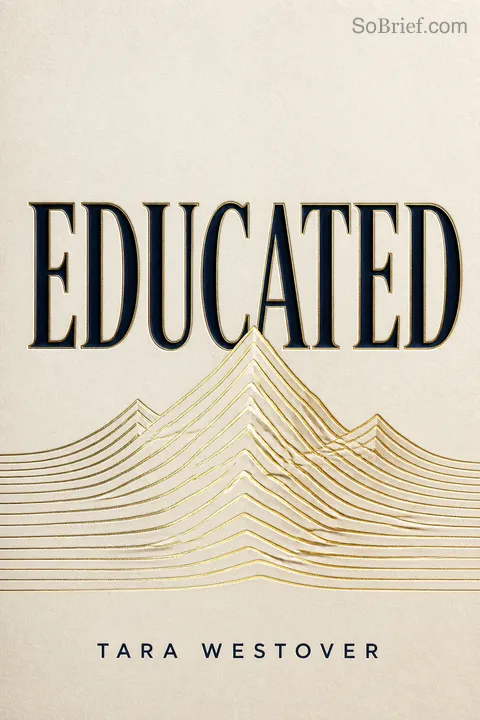
Plot Summary
Mountain Without a Birthdate
Tara Westover grows up at the base of Buck's Peak in rural Idaho, the youngest daughter in a family of Mormon survivalists. Her father, Gene, distrusts the government, schools, and hospitals, so Tara and several siblings have no birth certificates, medical records, or formal education. Their lives revolve around preparing for the apocalypse, bottling peaches, and learning the rhythms of the mountain. Tara's earliest memories are shaped by her father's stories and fears, and by the sense that her family is fundamentally different—unseen and unrecorded by the outside world. The mountain is both her playground and her prison, a place of beauty and isolation, where the outside world is a distant, threatening rumor.
Survivalist Gospel and Fear
Gene's worldview is dominated by apocalyptic prophecy and conspiracy. He teaches his children that the government is evil, public schools are brainwashing centers, and doctors are agents of Satan. The family stockpiles food, buries guns, and prepares "head for the hills" bags. Tara internalizes these fears, learning to see the world as a place of imminent danger. Her father's authority is absolute, his charisma both magnetic and terrifying. The children are taught obedience and self-reliance, but also suspicion and secrecy. The outside world is a threat, and the family's survival depends on their unity and faith in Gene's revelations.
Mother's Awakening Power
Tara's mother, Faye, is initially a compliant wife, supporting Gene's beliefs and raising their children according to his rules. But when she becomes a midwife and herbalist, she discovers a sense of purpose and autonomy. Her work brings money and respect, and she gradually gains confidence, even as she continues to defer to Gene in public. The tension between her growing independence and her loyalty to her husband becomes a central conflict. Tara witnesses her mother's transformation from a timid, apologetic woman to a healer with her own following, yet still trapped by the family's insular world.
Accidents and Unseen Wounds
Life on Buck's Peak is dangerous. The children work in the junkyard, exposed to constant risk. Accidents are frequent and severe: car crashes, burns, falls, and wounds that would send most families to the hospital. But Gene forbids medical treatment, insisting on faith and herbal remedies. Tara's mother suffers a traumatic brain injury in a car accident, and her brother Luke is horribly burned. The family's refusal to seek help leaves lasting scars, both physical and psychological. Tara learns to minimize pain, to distrust her own suffering, and to accept that survival sometimes means denying reality.
Tyler's Secret Melody
Tyler, Tara's older brother, is different from the rest. He loves books and music, and dreams of a life beyond the mountain. Despite Gene's opposition, Tyler teaches himself advanced math and eventually leaves for college, breaking the family's unspoken rule of loyalty. His departure is both a betrayal and a beacon for Tara, who idolizes him and begins to imagine her own escape. Tyler's courage plants the seed of possibility in Tara's mind, showing her that another life is possible, even if it means leaving everything she knows behind.
Junkyard Lessons and Scars
As Tara grows, she becomes part of her father's junkyard crew, learning to sort scrap metal and operate dangerous machinery. The work is grueling and hazardous, and Tara is injured more than once. Her father's disregard for safety and her own pain teaches her to suppress her needs and doubts. The junkyard becomes a crucible, forging her resilience but also her sense of unworthiness. She is called names, belittled, and made to feel that her value lies in obedience and endurance. The scars she accumulates are both visible and invisible, shaping her understanding of herself and her place in the family.
The World Beyond Buck's Peak
Tara's curiosity about the outside world grows, fueled by Tyler's example and her own longing for knowledge. She begins to teach herself from old textbooks, eventually deciding to take the ACT and apply to Brigham Young University. The process is daunting—she must learn algebra, grammar, and history from scratch, often in secret. When she is accepted to BYU, she enters a world utterly foreign to her: classrooms, dorms, and social norms she cannot decipher. She is ignorant of basic facts, like the Holocaust, and struggles with shame and self-doubt. Yet, she also discovers the thrill of learning and the possibility of transformation.
The Price of Obedience
As Tara pursues her education, the gulf between her and her family widens. Her father sees her quest for knowledge as a betrayal, a rejection of his authority and God's will. Her brother Shawn, volatile and abusive, becomes increasingly dangerous, targeting Tara with manipulation and violence. The family's code of silence and loyalty makes it nearly impossible for Tara to seek help or even name the abuse. Her mother, torn between her daughter and her husband, ultimately sides with Gene. Tara is forced to choose between her own safety and sanity, and the love and acceptance of her family.
Breaking the Family Spell
Tara's growing awareness of Shawn's abuse—toward herself and others—forces her to confront the family's denial and complicity. She tries to enlist her mother and sister, but the family closes ranks, accusing Tara of betrayal and madness. The psychological toll is immense: Tara questions her own memories, sanity, and worth. She seeks validation from friends, journals, and eventually therapy. The process of breaking free is agonizing, requiring her to relinquish the hope of reconciliation and to accept the loss of her family as the price of survival.
The Cost of Knowledge
Tara's academic journey takes her from BYU to Cambridge and Harvard, where she excels despite her unconventional background. She discovers new ways of thinking, new communities, and a sense of self-worth independent of her family. Yet, each step forward comes with a cost: the further she moves from Buck's Peak, the more she is alienated from her past. Her achievements are met with suspicion or outright rejection by her parents, who see her education as evidence of corruption. Tara must grapple with the loneliness of self-invention and the pain of being misunderstood by those she loves most.
Cambridge: Becoming Gold
At Cambridge, Tara is mentored by professors who recognize her potential and challenge her to think critically. She learns to see herself not as an impostor, but as someone capable of shaping her own story. The metaphor of "becoming gold" captures her journey from self-doubt to self-acceptance. She realizes that her worth is not contingent on her family's approval or her ability to conform, but on her own choices and convictions. The process is both exhilarating and terrifying, as she must let go of old identities and embrace the uncertainty of becoming.
The Maze and the Mirror
Tara's struggle to reconcile her past and present intensifies. She is haunted by memories of abuse, by the family's shifting narratives, and by her own doubts about what is real. The image of the maze—her father's world of fear and control—and the mirror—her fractured sense of self—become central metaphors. Tara must decide whether to remain trapped in the family's story or to claim her own. The act of writing, of recording her memories, becomes a way to assert her reality and to begin healing.
Choosing My Own Mind
The final break with her family comes when Tara refuses to submit to her father's authority, to accept his version of reality, or to undergo a ritual "blessing" meant to cast out her supposed demons. She chooses instead to trust her own mind, to value her own experiences and perceptions. This act of self-creation is both a liberation and a loss: she gains her freedom but forfeits the hope of reconciliation. Tara learns that education is not just about knowledge, but about the courage to think for oneself, even when it means standing alone.
The Family Divides
The Westover family fractures along lines of belief, education, and dependence. Some siblings remain loyal to Gene and Faye, working in the family business and accepting their parents' worldview. Others, like Tyler and Richard, pursue higher education and distance themselves from the family's control. The divide is painful and often irreparable, as loyalty to the family is pitted against the need for self-preservation and truth. Tara finds solace in the support of a few siblings, but the loss of others is a wound that never fully heals.
The Power of Memory
Tara reflects on the nature of memory, the unreliability of personal narratives, and the difficulty of telling the truth about one's life. She acknowledges the contradictions and gaps in her own recollections, and the impossibility of capturing the full complexity of her family. Yet, she insists on the importance of bearing witness, of refusing to let others define her story. The act of remembering becomes an act of resistance, a way to reclaim agency and dignity.
Forgiveness Without Return
In the aftermath of her estrangement, Tara grapples with guilt, anger, and the longing for reconciliation. She learns that forgiveness does not require return, that she can love her family without subjecting herself to their control or abuse. The process of healing is slow and nonlinear, marked by setbacks and moments of clarity. Tara comes to accept that her parents may never change, and that her own peace depends on accepting her choices and their consequences.
The Education of Self
Tara's journey culminates in the realization that education is not merely the acquisition of knowledge, but the transformation of the self. She is no longer the child her father raised, but the woman she has chosen to become. The breach between her and her family is both a tragedy and a necessity, the price of becoming herself. Tara claims her right to her own mind, her own story, and her own future, even as she mourns what she has lost. Her education is ongoing, a continuing reconstruction of experience, and a testament to the power of self-creation.
Analysis
Educated is a powerful meditation on the struggle for selfhood in the face of family, faith, and trauma. Tara Westover's memoir is not just a story of escaping a survivalist upbringing, but of the ongoing process of becoming—of learning to think for oneself, to claim one's own mind, and to accept the cost of autonomy. The book interrogates the nature of memory, the unreliability of personal narratives, and the difficulty of telling the truth about one's life. It explores the ways in which family loyalty can become a form of bondage, and how education—formal and informal—can be both a liberation and a loss. Westover's journey is marked by courage, resilience, and the willingness to question even the most sacred beliefs. The memoir offers no easy answers or tidy resolutions; instead, it insists on the complexity of transformation and the necessity of forging one's own path. In the end, Educated is a testament to the power of self-invention, the importance of bearing witness, and the ongoing work of becoming oneself.
Review Summary
Educated received mostly positive reviews, with many praising Westover's resilience and powerful storytelling. Readers were captivated by her journey from a restrictive upbringing to academic success. Some found the family dynamics and abuse disturbing. A few reviewers expressed skepticism about certain details and inconsistencies in the memoir. Overall, the book was lauded for its exploration of education's transformative power, though some felt it focused too heavily on family drama rather than Westover's educational experiences.
People Also Read










Characters
Tara Westover
Tara is the youngest daughter of a survivalist family, raised without formal education or medical care. Her journey is one of self-discovery, as she moves from unquestioning obedience to her father's authority to the painful process of individuation. Tara is intelligent, curious, and resilient, but also deeply loyal and plagued by self-doubt. Her relationships with her parents and siblings are fraught with love, fear, and betrayal. Through education, she learns to trust her own mind and to claim her own story, even at the cost of family and belonging. Tara's development is marked by trauma, courage, and the ongoing struggle to reconcile her past with her present.
Gene (Dad)
Gene is Tara's father, a deeply religious and paranoid man who shapes the family's reality through his apocalyptic beliefs and authoritarian rule. He is both loving and dangerous, capable of tenderness but also of neglect and abuse. Gene's mental illness—possibly bipolar disorder—fuels his delusions and erratic behavior. He demands absolute loyalty and obedience, and views Tara's pursuit of education as a betrayal. His inability to accept dissent or vulnerability creates a climate of fear and silence. Gene's influence is both formative and destructive, and his refusal to change ultimately forces Tara to choose between him and herself.
Faye (Mother)
Faye begins as a submissive wife, supporting Gene's worldview and raising their children according to his rules. Her work as a midwife and herbalist awakens her sense of agency and power, but she remains trapped by her loyalty to her husband and the family's insular culture. Faye is intelligent, resourceful, and compassionate, but also complicit in the family's denial and abuse. Her relationship with Tara is complex—marked by moments of solidarity and betrayal. Faye's inability to protect her children or to confront Gene's authority is a source of lasting pain for Tara, even as she comes to understand her mother's own limitations and wounds.
Shawn
Shawn is Tara's older brother, charming and protective at times, but also violent, controlling, and deeply damaged. He targets Tara and other women in the family with psychological and physical abuse, using manipulation, threats, and gaslighting to maintain power. Shawn's behavior is enabled by the family's code of silence and by Gene's refusal to acknowledge wrongdoing. His relationship with Tara is a source of trauma and confusion, as he alternates between affection and cruelty. Shawn's inability to change, and the family's refusal to hold him accountable, becomes the catalyst for Tara's final break with her family.
Tyler
Tyler is Tara's older brother, distinguished by his love of learning and his quiet resistance to the family's rules. He teaches himself advanced subjects, leaves for college, and becomes a model of possibility for Tara. Tyler's support and belief in Tara are crucial to her escape, even as he struggles with his own guilt and ambivalence about leaving the family. His relationship with Tara is marked by mutual respect and affection, and he becomes one of her few enduring allies. Tyler's journey illustrates the difficulty of breaking free from family loyalty and the cost of choosing one's own path.
Richard
Richard is another of Tara's brothers who pursues higher education and eventually earns a PhD. He is intelligent, curious, and supportive, but also caught between the family's demands and his own aspirations. Richard's journey mirrors Tara's in many ways, as he navigates the tension between loyalty and self-actualization. His eventual support for Tara is a source of comfort and validation, demonstrating the possibility of connection beyond the family's control.
Audrey
Audrey is Tara's older sister, who also suffers abuse at Shawn's hands. She initially allies with Tara in confronting the family, but ultimately succumbs to the pressure to conform and preserve unity. Audrey's ambivalence and eventual rejection of Tara are devastating, illustrating the power of family loyalty and the difficulty of breaking the cycle of denial. Her relationship with Tara is marked by shared pain, but also by the limits of solidarity in the face of overwhelming pressure.
Faye's Mother (Grandma-over-in-town)
Tara's maternal grandmother represents the possibility of a different life—one of order, respectability, and connection to the outside world. Her relationship with Faye is strained by Faye's choice to marry Gene and embrace his worldview. Grandma's presence is a reminder of what has been lost, and her death marks the end of a potential bridge between Tara and her family. Her quiet endurance and unspoken understanding become more meaningful to Tara as she matures.
Charles
Charles is Tara's first close friend and romantic interest outside the family. He introduces her to new experiences and perspectives, offering kindness and acceptance. Charles's inability to save Tara from her family's influence, and her own inability to accept his help, highlight the depth of her entanglement and the difficulty of healing from trauma. His presence in Tara's life is both a comfort and a painful reminder of what she must leave behind.
Professor Steinberg
At Cambridge, Professor Steinberg recognizes Tara's potential and challenges her to think critically and claim her own voice. His belief in her abilities helps Tara overcome her impostor syndrome and embrace her identity as a scholar. Steinberg's mentorship is a turning point, enabling Tara to see herself as someone capable of shaping her own story and contributing to the world of ideas. His influence endures as Tara continues her journey of self-creation.
Plot Devices
Nonlinear Memory and Unreliable Narration
The memoir is structured around Tara's evolving understanding of her past, with memories presented as uncertain, contested, and subject to revision. This device underscores the difficulty of telling the truth about trauma and the ways in which family narratives can distort reality. Tara's journals, conversations, and reflections serve as anchors, but the story is always filtered through her changing perspective. The unreliability of memory becomes both a theme and a method, inviting readers to question the nature of truth and the possibility of self-knowledge.
Symbolism of the Mountain and the Mirror
Buck's Peak is both a literal place and a symbol of Tara's origins, her family's power, and the limits of her world. The mountain represents beauty, isolation, and the weight of tradition. The mirror, recurring throughout the memoir, symbolizes Tara's fractured identity and the struggle to reconcile her past and present selves. The act of looking in the mirror, of seeing both the child she was and the woman she is becoming, encapsulates the central conflict of the book.
Education as Transformation
Education is not merely the acquisition of knowledge, but the process of becoming. Tara's journey from Buck's Peak to Cambridge and Harvard is marked by moments of revelation, doubt, and reinvention. Each step forward requires her to question old beliefs, confront painful truths, and accept the cost of autonomy. The narrative structure mirrors this process, moving from the insular world of the family to the wider world of ideas, and from obedience to self-authorship.
Family Loyalty and Betrayal
The memoir explores the tension between loyalty to family and the need for selfhood. Tara's choices are framed as betrayals by her parents and siblings, but as acts of survival and integrity by herself. The shifting alliances, accusations, and denials within the family create a sense of psychological suspense, as Tara must navigate the perilous terrain of love, fear, and truth. The device of the ultimatum—accept our reality or lose us—forces Tara to confront the limits of forgiveness and the necessity of letting go.
Testimony and Bearing Witness
The memoir is itself an act of testimony, a refusal to let others define Tara's story. The process of writing, of recording memories and questioning them, becomes a way to reclaim agency and dignity. The narrative is punctuated by moments of self-doubt and revision, but also by the insistence on the importance of bearing witness, even when the truth is painful or uncertain.
FAQ
What's Educated by Tara Westover about?
- Memoir of Transformation: Educated is a memoir detailing Tara Westover's journey from a survivalist family in rural Idaho to earning a PhD from Cambridge University.
- Family Dynamics: It explores her complex family relationships, particularly with her father, who held extreme beliefs, and her brother, who was abusive.
- Education as Liberation: The book highlights how education became a means for Westover to question her upbringing and liberate herself from her family's oppressive ideologies.
Why should I read Educated by Tara Westover?
- Inspiring Story: The memoir showcases the resilience of the human spirit and the transformative power of education, making it relatable to anyone facing adversity.
- Insight into Family Loyalty: It provides a deep exploration of family loyalty and the struggle between personal beliefs and familial expectations.
- Critical Acclaim: Educated has received widespread acclaim, including being a finalist for the Pulitzer Prize, and is praised for its compelling narrative and thought-provoking themes.
What are the key takeaways of Educated by Tara Westover?
- Value of Education: Education is portrayed as a powerful tool for personal growth and self-empowerment, allowing individuals to break free from limiting beliefs.
- Complex Family Relationships: The memoir highlights the complexities of familial love and loyalty, showing how these bonds can be both nurturing and suffocating.
- Self-Identity and Autonomy: Westover's journey underscores the importance of self-identity and the courage it takes to forge one's own path, even when it means distancing oneself from family.
What are the best quotes from Educated by Tara Westover and what do they mean?
- “The past is beautiful...”: This quote reflects the idea that emotions and experiences often gain clarity and beauty in hindsight.
- “Emancipate yourselves from mental slavery.”: Inspired by Bob Marley, it emphasizes the importance of freeing oneself from limiting beliefs and societal expectations.
- “You’re a traitor, a wolf among sheep.”: This illustrates the internal conflict Westover faces as she seeks knowledge outside her family's beliefs.
How does Tara Westover's upbringing affect her later life in Educated?
- Isolation from Society: Her survivalist upbringing isolated her from mainstream society, leading to challenges in education and socialization.
- Struggle with Identity: The conflicting values between her family's beliefs and her pursuit of education caused a profound struggle with her identity.
- Impact on Relationships: Her upbringing influenced her interactions with peers, as she navigated feelings of inadequacy and fear of judgment.
What challenges does Tara Westover face when she first enters school in Educated?
- Academic Disparity: Westover struggled with basic concepts due to her lack of formal education, making her feel out of place.
- Social Anxiety: Entering a classroom environment created social anxiety, as she felt like an outsider among her peers.
- Cultural Shock: The transition from her isolated upbringing to a structured educational setting was a cultural shock, requiring adaptation to new norms.
How does Educated by Tara Westover address the theme of family loyalty?
- Conflict Between Love and Abuse: Westover illustrates how love can coexist with dysfunction and abuse, creating a complex dynamic of loyalty.
- Struggle for Acceptance: She grapples with her desire for acceptance from her family while pursuing her education, highlighting the emotional toll of this conflict.
- Consequences of Estrangement: The memoir explores the painful separation from her family as a consequence of choosing education over loyalty.
What role does education play in Tara Westover's transformation in Educated?
- Catalyst for Change: Education allows Westover to break free from her family's beliefs and pursue her own identity.
- Empowerment and Independence: Through education, she gains empowerment and independence, learning to challenge the beliefs she was raised with.
- Reconstruction of Self: Education becomes a journey of self-discovery, enabling her to define her own identity.
How does Tara Westover's relationship with her parents evolve throughout Educated?
- Initial Dependence: Westover's relationship with her parents begins with dependence and loyalty, adhering to their beliefs.
- Growing Tension: As she pursues education, tension grows, particularly with her father, leading to conflict and estrangement.
- Final Estrangement: Her relationship reaches a breaking point as she chooses education over familial loyalty, necessary for her personal growth.
What impact does the concept of survivalism have on Tara Westover's life in Educated?
- Isolation from Society: Survivalism instilled a sense of isolation, limiting her access to education and socialization.
- Fear of Government and Authority: It fostered a fear of government and authority figures, influencing her worldview.
- Resilience and Resourcefulness: Despite challenges, survivalism instilled resilience and resourcefulness, essential for adapting to a new life.
How does Educated by Tara Westover explore the concept of self-identity?
- Journey of Self-Discovery: Westover learns to define herself outside of her family's beliefs and expectations.
- Conflict Between Past and Present: The memoir illustrates the tension between her past identity and her evolving identity as an educated woman.
- Embracing Complexity: She ultimately embraces the complexity of her identity, recognizing she can honor her past while forging her own path.
What is the significance of the title Educated by Tara Westover?
- Education as a Transformative Force: The title reflects the central theme of the memoir, emphasizing education's transformative power.
- Dual Meaning: It suggests a critique of what it means to be "educated," questioning subjective knowledge shaped by personal experiences.
- Personal Growth: The title encapsulates Westover's growth from isolation to gaining knowledge, perspective, and critical thinking skills.
About the Author
Other books by Tara Westover

Download PDF
Download EPUB
.epub digital book format is ideal for reading ebooks on phones, tablets, and e-readers.








































