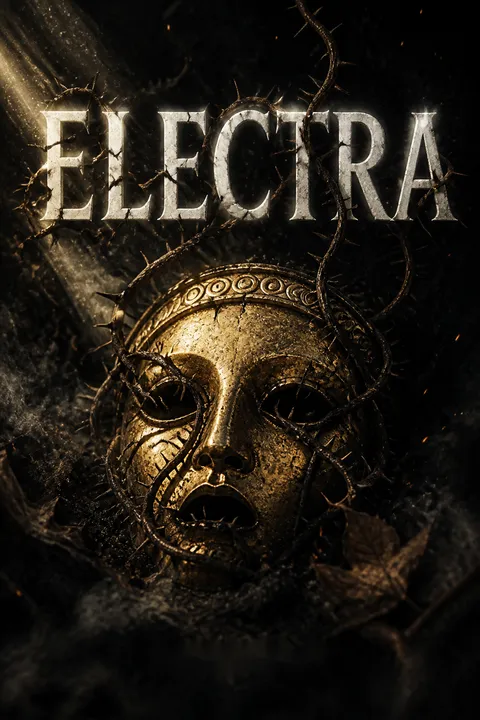

Plot Summary
Shadows Over Argos
After Agamemnon's murder by his wife Clytemnestra and her lover Aigisthos, Argos is ruled by these usurpers. The city's golden age is over, and the children of Agamemnon—Electra and Orestes—are scattered and powerless. The land is haunted by the memory of betrayal and bloodshed, and the gods' justice seems distant. The chorus of country women, representing the ordinary people, sense the wrongness that pervades the land. The play opens not in a palace but in the humble countryside, signaling a world turned upside down, where nobility is exiled and virtue is forced to survive in obscurity.
Electra's Exile and Marriage
Electra, once a princess, now lives in rural obscurity, married off to a poor but honorable farmer. This marriage, arranged by Aigisthos to neutralize her as a threat, is never consummated; the farmer respects her lineage and her suffering. Electra's daily life is marked by hardship and humiliation, but she clings to her grief and her sense of justice. Her isolation is both physical and emotional, as she refuses to join in the joys of village life, instead mourning her father and longing for her brother's return. Her pain is sharpened by the contrast between her own misery and her mother's luxury.
Orestes Returns in Secret
Orestes, grown but haunted by exile, returns to Argos in secret, accompanied by his loyal friend Pylades. He has come at Apollo's command to avenge his father's murder, but he is cautious, aware of the dangers. He seeks out Electra, hoping to find an ally and to learn the truth about the situation at home. Orestes is torn between the divine command for vengeance and his own uncertainty. His return is not triumphant but furtive, marked by fear and hesitation, as he navigates a world where trust is scarce and the line between justice and crime is blurred.
Siblings in Suffering
The siblings, long separated, are both shaped by loss and longing. Electra's suffering is raw and public, while Orestes' is internalized and masked by caution. Their reunion is delayed by uncertainty and the passage of time, but their shared pain forges a bond stronger than blood. They are both haunted by their father's ghost and the injustice that has befallen their house. Their dialogue is filled with longing, bitterness, and the desperate hope that together they might restore some measure of justice to their shattered family.
Recognition at the Threshold
The old retainer, who once saved Orestes, brings tokens and memories that finally reveal Orestes' identity to Electra. The recognition is bittersweet—joy at reunion is shadowed by the enormity of the task ahead. The siblings embrace, but their happiness is fleeting, as the reality of vengeance looms. The chorus and the old man urge action, but the siblings are forced to confront the cost of their mission. The moment is charged with both hope for justice and dread of the violence it will require.
The Farmer's Quiet Nobility
Electra's husband, the farmer, emerges as a figure of quiet dignity. Though poor, he is honorable, refusing to exploit Electra or profit from her misfortune. His hospitality to Orestes and Pylades, and his gentle wisdom, stand in stark contrast to the corruption of the palace. He represents a different kind of nobility—one based on character rather than birth. His presence in the play highlights the moral ambiguity of the aristocratic quest for vengeance and the possibility of goodness outside the circles of power.
Plotting Vengeance
With the old man's guidance, Orestes and Electra plot the murders of Aigisthos and Clytemnestra. The plan is cunning: Orestes will ambush Aigisthos at a rural sacrifice, while Electra will lure her mother with news of a childbirth. The siblings steel themselves for the act, invoking the gods and their father's spirit. Yet, beneath their resolve, doubts flicker—especially for Orestes, who hesitates at the prospect of matricide. Electra's determination is fierce, her grief hardened into a weapon. The chorus, swept up in the drama, prays for justice but senses the darkness gathering.
The Old Man's Counsel
The old man, once Agamemnon's loyal servant, is both practical and deeply invested in the family's fate. He provides the crucial information and encouragement needed for the plot, but his presence is tinged with tragic irony. He represents the old order, loyal to the house of Atreus, yet his advice leads to further bloodshed. His recognition of Orestes is a moment of hope, but his role in the plot's unfolding is a reminder that cycles of vengeance are perpetuated by those who remember old wrongs.
Aigisthos at the Altar
Aigisthos, unaware of the danger, prepares a sacrifice to the Nymphs, seeking blessings for his rule. Orestes and Pylades, posing as strangers, are welcomed as guests. The ritual, meant to honor the gods, is subverted into an act of murder. Orestes, urged on by the old man's plan and Electra's resolve, seizes the moment and kills Aigisthos. The act is swift and brutal, and the chorus exults in the apparent restoration of justice. Yet, the perversion of sacred ritual foreshadows the moral cost of their victory.
The Bloody Sacrifice
The news of Aigisthos' death brings a surge of joy to Electra and the chorus. Orestes is crowned as a victor, but the celebration is uneasy. Electra's triumph is laced with bitterness as she insults Aigisthos' corpse, venting years of rage. The chorus, though initially jubilant, begins to sense the ambiguity of their actions. The boundary between justice and revenge blurs, and the siblings are left to contemplate the next, more terrible step: the murder of their own mother.
Mother and Daughter Confronted
Clytemnestra arrives, drawn by Electra's ruse. The confrontation between mother and daughter is a trial in miniature, each presenting her case. Clytemnestra defends her actions as justified by Agamemnon's sacrifice of Iphigenia and his infidelity; Electra counters with accusations of lust, betrayal, and injustice. The exchange is charged with pain, bitterness, and the impossibility of reconciliation. Both women are trapped by the past, and the chorus, once certain of justice, now wavers in its support.
The Matricide's Agony
Orestes, torn by doubt, is driven by Electra's relentless will and the memory of his father. The murder of Clytemnestra is committed in a frenzy of conflicting emotions—pity, rage, and despair. The siblings emerge bloodstained and shattered, immediately overcome by guilt and horror at what they have done. The chorus, too, recoils from the violence, recognizing that the cycle of vengeance has only deepened the family's suffering. The justice they sought has become a new crime, and the gods' will is more inscrutable than ever.
The Dioskouroi Descend
Castor and Polydeukes, the Dioskouroi, appear as divine arbiters. They pronounce the siblings' actions both just and unjust, dictated by Apollo's oracle yet condemned by fate. Orestes is sentenced to exile and torment by the Furies; Electra is given in marriage to Pylades. The gods offer explanations but little comfort, revealing the limits of human understanding and the ambiguity of divine justice. The siblings' suffering is acknowledged, but their pain cannot be undone.
Exile and Aftermath
Orestes, pursued by the Furies, must wander in madness and guilt, seeking purification in Athens. Electra, though promised to Pylades, is left to mourn the loss of her homeland and family. Their final farewell is filled with sorrow and longing, as they recognize that their quest for justice has left them more isolated than before. The chorus reflects on the fragility of happiness and the unpredictability of fate, offering only the faint hope that suffering may one day end.
The Gods' Uncertain Justice
The play closes with the gods' pronouncements, but their justice is ambiguous and incomplete. The cycle of violence is not truly broken, and the suffering of mortals is met with divine pity rather than resolution. The chorus, and the audience, are left to ponder the meaning of justice, the cost of vengeance, and the possibility of forgiveness in a world governed by inscrutable powers. The tragedy ends not with triumph, but with a somber meditation on the limits of human agency and the enduring need for compassion.
Analysis
Euripides' Electra is a tragedy that interrogates the very foundations of justice, family, and the human longing for retribution. Unlike earlier versions of the myth, Euripides strips away the grandeur of heroic vengeance, exposing its psychological and ethical costs. The play's rural setting and focus on ordinary suffering challenge the audience to reconsider the value of nobility and the legitimacy of revenge. Electra's obsession and Orestes' hesitation reveal the dangers of moral absolutism and the corrosive effects of unresolved grief. The intervention of the gods, far from providing comfort, underscores the ambiguity and unpredictability of divine justice. In the end, the play offers no easy answers—only the recognition that suffering begets suffering, and that the pursuit of justice, when divorced from compassion, can lead to new horrors. Euripides invites us to empathize with all his characters, victims and perpetrators alike, and to reflect on the fragility of happiness and the enduring need for pity in a world governed by fate and human frailty.
Review Summary
Reviewers of Electra largely appreciate Euripides' morally complex take on the revenge myth, praising his humanization of characters and willingness to question whether matricide can ever be justified. Many compare it favorably to versions by Aeschylus and Sophocles, noting Euripides makes Electra more central and active. The peasant husband receives warm praise for his dignity. Some find the play slow or less impactful than expected, while others highlight its psychological depth, exploration of gender roles, and enduring relevance to human nature and cycles of vengeance.
Characters
Electra
Electra is the emotional and moral center of the play, her life defined by loss, humiliation, and an unyielding sense of injustice. Exiled from her birthright and forced into a barren marriage, she clings to her grief as both shield and weapon. Her psychological state is marked by obsession and isolation; she refuses comfort, friendship, or joy, channeling all her energy into the hope of revenge. Electra's relationship with Orestes is complex—she is both sister and instigator, pushing him toward matricide with a ferocity that borders on fanaticism. Her development is tragic: in seeking justice, she becomes complicit in new crimes, and only after the murders does she recognize the horror of her actions. Electra embodies the destructive power of unresolved grief and the dangers of moral absolutism.
Orestes
Orestes is the exiled son, commanded by Apollo to avenge his father but deeply ambivalent about the task. His return is marked by caution and fear, and he relies on others—Electra, the old man, Pylades—for guidance and resolve. Orestes' psychological journey is one of increasing torment: he hesitates at the prospect of killing his mother, is goaded into action by Electra, and is immediately consumed by guilt and horror after the deed. His relationship with Electra is both loving and fraught, as he is both her instrument and her victim. Orestes' development is a study in the cost of vengeance: he is transformed from a potential restorer of justice into a haunted outcast, pursued by the Furies and condemned to wander in madness.
Clytemnestra
Clytemnestra is portrayed with psychological depth and ambiguity. She is both the murderer of Agamemnon and a mother who once saved Electra from death. Her defense of her actions is rooted in her own suffering—the sacrifice of Iphigenia and Agamemnon's infidelity—but she is also guilty of ambition and betrayal. Clytemnestra's confrontation with Electra is a tragic collision of irreconcilable grievances. She is capable of remorse and tenderness, but her fate is sealed by the logic of vengeance. Her death at her children's hands is both just and monstrous, and her character embodies the tragic complexity of human motives and the impossibility of simple moral judgments.
Aigisthos
Aigisthos is the architect of Agamemnon's downfall and the symbol of illegitimate power. His rule is marked by fear and suspicion, and he seeks to secure his position through cruelty and manipulation. Yet, in his final moments, he is portrayed as almost ordinary—engaged in ritual, unsuspecting of his fate. His murder is both a restoration of justice and a further descent into violence. Aigisthos' character serves as a reminder of the corrupting effects of power and the inevitability of retribution in a world governed by cycles of vengeance.
The Farmer
Electra's husband, the farmer, is a figure of integrity and compassion. Though poor and powerless, he treats Electra with respect, refusing to consummate a marriage imposed by force. His hospitality to Orestes and Pylades, and his practical wisdom, contrast sharply with the moral decay of the palace. The farmer's presence in the play highlights the possibility of goodness outside the aristocratic order and serves as a foil to the destructive passions of the main characters.
The Old Man (Retainer)
The old man, once Agamemnon's tutor, is devoted to the house of Atreus. He provides the crucial recognition and the practical advice that enables the plot of vengeance. His loyalty is admirable, but his actions perpetuate the cycle of violence. The old man's role is tinged with tragic irony: in seeking to restore justice, he helps to unleash new suffering. He represents the persistence of old loyalties and the dangers of living in the past.
Pylades
Pylades, Orestes' loyal friend, is a constant but mostly silent presence. He supports Orestes in his mission, sharing in the risks and the guilt. Pylades' devotion is unwavering, and he ultimately becomes Electra's husband, offering her a future beyond vengeance. His character embodies the virtues of loyalty and friendship, providing a counterpoint to the destructive isolation of the main family.
The Chorus
The chorus of country women serves as both observers and participants in the drama. They sympathize with Electra's suffering and pray for justice, but as the violence escalates, their support wavers. The chorus reflects the audience's shifting emotions—hope, fear, horror, and pity—and provides a moral commentary on the unfolding events. Their final reflections underscore the ambiguity of justice and the enduring need for compassion.
Castor and Polydeukes (The Dioskouroi)
The twin gods, brothers to Clytemnestra, appear at the play's end to pronounce judgment. They acknowledge the justice and injustice of the siblings' actions, attributing the tragedy to fate and Apollo's will. Their intervention brings order but not resolution, offering explanations that fail to comfort the suffering mortals. The Dioskouroi embody the distance and ambiguity of divine justice in a world of human pain.
Messenger
The messenger delivers the crucial report of Aigisthos' death, narrating the events with vivid detail. His role is to bridge the gap between action and audience, transforming offstage violence into communal experience. The messenger's account heightens the tension and underscores the play's themes of fate, justice, and the unpredictability of human affairs.
Plot Devices
Cycle of Vengeance and Moral Ambiguity
Euripides structures the play around the ancient cycle of blood vengeance, but he subverts expectations by foregrounding the psychological and moral costs. The narrative is driven by recognition scenes, delayed revelations, and the interplay of public and private motives. Foreshadowing is used to heighten tension—Electra's laments, the old man's warnings, and the chorus's prayers all hint at the coming violence. The use of the humble rural setting, rather than the palace, destabilizes the traditional heroic narrative and invites the audience to question the values of nobility and revenge. The intervention of the gods at the end provides a formal resolution but leaves the deeper questions unresolved, emphasizing the inscrutability of fate and the limits of human understanding.
Download PDF
Download EPUB
.epub digital book format is ideal for reading ebooks on phones, tablets, and e-readers.








































