
Plot Summary
Smuggling on the Channel
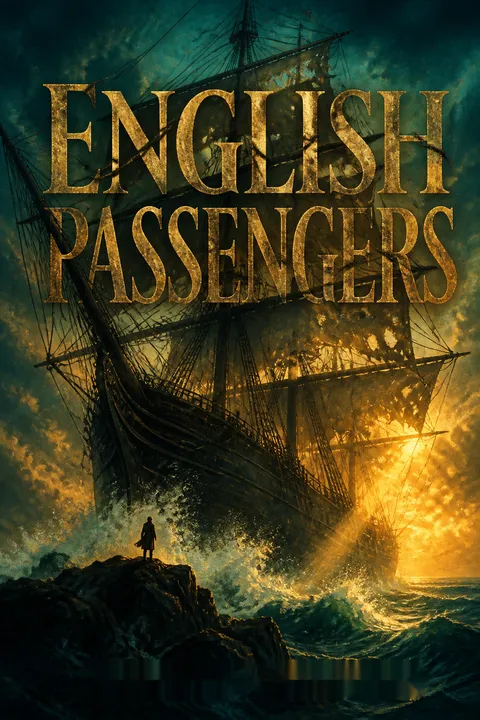
Captain Illiam Quillian Kewley, a Manx sea captain desperate for money to restore his family's faded status, embarks on a risky smuggling venture aboard his aging ship, the Sincerity. Hoping for quick profit from contraband brandy and tobacco, Kewley's plans unravel almost immediately. The Sincerity is stopped and searched by the zealous Captain Clarke, only to be tripped up by a careless crew member waving French cheese in English customs' faces. Fined heavily and facing ruin, Kewley's only escape is to take on desperate English passengers—the Reverend Geoffrey Wilson and his companions—seeking passage to Tasmania. The farce-laced adventure surges with tension and humor, as old superstitions and tangled family pride clash with economic desperation, setting the voyage and Kewley's fate on a tumultuous trajectory.
Dreams and Pamphlets
Reverend Geoffrey Wilson, a vicar with more hope and ambition than parishioners, experiences a vivid dream that sets him on a quixotic quest: to prove, via geological "evidence," that the Garden of Eden lies in Tasmania. Driven by frustration with the complacency of his rural flock and emboldened by his own published pamphlets, he assembles a motley team—a botanist and a surgeon—backed by the impetuous, idealistic patron Jonah Childs. Wilson's dogged pursuit of Eden is both comic and tragic; his religious certainty is met with skeptical, sometimes mocking, responses from both friends and rivals. This chapter establishes the blend of naivety, faith, and self-importance that will propel the expedition, along with the slippery difference between conviction and folly.
Isle of Man to Van Diemen's Land
Beset by customs and the loss of his crew, Kewley meets his passengers—the earnest Wilson, surly botanist Renshaw, and the enigmatic Dr. Potter—each with private motives and backgrounds. They bring with them not only stores and scientific instruments but also their clashing temperaments and simmering ambitions. As the Sincerity is readied, the Englishmen's naive expectations and the practicality of the Manx sailors entwine in farcical logistics and mutual suspicion. When their ship—now loaded with excessive provisions and ornate cutlery—finally slips free, the boundaries between commerce, exploration, and moral crusade blur, setting the entire voyage on a collision course with deeper histories waiting at journey's end.
Old World, New World
Through flashbacks, the narrative shifts thirty years earlier, chronicling the violence along Tasmania's fringes. Jack Harp, a brutal escaped convict, recounts his abduction of aboriginal women and bloody standoffs—a microcosm of the island's destructive frontier. Peevay, a mixed-race child, offers a painful, poignant perspective, witnessing his tribe's displacement, deaths, and the corrosive effect of colonial violence. The chapter weaves together fraught cross-cultural encounters, inherited hatreds, and betrayals, foreshadowing the later fates of all who come to Van Diemen's Land—native or newcomer.
The Black War Begins
The colonial land rush intensifies, with settlers and company men pushing ever deeper, while pockets of aboriginal resistance persist against overwhelming odds. Mismatched attempts at coexistence—by officials, settlers, and evangelical saviors—fail miserably, as massacres erupt and vengeance feeds vengeance. Orders from London urge preservation, but Governor Alder and his settlers are consumed by distrust and retaliatory violence, culminating in the disastrous "Black Line"—a human chain intended to corral and catch the native population. Meanwhile, tribes like Peevay's are divided over whether to fight, flee, or collaborate with newcomers, and betrayals—from both black and white—multiply, driving the Tasmanian aborigines closer to destruction.
Survivors and Betrayers
Miserable survivors—like Peevay and his mother—endure the island's ever-shrinking spaces. Some whites, like Robson, present themselves as protectors, schooling and converting aborigines, yet often rendering them more dependent and lost. The exiled, "civilized" boy Tayaleah is returned to lead a rootless existence; Peevay's ambiguous identity isolates him within both worlds. The ruinous oscillation between resistance and surrender, between hating and needing the enemy, shapes the dwindling tribe's final acts. The question of who truly betrays whom—native, settler, or self-appointed savior—marks the erosion of every assurance, every dream, on the edge of extinction.
The Fate of the Tribe
The remnants of Tasmania's native peoples are gathered on Flinders Island, victims of disease, despondency, and cultural obliteration. Christianization, renaming, and forced routines fail to provide respite as the population withers, and old identities dissolve under the weight of colonial logic. Attempts by a few to return to their homelands are rebuffed; regulations and romantic "sorrow" from white administrators obscure responsibility for the genocide. In parallel, society's evidence-mongers, gripped by European race science, begin seeking the final remnants and—even after death—their remains, transforming human tragedy into museum curiosity.
Contagion, Conversion, Control
By the mid-19th century, the administrative machinery—prisons, exile, rhetoric of improvement—governs every relation between aborigine and settler. Letters, school reports, and polite conversations obfuscate violence, while figures like Dr. Potter exult in the "capture" of aboriginal remains for scientific scrutiny. Official sentimentality—expressed in garden parties, education policies, and morbid curiosity—serves as both mask and machinery for the island's collective amnesia. Even well-intentioned teachers and commandants become entangled in the slow, grinding indignity imposed on the last survivors.
Ship of Discord
Onboard the Sincerity, petty grievances and deep-seated prejudices simmer. Dr. Potter's racial theories and sense of mission clash with Wilson's zeal and Renshaw's cynicism; tempers flare in the cramped quarters. The Sincerity survives pirates, storms, and becalmings only for personalities to fragment further. A stop in Cape Colony brings fresh dangers—and contraband complications—as Manx and English schemers cross and double-cross each other. Suspicion, boredom, and distrust escalate, binding the fate of the expedition to the inexorable dissolution of the old world and the misguided ambitions of their voyage.
Specimens and Betrayals
As the Sincerity drops anchor in Van Diemen's Land, Potter's scientific ambitions become both obsessive and grotesque; the corpse of Mary (Peevay's mother) is stolen from a hospital, and his specimen hunt triggers outrage. The disintegration of morality is mirrored in the behavior onboard. The journey through Tasmania becomes an epic of hunger, mutiny, fevered faith, and violence—each character's true resourcefulness and limits exposed as the dream of discovery dissolves into nightmares of cannibalism, betrayal, and the chaos of nature unmastered.
The Long Suffering Journey
The expedition, led onwards by Wilson's religious mania, devolves into disaster amid the Tasmanian wilds. Mules plunge to their deaths, supplies rot, and guiding knowledge proves illusory. Paranoia and scapegoating intensify as the group is stalked by their own failed ideals and by Peevay, seeking vengeance for his mother. Starvation drives men mad, faith founders, and justice collapses into farce—the self-delusions of the "explorers" as destructive as any external threat.
Carnage at Sea
Starving, scurvy-ridden, and wracked by violence, the survivors of the expedition stagger back to the Sincerity, only to be imprisoned and starved anew by a paranoid, arbitrary "command." Mutiny upon mutiny wracks the last days of the voyage. The Sincerity, battered beyond repair, heads for home as ship, crew, and cargo all come apart—ending in a shipwreck on the English coast. Each character is left dazed, broken, or vanished; the ship's treasures—material and human—scattered to lawyers, doctors, and the bottom of the sea.
Shipwreck and Reckoning
Survivors of the Sincerity make landfall; their divisions unresolved and crimes unpunished. Kewley evades justice by the luck of history; most Manxmen melt away, the expedition's "scientific" plunder is savored by London's learned men, while personal betrayals and the ethical horror of what has transpired remain unacknowledged by society at large. The dream of restitution or understanding for the dead is exposed as inadequate. In the colony, the last of Tasmania's aboriginals vanish quietly; in London, the display of their remains and the celebration of conquest are untroubled by conscience.
The Last Tasmanian
Peevay, the last witness, endures amid the ruins of both cultures. Discovering a family of lost kin descended from the stolen aboriginal women and their white captors, he claims a precarious new tribe on a remote island, resolved to teach, remember, and resist. His piercing recollection of origin and loss is paired with a refusal to let the world's stories—those of elders or invaders—define the meaning of his life and those who survive him. As the world commemorates Tasmania's "last aborigine" in tinted photographs, Peevay lives on, a testament and accusation unfit for English celebration.
Homecomings and Legacies
Back in Britain, fates diverge: Kewley retires to anonymity, traumatized and restless; the messianic, deranged Wilson becomes a harmless village curiosity; the revelations and crimes of the past fade imperceptibly into polite society's oblivion. Tales of discovery, of Eden, and of civilization are rewritten, sold, and canonized, while the true stories of violence and survival—the marginalized, half-remembered, unfit for monument or museum—persist underground, unacknowledged by the world that claimed to bring enlightenment.
Analysis
A fiercely polyphonic reckoning with the violence of progress and mythEnglish Passengers is more than an epic sea adventure or colonial saga: it is a deeply ironic meditation on the stories we tell—about ourselves, our origins, and those we imagine to be "other." Through its layered structure, it dramatizes the slow-motion collision between the fragile worlds of islanders (Manx and Tasmanian alike) and the pitiless machinery of modernity. Kneale's adaptation of first-person testimonies creates persistent cognitive dissonance, refusing the reader moral certainty while exposing the consequences of each perspective: the blindness of faith, the cruelty of pseudoscience, and the corrupting lure of survival. The narrative insists that violence, betrayal, and self-justifying mythmaking are not aberrations, but structural features of history—recurring in every "civilizing" venture. Yet, for all its darkness, the novel twists with humor, vulnerability, and flashes of grace: survival (even in altered form), unexpected kinship, and the naming of lies offer a thin line of enduring humanity. English Passengers leaves its readers reckoning with the residues of empire, the slipperiness of truth, and the impossibility—and necessity—of retelling the past in all its unresolved pain and absurdity. The lasting lesson: history is messier, funnier, and more tragic than we allow; its survivors, forced to adapt, bear both its wounds and its wisdom.
Review Summary
English Passengers receives widespread acclaim for its ambitious multi-narrator structure, blending dark comedy with the tragic genocide of Tasmanian Aborigines. Readers praise Kneale's distinct character voices, particularly the charming Manx smuggler Captain Kewley and the Aboriginal narrator Peevay. The novel's historical depth, irony, and humor are frequently highlighted, though some find the tone occasionally jarring given the subject matter. Critics note occasional pacing issues and an excess of narrators, but most agree the book rewards patient readers with a compelling, thought-provoking portrait of colonialism and Victorian-era attitudes.
People Also Read

Characters
Captain Illiam Quillian Kewley
Kewley embodies the declining Manx gentry: proud, anxious, and endlessly maneuvering to regain lost standing. His resilience is rooted in cunning, sardonic humor, and a deep but conflicted loyalty to his heritage. He is never entirely at home, neither with the high-minded English nor his own superstitious crew. Psychologically, Kewley oscillates between bravado and insecurity; the failures and humiliations of his adventure—culminating in mutiny and shipwreck—leave him more disillusioned than damned. Though he occasionally exhibits courage or generosity, he is ultimately a survivor: able to bend, even to crime or betrayal, to evade extinction—a mirror to his island's ambiguous fate.
Peevay (Cromwell)
Born of rape, half-caste Peevay experiences rejection from both his mother's tribe and the whites, his identity formed out of trauma and marginality. His relationship to his mother (Walyeric) is fraught with longing and resentment, while his obsessive, wounded endurance becomes both blessing and curse. Psychoanalytically, Peevay's deep need for belonging and recognition wars with his accumulated sense of betrayal—by family, by culture, and by history. As witness, avenger, and reluctant guide, he carries memory and possibility, refusing both erasure and assimilation. His path from hunted child to the final "Tasmanian" is both deeply individual and representative of the survivors of colonial violence.
Reverend Geoffrey Wilson
Wilson is driven by a desperate need to align the chaos of the world to biblical certainty. He sees himself as a champion of righteousness against skeptics and the rising tide of scientific materialism. In reality, his pursuit of Eden masks insecurity, spiritual vanity, and fear of insignificance. His faith is genuine yet brittle; confronted with indifference, hunger, and moral ambiguity, he breaks into fanaticism and, ultimately, madness. His journey is a psycho-religious spiral—not toward enlightenment, but toward a meaningless martyrdom that renders him a holy fool, cherished only as a local curiosity by story's end.
Dr. Thomas Potter
Potter is the embodiment of Victorian scientific racism: ambitious, meticulous, and ruthlessly self-assured. His pursuit of specimens and racial "types" is less about truth than about asserting control and superiority over nature and other peoples. Deeply narcissistic, he forms theories that justify the destruction he observes and perpetrates, rationalizing atrocity through the veneer of "science." Despite his calculating nature, Potter is also a figure of self-destruction, haunted by doubt and ultimately undone by his own hubris and the collapse of his moral and physical world.
Walyeric (Peevay's Mother)
A woman driven by rage forged in the crucible of loss, Walyeric is both legendary warrior and emotionally wounded. Her love, when it appears, is tough, partial, and frequently paired with bitter scorn; she is unable to forgive indignity or betrayal, but her destructiveness is wedded to a powerful will to live. As symbolic "Mother Tasmania," her death and desecration are both personal and metonymic for her race. Even in estrangement, she and Peevay are marred and bound by the same history, rage, and longing.
Jonah Childs
Childs finances and champions the Eden expedition, propelled by a mix of faith, guilt, and a desire for redemption through action. Sociable and energetic but easily manipulated, he embodies the best and worst of earnest reformers: generous and well-meaning but ultimately out of his depth and unable to comprehend the full implications of the adventure he supports.
Jack Harp
As an escaped convict turned predatory frontiersman, Harp's narrative exposes the underbelly of settlement: lawlessness, exploitation, and violence both inflicted and suffered. He is remorseless and opportunistic but also shaped by exile, punishment, and deprivation—a dark mirror of survival at all costs.
Robson
Robson navigates the blurry lines between benefactor and jailer. His attempts to "civilize" or protect aborigines are well-intentioned yet complicit in their cultural erasure. He is both admired and resented by those he seeks to help, and his personal shortcomings in intimacy and loyalty further complicate his role as "white savior."
Timothy Renshaw
An academic botanist with more debility than interest in adventure, Renshaw is drawn into the expedition by chance and family pressure. He is constantly misjudged by others and himself, rarely comfortable in any environment. His combination of insight, inertia, and persistent discomfort typifies those caught between high ideals and everyday realities.
The Manx Crew (Brew, Kinvig, etc.)
Kewley's crew is deeply rooted in Manx identity, suspicious of outsiders, and inventive in adversity. Their superstitions and stubbornness mirror their captain's; their fate oscillates between helpless suffering and sly resistance. The group dynamic explores the tensions of small, marginalized communities wrestling with global currents they cannot control—a microcosm of old world insularity and adaptability.
Plot Devices
Multiplicity of Voices and Perspectives
The novel unfolds through dozens of first-person narrations—English, Manx, convict, and aboriginal—interleaving testimony and memory to reveal how every event is constructed from clashing, sometimes incompatible perceptions. This device exposes the instability of truth, especially in colonial contexts, and allows the reader to experience historical events as fragmented, ambiguous, and emotionally charged. Each voice both reveals and distorts, challenging any single "master narrative" and breaking the comfort of straightforward judgment.
Racial "Science" and Satire
Dr. Potter's race science—detailing intricate "types" and evolutionary hierarchies—serves as both a tool of plot and a satirical weapon. It justifies violence and silences conscience, while unleashing the full folly of rationalized hate. As he and other "men of reason" pursue classification and control, their failures, blind spots, and moral idiocy invite the reader to see through the constructedness of scientific racism, even as its pseudo-logic claims authority in the text.
Mutual Betrayal, False Alliances
The novel blurs boundaries of good and evil by forcing each character—aboriginal, convict, captain, scientist—into situations where survival means betrayal: of kin, heritage, ideals, or companions. Alliances of necessity collapse at each turn, making every promise provisional and every act morally ambiguous. This field of treachery is highlighted by recurring devices: letters withheld or doctored, laws inverted, and acts of mercy or loyalty backfiring in unexpected ways.
Irony and Incongruity
Through stylistic flourishes and wry observations, the novel repeatedly pulls comedic effects from deadly circumstances—Eden is chased in a penal colony, dinners are staged amidst famine, and sentimental rituals overlay annihilation. This tonal instability unsettles the reader and reveals the dissonance at the heart of colonial projects, missionary zeal, and scientific "progress."
Foreshadowing and Layered Time
The shifting timelines and nested narratives serve to foreshadow the unraveling of both personal fates and history's trajectory. Each section, voice, and crisis mirrors or inverts earlier betrayals, lost hopes, and failed quests—making the past always present and the future a reflection of unresolved scars.
Download PDF
Download EPUB
.epub digital book format is ideal for reading ebooks on phones, tablets, and e-readers.








































