Plot Summary
Faces and Friends in Sackcloth
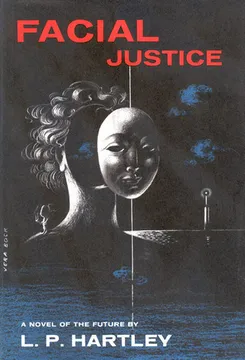
In a gray, emotionally stunted England remade after the Third World War, two friends—Jael and Judith—converge at the Equalization (Faces) Center, where citizens are pressured to have their faces standardized to prevent envy (Bad E) and promote superficial equality. Personal beauty is a liability; sackcloth is worn as the uniform of humility. The friends' different approaches to conformity are tinged with longing, guilt, and the threat of disappearance into the undistinguished "Beta" class of faces. Their conversation, full of self-doubt and mutual concern, highlights the psychological strain of being "different" in a world obsessed with sameness. Behind the fear of social punishment is the deeper anxiety: the flattening of selves, loss of identity, and enforced loneliness, all under the watchful, amorphous power of the Dictator.
The New State's Order
After catastrophic war, England is reconfigured as the "New State," where everything, from looks to jobs to emotions, is rigidly managed. The regime, led by an unseen Dictator, enforces endless leveling—housing, income, and even relationships are standardized. Inspectors enforce ritual dances and fines, and sedatives sap individuality. There are stark classifications: Alphas (superior, suspect), Betas (approved, uniform), Gammas (plain), and Failed Alphas (neither, vulnerable). Even feelings must be regulated; public life is composed of rituals and slogans. Though life is safe and free from open violence, it is also drained of spontaneity and joy. The population, conditioned into docility, is haunted by the memory of past horrors, cajoled by slogans, and quietly policed into egalitarian mediocrity.
Underground Exodus and the Voice
Rewind to the postwar underworld: humanity survived in vast caves, restricted and conditioned for sameness. The yearning for the "Upper Air" lingers, reawakened by an irrepressible Voice—first a child, preaching forbidden aspirations—sparked laughter, then terror, and ultimately mass exodus led by the innocent. The surface, ravaged but free, is both a promise and a grave. The trauma of emergence shapes the New State's fear of difference; the punitive response to "pretty gentlemen" and the use of children as symbols of innocence and rebellion reveal the anxiety underlying the regime's obsession with suppressing envy and individuality. The consequence: hiding, scapegoating, and unpredictable authority.
Dictator's Rules and Routine
Above ground, order is restored but at a cost. Children are separated from parents to prevent dangerous attachments; everyone adopts names of murderers, a spiritual devaluation ritual meant to inoculate against crime. Inspectors, set apart by beauty, brawn, or brains, patrol a toadstool-shaped, two-story world of compulsory leisure and ritualized apologies. The Dictator's proclamations, instantly binding, can change at a whim. Bromide is administered daily to douse passion; enthusiasm and preference are suspect. Joy is feigned, and all true feeling is suspect—a world built for safety, where sameness is both policy and imprisonment, and exceptions (like Jael) are reluctantly tolerated but perilously visible.
Jael's Choice and Conflict
Jael is pressured by her brother Joab—a devout statistician and regime zealot—to undergo Betafication, but she is tormented by the loss of her own flawed, living face. Relationships strain under the logic of enforced sameness: romantic, filial, and even aesthetic bonds are all colored by guilt, envy, and suspicion. Bromide mutes Jael's anxiety, and Joab's bureaucratic rationalization of every emotion shows the depth of the regime's psychological reach. Jael's yearning to "be herself" (and the wish for others to see her as she is) wars with the pressure to be a contented, indistinguishable Beta. The Dictator's pronouncements, unpredictably mixing discipline with dangerous permissiveness, raise the stakes—change might soon become compulsory.
Dangerous Journeys and Temptations
Jael contemplates forbidden pleasures: an officially sanctioned but increasingly dangerous coach excursion, rumored to now involve deliberate accidents to terrify the population back into compliance. Despite her brother's pleas, she is drawn to the journey—its risks and the possibility of encountering something beyond her "level." This chapter peaks in the Square, where the lure of danger, crowd excitement, and anxiety over equality explode into a near-riot. Official intervention quashes the outbreak, but Jael's resolve is shaped—she is willing to risk injury or punishment to reclaim sensation and agency, even if only in defiance.
Heights and Forbidden Desires
Jael embarks on the fateful coach ride to the last vestige of transcendent architecture: the towering remains of Ely Cathedral. The sight, so alien to the New State's horizontality, triggers awe, fear, and ultimately mass hysteria among the passengers—physical collapse in the face of vertical aspiration. Jael's rallying cry, commanding others to "look up," marks both a personal and collective act of rebellion: yearning for height, difference, and meaning. The ensuing impromptu dance around the tower is a creative eruption of suppressed energy, but ends in chaos and a trampling accident—an event that scars Jael and presages her alienation from the world of sameness.
Wounds, Rescue, and Revelation
Jael, both physically and emotionally shattered, hovers between pain and dream. She is rescued from the chaos by an Inspector (Michael), who tenderly cares for her, validating her independent spirit and brokenness. In a moment of suspended time and self-forgetting, she experiences real intimacy for the first time—an unmediated connection that transcends the regime's boundaries. Emerging from the depths of suffering, Jael contemplates what it means to lose (or find) herself—not as an interchangeable body, but as a being touched by love, vulnerability, and fate. The scar becomes a symbol of her authenticity.
Recovery, Reflection, and Friendship
In the hospital, surrounded by standardized Betas and uniform plastic flowers, Jael mourns her old self and fluctuates between hope and despair. Visits from Joab and Judith sharpen her sense of loss and difference, even as official policies and medical routines reinforce mindless conformity. The status of pain, scars, and feelings is reduced to regulation, and status games continue in new forms—pride in uniformity, pity for Gammas, and a creeping longing for lost individuality. The presence of a real, dying flower among fakes becomes for Jael an emblem of survival and memory.
Beta Bliss and Quiet Discontent
Judith returns, now contentedly Beta, extolling the safety and ease of standardized looks and marriage. She recounts improvements in her relationship and the sense of ease in being "taken for granted." The conversation reveals the normalization of emotional numbness, the suppression of desire (for babies, for uniqueness, for risk), and the bureaucratic reengineering of marriage. Despite Judith's assurances, old regrets flicker—Jael's memory of upward longing at Ely cannot be erased. The possibility of children and individuality now raises anxiety about ego and "hypertrophy of personality." Simultaneously, new systems break down old ones—husbands become hotel-dwellers, family life is sanitized. Friendship, like everything else, is haunted by suspicion.
The Visitor and the Real Flower
A kindly old welfare-worker (the Visitor) visits the hospital, quietly interrogating Jael about her case. The Visitor, herself marked by age and quiet resilience, listens and absolves Jael, declaring that her suffering is punishment enough. Their exchange is both shallow and deep: the bureaucratic process simulates compassion, but the Visitor's recognition of Jael's unique, living flower is a genuine moment of wonder and blessing. Jael realizes the value and vulnerability of authentic life—her scar, her flower, her capacity for connection—within a society that is "florally underprivileged." Forgiveness, even if procedural, allows Jael to begin again, but the sense of threat and surveillance never vanishes.
Punishment, Forgiveness, and Release
After the Visitor's round, the ward relaxes. The convalescents, once anxious, are buoyed by rote forgiveness and a rare atmosphere of trust. Jael's experimental longing for self-recognition, reflected in her obsession with seeing her own face, hints at her lingering resistance to uniformity. Yet the realization dawns that any true difference (beauty, scars, even flowers!) is swiftly covered up or erased. Jael is readied for discharge; her identity, already fragile, is about to be substantively altered.
Beta Transformation and Loss
Jael, fully recovered, discovers to her horror that while unconscious, she has been Betafied—her own face (once her stand-in for self) is gone, replaced with an anonymous standard issue. No emotion registers: tears roll off her new skin without leaving a trace. Amid the platitudes and jokes of nurses, and the banality of enforced cheerfulness, Jael's agony is unseen; her friends see only a good job well done. In a moment both comic and tragic, her last connection to her own history—the flower—is nearly lost. Grabbing it, she finds herself with one true possession in a world where nothing truly belongs to anyone.
The Conspiracy Takes Shape
Devastated, Jael dons a veil—her "Beta hood"—to mark her difference and launches herself into clandestine struggle against the Dictator. Like-minded Beta women and resistant men, discontent with the excesses of standardization, meet in secret ("The Dancing Class") and debate how to restore variety and meaning to life. Their discussions spiral over the loss of individuality, the erasure of merit and aspiration, and the poverty of slogans. Revolution must move from theory to practice, and Jael, emboldened by her suffering, becomes the catalyst for direct action.
A Revolution of Mistakes
In pursuit of disrupting the Dictator's regime, Jael engineers a campaign of bureaucratic sabotage: typists and citizens intentionally make errors in records, spelling, and calculations. Mistakes become political statements—a revolt of unpredictability against efficiency, levity against seriousness. The spirit catches fire: practical jokes, misdirection, and deliberate blunders sweep the population, threatening collapse of the old routines. Jael's next coup—demanding that everyone display proof of not possessing a heart-shaped birthmark—ignites paranoid violence.
Violence, Baiting, and Collapse
The challenge campaign to find and expose the "privileged" one bearing a heart-shaped birthmark triggers mass public strip-searches, suspicion, and rising violence. Street fights, deaths, and orgies of envy convulse the New State. The media lapses into cruelty and satire. The Inspectors withdraw, the regime's mechanisms of order vanish, and the population is left to enforce "justice" by mob action. The fragile order, built on uniformity and the repression of feeling, collapses into anarchy and terror.
The Disappearing Dictator
As the violence reaches its peak, the Dictator withdraws all guidance, communicating only through broadcasts. In an extended address, the Dictator confesses to engineering the outbreak of disorder "as a test," rationalizes every policy as a response to the people's will, and finally abdicates—declaring that the age of plays and voice is over. The citizens, abandoned, initially rejoice in freedom, but soon the freedom curdles into famine, chaos, and a desperate search for scapegoats. The Dictator's perceived omnipotence evaporates, leaving a void nobody is equipped to fill.
Hunger, Despair, and a Choice
As famine grips the settlement, order is belatedly restored by a harsh provisional authority, which must bargain with the Underworld for food. The price: six hostages to be delivered as tributes, never to return. Conditioned to group-think and the horror of isolation, the population panics; the prospect of solitary sacrifice is more terrifying than collective extinction. The "scapegoat mechanism" is activated with ferocity; Jael, stripped of all supports, chooses voluntarism as her last assertion of selfhood—she will go as a hostage, not to save others, but as an act of identity reclaimed by her own choice.
The Old Woman's Secret
On her last night, Jael is visited by the aged, gentle Visitor. Wet, weak, and in need, the old woman is cared for and redressed by Jael. In a moment both mundane and fateful, Jael notices a heart-shaped birthmark on the woman's chest—the whispered Sign of the Dictator. The Dictator, at the end of her strength, now revealed as an old woman whose authority was always rooted in anonymity and sacrifice, surrenders all pretense. Jael, confronted with both victim and culprit, wavers between compassion and her urge for vengeance.
Fire, Renewal, and Legacy
As the city burns in chaos and the crowd calls for the Dictator's return, Michael appears. Together, Jael and Michael tend to the dying Dictator, hearing her final blessing and commission: they, the rebels, now inherit the mission of guiding and reforming the people. The veil (and with it, the last of Jael's separateness) is destroyed as she escapes with Michael and her beloved, battered cineraria—the living flower—into an uncertain new dawn. The old voices fade; a new voice, forged from their joined experience, prepares to speak hope and meaning into a world in ashes.
Analysis
Facial Justice explores the terror and banality of a future where the pursuit of absolute equality is enacted at the expense of individuality, intimacy, and genuine feeling
Hartley conjures a society obsessed with eliminating envy—not by raising everyone up, but by forcibly lowering the gifted, the unique, and the beautiful. The result is both a grotesque parody of progress and a devastating dissection of how power manipulates fear and longing. Hartley's satire is less about technological dystopia and more about spiritual and psychological dystopia: the flattening of hopes, the suppression of self, the policing of emotion through insipid rituals and sedatives. Rebellion, when it comes, is at first personal—a desperate effort by Jael to retain her "face"—but the machinery of sacrifice and scapegoating is embedded in the new order as much as in the old. The Dictator is both scapegoat and architect; her death is both release and tragic repetition. In the end, the destruction of the old world by fire, and the passing of the "Voice" to Jael and Michael, raise cautious hope—the only real, living things are those that can survive without guarantees. The novel warns that in seeking to abolish the pain of difference, we may abolish meaning, agency, and the capacity for love. Hartley's prescient vision resonates today in debates over conformity, surveillance, and the false promises of "justice" imposed from above, urging us to cherish the messy, inconvenient dignity of being unique, imperfect selves.
Review Summary
Characters
Jael 97
Jael is the novel's protagonist—a young woman caught between self-affirmation and the crushing demands of enforced equality. Both stubbornly independent and painfully social, she desperately wants to be accepted as herself. The tension between yielding to Beta conformity and holding onto her unique (but dangerous) "Failed Alpha" face drives her arc. Her traumatic Betafication (the loss of her face and self) catalyzes her into resistance; donning a veil, she becomes an unwilling revolutionary. Her journey oscillates between loneliness, rage, guilt (especially over the deaths her actions precipitate), and flashes of hope—embodied in her connection to Michael and her nurturing of the real flower. Ultimately, Jael's psychological development is marked by grief: she loses everything—face, friends, family—but discovers new purpose as society's voice and conscience.
Judith 91
Judith is Jael's closest friend, a mirror and a foil. Initially a Gamma, she embraces Betafication and marries a man who once resented her looks. Judith embodies the social rewards of conformity: marital harmony, public approval, and emotional "bliss" in being taken for granted. Yet her conversations with Jael betray ambiguous feelings about her own happiness: a faint nostalgia for lost intensity and the realization that standardization deadens both joy and sorrow. Her death in a riot, by random violence, suggests the ultimate futility of safe, surface happiness in a society without depth or true connections.
Joab 32
Jael's brother, Joab, is a paragon of bureaucratic virtue, invested utterly in the regime's logic and systems. His devotion to equality is absolute: he subjugates personal feeling, resists deviation, and polices his sister's actions with bureaucratic earnestness. Yet his emotional life is threadbare—he needs Jael for practical partnership and schedule-keeping, not warmth. After social order breaks down, Joab's cautious, collective mentality proves useless, and he perishes. Psychologically, Joab is the product and prisoner of the system: his intellect, conscience, and affection have all been standardized and debased.
Michael (Inspector)
Distinguished by beauty and authority, Michael is an Inspector—a special class above the ordinary. At first an agent of the regime's order, he becomes Jael's savior and, briefly, her lover. He validates her difference and vulnerability, offering the one experience of authentic, bodily connection she ever knows. The gulf between duty and desire stymies him; ultimately, he proves incapable of maintaining order or enforcing absolute standards. By the end, Michael is both inheritor and orphan: he is the "Voice" that must succeed the Dictator, not through power but through the lessons learned in love and failure.
Dr. Wainewright
Dr. Wainewright is the regime's agent of transformation—standardizing faces in the name of justice. He falls for Jael (whose face he has created in his own image), longing for her affection and struggling to reclaim her selfhood. His knowledge of the Dictator's physical secret (the heart-shaped birthmark) is extracted by Jael in a disturbing, transactional seduction—making him both confessor and victim. Emotionally needy, prone to self-justification, Wainewright both desires and resents what he cannot have: Jael's authentic self.
The Dictator (Visitor, Old Woman)
First a remote, genderless Voice; then an old, nearly invisible welfare worker; finally, a dying, heart-scarred woman—the Dictator is the architect of the New State's leveling, the sustainer of rituals, boundaries, and slogans. Her rule is motivated by anxiety, nostalgia, and a paradoxical desire to both protect and annul difference. The reveal that she is an old woman with the legendary birthmark exposes her vulnerability; her final abdication and blessing allow her legacy to pass on, but only through fire and self-erasure. Psychologically, she is both omnipotent and powerless, nurturing and punitive—the ultimate scapegoat and author of the state's sacrificial logic.
Judith's Husband (Cain)
Judith's partner, Cain, illustrates the regime's goal: a man who becomes pleasant, peaceful, and emotionally predictable once he and his wife attain Beta status. His relationship with Judith, once charged by her difference, is now dull and safe—a marital peace won at the cost of passion and true intimacy. Cain is a function more than a character, showing the social rewards and spiritual deadness of uniformity.
The Visitor (Welfare Worker)
The Visitor represents both surveillance and mercy—a bureaucratic angel who listens, absolves, and gently nudges Jael (and others) toward acceptance or resignation. Her "miracle" of recognizing the living flower signifies the persistence of genuine life and difference within the system. As the Dictator's double, she mediates between power and vulnerability.
Conspirators/Dancing Class
Jael's accomplices—women and men, Betas, Gammas, and Failed Alphas—gather to plot against the suffocating system. Their dialogue, alternating between bitterness, humor, and despair, exposes how difficult it is for individuals (no longer trained for self-assertion or competition) to mount real opposition. Their efforts quickly degenerate into mimicry of the system or infighting, foreshadowing the inadequacy of small-scale rebellion within a thoroughly de-individualized society.
The Cineraria (Flower)
The only authentic, living thing amid a world of substitutes, artificiality, and loss. Cared for by Jael, the flower's survival and withering mirror her own fortunes and her longing for the unrecoverable past. As object and talisman, it is the book's last vestige of unmediated truth, grounding Jael's identity against the world's pressure to forget.
Plot Devices
Enforced Equality Begets New Injustices
The entire narrative is structured around the extreme logical consequences of leveling: to eradicate envy and violence, the society imposes sameness in appearance, feeling, role, and fate. Yet this creates new forms of anguish, rivalry, and violence—culminating in mob justice and an unmoored quest for meaning and identity. The plastic surgery "Betafication" stands as a literalization of social flattening; the system's obsession with "Bad E" (envy) ensures its constant recurrence.
Revelatory Encounters and Rituals
Key events are heralded by ritual dances and ceremonial tests (inspections, litanies, signature tunes). The journeys—especially the coach excursion to Ely Cathedral—literalize the forbidden search for height (aspiration) and result in trauma, revelation, and the collapse of old categories. Recurring confrontations with the authorities, and especially with the enigmatic Inspector, drive Jael's metamorphosis from conformist to revolutionary.
Symbolism of Physical Markers
The scar on Jael's face, the heart-shaped birthmark, and the living flower all symbolize the persistence (and peril) of individuality. The quest to find the "privileged" birthmark becomes a scapegoat ritual, foreshadowed by the system's use of criminal names, family separation, and collective punishment.
The Device of the Voice
The Dictator's omnipresent, mutable Voice both instills and reflects the population's anxieties. Its withdrawal triggers panic and collapse; its final revelation (as the martyred, dying old woman) frames the book's ultimate sacrificial logic. The passing of the "Voice" to Jael and Michael hints at the possibility—yet persistent danger—of new beginnings.
Irony and Parody
Hartley's narrative is structured as a dark parody—each social improvement (face equalization, bromide administration, practical joke revolutions, etc.) is carried to self-defeating absurdity, laying bare the psychological damage done by a system that fears envy more than anything else. The satire is both hilarious and excruciating, using the society's own slogans, routines, and rituals as foreshadowing and narrative framing.
Download PDF
Download EPUB
.epub digital book format is ideal for reading ebooks on phones, tablets, and e-readers.








































