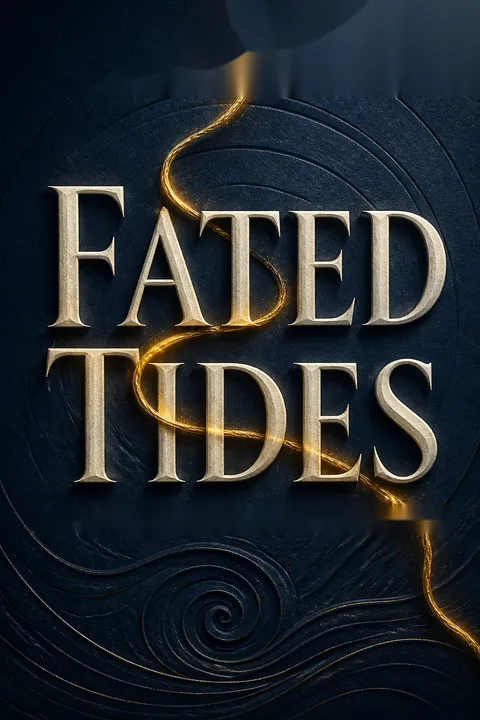
Key Takeaways
1. Souls are bound by an eternal, non-linear magnetic pull across lifetimes
As a pair, A and Z are quite like the moon and the tides—pushing and pulling against one another, ebbing and flowing from life to life, always looking for each other.
Eternal soul connection. The universe operates on a metaphysical plane where souls exist in a state of blissful, timeless awareness before descending into physical incarnation. The protagonists, Z and A, represent cosmic forces—petrichor and crashing waves—destined to seek each other out across infinite lifetimes. This cosmic pull is non-linear, meaning their bond transcends the boundaries of time, space, and individual physical identities.
Multitude of lifetimes. Throughout history, these souls reincarnate in various forms, adapting to different eras and physical constraints while retaining their core spiritual resonance. Whether existing as a scoundrel and a caged fairy, a raven and a mermaid, a robot and its creator, or an elderly couple battling the fog of Alzheimer's, their essence remains unchanged.
- A scoundrel rescues a fairy from an iron cage, instantly feeling rooted.
- A raven brings beach trinkets to a beautiful mermaid in a secluded pool.
- A sentient machine deviates from its programming upon meeting its creator.
- An elderly man feels an inexplicable soul-tug toward a silent woman in a nursing home.
The cosmic design. This recurring reunion is not accidental but a fundamental law of their existence, driven by a love that conquers the universe one story at a time. When they incarnate, they temporarily forget their vast, timeless nature, allowing them to experience the raw, human thrill of discovery and romance. This metaphysical framework elevates their earthly romance from a simple pirate adventure to a grand, cosmic destiny.
2. True adventure begins when we abandon mundane security for the call of the soul
For so often, when a person encounters a chance to live as they truly are, it feels so grand, so colossal, they chalk it up to delusion when it is nothing more than an open door.
Answering the call. Alexander "Zander" Sutton begins his journey trapped in a mundane, suffocating existence as a leather tanner in Barbados, replicating the dull life of his father in England. When he crosses paths with the pirate captain Ace, he experiences a sudden, violent awakening that shatters his routine. Despite his rational mind screaming that chasing a pirate ship is suicidal madness, his soul rebels against safety, forcing him to leap into the ocean.
Overcoming self-doubt. The transition from a predictable life to one of high-seas adventure requires overcoming the internal narrative that dismisses greatness as mere folly. Zander initially views his desire for romance and adventure as a sorrow-induced fantasy, a common defense mechanism against the terror of change.
- Recognizing the open door of destiny instead of dismissing it as a delusion.
- Embracing the vulnerability of running toward something rather than just running away.
- Committing to a leap of faith, even when survival is not guaranteed.
The transformative leap. By diving into the sea and swimming toward The Valerian, Zander actively chooses to rewrite his destiny. This physical act of surrender symbolizes the death of his old, invisible self and the birth of his true identity. He trades the safety of a roof and tools for the boundless, unpredictable ocean, proving that true living requires the courage to step through the doors of opportunity.
3. Freedom is not the absence of structure, but the choice of who we serve and love
But in the end, a pirate is just someone who doesn’t fit. They don’t fit into the roles others make for them, the expectations—whether it’s their family, or their friends, or goddamned high society.
Redefining the outlaw. The crew of The Valerian challenges the traditional, bloodthirsty stereotypes of piracy, presenting a community of misfits seeking autonomy rather than mindless violence. For these individuals, piracy is not a pursuit of fame and fortune, but a radical rejection of societal expectations and oppressive structures. They operate as a functional democracy, making collective decisions and sharing their spoils equally.
The diverse collective. The crew is a mosaic of outcasts from different backgrounds, united by their shared desire to live unbridled lives. They find solace in a community that values their unique identities rather than forcing them into rigid, pre-determined roles.
- Theo, a former street thief saved from mutilation, who lives for love and storytelling.
- Yarrow, a brilliant quartermaster, healer, and alchemist who rejects conventional gender roles.
- Sean, an Irish fife player who transitioned from a previous life as Bridget.
- Outcasts from Senegal, Sweden, Holland, and Spain working in perfect harmony.
Living unbridled lives. True freedom is depicted not as lawlessness, but as the ability to govern oneself and choose one's companions. By rejecting the expectations of kings, merchants, and high society, the pirates create a sanctuary on the water. They prove that those who do not fit into the world's pre-made molds can build their own vessel of belonging.
4. Love requires vulnerability and the courage to reveal our deepest wounds
There are things in my past I’ve worked very hard to leave behind... Someday, I’ll tell you all about it. But not today. Today, we sail.
The cave sanctuary. In a hidden, subterranean cave in Bermuda, Zander and Ace finally find a moment of absolute privacy away from the watchful eyes of the crew. This physical descent into the earth mirrors their emotional descent into vulnerability, allowing them to shed their protective armor. Here, amidst the cool, still waters and ancient stone, they consummate their love, uniting their physical bodies and eternal souls.
Shedding emotional armor. For Ace, letting Zander in requires overcoming the deep-seated trauma of her past, which has taught her to guard her heart against manipulation. Zander, too, must overcome his feelings of inadequacy as a simple tanner playing at being a pirate.
- Shedding the professional boundaries of captain and crew in private.
- Placing hands over hearts to acknowledge the silent, magnetic voice of the soul.
- Embracing the physical and emotional intensity of a love spanning eons.
The power of intimacy. Their intimacy becomes a healing balm, knitting together the fractured pieces of their identities. By choosing to reveal their true selves in the quiet of the cave, they establish a foundation of trust that will sustain them through the coming trials. They prove that true love is not just a physical connection, but a courageous act of mutual surrender.
5. True family is forged through shared burdens, loyalty, and mutual protection
We’re family now... It’s nothing.
Forging deep bonds. The crew of The Valerian demonstrates that family is not defined by blood, but by a fierce, unwavering commitment to one another's survival and happiness. Zander, who grew up as an invisible youngest child in a crowded, emotionally distant household, finds true belonging among these outlaws. They protect him, teach him, and celebrate his victories, offering him the validation he was denied in his youth.
Acts of devotion. This chosen family manifests through daily acts of care, mentorship, and mutual defense during times of crisis. The pirates do not hesitate to risk their lives for one another, sharing both the joy of their victories and the heavy burden of their grief.
- Yarrow patiently teaching Zander the art of the sword on a dark beach.
- Bagu gifting Zander his own cherished twin daggers as a symbol of brotherhood.
- Theo and Yarrow fighting shoulder-to-shoulder, their movements perfectly synchronized by love.
- The crew sharing their gold and celebrating with music, dance, and laughter.
A shared burden. When tragedy strikes, the grief is not borne individually but distributed among the collective, making the weight bearable. This profound sense of community transforms their dangerous lifestyle into a sanctuary of love. They prove that the strongest armor against a hostile world is the unwavering loyalty of a chosen family.
6. The shadows of our past will always pursue us until we face them
And now... well, Ace’s past has caught up with her, as she always feared it would.
The inescapable past. Ace’s life as a pirate captain is a direct flight from the trauma of her forced marriage to the villainous Viscount Ignacio Sanz. Sanz, obsessed with the mythical "Vidal fortune," represents the oppressive, greedy forces of high society that seek to control and exploit her. Despite her years of successful evasion, her past catches up with her when Sanz’s privateer ship corners The Valerian in open water.
The cost of evasion. Running from trauma provides temporary safety, but it often leaves unresolved conflicts that eventually demand a reckoning. Ace’s past marriage was a cage of expectations and manipulation, culminating in the suspicious deaths of her parents.
- The forced engagement to a charming but cruel nobleman obsessed with wealth.
- The tragic fire that claimed the lives of her loving parents, Chandace and Nicolas.
- Her daring escape in the night, stealing Sanz's emerald dagger to buy her freedom.
Facing the monster. When Sanz captures her, Ace is forced to confront the physical manifestation of her past trauma. This capture, though terrifying, sets the stage for her ultimate liberation. It proves that true freedom cannot be achieved by running forever; eventually, one must turn and slay the monsters of the past.
7. Justice and moral integrity must be upheld even at the cost of blood
People aren’t loot! Women are off limits! I told every one of you in no unclear terms what would happen if I caught you abusing a woman.
The pirate code. Despite their status as outlaws, the crew of The Valerian operates under a strict moral code that distinguishes them from common, bloodthirsty villains. This code is rooted in empathy, as most of the crew have experienced helplessness and abuse in their past lives. When a crew member, Thomas, violates this code by attempting to assault a captive woman during a raid, Ace executes him without hesitation.
Upholding moral boundaries. This act of swift, violent justice is necessary to preserve the integrity of the crew and protect the vulnerable. It demonstrates that their rebellion against society is not a rejection of morality, but an embrace of a higher, more compassionate standard.
- Protecting the weak and refusing to exploit those who have nothing.
- Enforcing immediate, severe consequences for violations of bodily autonomy.
- Sharing the emotional weight of necessary violence as a collective burden.
The weight of leadership. Ace’s willingness to execute a trusted crewmate highlights the heavy burden of her leadership. She must remain fair and evenhanded, ensuring the crew’s actions do not throw their collective motives into question. This moral clarity earns her the absolute respect of her crew, proving that true strength lies in the defense of the vulnerable.
8. True treasure lies in cherished memories and connections, not material wealth
Inside the worn wooden box lay the treasures of a child, collected during her adventures at sea: a piece of coral, a sand dollar, a crab pincer, a doll made from corn husks, a seashell necklace, and a total of sixteen rocks of various sizes and colors.
The illusion of wealth. Throughout the novel, the "Vidal fortune" is a source of intense speculation, driving the greed of Ignacio Sanz and the curiosity of the pirate world. Sanz squanders his family's resources and chases Ace across the ocean, convinced she holds the key to a vast storehouse of gold. However, the true "treasure" is revealed to be a simple wooden box containing the sentimental keepsakes of Ace's childhood.
Redefining value. This revelation serves as a powerful critique of material greed, contrasting Sanz's destructive obsession with the simple, loving memories of the Vidal family. The true inheritance Ace receives from her parents is not gold, but a legacy of love, adventure, and freedom.
- A collection of seashells, rocks, and a corn husk doll representing childhood wonder.
- A charcoal drawing of a little girl standing happily between her doting parents.
- The realization that the fabled treasure was a playful family joke, kept safe by love.
The ultimate inheritance. By retrieving this box from its hiding place in the ruins of her childhood home, Ace reclaims her identity and her past. She proves that the most valuable treasures are those that connect us to our roots and our loved ones, things that cannot be bought, sold, or stolen by greedy men.
9. Reincarnation is a continuous cycle of learning, losing, and reuniting
There is no beginning, middle, or end to the many lives of the characters in these tales.
The non-linear journey. The narrative of Fated Tides is punctuated by metaphysical interludes that showcase the protagonists' souls interacting in various historical and futuristic settings. These glimpses emphasize that their earthly lives are not isolated events, but chapters in a continuous, non-linear journey of spiritual evolution. Each incarnation offers new opportunities to grow, to change, and to discover new facets of their eternal bond.
The patterns of destiny. Across different lifetimes, the dynamics of their relationship remain remarkably consistent, characterized by a mutual pursuit and a deep, instinctual recognition. They are constantly pushing and pulling against one another, ebbing and flowing like the moon and the tides.
- The scoundrel and the fairy learning the power of mutual rescue and protection.
- The raven and the mermaid communicating through a language of gifts and play.
- The robot and the creator exploring the boundaries of consciousness and emotion.
- The hunter and the prey discovering a shared, soul-shaking hunger that transcends their roles.
The purpose of incarnation. These diverse experiences serve a higher purpose: to align their souls more closely with the direction of the universe, which is driven by love. By experiencing the full spectrum of human (and non-human) existence, they contribute to the grand mosaic of cosmic evolution. They prove that our earthly lives are but brief windows into a vast, eternal reality.
10. Death is not an end, but a transition back to our infinite, unified state
When a pirate dies, it’s not god that takes us. You see, god can’t swim. And neither can your king. It’s the ocean that takes us.
The transition of death. In the metaphysical framework of the novel, death is not depicted as a tragic end, but as a peaceful transition back to a state of unified, blissful awareness. When Ace passes away in Zander's arms after shielding him from a blade, and when Zander follows her a year later by stepping into the ocean, they are simply returning to their natural state as Z and A. Their physical bodies return to the earth, but their souls remain gloriously whole and eternally united.
The ocean as a deity. The ocean serves as a powerful metaphor for this spiritual transition, representing a boundless, unbridled force that welcomes all outcasts. It is a god of unbridled people, offering a sanctuary free from the restrictive dogmas of religion and society.
- Viewing death as a return to the infinite, watery womb of the universe.
- Rejecting the fear of damnation in favor of a peaceful, cosmic reunion.
- Recognizing that love is the ultimate force that conquers the whole of existence.
Happily ever after. The novel concludes with the assurance that their love will continue to bloom in future incarnations, "again, and again, and again." This perspective reframes the tragedies of their physical lives as temporary obstacles in an eternal romance. It offers readers a comforting, hopeful vision of existence, proving that love is the only force that truly endures.








































