Plot Summary
Blood on Privilege's Carpet
Abigail Campano's gilded life collapses in violence when she returns home to her Atlanta mansion, discovering her daughter apparently murdered, and a struggle with a knife-wielding man leaves him dead under her hands. Police descend; what should be a closed case of a mother avenging her child is instantly suspect. Detective Will Trent, an outsider to the police's own, senses something off in the forensic details—blood trailing upstairs, a bloody footprint that doesn't fit the story. As the privileged family unravels under grief and shock, it's clear the cuts go deeper than the visible wounds, and an even more terrible crime lurks in the chaos. The costs of privilege and the carnage it cannot prevent quickly surface.
The Puzzle of the Living
With forensic evidence not matching the initial narrative, Will Trent pieces together that the blood trail and body on the floor do not point to Abigail's daughter, Emma, but to her best friend, Kayla. The real Emma is missing, possibly abducted in broad daylight, triggering panic and urgency far beyond traditional motives. The horror multiplies: what began as a tragedy now morphs into a desperate race to save a living girl, with grief replaced by hope as well as dread. The dysfunctional intersection of trauma and survival emerges, as the searchers navigate layers of lies, privilege, and vulnerability.
Broken Keys, Broken Trust
Will is forced to partner with Faith Mitchell, daughter of a disgraced cop and holder of old resentments, resulting in bitter yet productive friction. As they dig through Emma's and Kayla's intertwined lives, pieces emerge: broken cell phones, a mysterious key, and suspicious truancy. Emma's disappearance clearly isn't random. Will's unorthodox methods and Faith's skepticism produce reluctant trust, haunted by their respective pasts—Faith's fraught family, Will's years in foster care. Each clue uncovers more dysfunction beneath the Campanos' perfect image, and the investigation becomes deeply personal.
Hiding in Closets and Truths
Investigating Emma's room, Will finds traces of dog urine, not canine but human—evidence of terror and hiding. The blood types and footprints tell a story of misidentification, missed opportunities, and a child's desperate will to survive. The physical layout becomes a metaphor; each room and hiding spot parallels emotional secrets and half-shared truths between family and detectives. As technology and intuition duel, the chase for Emma's fate becomes entwined with past abuses and present deceptions.
Dysfunctional Partnerships
The Campano family fractures under pressure and guilt, and so do the professionals seeking truth. Will and Faith, despite hostile beginnings, begin to sync as a team, drawing on raw emotion and personal histories. The city's undercurrent of resentment against Will—who previously rooted out police corruption—colors every encounter, escalating tension. Tellingly, deep flaws echo up the social ladder: dysfunctional marriages, absent parents, broken police units. Hope in finding Emma paradoxically depends on these fragile, imperfect connections.
Unveiling the Hidden Girl
A trail of digital artifacts leads Will and Faith to Georgia Tech, where Adam Humphrey, the secondary victim, was a student. Interviews with Adam's awkward acquaintances, especially Gabe, reveal how isolation and being different draw people together, only to make them targets. Gendered violence and campus dynamics surface. Emma's learning disorder becomes not an incidental detail but a lens through which survival and detection are viewed. Her unseen suffering crystallizes the stakes of the hunt.
Sins of the Guardians
The investigation's focus shifts to the adults' sins: Evan Bernard, Emma's reading teacher, harbors secrets and a troubling past—like so many in positions of trust. Simultaneously, the privileged Campanos and their social club crowd are exposed for their willful blindness and emotional negligence. The consequences of choosing to see or avoid the truth, in both families and institutions, threaten to doom Emma. The notion of stewardship—of children, power, and justice—is under siege.
The Teacher's Shadow
Deep dives into Bernard's past and teaching records reveal his pattern of preying on young girls, exploiting both Kayla and Mary, a former protégée. Will's own struggles with reading tie him intimately to the investigation—his dyslexia hidden through color codes and digital aids mirrors Warren, another illiterate adult shaped by trauma. This recognition, and mutual understanding, breaks the case open: the predator's network is less about intelligence and more about shared wounds and manipulation.
The Illiterates' Trail
Both Will and Warren have learned to navigate the literate world through alternative methods—color, voice, instinct. This parallelism leads to breakthrough: recordings made by the kidnapper are discovered in the copy shop, color-coded and filed by Warren's system. The centrality of illiteracy—not just as a limitation but as a creative tool—guides both crime and detection, linking killer and investigator more closely than either would like. The chilling reality of what illiteracy enables and covers comes to the fore.
Patterns of a Predator
The case's calculated evil becomes clear: Bernard orchestrates, Warren executes, and Kayla—once thought a victim—may have abetted in Emma's selection. Kayla's own history with Bernard, and her possible complicity, makes her both victim and participant, manipulated and manipulator. The divide between monstrousness and vulnerability blurs; every "monster" is molded by earlier wounds. Justice becomes as much about understanding cycles of abuse and complicity as about evidence and confession.
The Angel and the Orphan
The final physical search is frantic. In a boarded-up, derelict house, Will and Faith find Emma barely alive, abused but not broken, her body bearing the brutal marks of both Warren's dysfunction and Bernard's manipulation. The moment of her recovery is an ambiguous victory—she survives, but her whole identity is forever altered. For Will, another orphan of the system, her survival feels redemptive, if only partially, against a world that so often fails the vulnerable.
Darkness, Rescue, and Survival
With Emma found, but deeply traumatized, and Warren dead by suicide, there is no pure triumph. Bernard is arrested but remains unrepentant, shielded for years by apathy and blind eyes. The Campanos move house, but the past cannot be erased by fresh paint or new routines. Survival, for Emma and her family, is now a daily negotiation with trauma. For Faith and Will, the victory feels incomplete—justice is complicated, and the cost of survival incalculable.
The Cost of Survival
Life moves forward, but those left behind are wounded—Emma, Abigail, Paul, each in unique ways. Their new routines, carefully built, only partially mask the damage done. The city moves on, the press latches onto new tragedies, but those who truly suffered are altered. For the humble and the privileged, carrying on is both a burden and a kind of victory. After the violence and the rescue, there remains only to live, marked forever by the cost of what they survived.
Secrets in Simple Words
Throughout, the novel lingers on the power and limitations of language—how Will and Warren's struggles with reading shape not just their fates, but the investigation and crime itself. The tools used to fake normalcy become critical clues; words misspelled, voices altered, stories misread. Truths are hidden as much by what is not said as by what is said. In the end, it is not literate sophistication, but raw humanity—pain, love, longing—that reveals what happened and who the monsters are.
Carrying On, Scarred
The survivors' greatest challenge is to define a life after the atrocity—to carry on, knowing scars are permanent. Abigail's moments with Emma, Paul's stifled grief, Faith's and Will's persistence—all speak to fragile, imperfect hope. Justice is imperfect; no restoration, only adaptation. A new "normal" is forged, full of silences, rituals, small comforts. Lessons linger: privilege cannot prevent suffering, and evil often hides in the most ordinary faces. Strength, in the end, lies in struggling forward despite ruin.
Analysis
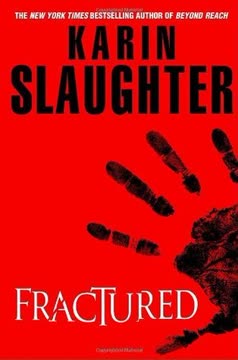
Karin Slaughter's Fractured is an unflinching dissection of the intersection between private wounds and public violence. On its surface, it's a literary thriller: a missing-girl procedural with a clock ticking toward doom. But beneath is a story about the lifelong consequences of trauma—how cycles of abuse, neglect, and complicity perpetuate new horrors even in the most privileged spaces. Slaughter exposes the peril in institutional blindness and the way evil often masks itself as charisma or banality. Dyslexia and illiteracy, far from being mere obstacles, become metaphors for what societies refuse to see or address: victims' silences, abusers' deceptions, systemic failures. The book condemns both apathy and hyper-vigilant privilege, emphasizing survival's hidden costs and the inadequacy of any justice that does not reckon with root causes. In the end, Fractured refuses easy closure—its characters, alive or dead, remain fundamentally broken. Strength lies not in "moving on" but in carrying scars forward and forging fragile new rituals of care and vigilance, however imperfect. Slaughter insists we look at what we'd rather not see—and questions, hauntingly, whether we're capable of learning from it.
Review Summary
People Also Read










Characters
Will Trent
Will is an investigator for the Georgia Bureau of Investigation, fiercely intelligent yet burdened by a secret: profound dyslexia, forcing him to rely on color, voice, and memory over reading. Raised in foster care, Will's past as an abused, overlooked orphan shapes his empathy for victims—and his isolation from peers who mistrust his previous anti-corruption work. Will's emotional distance is a shield, yet his drive and humility make him singularly effective. Over the case, his partnership with Faith forces him toward vulnerability and self-acceptance. In confronting killers crippled by similar disadvantages, Will glimpses that pain can fuel both destruction and redemption. His personal arc is a struggle: to prove himself, to navigate love with his unstable partner Angie, and to accept help—without shame—from his new partner and peers.
Faith Mitchell
Faith, daughter of a disgraced former police commander, is defined by resilience and inherited cynicism. Her career is shadowed by suspicions of nepotism and the fallout from her mother's forced retirement, leaving her mistrustful of authority—especially outsiders like Will. As a mother who became pregnant as a teen, Faith understands the vulnerabilities of girls like Emma but also wrestles with her own bitterness and need for validation. Initially sharp-edged and resistant, Faith grows into a nuanced partner for Will, learning to balance emotional pragmatism with raw empathy. Her psychological journey is about letting go of old wounds, risking trust, and forging a new professional identity outside her family's shadow.
Abigail Campano
The polished wife of a wealthy Atlanta businessman, Abigail is both victim and accidental perpetrator. Her overwhelming guilt—having killed the wrong man in a moment of terror—spills into her drive for redemption. Abigail loves her daughter fiercely but is emotionally hamstrung by her own upbringing, marital betrayals, and need for control. Her picture-perfect world unravels under the revelations of crime and personal failures. Abigail's arc is tragic but ultimately about survival: enduring loss, shame, and ambivalent victory, she is forced to adapt, redefine maternal love, and live with the unerasable damage her family has suffered.
Paul Campano
Paul's public persona—successful, charismatic dealer—masks a heritage of violence, insecurity, and emotional volatility. His bullying of Will and others is a mask for his own fear and inadequacy, especially when faced with a crisis he cannot control. Paul's relationship with Abigail and Emma reveals the consequences of both overindulgence and absence. His guilt over family failures surfaces as anger and helplessness. Though briefly achieving insight into his flaws, Paul remains a man struggling to comfort, to punish, and to atone—never quite at peace with the traumatic aftermath.
Emma Campano
Emma, at first a background figure, transforms into the desperate focus of the narrative. Smart but introverted and dyslexic, she is caught between parental pressures, manipulative friendships, and predators who sense her vulnerabilities. Her arc is a harrowing passage through terror, manipulation, and abuse; her survival is ambiguous—she endures, but the trauma will forever redefine her. Emma embodies the costs visited on the powerless by the sins of others, and the fragile resilience required to keep living.
Kayla Alexander
Kayla, Emma's best friend, is a master manipulator—damaged and acting out, both a victim and sometimes perpetrator. She is key in facilitating Emma's tragedy, both as participant in skipping school and as an unwitting pawn in the predators' schemes. Kayla's own relationship with Bernard, and her possible complicity, point to cycles of abuse and complicity and desperate searches for belonging in all the wrong places. Her gruesome fate stands as both condemnation and warning.
Evan Bernard
Bernard is a reading teacher who uses his position to prey on isolated, vulnerable girls. Muscular, charming, and erudite on the surface, he is a narcissistic sociopath, using intellect and social capital to exploit and then abandon his victims. For years, he escapes scrutiny due to institutional complacency and the silence of his prey. Bernard's pattern is not of passion but of calculated domination—he grooms, exploits, and then ensures there's always another girl in his sights. Emotionally hollow, he is unmoved even when finally exposed—a study in the banality of real-world evil.
Warren Grier
Warren represents what happens when society fails the vulnerable. Raised in state care, socially isolated, illiterate, he navigates the world through color, pattern, and imitation. Genuinely seeking love and belonging, he is susceptible to Bernard's manipulations, carrying out violence with a disturbing mixture of innocence and rage. Warren's identification with—and envy of—Emma reveals his longing for the normalcy and affection denied him. His suicide in custody is not just guilt but the ultimate resignation of someone who could never escape his own haunted mind.
Mary Clark
Mary, a former student and victim of Bernard, now a teacher herself, is a poignant portrait of trauma's long half-life. Her early exploitation colors every relationship and ambition, fogging agency with shame and confusion. Mary's struggle to name and confront what happened reveals both the courage and limitations of survivors; she is unable to save herself or others, lost between memory and the present.
Gabe Cohen
Gabe is Adam's awkward dormmate, a young man orbiting the events as a potential suspect before revealing himself as simply another lost youth. His hidden knowledge (the threatening notes, the missing gun) is born of fear, not malice. Gabe's emotional breakdown under questioning—together with his self-blame and suicidal ideation—mirrors the story's pervasive theme of the psychological fragility of outsiders and witnesses.
Plot Devices
Unreliable Evidence and Misdirection
From the mistaken identity of the body in the Campano house, to the appearance of forensic evidence that does not fit the initial story, the novel employs red herrings and unreliable witness accounts to generate suspense. Will's dyslexia introduces an additional layer: clues are filtered, misread, and delayed, paralleling the investigation's obstacles. This constant shifting between what is presented and what is true heightens paranoia and urgency.
Parallel Outsider Narratives
Will's illiteracy and orphan past directly mirror those of Warren, the killer, blurring antagonist/protagonist boundaries and fueling both psychological insight and discomfort. The "language of the illiterate" (color, pattern) becomes the thread connecting detection and commission of the crime. The narrative thus uses parallelism not just as a structural device but as a mode of psychological revelation and reader unease.
Cycles of Abuse and Complicity
Victims turn abettors; bystanders become unwitting collaborators or future predators. The web of silence around Bernard's long predations—fellow teachers, administrators, even past victims—mirrors the collective failure of institutions the novel scathingly indicts. This device subverts easy notions of guilt and innocence, implicating everyone in the continuing violence.
Clues through Negative Space
Emma's absence, the missing computer and cell data, the unaccounted-for time and illogical details, all drive the narrative beneath the surface. The structure repeatedly reminds readers that what is missing, hidden, or unspoken shapes destinies—and that understanding trauma requires listening to silence as well as speech.
High-Stakes Personal Relationships
Professional feuds, marital betrayals, and familial disasters evolve beyond mere subplot. The detectives' personal histories (Faith's inheritance of shame, Will's trauma, Will and Angie's whirlwind relationship) become both motive and method for their casework. The collision of the personal and investigative propels both procedural realism and emotional resonance.
Institutional Distrust and Police Politics
The police procedural aspects are heavily inflected by mistrust, office politics, and personal vendettas (e.g., Will's previous anti-corruption campaign). The investigation is hindered as much by ego and tradition as by the cunning of adversaries. This structural element grounds the story in the contemporary crisis of trust in authority.