Plot Summary
Auctioned in Darkness
Five years before the present, Blaire is violently abused and auctioned in a hidden world of human trafficking. Her body and spirit are shattered by men who see her as nothing but a commodity. The trauma is relentless, and her sense of self-worth is systematically destroyed. The auction is a spectacle of cruelty, where her pain is currency and her innocence a lie. The chapter immerses the reader in the horror of her experience, setting the tone for a story where hope is a distant memory and survival is a daily negotiation with despair.
Sold to a Stranger
After the auction, Blaire is sold to a mysterious, wealthy man known only as Law. She is transported in darkness, terrified and uncertain of what awaits her. Her memories of abuse at the hands of her father and her captor, Graham, haunt her, blurring the lines between past and present suffering. Law's home is cold and unfamiliar, and Blaire's arrival is marked by fear and confusion. The transaction that delivers her to Law is devoid of humanity, reinforcing her belief that she is nothing more than property, a vessel for others' desires.
The Man Called Law
Law is an enigma—cold, powerful, and emotionally impenetrable. He claims to rescue women from the trafficking underworld, but his methods are as ruthless as the world he fights. When Blaire first meets him, she is terrified, but Law surprises her by offering freedom instead of violence. Yet, his presence is intimidating, and his motives are unclear. Law's own trauma and darkness are hinted at, suggesting that his acts of rescue are as much about his own redemption as they are about saving others. The dynamic between Law and Blaire is charged with tension, suspicion, and a strange, dangerous attraction.
A Marriage of Shadows
Over time, Blaire and Law's relationship evolves from captor and captive to husband and wife. What begins as a fragile hope for safety and love becomes a prison of control and psychological torment. Law's affection curdles into obsession, and Blaire's dependence deepens into fear. The marriage is marked by manipulation, gaslighting, and escalating violence. Blaire's attempts to reclaim her autonomy are met with cruelty, and the home that once promised sanctuary becomes a gilded cage. The emotional arc is one of hope corrupted, as love is weaponized and trust is shattered.
Bruises Behind Closed Doors
The facade of domesticity crumbles as Law's true nature emerges. He isolates Blaire, monitors her every move, and punishes any perceived disobedience with physical and psychological violence. The abuse is relentless and inventive, designed to break her spirit and reinforce his dominance. Blaire's world shrinks to the confines of her bruised body and battered mind. The chapter explores the cyclical nature of abuse, the internalization of blame, and the suffocating loneliness of being trapped with a monster who once wore the mask of a savior.
The Last Straw
Blaire reaches her breaking point after a particularly brutal assault. The loss of her unborn child—killed during a sadistic attack orchestrated by Law—becomes the catalyst for her resolve to escape. Grief and rage replace fear, and Blaire begins to plot her departure. The chapter is a turning point, as the narrative shifts from passive endurance to active resistance. Blaire's internal monologue is raw and unfiltered, capturing the complexity of loving and hating her abuser, and the impossible calculus of survival versus freedom.
Escape and Betrayal
Blaire seizes a fleeting opportunity to flee Law's mansion, driven by the memory of better days and the hope of rescue. She seeks help from Brad, Law's former friend, but trust is a luxury she cannot afford. Her escape is short-lived; she is recaptured and delivered back into the hands of those who profit from her suffering. The betrayal is devastating, reinforcing the lesson that safety is an illusion and that every act of hope is met with renewed violence. The cycle of captivity begins anew, but Blaire's resolve is hardened by loss.
Back to the Box
Blaire is once again imprisoned, this time in a facility that traffics in broken women. The conditions are even more dehumanizing than before, and the violence is both physical and existential. She is stripped, inspected, and prepared for sale to buyers who delight in the destruction of what little remains of her. The chapter is a meditation on the commodification of pain and the erasure of identity. Blaire's memories of her father's abuse and her years in Graham's box resurface, blurring the boundaries between past and present torment.
The Market for Broken Things
Blaire is sold into a market that specializes in women who have already been destroyed. Here, the buyers are not interested in innocence but in the spectacle of suffering. The violence is ritualized, and the women are mutilated, raped, and discarded. Blaire witnesses unspeakable acts and is forced to confront the reality that her body is no longer her own. The chapter is a descent into the darkest corners of human depravity, where hope is not just absent but actively punished. Blaire's only solace is the faint memory of love, now twisted beyond recognition.
Ninth Isle: Arrival
Blaire and other women are trafficked to Ninth Isle, a place rumored to manifest the deepest fears of its captives. The island is a labyrinth of abandoned buildings, haunted woods, and monstrous entities. The environment is both physically and psychologically hostile, designed to break the spirit and feed on terror. Blaire's group is quickly decimated by supernatural horrors that mirror their personal traumas. The island becomes a character in its own right—a living, breathing entity that thrives on suffering and despair.
Fear Made Flesh
On Ninth Isle, the boundaries between memory, hallucination, and reality dissolve. Blaire is hunted by monstrous versions of her abusers, and the landscape shifts to reflect her deepest wounds. The other women are picked off one by one, each meeting a fate tailored to their specific fears. Blaire's own mind becomes a battleground, as she is forced to relive her traumas in increasingly surreal and violent ways. The chapter explores the psychology of fear, the persistence of trauma, and the ways in which the past refuses to stay buried.
The Entity's Claim
Blaire encounters Krool, a supernatural entity who feeds on fear and suffering. Krool is both a tormentor and a mirror, reflecting Blaire's pain back at her while exploiting it for his own sustenance. He marks her with a tally—sixty-two days—signaling a countdown to an unknown fate. Krool's power is absolute within the island, and his fascination with Blaire is both predatory and intimate. The relationship between captor and captive is reimagined on a cosmic scale, as Blaire becomes both victim and object of obsession.
Sixty-Two Days
The tally marks on Blaire's chest serve as a constant reminder of her impending doom. Each day is a struggle for survival, as Krool alternates between torturing and seducing her. The dynamic is one of power and submission, but also of mutual recognition—each sees something of themselves in the other's brokenness. The chapter is a meditation on time, mortality, and the possibility of agency even in the face of overwhelming power. Blaire's resistance is both physical and psychological, as she fights to retain some shred of selfhood.
The House of Mirrors
Isolated in a strange house, Blaire is haunted by visions of her past and by manifestations of her own guilt and shame. The mirrors in the house reflect not just her physical scars but the psychic wounds that refuse to heal. She is confronted by distorted versions of herself, each accusing her of weakness and complicity. The chapter is a psychological crucible, forcing Blaire to reckon with the ways in which trauma has shaped her identity. The house becomes a metaphor for the mind—a place of endless corridors, locked doors, and hidden monsters.
The Haunting Within
Blaire's internal torment is externalized as supernatural phenomena—voices, apparitions, and physical attacks. The boundaries between self and other, victim and perpetrator, blur as she is forced to relive her worst memories. The haunting is both literal and figurative, as the ghosts of her past demand acknowledgment and retribution. The chapter explores the cyclical nature of trauma, the impossibility of closure, and the ways in which survival can feel like a curse rather than a victory.
The Monster's Game
Krool escalates his torment, subjecting Blaire to a series of physical and psychological ordeals designed to break her will. The violence is both sexual and existential, as Krool seeks not just to destroy Blaire's body but to consume her soul. The game is one of dominance and resistance, with the stakes escalating as the countdown continues. Blaire's suffering is both spectacle and sustenance, and the line between pain and pleasure becomes increasingly blurred. The chapter is a meditation on power, desire, and the limits of endurance.
Breaking the Light
As the days pass, Blaire's sense of self is eroded by Krool's relentless assault. Yet, within the darkness, a stubborn spark of resistance remains. Blaire's internal monologue becomes a lifeline, a way of asserting agency even as her body is violated and her mind is fractured. The chapter explores the paradox of survival—the ways in which enduring horror can both destroy and strengthen the self. Blaire's refusal to surrender completely becomes an act of defiance, a refusal to let her abusers define the terms of her existence.
Sleep, Little Light
Exhausted and broken, Blaire is granted a brief respite by Krool, who puts her into a deep, dreamless sleep. The chapter is a moment of stillness amid chaos, a pause in the relentless cycle of violence. Yet, even in sleep, the tally marks on her chest pulse with ominous promise. The future is uncertain, and the only certainty is that the game is far from over. The chapter ends with a sense of uneasy anticipation, as both Blaire and Krool prepare for the next round in their deadly dance.
Analysis
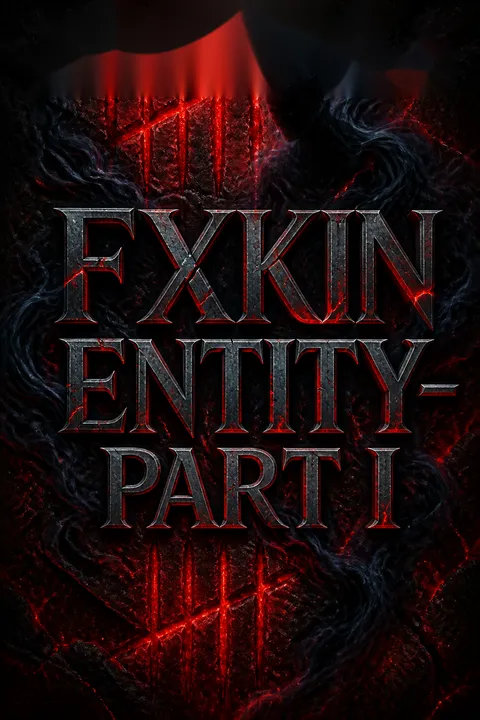
FXKIN ENTITY: Part I is a harrowing exploration of trauma, survival, and the cyclical nature of abuse. The novel refuses to offer easy redemption or catharsis; instead, it immerses the reader in the relentless reality of suffering, both physical and psychological. Through its nonlinear structure, supernatural horror, and unflinching depiction of violence, the book interrogates the ways in which trauma shapes identity and the impossibility of true escape. The relationship between Blaire and Krool is both a literal and metaphorical dance of power, desire, and destruction—each feeding on the other's wounds. The tally marks serve as a constant reminder that survival is measured not in victories but in days endured. The novel's refusal to offer hope is itself a commentary on the persistence of trauma and the inadequacy of conventional narratives of healing. In a world where monsters wear both human and supernatural faces, FXKIN ENTITY asks what it means to survive when survival itself is a form of damnation.
Review Summary
Reviews for FXKIN Entity - Part I are sharply divided. Fans of pitch-black horror praise its relentless darkness, brutal emotional impact, and addictive quality, admiring the protagonist Blaire's harrowing journey. Critics argue the book lacks cohesive plot, relying on shock value over substance, and feels like two disconnected stories forced together. Many readers note a jarring tonal shift mid-book into paranormal territory. Grammatical errors and shallow characters are common complaints. Despite frustrations, even skeptical readers express curiosity about Part II, suggesting the cliffhanger ending succeeds in maintaining interest regardless of overall satisfaction.
Characters
Blaire
Blaire is the protagonist, a young woman whose life has been defined by abuse, captivity, and betrayal. Her psychological landscape is shaped by early sexual violence at the hands of her father, years of imprisonment by Graham, and the sadistic "rescue" and marriage to Law. Blaire's resilience is remarkable, but it is a resilience born of necessity rather than hope. She is both victim and fighter, her sense of self constantly under siege. Her relationship with Law is complex—marked by dependency, fear, and a desperate longing for love. On Ninth Isle, Blaire's trauma is externalized, and her struggle becomes both literal and metaphysical. Her interactions with Krool force her to confront the darkest parts of herself, and her journey is one of survival, resistance, and the search for meaning in a world that seems designed to erase her.
Law
Law is Blaire's husband and captor, a man whose initial act of rescue quickly devolves into a campaign of domination and abuse. He is charismatic, wealthy, and outwardly respectable, but beneath the surface lies a profound cruelty. Law's motivations are complex—part savior complex, part narcissistic need for control. His relationship with Blaire is a study in gaslighting and psychological manipulation; he alternates between tenderness and violence, keeping her perpetually off-balance. Law's own trauma is hinted at but never fully explored, suggesting that his need to dominate is rooted in his own brokenness. By the time Blaire escapes, Law has become the embodiment of everything she fears—a monster in human skin.
Krool
Krool is the entity that haunts Ninth Isle, a being who feeds on fear, pain, and suffering. He is both literal monster and metaphorical representation of trauma—shapeshifting, omnipotent, and intimately attuned to Blaire's wounds. Krool's fascination with Blaire is predatory but also strangely intimate; he recognizes in her a kindred spirit, someone whose pain resonates with his own hunger. Krool's power is absolute within the island, and his methods are both sadistic and seductive. He marks Blaire with a tally, initiating a countdown that becomes the central tension of the narrative. Krool is both tormentor and teacher, forcing Blaire to confront the parts of herself she would rather forget.
Graham
Graham is the man who first kidnaps Blaire, keeping her imprisoned for years before selling her at auction. He is a master of psychological torture, alternating between neglect and sadistic attention. Graham's motivations are mercenary—he sees Blaire as currency, a commodity to be preserved and sold for maximum profit. His relationship with Blaire is devoid of empathy, and his cruelty is methodical. Graham's presence looms over the narrative, a reminder that the worst monsters are often those who wear human faces.
Brad
Brad is Law's former friend and business partner, a man caught between complicity and conscience. He represents the possibility of rescue, but his inability to act decisively makes him a tragic figure. Brad's relationship with Blaire is marked by guilt and regret; he sees her suffering but is powerless to intervene. His presence in the narrative underscores the theme of betrayal—not just by abusers, but by those who stand by and do nothing.
Mattie
Mattie is one of the women trafficked alongside Blaire to Ninth Isle. She is resourceful, compassionate, and briefly becomes a source of comfort and solidarity. Mattie's fate is ultimately tragic, reinforcing the narrative's insistence that hope is fragile and often short-lived. Her relationship with Blaire is a reminder of the importance of connection, even in the darkest circumstances.
Lena
Lena is another captive on Ninth Isle, whose personal nightmare is manifested in the form of a monstrous ice cream man. Her breakdown and subsequent death illustrate the island's power to weaponize individual fears. Lena's story is a microcosm of the larger narrative—a testament to the enduring impact of childhood trauma and the impossibility of escape.
Lotty
Lotty is Lena's friend and fellow captive, forced to watch as Lena is destroyed by her own nightmare. Lotty's grief and helplessness mirror Blaire's own struggles, and her presence in the narrative underscores the communal nature of suffering. Lotty's survival is tinged with guilt, a reminder that endurance often comes at the cost of others.
The Red-Haired Girl
The red-haired girl is a young captive whose mutilation and death serve as a stark reminder of the stakes on Ninth Isle. Her brief connection with Blaire is poignant, highlighting the ways in which trauma can forge bonds even in the most hopeless circumstances. Her fate is a catalyst for Blaire's renewed determination to survive.
The Pig-Headed Butcher
The pig-headed butcher is a supernatural entity on Ninth Isle, a monstrous embodiment of Blaire's father and the violence he inflicted. The creature's pursuit of Blaire is both literal and symbolic, representing the inescapability of childhood trauma. Its destruction by Krool is a moment of catharsis, but also a reminder that new monsters always rise to take the place of the old.
Plot Devices
Trauma as Narrative Engine
The novel's structure is built around the cyclical nature of trauma—past and present, memory and reality, victim and survivor. Flashbacks, hallucinations, and supernatural manifestations are used to blur the boundaries between what is real and what is remembered. The island itself is a plot device, a physical space that externalizes internal wounds. The tally marks on Blaire's chest serve as both a literal countdown and a metaphor for the ways in which trauma is measured in days survived rather than wounds healed. The narrative is nonlinear, reflecting the fragmented nature of memory and the impossibility of closure.
Power and Submission
The relationships in the novel are defined by shifting power dynamics—between captor and captive, abuser and victim, human and entity. Law's manipulation of Blaire is mirrored by Krool's supernatural domination, creating a continuum of abuse that transcends the boundaries of the physical world. The auction, the market, and the island are all spaces where power is exercised through violence, and submission is both a survival strategy and a source of shame. The narrative interrogates the ways in which agency can be reclaimed, even in the most powerless circumstances.
Manifestation of Fear
Ninth Isle is a living embodiment of the characters' deepest fears, a place where nightmares take physical form and hunt their creators. The monsters that stalk the island are not random—they are tailored to the specific traumas of their victims. This device allows the narrative to explore the persistence of fear, the ways in which the past refuses to stay buried, and the possibility of catharsis through confrontation. The supernatural elements are both literal and metaphorical, blurring the line between horror and psychological realism.
The Tally Mark Countdown
The tally marks burned into Blaire's chest by Krool serve as a constant reminder of her limited time and the inevitability of her fate. The countdown creates narrative tension, structuring the story around a finite period in which Blaire must either escape, resist, or be consumed. The marks are also a metaphor for the ways in which trauma is counted—not in years or milestones, but in days survived, wounds endured, and moments of resistance.
Mirror Imagery and Self-Reflection
Throughout the novel, mirrors are used to reflect not just physical appearance but psychological reality. Blaire's encounters with her own reflection are moments of confrontation with the self—accusation, self-loathing, and the possibility of transformation. The house of mirrors is both a literal space and a metaphor for the fractured self, a place where identity is contested and reclaimed.








































