Plot Summary
Between Worlds, Between Words
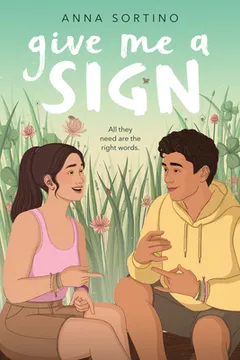
Seventeen-year-old Lilah lives in the liminal space between the hearing and Deaf worlds, wearing hearing aids but never feeling fully at home in either. Her annual audiology appointment is a reminder of her "in-between" status—her hearing loss is significant, but not "deaf enough" for some, and her accommodations at school make her feel isolated. She's exhausted by the constant effort to fit in, to advocate for herself, and to explain her needs to people who don't understand. The only place she's ever felt truly accepted was at Gray Wolf, a summer camp for Deaf and Blind kids, where sign language and difference are the norm. As she contemplates her future, Lilah aches for a sense of community and self-acceptance.
Summer Camp Calling
After a frustrating day with her hearing friends, who don't quite get her experience, Lilah impulsively decides to apply for a counselor position at Gray Wolf. The camp's outdated website forces her to reach out to Ethan, a former counselor she remembers fondly. To her surprise, Ethan remembers her and quickly connects her with the camp director. As she waits anxiously for a response, Lilah throws herself into relearning ASL, hoping to reclaim a part of herself she's let slip away. When the job offer finally arrives, she's both thrilled and nervous—especially when her younger brother Max, who also has hearing loss, decides to attend as a camper. The summer promises a chance for growth, but also the risk of confronting old insecurities.
Relearning Language, Reclaiming Self
Lilah's anticipation is tinged with anxiety as she practices ASL, worried she won't be fluent enough to fit in with the other counselors. Her family is supportive but doesn't fully grasp the significance of this opportunity. Max's curiosity about camp and sign language highlights the generational gap in their family's approach to deafness. Lilah's impostor syndrome grows—she fears she'll be as much of an outsider in the Deaf world as she is in the hearing one. Yet, the prospect of returning to Gray Wolf, of being surrounded by people who "get it," gives her hope that she might finally find her place.
New Faces, Old Fears
Driving to Gray Wolf alone, Lilah is greeted by Ethan and introduced to a diverse staff, including Mackenzie, a hearing ASL student eager to "help the Deaf," and Isaac, a former camper who remembers Lilah as "Bug." The camp is both familiar and changed, with signs of financial strain and weathered facilities. Lilah's nerves about her ASL skills are quickly tested, leading to embarrassing mistakes that highlight her outsider status. Yet, moments of connection—especially with Isaac—hint at the possibility of belonging. The camp's unique blend of communication styles, from fluent ASL to lipreading and speech, forces Lilah to navigate her own identity anew.
Finding Community
As staff training begins, Lilah is paired with Mackenzie, whose well-meaning but performative approach to ASL grates on her nerves. She finds camaraderie with other counselors, like Bobby and Simone, who bring their own perspectives as blind and sighted allies. The camp's financial troubles loom, threatening its future. Despite awkwardness and self-doubt, Lilah begins to bond with Isaac, whose patience and humor help her feel seen. The staff's after-hours traditions—like midnight swims and campfire games—offer glimpses of the community Lilah craves, even as she struggles to keep up with the rapid-fire signing and complex social dynamics.
Lake Nights and First Crushes
A nighttime leap from the bridge into the lake becomes a rite of passage, symbolizing Lilah's willingness to embrace fear and uncertainty. Supported by Isaac, she experiences a rare sense of freedom—without her hearing aids, she's not limited but bold. The intimacy of shared vulnerability draws them closer, and playful teasing gives way to genuine connection. Yet, Lilah's insecurities about her ASL and her place in the group persist, especially as she navigates the blurred lines between friendship and something more with Isaac. The summer's promise of romance is both exhilarating and terrifying.
Communication Breakdowns
As campers arrive, Lilah is thrust into the role of junior counselor, responsible for guiding young girls with varying degrees of hearing loss and signing ability. Tensions flare between campers, especially Blake, who resists signing and feels alienated. Lilah's own communication struggles—missing words, misreading signs, and relying on others to interpret—mirror the campers' frustrations. Mistakes, like losing a camper's cochlear implant in the lake, shake her confidence. Yet, these challenges also force Lilah to confront her perfectionism and accept that learning is messy. Through trial and error, she begins to see the value in persistence and empathy.
Campers Arrive, Tensions Rise
The arrival of campers brings new challenges: clashing personalities, homesickness, and the ever-present need for accessibility. Lilah juggles her responsibilities as a counselor with her desire to improve her ASL and connect with Isaac. She witnesses the complexities of Deaf identity among the campers—some embrace sign, others resist, and all grapple with the expectations of family and society. The camp's inclusive ethos is tested by real-world barriers, from outdated technology to well-meaning but misguided adults. Lilah's efforts to mediate conflicts and foster understanding among her campers deepen her sense of purpose, even as she questions her own adequacy.
Mistakes and Misunderstandings
A series of accidents—lost devices, pool mishaps, and a camper's meltdown—underscore the high stakes of communication breakdowns. Lilah's attempts to advocate for herself and her campers are met with mixed results, revealing the limits of accommodation in both Deaf and hearing spaces. The pressure to be a "good" counselor and role model weighs heavily, especially as she navigates the expectations of her hearing family and the Deaf community. Through these trials, Lilah learns the importance of self-forgiveness and the necessity of asking for help, both for herself and those she leads.
Bonds Forged in Adversity
A tornado warning forces the entire camp into the dining hall basement, where fear and boredom give way to unexpected moments of connection. Lilah facilitates a tactile ASL-Braille lesson between campers, embodying the bridge between worlds she's always inhabited. The storm damages cabins, prompting a scramble for resources and a renewed sense of urgency around the camp's fundraising efforts. Amidst the chaos, Lilah and Isaac's relationship deepens, their shared experiences forging a bond that transcends words. The camp's resilience in the face of adversity becomes a metaphor for the Deaf community's enduring strength.
The Limits of Access
A late-night trip to the store with Isaac turns disastrous when a miscommunication at the register leads to a confrontation with security and the police. Isaac is injured and detained, his deafness ignored and his attempts to communicate dismissed. Lilah is wracked with guilt, blaming herself for not wearing her hearing aids and for failing to prevent the escalation. The incident exposes the dangers of living in a world not built for Deaf people, where access is conditional and misunderstanding can have dire consequences. The aftermath leaves both Lilah and Isaac shaken, forcing them to reckon with the realities of ableism and the fragility of safety.
After Hours and Heartbeats
In the wake of the police incident, Lilah is consumed by shame and self-doubt, convinced she's failed as both a counselor and a friend. Support from her peers, especially Simone and Mackenzie, helps her process the trauma and recognize that the fault lies not with her or Isaac, but with a system that refuses to accommodate difference. As Isaac recovers at home, Lilah throws herself into camp life, helping to finalize the fundraising video and advocating for more accurate representation of Deaf experiences. The camp community rallies, and donations pour in, securing Gray Wolf's future. When Isaac returns, their reunion is bittersweet but hopeful, marked by honest conversation and mutual understanding.
Storms and Shifting Ground
As summer winds down, Lilah's brother Max arrives at camp, facing his own crossroads: whether to get a cochlear implant. Lilah, now more confident in her identity, encourages Max to make his own decision, emphasizing that there's no single "right" way to be deaf. Conversations with Natasha, who shares her complex feelings about her own implant, and with her parents, who reflect on their choices, deepen Lilah's understanding of the nuances of disability, family, and autonomy. The camp's survival is secured, and Lilah is offered a senior counselor position for next year, a testament to her growth and leadership.
Fundraising and Frustrations
The camp's fundraising efforts culminate in a viral video campaign, boosted by Mackenzie's large following and the support of the wider Deaf community. The process sparks important conversations about who gets to teach and represent ASL, the ethics of online advocacy, and the need for authentic Deaf voices. Lilah and her peers navigate these debates with increasing confidence, challenging Mackenzie to update her platform and centering Deaf creators. The influx of donations ensures the camp's future, and the staff celebrates with a night out in Chicago, reveling in their collective achievement and the bonds they've formed.
Family, Identity, and Choice
Back home, Lilah initiates honest conversations with her family and friends about her needs and boundaries. She encourages her parents and Max to learn ASL, reframing hearing loss as "Deaf gain" and advocating for a more inclusive approach. With her friends, she sets new expectations for accessibility and support, finding that openness leads to deeper connection. Max decides to get a cochlear implant, but on his own terms, and the family commits to ongoing learning. Lilah's journey toward self-acceptance is mirrored in her relationships, as she learns to balance the demands of both worlds without losing herself.
The Cost of Miscommunication
As camp ends, Lilah grapples with the bittersweet reality of saying goodbye to Isaac, whose college plans will take him far away. Their relationship, forged in the crucible of shared struggle and joy, is marked by uncertainty but also by hope. The lessons of the summer—about communication, identity, and resilience—linger as Lilah prepares for her senior year. She recognizes that miscommunication is inevitable, but it doesn't have to define her. Instead, she chooses to embrace the messiness of growth, trusting that she can navigate whatever comes next.
Healing, Growth, and Goodbyes
The final days at Gray Wolf are filled with nostalgia and gratitude. The staff and campers gather for one last photo under the newly rebuilt camp arch, a symbol of renewal and continuity. Lilah is offered the senior counselor position for next summer, and Phoebe is invited to return as a junior counselor. The community they've built endures, even as members move on to new chapters. Lilah and Isaac share a heartfelt goodbye, promising to stay in touch and support each other's journeys. The summer's end is not a conclusion, but a launching point for continued growth.
Deaf Gain, New Beginnings
Back home, Lilah integrates the lessons of camp into her daily life, advocating for accessibility with her friends and family. She embraces her identity as both deaf and Deaf, recognizing that belonging is not about fitting into a single category but about claiming her own story. As her family begins learning ASL and Max prepares for his implant, Lilah finds peace in the knowledge that she can bridge worlds without losing herself. A surprise video call from Isaac reminds her that connection endures, and she looks forward to future summers at Gray Wolf, confident in her place and her voice.
Analysis
Give Me a Sign is a nuanced, heartfelt exploration of identity, community, and the messy, beautiful work of communication. Anna Sortino crafts a narrative that is both deeply personal and broadly resonant, centering the lived experiences of Deaf and hard of hearing individuals without reducing them to inspiration or tragedy. The novel interrogates the binaries of hearing/Deaf, ability/disability, and belonging/alienation, insisting on the validity of liminal identities and the necessity of self-definition. Through Lilah's journey, readers are invited to consider the labor of access—not just technological or institutional, but emotional and relational. The story's emphasis on choice, agency, and the multiplicity of Deaf experiences challenges monolithic narratives and celebrates the richness of Deaf culture. Ultimately, Give Me a Sign is a call to embrace difference, to advocate for oneself and others, and to recognize that true belonging is found not in conformity, but in the courage to be seen and heard on one's own terms.
Review Summary
Reviews for Give Me a Sign are largely positive, averaging 4.07/5. Readers praise its authentic Deaf culture representation, summer camp atmosphere, and sweet romance. Many highlight how the book educates hearing readers while validating Deaf and hard-of-hearing experiences. Critics note the story can feel preachy, with some characters underdeveloped and the plot occasionally reduced to a checklist of ableist encounters. The protagonist Lilah's journey of identity and belonging resonates emotionally with many readers, particularly those with personal connections to hearing loss.
Characters
Lilah
Lilah is a seventeen-year-old girl with moderate-to-severe hearing loss, caught between the hearing and Deaf worlds. She wears hearing aids and is adept at lipreading, but often feels isolated and misunderstood in mainstream settings. Her journey is one of self-discovery, as she grapples with impostor syndrome, internalized ableism, and the pressure to "pass" as hearing. At Gray Wolf, she confronts her insecurities about her ASL skills and her place in the Deaf community, ultimately learning to embrace her unique identity. Lilah's relationships—with her family, campers, and especially Isaac—challenge her to advocate for herself and others, and to redefine what it means to belong.
Isaac
Isaac is a Deaf counselor at Gray Wolf, known for his warmth, humor, and athleticism. A former camper, he remembers Lilah as "Bug" and becomes her anchor as she navigates the complexities of camp life. Isaac is fluent in ASL and lipreading, and his trilingualism (including Spanish) reflects his multicultural background. Despite his confidence, he harbors his own insecurities, particularly around trust and past experiences with hearing people who failed to truly connect. His relationship with Lilah is marked by mutual support, gentle teasing, and deep emotional resonance. Isaac's journey is one of learning to let others in and to forgive himself for the world's failures.
Ethan
Ethan is the assistant director of Gray Wolf, a Deaf educator with a passion for accessibility and inclusion. He serves as both interpreter and role model, guiding staff and campers through the challenges of communication and community-building. Ethan's experience as a twin with a cochlear-implanted sibling informs his nuanced perspective on Deaf identity. He is a stabilizing force, offering wisdom, humor, and tough love when needed. Ethan's leadership is instrumental in securing the camp's future and fostering a culture of empathy and growth.
Mackenzie
Mackenzie is a hearing ASL student and junior counselor, eager to "help the Deaf" but often oblivious to her own privilege. Her enthusiasm for sign language is genuine, but her approach is sometimes tone-deaf, centering herself and her online platform. Through feedback from her peers, especially Natasha and Lilah, Mackenzie learns to step back, amplify Deaf voices, and reconsider her role as an ally. Her journey reflects the complexities of hearing people in Deaf spaces—well-intentioned but in need of humility and growth.
Natasha
Natasha is a Deaf counselor with a cochlear implant, navigating the tensions between Deaf pride and the realities of access. Her family's generational Deafness and her own decision to get an implant create internal and external conflicts. Natasha is blunt, loyal, and sometimes intimidating, especially in her protectiveness of Isaac. Her experiences with ableism and medical trauma inform her advocacy for authentic representation and language access. Natasha's arc is one of reconciliation—embracing both her Deaf heritage and her individual choices.
Bobby
Bobby is a blind counselor whose humor and candor enliven the staff dynamic. He is fiercely independent, skilled at navigating both physical and social spaces, and deeply invested in the camp's success. His close friendship (and possible romance) with Simone adds depth to his character, as does his mentorship of younger campers. Bobby's perspective challenges assumptions about disability, emphasizing agency, adaptability, and the importance of community.
Simone
Simone is a sighted counselor studying to work with blind and low-vision kids. Her relationship with Bobby is marked by mutual respect and unspoken affection, complicated by her career ambitions and impending move. Simone is a steady presence, offering support to both campers and staff, and modeling the importance of boundaries and self-care. Her arc explores the challenges of balancing personal growth with loyalty to community.
Blake
Blake is a young camper with hearing aids, resistant to signing and prone to conflict. Her defensiveness masks a deep sense of alienation and a desire to fit in without being singled out. Through her interactions with Lilah and her peers, Blake gradually opens up to new ways of communicating and belonging. Her journey mirrors Lilah's, highlighting the diversity of Deaf experiences and the importance of patience and empathy.
Max
Max is Lilah's younger brother, also hard of hearing, facing the decision of whether to get a cochlear implant. His reluctance to learn ASL and his desire to "be normal" reflect the pressures of family and society. Max's arc is one of agency—learning to make choices for himself, with Lilah's guidance and support. His story underscores the complexities of disability, family, and self-determination.
Oliver
Oliver is a British lifeguard at camp, whose easygoing nature and accent make him a favorite among staff and campers. His friendship with Lilah is flirtatious but platonic, and his relationship with Ben adds subtle LGBTQ+ representation. Oliver's willingness to learn ASL and adapt to the camp's culture exemplifies allyship done right—curious, respectful, and open-hearted.
Plot Devices
Dual Worlds and Liminal Identity
The novel's central device is Lilah's position "in-between"—not fully hearing, not fully Deaf. This liminality is explored through her internal monologue, her struggles with ASL, and her interactions with both communities. The camp setting serves as a microcosm where these tensions play out, forcing Lilah to confront her own biases and assumptions. The narrative structure alternates between moments of connection and alienation, mirroring the ebb and flow of belonging.
Communication as Both Bridge and Barrier
Sign language, lipreading, and speech are not just tools but battlegrounds—sites of power, vulnerability, and identity. The novel uses italicized internal translations to highlight the subjectivity of communication. Misunderstandings—whether comic (signing "horny" instead of "hungry") or tragic (the police incident)—drive the plot and character development. The story foregrounds the labor of communication, the exhaustion of advocacy, and the joy of being understood.
Coming-of-Age Through Community
The summer camp structure provides a contained environment for transformation. Training week, camper arrival, storms, and after-hours rituals serve as narrative milestones, each presenting new challenges and opportunities for growth. The ensemble cast allows for multiple perspectives on disability, identity, and belonging, reinforcing the theme that community is both a refuge and a crucible.
Foreshadowing and Symbolism
Weather events—melting snow, summer storms, tornado warnings—foreshadow internal upheaval and the unpredictability of life with a disability. The bridge over the lake, the rebuilt camp arch, and the act of jumping into water all symbolize transitions, leaps of faith, and the courage to embrace change. The recurring motif of bracelets and sign names underscores the importance of chosen identity and connection.
Modern Social Commentary
The camp's financial struggles and the viral fundraising campaign reflect real-world issues of access, sustainability, and the politics of representation. Debates over who gets to teach ASL, the ethics of online platforms, and the commodification of disability are woven into the plot, inviting readers to question their own assumptions. The novel's meta-awareness—referencing the author's own experiences and the lack of representation in literature—grounds the story in contemporary discourse.








































