Plot Summary
Gilded Cages, Hollow Hearts
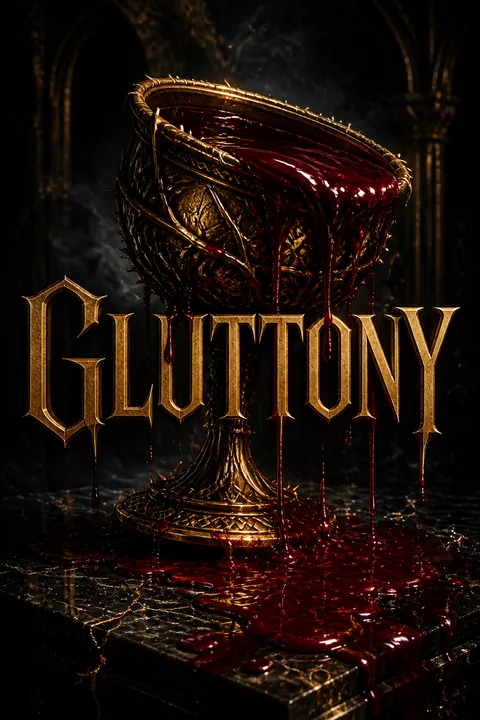
Baxter "God" Goddard V is born into obscene privilege, the only heir to a fortune and a legacy of excess. His father, a glutton in every sense, rules the family with money and intimidation, while his mother floats through life in a wine-soaked haze. Baxter's world is one of luxury, but also of loneliness and pressure to be the perfect successor. He's taught that money can buy anything, but nothing fills the void inside him. His only real connection is with his best friend Rhett, but even that is tinged with competition and the shadow of their fathers' ambitions. Baxter's life is a gilded cage, and he's desperate for something real—something money can't buy.
Brotherhood of Sins
At St. Augustine University, Baxter is inducted into The Elite Seven, a clandestine brotherhood that selects members based on the seven deadly sins. Each initiate is given a task that embodies their assigned sin; Baxter is Gluttony. The society promises power, influence, and protection, but at a steep price: absolute obedience and moral compromise. Baxter's task is to steal and destroy a car belonging to his best friend's mother, a test of loyalty that will force him to betray those closest to him. The Elite's rituals are shrouded in tradition and cruelty, breeding ruthlessness in its members and binding them together in secrecy and shared guilt.
The Task That Breaks
Baxter's initiation task seems simple—steal Caroline Masters' car and wreck it as a warning. But the act is more than a prank; it's a calculated move by the Elite to test his willingness to harm even those he cares about. High on drugs and adrenaline, Baxter completes the theft, but in his reckless flight, he runs a red light and hits Zemira Coleman, a hardworking college student with no family and everything to lose. The accident is catastrophic, leaving Zemira with life-threatening injuries. In that moment, Baxter's world shatters, and the consequences of his gluttony become horrifyingly real.
Collision of Fates
Zemira's life is upended in an instant. Orphaned, struggling to pay rent, and working herself to exhaustion, she is struck down by Baxter's recklessness. As she hovers between life and death, Baxter is consumed by guilt and horror at what he's done. His father moves quickly to cover up the crime, using money and influence to erase evidence and silence witnesses. Zemira becomes a "problem" to be swept away, but Baxter can't let go. He's haunted by her pleas for help and the sight of her broken body. For the first time, he's forced to confront the emptiness of his privilege and the monstrous legacy he's inherited.
Guilt and Obsession
Baxter's guilt morphs into obsession. He visits Zemira in the hospital, posing as her fiancé to stay close. He pays her bills, bribes staff, and watches over her as she lies in a coma. His need to atone is tangled with a growing fascination—Zemira becomes the one thing he can't buy or control. Meanwhile, his father pressures him to let Zemira die, seeing her as a threat to the family's reputation. Baxter rebels, using his one "get out of jail free" coin from the Elite to protect her. This act severs him from the society's protection, but marks the beginning of his transformation.
The Girl Who Survived
After months in a coma, Zemira wakes to find her life in ruins—her hair shorn, her body scarred, her job and education in jeopardy. She's furious to discover Baxter hovering over her, the man who destroyed her life now acting as her savior. Zemira's independence and pride clash with her vulnerability; she resents Baxter's help but can't deny her need. As she struggles to recover, she's forced to accept his support, even as she vows never to forgive him. Their dynamic is fraught with anger, dependency, and a strange, growing intimacy.
Bargains and Consequences
Baxter's attempts to fix Zemira's life are clumsy and overwhelming—lavish gifts, new apartments, and endless money. Zemira rejects his extravagance, craving dignity and agency. Meanwhile, the Elite's influence looms: the society's matriarch, Lillian, threatens both Baxter and Zemira, manipulating university officials to sabotage Zemira's education. Baxter leverages his family's power to fight back, but every victory comes at a cost. The more he tries to help, the more he must confront the toxic patterns of his upbringing and the true meaning of redemption.
Healing in the Shadows
Zemira's physical healing is slow and painful, complicated by migraines and vision loss. Baxter becomes her constant companion, learning to care for her in ways that go beyond money—cooking, supporting her studies, and simply being present. Their relationship shifts from adversarial to tentative partnership, as shared vulnerability breaks down barriers. Zemira helps Baxter confront his eating disorder and self-loathing, while he gives her the stability and affection she's never known. Together, they begin to imagine a future not defined by trauma or privilege, but by mutual respect and love.
Hunger for More
Baxter's gluttony is not just about food—it's a hunger for more of everything: love, control, absolution. Zemira becomes both his addiction and his cure. Their romance is intense, physical, and healing, but also fraught with the risk of codependency. Baxter must learn to moderate his impulses, to give without overwhelming, and to accept that some wounds can't be bought away. Zemira, in turn, must learn to trust, to accept help, and to believe she deserves happiness. Their journey is one of learning to be "enough" for each other, without excess or deprivation.
Love in the Ruins
As Zemira regains her independence, she and Baxter navigate the challenges of her return to school, her job, and her sense of self. The Elite's machinations continue to threaten them, but together they face down Lillian and the corrupt system that nearly destroyed them. Baxter's friends—his "brothers" in the Elite—rally around him, each grappling with their own sins and secrets. The group's loyalty is tested as they confront the society's darkest truths and the cost of their membership. Love becomes both a refuge and a rebellion against the world that shaped them.
The Elite's Reckoning
The Elite's power is built on generations of cruelty, secrecy, and manipulation. When one of their own commits an unforgivable crime, the brotherhood is forced to confront the monster in their midst. The society's leaders, including Baxter's father and Lillian, are exposed as architects of suffering. In a brutal act of poetic justice, the brothers turn the society's rituals against its creators, enacting vengeance and breaking the cycle of abuse. The old guard is destroyed, but not without cost—innocence is lost, and the survivors are forever changed.
Breaking the Cycle
With the Elite's grip broken, Baxter faces the ultimate test: will he become his father, or forge a new path? Zemira challenges him to reject the patterns of excess and control that defined his upbringing. Together, they choose simplicity, honesty, and hard work over wealth and power. Baxter sells his cars, leaves the city, and dedicates himself to building a real home with Zemira. They support each other's dreams, heal each other's wounds, and create a life rooted in love rather than legacy.
Redemption's Price
True redemption requires more than apologies or grand gestures—it demands humility, accountability, and change. Baxter must forgive himself for the harm he caused, and earn Zemira's forgiveness through consistent action. Zemira, in turn, must let go of her anger and allow herself to be loved. Their journey is messy and imperfect, but ultimately transformative. They learn that healing is not linear, and that love is both a risk and a reward.
The End of Monsters
The final reckoning comes for those who perpetuated the Elite's cycle of abuse. Lillian is brought down by the very rituals she used to control others, and Baxter's father dies, leaving behind a legacy of emptiness. The old order is dismantled, and the survivors are left to pick up the pieces. Baxter and his friends vow to use their power for good, supporting each other and the vulnerable instead of exploiting them. The era of monsters ends, and a new chapter begins.
Building Something Real
Baxter and Zemira marry in a simple ceremony, surrounded by friends who have become family. They buy a modest house in the woods, far from the city's corruption, and dedicate themselves to building a life together. Zemira returns to school, determined to help others as she was helped. Baxter finds purpose in supporting her and giving back to the community, especially the orphanage that shaped Zemira's early years. Their home is filled with laughter, love, and the promise of a better future.
The God Who Changed
Baxter's journey from spoiled, self-destructive heir to loving partner and father is hard-won. The death of his father frees him from the last chains of expectation, allowing him to define himself on his own terms. He embraces vulnerability, responsibility, and the messy work of being human. Zemira's faith in him becomes his anchor, and together they prove that even the most broken people can change. Their love is not perfect, but it is real—and that is enough.
Fate's Last Laugh
Life is unpredictable, and happiness is never guaranteed. Baxter and Zemira face setbacks, doubts, and the lingering shadows of their pasts. But they choose each other, again and again, building a family and a future out of the wreckage. Their story is a testament to resilience, forgiveness, and the power of love to redeem even the darkest sins. In the end, fate may be cruel, but they learn to laugh with her, not at her.
Divine, Not Damned
The final chapter is one of peace and fulfillment. Baxter and Zemira, once defined by their sins and scars, become partners in every sense. They raise a child, support their friends, and dedicate themselves to helping others escape the cycles that nearly destroyed them. Their love is both ordinary and extraordinary—a daily act of faith, a choice to be better, and a celebration of survival. In each other, they find not damnation, but divinity.
Analysis
"Gluttony" by K. Webster is a dark, psychological romance that interrogates the costs of privilege, the corrosive effects of unchecked appetite—whether for food, power, or love—and the possibility of redemption through vulnerability and connection. At its core, the novel is a study in contrasts: wealth and poverty, control and chaos, guilt and forgiveness. Through the lens of the Elite Seven's rituals and the personal tragedies they unleash, the story explores how cycles of abuse and excess are perpetuated by those in power, and how breaking free requires both courage and humility. Baxter's journey from spoiled, self-destructive heir to loving partner and father is emblematic of the struggle to define oneself against the weight of legacy. Zemira's resilience and insistence on dignity challenge the narrative of victimhood, offering a model of agency and hope. The novel's ultimate message is that true abundance is found not in what we consume or control, but in what we give, build, and share with others. Love, in all its messy imperfection, is the only thing that can fill the void left by gluttony—and it is, in the end, enough.
Review Summary
Gluttony is the fifth installment in The Elite Seven series and is widely considered the best book yet. Reviewers praised the complex, layered character of Baxter "God" Goddard, whose struggles with self-hatred and excess surprised many readers. Heroine Zemira Coleman was lauded as the most developed and likable in the series. The romance was noted as the most fleshed-out of the series, with both characters helping each other grow. Most reviewers felt the book revitalized the series and left them eager for the next installment.
People Also Read

Characters
Baxter "God" Goddard V
Baxter is the only son of a wealthy, powerful family, raised to believe that money and excess are the keys to happiness. Scarred by his father's gluttony and emotional neglect, he develops his own compulsions—an eating disorder, substance abuse, and a desperate need for control. His induction into the Elite Seven forces him to confront the darkness within himself, especially after his reckless actions nearly kill Zemira. Baxter's journey is one of painful self-awareness, as he struggles to break free from his family's toxic patterns and become a man worthy of love. His relationship with Zemira is both his salvation and his greatest challenge, demanding vulnerability, humility, and real change.
Zemira Coleman
Zemira is a fiercely independent college student, orphaned and struggling to make ends meet. Her life is defined by hard work, resilience, and a refusal to be a victim. The accident that nearly kills her is both a tragedy and a turning point, forcing her to accept help and confront her own vulnerabilities. Zemira's pride and anger are matched by her capacity for forgiveness and love. She challenges Baxter to be better, refuses to be bought, and ultimately chooses to build a life with him on her own terms. Her journey is one of reclaiming agency, healing, and finding family in unexpected places.
Four (Baxter's Father)
Four is the embodiment of gluttony—physically, emotionally, and morally. He wields his wealth as a weapon, manipulating everyone around him to maintain power. His love is conditional, his approval impossible to earn, and his legacy toxic. Four's influence haunts Baxter, shaping his fears and compulsions. In the end, his death is both a liberation and a warning: unchecked appetite destroys not only the self, but everyone in its orbit.
Rhett Masters
Rhett is Baxter's childhood friend and fellow Elite member, representing both loyalty and the dangers of complicity. Their bond is deep but complicated by rivalry, shared trauma, and the pressures of their fathers' expectations. Rhett's own struggles with the Elite and his family echo Baxter's, and their friendship is a source of both strength and pain. Rhett's journey is one of finding his own path, supporting Baxter, and learning to love without conditions.
Lillian Griffin
Lillian is the society's enforcer, using her intelligence and ruthlessness to control members and protect the Elite's secrets. She is both victim and perpetrator, shaped by her own traumas and ambitions. Lillian's machinations nearly destroy Zemira and Baxter, but ultimately lead to her downfall. Her character is a study in the corrupting influence of power and the costs of unchecked ambition.
Wendy
Wendy is the Goddard family's long-suffering housekeeper, a figure of stability and quiet compassion. She sees the family's dysfunction but is powerless to intervene. Wendy's presence is a reminder of the invisible labor and emotional toll borne by those on the margins of privilege.
Mason "Pride" Blackwell
Mason is the Elite's Pride, a foil to Baxter's Gluttony. Ambitious, cunning, and often antagonistic, he represents the dangers of unchecked ego and the seductive pull of power. Mason's relationship with Baxter is fraught with competition and mutual distrust, but also a grudging respect. His arc is one of learning humility and the limits of control.
Rush "Sloth" Dempsey
Rush is the Elite's Sloth, outwardly indifferent but deeply perceptive. He serves as a confidant and occasional conscience for Baxter, offering perspective and support when needed. Rush's detachment masks his own struggles with purpose and belonging, and his friendship with Baxter is a quiet but vital thread in the story.
Sam "Wrath" Gunner
Sam is the Elite's Wrath, driven by rage and a thirst for vengeance. His personal losses and the society's betrayals fuel his actions, making him both a danger and a catalyst for change. Sam's journey is one of learning to channel his anger into something constructive, and his loyalty to his friends is fierce and unwavering.
Gracie
Gracie is Zemira's coworker and mentor, offering guidance, comfort, and tough love. She represents the found family that sustains Zemira through her darkest moments. Gracie's wisdom and warmth are a counterpoint to the coldness of the Goddard household, and her support is instrumental in Zemira's recovery.
Plot Devices
The Elite Seven Society
The Elite Seven is the central plot device, a clandestine group that selects members based on the seven deadly sins and subjects them to morally compromising tasks. The society's rituals, power plays, and demands for loyalty force characters to confront their darkest impulses and the consequences of their actions. The Elite serves as both antagonist and catalyst, driving the plot through tests of character, betrayal, and eventual rebellion. Its presence allows for exploration of themes like privilege, corruption, and the possibility of redemption.
The Initiation Task
Each Elite member is given a task that embodies their assigned sin. Baxter's task—to steal and destroy a car—sets off the chain of events that define the novel. The task is both a literal and symbolic test, forcing Baxter to choose between loyalty to the society and his own moral compass. The consequences of the task—Zemira's injury, Baxter's guilt, and the unraveling of the Elite—drive the narrative and character development.
Guilt and Redemption Arc
The novel's structure follows Baxter's descent into guilt and obsession, his attempts at atonement, and his eventual transformation through love and self-acceptance. Zemira's parallel journey from victimhood to agency mirrors and challenges Baxter's, creating a dynamic interplay of power, vulnerability, and forgiveness. The arc is punctuated by moments of crisis, confrontation, and reconciliation, culminating in a hard-won peace.
Power and Corruption
The Goddard family's wealth is a double-edged sword, enabling both harm and healing. Money is used to cover up crimes, manipulate institutions, and control others, but it cannot buy love, forgiveness, or self-worth. The novel interrogates the limits of privilege and the moral bankruptcy of those who wield it without conscience.
Foreshadowing and Cyclical Structure
The narrative is rich with foreshadowing—Baxter's fear of becoming his father, the Elite's history of unchecked power, and the recurring motif of hunger and excess. The story's cyclical structure—beginning and ending with the consequences of gluttony—emphasizes the difficulty of breaking free from inherited patterns, but also the hope of transformation.
The Elite Seven Series Series



About the Author
Other books by K. Webster



Download PDF
Download EPUB
.epub digital book format is ideal for reading ebooks on phones, tablets, and e-readers.








































