Key Takeaways
1. The desert hides an advanced, non-human presence known as the "Tall Whites"
The white thing responded, ‘You may call me Range Four Harry.’
Unearthly desert residents. The Mojave Wells gunnery ranges are not as empty as they appear. For decades, military personnel have encountered tall, chalk-white humanoids with large blue eyes and blonde hair. These beings, often misidentified from a distance as "Range Four Harry" (a mythical radioactive horse) or "ghosts," live in the remote mountains and valleys.
Technological superiority. The "Tall Whites" possess highly advanced technology that allows them to navigate the desert effortlessly. Their suits generate a soft, white fluorescent light and allow them to float inches above the ground. Key features of their presence include:
- Chalk-white skin, thin bodies, and four-fingered hands ending in claws.
- Anti-gravity suits that absorb light and eliminate physical contact with the ground.
- Spacecraft capable of faster-than-light travel, disguised as simple "clouds" or "rainstorms."
A hidden reality. Despite their terrifying appearance, these beings are flesh-and-blood creatures with families, emotions, and vulnerabilities. They are highly curious about human behavior and technology, often entering military barracks at night to inspect personal belongings.
2. Fear of the unknown drives human isolation and psychological breakdown
The Creatures! The White Creatures!! The White Creatures, Charlie! They’ll come! They always come!
Psychological toll. The sheer shock of encountering the "Tall Whites" causes severe psychological trauma to unprepared observers. Many weather observers assigned to the isolated ranges suffered mental breakdowns, deserted their posts, or fabricated weather reports from the safety of the barracks. The fear of being watched by invisible entities in the dark is a powerful destabilizer.
The cost of panic. When humans react with panic or aggression, the "Tall Whites" perceive them as dangerous animals and defend themselves. For example:
- Zimmerman suffered deep, bone-deep radiation burns after attempting to approach a creature.
- Sullivan abandoned his post and fled to Long Beach after being clawed by a young alien.
- McIntyre was threatened with death after throwing a rock at an alien child and throwing a knife at the mother.
Isolation amplifies terror. The vast, silent desert environment magnifies the psychological pressure on lone observers. The realization that one is completely isolated, miles from help, and surrounded by highly advanced, unpredictable beings is enough to break even the toughest military minds.
3. Telepathic communication is mediated through electromagnetic brainwaves
The human brain is a very low power electrical device that transmits tiny weak pulses of microwaves when a person thinks... The electronics in his high tech suit must be able to decode these waves, thereby allowing him to read my thoughts.
Microwave telepathy. The "Tall Whites" communicate with humans and each other using advanced electronic systems built into their helmets. These systems detect and decode the weak microwave signals naturally transmitted by the human brain's nerve cells. This allows them to read human thoughts and project their own thoughts directly into a human's consciousness.
Two-way mental link. When a human aligns their temples with an alien's helmet, a direct telepathic connection is established. This communication is experienced as slow, clear thoughts appearing in the human's mind, often accompanied by a tingling sensation in the temples. Key aspects of this link include:
- The ability of the aliens to anticipate human movements before they occur.
- The transmission of alien conversations, which humans can "overhear" like a radio broadcast.
- The capacity of the aliens to project overwhelming feelings of fear or calm into a human's mind.
Technological limitations. The telepathic link is highly sensitive to the human's emotional state. If the human becomes too agitated or terrified, the connection fails, and the alien's equipment cannot decode the brainwaves. Maintaining emotional composure is therefore essential for successful communication.
4. The "Tall Whites" possess physical capabilities far exceeding human limits
The white male had run into the sagebrush at least two and a half times faster than the best Olympic runner.
Superhuman physical traits. The "Tall Whites" possess physical capabilities that far exceed human biological limits. Despite their thin, fragile-looking frames, they can run at speeds of 30 to 35 miles per hour, even uphill through rough desert terrain. This speed is more than double that of the fastest human Olympic sprinters.
Biological adaptations. Their biology is uniquely adapted to their environment and technology. Their large, blue eyes wrap around the sides of their heads, giving them a much wider field of vision than humans. Other notable physical characteristics include:
- A nervous system that operates up to 2.5 times faster than a human's.
- Exceptional night vision and acute hearing, allowing them to detect whispers from a distance.
- A lightweight skeletal structure, with adults weighing only 90 to 110 pounds despite standing nearly seven feet tall.
Implications of speed. Their incredible speed allows them to quickly close distances or retreat into the safety of the sagebrush before a human can react. This rapid movement, combined with their silent anti-gravity suits, makes them appear to "vanish" or "float" like ghosts in the desert night.
5. A delicate, classified coexistence exists between the military and the aliens
The general made it perfectly clear that I was to deliver his messages with no questions asked... You have to handle the ranges, Charlie, and you have to handle them alone.
Classified military agreement. The United States military and the Pentagon are fully aware of the "Tall Whites" and have established a delicate, highly classified coexistence with them. The government protects the aliens' privacy and safety, while the aliens allow the military to operate the gunnery ranges. This agreement is managed at the highest levels of command.
Strict operational protocols. To maintain this fragile peace, the military enforces strict, unusual protocols on the ranges. These rules are designed to prevent accidental conflicts and protect the aliens from human aggression. Key protocols include:
- Restricting range access to a single, approved observer who has demonstrated emotional stability.
- Ordering all other personnel to evacuate the base during special alien "inspections."
- Providing immediate, high-priority medical and logistical support to the designated observer.
The "Happy Charade." The military and the aliens engage in a carefully choreographed "charade" to keep the relationship secret. While officially denying the existence of the aliens, the military command post closely monitors the observer's safety and coordinates with the alien "Captain" to ensure that both sides respect each other's boundaries.
6. Empathy and non-threatening behavior establish trust across species
The man has already seen you. Your life is in danger. Your equipment will stop soon. You must come across now... The man will not harm you.
Trust through empathy. The key to surviving and thriving among the "Tall Whites" is establishing trust through non-threatening, empathetic behavior. Unlike his predecessors, Charlie Baker did not react to the aliens with panic, anger, or weapons. Instead, he treated them with the same respect and care he would show to fellow humans, which completely disarmed their hostility.
The power of gentleness. Charlie's willingness to help a lost alien child, "Playful Butterfly," and his refusal to harm the vulnerable female and child at Range Three, earned him the lifelong gratitude of the alien community. This trust manifested in several ways:
- The aliens actively protected Charlie from danger and monitored his physical well-being.
- They assisted him with heavy physical labor, such as unloading heavy helium cylinders when he was exhausted.
- They allowed him to walk among them and interact with their children, a privilege denied to all other humans.
A mutual understanding. By demonstrating that he posed no threat, Charlie transformed a potentially deadly situation into a cooperative relationship. The aliens recognized his high intelligence and emotional maturity, referring to him as "the teacher's pet" and treating him as a valued friend rather than a hostile intruder.
7. The "Teacher" and her children represent a structured alien social order
This is Charlie Baker... He is the one who saved my little girl’s life when she was lost down on range one... You must be very cautious and very gentle when you are around him.
Structured alien society. The "Tall Whites" are not random monsters; they belong to a highly structured, civilized society with a clear social order, family units, and professional roles. The "Teacher" is a high-ranking female responsible for educating and protecting the children during their "field trips" to the desert.
Family and community values. Like humans, the "Tall Whites" value family, protect their young, and feel deep parental anxiety. Their community structure includes:
- Mothers who actively teach their children about the physical world and human behavior.
- Fathers and uncles who act as protectors, ready to defend their families with advanced weapons if threatened.
- A "Captain" and an "Ambassador" who manage the community's leadership and diplomatic relations with the US military.
The "Teacher's Pet Project." The Teacher established a special project to study Charlie Baker, using him as a positive example of human behavior for the alien children. This structured observation allowed the children to learn about human biology, language, and emotions in a safe, controlled environment, fostering mutual understanding between the two species.
8. Environmental mastery and observation are vital for survival in extreme conditions
The wind gusts have been very regular, almost musically timed... I’m going to time it so the gust lets up just before they reach the end of the runway.
Mastery of the environment. Survival in the harsh desert environment of Mojave Wells requires meticulous observation and a deep understanding of natural patterns. As a weather observer, Charlie Baker used his scientific training to master the desert's wind, temperature, and cloud patterns, which proved vital for both his military duties and his survival.
Predicting the unpredictable. Charlie's ability to identify and exploit regular patterns in the desert winds allowed him to perform seemingly impossible tasks. For example:
- He timed the regular, musical intervals of wind gusts to safely land six F105 fighters during a blinding sandstorm.
- He identified a predictable break between thunderstorms to guide two fully loaded 707 passenger jets to a safe landing.
- He used the desert's natural terrain and wind currents to play "catch the wind" with the alien children using tumbleweeds.
Observation as a shield. By paying close attention to his surroundings, Charlie could detect subtle changes that signaled danger or the presence of the "Tall Whites." This constant vigilance, combined with his scientific approach to the environment, gave him the confidence to operate alone in conditions that terrified other men.
9. True courage lies in maintaining composure during terrifying encounters
I decided that as long as the white creatures were willing to stay hidden in the distant mountains, or run away while I was still several miles away, that I had no choice... I had no choice but to forget the entire experience.
Composure under pressure. True courage is not the absence of fear, but the ability to maintain emotional composure and perform one's duty in the face of overwhelming terror. Charlie Baker survived his encounters with the "Tall Whites" because he refused to let panic dictate his actions, even when his body was shaking with fear.
The strategy of denial. To protect his sanity and maintain his courage, Charlie employed a deliberate psychological strategy of "denial." He forced himself to treat his terrifying encounters as "dreams" or "hallucinations" caused by fatigue or heat. This mental shield allowed him to:
- Continue driving out to the isolated ranges alone in the pitch darkness of 3:15 a.m.
- Perform his complex weather calculations accurately while being watched by invisible entities.
- Interact calmly with the aliens, preventing the panic-induced conflicts that had ruined other observers.
A soldier's determination. Charlie's commitment to his military orders and his reliance on God for protection gave him a brutal, unyielding determination. By standing his ground and refusing to run, he earned the respect of both his military superiors and the "Tall Whites," proving that a composed mind is a soldier's most powerful weapon.
Review Summary
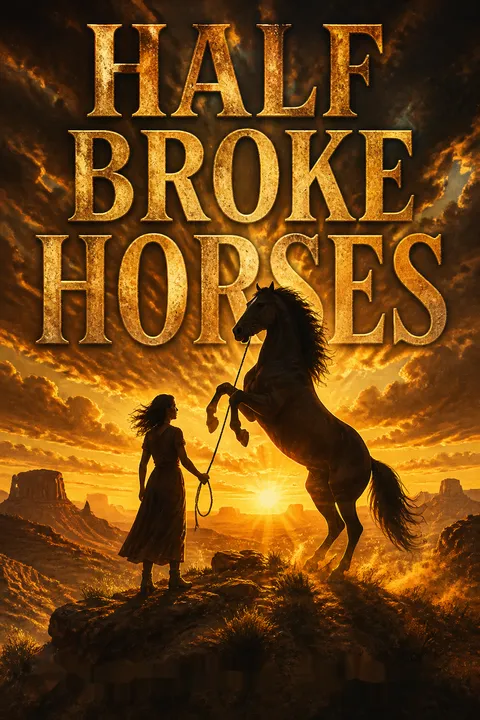
Half Broke Horses by Jeannette Walls is a fictionalized account of her grandmother Lily Casey Smith's life in the American Southwest. Most readers found it engaging and well-written, praising Walls' storytelling ability and the depiction of her tough, resourceful grandmother. Many appreciated the historical context and insights into rural life in the early 20th century. Some felt the second half was stronger than the first, and a few questioned the accuracy of some details. Overall, it was generally well-received, though not as universally praised as Walls' memoir The Glass Castle.
People Also Read









FAQ
What is Half Broke Horses about?
- A life of resilience: Half Broke Horses chronicles the extraordinary life of Lily Casey Smith, a woman who embodies resilience and self-reliance as she navigates the challenges of the early 20th century American West.
- From ranch to city: The narrative follows Lily from her childhood on a Texas ranch to her adventures as a teacher, a wife, and a mother, showcasing her adaptability and determination in various settings.
- A journey of self-discovery: The story is not just a biography but a journey of self-discovery, as Lily confronts societal expectations, personal betrayals, and the harsh realities of life, always striving to define her own path.
Why should I read Half Broke Horses?
- Inspiring female lead: Lily Casey Smith is an unforgettable character, a woman who defies conventions and embodies strength, intelligence, and a fierce independence, making her a truly inspiring figure.
- Vivid historical setting: The book offers a rich and immersive portrayal of the American West, from the rugged landscapes to the challenges of ranch life, providing a unique glimpse into a bygone era.
- Themes of resilience and grit: Half Broke Horses explores universal themes of resilience, self-reliance, and the importance of family, making it a compelling and thought-provoking read for anyone facing life's challenges.
What is the background of Half Broke Horses?
- Early 20th-century America: The story is set against the backdrop of the early 20th century, a time of significant social and economic change in America, including the Great Depression and the rise of industrialization.
- The American West: The narrative is deeply rooted in the culture and landscape of the American West, particularly Texas, New Mexico, and Arizona, highlighting the challenges and opportunities of ranch life.
- Cultural and social shifts: The book explores the changing roles of women, the impact of modernization, and the clash between traditional values and new ideas, providing a rich historical context for Lily's journey.
What are the most memorable quotes in Half Broke Horses?
- "You can because you have to.": This quote, spoken by Lily to her siblings during the flash flood, encapsulates her unwavering determination and her belief in the power of inner strength to overcome adversity.
- "Never blame the horse.": This recurring phrase, taught to Lily by her father, reflects a philosophy of understanding and empathy, emphasizing the importance of looking beyond surface appearances to find deeper meaning.
- "When God closes a window, he opens a door. But it's up to you to find it.": This quote, shared by Mother Albertina, highlights the theme of resilience and the importance of taking initiative to create one's own opportunities in the face of setbacks.
What writing style, narrative choices, and literary techniques does Jeannette Walls use?
- First-person narrative: Walls employs a first-person narrative, allowing readers to experience the world through Lily's distinctive voice, which is both strong and authentic, creating a sense of intimacy and immediacy.
- Vivid and descriptive language: The author uses vivid and descriptive language to bring the landscapes and characters to life, immersing the reader in the sights, sounds, and smells of the American West.
- Conversational tone: The narrative has a conversational tone, as if Lily is telling her story directly to the reader, which makes the book engaging and accessible, while also highlighting her down-to-earth personality.
Hidden Details & Subtle Connections
What are some minor details that add significant meaning?
- The pearl-handled revolver: This gift from her father becomes a symbol of Lily's self-reliance and her willingness to protect herself and her family, reflecting her independent spirit and her ability to navigate a dangerous world.
- The red silk shirt: This item, which Lily wears during horse races, represents her boldness and her refusal to conform to traditional gender roles, highlighting her vibrant personality and her desire to stand out.
- The Sears, Roebuck catalog: This recurring object symbolizes the promise of modernity and progress, but also the limitations of a consumer-driven society, reflecting Lily's complex relationship with the changing world around her.
What are some subtle foreshadowing and callbacks?
- The broken bone: Lily's broken arm from a horse fall foreshadows her later resilience and her ability to overcome physical and emotional challenges, while also highlighting her father's philosophy of learning how to fall.
- The mirage of Tinnie: This early scene, where Lily sees an upside-down town in the sky, foreshadows the later disappointments and illusions she encounters in Chicago, highlighting the theme of perception versus reality.
- The recurring mention of the cottonwood tree: This image, first introduced during the flash flood, becomes a symbol of safety and resilience, and is later referenced when Lily comforts her sister, Helen, highlighting the importance of family bonds.
What are some unexpected character connections?
- Lily and Lupe: Despite their different backgrounds, Lily and Lupe share a bond of mutual respect and understanding, highlighting the importance of empathy and compassion across cultural and social divides.
- Lily and Old Man Pucket: Despite their initial conflict, Lily and Old Man Pucket develop a grudging respect for each other, highlighting the importance of understanding different perspectives and finding common ground.
- Lily and Mother Albertina: Despite their different paths, Lily and Mother Albertina share a mutual respect for education and a belief in the power of women, highlighting the importance of mentorship and guidance.
Who are the most significant supporting characters?
- Apache: This enigmatic figure, who lives with the Casey family, represents a connection to the land and a different way of life, highlighting the importance of cultural diversity and the value of non-traditional perspectives.
- Dorothy Clemens: This tenant farmer's daughter, who becomes Buster's wife, embodies strength and practicality, highlighting the importance of hard work and determination in achieving success.
- Mother Albertina: This nun, who runs the Sisters of Loretto Academy, serves as a mentor to Lily, encouraging her to pursue her education and independence, highlighting the importance of female role models and the power of education.
Psychological, Emotional, & Relational Analysis
What are some unspoken motivations of the characters?
- Adam Casey's need for respect: Despite his physical limitations, Adam's actions are driven by a need to be respected for his skills and knowledge, highlighting the importance of self-worth and the desire to overcome adversity.
- Daisy Mae Casey's desire for gentility: Daisy Mae's obsession with propriety and refinement stems from a desire to maintain a sense of control and order in a chaotic world, highlighting the importance of personal identity and the need for stability.
- Lily's fear of vulnerability: Lily's fierce independence and her reluctance to rely on others stem from a deep-seated fear of vulnerability, highlighting the importance of self-reliance and the need to protect oneself from emotional pain.
What psychological complexities do the characters exhibit?
- Lily's internal conflict: Lily struggles with the tension between her desire for independence and her need for connection, highlighting the complexities of human relationships and the challenges of balancing personal goals with family obligations.
- Jim's quiet strength: Jim's stoic demeanor masks a deep well of emotion and a strong sense of responsibility, highlighting the complexities of masculinity and the importance of inner strength.
- Rosemary's artistic temperament: Rosemary's artistic nature and her rebellious spirit reflect a deep-seated desire for self-expression and a rejection of societal norms, highlighting the complexities of adolescence and the search for identity.
What are the major emotional turning points?
- Lily's betrayal by Ted: This event shatters Lily's trust and forces her to confront the harsh realities of the world, marking a turning point in her journey toward self-reliance and independence.
- Helen's suicide: This tragic event deeply affects Lily, forcing her to confront the fragility of life and the importance of resilience, while also highlighting the devastating consequences of despair and hopelessness.
- Lily's decision to leave the ranch: This decision marks a turning point in Lily's life, as she chooses to pursue her own path and define her own destiny, highlighting the importance of personal agency and the courage to embrace change.
How do relationship dynamics evolve?
- Lily and her parents: Lily's relationship with her parents evolves from one of dependence to one of mutual respect, highlighting the importance of family bonds and the challenges of navigating generational differences.
- Lily and Jim: Lily's relationship with Jim is characterized by mutual respect and a shared commitment to their goals, highlighting the importance of partnership and the power of shared values.
- Lily and Rosemary: Lily's relationship with Rosemary is marked by both love and conflict, highlighting the challenges of motherhood and the complexities of raising a child with a strong will and a different perspective.
Interpretation & Debate
Which parts of the story remain ambiguous or open-ended?
- The nature of God's will: The question of whether events are predetermined or a result of personal choices remains open-ended, prompting readers to consider the role of fate and free will in shaping one's destiny.
- The true nature of Rex Walls: Rex's character remains somewhat ambiguous, leaving readers to question whether he is a charming rogue or a genuine soulmate for Rosemary, highlighting the complexities of human relationships and the challenges of judging character.
- The long-term impact of Lily's choices: The book leaves the reader to ponder the long-term impact of Lily's choices on her children and her legacy, highlighting the complexities of motherhood and the challenges of balancing personal desires with family obligations.
What are some debatable, controversial scenes or moments in Half Broke Horses?
- Lily's treatment of her children: Lily's strict parenting style, including her use of physical discipline, may be seen as controversial, prompting readers to consider the effectiveness of different parenting approaches and the impact of cultural norms on child-rearing practices.
- Lily's decision to sell bootleg liquor: Lily's decision to sell bootleg liquor to make ends meet may be seen as morally ambiguous, prompting readers to consider the ethical implications of breaking the law for personal gain.
- Lily's shooting at Uncle Eli: Lily's decision to shoot at Uncle Eli may be seen as a controversial act of defiance, prompting readers to consider the limits of self-defense and the complexities of cultural and religious conflict.
Half Broke Horses Ending Explained: How It Ends & What It Means
- A life of purpose: The ending of Half Broke Horses emphasizes Lily's lifelong pursuit of purpose and her ability to find fulfillment in various roles, from teacher to rancher to mother, highlighting the importance of self-discovery and personal growth.
- The cyclical nature of life: The story ends with Lily's granddaughter, Jeannette, carrying on the family legacy, suggesting the cyclical nature of life and the enduring power of family bonds, while also highlighting the importance of passing down stories and values.
- Embracing the unknown: The ending leaves the reader with a sense of hope and possibility, as Lily continues to embrace the unknown and face the future with courage and determination, highlighting the importance of resilience and the power of the human spirit.


Download PDF
Download EPUB
.epub digital book format is ideal for reading ebooks on phones, tablets, and e-readers.








































