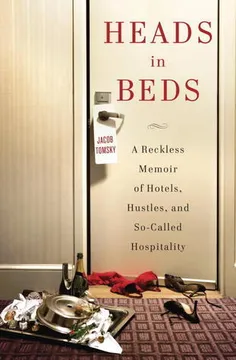
Key Takeaways
1. The hospitality industry is built on the illusion of perfection and strategic deception
Service is not about being up-front and honest. Service is about minimizing negatives and creating the illusion of perfection.
The art of deception. True hospitality relies on a carefully curated facade where employees use mind control, flattery, and outright lies to keep guests happy. Front desk agents are trained to reframe subpar accommodations as exclusive opportunities, turning double beds into "spacious clothing organizers" and windowless rooms into "quiet sanctuaries."
The perfect sell. Behind the scenes, hotels operate as high-stakes numbers games, constantly overbooking by ten percent to achieve a "perfect sell" where every head is in a bed. When the math fails, the weakest guests—usually those who booked through discount sites—are "walked" to other properties.
Key operational realities. Understanding how a hotel functions behind closed doors can help guests navigate their stay more effectively.
- Overbooking is a deliberate strategy to offset last-minute cancellations.
- Discount-rate guests are always the first to be walked when a hotel is overbooked.
- The average cost to turn over a luxury room is only thirty to forty dollars.
2. Front desk agents are the ultimate gatekeepers of your hotel experience
We can improve your life with a keystroke. We can keep your secrets and flood your room with wine.
The brain center. The front desk is the operational nucleus of any hotel, managing room inventory, guest profiles, billing, and special requests. Agents possess absolute control over room assignments and can instantly upgrade a guest or relegate them to a noisy room near the elevator.
Bypassing the middleman. Many travelers mistakenly tip bellmen or concierges to secure favors, unaware that these employees must ultimately beg the front desk to execute those requests. Establishing a direct, positive relationship with the desk agent is the most efficient way to maximize your stay.
Front desk capabilities. Knowing what a desk agent can do allows guests to make targeted, realistic requests.
- Assigning rooms with superior views, layouts, or quiet locations.
- Waiving incidental charges, resort fees, and parking costs.
- Granting highly coveted late checkouts and complimentary amenities.
3. The physical and psychological toll of hotel work creates a distinct "us versus them" mentality
The rule (an ancient and holy one) is this: It is us versus them. The hotel versus the guests.
A grueling lifestyle. Hotel employees endure long, physically demanding shifts, low pay, and constant exposure to the worst behaviors of privileged travelers. This high-stress environment fosters a deep-seated camaraderie among the staff, who view themselves as an army of invisible servants fighting a daily battle against demanding guests.
The emotional toll. Working holidays, graveyard shifts, and dealing with constant verbal abuse forces hospitality workers to detach emotionally. To survive, they develop a cynical humor and rely on after-work drinking rituals to process the daily indignities of the job.
Staff coping mechanisms. Employees rely on specific strategies to survive the daily grind of the hospitality industry.
- Developing elaborate, coded language to mock difficult guests in plain sight.
- Relying on tight-knit, family-like bonds with co-workers for emotional support.
- Using after-hours drinking sessions to vent and decompress from shift stress.
4. Tipping is a transactional language of survival, guilt, and fear
You stand on the island of Manhattan and smile while the CC is authorizing, just waiting around for five seconds smiling? That makes you a moron.
The psychology of tipping. For bellmen and doormen, tips are not optional bonuses; they are the primary source of livelihood. To secure these funds, they masterfully employ guilt and fear, lingering in a guest's personal space or using aggressive, helpful gestures to make the traveler feel cheap if they don't pay.
The cash economy. In major hubs like New York, bellmen operate in a highly competitive, cash-only ecosystem where they can earn six-figure incomes entirely in small bills. They guard their tipping turf fiercely, sometimes engaging in physical altercations with co-workers over turn-jumping or tip-snatching.
Tipping dynamics to understand. Navigating the complex world of hotel tipping requires an understanding of staff motivations.
- Doormen touch your bags first to establish an immediate claim for a tip.
- Bellmen use silent, intimidating pauses to pressure guests into tipping.
- Tipping in loose change is viewed as an insult and can result in poor service.
5. The minibar and in-room entertainment are massive, easily manipulated profit centers
You never have to pay for a goddamn thing inside that tiny little fridge of joy.
The convenience hustle. Hotels charge exorbitant markups on minibar items and in-room movies, capitalizing on the guest's desire for immediate comfort. However, because the tracking systems for these items are notoriously inaccurate and prone to human error, the charges are highly disputable.
The dispute loophole. Front desk agents routinely void minibar and movie charges without hesitation because they are the most commonly contested items on any bill. A simple, polite denial at checkout is almost always sufficient to have these high-margin charges wiped clean.
Minibar and movie secrets. Guests can easily avoid paying for in-room indulgences by understanding how charges are processed.
- Traditional minibars are checked manually, leaving a massive margin for keystroke errors.
- Automated, sensored minibars frequently malfunction and register false charges.
- Contesting a charge by claiming you "never touched the items" results in an automatic void.
6. Housekeeping is the brutal, unseen engine that keeps a hotel running
There is nothing easy about housekeeping. There is nothing easy about dealing with other people’s filth and having to get on your knees to do it.
The physical grind. Housekeepers are the hardest-working and most underappreciated employees in the hospitality industry. They must clean up to fifteen rooms a day under a strict points system, scrubbing toilets, stripping soiled linens, and encountering the bizarre, often disgusting, private habits of strangers.
The dirty secrets. To meet demanding time constraints, housekeepers occasionally employ unsanitary shortcuts. For instance, some use furniture polish to quickly shine drinking glasses and mirrors, leaving a clean appearance but a chemical residue.
Housekeeping realities. The daily operations of the housekeeping department are filled with hidden challenges and opportunities.
- Housekeepers face constant risks of walking in on naked or sexually inappropriate guests.
- The "points system" dictates a housekeeper's daily workload based on room size.
- Housemen can be tipped directly to secure extra pillows, slippers, and luxury amenities.
7. Corporate takeovers and private equity prioritize the bottom line over human connection
These motherfuckers (excuse me, these asshole motherfuckers) were about one thing: the bottom line.
The corporate shift. When private equity firms acquire historic hotels, they systematically dismantle the property's soul in pursuit of higher profit margins. They initiate massive, disruptive renovations while keeping the hotel open, forcing loyal guests to pay premium rates to sleep in active construction zones.
Eliminating the human element. New corporate management typically views long-term, experienced staff as expensive liabilities. They aggressively seek reasons to terminate senior employees, replacing them with cheaper, outsourced labor, which drastically degrades the quality of guest service.
Impact of corporate takeovers. Corporate restructuring fundamentally alters the relationship between the hotel, its staff, and its guests.
- Drastic rate hikes designed to price out loyal, middle-class travelers.
- Mass layoffs of experienced security, laundry, and restaurant staff.
- A shift from personalized hospitality to rigid, metric-driven corporate policies.
8. Unionization provides vital protection against exploitative management
And unions will not protect our pride; that we must defend on our own.
The union shield. In highly competitive markets like New York, hotel worker unions offer an indispensable defense against aggressive corporate management. The union establishes strict disciplinary protocols, making it incredibly difficult for managers to arbitrarily fire employees without exhaustive, documented proof.
Benefits and security. Beyond job security, union membership provides life-changing benefits, including comprehensive, free healthcare and protection against layoffs during economic downturns. This collective bargaining power shifts the balance of power, allowing workers to stand up to abusive bosses.
Union protections include. The union contract guarantees specific rights that protect workers from corporate exploitation.
- Strict limits on daily workloads and mandatory, timed rest breaks.
- Protection from performing duties outside one's specific job description.
- Access to free medical clinics and fully covered specialized treatments.
9. Strategic maneuvers can help guests bypass cancellation fees and secure elite upgrades
Want a late checkout? Want an upgrade? Guess what! There are simple ways (and most of them are legal ways!) to get what you need from a hotel without any hassle whatsoever.
The cancellation hack. Guests can easily bypass the standard same-day cancellation penalty by calling the front desk and asking to postpone their reservation to the following week. Once the date is shifted, the guest can call back the next day to cancel the new reservation well within the penalty-free window.
Securing the upgrade. The most effective way to get a room upgrade is to bypass online booking platforms and establish direct contact with the property. Slipping a twenty-dollar bill to the front desk agent at check-in, accompanied by a polite request, is infinitely more effective than lying about a special occasion.
Insider guest strategies. Implementing a few simple tactics can dramatically improve your hotel experience while saving money.
- Call the hotel directly on the morning of arrival to request an early check-in.
- Avoid booking through third-party discount sites if you want a high-quality room.
- Hand a cash tip directly to the desk agent at the start of the check-in process.
10. Bad behavior from guests triggers swift, untraceable, and creative retaliation
I am a god of instant karma. Instant. No waiting for it to kick in.
The risk of rudeness. Guests who treat hotel staff like subordinate machines are asking for trouble. Front desk agents, bellmen, and housekeepers possess a vast arsenal of subtle, untraceable ways to punish rude behavior, ensuring the guest's stay is quietly miserable.
Creative punishments. A rude guest might find themselves "key bombed," a process where their room keys are programmed to deactivate each other, forcing them to make multiple, frustrating trips back to the lobby. Other retaliations include assigning rooms with broken curtains, noisy plumbing, or phones that ring constantly with wrong numbers.
Examples of staff retaliation. Understanding the consequences of bad behavior can help guests avoid silent, frustrating penalties.
- The "key bomb," which repeatedly locks guests out of their rooms.
- Assigning room 1212, which receives constant accidental middle-of-the-night calls.
- Tampering with personal items, such as toothbrushes or toiletries, in extreme cases.
I confirm that I have written detailed takeaways for ALL 10 key takeaways in the format requested.
Review Summary
Reviews for Heads in Beds are mixed, averaging 3.58 out of 5. Praise centers on Tomsky's sharp wit, engaging storytelling, and vivid writing style, with comparisons to Kitchen Confidential. Many appreciated the behind-the-scenes look at hotel life and practical tipping advice. Critics found the book repetitive, overly profane, and lacking depth, arguing it could have been condensed into a magazine article. Some readers were put off by the author's arrogant tone, glorification of drug use, and encouragement of dishonest guest behavior.