
Plot Summary
Ashes and Aftermath
Calista's world is upended when her Denver townhouse burns to the ground, leaving her with nothing but guilt and a gnawing sense of injustice. The fire is both literal and symbolic, consuming her past and forcing her to confront the traumas she's tried to bury. As she kneels in the mud, comforted by her best friend Genevieve, Calista's numbness is more telling than tears. The loss is not just material; it's the culmination of years of pain, secrets, and the consequences of choices made by others. The fire's aftermath sets her on a path toward isolation, self-reckoning, and the desperate search for a place to start over, even as the weight of her history threatens to crush her.
Freedom's Bitter Return
After fifteen years in prison, Ronan steps into the Colorado sunlight, but freedom feels more like exile than liberation. Haunted by the violence and betrayals that landed him behind bars, he's met by his estranged brother Eamon, whose offer of a remote cabin is laced with guilt and unfinished business. Ronan's sense of safety is warped; the outside world is a harsher prison, and family ties are frayed by old wounds. His return is not a homecoming but a reckoning with the ghosts of his past, the scars of abuse, and the knowledge that he is fundamentally changed—perhaps irreparably. The world expects him to move on, but Ronan is still shackled by memory and rage.
Seeking Sanctuary
Calista, displaced and adrift, negotiates with her mother for a temporary stay at the family's secluded cabin, Sanderson Pine. The arrangement is fraught with unspoken tensions—her mother's concern, her own need for independence, and the shadow of her stepfather Eamon's ownership. The cabin, nestled by a private lake, promises solitude and a chance to rebuild, but it's also a repository of family history and unresolved grief. As Calista settles in, she's determined to fix what's broken—both in the house and herself—yet the isolation amplifies her anxieties and the sense that she's never truly safe from the past.
Collision at Sanderson Pine
Calista's first night at the cabin is shattered by the unexpected presence of Ronan, fresh from prison and equally in need of sanctuary. Their confrontation is electric—fear, attraction, and suspicion swirl as boundaries are tested. Ronan's physicality and volatility unsettle Calista, but beneath his menace is a vulnerability she recognizes. Forced to share the space, their uneasy truce is built on necessity, not trust. The cabin becomes a crucible, intensifying their secrets and desires. Both are fugitives from their own histories, and their proximity is as dangerous as it is intoxicating.
Strangers in the Night
The forced cohabitation at Sanderson Pine breeds tension and fascination. Calista is drawn to Ronan's danger, craving the violence that both terrifies and excites her. Ronan, meanwhile, is haunted by his inability to tolerate touch, his trauma manifesting in rigid boundaries and explosive reactions. Their interactions oscillate between hostility and a twisted intimacy—Calista's masochism meeting Ronan's need for control. Each night is a test of will and restraint, as they circle each other, both aware that something volatile is building between them, threatening to ignite.
Dangerous Arrangements
As the days pass, Calista and Ronan negotiate the terms of their uneasy alliance. Ronan demands proof of her willingness to stay, forcing her to beg on camera—a degrading act that paradoxically gives Calista a sense of agency. Their dynamic is fraught with power plays, mutual manipulation, and the slow erosion of personal boundaries. Ronan's refusal to be touched is both a shield and a challenge, while Calista's willingness to submit is a way to reclaim control over her own narrative. The cabin becomes a stage for their psychological games, each pushing the other toward revelation and surrender.
Tension and Temptation
The sexual tension between Calista and Ronan becomes impossible to ignore. Their encounters are charged with risk—physical, emotional, and moral. Calista's attraction to Ronan's violence is matched by his fascination with her willingness to endure pain. Their relationship is a dance of dominance and submission, each testing the other's limits. Yet, beneath the surface, both are desperate for connection and terrified of vulnerability. The threat of outside danger—stalkers, past enemies, and the ever-present specter of family—heightens their need for each other, even as it threatens to tear them apart.
Haunted by Violence
Both Calista and Ronan are haunted by memories of abuse, betrayal, and loss. Flashbacks reveal the depth of their trauma—Calista's violation at the hands of her mother's associates, Ronan's childhood abuse and abandonment. These scars shape their present, informing their desires, fears, and the ways they hurt and heal each other. Violence is both a wound and a balm, a way to feel alive and a reminder of everything they've survived. Their attempts at intimacy are fraught with the risk of retraumatization, but also the possibility of redemption.
Running from the Past
When threats from Calista's past resurface, she is forced to confront the reality that she cannot outrun her history. Stalked by those who once controlled her mother, blackmailed with secrets she cannot bear to reveal, Calista's instinct is to run—sometimes literally, fleeing into the woods, sometimes emotionally, retreating into silence. Ronan, too, is pursued by old enemies and the weight of his own violence. Their relationship is tested by these external dangers, as well as the internal ones—the lies they tell, the truths they withhold, and the fear that love is just another trap.
Family Ties Fractured
The arrival of family—Calista's mother and stepfather, Ronan's brother—brings old wounds to the surface. Dinner devolves into confrontation, as secrets are exposed and loyalties tested. Calista's mother is revealed as both victim and perpetrator, her addiction and neglect shaping Calista's fate. Eamon's guilt over abandoning Ronan is laid bare, but forgiveness is elusive. The family's dysfunction is a microcosm of the larger cycles of harm and survival that define both protagonists' lives. In the aftermath, Calista and Ronan are left to decide whether they can build something new from the ashes of what was destroyed.
Panic and Protection
A panic attack sends Calista spiraling, and Ronan's response is both tender and commanding. He becomes her anchor, guiding her through the storm of anxiety with a mix of tough love and unexpected care. Their bond deepens in the crucible of crisis, as Calista learns to trust Ronan's protection and Ronan discovers the power of being needed. Yet, the specter of violence is never far—danger lurks outside the cabin, and the threat of betrayal hangs over every moment of peace. Their connection is forged in fire, but always at risk of being consumed by it.
Confessions and Consequences
As their relationship intensifies, Calista and Ronan are forced to confront the secrets they've kept from each other. Calista's involvement in the fire, her mother's blackmail, and the threats from the Serrano family come to light. Ronan's history of abuse, his time in prison, and the violence he's both suffered and inflicted are revealed in painful detail. These confessions are both cathartic and destructive, threatening to unravel the fragile trust they've built. The consequences of their honesty are immediate—danger escalates, alliances shift, and the possibility of a future together hangs in the balance.
The Weight of Secrets
The full extent of Calista's entanglement with the Serrano family is exposed—she was coerced into plotting Ronan's murder in exchange for her mother's safety. The revelation is devastating, shattering Ronan's trust and forcing Calista to confront the reality of her choices. The cabin, once a sanctuary, becomes a battleground as enemies close in. The weight of secrets—personal, familial, and criminal—threatens to crush them both. In the crucible of betrayal, Calista and Ronan must decide whether forgiveness is possible, and whether love can survive the truth.
Scars Beneath the Skin
Through flashbacks and confessions, the deep scars of abuse, neglect, and violence are laid bare. Ronan's childhood is revealed in harrowing detail—betrayed by family, abused by those meant to protect him, and abandoned by the system. Calista's own history of violation and survival is equally raw. These scars are not just physical, but psychological, shaping every aspect of their relationship. Healing is slow, nonlinear, and often painful, but together they begin to imagine a future not defined by their wounds, but by the strength it took to survive them.
Touch and Trust
The journey toward physical and emotional intimacy is fraught with obstacles—Ronan's aversion to touch, Calista's masochistic desires, and the ever-present threat of violence. Yet, through patience, consent, and mutual vulnerability, they begin to reclaim their bodies and their pleasure. Touch becomes an act of trust, a way to rewrite the scripts of pain and control that have governed their lives. Their lovemaking is both tender and brutal, a testament to the complexity of healing and the possibility of finding safety in each other.
The Threat Returns
The Serrano family's vendetta erupts into violence, as Calista and Ronan are targeted for retribution. Kidnapping, blackmail, and attempted murder force them into a fight for survival. Allies emerge—Ken, Amy, and the found family they've built—but the danger is relentless. The cabin is set ablaze, and Ronan is gravely wounded in the ensuing battle. Calista is forced to confront the consequences of her actions, risking everything to save the man she loves. The line between victim and perpetrator blurs, as both are pushed to their limits.
Betrayal and Blackmail
In the aftermath of violence, Calista's role in the plot against Ronan is revealed in full. The pain of betrayal is matched only by the desperation to make amends. Ronan, fighting for his life, must decide whether to forgive or condemn. Calista, wracked by guilt, is willing to sacrifice everything for his survival. Their love is tested in the crucible of truth, as they grapple with the reality that sometimes the greatest harm comes from those closest to us. Redemption is possible, but only through radical honesty and the willingness to carry each other's burdens.
The Trap Closes
As the authorities close in and the full extent of the Serrano family's crimes are exposed, Calista and Ronan are forced to make impossible choices. Calista's confession leads to her arrest for arson, while Ronan's survival hangs by a thread. The found family rallies around them, offering support and protection, but the cost of survival is high. The past cannot be erased, but together they begin to imagine a future built on truth, forgiveness, and the hard-won freedom of choosing each other, scars and all.
Blood and Fire
The cabin is reduced to ashes, but from the ruins, Calista and Ronan begin to rebuild—not just a home, but a life together. Their relationship, forged in violence and betrayal, is tempered by forgiveness and the shared determination to break the cycles of harm that shaped them. The scars remain, but they are no longer chains. Surrounded by chosen family, they create new rituals of love, safety, and belonging. The fire that once threatened to destroy them becomes the crucible in which they are remade.
Redemption and Rebuilding
In the aftermath, Calista and Ronan find redemption not in forgetting the past, but in carrying each other's burdens and building something new. Their love is imperfect, messy, and hard-won, but it is theirs. Together, they create a home filled with laughter, healing, and the promise of a better tomorrow. The weight they once carried alone is now shared, and in that sharing, they find the freedom and peace they were denied for so long. Their story is not one of easy answers, but of the courage to choose love in the face of darkness.
Analysis
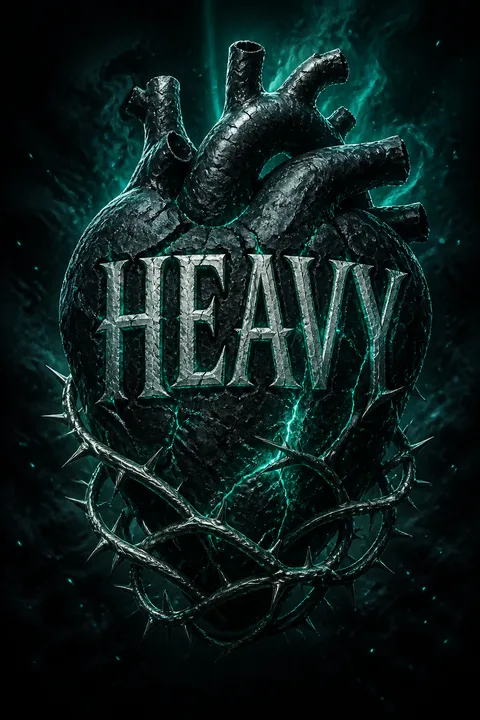
A modern gothic of trauma, survival, and radical loveHeavy is a dark, taboo romance that refuses easy answers or moral clarity. It is a story about the ways trauma shapes identity, desire, and the capacity for intimacy. Through its unflinching portrayal of abuse, violence, and the messy process of healing, the novel challenges readers to confront the realities of survival in a world that often fails its most vulnerable. The relationship between Calista and Ronan is both a site of danger and redemption—an exploration of how two broken people can find solace, pleasure, and even joy in each other, without erasing the scars that brought them together. The book's lesson is not that love fixes everything, but that true connection is forged in the willingness to carry each other's burdens, to tell the truth even when it hurts, and to choose each other, again and again, in the face of darkness. In a world where the weight of the past can feel unbearable, Heavy insists that healing is possible—not through forgetting, but through the radical act of loving what is heavy, and finding someone willing to help you carry it.
People Also Read






Characters
Calista Sanderson
Calista is a woman marked by trauma, betrayal, and resilience. The daughter of an addict, she was thrust into adult responsibilities far too young, forced to protect her mother and herself from predatory men and the consequences of addiction. Her history of sexual violence and emotional neglect shapes her desires—she craves pain as a way to reclaim control, and her masochism is both a coping mechanism and a source of shame. Calista's relationship with Ronan is fraught with danger and longing; she is drawn to his violence, yet desperate for the safety he represents. Her greatest flaw is her willingness to sacrifice herself for others, even when it leads to betrayal. Over the course of the story, Calista learns to confront her past, accept her own darkness, and fight for a future where she is more than the sum of her wounds.
Ronan Byrne
Ronan is a man forged in violence and abandonment. Abused as a child, betrayed by his family, and hardened by years in prison, he is both a survivor and a perpetrator of harm. His aversion to touch is a scar left by childhood sexual abuse, and his need for control is a shield against vulnerability. Ronan's relationship with Calista is transformative—she is the first person to see past his defenses, to touch him without causing pain. Yet, his capacity for violence is ever-present, and his struggle to trust is a constant battle. Ronan's journey is one of learning to accept love, to forgive himself and others, and to believe that he is worthy of happiness. His redemption is hard-won, achieved not by forgetting the past, but by choosing to carry it with someone who refuses to let him fall.
Eamon Byrne
Eamon is Ronan's older brother, a man burdened by the knowledge that he failed to protect his sibling from abuse and abandonment. His attempts to make amends are clumsy and often misguided, driven by guilt rather than genuine understanding. Eamon's relationship with Calista is complicated by his marriage to her mother and his role as both stepfather and bystander. He is a symbol of the ways family can both harm and heal, and his journey is one of learning to take responsibility, to listen, and to support without controlling. Eamon's arc is one of gradual redemption, as he chooses to stand by Ronan and Calista in their darkest moments.
Jasmine Byrne
Jasmine is Calista's mother, a woman whose addiction and poor choices set the stage for much of her daughter's suffering. She is both victim and perpetrator, her love for Calista warped by her own trauma and self-destruction. Jasmine's attempts at redemption are often too little, too late, and her inability to protect her child is a source of lasting damage. Yet, she is not a monster—her actions are shaped by desperation and fear, and her relationship with Calista is a testament to the complexity of forgiveness. Jasmine's presence is a reminder that healing is messy, and that love is not always enough.
Genevieve "Gene" Snowden
Gene is Calista's best friend and confidante, a source of stability and support in a world defined by chaos. Her loyalty is unwavering, but it comes at a cost—she is drawn into the web of violence and betrayal that surrounds Calista, becoming a victim of the very secrets she tries to help her friend escape. Gene's role is both grounding and tragic; she is a mirror for Calista's choices, and her suffering is a catalyst for Calista's ultimate reckoning with the consequences of her actions.
Ken Asuna
Ken is Ronan's closest friend, a man who understands the realities of violence, loyalty, and survival. Having met Ronan in prison, Ken is both a reminder of the past and a bridge to a better future. He provides practical support, emotional grounding, and a sense of belonging that Ronan has never known. Ken's family—Amy, Mia, and the boys—become a surrogate family for both Ronan and Calista, offering the unconditional acceptance that blood relatives failed to provide.
Samantha Serrano
Samantha is the architect of much of the story's violence, driven by a desire for revenge against Ronan for the death of her brother. Her manipulation, blackmail, and willingness to use others as pawns make her a formidable enemy. Yet, she is also a product of her own trauma, her actions shaped by the cycles of violence and retribution that define the world of the story. Samantha's downfall is a testament to the destructive power of vengeance and the futility of trying to erase pain by inflicting more.
Amy (Amaranta)
Amy is Ken's partner, a fierce and resourceful woman who provides both muscle and emotional support. Her loyalty to her family is unwavering, and her willingness to do whatever it takes to protect those she loves makes her a vital ally. Amy's presence is a reminder that strength comes in many forms, and that survival often depends on the people willing to fight for you.
Mia
Mia is Ken's daughter, a symbol of the possibility of breaking cycles of harm and creating a better future. Her relationship with Ronan is one of genuine affection and trust, offering him a glimpse of the family he never had. Mia's presence is a source of light in a dark world, and her resilience is a testament to the power of love and care.
The Boys (Cedric, Lux, Emilio)
The boys are Ken's adopted family, young men who have survived their own traumas and found belonging with each other. Their loyalty to Ronan and Calista is unwavering, and their presence is a reminder that family is not always defined by blood. Together, they represent the possibility of healing, acceptance, and the creation of new traditions in the aftermath of destruction.
Plot Devices
Dual Narration and Alternating Perspectives
The novel employs a dual narrative structure, alternating between Calista and Ronan's points of view. This device allows readers to inhabit the inner worlds of both protagonists, experiencing their traumas, desires, and rationalizations firsthand. The alternating perspectives create dramatic irony, as each character withholds or reveals information the other does not know, heightening tension and deepening empathy. The structure mirrors the push and pull of their relationship—two damaged souls circling each other, seeking connection but terrified of vulnerability.
Flashbacks and Nonlinear Memory
The story is punctuated by flashbacks that reveal the origins of Calista and Ronan's traumas—childhood abuse, parental neglect, betrayal, and violence. These nonlinear memories are triggered by present events, blurring the line between past and present and illustrating the inescapability of trauma. The flashbacks serve as both exposition and emotional climax, providing context for the characters' actions and deepening the reader's understanding of their pain.
Consent, Power, and Degradation
The novel explores the complexities of consent, power dynamics, and sexual degradation as both a source of pleasure and a reenactment of trauma. Scenes of forced begging, public sex, and violent intimacy are fraught with ambiguity—are they acts of agency or submission, healing or harm? The careful negotiation of boundaries, safewords, and aftercare becomes a means for the characters to reclaim control over their bodies and rewrite the scripts of abuse. The interplay of dominance and vulnerability is both erotic and therapeutic, challenging conventional notions of love and healing.
Foreshadowing and Symbolism
The recurring imagery of fire, ashes, and rebuilding serves as both literal plot device and symbolic motif. The destruction of Calista's home, the burning of the cabin, and the eventual reconstruction of their life together mirror the characters' internal journeys—destruction as a prelude to transformation, pain as the crucible of growth. The use of handprints, tattoos, and physical scars as symbols of ownership, healing, and memory reinforces the theme that the past cannot be erased, only integrated.
Found Family and Chosen Bonds
The introduction of Ken, Amy, Mia, and the boys as a surrogate family provides a counterpoint to the failures of blood relatives. These chosen bonds offer the unconditional acceptance, protection, and support that Calista and Ronan have been denied. The found family becomes a site of healing, a space where new traditions and rituals can be created, and where the weight of the past can be shared rather than borne alone.
Download PDF
Download EPUB
.epub digital book format is ideal for reading ebooks on phones, tablets, and e-readers.








































