
Plot Summary
Klickitat Street Summer Mornings
As summer drapes the Huggins home, Henry dreams of doing something new—beyond ordinary ball games and bike rides with friends. Ribsy, Henry's loyal mutt, waits eagerly for a treat at breakfast, innocently causing trouble by running through neighbors' lawns. The neighborhood's gentle ribbing of Ribsy's mischief, coupled with Henry's own restlessness, sets the stage for wanting something memorable. When Mr. Huggins offers to take Henry along for a routine car maintenance task, Henry seizes the chance, especially when fishing plans drift into conversation. This ordinary Saturday launches Henry onto his summer arc—a longing for adventure and a deep desire for recognition, especially if he could join Dad's salmon fishing trip and make Klickitat Street proud.
Ribsy's Law: Trouble Strikes
Henry's adventure starts innocently enough, but when Ribsy gets into mischief—especially stealing a policeman's lunch from a squad car—life for Henry takes a sudden, hilarious downturn. Feeling responsible for Ribsy's chaotic streak, Henry experiences anxiety and embarrassment, particularly after witnesses misinterpret Ribsy's behavior. The incident cements a new family rule through Dad: if Henry can keep Ribsy out of trouble until the big fishing trip, he'll get to go. Henry, emboldened by hope but shadowed by past calamities (dogs, lawns, stolen food, and neighborly complaints), realizes the stakes are high and simple fun often comes with unpredictable consequences. The pressure's on: can a boy and his dog behave for two whole months?
The Garbage and the Bargain
In a bid for extra allowance and to help at home, Henry takes on the daily task of taking out the garbage. What begins as a simple bargain soon morphs into a trial of perseverance and pride; garbage accumulates, stinks, and becomes a neighborhood sore point. When Ribsy attacks the garbageman—misunderstanding the can's sanctity—Henry's stress multiplies. Rumors twist Ribsy's actions into tales of a vicious, biting dog. Meanwhile, Henry's attempts to please his parents become knotted in the sticky web of grown-up negotiations and unintended consequences, making him question if the extra fifteen cents is worth the constant trouble, embarrassment, and now, literal mountains of garbage.
Defending Dog and Duty
With misunderstandings piling up, Henry must defend Ribsy's character against skeptical friends, wary neighbors, and even his own parents. He tries to rationalize the dog's growling—maybe Ribsy was just "protecting the garbage like a watchdog." In the midst of mounting rumors and relentless summer heat causing the trash to reek, Henry becomes the neighborhood's focal point for comic relief and mild exasperation. Tensions rise, especially when Ribsy proves to be gentle with young Ramona—even as everyone is convinced he's dangerous. Finally, with creative bargaining, the family pivots—switching Henry's chores to grass clipping. The underlying truth emerges: Ribsy's loyalty and love for Henry go deeper than the chaos on the surface.
Haircuts, Teeth, and Humiliation
Things only get messier—literally—when Mrs. Huggins attempts to save money by giving Henry a home haircut before school. The botched cut leaves Henry embarrassed and desperate to hide, especially from peers like Scooter, eager to tease. Meanwhile, Henry clings to his loose canine teeth, planning to show them off at school. His anxiety grows as the boys taunt him, his prized possession (his hair) reduced to a neighborhood joke. Ribsy, ever-present, is both his comfort and occasional co-conspirator. Henry's struggle to maintain dignity while facing ridicule and family blunders makes him relatable in his vulnerability.
The Tooth-Pulling Solution
Embarrassed by his hair and under pressure to produce a showstopping feat (since his teeth are now the only thing left to brag about), Henry finds himself challenged by friends to pull out both his loose teeth. Inspired by Ribsy's knack for tug-of-war, Henry brilliantly uses his dog to yank the teeth—canine teeth, fittingly—impressing his friends, quelling rivalry, and restoring pride. The adventure not only brings laughter and relief but also cleverly cements the playful bond between boy and dog. The sometimes-painful journey of growing up becomes a shared adventure, made easier with a loyal companion.
Rumors, Quarrels, and Vindication
Rumors swirl on Klickitat Street about Ribsy's supposed ferocity, and Henry must navigate the constant stress this brings. Every incident—no matter how innocent—gets exaggerated, as friends alternate between defending and teasing him. Meanwhile, minor misunderstandings become epic tales echoed around dinner tables and schoolyards, making Henry the unwitting star of neighborhood legend. He works to set the record straight, but the narrative grows larger than life. The true community dynamic emerges: both support and scrutiny intertwine, highlighting the anxieties and camaraderies of childhood.
Ramona's P.T.A. Mystery
Beezus and her irrepressible little sister, Ramona, enter Henry's life with a new brand of chaos. Ramona's innocent but unyielding logic—insisting she wants "P.T.A." (mistaking it for an edible treat)—leads to a circuitous, comical hunt for snacks she's never actually had. Ribsy's inability to resist a toppled ice cream cone further entangles Henry, as Ramona's tantrums and stubbornness draw attention and escalate minor incidents into major scenes. Henry's attempt to compensate and move on reveals both the unpredictability of young children and the lengths older kids go to keep the peace.
Schoolyard Misunderstandings
A playground episode during school pick-up turns into a community spectacle as Ribsy's pursuit of his own bone and Ramona's exaggerated distress lead watching parents to conclude the dog is dangerous. Despite Henry and Beezus's best efforts to explain, mounting fear and groupthink threaten to escalate matters. Ribsy's bark (and Ramona's dramatics) signal the way children's misunderstandings can snowball among adults, showing how quickly small moments become crises in a tightly-knit neighborhood. Henry's world is upended, his dog's reputation on the line once again.
Principal to the Rescue
Just as the situation with Ribsy and Ramona seems ready to spiral out of control, the principal, Miss Mullen, steps in. Calm, observant, and understanding, she sorts out the confusion, vouching for Ribsy's gentle nature and reputation. Her intervention diffuses the crowd and restores order, showing how authority figures can help unravel complex social tangles that children alone cannot. Moments like these reveal the value of trust, the necessity of listening, and the quiet power adults can wield to preserve childhood's integrity—and hope.
Salmon Dreams and Night Prep
With Ribsy's good behavior conditionally established and misunderstandings settled, Henry's long-awaited opportunity arrives: he's invited to accompany his father and Mr. Grumbie on the salmon fishing trip. The night before, Henry's excitement is palpable—alongside worry over Ribsy's ability to behave and the pressure not to let anyone down. Packing, anticipation, and the promise of adventure fill the air, with Henry's dreams growing larger than life—and for once, appearing within reach. This chapter brims with the hopeful tension of coming-of-age.
Fishing Trials and Close Calls
Fishing at the mouth of the Umptucca River quickly reveals the harsh reality behind the dream: bone-chilling cold, endless waiting, meager lunches, and a restless Ribsy. While the adults focus on the challenging sport, Henry drifts between boredom and bursts of hope. Disasters loom with upturned tackle boxes and mischief from Ribsy. The tranquility of nature and the unpredictability of animals combine, testing Henry's patience and his dog's behavior in unfamiliar territory. The day's slow progress and the physical challenges mirror the inner trials of youth.
Ribsy Overboard—Disaster Unleashed
Suddenly, calamity strikes: after startling and helping release a nearly-caught salmon, Ribsy leaps overboard, thrashed by panic. The river's strong current threatens to sweep him into the ocean, launching everyone—including neighboring fishermen—into frantic rescue mode. Henry's terror for his beloved dog forces him to the brink of his own safety. Relief arrives only through the intervention of strangers, who hook and save Ribsy, eliciting laughter and a new sense of community. The gravity of nearly losing his friend—combined with guilt, relief, and lingering embarrassment—weighs heavily on Henry.
Ashore and Out of Place
Shivering on shore, both Henry and Ribsy dry off in the boathouse, unwelcome and wrung out from the near-tragedy. The excitement of the trip morphs into loneliness and a sense of exclusion as adults and others (annoyed by the "wet dog" smell) subtly push him away. Henry wanders the fishing camp, hungry and alienated, full of longing to belong and make his mark. Here, the isolation that often haunts children—especially after embarrassment—cuts to the core, and Henry's resolve begins to ebb.
The Salty Adventure's Climax
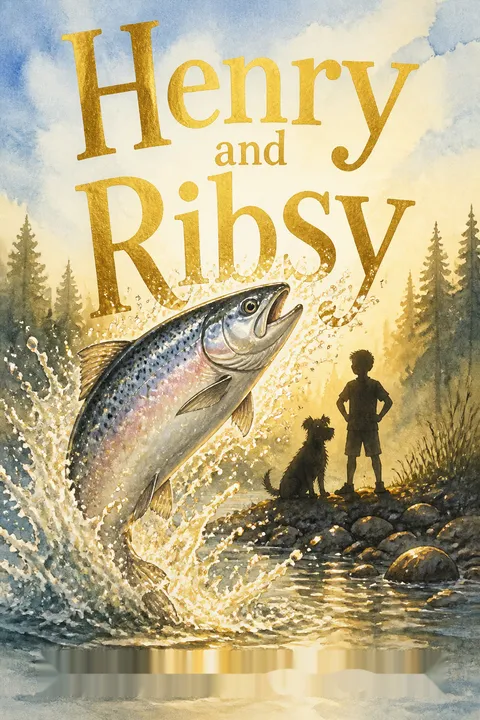
Refusing to give in to melancholy, Henry sets off along the beach with Ribsy. Amid sand, driftwood, and the sharp tang of salt air, they stumble on an astonishing sight: a massive chinook salmon struggling upstream in a shallow creek. Realizing an opportunity lost to adults, Henry acts decisively. Battling the fish with bare hands and grim determination, he wages an epic struggle—soaked, freezing, his hands numb, nearly giving up. Ribsy's barking finally draws adult help, and, together, man and boy subdue the fish. Against all odds, Henry seizes the moment he's been waiting for.
Unlikely Hero of the Day
Sodden and shaking, Henry hauls the enormous salmon back to the boathouse. The assembled fishermen are stunned by his remarkable catch, and stories of his barefoot battle quickly circulate. Weighing in at twenty-nine pounds, the fish dwarfs those landed by even the adults. Photos are snapped. Henry, at last, stands in local legend not as a nuisance or trouble-magnet, but as a true hero—thanks, in part, to Ribsy's involvement—his adventure made singular by creativity, courage, and lucky timing. The tide of neighborhood opinion turns in Henry's favor.
Triumph, Friendship, and Homecoming
Henry returns home triumphant, his journey of mishaps and mortification culminating in pride and validation—especially when Scooter (his frequent rival) must witness Henry's massive salmon side-by-side with his meager catch. Ribsy basks in newfound respect, and Henry relishes the rare blend of accomplishment, acceptance, and camaraderie—his ordinary troubles dwarfed by the extraordinary outcome. Through a string of minor tragedies, comic embarrassments, and resilient hope, Henry's summer closes with satisfaction, laughter, and the warmth of community, proving that real adventure is found in persistence, ingenuity, and the messy bond between a boy and his dog.
Analysis
"Henry and Ribsy" stands as a classic, emotionally poignant portrait of mid-century American boyhood, driven by comedy, embarrassment, anxiety, and resilience. Beverly Cleary's genius lies in translating the "small" events of everyday life—losing teeth, mowing lawns, seeking parental approval, the trials of dog ownership—into moments of high drama and universal relatability. The book explores how childhood is a continual negotiation: between independence and dependence, pride and humility, conformity and uniqueness. Ribsy's chaos is both a burden and a blessing; through their shared misadventures, Henry learns empathy, creativity, and the wisdom of perseverance. The social web of Klickitat Street—full of adults' misplaced assumptions and children's noisy alliances—reminds contemporary readers that community shapes all our growing pains. Ultimately, Cleary argues that triumph isn't found in achieving perfection or escaping trouble, but in facing up to life's messes, laughing with friends, and holding tight to those we love—fur-covered, troublesome, or otherwise.
Review Summary
Most reviewers praise Henry and Ribsy as a charming, relatable classic that resonates with both children and adults. Highlights include the humorous fishing trip finale, Ramona's mischievous appearances, and everyday adventures like bad haircuts and garbage troubles. Parents frequently note how eagerly their children engaged with the story, often requesting more books in the series. Some adult readers find it pleasantly nostalgic but simple, while younger audiences consistently rate it highly. Despite being written in the 1950s, readers agree the themes remain surprisingly relevant across generations.
Characters
Henry Huggins
Henry is every bit the imaginative, earnest, and sometimes impulsive child at the story's center. Yearning for something grander than Klickitat Street's routines, he vacillates between daydreams and harsh reality checks, enduring teasing, responsibility, and humiliation along the way. His psyche is shaped by a striving for recognition and validation—a need to be viewed as grown-up, accomplished, and "good" by family, peers, and neighbors. Henry's relationship with Ribsy—equal parts companion, confidant, and source of mischief—serves as both a reflection of childhood's chaos and a buffer against its lonely moments. Over the story, Henry matures in empathy, confidence, and the art of creative problem-solving, without losing his essential sense of wonder.
Ribsy
Ribsy is more than a dog—he is Henry's best friend, a source of both catastrophe and comfort. His instincts frequently lead him astray (from stealing lunches to guarding garbage), but never from malice—only from a pure, eager dog's heart. Ribsy is both misunderstood and fiercely loyal, demonstrating gentle restraint with children who irritate him and enthusiastic devotion to Henry's moods and plans. Psychologically, Ribsy embodies the uncontrolled, unpredictable energy of childhood, but also its steadfastness. His presence and antics drive not only the plot's key conflicts, but also many moments of humor, insight, and ultimate triumph.
Mr. Huggins
Henry's father operates first as an authority figure—setting boundaries, proposing bargains, and forcing Henry to earn privileges. At heart, though, he is sympathetic and understanding, urging Henry to grow through responsibility while still quietly supporting him. Mr. Huggins represents the adult world's practical logic and sometimes inscrutable standards; he knows when to encourage, when to challenge, and when to forgive. His presence nudges Henry toward maturity, while his occasional humor and flexibility reveal a fundamentally loving core.
Mrs. Huggins
With a warm but sometimes overzealous approach to thriftiness and order, Mrs. Huggins is both the orchestrator of Henry's more humbling moments (notably the infamous haircut) and the family's emotional anchor. Her attempts to manage home economics often conflict with Henry's dignity, but signal the ordinary, unavoidable tensions between children's desires and adult plans. Underneath, her deep care for Henry is unwavering, manifested in quietly perceptive support and a willingness—eventually—to let him chart his own path.
Beezus Quimby
Beezus, a sensible and loyal neighbor, balances youthful fun with gentle restraint—especially when it comes to managing her imaginative little sister, Ramona. As one of Henry's few consistent female friends, she diffuses conflict, offers pragmatic advice, and stands out for her capacity to see both sides of a dispute. Psychologically, Beezus is already a "grown up" among children, providing empathy and a source of calm amidst other kids' stormier emotions.
Ramona Quimby
Ramona, younger sister to Beezus, is irrepressibly inventive and unpredictable—her logic and stubbornness thwarting every attempt to contain her. She recasts the adult world in childish terms (confusing "P.T.A." for something edible), oblivious to societal expectations and rules. Ramona's presence in the book challenges every character around her to reinterpret what mischief means, and she embodies childhood's raw will, curiosity, and emotional honesty.
Scooter McCarthy
Scooter, two years Henry's senior, is both a source of competition and an occasional friend. He's often the first to tease, challenge, or one-up Henry, acting as a foil that brings out Henry's vulnerabilities and pushes him to assert himself or devise new solutions. Scooter's boastfulness is matched only by his desire for attention and approval. Beneath bluster lies insecurity and the secret need to fit in. By story's end, rivalry with Henry becomes a vehicle for both boys' growth.
Robert
Robert is Henry's age and frequent companion; less assertive than Scooter, he offers quiet support and sometimes a sympathetic ear when trouble arises. His own troubles and self-doubts mirror Henry's, and he serves to validate Henry's experience as "normal"—exhibiting both the insecurities and small triumphs that define childhood friendships.
Mr. Grumbie
Often on the receiving end of Ribsy's antics, Mr. Grumbie is the archetypal stern adult who embodies the neighborhood's skepticism toward both Ribsy and Henry. He is a foil that heightens tension and emphasizes the broader social costs of misbehavior. However, he's capable of appreciating fairness, and by story's climax—especially after the fishing trip—his role as skeptical onlooker softens, allowing for reconciliation and shared victory.
Miss Mullen
The school principal, Miss Mullen, exhibits patience, wisdom, and quiet power. She intervenes at the schoolyard's explosive moment, calmly gathering facts and reassuring both adults and children. By stepping in when adult rumors threaten Ribsy's fate, she upholds fairness and compassion, highlighting the importance of trusted authority for resolving the anxieties and conflicts of youth.
Plot Devices
The Prankster Dog as Narrative Engine
The narrative pivots on the cause-and-effect chain of Ribsy's surprising (often comic) actions, which serve both as sources of humor and as catalysts for deeper questions around responsibility, community acceptance, and growing up. Each escapade—whether garbage disputes, stolen food, or public embarrassment—sets off a ripple of consequences, challenging Henry to respond, adapt, and ultimately grow. Ribsy's unpredictability also acts as a force of chaos, disrupting stasis and prompting the story's turning points, while also providing an emotional through-line of loyalty and partnership.
The Bargain Motif
Henry's bargain with his father—keep Ribsy out of trouble and earn a place on the fishing trip—structures the narrative arc, serving as both a long-term goal and a recurring source of tension. This transactional premise frames nearly every challenge and forces Henry into repeated tests of self-restraint, creativity, and self-advocacy. The bargain device simultaneously grounds the story in childhood logic and dramatizes the universal urge to prove oneself worthy.
Neighborhood Gossip and Exaggeration
Word-of-mouth—stories retold, misunderstood, or amplified by neighbors—turns small slip-ups (a barking dog, an incident with a garbageman) into legendary calamities. This device amplifies Henry's anxieties and shapes the social environment as one where reputation is fragile and perception can outweigh reality. Children are constantly negotiating these social currents, learning early on how narratives get away from their creators and demand correction or resistance.
Symbolic Rites of Passage
Events that might seem minor—haircuts, losing teeth, taking on more chores—are loaded with significance, marking thresholds in Henry's personal development. Each becomes a mini-drama, a symbolic test or embarrassment, whose resolution grants both relief and a sense of progress. These plot devices seamlessly blend humor with the pathos of growing up, illustrating how ordinary moments are charged with meaning in a child's life.
Foreshadowing and Narrative Payoff
From Henry's daydreams of fishing glory to small incidents of Ribsy's "watchdog" tendencies, the narrative deliberately plants seeds for future payoff. Each humiliation or setback subtly foreshadows a reversal—the final victory being all the more sweet because of the accumulation of small defeats. This design mirrors the capricious yet restorative rhythms of childhood, where persistence is almost always eventually rewarded.
Henry Huggins Series Series
Download PDF
Download EPUB
.epub digital book format is ideal for reading ebooks on phones, tablets, and e-readers.








































