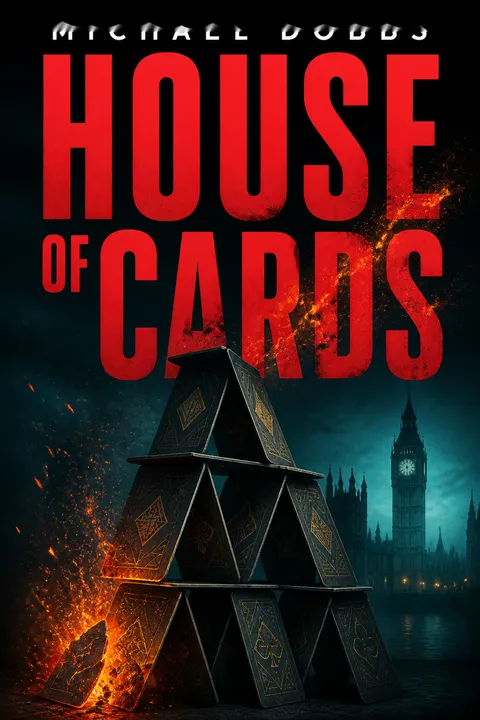

Plot Summary
Election Night Shadows
The novel opens on the eve of a British general election, where the ruling party faces a weary electorate and internal doubts. Mattie Storin, a young, ambitious political reporter, senses unease beneath the surface optimism. As results trickle in, the government's majority is slashed, and Prime Minister Henry Collingridge's victory feels hollow. The mood is anxious, not triumphant, as party insiders and journalists alike sense that the real battle is just beginning. In the shadows, Francis Urquhart, the calculating Chief Whip, quietly takes stock, already plotting his next move. The night's casualties—both literal and metaphorical—set the tone for a story where ambition, fear, and betrayal will soon eclipse any fleeting celebration.
The Chief Whip's Ledger
Francis Urquhart, the Chief Whip, is introduced as a master manipulator who wields influence not through charisma or public office, but through his encyclopedic knowledge of his colleagues' weaknesses. He keeps a black book of secrets—affairs, addictions, financial misdeeds—using them to enforce party discipline and secure loyalty. Urquhart's sense of being overlooked for promotion festers into resentment. When Collingridge, the Prime Minister, rebuffs his request for advancement in the post-election reshuffle, Urquhart's disappointment curdles into a cold, methodical resolve. He decides to collect on the debts owed to him, setting in motion a plan that will exploit the vulnerabilities of those around him.
Collingridge's Hollow Victory
Henry Collingridge, though re-elected, is battered by the campaign and haunted by his brother Charlie's public drunkenness and debts. The party's reduced majority leaves him vulnerable to both the opposition and internal dissent. Collingridge's leadership style—amiable but indecisive—fails to inspire confidence. As rumors swirl and the press grows restless, Collingridge's inability to control his own family becomes a metaphor for his waning grip on the party. The seeds of his downfall are sown not by his enemies, but by his own weaknesses and the loyalty he extends to those who may not deserve it.
The Moth and the Flame
The novel's recurring motif—a moth drawn fatally to a flame—mirrors the fate of those who seek power without understanding its dangers. Roger O'Neill, the party's publicity director, is introduced as a man with charm and energy but also a growing dependency on drugs and the approval of his superiors. O'Neill's willingness to do whatever is asked of him, combined with his personal vulnerabilities, makes him an ideal pawn for Urquhart. Meanwhile, Mattie Storin's journalistic instincts lead her to sense that the real story lies beneath the surface, in the hidden machinations of those who pull the strings.
Promises and Sacrifices
As the party reels from its electoral setback, Urquhart begins to exploit the weaknesses of his colleagues. He manipulates O'Neill by threatening exposure of his drug use, binding him into a web of favors and blackmail. Urquhart's wife, Mortima, encourages his ambitions, urging him to seize the moment. The narrative explores the idea that in politics, loyalty is transactional—sacrifices are demanded, but rarely from oneself. Urquhart's philosophy is clear: others must pay the price for his advancement, and he will not hesitate to use fear as his primary tool.
The Reshuffle Denied
Expecting a reward for his years of service, Urquhart is instead told by Collingridge that he is too valuable as Chief Whip to be moved. The Prime Minister's decision is framed as a compliment, but Urquhart sees it as a betrayal. This moment crystallizes Urquhart's resolve to bring Collingridge down. He begins to orchestrate a campaign of leaks, rumors, and subtle sabotage, using his network of informants and his mastery of party procedure. The stage is set for a ruthless campaign in which no one—friend or foe—is safe from Urquhart's machinations.
Mattie's Instincts Awaken
Mattie Storin, frustrated by her editor's reluctance to challenge the government line, begins to investigate the party's internal dynamics. She receives a leaked opinion poll showing Collingridge's plummeting popularity, but her attempts to publish the story are stymied by editorial caution and political pressure. Mattie's persistence, intelligence, and willingness to bend the rules set her apart from her colleagues. Her growing relationship with Urquhart—part professional, part personal—draws her deeper into the web of intrigue, even as she struggles to maintain her independence and objectivity.
O'Neill's Bargain
Roger O'Neill, desperate to maintain his position and lifestyle, is ensnared by Urquhart's threats. Urquhart uses O'Neill to leak damaging information to the press, manipulate party finances, and create false trails that will later be used to destroy Collingridge. O'Neill's drug addiction and emotional instability make him increasingly unreliable, but also more pliable. As the pressure mounts, O'Neill's sense of self-preservation wars with his fear of Urquhart, leading him to make choices that will have fatal consequences.
The Leaks Begin
A series of damaging leaks—about government policy reversals, internal polling, and personal scandals—begin to appear in the press. Each is carefully timed and targeted to undermine Collingridge's authority and sow discord within the party. The leaks are traced back to party headquarters, but the true source remains hidden. Collingridge, already weakened by his brother's troubles and the party's poor showing, finds himself besieged on all sides. The press, led by Mattie, senses blood in the water, and the narrative momentum accelerates toward crisis.
The Collingridge Scandal
The final blow comes when Collingridge's brother Charlie is implicated in insider trading, using confidential government information to profit from a pharmaceutical company's stock. The evidence—bank accounts, false addresses, and party records—has been meticulously fabricated by Urquhart and his agents. Collingridge's attempts to defend his brother only make matters worse, and the press seizes on the story as proof of corruption at the highest level. Isolated and exhausted, Collingridge resigns, convinced that he has been betrayed by those closest to him.
The Party Turns
With Collingridge gone, the party is thrown into a bitter leadership contest. The main contenders—Michael Samuel, Patrick Woolton, Harold Earle, and Urquhart himself—jockey for position, each seeking to exploit the chaos for personal gain. The press, now freed from the constraints of loyalty, turns on the party with a vengeance, exposing old scandals and manufacturing new ones. Urquhart, maintaining a façade of neutrality, quietly undermines his rivals through leaks, blackmail, and manipulation of the party machinery.
The Fall of a Prime Minister
Collingridge's departure is marked by a mixture of relief and regret among his colleagues. The leadership race becomes a battleground of egos and vendettas, with Urquhart emerging as the dark horse candidate. Mattie, now sidelined by her editor, continues to investigate the true cause of Collingridge's downfall. She uncovers evidence of forged documents and manipulated computer files, but her attempts to publish the story are blocked by the newspaper's proprietor, who has his own agenda in the leadership race.
The Leadership Race
As the leadership contest intensifies, Urquhart systematically destroys his opponents. Woolton is blackmailed with a secretly recorded tape of an affair; Earle is exposed for a past indiscretion; Samuel is smeared with allegations of youthful radicalism. Each scandal is orchestrated by Urquhart, who uses O'Neill and other intermediaries to do his dirty work. The party, desperate for stability, begins to rally around Urquhart as the only candidate untainted by scandal—unaware that he is the architect of their misfortunes.
The Web Tightens
Mattie, refusing to be silenced, pieces together the connections between the leaks, the fabricated evidence, and the deaths that have followed in Urquhart's wake. She realizes that O'Neill, now dead from a staged overdose, was the key to the conspiracy. Her investigation leads her to suspect Urquhart, but she lacks the final proof. Torn between her feelings for him and her commitment to the truth, Mattie confronts Urquhart in a final, fatal encounter.
The Final Ballot
With his rivals eliminated or discredited, Urquhart wins the final ballot and is poised to become Prime Minister. The party and the press hail him as a savior, unaware of the ruthlessness with which he has achieved his victory. In private, Urquhart reflects on the cost of his ambition—the lives destroyed, the friends betrayed, the innocence lost. Mattie, having confronted him with the truth, is silenced in a tragic and ambiguous climax that leaves the reader questioning the price of power.
The Price of Power
As Urquhart ascends to the highest office, he is haunted by the ghosts of those he has destroyed. The public narrative is one of renewal and hope, but beneath the surface lies a legacy of manipulation, betrayal, and murder. The novel ends with Urquhart addressing the reader directly, justifying his actions as necessary for the greater good, even as he acknowledges the darkness at the heart of his triumph. The house of cards stands—for now—but the cost has been paid in full.
Analysis
A chilling anatomy of political ambition and moral decayHouse of Cards endures as a masterful exploration of the corrosive effects of power, secrecy, and ambition within the highest echelons of government. Michael Dobbs crafts a narrative where the pursuit of office is not a noble calling but a ruthless game, played by individuals for whom loyalty is a tool and truth is malleable. Through the character of Francis Urquhart, the novel exposes the dark underbelly of politics: the manipulation of colleagues, the exploitation of personal weaknesses, and the willingness to destroy lives for personal gain. The story's structure—built on secrets, leaks, and betrayals—mirrors the precariousness of the titular house of cards, where every action threatens collapse. In a modern context, the novel's themes resonate with ongoing concerns about media manipulation, the fragility of democratic institutions, and the ethical compromises demanded by public life. House of Cards is both a cautionary tale and a darkly compelling portrait of the human cost of ambition, reminding readers that the true price of power is often paid in silence, suffering, and the loss of innocence.
Review Summary
House of Cards is a political thriller that captivates readers with its portrayal of power, ambition, and corruption in British politics. Many reviewers praise the complex character of Francis Urquhart and the intricate plot, drawing comparisons to the TV adaptations. While some find the political details challenging, others appreciate the insider's perspective on Westminster. The book's exploration of morality and manipulation in politics resonates with readers, although opinions vary on pacing and character development. Overall, it's considered a compelling read for those interested in political machinations.
People Also Read
Characters
Francis Urquhart
Francis Urquhart is the Chief Whip of the ruling party, a man whose power lies not in public acclaim but in his intimate knowledge of his colleagues' secrets and weaknesses. He is disciplined, calculating, and utterly ruthless, motivated by a sense of being overlooked and denied his due. Urquhart's psychological profile is marked by a cold detachment and a willingness to use fear, blackmail, and even murder to achieve his ends. His relationships are transactional—he uses O'Neill, manipulates Mattie, and even involves his wife Mortima as a confidante and co-conspirator. Over the course of the novel, Urquhart transforms from a loyal party servant into a Machiavellian architect of chaos, ultimately seizing the premiership at the cost of his soul.
Mattie Storin
Mattie Storin is a young, ambitious political reporter determined to break through the male-dominated world of Westminster journalism. Intelligent, persistent, and principled, she is driven by a desire to uncover the truth, even when it puts her at odds with her editors and colleagues. Mattie's psychological complexity is deepened by her growing attraction to Urquhart, which clouds her judgment and ultimately leads to her downfall. Her relationships—with her editor, with O'Neill, and with Urquhart—are marked by a tension between professional integrity and personal vulnerability. Mattie's arc is tragic: her pursuit of the truth brings her close to exposing the conspiracy, but her trust in Urquhart proves fatal.
Henry Collingridge
Henry Collingridge is the incumbent Prime Minister, a man whose affability and decency are undermined by indecision and a lack of political ruthlessness. He is devoted to his family, particularly his troubled brother Charlie, but this loyalty becomes a liability. Collingridge's inability to control his party or anticipate the machinations of his enemies leaves him exposed. Psychologically, he is marked by self-doubt and a tendency to retreat from confrontation. His downfall is engineered by those he trusts, and his resignation is both a personal tragedy and a commentary on the vulnerability of good men in a corrupt system.
Roger O'Neill
Roger O'Neill is the party's publicity director, a man of wit and energy whose personal weaknesses—drug addiction, insecurity, and a need for approval—make him an ideal tool for Urquhart. O'Neill's psychological profile is one of self-destruction: he is aware of his flaws but unable to escape them, oscillating between bravado and despair. His relationship with his secretary Penny is marked by unfulfilled longing and mutual dependence. O'Neill's arc is that of a pawn who becomes both perpetrator and victim, ultimately destroyed by the very secrets he helped to create.
Mortima Urquhart
Mortima is Francis Urquhart's wife, a woman of intelligence, discretion, and ambition in her own right. She serves as Urquhart's confidante and moral sounding board, encouraging his pursuit of power while cautioning him against excess. Their relationship is one of mutual respect and shared purpose, though Mortima's emotional distance and independent interests (such as her love of opera) suggest a marriage built on partnership rather than passion. Psychologically, Mortima is pragmatic and unflappable, willing to accept the moral compromises required by her husband's ambitions.
Charlie Collingridge
Charlie is Henry Collingridge's older brother, a man whose life has been marked by failure, addiction, and dependence on his more successful sibling. His public drunkenness and financial troubles become a liability for the Prime Minister, and he is ultimately framed for insider trading as part of Urquhart's plot. Charlie's psychological profile is one of self-loathing and resignation; he is aware of his shortcomings but unable to overcome them. His relationship with Henry is both loving and destructive, and his fate serves as a catalyst for the novel's central crisis.
Michael Samuel
Michael Samuel is the youthful Environment Secretary, a rising star whose intelligence and liberal views make him both a favorite of the party's reformist wing and a target for smear campaigns. Samuel's psychological makeup is marked by ambition tempered by conscience; he is principled but politically naïve, underestimating the ruthlessness of his rivals. His relationship with party chairman Teddy Williams is one of mentorship, but this alliance becomes a liability as the leadership race turns vicious. Samuel's downfall is engineered through the exposure of youthful indiscretions and manipulated leaks.
Patrick Woolton
Patrick Woolton is a senior cabinet minister whose northern roots and direct style make him a formidable contender in the leadership race. He is ambitious, combative, and unafraid to speak his mind, but his personal life—particularly an affair with Penny Guy—becomes a weapon used against him. Woolton's psychological profile is that of a man who thrives on conflict but is ultimately undone by his inability to control his appetites. His withdrawal from the race, prompted by blackmail, is both a personal humiliation and a testament to the power of secrets in political life.
Penny Guy
Penny is Roger O'Neill's secretary and confidante, a woman of competence, loyalty, and unrequited love. She is drawn into the web of intrigue through her relationship with O'Neill and her brief affair with Woolton. Penny's psychological profile is marked by resilience and emotional vulnerability; she is willing to sacrifice her own dignity for those she cares about, but is ultimately powerless to prevent their destruction. Her grief at O'Neill's death and her realization of the extent of the conspiracy add a note of pathos to the novel's climax.
Teddy Williams
Teddy Williams is the party chairman, an elder statesman whose experience and influence make him both a kingmaker and a target. He serves as a mentor to Michael Samuel and a rival to Urquhart, but is ultimately outmaneuvered by the younger man's ruthlessness. Williams's psychological profile is that of a survivor—cautious, pragmatic, and skilled at navigating the party's internal politics. His downfall is engineered through leaks and rumors, and he becomes a convenient scapegoat for the party's failures.
Plot Devices
The Black Book of Secrets
Central to Urquhart's power is his black book—a literal and metaphorical record of the secrets, scandals, and weaknesses of his fellow politicians. This device allows him to manipulate, blackmail, and control those around him, enforcing discipline and eliminating rivals. The black book symbolizes the hidden economy of favors and threats that underpins political life, and its contents drive much of the novel's action.
Leaks and Fabricated Evidence
The novel's central plot device is the strategic use of leaks—both true and fabricated—to undermine opponents and shape public perception. Urquhart orchestrates a campaign of sabotage, planting stories in the press, forging documents, and manipulating computer files to create scandals where none exist. This device highlights the fragility of reputation and the ease with which truth can be distorted for political ends.
The Unreliable Narrator
Throughout the novel, Urquhart breaks the fourth wall, addressing the reader directly with asides, justifications, and confessions. This device creates a sense of intimacy and complicity, drawing the reader into his worldview and challenging them to question their own moral boundaries. The unreliable narrator blurs the line between truth and fiction, making the reader an accomplice to Urquhart's crimes.
The Moth Motif
The recurring image of a moth drawn to a flame serves as a metaphor for the self-destructive nature of political ambition. Characters like O'Neill, Mattie, and even Collingridge are drawn to power, only to be consumed by it. The motif underscores the novel's central theme: that the pursuit of power is inherently dangerous, and those who seek it are often destroyed by their own desires.
Foreshadowing and Irony
The narrative is laced with foreshadowing—references to past scandals, warnings about the dangers of ambition, and ironic asides that hint at the characters' fates. The use of irony is particularly sharp in Urquhart's reflections on loyalty, sacrifice, and the nature of power, inviting the reader to question the cost of victory and the meaning of success.
Download PDF
Download EPUB
.epub digital book format is ideal for reading ebooks on phones, tablets, and e-readers.








































