Plot Summary
Forecasting the Unpredictable Heart
Margot Wayward, a thirty-six-year-old meteorologist, is obsessed with predicting the future—both in weather and in love. After a devastating breakup and betrayal by her fiancé and best friend, she launches herself into a data-driven experiment: twenty first dates, meticulously catalogued, to prove she's giving romance a fair shot. But the more she tries to control her fate, the more she's battered by the chaos of real life. Her friends, Eve and Jules, are her anchors, but even their support can't shield her from the loneliness and self-doubt that swirl around her. Margot's attempts to forecast her own happiness only reveal how unpredictable the human heart can be.
Data, Dates, and Disasters
Margot's foray into online dating is a parade of disappointments: liars, cheapskates, and men who can't see past her job or her body. Each date is a data point, each failure a new entry in her notepad of red flags. Her scientific approach to love—lists, criteria, and controlled environments—only seems to make things worse. The more she tries to protect herself, the more isolated she feels. Her friends urge her to open up, but Margot clings to her experiment, convinced that if she just collects enough evidence, she'll find the right person—or at least prove that love isn't worth the risk.
Friendship Roots and Fault Lines
Margot's friendships with Eve and Jules are her lifeline, but even these bonds are tested. Eve's struggle with infertility and IVF brings the trio closer, yet also exposes their vulnerabilities. Jules, ever the skeptic, pushes Margot to confront her avoidance and bitterness. The absence of Lily, their former fourth, is a constant ache—a reminder of betrayal and the fragility of trust. As Margot navigates her friends' crises and her own, she realizes that even the strongest roots can be shaken by storms, and that healing requires more than just weathering the pain.
Red Flags and Rain Checks
Margot's sixteenth date, Henry the fireman, seems promising—until his "traditional" views and hidden anger flare up, revealing yet another red flag. The pattern is relentless: every time Margot feels a spark, it's quickly doused by disappointment or her own fear. The experiment, meant to prove she's open to love, becomes a shield against vulnerability. Yet, in the aftermath of another failed date, Margot notices the restaurant waiter—quiet, observant, and unexpectedly kind. The smallest details—a scribbled note on his hand, a shared smile—hint at a different kind of connection, one she almost misses in her quest for certainty.
The Waiter with the Future
When Margot agrees to a date with Henry the waiter, something shifts. Their conversation is honest, awkward, and unexpectedly intimate. But as they touch, Margot is struck by vivid, inexplicable visions—moments from a possible future with Henry and his daughter, Winter. These glimpses are disorienting and frightening, blurring the line between reality and possibility. Margot's scientific mind rebels against the idea of fate, but the visions persist, showing her a life she never dared imagine. As she grapples with these flashes of the future, Margot must decide whether to trust what she sees—or run from it.
Visions, Fears, and Family
The visions become more frequent and detailed, showing Margot not just happiness but also heartbreak, conflict, and loss. Her parents, now living in Australia, pressure her to "move on" and find stability, while her beloved grandfather quietly struggles with his own decline. Margot's attempts to control her life—through work, dating, and even her Instagram meteorology page—begin to unravel. The future feels both tantalizingly close and terrifyingly out of reach. Margot's fear of repeating past mistakes wars with her longing for connection, leaving her paralyzed between hope and dread.
The Experiment Unravels
As Margot's experiment collapses, so does her sense of self. She burns her belongings in a midnight bonfire, desperate to start anew. Her career teeters on the brink after a social media scandal, and her friendships are strained by secrets and unspoken pain. The visions, once a source of wonder, now feel like a curse—showing her futures she may never reach. Margot's carefully constructed defenses crumble, forcing her to confront the raw grief and anger she's been avoiding. In the ashes of her old life, she must decide what—if anything—is worth salvaging.
Ghosts of Love and Loss
Margot's unresolved grief over Aaron and Lily resurfaces as she reconnects with both, uncovering old wounds and new truths. Her friends, too, are haunted by their own losses—Eve's longing for a child, Jules's hidden loyalties. The visions show Margot not just joy but also inevitable endings: breakups, estrangement, even death. The knowledge that happiness is fleeting becomes both a burden and a gift, teaching her that love is precious precisely because it cannot be guaranteed. Margot learns that to truly live, she must risk heartbreak, again and again.
The Future Arrives Uninvited
Margot's glimpses of the future become more vivid: a wedding with Henry, a blended family with Winter, a career as a beloved children's TV presenter. She sees herself as a stepmother, a wife, a friend—and, eventually, as someone who loses it all. The visions are not just promises but warnings: every joy is shadowed by the knowledge of its end. Margot's grandfather reveals he shares her gift, teaching her that seeing the future is not about control but about connection. The choice is hers: embrace the storm, or retreat into safety.
Breaking, Burning, Beginning
Faced with the inevitability of loss, Margot makes a choice: to love Henry fully, knowing their story will end. She confesses her visions, and together they decide to live in the present, trusting that the future—whatever it brings—will be theirs to face. Margot's relationships with her friends and family deepen as she lets go of old resentments and embraces forgiveness. The experiment is over; the real work of living begins. Margot learns that happiness is not a destination but a series of moments, each one worth the risk of pain.
Apologies and New Alignments
Margot reconciles with Jules and Lily, acknowledging the complexity of love and betrayal. Eve's long-awaited pregnancy brings hope and healing to their circle. Margot's career flourishes, and her home fills with new life—friends, family, and even a mischievous cat. The visions, once a source of anxiety, become a reminder to cherish what she has while she has it. Margot's willingness to apologize, forgive, and start again transforms her relationships and herself. She learns that the future is not something to be feared, but something to be created, one choice at a time.
The Truth About Lily
Margot's long-awaited conversation with Lily is raw and honest. Both women confront their guilt, pain, and longing for forgiveness. Margot realizes that hating Lily only prolongs her own suffering, and that compassion is the only way forward. Their tentative reconciliation is mirrored in the healing of their wider friend group, as secrets are aired and loyalties realigned. Margot's acceptance of Lily's humanity—and her own—marks a turning point, allowing her to move forward without the weight of the past dragging her down.
The Gift of Seeing
With her grandfather's guidance, Margot learns to see her gift not as a curse but as a connection—to others, to herself, to the flow of time. She understands that glimpsing the future is not about avoiding pain, but about appreciating the beauty of each moment. The visions teach her to let go of control, to embrace uncertainty, and to trust in the resilience of love. Margot's story becomes one of acceptance: of impermanence, of imperfection, and of the messy, glorious unpredictability of life.
Choosing the Storm
Knowing that her relationship with Henry will one day end, Margot chooses to love him anyway. Together, they decide to live fully, to take the world by storm, and to let the future unfold as it will. Margot's willingness to risk heartbreak is an act of courage, a declaration that life is worth living even when it cannot be controlled. The storm is not something to be feared, but something to be danced in—an opportunity to feel, to connect, and to grow.
The End and the Beginning
Years later, Margot looks back on a life filled with love, laughter, and loss. Her marriage to Henry has ended, but the roots they planted together continue to nourish her. Her friends, family, and stepdaughter remain her anchors, even as time carries them all forward. Margot's story is not one of happily ever after, but of choosing happiness again and again, in the face of uncertainty. The gift of seeing the future has taught her that every ending is also a beginning, and that the only way to truly live is to embrace the storm.
Fifteen Years Later: Full Circle
In her fifties, Margot encounters her younger self in a final vision, realizing that the future she feared was never the point. The love she shared with Henry, the friendships she rebuilt, the family she created—all were worth the risk, the pain, and the loss. Margot's story ends not with certainty, but with hope: the knowledge that life is a series of storms and rainbows, each one unique, each one hers alone. She lets go of the need to know how it ends, and instead chooses to live, fully and bravely, in the present.
Analysis
A modern meditation on fate, forgiveness, and the courage to loveI Know How This Ends is a luminous exploration of what it means to live with uncertainty. Holly Smale uses the device of visions—not as a cheap trick, but as a profound metaphor for anxiety, hope, and the human longing for control. Margot's journey is both deeply personal and universally resonant: we all want to know how our story ends, but the real challenge is to live fully in the chapters we're given. The novel interrogates the limits of prediction—scientific, emotional, and existential—while celebrating the messy, unpredictable beauty of love, friendship, and family. Its greatest lesson is that happiness is not found in certainty, but in the willingness to risk heartbreak for the sake of connection. By embracing the storm, Margot discovers that every ending is also a beginning, and that the only way to truly live is to let go of the need to know how it ends. The book is a call to courage: to forgive, to love, and to choose joy, even when the forecast is uncertain.
Review Summary
I Know How This Ends receives overwhelmingly positive reviews, averaging 4.11/5 stars. Readers praise Holly Smale's emotionally resonant writing, the relatable and complex protagonist Margot, and the thoughtful magical realism premise exploring fate versus free will. Standout elements include Margot's relationship with her grandfather, the charming romance with single dad Henry, and witty, sharp dialogue. Some critics note repetitiveness and predictability, while a minority found the characters unconvincing. Comparisons to Smale's Cassandra in Reverse are frequent, with many readers considering this her best work yet.
Characters
Margot Wayward
Margot is a meteorologist who tries to apply scientific rigor to her emotional life, using data and lists to shield herself from pain. Scarred by betrayal and loss, she is both fiercely independent and desperately lonely. Her relationships—with friends, family, and lovers—are marked by a push-pull between vulnerability and self-protection. Margot's journey is one of learning to let go of control, to forgive herself and others, and to risk love even when she knows it will end. Her visions of the future force her to confront the limits of prediction and the necessity of living in the moment. Through heartbreak, friendship, and self-discovery, Margot becomes someone who can weather any storm—not because she can see what's coming, but because she learns to embrace uncertainty.
Henry Armstrong
Henry is a waiter with hidden depths: a widower, a single father, and a man who has put his dreams on hold for the sake of his daughter. His warmth and humor mask a deep well of grief and resilience. Henry's relationship with Margot is transformative for both; he challenges her defenses with patience and honesty, and is himself changed by her willingness to see him fully. As their connection deepens, Henry becomes both a partner and a mirror, reflecting Margot's fears and hopes back to her. His own journey—from loss to love, from waiting tables to pursuing his dream of becoming a surgeon—parallels Margot's, and together they learn that love is not about certainty, but about choosing each other, again and again.
Winter Armstrong
Winter is Henry's daughter, a child marked by early loss but also by the fierce devotion of her father. Her relationship with Margot evolves from suspicion to deep affection, and she becomes both a source of joy and a symbol of the future Margot never expected. Winter's presence forces Margot to confront her own fears about motherhood, family, and belonging. As she grows, Winter becomes a bridge between past and future, her love and forgiveness anchoring Margot through the storms of life. Her eventual understanding of Margot's visions suggests a legacy of empathy and connection that outlasts even the end of Margot and Henry's marriage.
Eve Williams
Eve is Margot's oldest friend, a primary school teacher whose optimism and kindness are both her strength and her vulnerability. Her struggle with infertility is a central thread, exposing the limits of hope and the pain of longing. Eve's unwavering support for Margot is matched by her own need for reassurance and belonging. Her eventual pregnancy and motherhood are hard-won victories, testaments to her resilience and the power of friendship. Eve's journey is a reminder that happiness is often found in unexpected places, and that family is something we build together.
Jules Achiuwa
Jules is the truth-teller of the group, unafraid to challenge Margot's avoidance or call out her friends' bullshit. Her sarcasm masks a deep loyalty and a capacity for forgiveness that is tested by the group's fractures. Jules's own struggles—with loyalty, with illness, with the demands of adulthood—are often hidden beneath her bravado. Her eventual reconciliation with Margot and Lily is a testament to the enduring power of friendship, even when it is battered by betrayal and loss. Jules's presence is a grounding force, reminding Margot that love is not always easy, but it is always worth fighting for.
Lily Howard
Lily is the friend who betrays Margot, but she is also a victim of her own longing for love and validation. Her affair with Aaron is both a mistake and a symptom of deeper wounds. Lily's journey is one of guilt, self-discovery, and the slow, painful process of seeking forgiveness. Her reconciliation with Margot is tentative but genuine, a recognition that love and friendship are complicated, messy, and worth salvaging. Lily's story is a reminder that even the most painful betrayals can be healed, if we are willing to see each other's humanity.
Grandad (Margot's Grandfather)
Margot's grandfather is her anchor, a source of unconditional love and wisdom. His own experience with visions of the future provides Margot with both comfort and guidance, teaching her that the gift of seeing is not about control, but about connection. His decline and eventual death are deeply felt, but his legacy endures in the lessons he imparts: to cherish the present, to forgive, and to love without reservation. Grandad's presence is a reminder that the most important things in life cannot be predicted or controlled—they can only be lived.
Polly
Polly is Margot's neighbor and eventual friend, a woman navigating her own marital crisis with grace and determination. Her practical support helps Margot rebuild her career, and her own journey toward independence mirrors Margot's struggle to claim her own happiness. Polly's friendship is a testament to the power of new connections and the importance of mutual support among women. Her story is one of quiet bravery, showing that starting over is always possible.
Aaron
Aaron is Margot's ex-fiancé, the catalyst for much of her pain and growth. His betrayal with Lily is both shocking and, in retrospect, inevitable—a reflection of his inability to truly see or value Margot. Aaron's charm masks a deep insecurity and a pattern of using others to fill his own emptiness. His presence in Margot's life is a lesson in letting go, in recognizing that some storms are best left behind.
Cheddar (Cheds)
Cheddar, the orange cat Margot adopts, is more than a pet—he is a symbol of the unexpected joys and responsibilities that come with embracing the unknown. His presence in Margot's life marks a turning point, a willingness to care for something (and someone) beyond herself. Cheddar's antics and affection provide comic relief and comfort, reminding Margot that love often arrives in the most surprising forms.
Plot Devices
Visions of the Future
The central device is Margot's sudden, uncontrollable visions of her own future—moments of joy, pain, and everything in between. These visions are not linear or complete; they are fragments, out of order, that force Margot to confront the limits of prediction and the illusion of control. The visions serve as both foreshadowing and symbolism and misdirection, challenging Margot (and the reader) to question what is inevitable and what can be changed. They are a metaphor for anxiety, hope, and the human desire to know what comes next, even when that knowledge is both a blessing and a curse.
Narrative Structure
The novel's structure mirrors Margot's experience: looping between past, present, and future, with chapters that echo and refract each other. The use of visions allows for recursive storytelling, where events are seen multiple times from different perspectives, deepening the emotional impact. The narrative is punctuated by lists, notepads, and data points—Margot's attempts to impose order on chaos. The structure reinforces the theme that life is not a straight line, but a series of storms and rainbows, each one unique and unrepeatable.
Foreshadowing and Symbolism
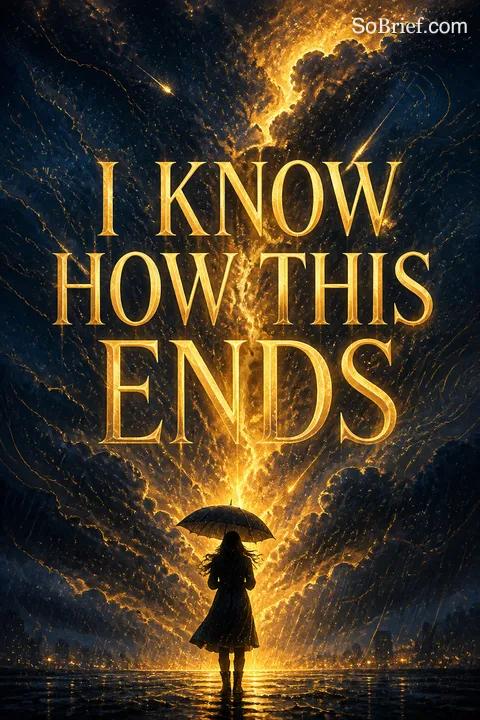
Weather is both Margot's profession and the novel's central metaphor: storms for conflict, rainbows for hope, clouds for uncertainty. The recurring motif of "taking the world by storm" encapsulates Margot's journey from avoidance to engagement. Objects—like the blue marble, the calendar, and Cheddar the cat—serve as touchstones, linking past, present, and future. The visions themselves are a form of foreshadowing, but their ambiguity ensures that the future remains open, shaped by Margot's choices as much as by fate.
Interpersonal Dynamics
The novel's emotional core lies in the relationships between Margot and her friends, family, and lovers. Betrayal, reconciliation, and the slow work of rebuilding trust are explored with nuance and empathy. The interplay between Margot's desire for control and her need for connection drives the plot, as does her eventual realization that love is not about certainty, but about showing up—again and again—for the people who matter.








































