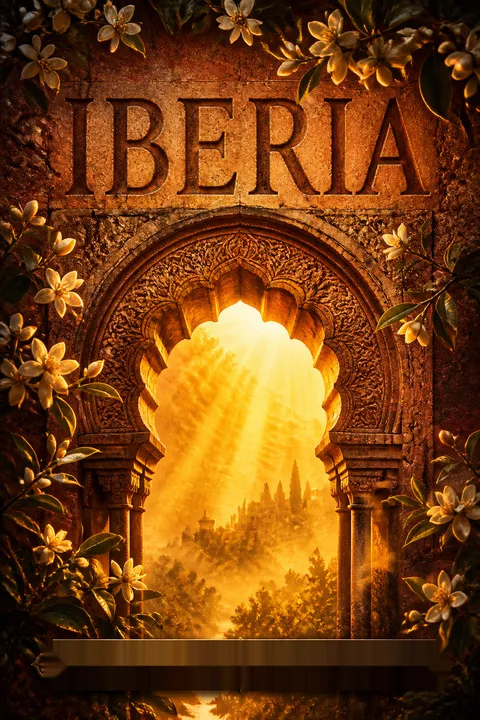

Key Takeaways
1. Spain is a land of profound, irreconcilable contradictions
I have long believed that any man interested in either the mystic or the romantic aspects of life must sooner or later define his attitude concerning Spain.
A land of dualities. Spain physically and philosophically juts out from the rest of Europe, isolating itself while simultaneously intruding into the global imagination. Michener's first encounter with Spain—smelling the orange blossoms of Burriana while watching medieval oxen strain in the sea—perfectly encapsulates this juxtaposition of harsh labor and sensory beauty.
The central mystery. The Spanish psychology is defined by a baffling combination of outgoing, earthy joy and deeply withdrawn, mystical introspection. This duality is evident in every aspect of Spanish life, from the solemnity of their religious processions to the wild, chaotic energy of their local festivals.
Unresolved historical questions. Throughout its history, Spain has repeatedly made decisions that seem counterintuitive to its own progress and survival.
- Why did a nation so rich in New World gold become the poorest in Europe?
- Why did a country once celebrated for cultural tolerance suddenly expel its most industrious citizens?
- How does a people with a passionate love for personal freedom repeatedly embrace dictatorial rule?
2. Extremadura's harsh landscape forged the ruthless spirit of the Conquistadors
The New World was won for Spain not by gentlemen from Toledo and Sevilla but by a group of uneducated village louts...
The brutal cradle. Extremadura is a vast, empty, and unforgiving region of Spain, characterized by brassy heat, rocky soil, and ancient oak forests. This severe environment produced a breed of tough, weather-beaten men who had no future in their impoverished homeland and were forced to seek fortune elsewhere.
Conquest and neglect. Men like Cortes, Pizarro, and Balboa left Extremaduran towns like Medellin, Trujillo, and Jerez de los Caballeros to conquer vast empires in the Americas. However, the immense wealth they won did not enrich their homeland; instead, it bypassed Spain to fund foreign wars, leaving Extremadura as barren and neglected as before.
The modern exodus. The legacy of poverty in Extremadura persists into the modern era, forcing its young men to leave once again.
- Many migrate to industrial centers like Barcelona or seek labor in Germany.
- The shuttered houses of villages like Medellin stand as silent monuments to this ongoing drain of human energy.
- The region remains a land of stark beauty, guarded by the stern presence of the Civil Guard.
3. Toledo represents the spiritual fortress and tragic history of Spain
Toledo, a bejeweled museum set within walls, is a glorious monument and the spiritual capital of Spain...
The rock fortress. Perched on a rugged cliff and encircled by the River Tagus, Toledo has served as the defensive heart of Spain through successive Roman, Visigothic, Moorish, and Christian occupations. Its cathedral is a masterpiece of Gothic art, housing the complex legacies of Cardinals Mendoza and Cisneros, who helped usher Spain into its golden age.
The tragic expulsions. Toledo was once a model of coexistence where Christians, Muslims, and Jews lived and worked together, but this tolerance ended abruptly in 1492. The expulsion of the Jews and the subsequent persecution of the Moors, directed by the Inquisition, transformed the city into a homogeneous but intellectually defensive stronghold.
The siege of the Alcazar. In modern times, Toledo became the focus of the world during the Spanish Civil War, when Colonel Moscardo defended the Alcazar against a seventy-day Republican siege.
- The fortress was reduced to rubble, but the defenders refused to surrender.
- The famous telephone call in which Moscardo told his son to die bravely steeled the garrison's resolve.
- Today, the rebuilt Alcazar stands as a controversial monument to the bitter divisions of the Civil War.
4. Cordoba reflects the intellectual heights of Spain's coexisting golden ages
It was in Cordoba that had lived four of the Spaniards who were most important to me...
The intellectual capital. Cordoba was once the most brilliant metropolis in Europe, serving as the capital of the Moorish caliphate and a center of unparalleled learning. It produced four of the most influential minds in history, representing four distinct traditions: the Roman stoic Seneca, the Christian bishop Hosius, the Jewish philosopher Maimonides, and the Muslim scholar Averroes.
The Great Mosque. The Mezquita of Cordoba, with its forest of eight hundred and fifty marble columns and double-tiered arches, is a breathtaking monument to Islamic architecture. However, the insertion of a massive Christian cathedral in its center during the reign of Carlos V stands as a permanent symbol of Spain's cultural conflicts.
The romantic legacy. The narrow, whitewashed streets of the old Jewish quarter, with their flower-filled patios, still evoke the poetic charm of Cordoba's past.
- The city served as the setting for the classic romantic tragedy Don Alvaro, which inspired Verdi's opera.
- The local cuisine, featuring the famous rabo de toro (bull's tail), reflects the robust, earthy character of Andalucia.
- Yet, the commercialization of flamenco in the city's tourist bars represents a sad cheapening of this ancient art.
5. Las Marismas and the Mesta illustrate the ecological and agricultural tragedy of Spain
The Mesta existed as a mobile feudal kingdom, ravaging the best land and inhibiting its proper utilization.
The wild wetlands. Las Marismas, the vast swampland of the Guadalquivir River, is one of the world's premier wildlife sanctuaries, hosting millions of migratory birds each year. In this watery wilderness, herds of fighting bulls graze alongside snowy-white egrets, and imperial eagles hunt over the sand dunes of the Coto Donana.
The agricultural blight. For centuries, Spanish agriculture was crippled by the Mesta, a powerful cooperative of sheep owners who enjoyed royal privileges to graze their herds across the country. This system prevented farmers from fencing their fields and led to the systematic deforestation and depletion of Spain's most fertile lands.
The threat of progress. Today, the unique ecosystem of Las Marismas faces a new threat from modern development and drainage projects.
- The government's desire to reclaim the swamps for rice and wheat fields threatens to destroy the bird sanctuaries.
- The Coto Donana, now a protected national park, remains a fragile refuge for endangered species like the Spanish imperial eagle.
- The conflict between economic progress and ecological preservation remains unresolved.
6. Sevilla's spring festivals embody the dualism of intense piety and pagan revelry
In Sevilla each spring one finds combined within the span of a few weeks six major diversions...
The sacred and the profane. Sevilla's Holy Week (Semana Santa) and the subsequent Feria are the twin peaks of the city's cultural life, representing the extreme poles of the Spanish character. During Holy Week, the city is hushed as massive, jewel-encrusted floats bearing the Virgin Mary and Christ are carried through the streets by penitents.
The joy of the Feria. As soon as Easter ends, the city erupts into the wild, week-long celebration of the Feria, where the streets are lined with colorful canvas casetas. Here, the wealthy families of Sevilla host private parties, and the air is filled with the sound of castanets, flamenco music, and the soft, rhythmic clapping of hands.
The social hierarchy. The festivals of Sevilla are strictly controlled by the city's traditional aristocracy, who use the events to display their wealth and social standing.
- The daily parade of horsemen and carriages in the park is a stunning exhibition of Spanish gentry.
- The exclusive Aero Club remains the focus of the most conservative elements of Spanish society.
- For the visitor, the festivals offer an unforgettable glimpse into the heart of Andalusian culture.
7. The Prado Museum is a royal family heirloom reflecting the Spanish soul
The Prado began as a private collection formed for the most part by the people of one continuous family...
The royal collection. Unlike other great European museums, which were often enriched by war booty or wholesale purchases, the Prado in Madrid is the personal collection of Spain's monarchs. It reflects the specific tastes of the Habsburg and Borbon rulers, who commissioned works from the finest artists of their day, particularly Titian, Rubens, and Velazquez.
The Spanish masters. The museum is the world's premier repository of Spanish painting, housing the masterpieces of El Greco, Velazquez, and Goya. Velazquez's Las Meninas and Goya's The Third of May are not merely great paintings; they are profound statements on the nature of Spanish royalty and the tragedies of Spanish history.
The dark and the light. The collection is marked by a striking contrast between the luminous, classical works of the Italian school and the dark, tormented visions of the Spanish masters.
- Goya's "black paintings," done in his later years of deafness and disillusionment, are masterpieces of psychological terror.
- The enigmatic Dama de Elche, a prehistoric stone bust, remains one of the museum's most compelling mysteries.
- For the traveler, the Prado is an indispensable guide to the complexities of the Spanish soul.
8. The Spanish character is defined by pundonor, viva yo, and a resistance to change
No nation in the world is so difficult to govern as Spain. No people are so fundamentally anarchistic as the Spanish.
The code of honor. The Spanish character is governed by pundonor (point of honor), an intense, often preposterous sense of personal dignity that requires immediate action against any perceived insult. This code is shared by all classes, from the grandee of Spain to the poorest peasant, and accounts for the formal, courtly manners of the people.
The spirit of egoism. Coexisting with pundonor is the spirit of viva yo (hurrah for me, and to hell with everyone else), a fierce, anarchistic individualism that makes the Spaniard resistant to central authority. This trait manifests itself in daily life, from the reckless driving on the highways to the sudden, violent uprisings that have marked Spanish history.
The resistance to modernity. For centuries, Spain has resisted the intellectual and political movements of the rest of Europe, preferring to remain a closed, traditional society.
- The recent "revolution of the Sueca" (the influx of foreign tourists) has begun to challenge these ancient codes.
- Young Spaniards are increasingly demanding the freedoms enjoyed by their European neighbors.
- Yet, the traditional values of family, church, and personal honor remain the bedrock of Spanish life.
9. Salamanca and its university represent the rise and tragic intellectual decline of Spain
This university is the treasury from which I furnish justice and government to my people of Spain...
The light of Europe. Salamanca's Plaza Mayor is the most harmonious in Spain, a beautiful, amber-colored square that serves as the heart of the city's life. Nearby stands the ancient university, which in the sixteenth century was one of the world's foremost centers of learning, attracting thousands of students from all parts of Europe.
The intellectual retreat. However, the university's greatness was short-lived; under the pressure of the Inquisition and the crown's demand for religious conformity, the school began a long, tragic decline. It banned the teaching of modern science and philosophy, excluded students of Jewish or Moorish blood, and became a finishing school for the conservative nobility.
The legacy of defiance. In spite of this decline, Salamanca has produced moments of heroic intellectual defiance.
- Fray Luis de Leon returned to his classroom after five years in an Inquisition jail with the simple words, "As we were saying yesterday..."
- In 1936, the philosopher Miguel de Unamuno stood before the Fascist general Millan Astray and declared, "Long live intelligence!"
- Today, the university functions as a modern school, but the memory of its lost greatness still haunts its cloisters.
10. Santiago de Compostela is the ultimate destination of Spain's spiritual pilgrimage
To have seen this thing is to see something so different as to illuminate a lifetime of travel.
The sacred goal. For more than a thousand years, the city of Santiago de Compostela in the rainy, green hills of Galicia has been the goal of Europe's most famous pilgrimage. The cathedral, built over the reputed grave of St. James, is a masterpiece of Romanesque art, and its western façade is one of the most spectacular sights in Spain.
The Portico of the Glory. The entrance to the cathedral is guarded by the Portico of the Glory, a magnificent stone wall carved by Maestro Mateo in the late twelfth century. Its life-sized statues of prophets and apostles are so human and expressive that they seem to be participating in a joyous, heavenly conversation.
The final blessing. The pilgrimage to Compostela was a hazardous journey that tested the faith and endurance of millions of travelers.
- The great botafumeiro, a giant silver censer, still swings through the cathedral during major festivals, filling the air with incense.
- For the pilgrim who reached this spot, the long journey was over, and he had found his peace.
- The Way of St. James remains one of the great spiritual and artistic monuments of western civilization.
Review Summary
Iberia is a sprawling travelogue of Michener's experiences in Spain from the 1930s to 1960s. Readers appreciate his deep knowledge of Spanish history, culture, and art, but some find the book overly long and dated. Michener's fascination with Catholicism, bullfighting, and traditional Spanish values is evident. While praised for its vivid descriptions and historical insights, critics note its lack of focus and occasional tone-deafness to modern sensibilities. Despite its flaws, many readers find it an informative, if exhaustive, exploration of Spain's essence.
People Also Read


Download PDF
Download EPUB
.epub digital book format is ideal for reading ebooks on phones, tablets, and e-readers.








































