Plot Summary
Into the Vanishing City
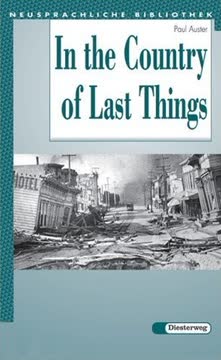
Anna Blume enters a nameless city spiraling toward collapse, determined to find her missing brother William. The world she steps into is a dissolving landscape where not only buildings but memories and even words slowly disappear. Survival is a daily battle; hunger, violence, and despair are ever-present. Anna's journey is marked from the outset by uncertainty—nothing stays the same, and every connection to the past seems at risk of erasure. Aching with longing, Anna must quickly adapt her expectations and trust in little but her own instincts. The city is a test, stripping away familiarity and demanding resourcefulness, each day more dangerous and disorienting than the last. Anna's quest is both outward, after her brother, and inward—fighting to retain her sense of self.
Survival on Shifting Ground
The city offers little stability; Anna learns to let go of everything she once took for granted. She observes the delicate balancing act required to keep moving—meager food, constant vigilance, and the necessity of shifting one's habits and expectations. Hunger transforms people, sometimes into monsters, sometimes into ghosts. Anna attempts to retain her sanity by refusing to join the ranks of the "ghost talkers"—those who escape into endless nostalgia or fanciful dreams. The very act of moving forward becomes Anna's only ritual of survival. Each encounter—whether with the wind buffeting the frail or the arbitrary tolls exacted by armed men on mounds of rubble—teaches her a grim new rule: only those willing to relinquish the past can hope to endure this precarious present.
Streets of Hunger and Loss
Anna vividly describes the daily reality of scavenging for food and shelter, confiding the intricate social systems—municipal markets, black market grocers, rampant theft, and exploitative scams. Buildings vanish overnight; finding a home is nearly impossible, and the brutal phenomenon of housebreaking leaves many stranded. Without contracts or law, danger rules every threshold, and Anna herself experiences the bitter calculations and shame that come with survival. Those unable to adapt—too proud or too slow—quickly succumb. Through the lens of hunger and dispossession, Anna reveals a city's unraveling morality, where simple acts like eating and sleeping become acts of defiance and despair.
Ghost Talk and Death Rituals
In a culture stripped of hope, Anna rejects the city's "ghost language"—tales of vanished feasts and impossible wishes. Around her, others embrace fantasy, surrender silently to despair, or violently to the city's cults of death: the Runners, who die in orchestrated frenzies; the Leapers, who end their lives with public suicides; and the Euthanasia Clinics, where the wealthy buy designer deaths. Even death has become bureaucratized or commodified, while everyday violence (assassination clubs, street battles) and cruelty reign unchecked. Anna's clear-eyed refusal to lose herself in fantasy isolates her further but keeps her anchored in the grim truth of survival.
The Endless Search Begins
Determined, Anna tries to trace William through his last known workplace, only to find not even ruins but emptiness—a street erased by plague and purges. All around, collective amnesia infects the populace; rumor replaces fact, and grief becomes a kind of fog. Clarity is as fleeting as the city's crumbling infrastructure, and the few signposts Anna finds often lead nowhere. Her search is quickly subsumed by the struggle to simply endure—food, shoes, a night's shelter eclipse heroics. The weight of the vanished—her brother, her childhood, her own identity—weighs on Anna, driving her efforts and her doubts.
Isabel's Odd Grace
In the chaos, Anna rescues the frail Isabel from the path of a death-obsessed Runner cult. This impulsive act binds Anna to Isabel, whose gratitude and deluded faith (in God, in chance) provide Anna needed shelter. Isabel's fraught marriage to the embittered, reclusive Ferdinand patterns the household life Anna joins—at once a haven and a new form of captivity. Isabel's frailty and hope contrast with Ferdinand's bitterness and eccentric artistic obsession, and Anna is forced to learn the rituals of survival through their twin examples: one of desperate faith, the other of resigned decay. For the first time since arriving, Anna finds herself needed.
In the House of Decay
Isabel and Ferdinand's home is both security and entrapment. Anna and Isabel bond through shared labor and suffering, scavenging for survival, while Ferdinand grows increasingly hostile, resentful of Anna's presence and powerless within his own home. Their collective efforts—scavenging, bartering, stretching the remains of civilization—bring together the past and the present in shaky equilibrium. As Isabel's health fails and Ferdinand's aggression mounts, Anna must weigh gratitude, obligation, and emerging fear. The once-strange, decaying household becomes the center of her world, a microcosm of the city's tyranny of needs, where kindness and violence mix.
A Tale of Two Killings
Anna's growing dread is realized when Ferdinand's hostility leads to attempted sexual violence. Anna, pushed to her limit, nearly kills him in self-defense, but stops in a sudden wave of self-revulsion. The next morning, Ferdinand is inexplicably dead—strangled, possibly by Isabel. This ambiguous violence shifts their daily reality; together, Anna and Isabel dispose of the body with a macabre ritual, feigning suicide to preserve Ferdinand's dignity amid the city's judging eyes. It's an act of liberation but also a grim symptom of survival: in the country of last things, violence recycles love, care, and guilt.
Final Days with Isabel
With Ferdinand gone, Anna cares for Isabel through her final decline: a painful, inexorable paralysis that strips Isabel of strength, speech, and eventually life. Anna's duties multiply, her connection to Isabel deepens even as both are eroded by suffering and scarcity. The notebook Anna buys for Isabel's last written words becomes a precious inheritance. When Isabel finally dies, Anna's grief is numb, but her actions—procuring a dress for the corpse, shepherding her body to the crematorium—carry the weight of ceremony, memory, and love. The final thread to Anna's surrogate family is cut and with it, nearly, her own will to persist.
Alone, Again and Always
Isabel's death precipitates a cascade of losses: Anna is evicted by predatory neighbors, left homeless and alone once more. Attempts to escape the city are thwarted by bureaucracy, superstition, and walls—literal and psychological. Anna's memories grow unreliable; words, objects, and even the concept of escape become ephemeral. Her enduring only proves how isolation and loss are recursive: each temporary community is surrendered to hunger, violence, or forgetfulness. Yet Anna persists—out of inertia, out of doubt. She is the last witness to her own story, refusing to vanish with her losses.
The Scholar's Refuge
Desperate for safety, Anna stumbles into the National Library, now a ramshackle refuge for scholars, religious exiles, and writers. Guided by rabbinical kindness and a new acquaintance, Isaac, she's finally led to Samuel Farr—her brother's last known contact, the journalist sent to replace William. Sam is reduced, nearly mad from hunger and strain, but Anna strikes a pact: pooling their remaining resources and hope, they stake out a fragile partnership. Here, among the ruins of culture, with burning books for warmth, Anna's search for William merges with Sam's obsessive effort to record the city's end. Refuge, for now, is found in community and in words.
Library of Ruin and Hope
As winter ravages the city, Anna and Sam's shared survival turns to intimacy. Their work on Sam's chronicle becomes an anchor amid chaos, and their memories of home, shared in the light of smuggled cigarettes, revive the sense of a lost world. Yet, the library is always provisional: political purges and resource shortages threaten its existence, and disappearances among its residents echo the city's erasures. The act of writing—and loving—becomes resistance. Anna and Sam's bond, tested by pregnancy and illness, briefly transforms survival into hope. Their alliance embodies the enduring need for connection, even as everything else is whittled away.
Winter of Smoke and Longing
Anna's pregnancy coincides with the loss of the last vestiges of safety—her shoes, her health, and even the library, which is destroyed by fire. Betrayed by a fellow scholar while hunting for new shoes, Anna survives a murderous attack only by leaping out a window. She loses her child and is rescued, half-dead, by the workers of Woburn House, an ever-dwindling charity shelter. Amid new kindness and old wounds, Anna's grief over Sam—missing, presumed lost in the fire—and her dead baby threatens to annihilate her. The thread of hope is frayed to nearly nothing, but the will to revive endures.
The Betrayal of Shoes
Anna's recovery at Woburn House is slow and joyless; her grief and rage for Sam's probable death and the loss of her unborn child threaten to swallow her. She builds new ties with Victoria, the stoic leader of the house, and Boris, the extravagant, pragmatic supplier. Woburn House becomes another transient refuge—filled with the stories of the broken, the spent, the desperate. Even bonds of friendship are shaped by the city's core lesson: nothing lasts. Every comfort—food, shelter, even love—is rationed and temporary, haunted by the certainty of loss.
Resurrection at Woburn House
Anna forms a closeness with Victoria that grows into intimacy, while the staff of Woburn House—a mix of wounded, eccentric, or damaged souls—struggles to maintain the tiny oasis amid relentless scarcity. Their efforts, though earnest, have a bitter edge; for every resident they shelter, dozens wait or perish outside. Anna becomes vital once more, immersing herself in the day-to-day labor and the stories of others. Woburn House's mission embodies both compassion and futility—that tension between helping and helplessness that defines the city of last things.
New Bonds, Old Sorrows
As Anna regains her place in the world—as worker, friend, and (with Victoria) lover—the cracks beneath Woburn House grow dangerous. Resources dwindle, residents betray, and grief returns with every new loss. With the return of Sam, traumatized but alive, Anna's loyalties are once again tested. Victoria accepts Sam's presence with enormous grace, asking him to pose as a doctor to give hope to the hopeless. Survival requires illusion; the house now runs on lies as much as charitable intent. Even love must yield to the harsh arithmetic of scarcity and the inevitability of further change.
Losses and Partings
One by one, the foundations of Woburn House crumble. The last resources are spent; laws, betrayals, and violence claim friend after friend. The funeral for Frick, Victoria's beloved family retainer, invites state punishment. Betrayed to the authorities, the group survives only through a bribe. Willie, Frick's simple grandson, is undone by grief and kills several residents in a shooting rampage before being killed himself. Loss accumulates until the house, stripped bare of people and possessions, stands as a hollow reminder that no haven endures. The survivors—Anna, Sam, Victoria, and Boris—prepare to depart, knowing they take only their memories, their pain, and the bare hope that somewhere else may offer more than this endless country of last things.
Toward Another Tomorrow
Anna closes her account with the preparation for departure. With nothing left to tie them to the city, the last few survivors plan their escape. The themes of connection, story, and memory return as Anna, reflecting on her letter, acknowledges both the futility and necessity of telling her tale. She entreats her addressee never to come searching, never to make her mistake—yet that contradiction, between hoping to be remembered and wishing to vanish, is the final truth. The city's logic demands surrender of everything, even hope, but Anna, Sam, Victoria, and Boris drive toward one more uncertain day.
Analysis
"In the Country of Last Things" is Paul Auster's bleak yet strangely luminous meditation on survival, memory, and the struggle for meaning amid collapse. The novel's dystopian city is not just a setting, but the chief force: a living mechanism designed to erase not only people and things, but the very possibility of returning, of reconnecting the past to the present or the future. Against this grim entropy, Anna Blume's narrative—her stubborn, honest act of telling—becomes a form of resistance. Auster's genius is to anchor dystopia in minute physical and emotional realities: hunger, cold, love, mourning, sex, betrayal. Every character's journey is a negotiation with despair, where even hope must be rationed. The plot's relentless losses are leavened by moments of kindness, intimacy, and creation, yet these too are always provisional. Auster warns against both comforting illusions and passive oblivion; neither fantasy nor stoicism will save anyone, yet the simple act of bearing witness matters profoundly. The lessons are tragic but not nihilistic: compassion, story, and the acknowledgement of loss are all that survive when everything else vanishes. In the end, movement into the unknown is inevitable—but so, Auster suggests, is the need to leave a trace, however faint, that we were here.
Review Summary
Readers largely praise In the Country of Last Things as a haunting, beautifully written dystopian novel, with many finding its post-apocalyptic vision uniquely plausible and emotionally resonant. Anna Blume's epistolary journey through a collapsing unnamed city draws comparisons to Holocaust literature and works by McCarthy and Orwell. Critics appreciate Auster's sparse prose and exploration of humanity amid despair. Some find the second half weaker or the format occasionally limiting, while a minority felt underwhelmed or disconnected. The open ending divides readers, though most consider it fitting.
Characters
Anna Blume
Anna is both the narrator and the emotional center of the story. Entering the city to find her lost brother William, she is quickly stripped of hope, comfort, and identity by the city's relentless entropy. Anna's journey transforms her from a sheltered, impulsive young woman into a hardened, resourceful survivor. Her psychological resilience is matched by an awareness of loss; she refuses the seductive comforts of dreams or fantasy adopted by the city's "ghosts." Anna's relationships—with Isabel, Ferdinand, Sam, Victoria, and others—shape her, yet she remains fundamentally alone, the last custodian of memory and selfhood in a world determined to erase both. Her endurance is less about triumph than about the refusal to let the last things vanish without witness.
Samuel Farr
Sam arrives in the city as a journalist, tasked with both reporting on and finding Anna's brother. Scarred by the city's violence and indifference, he obsessively documents its decline, carrying out hundreds of interviews. As Anna's lover and partner, he represents knowledge, hope, and longing for order. Sam's psychological complexity is marked by oscillations between obsession and despair; his drive to "finish the book" is both a means of survival and a futile gesture. He is both strengthened and broken by love—first with Anna, then with others—with his final acceptance of uncertainty offering not victory, but a mature acceptance of loss.
Isabel
Isabel, introduced through Anna's rescue, is simultaneously frail and tenacious. Her faith comforts Anna even as it hastens her decline; her belief in God and meaning sits at odds with the surrounding nihilism. As Anna's surrogate mother and dependent, Isabel tracks a course from marginal utility (as a scavenger with a "gift") to helplessness. Her physical decline serves as an allegory for the death of hope, of language, and of care within the city. Isabel's death is both the loss of refuge and the impetus for Anna's new phase of self-reliance.
Ferdinand
Isabel's husband Ferdinand is both comic and monstrous—a failed provider reduced to making miniature ships and eating rats. His psychological disintegration mirrors that of the city: obsessed with tiny, useless creation as the world decays, resentful and ultimately violent toward the women who sustain him. Ferdinand's attempted rape and subsequent death—possibly at Anna's hands, possibly Isabel's—catalyze the unraveling of the last semblance of family structure, underscoring the ambiguous, destructive power that memory and impotence can wield.
Victoria Woburn
Victoria is the backbone of Woburn House—an erstwhile heiress who has remade herself as a caretaker, sacrificing nearly all personal comfort for the good of others. Psychologically, she embodies both strength and vulnerability: nurturing, but also rigid; capable of grace and of necessary lies. Her deep bond with Anna transcends romance, marked by mutual respect and healing. Victoria's devotion to the house is both her strength and her tragic flaw—her inability to relinquish her mission hastening the eventual collapse.
Boris Stepanovich
Boris, the colorful, possibly mythomaniac supplier, is both comic relief and a cunning participant in the city's barter economy. His endless stories and adaptability make him a survivor, floating above the city's tragedies by imagining new identities and always seeking an advantageous "game." Yet beneath the avuncular bluster lies deep pessimism and a refusal to be surprised by loss. His friendship and support for Anna add warmth and hope but also underscore the limits of narrative and illusion in the face of erasure.
Willie
As Frick's grandson, Willie represents innocence and the vulnerability of the "other." His emotional bonds—especially to his grandfather—are primal, and in the absence of that anchor, his psychic disintegration leads to the final, tragic spree of violence that precipitates Woburn House's ultimate fall. Willie's trajectory is a study in the psychological wreckage wrought by too much loss and not enough comprehension, a last echo of the old world's family bonds gone irreparably wrong.
Frick
Frick is an emblem of loyalty and tradition, maintaining both the great car and the daily functions of Woburn House. His backwards-and-forwards name—"Otto"—serves as a meditation on the cycles of life and the possibility of recurrence. Frick's death marks the end of a moral era for Woburn House, and his funeral (in defiance of city law) is the final assertion of meaning against bureaucratic annihilation.
Maggie Vine
As the deaf-mute kitchen worker, Maggie is an outsider even among the house's marginalized. Her rare, comic pantomimes suggest hidden depths and the potential for joy, but her silent disappearance parallels the fates of so many unnoticed victims in the city. She serves as a reminder of the importance of wordless comfort and the implacable erasures at play.
William Blume
Though never seen, William is the engine of Anna's quest—a focal point for hope, regret, and the pull of the lost past. His presumed death embodies the city's power to erase: not only lives but the stories people once inhabited. By the end, William stands as both memory and myth, the ideal that haunts Anna's every action.
Plot Devices
Epistolary Structure
The entire narrative is framed as a letter from Anna to an unnamed friend or lover, reinforcing the importance of testimony in a decaying world. This structure allows for intimacy, confession, and the honest subjectivity that colors every event. The act of recording her experience becomes both Anna's resistance to vanishing and her last tie to life beyond the city. The letter is not just a chronicle but a desperate gesture of survival as an act of memory.
Disintegration as Motif
The ongoing loss of things—objects, buildings, words, people—mirrors Anna's internal struggle to hold onto identity, sanity, and hope. Plot events unfold against a background of physical, linguistic, and psychological erosion; even basic laws of causality and narrative are threatened.
Survival and Adaptation
Jobs, housing, relationships, routines—everything becomes provisional, and strategies for survival shift constantly. The tension between holding on (to love, memory, principle) and letting go (for food, for safety) structures every conflict and decision. Scavenging, object-hunting, and bargains become both a metaphor and literal necessity.
Unreliable Memory and Rumor
Anna frequently acknowledges the limits of her own perception and memory, while the city's inhabitants live by rumor, fantasy, and self-delusion. This device fosters uncertainty, invites the reader's interpretation, and underscores the unreliability of truth under conditions of trauma.
Cults and Rituals of Death
From the Runners and Leapers to the ritualized burning of bodies, the city abounds in orchestrated, even bureaucratized, forms of ending. These plot elements literalize despair and act as both a warning and an escape for those who cannot bear to survive.
Cycles of Community and Isolation
Whether with Isabel, Ferdinand, the library scholars, or the Woburn House collective, every found family is impermanent, lost to death, betrayal, or violence. These cycles raise questions about the value of connection when community so often presages new forms of loss.








































