Plot Summary
Night of Three Promises
On a night indistinguishable from any other, Enaiatollah's mother holds him close and imparts three sacred promises: never use drugs, never wield weapons, and never cheat or steal. These are not just rules, but a moral compass for a life about to be uprooted. The next morning, Enaiatollah wakes to find his mother gone, left alone in a foreign city. The shock of abandonment is profound, but her words echo as a lifeline. This moment marks the end of childhood innocence and the beginning of a journey defined by survival, resilience, and the search for belonging. The emotional wound of separation is deep, but the promises become a shield against the world's harshness, guiding him through the darkness that follows.
Abandonment in Quetta
Enaiatollah, now alone in Quetta, faces the overwhelming reality of being a child refugee. The city's chaos and unfamiliarity amplify his sense of isolation. He seeks work at the samavat, a makeshift hotel for migrants, where he is given shelter in exchange for labor. The struggle to communicate, the menial tasks, and the constant threat of exploitation weigh heavily on him. Yet, amidst the hardship, he learns to navigate the adult world, relying on his wits and the kindness of strangers. The pain of his mother's absence lingers, but necessity forces him to adapt quickly. This chapter is a crucible, forging his independence and teaching him the first lessons of survival in a world indifferent to his suffering.
Surviving the Fruit Garden
Quetta, the "fruit garden of Pakistan," becomes both a prison and a proving ground. Enaiatollah finds camaraderie among other Hazara boys, especially Sufi, whose quiet strength and mischief offer moments of levity. Together, they navigate the dangers of street life, from market scams to police harassment. Enaiatollah's resourcefulness grows as he shifts from kitchen work to street vending, learning the art of negotiation and self-defense. The boys share food, laughter, and dreams of a better future, forging bonds that substitute for lost family. Yet, the city's dangers are ever-present, and the longing for safety and dignity propels Enaiatollah to consider the perilous journey to Iran, where hope and risk intertwine.
Brotherhood and Bazaar Battles
Life in Quetta's bazaars is a daily contest for survival. Enaiatollah and Sufi face bullying, theft, and the constant threat of violence, but also moments of solidarity among fellow refugees. Their friendship is tested by hardship and the moral dilemmas of street life—whether to cheat, fight, or forgive. The boys' ingenuity helps them outwit rivals and scrape together enough to eat, but the city's hostility and the ever-present fear of religious persecution remind them of their vulnerability. The chapter captures the bittersweet camaraderie of displaced youth, their resilience in the face of adversity, and the seeds of longing for a place where they can simply be children again.
Choosing the Road to Iran
Disillusioned by the dangers and indignities of Quetta, Enaiatollah and Sufi decide to risk everything for a chance at a better life in Iran. With the help of a people smuggler, they barter their meager savings for passage, agreeing to work off their debt upon arrival. The journey is fraught with uncertainty, but the promise of work and the possibility of safety outweigh the risks. As they leave behind the only semblance of stability they've known, the boys are propelled by hope, desperation, and the unspoken bond of brotherhood. This decision marks a turning point, setting them on a path through new dangers and unexpected kindnesses.
Smugglers and the Fever House
Crossing into Iran, Enaiatollah and Sufi are thrust into the clandestine world of human trafficking. Hidden in safe houses, they encounter other migrants, traffickers, and the ever-present threat of discovery. Enaiatollah falls gravely ill, his body succumbing to exhaustion and fever. In this vulnerable state, he experiences both the indifference and compassion of strangers—a trafficker's rough care, a fellow traveler's gentle touch. The fever becomes a metaphor for the trauma of displacement, but also for the resilience that allows him to recover. Emerging from illness, Enaiatollah is changed—older, wiser, and more determined to survive whatever comes next.
Building a Life in Isfahan
In Isfahan, Enaiatollah and Sufi are put to work on a construction site, living among other undocumented migrants. The site becomes their world—a place of grueling labor, camaraderie, and relative safety from the authorities. For the first time, Enaiatollah earns wages, saves money, and carves out a semblance of normalcy. Yet, the fear of police raids and deportation is constant, and the memory of home is never far. The monotony of work is punctuated by small joys—shared meals, jokes, and the pride of learning new skills. This chapter explores the dignity found in honest work, even under exploitative conditions, and the fragile hope that stability might be possible.
Friendship and Separation
As time passes, the bonds between Enaiatollah and Sufi are tested by the pressures of survival and the lure of new opportunities. Sufi leaves for Qom, seeking better prospects, and Enaiatollah is left to grapple with loneliness and the fear of being forgotten. The pain of separation echoes his earlier loss of family, underscoring the transient nature of relationships in exile. Yet, the possibility of reunion remains—a thread of hope that sustains him through hardship. This chapter delves into the emotional cost of migration, the longing for connection, and the resilience required to keep moving forward, even when every goodbye feels like a small death.
Repatriation and Return
A police raid shatters the fragile security Enaiatollah has built. Rounded up with other illegals, he is detained, humiliated, and forcibly returned to Afghanistan. The journey back is brutal, but the prospect of returning to danger in his homeland is even more terrifying. Yet, the network of traffickers and fellow migrants offers a way back into Iran, and Enaiatollah's determination to survive propels him forward. Each cycle of deportation and return erodes his innocence but strengthens his resolve. The chapter highlights the Kafkaesque reality of refugee life—caught between borders, always moving, never arriving.
The Endless Mountain Crossing
Determined to reach Europe, Enaiatollah joins a group of migrants crossing the mountains into Turkey. The journey is a harrowing ordeal—weeks of walking, hunger, freezing temperatures, and the constant threat of death. Companions are lost to exhaustion, violence, and the elements; the group is whittled down by tragedy. Enaiatollah's endurance is tested to its limits, but the memory of his mother's promises and the hope of a better life drive him onward. The mountain crossing becomes a crucible, stripping away illusions and forging a survivor. The trauma of this passage will haunt him, but it also marks his transformation from child to adult.
Istanbul's Hidden Underworld
Arriving in Istanbul, Enaiatollah finds himself in the city's shadow economy, living among other undocumented migrants in squalid conditions. Work is scarce, and survival depends on luck, cunning, and the occasional kindness of strangers. The city is both a gateway and a trap—a place where dreams of Europe are kindled and dashed. Enaiatollah's resourcefulness is tested as he navigates the dangers of the underground labor market, the indifference of locals, and the ever-present threat of arrest. Yet, moments of beauty and solidarity shine through, reminding him that even in the darkest places, humanity endures.
Sea of Invisible Dangers
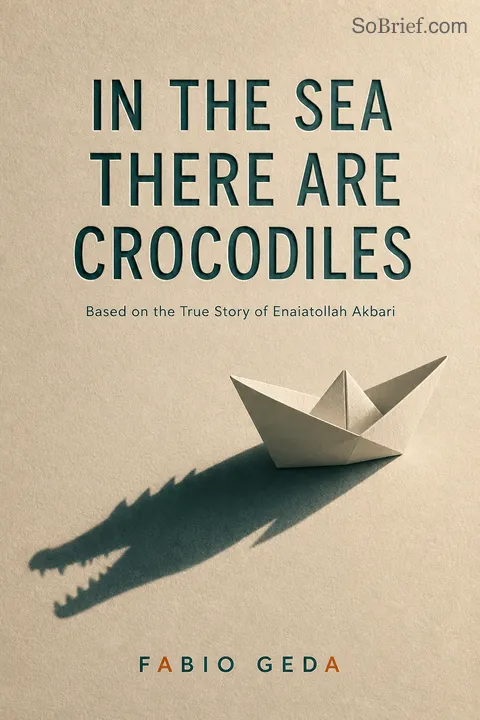
The final barrier to Europe is the sea—a crossing as perilous as any mountain. With a group of younger boys, Enaiatollah attempts the journey in a flimsy dinghy, facing waves, exhaustion, and the terror of drowning. The sea becomes a symbol of both hope and mortal danger, its depths hiding not crocodiles, but the ever-present possibility of death. The boys' inexperience and fear lead to chaos, and not all survive the crossing. Yet, against all odds, Enaiatollah reaches Greek shores, battered but alive. The ordeal cements his identity as a survivor, but the cost is etched in memory and scar.
Stranded on Greek Shores
Washed up on the island of Lesbos, Enaiatollah and his companions are met with suspicion, hunger, and the indifference of authorities. Yet, amid the struggle to find food and shelter, unexpected kindness appears—a Greek woman offers him clothes, food, and a bus ticket. The contrast between hostility and generosity is stark, highlighting the randomness of fate. The boys' journey continues through Greece, marked by police harassment, fleeting friendships, and the constant search for a way forward. The chapter captures the exhaustion of perpetual movement and the small mercies that make survival possible.
Athens: Hunger and Hope
In Athens, Enaiatollah joins a community of young refugees living in parks and abandoned buildings. Hunger, fear, and exploitation are daily realities, but so are moments of joy—football games, shared meals, and the camaraderie of the dispossessed. The city's preparations for the Olympics offer temporary work, a brief respite from desperation. Yet, the dream of asylum or onward passage remains elusive, and the threat of violence—both from police and predatory adults—lurks in the shadows. Athens becomes a microcosm of the refugee experience: hope and despair intertwined, the future always uncertain.
Olympic Labor and Lost Innocence
The Olympic Games bring a surge of demand for cheap labor, and Enaiatollah seizes the opportunity to earn money and regain a sense of purpose. The work is hard but honest, and for a time, he feels part of something larger. Yet, the innocence of youth is eroded by the realities of exploitation, the loss of friends, and brushes with danger—including a mistaken visit to a brothel. The chapter explores the tension between hope and disillusionment, the fleeting nature of security, and the resilience required to keep dreaming in the face of relentless adversity.
The Final Crossing to Italy
With his sights set on Italy, Enaiatollah undertakes one last, perilous journey—hiding in a container, braving suffocation, and relying on luck and the kindness of strangers. Arrival in Venice is both an end and a beginning: the culmination of years of struggle, and the start of a new quest for belonging. Helped by strangers, he makes his way to Rome and then Turin, driven by the hope of reuniting with a friend from his village. The journey is marked by moments of fear, confusion, and unexpected generosity, underscoring the unpredictability of exile and the power of human connection.
Finding Family, Finding Home
In Turin, Enaiatollah is welcomed by Payam and eventually fostered by an Italian family. The warmth, stability, and acceptance he finds are both unfamiliar and deeply healing. Learning a new language, navigating school, and adapting to a different culture are daunting, but the support of his foster family and community make it possible. For the first time, he experiences the security of home, the joy of learning, and the possibility of a future shaped by choice rather than circumstance. The chapter is a testament to the transformative power of kindness and the resilience of the human spirit.
The Language of New Beginnings
As Enaiatollah builds a new life in Italy, he grapples with the complexities of identity, memory, and belonging. Learning Italian, excelling in school, and seeking asylum are milestones on the path to adulthood. The trauma of the past lingers, but the promise of the future grows brighter. A long-awaited phone call reunites him with his mother, bringing closure and a sense of peace. The journey from Afghanistan to Italy is complete—not just in distance, but in transformation. Enaiatollah's story becomes a beacon of hope for others, a testament to the endurance of dreams and the possibility of new beginnings.
Analysis
"In the Sea There are Crocodiles" is a powerful meditation on displacement, resilience, and the search for dignity in a world marked by borders and indifference. Through Enaiatollah's journey, the book exposes the arbitrary cruelty and unexpected kindness that define the refugee experience. The narrative's strength lies in its refusal to sensationalize suffering; instead, it foregrounds the protagonist's agency, humor, and humanity. The three promises serve as a moral anchor, reminding readers that even in the most dehumanizing circumstances, ethical choices matter. The episodic structure mirrors the fragmentation of exile, while the recurring motifs of loss and reunion underscore the enduring need for connection. In a contemporary context marked by debates over migration and belonging, the story challenges readers to see refugees not as statistics, but as individuals shaped by hope, trauma, and the universal longing for home. Ultimately, the book is a testament to the possibility of new beginnings, the transformative power of kindness, and the enduring strength of the human spirit.
Review Summary
Reviews of In the Sea There are Crocodiles are largely positive, praising the remarkable true story of Enaiatollah Akbari's journey from Afghanistan through Pakistan, Iran, Turkey, Greece, and Italy. Many readers found it deeply moving and recommended it as essential reading, particularly for its themes of resilience, hope, and the refugee experience. Some critics noted the writing style as overly simplistic or flat, and a few felt the narrative lacked depth. The interview-style format was divisive, though most agreed the story's authenticity and emotional power outweighed any stylistic shortcomings.
People Also Read

Characters
Enaiatollah Akbari
Enaiatollah is the heart of the narrative—a Hazara boy forced to flee Afghanistan due to ethnic persecution and the threat of violence. His journey from childhood innocence to hard-won maturity is marked by loss, resilience, and an unwavering moral compass instilled by his mother. Enaiatollah's psychological landscape is shaped by abandonment, trauma, and the constant need to adapt, yet he retains a capacity for hope, humor, and empathy. His relationships—with friends like Sufi, with surrogate families, and with strangers—reveal a longing for connection and a remarkable ability to trust despite repeated betrayals. Over time, he transforms from a passive victim of circumstance to an active agent in his own destiny, ultimately finding a sense of home and identity in Italy.
Mother
Enaiatollah's mother is both a guiding presence and an absence that haunts his journey. Her decision to leave him in Quetta, motivated by a desperate hope for his safety, is an act of both love and sacrifice. The three promises she extracts from him become his ethical foundation, shaping his choices and sustaining him through hardship. Psychologically, her absence is a wound that never fully heals, driving his longing for family and belonging. The eventual reconnection by phone is a moment of profound catharsis, symbolizing both the enduring bond between mother and child and the possibility of healing after trauma.
Sufi (Gioma)
Sufi, nicknamed for his calm demeanor, is Enaiatollah's closest companion during his years in Pakistan and Iran. Their friendship is a lifeline, providing emotional support, practical help, and moments of levity amid hardship. Sufi's quiet strength and occasional mischief balance Enaiatollah's seriousness, and their eventual separation is a source of deep pain. Sufi's choices—seeking better opportunities, risking new journeys—mirror the difficult decisions faced by all refugees. His presence underscores the importance of solidarity and the ache of inevitable partings in a life defined by movement and uncertainty.
Kaka Rahim
The owner of the samavat in Quetta, Kaka Rahim is a complex figure—both exploiter and benefactor. He provides Enaiatollah with shelter and work, teaching him the rules of survival in a hostile world. His advice is often blunt, shaped by experience and necessity, but he also shows moments of genuine care, offering guidance and connections that prove crucial. Psychologically, he represents the ambiguous morality of the refugee underworld, where kindness and self-interest coexist. His relationship with Enaiatollah is transactional but not devoid of empathy, reflecting the blurred lines between exploitation and support in the lives of the displaced.
Sufi's and Enaiatollah's Smuggler
The people smuggler who facilitates Enaiatollah and Sufi's journey to Iran embodies the ambiguous role of traffickers in the refugee experience. He is both a necessary evil and a source of danger, demanding payment and labor in exchange for passage. His actions are driven by profit, but he also provides moments of care—arranging work, ensuring basic needs. Psychologically, he represents the moral compromises forced upon both refugees and those who profit from their desperation. His presence is a constant reminder of the risks and dependencies inherent in illegal migration.
Payam
Payam, a friend from Enaiatollah's village, becomes a beacon of hope and a link to the past when they reunite in Italy. His support—helping Enaiatollah navigate bureaucracy, find shelter, and adapt to a new culture—is instrumental in the latter's integration. Payam's own journey mirrors Enaiatollah's, and their friendship is a testament to the enduring bonds of shared origin and experience. Psychologically, Payam represents the possibility of healing, belonging, and the creation of new family ties in exile.
Danila and Marco
Danila and Marco, Enaiatollah's Italian foster parents, embody the transformative power of kindness and hospitality. Their willingness to welcome a traumatized refugee into their home, provide stability, and support his education is a turning point in his journey. They offer not just material comfort but emotional security, helping Enaiatollah heal and envision a future. Psychologically, they represent the antidote to the indifference and hostility he has faced, modeling a form of love that is both nurturing and empowering.
Sufi's Cousin (Trafficker to Turkey)
The cousin of Sufi's friend, who arranges the journey to Turkey, is a figure of trust and risk. His familial connection offers a semblance of safety, but his lack of firsthand knowledge about the journey's dangers highlights the limits of trust in the world of smuggling. He is both a helper and an unwitting participant in the suffering that follows. Psychologically, he represents the blurred boundaries between kinship, obligation, and the impersonal machinery of migration.
Hussein Ali
The youngest member of the group crossing from Turkey to Greece, Hussein Ali's fear, naivety, and humor provide both comic relief and a poignant reminder of lost childhood. His anxieties—about crocodiles, waves, and the unknown—mirror the group's collective vulnerability. Psychologically, he embodies the innocence that persists even in the face of trauma, and his survival is a testament to the resilience of youth.
Jamal
Jamal, whom Enaiatollah meets in Greece, is both a companion and a reflection of the arbitrary nature of luck in the refugee journey. Their shared experiences—struggles for tickets, brushes with the law, and the search for belonging—underscore the randomness of fortune and the importance of solidarity. Jamal's fate, shaped by a single fingerprinting, contrasts with Enaiatollah's, highlighting the thin line between hope and despair.
Plot Devices
Framing as Oral Testimony
The narrative is structured as a reconstructed oral testimony, with the author acting as both listener and interlocutor. This device blurs the line between fiction and memoir, emphasizing the subjectivity of memory and the collaborative nature of storytelling. The dialogue between Enaiatollah and the author allows for reflection, clarification, and the insertion of commentary, creating a sense of intimacy and immediacy. This structure foregrounds the act of bearing witness, inviting readers to engage emotionally and ethically with the protagonist's journey.
The Three Promises
The promises extracted by Enaiatollah's mother serve as a recurring motif, guiding his actions and decisions throughout the story. They function as both a source of strength and a measure of his integrity, shaping his responses to temptation, danger, and despair. The promises also symbolize the enduring influence of family and culture, even in exile, and provide a touchstone for the reader's empathy.
Episodic Journey Structure
The plot unfolds as a series of episodes—each country, city, or crossing representing a distinct trial or stage in Enaiatollah's odyssey. This structure mirrors the unpredictability and fragmentation of the refugee experience, with each new setting bringing fresh challenges and opportunities. The episodic nature allows for the exploration of diverse themes—loss, friendship, exploitation, hope—while maintaining a coherent emotional arc.
Foreshadowing and Circularity
The narrative employs foreshadowing—references to crocodiles in the sea, the dangers of each crossing, and the possibility of reunion—to create a sense of inevitability and suspense. Circular motifs—such as repeated cycles of deportation and return, or the longing for family—underscore the persistence of trauma and the difficulty of escape. The eventual reunion with his mother, both literal and symbolic, brings the story full circle, offering closure and hope.
Symbolism of Objects and Places
Objects—such as the watch, the dinghy, or the three promises—carry symbolic weight, representing time, hope, and moral grounding. Places—Quetta, Isfahan, Istanbul, Athens, Turin—are more than settings; they are stages in the protagonist's transformation, each leaving an indelible mark on his psyche. The interplay of objects and places grounds the narrative in concrete detail while inviting broader reflection on the meaning of home and belonging.
Download PDF
Download EPUB
.epub digital book format is ideal for reading ebooks on phones, tablets, and e-readers.








































