

Plot Summary
Ashes on the Field
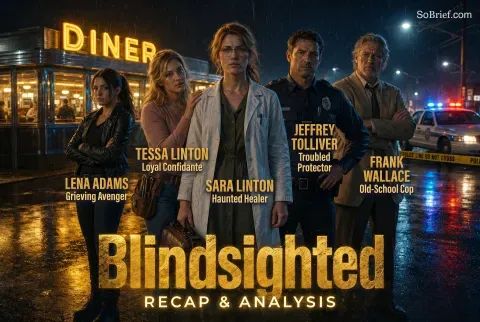
The story opens with a horrifying scene: a Cadillac Escalade burning in the middle of a small Georgia town's football field, a body inside. Detective Lena Adams is found nearby, battered and mute, refusing to speak to anyone—including her boss, Chief Jeffrey Tolliver, and his wife, Dr. Sara Linton. The local sheriff, Jake Valentine, arrests Lena, suspecting her involvement in the explosion and death. As Sara and Jeffrey try to help Lena, they are drawn into a web of violence, silence, and fear. The town's undercurrents of meth, racism, and old wounds begin to surface, and the sense of danger is immediate and personal. The fire is not just literal—it signals the start of a reckoning for everyone involved.
Lena's Silent Escape
Lena, traumatized and terrified, escapes from the hospital with Sara's unwitting help. Her silence is not just shock—it's a desperate attempt to protect those she cares about. As she disappears into the night, Sara and Jeffrey are left reeling, their trust in Lena and themselves shaken. The local authorities are outmatched, and the town's secrets begin to close in. Lena's actions force Sara and Jeffrey to question their own roles as protectors and partners, and the emotional cost of loyalty. The escape is a catalyst, setting off a chain of events that will test every relationship and moral boundary.
Secrets in the Attic
Lena returns to her childhood home, searching for answers about her uncle Hank's relapse into addiction and her own family's past. In the attic, she discovers the decomposing body of Deacon Simms, her uncle's old friend, brutally murdered and left to rot. The discovery is more than a crime scene—it's a symbol of the rot at the heart of her family and the town. Lena is forced to confront the lies she's been told about her parents, her mother's death, and her own identity. The attic becomes a crucible for Lena's pain, guilt, and determination to uncover the truth, no matter the cost.
The Burned Woman's Identity
Sara, desperate to reclaim her sense of purpose, performs the autopsy on the burned woman from the Escalade. The procedure is grueling, both physically and emotionally. Sara's meticulous work reveals that the victim was a woman, likely a mother, who suffered terribly before death. The autopsy is not just about science—it's about empathy, and Sara's need to make sense of senseless violence. The woman's identity remains elusive, but the clues point to a connection with Lena and the town's meth underworld. Sara's work is a stand against chaos, a way to honor the dead and fight for the living.
Hank's Downward Spiral
Hank Norton, Lena's uncle and surrogate father, is found near death from a meth overdose and brutal beating. His decline is both a personal tragedy and a symptom of the town's larger sickness. Through flashbacks and confessions, Hank's history of addiction, guilt over Lena's mother, and failed attempts at redemption are revealed. His suffering is mirrored in Lena's own struggles, and their relationship is a tangle of love, resentment, and regret. Hank's fate is uncertain, but his story is a warning about the cost of secrets and the difficulty of forgiveness.
Brotherhood in the Shadows
Jeffrey's investigation uncovers a network of white supremacist meth dealers operating in the town, protected by corrupt officials and bound by blood and violence. The Brotherhood of the True White Skin is not just a gang—it's a shadow government, manipulating the town's fate. Sheriff Valentine is revealed as a high-ranking member, his tattoo a mark of allegiance. The Brotherhood's reach is long, and their methods are ruthless. The threat they pose is existential, not just to Lena and Sara, but to the very soul of the community. The battle lines are drawn, and the cost of resistance is high.
Sara's Guilt and Resolve
Sara is haunted by a malpractice suit, the death of a child, and her own inability to have children. Her sense of failure is compounded by Lena's accusations and the violence around her. Yet, Sara's resolve hardens—she will not abandon those she loves, even as she is drawn deeper into danger. Her relationship with Jeffrey is tested, but their love endures. The possibility of adoption offers hope, but also fear. Sara's journey is one of reclaiming agency, finding meaning in suffering, and choosing to fight for life in the face of death.
The Sheriff's True Colors
Sheriff Jake Valentine's mask slips, revealing his true allegiance to the Brotherhood and his willingness to kill to protect their secrets. He orchestrates a plan to murder Lena and Sara, framing them as casualties of a meth lab explosion. The kitchen becomes a death trap, filled with chemicals and fire. Valentine's betrayal is personal—he was supposed to be the law, the protector. Instead, he is the executioner. The confrontation is brutal, and the cost is high. The line between good and evil blurs, and survival becomes the only goal.
Charlotte's Last Letter
Charlotte Warren, Lena's childhood friend, is murdered in a horrifying act of violence meant to send a message. Her death is not just a plot point—it's a devastating loss that reverberates through Lena's soul. Through Charlotte's letters, Lena learns about love, regret, and the choices that define a life. Charlotte's voice is a reminder of what is at stake, and her memory becomes a source of strength for Lena. The personal becomes political, and grief becomes a weapon in the fight for justice.
Meth, Blood, and Betrayal
The climax unfolds in a whirlwind of violence: meth lab explosions, gunfire, and desperate escapes. Lena and Sara are handcuffed together, forced to fight for their lives as the house burns around them. Betrayals are revealed—Fred Bart, the dentist, is as complicit as the sheriff. The Brotherhood's grip is broken, but not without sacrifice. The physical and emotional wounds are deep, and the survivors are forever changed. The town is left to pick up the pieces, and the question of justice remains unresolved.
The Mother's Return
Lena's search for her mother ends in a heartbreaking revelation: Angela is alive, a broken woman destroyed by addiction and guilt. The truth about Lena's parentage, her mother's abandonment, and the lies that shaped her life come to light. Angela's refusal to seek forgiveness is both a curse and a blessing—Lena is forced to find closure on her own terms. The reunion is not a healing, but a reckoning. The past cannot be undone, but the future is still unwritten.
The Final Inferno
The story's final act is a literal and metaphorical inferno. Lena and Sara's escape from the burning house is a rebirth through fire. Hank's survival is uncertain, but Lena's determination to live is unbroken. Sara and Jeffrey return home, battered but together, ready to face whatever comes next. The town is scarred, but the possibility of healing remains. The cost of survival is high, but the value of life is higher.
Only Ever You
In the aftermath, Sara and Jeffrey are offered the chance to adopt a child—a symbol of hope and renewal. Their joy is short-lived. A bomb in their mailbox, a final act of vengeance from the Brotherhood, kills Jeffrey in Sara's arms. The story ends with Sara's grief, her whispered declaration of love, and the knowledge that the fight for justice and healing is never truly over. The legacy of violence is not easily erased, but neither is the power of love.
Analysis
A Southern Gothic of violence, trauma, and the cost of survivalIndelible is a searing exploration of the ways violence, addiction, and systemic corruption shape lives and communities. Karin Slaughter uses the conventions of the crime thriller to probe deeper questions about family, loyalty, and the legacy of trauma. The novel's dual timelines and interwoven mysteries create a sense of inevitability—past and present are inextricably linked, and the sins of one generation are visited upon the next. The characters are richly drawn, their flaws and strengths rendered with empathy and insight. Sara's journey from guilt to resolve, Lena's relentless search for truth, and Jeffrey's tragic heroism are all emblematic of the novel's central concern: the cost of survival in a world where justice is never guaranteed. The Brotherhood's shadowy power is a metaphor for the ways racism, violence, and addiction are woven into the fabric of American life. The story's final act—a bomb that kills Jeffrey just as hope seems possible—is a gut punch, a reminder that healing is never easy, and that the fight for justice is ongoing. Indelible is both a gripping thriller and a profound meditation on the meaning of love, loss, and the indelible marks we leave on each other.
Review Summary
Indelible receives mostly positive reviews, averaging 4.15/5 stars. Readers praise its dual timeline structure, alternating between a tense present-day hostage situation at the police station and the origins of Sara and Jeffrey's relationship. Many consider it a standout in the Grant County series, particularly appreciating the insight into Jeffrey's troubled past. Common criticisms include pacing issues during timeline transitions and an overabundance of drama. The audiobook narration receives special praise. Some readers found certain characters unsympathetic, while others loved the deeper character development.
People Also Read



Characters
Sara Linton
Sara is the emotional and moral center of the story—a pediatrician and medical examiner whose compassion is matched only by her resilience. Haunted by a malpractice suit and her inability to have children, Sara is driven by guilt and a need to make things right. Her relationship with Jeffrey is a source of strength and vulnerability. Sara's journey is one of reclaiming agency, facing her own fears, and choosing to fight for life even when surrounded by death. Her empathy is both her greatest gift and her deepest wound, and her arc is a testament to the power of love and the cost of survival.
Jeffrey Tolliver
Jeffrey is the chief of police, a man defined by his sense of duty and his love for Sara. His stubbornness is both a strength and a flaw—he cannot walk away from a fight, even when it puts him and those he loves in danger. Jeffrey's relationship with Lena is complex, a mix of mentorship, frustration, and loyalty. His investigation into the town's corruption is relentless, but his greatest battle is internal: the fear of losing Sara, the guilt of past mistakes, and the hope for a future that is always just out of reach. His death is a devastating blow, a reminder that even heroes are mortal.
Lena Adams
Lena is a detective haunted by trauma, addiction, and the legacy of family secrets. Her relationship with violence is intimate—she is both victim and avenger. Lena's search for the truth about her mother, her uncle, and herself is a journey through pain, betrayal, and self-discovery. Her loyalty to Jeffrey and Sara is fierce, but her methods are often reckless. Lena's arc is one of survival against impossible odds, and her refusal to give up is both her salvation and her curse. She is a study in contradictions: tough yet vulnerable, loyal yet self-destructive, always fighting for a place to belong.
Hank Norton
Hank is Lena's uncle and surrogate father, a man destroyed by addiction and guilt. His love for Lena is genuine, but his inability to overcome his demons makes him both protector and threat. Hank's history is a microcosm of the town's sickness—secrets, lies, and the slow erosion of hope. His suffering is a warning about the cost of silence and the difficulty of forgiveness. Hank's fate is uncertain, but his story is a plea for compassion and understanding.
Jake Valentine
Valentine is the smiling face of law and order, but beneath the surface he is a high-ranking member of the Brotherhood, a white supremacist meth syndicate. His charm masks a ruthless willingness to kill to protect his power. Valentine's betrayal is personal—he was supposed to be the protector, the upholder of justice. Instead, he is the architect of violence and death. His arc is a study in the banality of evil, and his downfall is both satisfying and chilling.
Fred Bart
Bart is the town dentist and coroner, a man whose small-town respectability hides a deep involvement in the meth trade and the Brotherhood's crimes. His complicity is motivated by greed, fear, and a desperate need to survive. Bart is a follower, not a leader, but his willingness to look the other way makes him just as guilty as the killers. His arc is one of moral collapse, and his fate is a warning about the dangers of apathy and self-preservation.
Charlotte Warren
Charlotte is Lena's childhood friend, a woman whose life is marked by love, regret, and the struggle for redemption. Her letters to Hank and Lena are a window into the emotional cost of addiction, secrecy, and lost opportunities. Charlotte's murder is a turning point, a personal loss that galvanizes Lena's quest for justice. Her memory is a source of strength, and her voice is a reminder of what is at stake.
Angela Adams
Angela is Lena's mother, a woman destroyed by addiction, guilt, and the weight of her own secrets. Her abandonment of Lena and Sibyl is both a curse and a blessing—Lena is forced to find closure on her own terms. Angela's refusal to seek forgiveness is a final act of self-destruction, and her return is not a healing, but a reckoning. She is a symbol of the past that cannot be undone.
Ethan Green
Ethan is Lena's former boyfriend, a skinhead whose charisma and brutality leave a trail of destruction. His relationship with Lena is a study in abuse, addiction, and the difficulty of breaking free. Ethan's presence haunts the story, a reminder that the past is never truly gone. His manipulations are both psychological and physical, and his arc is a warning about the dangers of toxic love.
The Brotherhood
The Brotherhood of the True White Skin is more than a gang—it is a shadow government, manipulating the town's fate through violence, drugs, and fear. Its members are bound by blood, ideology, and the willingness to kill to protect their secrets. The Brotherhood's reach is long, and their methods are ruthless. They are the embodiment of systemic evil, and their defeat is both a victory and a warning.
Plot Devices
Dual Timelines and Interwoven Mysteries
The novel uses a dual timeline structure, weaving together the present-day investigation with flashbacks and revelations from the past. This device allows the reader to experience the emotional weight of family secrets, personal trauma, and the slow unraveling of the town's corruption. The interlocking mysteries—Lena's parentage, Hank's addiction, the identity of the burned woman, the Brotherhood's power—are revealed piece by piece, each answer raising new questions. Foreshadowing is used to build tension, and the narrative structure mirrors the characters' psychological journeys. The use of letters, autopsy reports, and official documents adds layers of realism and complexity, grounding the story in both personal and institutional history.
False Leads and Red Herrings
Throughout the novel, the reader is presented with multiple suspects, motives, and explanations for the violence. Lena's visit to Ethan, the discovery of her knife at a murder scene, and the shifting alliances among the town's power brokers all serve as red herrings, keeping the reader—and the characters—off balance. This device not only heightens suspense but also deepens the psychological complexity of the story, forcing the characters to confront their own biases, fears, and desires.
The Body as Evidence and Symbol
Sara's autopsies are more than forensic procedures—they are acts of empathy, attempts to restore dignity to the dead and make sense of senseless violence. The body becomes both evidence and symbol, a site where personal and political histories intersect. The physical wounds mirror the emotional and psychological scars carried by the living. The autopsy scenes are meticulously detailed, grounding the story in realism while also serving as metaphors for the process of uncovering hidden truths.
Corruption and Complicity
The novel explores the ways in which corruption is both systemic and personal. The Brotherhood's power is maintained not just through violence, but through the complicity of ordinary people—sheriffs, dentists, neighbors—who look the other way or actively participate in the crimes. The plot device of the threatening letter to Valentine, the manipulation of evidence, and the use of meth as both commodity and weapon all serve to illustrate the insidious nature of evil. The characters are forced to confront their own roles in perpetuating or resisting this corruption.
Sacrifice and Survival
The story is driven by acts of sacrifice—Sara's willingness to risk her life for others, Lena's determination to save her uncle, Jeffrey's refusal to abandon those he loves. Survival is not just physical, but emotional and moral. The characters are tested by violence, betrayal, and loss, but their bonds endure. The final act of violence—the bomb that kills Jeffrey—is both a devastating loss and a testament to the price of hope. The story ends not with closure, but with the knowledge that the fight for justice and healing is ongoing.
Grant County Series


About the Author
Other books by Karin Slaughter




Download PDF
Download EPUB
.epub digital book format is ideal for reading ebooks on phones, tablets, and e-readers.








































