Key Takeaways
1. Iran's 19th-Century Society: A Mosaic of Isolation and Diversity
The change from summary denunciation to analytical examination has been caused in part by a broader outlook attained through the passage of time; in part by a nostalgia for a bygone age; and in part by the gradual awareness that nineteenth-century Iran, despite its economic backwardness, was a land of infinite variety, of social complexity, and of regional diversity.
Geographical Fragmentation: 19th-century Iran was characterized by its fragmented geography, with limited navigable waterways and formidable mountain ranges that isolated communities. This isolation fostered self-sufficiency in villages and tribes, hindering broader social and economic integration. The lack of efficient transportation infrastructure further exacerbated this fragmentation, leading to regional disparities and hindering trade.
Ethnic and Religious Diversity: The population was a complex mosaic of ethnic groups, including Persians, Azeris, Kurds, and others, each with distinct languages and cultural traditions. Religious divisions, particularly between Shi'a Muslims and Sunni Muslims, as well as the presence of non-Muslim minorities like Armenians and Jews, added another layer of complexity to the social fabric. These ethnic and religious differences often led to communal tensions and conflicts.
Local Self-Sufficiency: The limited trade and communication networks meant that most villages and tribes were economically self-contained, producing their own goods and services. This self-sufficiency reinforced local identities and hindered the development of broader national consciousness. The absence of a unified national market further contributed to the fragmentation of Iranian society.
2. Communal Organizations: The Building Blocks of Iranian Society
In small towns or villages the voice of the inhabitants in nominating their head is still more decided: if one is named of whom they did not approve, their clamour produces either his resignation or removal.
Hierarchical Structures: Iranian society was structured around communal organizations, including tribes, villages, and urban wards, each with its own hierarchical structure. At the base were the common people, while at the apex were regional magnates such as tribal chiefs, local notables, and wealthy merchants. These organizations provided a framework for social order and governance at the local level.
Role of Headmen: The kadkhudas, or headmen, played a crucial role in mediating disputes, representing their communities, and maintaining internal peace. They derived their authority from a combination of local wealth and group allegiance, reflecting a society based on rank rather than strict egalitarianism or complex stratification.
Urban Complexity: Urban centers featured more complex social organizations, including occupational guilds (asnaf) that regulated trades and enforced professional standards. These guilds, along with ward kadkhudas and religious institutions, contributed to the intricate social fabric of Iranian cities.
3. Communal Conflicts: The Undercurrent of Traditional Iran
Factional strife, in one form or another, has remained a feature of Persian life down to modern times.
Competition for Resources: Scarcity of resources, such as irrigated land and water, fueled conflicts between communities. The prevailing belief that one group's prosperity came at the expense of another intensified these rivalries. This zero-sum mentality contributed to a climate of suspicion and antagonism.
Struggle for Local Power: Competition for local offices, such as mirabs (water distributors) and kadkhudas, further exacerbated communal tensions. These positions held significant influence over resource allocation and local governance, making them highly sought after and contested.
Multiple Divisions: Conflicts were not limited to broad ethnic or religious lines but permeated all levels of society, from clan against clan to town ward against town ward. This intricate web of rivalries hindered the formation of broader class consciousness and national unity.
4. Qajar Dynasty: A Fragile Rule of Manipulation and Retreat
The king may do what he pleases; his word is law.
Theoretical Absolutism, Practical Impotence: The Qajar shahs claimed absolute authority, but their power was limited by a lack of effective bureaucracy, a weak standing army, and the influence of local magnates. They relied on manipulating communal conflicts to maintain control.
Policies of Retreat and Manipulation: The Qajars responded to opposition by retreating when necessary and by skillfully manipulating the diverse communal groups within Iranian society. This "divide and rule" strategy allowed them to maintain a semblance of authority despite their limited resources.
Failed Modernization Efforts: Attempts at modernization, such as the Nizam-i Jadid and the reforms of Amir Kabir, were ultimately unsuccessful due to financial constraints, political intrigues, and resistance from traditional elites. These failures further weakened the Qajar state and its ability to address the challenges of the modern era.
5. Western Impact: Seeds of Change in a Traditional Society
The People that have elected him are also able to elect another in his place.
Economic Penetration: Western economic penetration, facilitated by unequal treaties and commercial capitulations, undermined traditional handicrafts and created economic dislocations. This led to the rise of a comprador bourgeoisie and the decline of the native merchant class.
Ideological Influence: Contact with the West introduced new ideas, such as liberalism, nationalism, and socialism, which challenged the traditional foundations of Iranian society. These ideas were disseminated through modern educational institutions and translations of Western texts.
Qajar Responses: The Qajars initially attempted defensive modernization but later shifted to piecemeal reforms and the granting of concessions to foreign powers. These policies further weakened the state and exacerbated social tensions.
6. The Traditional Middle Class: Bazaar Grievances and Nascent Unity
It is clear enough that the concessionnaire will commence the work with a small capital and will purchase the tobacco from the cultivators and sell it to the merchants and manufacturers for higher prices, and all the profits will remain in the purse of the English.
Economic Decline: The influx of foreign goods and capital, coupled with the government's failure to protect native industries, led to the decline of the traditional middle class in the bazaars. This decline fostered a sense of shared grievance among merchants and craftsmen across different regions.
Improved Communications: Improvements in transportation and communication, such as telegraph lines and newspapers, facilitated the exchange of ideas and the formation of a collective identity among the bazaar communities. This nascent unity laid the groundwork for political action.
Religious and Economic Ties: The traditional middle class was closely connected to the 'ulama, who provided spiritual guidance and legitimacy to their concerns. This alliance between economic and religious forces would prove crucial in the Constitutional Revolution.
7. The Intelligentsia: Modern Ideas and the Call for Reform
He should remember that his sovereignty depends only on the acceptance or rejection of the People.
Western Education and Ideologies: The intelligentsia, educated in modern schools and exposed to Western ideas, embraced concepts such as constitutionalism, secularism, and nationalism. They challenged the traditional authority of the monarchy and the clergy.
Key Figures: Sayyid Jamal al-Din "al-Afghani" and Mirza Malkum Khan were influential figures who advocated for reform and modernization. They criticized royal despotism, clerical dogmatism, and foreign imperialism.
New Vocabulary: The intelligentsia introduced new political concepts and terminology into Iranian discourse, transforming the meaning of existing words and paving the way for a new understanding of state and society.
8. Constitutional Revolution: From Protest to Armed Uprising
It is true, these magistrates cannot always screen the people from the hand of power, and are often compelled to become the instruments of oppression: still their popularity with their fellow citizens, which caused their elevation, continues to be their strength.
Economic Crisis and Public Protests: Economic hardship, coupled with government policies that favored foreign interests, sparked a series of public protests that culminated in the Constitutional Revolution. The tobacco crisis of 1891-1892 served as a crucial turning point.
Demands for Reform: The protestors demanded a constitution, a House of Justice, and an end to foreign influence. These demands reflected a growing desire for greater political participation and accountability.
The Revolution Unfolds: The revolution involved diverse social groups, including merchants, clerics, intellectuals, and even members of the royal harem. The government's violent response to peaceful demonstrations further fueled the uprising.
9. The Struggle for a Constitution: Factions and Foreign Interference
The People that have elected him are also able to elect another in his place.
The First Majles: The establishment of the National Consultative Assembly (Majles) marked a significant step towards constitutional government. However, the assembly was quickly divided into factions with competing visions for the future of Iran.
Drafting the Constitution: The deputies worked to draft a constitution that would limit the power of the monarchy and guarantee individual rights. However, the process was complicated by internal divisions and foreign interference.
The Civil War: The shah's attempt to suppress the constitutional movement led to a civil war, further destabilizing the country and paving the way for foreign intervention.
10. The Era of Disintegration: Chaos and the Rise of Reza Shah
The Qajars ensured their own safety by nicely balancing and systematically fomenting mutual jealousies.
Political Fragmentation: The period following the Constitutional Revolution was marked by political instability, tribal warfare, and foreign occupation. The central government lost control over much of the country.
Emergence of Local Powers: Autonomous governments emerged in Azerbaijan and Gilan, while tribal chiefs asserted their authority in other regions. This fragmentation threatened the very existence of Iran as a unified state.
The Search for a Savior: Amidst the chaos, a desire for strong leadership emerged, paving the way for the rise of Reza Khan, a colonel in the Cossack Division, who would eventually seize power and establish the Pahlevi dynasty.
11. Reza Shah's Autocracy: Modernization from the Top Down
The king may do what he pleases; his word is law.
Military Consolidation: Reza Shah consolidated power through the creation of a strong, centralized army. He used this military force to suppress tribal rebellions and enforce his authority throughout the country.
Top-Down Modernization: Reza Shah implemented a program of rapid modernization, including infrastructure development, industrialization, and secularization. However, these reforms were often imposed from the top down, without regard for local customs or traditions.
Suppression of Dissent: Reza Shah's regime was characterized by political repression and the suppression of dissent. He silenced opposition voices and created a highly centralized state with limited political participation.
12. The Politics of Uneven Development: Seeds of Revolution
The Shah’s only fault is that he is really too good for his people—his ideas are too great for us to realize them.
Socioeconomic Transformation: Muhammad Reza Shah's reign saw significant socioeconomic development, fueled by increasing oil revenues. However, this development was uneven, benefiting some groups and regions more than others.
Political Underdevelopment: The shah's regime failed to develop a corresponding political system that could accommodate the new social forces created by socioeconomic change. This led to growing discontent and a widening gap between the state and society.
The Islamic Revolution: The combination of socioeconomic development and political underdevelopment created the conditions for the Islamic Revolution. The revolution was fueled by a complex mix of factors, including economic inequality, political repression, and religious revivalism.
Review Summary
Iran Between Two Revolutions is highly praised for its comprehensive analysis of Iranian history between the Constitutional and Islamic revolutions. Readers appreciate its detailed examination of social forces, political movements, and economic factors shaping modern Iran. The book is commended for its balanced perspective and extensive research, though some note a leftist bias. Many consider it essential reading for understanding Iran's complex history. While dense and data-heavy, readers find it illuminating and crucial for grasping Iran's trajectory. Some criticize its disproportionate focus on certain topics, particularly the Tudeh Party.
FAQ
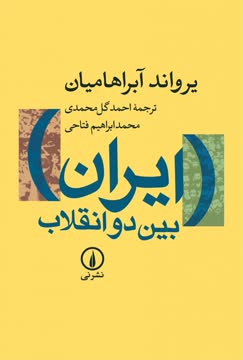
What is Iran Between Two Revolutions by Ervand Abrahamian about?
- Comprehensive historical analysis: The book traces Iran’s political, social, and economic transformations from the late 19th century through the Islamic Revolution of 1979, focusing on the Constitutional and Islamic Revolutions.
- Focus on social forces: Abrahamian examines how social classes, ethnic groups, political parties, and religious organizations shaped Iran’s modern history.
- Interplay of modernization and politics: The narrative highlights the tensions between rapid socioeconomic modernization and political underdevelopment, explaining how these dynamics led to revolutionary upheaval.
Why should I read Iran Between Two Revolutions by Ervand Abrahamian?
- In-depth political sociology: The book offers a rare, scholarly perspective connecting state politics with social structures, class conflicts, and ethnic diversity in Iran.
- Balanced and well-researched: Abrahamian uses a wide range of sources, including archival documents, parliamentary debates, and Persian-language newspapers, to provide a nuanced and balanced account.
- Essential for understanding Iran: It is a foundational text for anyone seeking to understand the roots of the Islamic Revolution and the complexities of modern Iranian society.
What are the key takeaways from Iran Between Two Revolutions by Ervand Abrahamian?
- Uneven development as a cause: The shah’s rapid socioeconomic modernization without corresponding political reform created a gap between society and the regime, fueling revolutionary tensions.
- Role of social classes: The traditional bazaar middle class, modern intelligentsia, working class, and clergy each played distinct roles in shaping Iran’s political trajectory.
- Political repression and opposition: The suppression of political parties and independent organizations blocked peaceful reform, leading to the rise of radical opposition and mass mobilization.
- Revolution as mass participation: The book emphasizes that revolutions in Iran were driven by the direct involvement of the masses in political life.
What are the main historical periods and events covered in Iran Between Two Revolutions by Ervand Abrahamian?
- Qajar dynasty and Constitutional Revolution: The book covers Iran’s fragmented society under the Qajars and the rise of the Constitutional Revolution (1905-1909).
- Reza Shah’s modernization: It analyzes the centralization and secularization efforts under Reza Shah (1921-1941) and their social consequences.
- Post-Reza Shah era: The narrative follows the rise and fall of political parties, the 1953 coup against Mossadeq, and the increasing role of the military and monarchy.
- Islamic Revolution: The final chapters focus on the causes, dynamics, and outcomes of the Islamic Revolution (1977-1979).
How does Ervand Abrahamian define and use the concept of social class in Iran Between Two Revolutions?
- Class as a dynamic process: Drawing on E. P. Thompson, Abrahamian sees class not as a fixed entity but as a social process shaped by historical context and social friction.
- Latent vs. manifest classes: He distinguishes between socioeconomic (latent) and sociopolitical (manifest) classes, noting that communal ties often stifled class consciousness in Iran.
- Class and communal bonds: The book argues that strong tribal, religious, and local identities hindered the formation of broad-based political classes, especially in the 19th century.
What role did ethnic and religious diversity play in shaping Iranian politics according to Iran Between Two Revolutions by Ervand Abrahamian?
- Complex ethnic mosaic: Iran’s population included Persians, Azeris, Kurds, Baluchis, Arabs, and others, each with distinct languages and identities.
- Religious sectarianism: The country was divided among Shi’i and Sunni Muslims, various Shi’i sects, and non-Muslim minorities, often living in segregated communities.
- Impact on social integration: Competition over resources and local offices reinforced communal bonds and hindered the development of national or class-based political movements.
How did the Qajar and Pahlavi dynasties maintain power, and what were their main policies according to Iran Between Two Revolutions by Ervand Abrahamian?
- Qajar manipulation of rivalries: The Qajars maintained power by balancing and fomenting rivalries among tribes, sects, and local communities, often retreating in the face of opposition.
- Pahlavi centralization and modernization: Reza Shah centralized authority, secularized the state, and promoted Persian culture, often at the expense of minorities and traditional elites.
- Authoritarian control: Both dynasties relied on limited state capacity, local notables, and, under the Pahlavis, a modern bureaucracy and military to suppress opposition and maintain order.
What was the impact of Western influence and modernization on Iran as described in Iran Between Two Revolutions by Ervand Abrahamian?
- Economic penetration: Western trade and concessions undermined traditional industries and merchants, leading to the rise of a statewide middle class.
- Ideological influence: Western education and ideas fostered a new intelligentsia advocating liberalism, nationalism, and socialism.
- Political consequences: These changes contributed to the emergence of political organizations and movements, culminating in the Constitutional Revolution and later opposition to the Pahlavi regime.
What were the main social and political forces behind the Constitutional Revolution and the National Front according to Iran Between Two Revolutions by Ervand Abrahamian?
- Traditional middle class: Bazaar merchants and religious leaders, threatened by foreign competition and economic decline, demanded constitutional reforms.
- Modern intelligentsia: Educated professionals and intellectuals introduced new political ideas and challenged royal despotism.
- Coalition politics: The National Front united secular intellectuals, bazaaris, and clerics to pursue constitutional government, national sovereignty, and oil nationalization, but internal divisions weakened its effectiveness.
How does Iran Between Two Revolutions by Ervand Abrahamian analyze the Tudeh Party and its role in Iranian politics?
- Origins and growth: The Tudeh Party emerged after Reza Shah’s abdication, rapidly expanding among the modern middle class and urban workers.
- Labor organization: It played a leading role in organizing trade unions, strikes, and mass political movements, especially in industrial centers.
- Challenges and repression: The party faced internal factionalism, ethnic tensions, and severe repression after the 1953 coup, but maintained a symbolic presence in Iranian politics.
What were the main causes and dynamics of the Islamic Revolution according to Iran Between Two Revolutions by Ervand Abrahamian?
- Uneven development: Rapid socioeconomic modernization without political reform created a gap between society and the regime.
- Political repression: The shah’s reliance on military and bureaucratic control suppressed political participation and alienated key social groups.
- Role of Khomeini and the clergy: The alliance of the traditional bazaar middle class, modern intelligentsia, working class, and militant clergy under Khomeini’s leadership unified opposition and led to the revolution.
What are the best quotes from Iran Between Two Revolutions by Ervand Abrahamian and what do they mean?
- On revolution and mass participation: “The most indubitable feature of a revolution is the direct interference of the masses in historic events...” (Trotsky, cited by Abrahamian) underscores the centrality of popular involvement in revolutionary change.
- Khomeini on clergy and politics: “Those intellectuals who say that the clergy should leave politics and go back to the mosque speak on behalf of Satan.” This highlights the revolutionary clergy’s active political role.
- On uneven development: Abrahamian’s thesis that the revolution occurred “because the shah modernized on the socioeconomic level... but failed to modernize on another level—the political level,” explains the regime’s vulnerability despite economic progress.
- Shah’s overconfidence: “Just imagine Iranians, if they are Iranians, demonstrating against their leader after what we have done for the country...” illustrates the disconnect between the shah’s perception and the reality of popular discontent.
About the Author
Download PDF
Download EPUB
.epub digital book format is ideal for reading ebooks on phones, tablets, and e-readers.








































