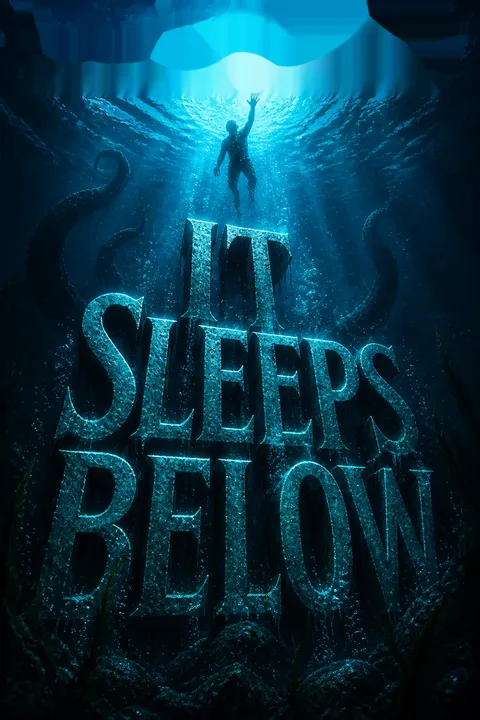
Plot Summary
Blue Sun Awakening
Samantha Morris awakens to a world forever changed by a childhood near-drowning in Dale County Lake. In her memory, the sun is blue, the water impossibly cold, and a voice—deep, melodic, and inhuman—calls her to the lake, promising safety and belonging. Her father's frantic rescue and her mother's distant, haunted gaze mark the beginning of a lifelong struggle with trauma and the supernatural. The blue sun becomes a recurring symbol in her nightmares, a harbinger of something ancient and hungry lurking beneath the lake's surface. This formative event fractures her sense of reality, setting the stage for a life shadowed by loss, mental illness, and the persistent, seductive whisper of the thing that sleeps below.
Grief's Saltwater Grip
Years later, Samantha's life with her partner Ellie is shattered by a late-night phone call: Ellie has died in a car accident, her vehicle plunging into a river. The grief is immediate and suffocating, compounded by the uncanny—Ellie's final call to Samantha is distorted, her voice layered with that same deep, otherworldly tone from Samantha's childhood. As Samantha reels from the loss, she is haunted by the sense that Ellie's death is not just a tragedy, but a summons. The taste of brine, the scent of decay, and the echo of the voice below the water all return, entwining her mourning with a growing dread that something is reaching for her through her grief.
Nightmares and Echoes
Samantha's nights are plagued by vivid nightmares: she floats above the lake, the blue sun burning, the voice calling her home. The boundaries between dream and reality blur as she begins to see and hear things—phantom puddles of saltwater, shadowy figures, and the persistent, comforting yet terrifying voice. Her therapist increases her medication, but the dreams intensify, and Samantha's sense of self begins to erode. The trauma of her mother's disappearance and her father's descent into alcoholism resurface, entwined with the supernatural. The voice promises reunion, safety, and the return of lost loved ones, but at a price Samantha cannot yet fathom.
Traces of the Lost
In the aftermath of Ellie's death, Samantha becomes obsessed with preserving every trace of her partner—her scent, her belongings, her presence in their shared apartment. The fear of losing even the smallest memory is overwhelming, and the mundane becomes sacred. Yet, as she searches for comfort, she finds only reminders of absence and the growing sense that Ellie's loss is not natural. The voice in her dreams insists that Ellie is not truly gone, that she waits with the Old God below. Samantha's grief becomes a battleground between memory and oblivion, love and the seductive promise of reunion in the depths.
Family Fractures
Flashbacks reveal the unraveling of Samantha's family after her near-drowning. Her mother, Kate, becomes increasingly unstable, haunted by the same voice and visions. Her father, Brian, turns to alcohol, unable to cope with the loss and the inexplicable changes in his wife and daughter. The family's attempts to heal—through therapy, medication, and denial—only deepen the fractures. Kate's eventual disappearance, shrouded in mystery and violence, leaves Samantha with a legacy of guilt and unanswered questions. The lake, once a place of childhood innocence, becomes a symbol of everything lost and the darkness that waits beneath.
The Voice Below
The entity beneath the lake, known as Senex Deus—the Old God—manipulates the vulnerable, promising solace and reunion in exchange for devotion. Its influence is subtle but pervasive, manifesting as dreams, hallucinations, and compulsions. Those who hear its call are marked by obsession, madness, and a longing for the void. The Old God feeds on pain, grief, and the desire for escape, drawing disciples to its cause. Samantha, already fragile from loss and trauma, becomes its primary target, her connection to the entity forged in childhood and strengthened by every tragedy since.
Homecoming Shadows
Driven by the need for answers and closure, Samantha returns to her childhood home and the lake that has haunted her life. Her reunion with her estranged father is fraught with guilt, regret, and the ghosts of the past. The landscape is changed—neighbors gone, houses abandoned, the lake more ominous than ever. As Samantha investigates the string of drownings and disappearances linked to the lake, she uncovers a pattern stretching back centuries. The sense of being watched, the recurrence of the yellow-and-red moth, and the resurgence of nightmares all point to an ancient evil that is not content to remain below.
The Old God's Hunger
Research reveals that the lake has claimed dozens of lives over generations, each death feeding the Old God's hunger. Survivors and witnesses speak of dreams, voices, and compulsions eerily similar to Samantha's experiences. The entity's disciples—those who have heard its call and acted on its behalf—are both victims and perpetrators, lured by promises of reunion with lost loved ones or escape from suffering. The line between mental illness and supernatural influence blurs, as the Old God exploits the vulnerabilities of its chosen. Samantha realizes that her family's suffering is part of a much larger, more sinister design.
Disciples in the Dark
Samantha is abducted by a group of the Old God's disciples, including figures from her past and others broken by grief and longing. Their leader, Tom—Ellie's estranged father—reveals the depth of the cult's devotion and the lengths they will go to bring about the Old God's return. Tortured and drugged, Samantha endures both physical and psychological torment, her pain seen as a necessary cleansing for the ritual to come. The disciples are a mix of zealots and victims, each with their own tragic story, all manipulated by the promise of something after death. Samantha's will is tested as she confronts the reality of Ellie's betrayal and the true nature of the entity below.
Pain Is Cleansing
Subjected to brutal rituals meant to "cleanse" her and prepare her as a vessel, Samantha is forced to confront her deepest fears and traumas. The cultists inflict pain not just for sadistic pleasure, but as a means of breaking her down and opening her to the Old God's influence. Through cunning, resilience, and the exploitation of her captors' weaknesses, Samantha manages a violent escape, killing several disciples in the process. Her flight through the woods is a desperate struggle for survival, pursued by both human and supernatural threats. The boundaries between victim and survivor blur as Samantha is forced to become as ruthless as those who sought to destroy her.
Revelations and Betrayals
In a climactic confrontation, Samantha learns the full truth of her family's history with the Old God. Her mother, once an emissary of the entity, tried to save Samantha by severing the connection through medication, only to be driven to madness and ultimately killed by Brian in a desperate act of protection. Ellie's role as both lover and betrayer is revealed—she was manipulated by her father and the cult, switching Samantha's medication and setting the stage for the Old God's return. The cycle of trauma, love, and betrayal is laid bare, forcing Samantha to choose between vengeance, forgiveness, and self-destruction.
The Rift and the Choice
With the cult destroyed and her family's secrets exposed, Samantha faces the Old God directly at the lake. The entity offers her everything she has lost—Ellie, her mother, peace from pain—in exchange for surrender. The lake becomes a liminal space, filled with the voices and apparitions of past victims, all urging her to give in. The Old God's power is overwhelming, its promises seductive, but Samantha recognizes the manipulation at the heart of its offer. The choice before her is stark: submit and become the vessel for the Old God, or break the cycle, even if it means embracing the void.
Descent to the Lake
Samantha, battered and broken, makes her way to the dock, gun in hand, pursued by the voices of the dead and the living. The lake churns with supernatural fury, the Old God's hunger palpable. As she prepares to end her own life to deny the entity its vessel, the Old God manifests as Ellie, offering love and reunion. Samantha sees through the illusion, recognizing that true peace cannot be found in surrender to oblivion or the false promises of the void. In a final act of defiance, she rejects the Old God, choosing her own agency over the seductive pull of annihilation.
Breaking the Cycle
The dock collapses, plunging Samantha into the lake, but she emerges not as a victim, but as a survivor. The Old God's hold is broken—not by violence or ritual, but by the refusal to submit to despair and the seductive promise of something after. The cycle of trauma, sacrifice, and possession is shattered, at least for now. Samantha's survival is not triumphant in the traditional sense; she remains scarred, haunted, and uncertain, but she has reclaimed her life from the entity that sought to consume her. The lake is still, the voices fade, and for the first time, Samantha is free to choose her own path.
Something After
In the aftermath, Samantha and her father begin the slow process of healing. They visit her mother's grave, tend the garden, and try to build a life not defined by loss or the supernatural. The scars remain—physical, emotional, and spiritual—but there is a sense of possibility, however fragile. The Old God's influence lingers at the edges, a reminder that trauma and darkness are never fully vanquished, only managed. Yet, Samantha's refusal to surrender, her choice to live despite everything, offers a glimmer of hope. There may be nothing after death, but there is still something here, and that is enough.
Analysis
It Sleeps Below is a masterful exploration of trauma, grief, and the seductive power of oblivion, wrapped in the skin of cosmic horror. William F. Gray uses the supernatural as both metaphor and literal threat, blurring the boundaries between mental illness and possession, personal pain and cosmic hunger. The Old God is not just a monster beneath the lake, but the embodiment of every longing for escape, every temptation to surrender to despair. The novel's structure—fragmented, dreamlike, and recursive—mirrors the psychological reality of its protagonist, drawing the reader into a world where reality is always suspect and the past is never truly past. The lessons are both personal and universal: trauma is inherited, but not inescapable; love can be both salvation and weapon; and agency, however fragile, is the only true defense against the void. In the end, It Sleeps Below is a story about survival—not just of the body, but of the self, the refusal to be consumed by darkness, and the hard-won hope that there is still something after, even if it is only the choice to live.
Review Summary
It Sleeps Below receives strong praise overall, earning 3.82/5 across 157 reviews. Readers consistently highlight the deeply developed protagonist Samantha, whose grief and trauma feel authentic and emotionally resonant. Many appreciate the blend of cosmic and grief horror, though some feel the supernatural elements are underdeveloped compared to the psychological focus. The slow-burn pacing draws mixed reactions, with some finding it intentional and rewarding, others frustrating. The included novella, The Haunting of Dale County Lake, receives generally positive but qualified reception, with some feeling it disrupts the main story's momentum.
Characters
Samantha Morris
Samantha is the emotional and psychological core of the story—a woman marked by childhood trauma, familial loss, and the persistent influence of the supernatural. Her near-drowning as a child forges a lifelong connection to the Old God, manifesting as nightmares, hallucinations, and a sense of being perpetually hunted. Samantha's relationships—with her mother, father, and partner Ellie—are fraught with love, betrayal, and the desperate search for belonging. Her psychological journey is one of endurance: she is battered by grief, manipulated by those she trusts, and targeted by a cosmic entity that feeds on her pain. Yet, her arc is ultimately one of agency—she refuses to be defined by her trauma or the Old God's designs, choosing life and self-determination over oblivion.
Ellie McDaniel
Ellie is both Samantha's greatest source of comfort and her deepest wound. A recovering addict with her own history of pain, Ellie's love for Samantha is genuine, but she is manipulated by her estranged father and the cult. Her decision to switch Samantha's medication, under duress and the promise of reunion, is a devastating betrayal that leads to her own death and Samantha's renewed vulnerability to the Old God. Ellie's presence lingers as both a memory and a supernatural lure, her voice and image used by the entity to tempt Samantha. In the end, Ellie is a victim as much as a betrayer, her love twisted by forces beyond her control.
Brian Morris
Brian is a man undone by loss—of his wife, his daughter's innocence, and his own sense of self. His descent into alcoholism is both a coping mechanism and a symptom of the supernatural rot at the heart of his family. Brian's greatest sin is the killing and burial of his wife, an act of desperation to protect Samantha from a mother possessed by the Old God. His relationship with Samantha is fraught with guilt, regret, and the longing for redemption. In the end, Brian's willingness to face the truth and support Samantha's autonomy is a quiet act of heroism, offering a path to healing for them both.
Kate Morris
Kate's transformation from loving mother to vessel of the Old God is a study in the corrosive power of trauma and supernatural influence. Haunted by visions and the voice below, she becomes both protector and threat to Samantha, ultimately driven to madness and violence. Her attempts to sever Samantha's connection to the entity through medication are both heroic and doomed, leading to her own death at Brian's hands. Kate's legacy is one of love twisted by forces beyond comprehension, her memory a source of both pain and the possibility of forgiveness.
Tom McDaniel
Tom is the human face of the Old God's cult—a charismatic, broken man whose own losses have made him susceptible to the entity's promises. His manipulation of Ellie and Samantha is both calculated and desperate, driven by the belief that serving the Old God will bring meaning or reunion. Tom's actions are monstrous, but rooted in the same longing for escape and solace that drives all the cult's disciples. His ultimate failure and death are a testament to the destructive power of belief twisted by grief and supernatural hunger.
The Old God (Senex Deus)
The Old God is less a character than a force—a cosmic entity that feeds on pain, loss, and the desire for oblivion. Its influence is insidious, manifesting as dreams, voices, and compulsions that exploit the vulnerabilities of its chosen. The Old God promises reunion, peace, and escape from suffering, but its true aim is consumption and domination. It is both a metaphor for trauma and a literal supernatural threat, its presence felt in every tragedy that befalls Samantha and those around her. The Old God's defeat is not total; it is denied, not destroyed, its hunger lingering at the edges of the world.
Jackie Daily
Jackie is a survivor of the lake's curse, her family destroyed by the Old God's influence. As the administrator of the memorial website and a member of the cult, she is both victim and perpetrator, driven by the hope of reunion with her lost sister. Jackie's actions are shaped by grief and manipulation, her loyalty to the Old God a desperate attempt to find meaning in loss. Her fate is a cautionary tale of what happens when trauma is exploited by forces beyond understanding.
Lucas ("Tweaker")
Lucas is one of the cult's most dangerous members, his addiction and instability making him both a tool and a victim of the Old God's designs. His brutality toward Samantha is both a ritual and an expression of his own brokenness, his violence a means of cleansing and preparation for the entity's return. Lucas's death at Samantha's hands is both justice and tragedy, a reminder of the cycle of victimization at the heart of the cult.
Peter ("Dirty Guy")
Peter is a minor disciple, more follower than leader, whose guilt and compassion make him susceptible to Samantha's manipulation. His participation in the cult's rituals is driven by a longing for belonging and the hope of escape from his own pain. Peter's fate is a testament to the ways in which the Old God exploits the vulnerable, turning victims into perpetrators in the service of its hunger.
Rose McCoy
Rose is the spectral presence of a past victim of the lake, her image and voice used by the Old God to lure and torment Samantha. As both a warning and a temptation, Rose embodies the cycle of sacrifice and possession that has defined the lake's history. Her presence is a reminder that the Old God's influence is generational, its hunger never sated, its victims never truly at rest.
Plot Devices
Intergenerational Trauma and Possession
The narrative structure of It Sleeps Below is built on the interplay between personal trauma and supernatural possession, blurring the line between mental illness and cosmic horror. The Old God's influence is passed down through families, exploiting grief, loss, and vulnerability to perpetuate its cycle of sacrifice. Flashbacks, dreams, and hallucinations are used to reveal the depth of this inheritance, with each generation both victim and vector. The use of found footage, memorial websites, and shifting perspectives creates a sense of inevitability and claustrophobia, as characters struggle to break free from patterns set long before their birth.
Unreliable Reality and Dream Logic
The novel employs a narrative structure that constantly shifts between waking life, dreams, and hallucinations, making it difficult for both protagonist and reader to distinguish reality from nightmare. This device heightens the sense of disorientation and vulnerability, mirroring the psychological effects of trauma and supernatural influence. Foreshadowing is achieved through recurring symbols—the blue sun, the yellow-and-red moth, the taste of brine—each signaling the Old God's presence and the approach of crisis. The use of shifting timelines and perspectives deepens the sense of inevitability, as past and present bleed into one another.
Cult Dynamics and Ritual Violence
The presence of the Old God's disciples introduces themes of cult psychology, ritual violence, and the exploitation of grief. The cult's rituals—inflicting pain, preparing vessels, promising reunion—are both literal and metaphorical, reflecting the ways in which trauma can be weaponized by those seeking power or escape. The narrative structure uses these rituals to escalate tension, culminating in Samantha's captivity and the final confrontation at the lake. The cult's internal dynamics—betrayal, guilt, longing—mirror the larger themes of the novel, reinforcing the idea that the true horror lies not just in the supernatural, but in the ways people hurt each other in the name of love or salvation.
The Lure of Oblivion vs. Agency
At its core, the novel is a meditation on the allure of oblivion—the promise of escape from pain, reunion with the lost, and the end of suffering. The Old God embodies this temptation, offering Samantha everything she desires in exchange for surrender. The narrative structure builds to a climax in which agency becomes the ultimate weapon: Samantha's refusal to submit, her choice to live despite everything, is what breaks the cycle and denies the Old God its victory. The use of repetition, mirrored scenes, and the return of lost loved ones as supernatural lures reinforces the central conflict between annihilation and self-determination.








































