Plot Summary
Under the Vicious Stars
In a land where mortals live in fear of the Solitary Fae, Lark and her sisters survive on the edge of Faerie's domain. The Fae are beautiful, cruel, and powerful, their presence a constant threat. The villagers cling to fables for guidance, but the rules are simple: keep the lights burning, stay out of the wild, and never answer the wind. Yet, beneath the vicious stars, the boundaries between human and Fae, prey and predator, are as thin as a whisper. Lark's life is shaped by these warnings, but fate is about to test every rule she's ever known.
Sisters, Strays, and Sanctuary
Lark, Juniper, and Cove are not sisters by blood, but by choice and survival. Each was abandoned, each bears scars—physical and emotional—from a harsh world. Together, they run the Fable Dusk Sanctuary, rescuing wounded animals and each other. Their bond is fierce, their differences complementary: Lark is bold and brash, Juniper is sharp and guarded, Cove is gentle and honest. Their home is a haven, but also a target, as the past's violence between mortals and Fae lingers. When danger comes too close, their unity is both their greatest strength and vulnerability.
Trespass into Faerie
After a poacher's betrayal, Lark flees into the forbidden wild, crossing the Triad of hawthorn, oak, and ash—an act no mortal survives. Her sisters follow, unwilling to leave her behind. Inside Faerie, the world is a riot of color and danger, alive with magic and malice. The sisters are quickly separated, each summoned by a mysterious invitation from the Fae rulers. Lark is drawn toward the mountain, Juniper to the forest, Cove to the river. The sisters' love is tested as they are forced to play the Fae's games alone, with only the hope that all three can win—or none will.
The Fae Triad's Game
The Solitary wild is ruled by Cerulean of the sky, Puck of the woodland, and Elixir of the river. Each commands a domain and a deadly challenge. Lark is claimed by Cerulean, who sets her a task: reach the mountaintop in thirteen days, or perish. The rules are cruel and shifting, the landscape a living maze. The Fae delight in bargains, wordplay, and suffering, but Lark's defiance intrigues Cerulean. As she navigates the labyrinth, she must rely on wit, courage, and the memory of her sisters' advice. The stakes are survival, freedom, and the fate of her family.
The Mountain's Ruler
Lark's adversary is Cerulean, a Fae of obsidian-blue hair and stormy eyes, whose power over wind and music is matched only by his cunning. Their encounters are charged with danger and attraction, each testing the other's limits. Cerulean is both captor and guide, tormentor and protector. He is haunted by his own past—captivity, loss, and the burden of leadership. As Lark climbs the mountain, their relationship becomes a battle of wills and desires, blurring the line between enemy and lover. The mountain itself is a reflection of Cerulean: beautiful, treacherous, and full of secrets.
Bargains and Barriers
Progress on the mountain is won through bargains—some explicit, some unspoken. Lark trades wit and courage for small advantages, but every gain comes with a cost. The Fae's rules are riddles, their truths half-lies. Cerulean offers her a free rule in exchange for a future price, and their mutual fascination deepens. Yet, the barriers between them—species, history, and pain—are formidable. Lark's memories of a childhood encounter with a masked Fae boy resurface, entwining past and present. The mountain's trials become a crucible, forging something new from old wounds.
The Maze of Wind
The Solitary Mountain is a living maze, its paths shifting with the wind and the Fae's will. Lark faces deadly steps, collapsing bridges, and cages that test her body and mind. Each challenge is a lesson in fear, desire, and regret. She is hunted by Cerulean, aided and hindered by Fae like Moth, and haunted by the memory of a lost friend. The mountain's magic is both weapon and invitation, forcing Lark to confront her deepest vulnerabilities. Survival demands not just strength, but the willingness to trust, forgive, and let go.
The Whip and the Flute
Lark's whip and Cerulean's flute are more than tools—they are extensions of self, symbols of power and vulnerability. Their clashes are as much seduction as combat, each seeking to unravel the other. The whip is Lark's defense and defiance; the flute, Cerulean's lure and lament. Their rivalry becomes a dance, culminating in moments of raw honesty and forbidden passion. The boundaries between pain and pleasure, hate and longing, blur. In the mountain's heart, they discover that true power lies not in domination, but in surrendering to connection.
Loss and Longing
Both Lark and Cerulean are shaped by loss: families abandoned or destroyed, innocence stolen, love left unfinished. Their bond is forged in shared longing—a yearning for freedom, belonging, and understanding. Lark's childhood rescue of a caged Fae boy becomes the secret thread tying her to Cerulean, though neither recognizes the other at first. Their reunion is a collision of memory and fate, forcing them to reckon with guilt, forgiveness, and the possibility of healing. The mountain's trials strip them bare, revealing the truth of their hearts.
The Parliament of Owls
At the summit, Lark faces the Parliament of Owls—a court of Fae and sacred animals who judge her worth. Here, the true rulers of the mountain are revealed: not the Fae, but the fauna they revere. Lark's compassion for animals, her sanctuary back home, and her refusal to be a pawn earn her unexpected allies. The Fae's power is shown to be rooted in their connection to nature, not in cruelty. The Parliament's verdict is a turning point, granting Lark the chance to claim her agency and redefine the terms of the game.
The Wild Peak
The last challenge is the most brutal: a climb through darkness, fear, and the threat of death. Lark must face her childhood trauma—chimneys, confinement, and helplessness—one last time. Cerulean, wounded and torn between love and duty, risks everything to help her. Their bond, once a liability, becomes their salvation. At the Wild Peak, the truth is laid bare: Lark was never meant to be a sacrifice. Her victory is not just survival, but the transformation of the mountain's fate. The cost is high, but the reward is freedom—for herself, her sisters, and the wild.
The Truth at the Horizon
At the Horizon that Never Lies, Lark offers her most precious possession—a blue feather from her past—in exchange for the truth. She learns that she and Cerulean are bonded by a kiss from childhood, a connection deeper than magic or fate. This bond exempts her from being a sacrifice, changing the rules of the game. The revelation forces both to confront what they truly want: not just survival, but a life together. The choice is theirs—to remain divided by species and history, or to forge a new path as equals.
The Masquerade's Unmasking
At the Middle Moon masquerade, Lark and Cerulean's true selves are unmasked—literally and figuratively. Amidst revelry and danger, they recognize each other as the lost friends and lovers of their youth. Their reunion is passionate, painful, and transformative. The masquerade is a microcosm of the world's divisions, but also a space where boundaries can be crossed. In claiming each other, they challenge the rules of both Fae and mortal realms, daring to imagine a future built on honesty, desire, and mutual respect.
Lovers and Enemies
Lark and Cerulean's relationship is a tempest—fierce, tender, and fraught with risk. They are enemies by circumstance, lovers by choice. Their intimacy is both a rebellion and a reconciliation, healing old wounds and forging new strength. Together, they confront the consequences of their bond: exile, suspicion, and the challenge of uniting two worlds. Their love is not a fairy tale, but a hard-won truth, built on compromise, forgiveness, and the courage to be vulnerable. In each other, they find not just passion, but purpose.
Sacrifice and Survival
The final test is not just for Lark, but for Cerulean and the entire Solitary wild. To win, they must defy tradition, risk everything, and trust in the power of love and community. The mountain's true rulers—the animals—intervene, breaking the cycle of violence and demanding a new way forward. Lark's victory is not just personal, but collective: a promise that peace and coexistence are possible. The price is steep—loss, exile, and the uncertainty of the future—but the reward is hope.
The Fauna's Rule
With the Fae's authority broken and the animals recognized as the true sovereigns, the Solitary wild begins to heal. Cerulean and Lark, now equals, dedicate themselves to serving the fauna and bridging the divide between worlds. Their love becomes a symbol of change, inspiring others to question old hatreds and embrace new possibilities. The mountain's restoration is not just magical, but moral—a testament to the power of compassion, humility, and shared stewardship of the wild.
Homecoming and Hope
Lark returns home, scarred but stronger, to the embrace of her father and the sanctuary she loves. The wounds of the past are not erased, but transformed by understanding and forgiveness. The fate of her sisters remains uncertain, but hope endures. Lark's journey has changed her, teaching her that love is not about possession, but about freedom, choice, and the courage to face the unknown. The bonds of family—chosen and found—are her anchor and her guide.
A New Fable Begins
Lark and Cerulean choose each other, not because fate demands it, but because they want to. They build a life at the edge of two worlds, serving the wild and each other. Their story is not an ending, but a beginning—a new fable for a new age. Together, they prove that even under the most vicious stars, love can rewrite the rules, heal old wounds, and create a home where all creatures belong.
Analysis
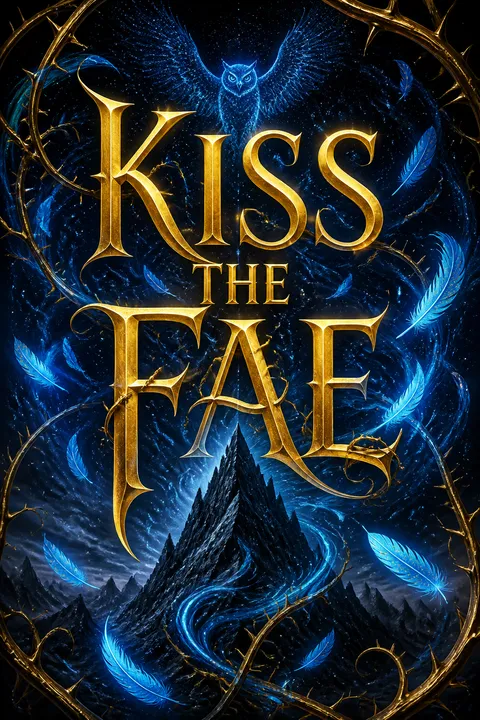
Kiss the Fae is a lush, psychologically rich fantasy that reimagines the enemies-to-lovers trope through the lens of trauma, agency, and the power of chosen family. At its heart, the novel is about breaking cycles—of violence, prejudice, and self-doubt—and forging new paths through courage, vulnerability, and love. The Fae's labyrinthine games are metaphors for the internal mazes we all navigate: fear, regret, longing, and the struggle to trust. By centering the story on the bond between sisters, the sanctity of animals, and the possibility of reconciliation between enemies, the book argues that true strength lies not in domination, but in compassion and humility. The romance between Lark and Cerulean is both a rebellion and a healing, challenging the idea that fate alone determines our worth or happiness. Instead, the story insists that love is a choice—messy, hard-won, and transformative. In a world ruled by vicious stars, Kiss the Fae offers a new fable: that even the most broken can find home, and that the wild, in all its beauty and danger, belongs to those brave enough to care for it together.
Review Summary
Reviews for Kiss the Fae are deeply divided. Fans praise Natalia Jaster's lyrical, poetic prose, immersive world-building, and the enemies-to-lovers chemistry between Lark and Cerulean, with many drawing favorable comparisons to Laini Taylor and noting clear Labyrinth-inspired elements. Critics, however, frequently condemn the writing as overwrought "purple prose," citing jarring tonal inconsistencies, excessive synonym substitution, repetitive phrasing, and confusion around the word "digit." The plot concept and characters are generally considered promising, though execution divides readers sharply.
People Also Read
Characters
Lark
Lark is a mortal woman marked by abandonment, hardship, and resilience. Raised as a foundling and chimney sweep, she is fiercely protective of her chosen family—her sisters and father—and the sanctuary they've built for wounded animals. Lark's wit, courage, and refusal to submit make her both a target and a fascination for the Fae. Her journey is one of self-discovery, as she confronts trauma, guilt, and the possibility of love with her enemy. Lark's psychological arc is about reclaiming agency, learning to trust, and choosing vulnerability over fear. Her bond with Cerulean is both a source of pain and healing, challenging her to redefine what it means to be strong, loved, and free.
Cerulean
Cerulean is the Fae monarch of the sky—beautiful, cunning, and haunted by loss. Once a captive of mortals, he is shaped by trauma, guilt, and the burden of leadership. His power over wind and music is matched by his capacity for both cruelty and tenderness. Cerulean's relationship with Lark is a battle of equals, each pushing the other to confront their deepest wounds. Beneath his arrogance lies a longing for connection, belonging, and redemption. His arc is about learning humility, embracing vulnerability, and choosing love over vengeance. The revelation that Lark is his childhood savior and soulmate forces him to reconcile past and present, duty and desire.
Juniper
Juniper is Lark's sister in all but blood—a foundling marked by a poacher's tattoo and a fierce intellect. She is pragmatic, skeptical, and fiercely loyal, often acting as the voice of reason and caution. Juniper's trauma makes her wary of trust, but her love for her sisters is unwavering. Her journey in the forest, under Puck's rule, tests her resourcefulness and resilience. Juniper's psychological struggle is with shame, anger, and the fear of being unworthy of love or belonging. Her arc is about reclaiming her agency and redefining her identity beyond her scars.
Cove
Cove is the youngest and kindest of the sisters, marked by a history of hunger and theft. She is empathetic, honest to a fault, and often the emotional glue holding the family together. Cove's journey in the river domain, under Elixir's rule, challenges her honesty and courage. Her psychological arc is about overcoming self-doubt, embracing her own strength, and learning that vulnerability is not weakness. Cove's love for her sisters and the animals they protect is her guiding light.
Papa Thorne
Papa Thorne is the adoptive father of Lark, Juniper, and Cove—a man of quiet strength, compassion, and wisdom. He rescues the girls from abandonment and gives them a home, teaching them the value of kindness, hard work, and family. Papa's presence is a source of comfort and grounding, his love unconditional. He represents the possibility of healing and the importance of chosen family. His arc is quieter but essential, embodying hope and the belief that love can be found and built, even in a world of loss.
Moth
Moth is a young Fae with a sharp tongue and a hidden heart, serving as Cerulean's confidante and the sanctuary's caretaker. Orphaned by the violence between mortals and Fae, she is both hostile and vulnerable, her loyalty hard-won. Moth's relationship with Lark evolves from suspicion to respect, mirroring the larger theme of reconciliation. Her arc is about learning to trust, forgive, and find family beyond blood.
Puck
Puck is the Fae monarch of the forest—seductive, cunning, and unpredictable. His power lies in wordplay, temptation, and the manipulation of desire. Puck's relationship with Juniper is a battle of wits and wills, each testing the other's limits. Beneath his bravado is a longing for connection and a fear of vulnerability. Puck's arc is about confronting his own darkness and learning the cost of cruelty.
Elixir
Elixir is the Fae ruler of the river—enigmatic, dangerous, and driven by old wounds. His domain is one of secrets, illusions, and submerged pain. Elixir's relationship with Cove is fraught with tension, each challenging the other's honesty and courage. His arc is about the destructive power of vengeance and the possibility of redemption through empathy.
Tímien
Tímien is Cerulean's animal companion and surrogate father—a majestic, one-eyed owl who embodies wisdom, loyalty, and the sacred bond between Fae and fauna. Tímien's presence is both protective and symbolic, representing the true rulers of the wild. His arc is about guiding Cerulean and Lark toward understanding, humility, and the acceptance of nature's authority.
The Fauna
The animals of the Solitary wild—owls, cougars, antelopes, nightingales, and more—are not mere background, but active agents in the story. They are victims, survivors, and ultimately the true rulers of the land. Their suffering and resilience mirror the struggles of the human and Fae characters. The fauna's arc is about reclaiming their place as the heart of the world, demanding respect, and teaching all others the meaning of stewardship and coexistence.
Plot Devices
The Fae's Game
The central plot device is the Fae's game: mortals are forced to navigate deadly, magical landscapes—mountain, forest, river—each ruled by a different Fae. The games are both literal and metaphorical, testing not just physical endurance but psychological resilience, moral courage, and the capacity for love and forgiveness. The rules are shifting, bargains are binding, and every victory comes with a cost. The structure allows for parallel journeys, character growth, and the gradual revelation of secrets.
Bargains and Wordplay
The Fae's obsession with bargains, riddles, and precise language is a recurring device. Every promise, threat, or deal is fraught with hidden meaning and potential betrayal. This device creates tension, foreshadows twists, and forces characters to think critically about trust, consent, and agency. It also serves as a metaphor for the complexities of relationships—romantic, familial, and political.
Foreshadowing and Flashbacks
The narrative is rich with foreshadowing—through fables, dreams, and recurring motifs (feathers, wind, masks). Flashbacks to Lark's childhood encounter with the caged Fae boy provide emotional depth and context, gradually revealing the true nature of her bond with Cerulean. This device deepens the psychological stakes and ties the personal to the epic.
Animal Symbolism
Animals are not just background, but active symbols and agents. They represent innocence, suffering, and the possibility of healing. The revelation that the fauna are the true rulers of the wild subverts expectations and reframes the entire conflict. This device reinforces themes of stewardship, humility, and the interconnectedness of all life.
The Bond
The magical bond between Lark and Cerulean—created by a childhood kiss—serves as both plot engine and thematic core. It exempts Lark from being a sacrifice, changes the rules of the game, and forces both characters to confront the difference between fate and choice. The bond is both a blessing and a burden, raising questions about agency, consent, and the nature of true love.
Narrative Structure
The story is structured around the separation and eventual reunion of the sisters, each facing their own trial. The narrative weaves together action, romance, and psychological exploration, building toward a climax that is both personal and collective. The use of alternating settings, shifting perspectives, and layered revelations creates a sense of momentum and emotional resonance.








































