
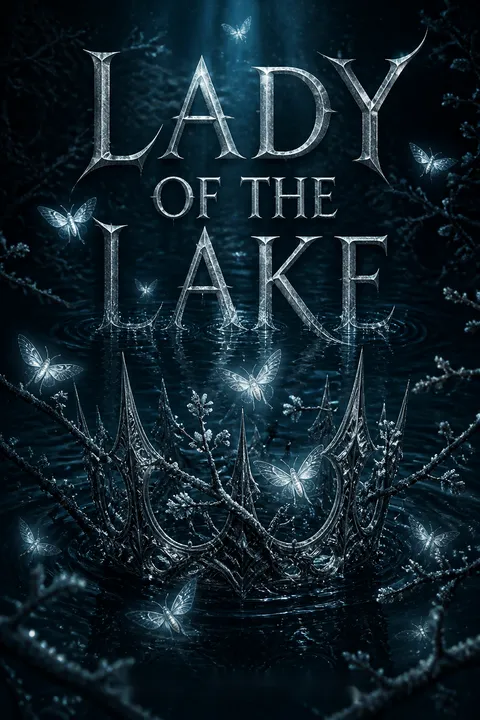


Plot Summary
Marry Me or Die
Nia1 returns to Castle Perillos from a secret battlefield mission — days spent leaking Talan's2 invasion plan to save the British army — to find the prince waiting in her room wearing only a towel. He announces they will marry tonight.
Not out of love: King Auberon7 intends to force Talan2 into a political marriage with Countess Arwenna,8 whose wealth could shore up the empty treasury. The only way to block it is to already be married. Talan2 has no idea Nia1 is a spy for Avalon Tower, sent to help assassinate him and his father.
She's been posing as his Fey farm-girl mistress, using telepathic powers he severed and forced into his service. She cannot refuse without abandoning her mission. She cannot accept without marrying the man she's here to kill.
Hunted Before the Altar
Talan2 brings Nia1 to Griflet,13 an eccentric forest cleric hooked on a glittering powder called bisen-root. Nia1 stalls by admitting she ate meat, violating Fey wedding tradition. Talan2 counters with a purification ritual: they must survive being hunted by a basilisk overnight. The creature nearly kills them — Nia's1 half-human body seizes in the frozen river, and Talan2 carries her through the woods for hours.
When the basilisk catches up, Nia1 uses her Sentinel powers to shatter its magical shield, letting Talan2 drive his sword home. Hours later, they marry beneath frozen hawthorns. Nivene4 — Nia's1 spy partner, posing as her sister — braids her hair and whispers strategy: seduce him, stay close, wait for the assassination order.
Lightning Crowns a Princess
Their return to Perillos is a siege in miniature. Soldiers block the gate on Auberon's7 orders. Talan2 unleashes nightmare magic on the commanding knight, reducing him to a trembling wreck, while Nia1 slips into the man's mind to compel him to open the gates. Inside the courtyard, they find Arwenna8 radiant in her wedding gown, the king7 seething beside an enormous golden tent prepared for the wrong bride.
Talan2 announces his marriage. Auberon7 declares it illegal. Lightning — summoned by Talan's2 primal weather magic — splits the sky and ignites the tent. Arwenna,8 vibrating with fury, is forced to curtsy to Nia.1 The declaration splits the court: no one knows whether to fear the king or his son more.
Hunting His Own Wife
In Talan's2 library sanctuary, Nia1 discovers his handwritten notes about a voice he's heard for years — her voice, her memories of LA, her mother's17 fires. He felt her loneliness across an ocean. Talan2 interrogates a captured spy who mentions a tavern before slitting his own throat.
Nia1 recognizes the description — The Shadowed Thicket, the resistance headquarters — and panic roots in her chest. She plants false intelligence among guards, framing Talan's2 cousin Lumos as running a spy network from a distant castle.
Nivene4 visits with blunt orders: tighten the network, burn everything written, carry hemlock. When Talan2 takes Nia1 to visit his wounded dragon Tarasque, he reveals his mother's dragon was killed by Nia's1 leaked intelligence — a guilt she must swallow in silence.
Summoned to the Round Table
Nivene4 returns from Scotland bearing orders: Avalon Tower demands Nia1 debrief in person. They stage a diversionary attack on the castle. Nia1 rappels from her tower and leaps through the guarded portal, landing at her father Mordred's3 ruined castle — the true Fey king, isolated for fifteen centuries, who monitors the world through magical silver moths.
At Avalon Tower, fifty knights await. Wrythe Pendragon5 radiates contempt; Sir Kay12 defends Nia1 but won't reveal the assassination plan. Before leaving, she finds her drunk mother17 clinging to her ex-boyfriend Raphael,6 the humiliation splitting her open.
Iron Legion soldiers ambush her on a bridge — friends Serana,9 Darius,11 and Tana10 fight them off, and Tana10 warns: these people don't want the war to end.
Poison, Dreams, and Kisses
At Lord Aedan's18 aphrodisiac-laced banquet, Nia1 and Talan2 perform as lovers — their kissing so intense that Nia1 can barely separate performance from desire. She tries to mind-control Aedan18 but his ancient psyche is too complex.
Instead, she puts him to sleep and helps Talan2 carve a permanent pathway into his dreams using dream-stalking magic, gaining influence over the lord's vast military. While Talan2 works, Nia1 contemplates killing him with a poisoned knife but cannot bring herself to strike.
Exiting the room, she runs into Maertisa, one of Auberon's7 deadliest captains, who recognizes her as a human agent. Nia1 fights her through the palace and poisons her with aconite stolen from Aedan's18 drawer. Talan2 finds the body and believes Nia's1 lie that Arwenna8 sent the assassin.
The Countess's Last Hunt
Meriadec, the resistance leader, has vanished. Mordred's3 silver moth guides Nia1 to a lakeside cottage in the Vorgium Forest, where she finds him tortured to death. She recognizes Arwenna's8 handiwork — not just cruelty but artistic savagery.
Nia1 gallops after the countess, catches her, and buries a throwing knife in her stomach. Entering Arwenna's8 dying mind, Nia1 discovers unexpected pain: a father who sacrificed her mother to save himself, years of obsessive loneliness, a teenaged girl once saved from execution by young Talan.2
She also identifies the mole who betrayed Meriadec. Nia1 kills Arwenna8 and scrubs the blood off in snow. Talan2 catches her near the castle, pins her to a tree demanding answers — then buries both bodies for her without another question.
Buried Alive in His Dreams
Talan2 proposes teaching Nia1 to enter dreams through him — touching his hand, she plunges into his unconscious via dream-stalking magic. She finds herself in a five-foot dungeon cell, suffocating in darkness, feeling his ribs protruding through skin.
He was imprisoned twice — once framed by Lord Aedan,18 once for bedding his father's mistress. After his brother Lothyr died, Auberon7 pulled Talan2 from prison specifically to blame him for the post-revolution carnage: the dragon fire, the disembowelments, the public executions.
Talan2 let the world believe he was the Butcher of Brittany because fear was his only weapon against a father who would burn anyone. Between nightmares, Nia1 catches a dream of Talan2 making love to her beneath a sycamore tree. The real man beneath the monster starts to feel impossible to kill.
The Bomb Behind the Window
Nivene4 delivers sealed assassination instructions: ensure Talan2 stays in his room nightly and unlatch his window so assassins can enter. For three nights, Nia1 opens the window after dream-practice sessions. On the third night, Mordred's3 silver moth appears outside, fluttering frantically — a warning.
Nia1 decides she cannot let Talan2 die. She invents an excuse and pulls him into the hallway. Minutes later, an explosion obliterates his bedroom. Auberon's7 quarters are bombed too, but the king was safely in his library — exactly where Nivene4 had told them he would be.
The window wasn't for assassins to climb through. It was a signal that Nia1 was in the room. Nivene4 argues they must flee to Camelot. Nia1 refuses, suspecting Wrythe5 sabotaged both operations. She goes rogue.
Her Glamour Dissolves
Talan2 wakes Nia1 before dawn and flies her north on Tarasque to enter Lord Kahedin's dreams remotely via dream-stalking magic. Inside Kahedin's bizarre fantasy — a bone palace guarded by naked replicas of his cousin — Nia's1 glamour fails.
In the dream world, she appears as she truly sees herself: human ears, a summer dress from California. Talan2 notices instantly. He reshapes her ears with a touch and files the revelation for later. Nia1 mind-controls the feverish lord with unprecedented ease — dream powers carry no headache — and he capitulates to Talan's2 political demands.
The dream turns nightmare, and Talan2 manifests as death incarnate to break them free. Afterward, tangled together by the fire, he brings Nia1 to a shuddering climax but refuses full intimacy until she surrenders every remaining secret.
The Telepath Unmasked
Vidal — Maertisa's twin — ambushes Nia1 with twenty King's Watch soldiers at the hunting lodge. An arrow pierces her thigh. Ancient magic surges through her: the combined power of Morgan, Nimuë, and herself as Lady of the Lake. She kills six soldiers with supernatural speed before the power drains. Cornered at a cliff, she drops the mental veil she has maintained against Talan2 since they met.
His voice reaches her mind, recognizing her as the thief who stole his map years ago. He arrives and crushes Vidal's skull, then turns his fury on Nia.1 They fight viciously — fists, elbows, bodies slamming into trees. She reveals she is Mordred's3 daughter, heir to the Fey throne. He ties her wrists and sends her home on Tarasque alone.
Seventeen Years of Feybane
Nia1 returns to an Avalon Tower transformed. Sir Kay12 is dead. Wrythe5 controls everything — demi-Fey face loyalty programs, censorship, archive destruction. At dawn, Nia1 sneaks behind Merlin's portrait through an iron chainmail curtain into a hidden laboratory.
Inside a disguised refrigerator desk: rows of stoppered test tubes. Research notes spanning seventeen years describe the Feybane Contagion — a plague engineered to kill all Fey, developed before the invasion ever began. The Pendragons caused the original famine in Brocéliande.
Wrythe5 catches her. He parades Nia1 through the castle, has her drunk mother17 identify Mordred3 from a painting, and publicly exposes Nia1 as the Kingslayer's daughter. Darius11 and Serana9 fight through guards to rescue her from Genivieve's16 execution attempt, then rush her to the docks.
The Voice Across the Ocean
After recovering from mild plague exposure in Mordred's3 care on Avalon, Nia1 steps through the unguarded portal into Brocéliande. No soldiers wait. Reading a guard's mind, she learns Talan2 told no one she was a spy — his silence a mystery that draws her deeper into the castle.
She finds him in a dark corridor. He catches her by the throat and pins her to the wall. She speaks to him in English for the first time, her American accent replacing the Fey persona she has worn for months.
She tells him she saw the real Talan2 in his dreams, that she pulled him from the room to save him, that she came back because he is where she belongs. He calls her the first light, the start of everything. Against the cold stone wall, they finally come together completely.
Burning the Plague Away
Nia1 and Talan2 fly Tarasque through a portal to Camelot, dodging a new anti-dragon gun that shreds the dragon's wing. They leap onto Merlin's Tower balcony, smash through the door, and grab the plague vials. In the corridors, they encounter Raphael6 — sword drawn, furious, betrayed — until Nia1 convinces him they share the same enemy.
Together with Nivene,4 Serana,9 and the others, they battle up Shalott Tower against Wrythe's5 forces. Tarquin15 — a Pendragon enforcer — fires a crossbow bolt that pierces Serana's9 throat. Nia1 smashes his skull against the floor.
Talan2 drives his sword through Wrythe's5 chest. On the turret, Tarasque incinerates the plague vials — glass shatters, liquid sizzles into harmless steam. Talan2 collapses from an iron wound. Nia1 flies them to Mordred,3 whose ancient healing salve saves the prince.
Crown Falls, Republic Rises
In Brocéliande, Talan2 confronts the Council of Nobles. Two-thirds side with him — months of dream-manipulation bearing fruit. Auberon7 opens a portal and escapes to incinerate the commoner army marching on the castle. Talan2 pursues on Tarasque.
Father and son battle in storm clouds, dragon against dragon. When Auberon7 opens a portal to strike from above, Nia1 telepathically warns Talan.2 He feints vulnerability, rockets upward as his father overshoots, and claws Auberon7 off his mount. The king vanishes through a final portal.
On the ground, Nia1 bluffs the standoff between nobles and revolutionaries by brandishing a mead bottle she claims is plague, forcing negotiations. A republic replaces the monarchy. Resistant nobles exile themselves to Avalon. The war ends not with conquest but compromise.
Epilogue
On a mossy island of rambling ruins, Nia1 celebrates her birthday with Mordred's3 long-awaited banquet — fifteen centuries in the making. He wears Morgan's3 raven-and-moon brooch and radiates the joy of a boy whose party guests finally arrived. Tana10 wears a wildflower crown. Nivene,4 Raphael,6 Darius,11 and the Fey nobles eat and drink and dance beneath ancient arches while musicians play in the candlelit hall.
Serana's9 absence opens a wound that will not close. As dawn rises, Nia1 lies with Talan2 on Avalon's shoreline, Tarasque2 sleeping nearby among apple trees. He murmurs that he doesn't need the throne — just her and his dragon. For the first time, the girl who was always rootless has found a place where time forgets to move.
Analysis
Lady of the Lake interrogates what happens when every role you play becomes a prison. Nia Melisande1 is a compulsive performer — caretaker daughter, dutiful spy, fake mistress, false princess — and each identity serves someone else's agenda. The novel argues that authenticity requires first surviving the systems that demand your inauthenticity, and that survival sometimes means wearing the mask so long you forget it's there.
The enemies-to-lovers romance works because both Nia1 and Talan2 are professional liars who recognize each other's performances. Talan2 cultivated a reputation for sadism to survive a father who burned his mother alive. Nia1 maintains a Fey glamour, a farm-girl backstory, and a mental veil — each layer draining her power. Their intimacy progresses through the systematic stripping of masks: first physical during the basilisk hunt and the aphrodisiac party, then psychological through dream-walking, then magical when the veil drops. The sex scene against the castle wall carries weight because it's the first time Nia1 speaks in her real voice — American English, not performed Fey.
The political architecture mirrors the personal. Auberon7 falsified his lineage; the Pendragons manufactured the famine they claim to be fighting. Every institution in the book — the Fey monarchy, Avalon Tower, the Round Table — runs on foundational lies. The Feybane Contagion is the logical endpoint of Pendragon ideology: a weapon developed before the threat it ostensibly counters existed. The book argues that those who most loudly declare themselves protectors are often engineering the dangers they protect against. Mordred3 complicates the generational trauma pattern by being simultaneously the worst possible father figure — an ancient killer isolated for centuries — and the most honest one. His banquet table, set for fifteen hundred years, is the novel's most quietly devastating image: a party prepared for love that arrives only after nearly everyone who mattered has died.
Review Summary
Lady of The Lake concludes the Fey Spy Academy trilogy with high praise from readers. Many lauded the character development, particularly Nia's growth and Talan's complexity. The book's tension, plot twists, and satisfying ending were frequently mentioned. Readers appreciated the Arthurian lore and world-building. Some felt the pacing was off, with a slow start and rushed ending. Overall, most reviewers found it a thrilling conclusion, with engaging romance, action, and magic. The series as a whole was highly recommended for fans of romantasy.
People Also Read
Characters
Nia Melisande
Spy, princess, Lady of the LakeHalf-Fey spy for Avalon Tower posing as a farm girl in the Fey court. Daughter of Mordred3, granddaughter of Morgan le Fey, and the Lady of the Lake—though she discovers these identities gradually. Raised by an alcoholic human mother17 in Los Angeles, Nia learned to be the responsible one before she was old enough to understand why. This caretaking instinct makes her an exceptional spy: she reads people instinctively, gives them what they need, and absorbs chaos around her. Her core conflict is between the compulsive need to please everyone and a buried hunger to stop performing entirely. She masks vulnerability with competence and humor. Telepathic and Sentinel-powered, she can break through magical veils and control minds—at the cost of blinding headaches.
Talan
Dream Stalker, Fey crown princeCrown prince of Brocéliande, known as the Dream Stalker and the Butcher of Brittany. His primal powers include dream manipulation and weather control. Talan cultivates a persona of cruelty and hedonism that serves as both armor and weapon—fear keeps him alive in a court where his father7 imprisoned him twice and burned his mother alive. Beneath the performance lies someone who built an orphanage for war children and trained dragons with a tenderness he shows no one. Twice locked in a dungeon cell so small he couldn't stand, he emerged with claustrophobia he buries and a determination to overthrow Auberon7 methodically. His connection to Nia1 predates their meeting: he heard her thoughts for years, a voice that made isolation bearable.
Mordred
True Fey king, Nia's fatherThe true heir to the Fey throne, son of Queen Morgan, trapped alone on the island of Avalon for over fifteen centuries after the war with Camelot. His isolation has made him simultaneously sharp and socially atrophied—he fluctuates between brilliant strategy and startling obliviousness to modern norms. He monitors the world through magical silver moths and maintains an elaborate banquet table set for a party his mother planned but never attended. His relationship with Nia1 is the most genuine thing in his existence, though he expresses care through tactical advice rather than warmth. He bound Nia1 with a Hemlock Oath that prevents her from revealing his existence. Beneath the crown and the reputation for massacre lies a man who misses his mother terribly.
Nivene
Nia's spy partner and handlerNia's1 fellow Sentinel who poses as her sister in Brocéliande, with red hair and brutally practical instincts. She serves as Nia's1 lifeline to Avalon Tower and the resistance network. Her real sister Alix died because love compromised her judgment—a cautionary tale Nivene references often. She prizes punctuality, tactical clarity, and survival above sentiment, though her loyalty to Nia1 runs deeper than her pragmatism suggests.
Wrythe Pendragon
Avalon Tower's scheming SeneschalSeneschal of Avalon Tower and leader of the Pendragon faction. A human supremacist who views demi-Fey as contamination and Fey as existential threats. Cold, calculating, and patient, he manipulates the aging Sir Kay12 while building the Iron Legion as his enforcement arm within Camelot's walls. His hatred stems from ideology rather than trauma—he has never suffered at Fey hands, yet he pursues their annihilation with a bureaucrat's precision and a fanatic's certainty.
Raphael
Nia's ex-lover, demi-Fey knightA demi-Fey knight of Avalon Tower with striking silver eyes. Captured and tortured in Fey dungeons before Nia1 rescued him, he broke off their relationship immediately after. Fiercely protective of Nia1 despite their separation, he coordinates the war effort from Camelot and advocates relentlessly for pulling her out of danger. His loyalty to her transcends his distrust of Talan2, though it takes a battlefield alliance to prove it.
Auberon
Tyrannical Fey king, usurperKing of Brocéliande, a tyrant who falsified his lineage to claim Morgan's throne—he descends from Merlin, not Mordred3. He imprisoned his own son2 twice, burned Talan's2 mother alive, and taxes his subjects into starvation to fund endless wars. His portal-opening magic lets him move armies across realms, making him militarily formidable despite the political fragility of a reign built entirely on lies.
Arwenna
Obsessed countess, Talan's rival brideWealthy countess intended as Talan's2 political bride. Beautiful and dangerously unstable, she oscillates between aristocratic composure and sadistic violence—having once had a romantic rival stripped and fed to dogs. Her obsession with Talan2 stems from him saving her from execution as a teenager. Her father used her as a scapegoat throughout childhood, shaping a woman who equates cruelty with control and love with possession.
Serana
Nia's fiercest warrior friendNia's1 closest friend at Avalon Tower, a half-Fey warrior who wields an enormous sword with joyful ferocity. Freckled cheeks and wild beauty mask a woman of absolute loyalty—she fights for her friends the way others fight for causes, wielding courage like another blade. She charges into every battle without hesitation and represents the human cost that war statistics can never capture.
Tana
Fortune-teller, Nia's seer friendNia's1 friend at Avalon Tower whose tarot readings and celestial observations provide cryptic but consistently accurate warnings. Tiny in stature, enormous in intuition, she guides friends through danger with omens they rarely understand until too late.
Darius
Loyal archer, Nia's friendNia's1 friend and fellow knight, an archer with silver eyeshadow and a warm heart. His humor lightens desperate moments, and he risks his life repeatedly to protect Nia1 and their circle of demi-Fey allies.
Sir Kay
Aging commander of Avalon TowerElderly head of Avalon Tower with a gray beard and fading authority. He trusts Nia1 but increasingly capitulates to Wrythe's5 political pressure, compromising his principles under the weight of age and manipulation.
Griflet
Eccentric forest clericA reclusive cleric addicted to bisen-root powder who officiates Nia1 and Talan's2 secret wedding despite paralyzing terror of both the king and the prince he's defying.
Aisling
Nia's chatty Fey maidNia's1 endlessly talkative maid in Castle Perillos whose rambling anecdotes about relatives provide comic relief and genuine care for the princess's wellbeing amid the palace's dangers.
Tarquin
Pendragon enforcer, Iron LegionA Pendragon loyalist and Iron Legion enforcer. Cruel, entitled, and violently bigoted against demi-Fey, he serves as Wrythe's5 most willing instrument of persecution.
Genivieve
Wrythe's venomous nieceWrythe's5 niece and Pendragon enforcer who masks her cruelty behind aristocratic composure. She takes particular pleasure in undermining Nia's1 credibility at every opportunity.
Brandy
Nia's alcoholic human motherNia's1 chaotic, alcoholic mother whose lifelong instability—burning furniture, crashing through tables, inappropriate flirtations—forged Nia1 into a compulsive caretaker who puts out everyone's fires except her own.
Lord Aedan
Powerful, poison-loving nobleOne of Brocéliande's wealthiest lords, commanding a quarter of the Fey army. He keeps a collection of poisons in his desk and throws lavish, aphrodisiac-fueled parties to compensate for conversational tedium.
Plot Devices
Feybane Contagion
Genocidal plague targeting FeyA biological weapon developed over seventeen years by the Pendragon family, stored in stoppered test tubes behind Merlin's portrait in Avalon Tower. The virus targets magical biology—deadly to full-blooded Fey, debilitating to demi-Fey who can contract but not spread it, and harmless to pure humans. Research notes reveal the Pendragons deployed an earlier variant sixteen years ago that caused the crop blight in Brocéliande—the very famine that triggered Auberon's7 invasion of Europe. The weapon represents the ultimate irony: humanity's self-proclaimed defenders manufactured the crisis that made the Fey their enemies. Its destruction by dragon fire on Shalott Tower's turret becomes the story's central climactic act.
Dream-Stalking Magic
Mind invasion through dreamsTalan's2 primal power allows him to enter and shape others' dreams—planting fears, extracting secrets, and carving permanent pathways into minds for future manipulation. He uses this strategically to control nobles like Aedan18 and Kahedin, building a political coalition one unconscious mind at a time. When he brings Nia1 into dreams through physical contact, the technique becomes a vehicle for intimacy and revelation: she experiences his nightmares of imprisonment and discovers the real man beneath his monstrous reputation. Dreams operate by their own logic—glamours dissolve, time becomes nonlinear, and emotions carry the force of physical blows. The device drives both the political and romantic plotlines simultaneously.
Power of the Three
Combined Lady of the Lake magicThe Lady of the Lake title connects three women across centuries—Morgan, Nimuë, and Nia1—through a shared magical current. Triple spirals mark Nimuë's statues and occasionally shimmer on Nia's1 wrists. When she faces mortal danger, the combined power surges through her: superhuman speed, sharpened senses, and the ability to hear heartbeats from dozens of yards away. The magic first manifests weakly during the basilisk hunt and crescendos during the King's Watch ambush, where Nia1 kills six trained soldiers in seconds. It feeds on Brocéliande's magical soil and requires Nia1 to drop her mental veil—meaning she can only access full power at the cost of exposing herself to Talan's2 dream-stalking abilities.
Mordred's Silver Moths
Remote magical spy devicesTiny metallic moths that serve as Mordred's3 eyes and ears across realms. He stations them in Castle Perillos to monitor Auberon's7 orders and in Avalon Tower to eavesdrop on the Round Table. The moths are fragile—an iron chainmail curtain in Merlin's Tower destroys one, cutting off Mordred's3 surveillance at a critical moment. He secretly plants another in Nia's1 boot without her knowledge, which is discovered during her capture, providing physical evidence of her connection to the Kingslayer. The moths embody Mordred's3 paradoxical nature: caring enough to watch over his daughter, manipulative enough to plant evidence on her without consent.
The Hemlock Oath
Magically enforced silence pactAn ancient Fey binding ritual that leaves a scar across the palm. Nia1 swore one with Mordred3 during their first meeting, preventing her from revealing his existence or their alliance's terms. When Wrythe5 publicly accuses Nia1 of being Mordred's3 daughter and demands she deny it, the oath physically prevents her from responding—pain flares in her palm at any attempt to speak. Her friends independently recognize the scar and deduce its meaning, choosing to trust her without explanation. The oath represents the price of Nia's1 most dangerous alliance: it protects Mordred3 but becomes a weapon used against her at the worst possible moment, silencing her when she most needs to speak.
FAQ
Basic Details
What is Lady of The Lake about?
- Spy Navigates Fey Court: Nia, a half-human, half-Fey spy for Avalon Tower, infiltrates the Fey kingdom of Brocéliande by posing as the mistress, and later the wife, of Prince Talan, the feared Dream Stalker. Her mission is to gather intelligence and undermine the Fey occupation of Europe.
- Forced Marriage & Hidden Identities: Prince Talan, seeking to escape a politically arranged marriage, forces Nia into a union, unaware she is the true heir to the Fey throne through her father, Mordred. Both Nia and Talan operate under layers of deception, using their relationship for strategic advantage while navigating treacherous court politics.
- Unlikely Alliance Against Tyranny: As Nia uncovers Talan's complex past and hidden compassion, and Talan senses Nia's secrets and power, their initial animosity evolves into a complicated alliance. They ultimately unite against Talan's tyrannical father, King Auberon, and a genocidal plot by human supremacists in Avalon Tower, leading to revolution and the potential for a new era.
Why should I read Lady of The Lake?
- Intense Psychological Thriller: The novel masterfully blends fantasy with psychological depth, exploring themes of identity, trauma, and the blurred lines between good and evil through Nia and Talan's complex relationship and their ability to delve into minds and dreams.
- High-Stakes Espionage & Action: Readers are plunged into a world of constant danger, political intrigue, and thrilling action sequences, from escaping basilisks and dragon flights to navigating deadly court politics and fighting in a civil war.
- Rich World-Building & Character Arcs: The story offers a unique, dark reimagining of Arthurian legend, featuring compelling characters with significant growth, particularly Nia's journey to embracing her power and Talan's struggle for redemption, set against a backdrop of a war-torn, magically charged world.
What is the background of Lady of The Lake?
- Arthurian Legend Reimagined: The story is set in a world where Arthurian figures like Merlin, Morgan le Fey, Mordred, and the Lady of the Lake are ancient Fey beings whose history directly impacts the current conflict between humans (Camelot/Avalon Tower) and Fey (Brocéliande).
- Post-War Fey Kingdom: Brocéliande is a kingdom founded by Merlin and Auberon after a devastating war centuries prior, built on a lie about Auberon's lineage. It is now a powerful, occupying force in Europe, but suffers from internal unrest, famine, and political instability under Auberon's tyrannical rule.
- Human Resistance & Internal Conflict: Avalon Tower represents the last major human stronghold, training agents like Nia to fight the Fey occupation. However, it is plagued by its own internal power struggles and prejudices, particularly the rise of human supremacist factions like the Iron Legion under Wrythe Pendragon.
What are the most memorable quotes in Lady of The Lake?
- "Darling, don't you know I'm a monster?": Talan's chilling yet seductive line encapsulates his public persona and the dark allure he wields, hinting at the complex performance of his identity and his self-awareness of his feared reputation.
- "You always act as if your hand is forced by fate. Own your decisions.": Mordred's blunt assessment of Nia's tendency to justify her actions by circumstance challenges her perception of herself and highlights the theme of agency versus destiny in her journey.
- "I will never let a single other person in the world know that I think this, but I almost never know what I'm doing.": Talan's vulnerable confession to Nia reveals the profound insecurity hidden beneath his arrogant facade, offering a rare glimpse into his true thoughts and the burden of his perceived certainty.
What writing style, narrative choices, and literary techniques does C.N. Crawford use?
- First-Person Perspective: The story is told from Nia's first-person point of view, providing immediate access to her thoughts, fears, and conflicted emotions, immersing the reader in her subjective experience as a spy living a double life.
- Blend of Modern & Fantasy: Crawford juxtaposes modern elements (karaoke, LA dive bars, inhalers, pizza cravings) with a dark, ancient fantasy world of Fey, magic, dragons, and castles, creating a unique and often jarring contrast that highlights Nia's displacement.
- Internal Monologue & Subtext: A significant portion of the narrative occurs within Nia's mind, detailing her strategic calculations, emotional turmoil, and hidden reactions, often contrasting sharply with her outward performance, emphasizing the theme of dual identities and the psychological toll of deception.
Hidden Details & Subtle Connections
What are some minor details that add significant meaning?
- Jasper's Character Arc: The flamboyant dressmaker, initially presented as a superficial courtier obsessed with fashion and status, reveals unexpected depth and loyalty when Talan forces him to defy the king, showing how even minor characters are shaped by the court's power dynamics and can be compelled to choose sides.
- Aedan's Poison Collection: The detail that Lord Aedan collects and uses poisons extensively, mentioned casually by Talan, foreshadows Nia's later use of aconite from his collection to defend herself against Maertisa, highlighting the pervasive danger and resourcefulness required for survival in the Fey court.
- The Lost Palace's Symbolism: Beyond being Tarasque's home and Nimuë's burial place, the description of the Lost Palace with its crumbling beauty, ancient symbols (triple spirals), and sense of forgotten power subtly links Nia's emerging Lady of the Lake identity to this specific location and the legacy of her predecessors.
What are some subtle foreshadowing and callbacks?
- Nia's Asthma: Nia's human vulnerability, particularly her asthma, is mentioned early on and dismissed by Talan as a "sickness," but it later becomes a critical plot point when exposed to the Feybane virus, highlighting the biological differences between species and the specific targeting of the plague.
- The Hemlock Oath Scar: Tana's recognition of the scar on Nia's palm as a "Hemlock Oath scar," an ancient ritual, subtly foreshadows Nia's binding pact with Mordred and explains her later inability to speak certain truths about him without risking a terrible consequence.
- Talan's "Little Telepath" Comment: Talan's early, seemingly throwaway comment calling Nia "little telepath" during the basilisk hunt is a direct callback to his encounter with her in the Château des Rêves, revealing he suspected her identity as the map thief long before she confessed, adding layers to his initial interactions with her.
What are some unexpected character connections?
- Nia's Mother and Mordred's Portrait: The seemingly random detail of Nia's mother recognizing Mordred's portrait in Avalon Tower and mentioning their past encounter is a crucial, unexpected connection that directly exposes Nia's heritage to Wrythe and the Pendragons, triggering the climax of the Camelot civil war.
- Talan's Connection to the Blue Dragon Project: Talan's deep personal connection to the orphanage attacked by Avalon Tower, revealed late in the book, reframes his initial anger towards Nia and the Pendragons, showing his "villainous" actions often stem from a desire to protect the innocent, not just cruelty.
- Nimuë and Merlin's Son (Auberon): The Avalon Timeline reveals that Auberon is the son of Merlin and Nimuë, making him Talan's father and Nia's grandmother's son. This complex lineage adds a layer of tragic irony to the conflict, as Nimuë's magic (part of Nia's power) is used against her own son's descendants, and Merlin's legacy (part of Talan's) is tied to the kingdom built on lies.
Who are the most significant supporting characters?
- Mordred: As Nia's father and the true heir, Mordred provides crucial information, magical assistance (the moth, healing balm), and a complex parental relationship for Nia. His presence on Avalon and his history are central to the political and magical legacy themes.
- Nivene: Beyond being Nia's handler, Nivene is a vital link to Avalon Tower, a trusted friend, and a key figure in organizing the resistance in Brocéliande. Her pragmatism and loyalty are essential to Nia's survival and the broader revolutionary plot.
- Tana: Tana's unique ability to read omens and sense danger, combined with her unwavering loyalty, provides critical warnings and guidance to Nia and her friends, often predicting key events like Nia's return or impending attacks, adding a mystical layer to the narrative's tension.
Psychological, Emotional, & Relational Analysis
What are some unspoken motivations of the characters?
- Talan's Need for Control: Talan's pervasive need to be in control, evident in his manipulation of dreams, people, and even the weather, is deeply rooted in his trauma from being imprisoned and powerless in the dungeons, making his control a psychological defense mechanism against vulnerability.
- Nia's Desire for Belonging: Despite her spy training and ruthlessness, Nia's deep-seated desire for a sense of belonging, stemming from her rootless childhood and fractured identity, subtly influences her actions and relationships, particularly her yearning for connection with Talan and her friends.
- Arwenna's Cruelty as a Response to Trauma: Arwenna's sadistic tendencies and obsession with Talan are implicitly linked to her traumatic past, including her father's cruelty and witnessing her mother's execution, suggesting her violence is a twisted response to her own powerlessness and fear.
What psychological complexities do the characters exhibit?
- Talan's Performance of Sadism: Talan consciously cultivates his terrifying reputation as the "Butcher of Brittany" and Dream Stalker, using it as a shield and a tool for control, but his internal monologues and interactions with Nia reveal the immense psychological toll of maintaining this monstrous facade.
- Nia's Dissociation and Role-Playing: Nia's ability to seamlessly inhabit different roles (farm girl, princess, spy) leads to a degree of dissociation, making it difficult for her to connect with her true self and causing internal conflict when her genuine emotions (like her feelings for Talan) clash with her assigned roles.
- Auberon's Paranoid Tyranny: Auberon's rule is driven by deep-seated paranoia and insecurity, stemming from the lie of his lineage. His cruelty and need for absolute control are psychological manifestations of his fear of exposure and losing the power he illegitimately holds.
What are the major emotional turning points?
- Nia Witnessing Viviane's Death: Seeing her mentor and friend Viviane die on the battlefield is a brutal emotional turning point for Nia, hardening her resolve against Talan and the Fey occupation, fueling her initial commitment to the assassination mission.
- Talan's Dream of the Dungeon: Nia entering Talan's dream and witnessing his recurring nightmare of being buried alive in the dungeon is a pivotal moment that reveals his deep trauma and vulnerability to her, fundamentally shifting her perception of him from pure monster to a wounded individual.
- Nia's Fight with Vidal and Dropping the Veil: The near-death experience fighting Vidal and the King's Watch forces Nia to drop her mental veil, not only unleashing her full magical power but also forcing her to confront her true identity and the emotional cost of her deception, leading to her confession to Talan.
How do relationship dynamics evolve?
- Nia and Talan: From Captor/Captive to Allies/Lovers: Their relationship undergoes the most dramatic evolution, starting as a forced arrangement based on manipulation and survival, progressing through shared danger and glimpses of vulnerability, and culminating in a complex alliance and passionate love built on a foundation of revealed truths and mutual acceptance.
- Nia and Avalon Tower Command: From Agent to Pariah: Nia's relationship with figures like Wrythe and Sir Kay deteriorates from loyal agent to suspected traitor and ultimately enemy, highlighting the inherent distrust within the organization and the dangers of divided loyalties.
- Nia and Mordred: From Bargain to Family: Nia's initial interactions with her father are transactional and wary, based on a magical bargain. Over time, despite his manipulative tendencies, a genuine, albeit unconventional, father-daughter bond forms, rooted in shared heritage and mutual protection.
Symbolism
What are some key symbols and motifs?
- The Ouroboros vs. The Triple Spiral: Talan's ouroboros symbol (serpent eating its tail) represents his view of eternal cycles, destruction, and recreation, often tied to his darker nature. Nia's triple spiral symbol (life, death, rebirth) represents her Lady of the Lake lineage and connection to ancient Fey magic, suggesting a different, perhaps more balanced, form of cyclical power.
- Weather as a Reflection of Talan's Power/Mood: The weather, particularly storms, lightning, and cold, often intensifies around Talan, subtly symbolizing his raw, untamed power and reflecting his emotional state, especially his anger or turmoil, hinting at his hidden primal abilities.
- The Lost Palace: This location symbolizes forgotten history, hidden truths, and the legacy of the Lady of the Lake. It's where Tarasque is kept (Talan's hidden compassion), where Nimuë is buried (Nia's predecessor), and where Nia first feels the full pull of her magical inheritance, making it a nexus of past, present, and hidden power.
How does the setting contribute to the themes?
- Brocéliande as a Kingdom of Illusion: Brocéliande, built on Auberon's lie and maintained through manipulation and fear, serves as a physical manifestation of the theme of deception and hidden realities. Its beauty often masks underlying cruelty and decay.
- Avalon as a Place of Truth and Healing: In contrast to Brocéliande, Avalon, though ruined, becomes a sanctuary where truths are revealed (Mordred's survival, Nia's heritage) and healing can occur (Talan's recovery, the gathering of allies), symbolizing the possibility of rebuilding and finding genuine connection amidst destruction.
- Camelot as a Microcosm of Human Flaws: Camelot, particularly Avalon Tower, represents the darker aspects of human nature – prejudice (against demi-Fey), political maneuvering, and the capacity for monstrous acts (the plague), highlighting that tyranny and corruption are not exclusive to the Fey.
What recurring images or objects hold symbolic weight?
- Mirrors and Reflections: References to mirrors or reflections often appear when characters are confronting their dual identities or seeing themselves through another's eyes (e.g., Nia seeing herself in Aedan's palace, Talan seeing Nia as "dawn"), symbolizing self-perception, performance, and the struggle to reconcile inner and outer selves.
- Blood and Scars: Blood is a pervasive symbol of violence, sacrifice, and lineage (Nia's bloodline, the blood spilt in battles). Scars, like Nia's Hemlock Oath scar or Talan's iron wound, represent the lasting physical and emotional marks left by trauma and conflict.
- The Veil: The magical veil separating worlds and the mental veil Nia uses to shield her thoughts symbolize concealment, protection, and the barriers between truth and deception, both external and internal.
Interpretation & Debate
Which parts of the story remain ambiguous or open-ended?
- The Full Extent of Talan's Past Actions: While the book clarifies Talan wasn't responsible for the Brittany massacre, the full scope of his actions as the "Butcher of Brittany" and Dream Stalker remains somewhat ambiguous, leaving room for interpretation on the depth of his past cruelty versus his performance of it.
- The Future of the Brocéliande Republic: The establishment of the republic is presented as a hopeful beginning, but its long-term stability and the challenges of uniting disparate factions (nobles, commoners, demi-Fey) are left open-ended, suggesting the peace is fragile and requires ongoing effort.
- The Nature of Nia's Lady of the Lake Power: While Nia's connection to Morgan and Nimuë is established, the precise limits and capabilities of her fully awakened Lady of the Lake powers, beyond enhanced physical ability and telepathy, are not fully explored, leaving potential for future development.
What are some debatable, controversial scenes or moments in Lady of The Lake?
- Talan's Use of Dream Magic for Coercion: Talan's non-consensual entry into and manipulation of others' dreams, particularly Lord Aedan's, raises ethical questions about consent and the violation of mental privacy, even when used for seemingly strategic purposes.
- Nia's Ruthlessness and Kill Count: Nia's increasing willingness to kill, sometimes brutally (e.g., Arwenna, Tarquin), and her justification of these actions as "doing what she had to" can be debated regarding whether she maintains her moral compass or becomes desensitized by the violence around her.
- The Justification of the Plague's Creation: While Wrythe is clearly the villain, the logbook entries hinting at the Pendragons' long-term project and Sir Kay's partial awareness raise questions about the extent of complicity within Avalon Tower and whether their fear of the Fey justified such a monstrous weapon.
Lady of The Lake Ending Explained: How It Ends & What It Means
- Tyranny Overthrown, Republic Established: The ending sees King Auberon defeated and the Pendragon leadership in Camelot dismantled. Brocéliande transitions from a monarchy built on lies to a nascent republic, where power is negotiated between nobles, commoners, and demi-Fey, symbolizing the breaking of old, corrupt power structures and the potential for a more equitable society.
- Plague Averted, Genocide Prevented: Nia and Talan, with their allies, successfully destroy the Feybane virus, preventing a widespread genocide of magical beings. This signifies the triumph of cooperation and sacrifice over prejudice and destruction, highlighting the importance of uniting against existential threats.
- Nia and Talan Find Home and Belonging: Nia, having embraced her full identity as the Lady of the Lake and Mordred's daughter, finds a sense of belonging on Avalon with Talan and her friends. Their relationship, built on honesty after layers of lies, represents healing and the possibility of finding love and stability amidst chaos, concluding [Nia's](#nia
Fey Academy for Spies Series
About the Author


Download PDF
Download EPUB
.epub digital book format is ideal for reading ebooks on phones, tablets, and e-readers.








































