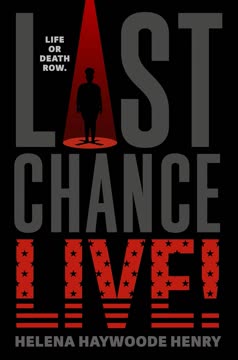
Plot Summary
White Walls, No Escape
Eighteen-year-old Eternity Price sits in a blindingly white Texas death row cell, her world reduced to sterile walls and the ache of lost freedom. She cycles through memories of family—her little brother Sincere, her distant Nana, her dead parents—and the gnawing knowledge that her life is ending before it ever truly began. The system that put her here feels indifferent, her voice unheard, her future erased. Yet, beneath the despair, a stubborn ember of hope flickers: she repeats to herself, "I'm not staying here." The white walls are a lie—this is not a hospital, not a place for healing, but a cage for the condemned. Eternity's mind drifts between longing for lost joys and the cold reality of her fate, setting the stage for a desperate search for escape.
Three Ways Out
Eternity weighs her only options: legal appeals, escape, or fighting for a miracle. Legal appeals are a maze of jargon and hopeless odds—her lawyer, Zach, offers little hope, and the system seems rigged against her. Escape is a fantasy; the prison is impenetrable, and the guards are as trapped as she is. The third option emerges when she learns about Last Chance LIVE!, a reality show where death row inmates compete for freedom. The show is a grotesque spectacle, but it's a chance—her last. Eternity, always overlooked, doubts she'll be chosen, but the alternative is certain death. She decides to fight, to apply, clinging to the slim hope that America might finally see her.
The Application
Eternity's application to Last Chance LIVE! is both an act of hope and surrender. The process is humiliating—she must give up all legal appeals, and if eliminated, execution follows within a week. Her lawyer warns her the odds are worse than the courts, but Eternity is undeterred. She faces questions about why she wants and deserves to live, questions she can barely answer. Memories of her fractured family and dreams of a future with Sincere haunt her. The application is a leap into the unknown, a wager that the world might care enough to let her live, even as she doubts her own worth.
Last Chance LIVE!
Eternity is selected for the show, whisked from prison to a California mansion under the glare of cameras. The transition is surreal—luxury replaces deprivation, but the bars remain, invisible yet unyielding. She meets the other contestants, each with their own burdens and secrets. The show's rules are brutal: weekly challenges, public voting, and the ever-present threat of elimination and death. The producers manipulate every detail, crafting narratives and rivalries for the audience. Eternity struggles to find her place, torn between the urge to hide and the need to stand out. The mansion is both a stage and a prison, and survival means playing a game she barely understands.
Arrival at the Mansion
The contestants—diverse in background but united by desperation—size each other up. Eternity feels out of place among them, especially when a white, all-American girl named Brenna arrives, embodying everything Eternity believes America loves. The group forms uneasy alliances, with Eternity gravitating toward other Black contestants, forming the "Monticello Crew." The show's challenges begin, blending therapy, humiliation, and competition. Eternity's insecurities flare as she navigates friendships, betrayals, and the relentless gaze of the cameras. The mansion's artificial warmth cannot mask the underlying tension: only one will survive.
Making Allies, Making Enemies
Eternity's survival depends on alliances, but trust is scarce. She bonds with Malleah, a fellow Black girl, and Terrance, whose bravado masks deep wounds. Together with Darnell, they strategize to protect each other from elimination. Yet, the game's structure pits them against one another, and betrayals are inevitable. Eternity's attempts to manipulate the game—both on and off camera—draw both admiration and resentment. She becomes a meme sensation after a viral confrontation, but fame is fickle. The line between friend and foe blurs, and Eternity learns that in this game, everyone is both.
The Monticello Crew
The Monticello Crew—Eternity, Malleah, Terrance, and Darnell—pledge to protect each other, invoking the dream of Black leaders who never found peace. Their alliance is tested by the show's twists and the producers' manipulations. Darnell's backstory—taking the fall for his younger brother—haunts the group, while Terrance's rage simmers beneath the surface. The crew's unity is both a shield and a target, as other contestants and the show itself conspire to break them. Eternity's leadership is challenged, and the cost of loyalty becomes painfully clear as the game progresses.
Viral or Invisible
Eternity's struggle for survival becomes a battle for visibility. She leverages social media, creating anonymous accounts to sway public opinion and keep herself in the game. Her efforts pay off—she becomes a viral sensation, her catchphrases and confrontations turning her into a symbol for viewers. Yet, the attention is double-edged, exposing her vulnerabilities and making her a target for both producers and contestants. The pressure to perform, to be memorable, weighs heavily. Eternity realizes that in this world, being invisible is as deadly as being hated.
The Chopping Block
The weekly challenges grow more brutal, forcing contestants to confront their pasts and betray their friends. The Monticello Crew is whittled down—Darnell is eliminated, then Ramon, then others. Each loss is a blow, eroding Eternity's hope and resolve. The producers manipulate outcomes, stoking drama and despair. Eternity's own actions—her betrayals, her viral attacks—come back to haunt her. The line between survival and self-destruction blurs, and the mansion becomes a crucible, burning away all illusions of safety or redemption.
Betrayal and Survival
As the game nears its end, alliances shatter. Eternity, desperate to survive, turns on Malleah, orchestrating a social media campaign to undermine her. The betrayal is devastating—Malleah, once her closest ally, becomes her enemy. Terrance, too, is caught in the crossfire, his loyalty tested to the breaking point. The producers exploit every fracture, pushing the contestants to their limits. The final challenges are both physical and psychological, forcing Eternity to confront the darkness within herself and the consequences of her choices.
The Darkness Within
Eternity is haunted by her past—the crime that put her on death row, the betrayals that kept her alive in the mansion, the friends she sacrificed. Therapy sessions with Dr. Jane force her to examine the roots of her rage and self-loathing. She grapples with the question of forgiveness—can she forgive herself, and does she deserve to live? The show's spectacle cannot mask the pain, and as the final elimination approaches, Eternity is forced to reckon with the truth: the problem with the universe might be her.
The Final Four
The mansion is nearly empty—only Eternity, Brenna, Terrance, and Malleah remain. The final challenges are grueling, and the producers' manipulations reach a fever pitch. A fire—set as an act of rebellion—destroys the mansion, scattering the survivors. In the chaos, alliances are tested one last time. Terrance and Malleah attempt escape; Brenna and Eternity are left to face the final vote. The game's end is both a release and a reckoning, as the survivors confront what they've become.
Fire and Freedom
The fire is both literal and symbolic—a last, desperate bid for freedom. Eternity and her allies try to escape, but the system closes in. The aftermath is brutal: Terrance is beaten, Malleah is recaptured, and Eternity is isolated. The dream of freedom dissolves in smoke, and the survivors are left to face the consequences of their rebellion. The show's spectacle is exposed as a farce, and the cost of survival becomes unbearably clear.
The End of the Game
The last episode is a spectacle of grief and regret. Eternity and Brenna stand alone, the only survivors of a game that promised freedom but delivered only loss. The final vote is both a judgment and a mercy—America chooses Brenna, and Eternity is condemned. The show ends, but the pain lingers. Eternity is returned to death row, her brief taste of hope replaced by the certainty of death. The game is over, but the questions it raised remain unanswered.
The Price of Forgiveness
Eternity's final days are a blur of fear, regret, and longing. She is offered a last wish—a park bench, a scholarship, a meaningless gesture—but what she wants is impossible: to undo the past, to be forgiven, to be loved. She confronts the reality that forgiveness is not a feeling but a cost, a debt that must be paid. As her execution approaches, she reflects on the meaning of justice, mercy, and redemption. The world's judgment is final, but Eternity's search for meaning endures.
Death Row's Last Day
Eternity's last day is marked by ritual and routine—showers, paperwork, final visits. She is denied even the comfort of a last meal. The execution chamber is cold and impersonal, the process mechanical. As the drugs take hold, Eternity's mind races through memories of family, friends, and the life she might have lived. In her final moments, she sees her mother, feels the presence of those she loved and lost, and wonders if there is anything beyond the darkness.
The Problem with the Universe
Eternity's story is a meditation on suffering—the pain inflicted by family, community, and society. She is both victim and perpetrator, shaped by a world that never gave her a chance. The narrative explores the roots of violence, the hunger for belonging, and the desperate search for meaning in a broken world. Eternity's journey is both singular and universal—a reflection of the ways we are all shaped by the systems and stories that surround us.
Renewal and Release
In the aftermath, the story turns to the possibility of renewal. The author's note reframes Eternity's journey as a call to mercy, justice, and wisdom. The world is broken, but change is possible—if we are willing to forgive, to pay the cost of others' pain, and to see the humanity in those we would condemn. Eternity's story is a love letter to the lost, a challenge to the comfortable, and a reminder that even in the darkest places, hope can endure.
Analysis
A searing indictment of justice, spectacle, and the hunger for mercyLast Chance Live! is a powerful, unflinching exploration of what it means to be human in a world that commodifies suffering and denies forgiveness. Through Eternity Price's journey—from death row to reality TV, from desperate hope to final reckoning—the novel interrogates the systems that shape our lives: family, community, media, and the law. It exposes the ways in which we are all both victims and perpetrators, shaped by forces beyond our control yet responsible for the choices we make. The reality show is a mirror, reflecting America's fascination with punishment and redemption, and the audience's complicity in both. The novel challenges readers to consider the true cost of justice, the possibility of forgiveness, and the meaning of freedom. It is a love letter to the lost, a call to mercy, and a reminder that even in the darkest places, hope can endure. In the end, Eternity's story is all of ours—a testament to the enduring human need for belonging, forgiveness, and renewal.
People Also Read




Characters
Eternity Price
Eternity is the heart of the novel—a Black teenager condemned to death for a crime that is both her fault and the product of a broken world. Her psyche is a storm of rage, shame, longing, and hope. She is shaped by abandonment, poverty, and the relentless message that she is unworthy. Eternity's relationship with her brother Sincere is her last tether to love, and her memories of her parents are both comfort and torment. On Last Chance LIVE!, she is both a fighter and a saboteur, forming alliances and betraying them in turn. Her journey is one of self-discovery, as she confronts the darkness within and the possibility of forgiveness. Eternity's voice is raw, honest, and unforgettable—a testament to the complexity of survival in a world that refuses to see her.
Sincere Price
Sincere is Eternity's younger brother, her mirror and her hope. Their relationship is marked by shared trauma and fleeting moments of joy—spooky pizza, bathtub cereal, whispered secrets. Sincere's descent into the dangers of their neighborhood mirrors Eternity's own fall, and his eventual estrangement is a wound that never heals. He represents both what Eternity has lost and what she fights for—a future where love and belonging are possible. Sincere's presence haunts Eternity, driving her choices and shaping her sense of self.
Malleah Wright
Malleah is Eternity's closest ally in the mansion, a fellow Black girl whose strength and vulnerability mirror Eternity's own. Their friendship is forged in adversity, tested by betrayal, and ultimately marked by forgiveness. Malleah's backstory—poverty, loss, and a crime born of desperation—parallels Eternity's, and their bond is both a refuge and a source of pain. Malleah's resilience and capacity for hope challenge Eternity to imagine a different future, even as the game pits them against each other.
Terrance Johnson
Terrance is a charismatic, wounded survivor whose bravado masks deep scars. His loyalty to the Monticello Crew is fierce, but his trust is hard-won and easily broken. Terrance's backstory—abandonment, manipulation by a surrogate father, and a crime born of rage—reflects the novel's themes of systemic failure and personal responsibility. His relationship with Eternity and Malleah is complex, marked by moments of tenderness and betrayal. Terrance's struggle to reconcile his past with his desire for redemption is one of the novel's most poignant arcs.
Brenna Massie
Brenna is the embodiment of white, middle-class American girlhood—beautiful, poised, and seemingly untouchable. Yet beneath the surface, she is as damaged and desperate as the others. Her crime is shrouded in ambiguity, her motives tangled in longing and resentment. Brenna's ability to manipulate perception—both on the show and in her own life—makes her a formidable opponent. Her rivalry with Eternity is both personal and symbolic, a battle for America's attention and approval. Brenna's victory is both a triumph and a tragedy, exposing the limits of justice and the power of narrative.
Darnell Clark
Darnell is the gentle giant of the group, a Black boy whose crime—taking the fall for his younger brother—embodies the novel's themes of loyalty and injustice. His faith is both a comfort and a source of conflict, as he struggles to reconcile his beliefs with the reality of his situation. Darnell's presence is a balm for Eternity, a reminder of the possibility of goodness even in the darkest places. His elimination is a turning point, marking the end of innocence and the beginning of the endgame.
Ramon Gutierrez
Ramon is a complex figure—warm, funny, and deeply wounded. His crime—killing his grandmother—haunts him, and his search for forgiveness is both spiritual and existential. Ramon's sexuality, body image, and cultural identity add layers to his character, making him both relatable and enigmatic. His conversations with Eternity about God, guilt, and redemption are some of the novel's most profound moments. Ramon's fate is a testament to the novel's refusal to offer easy answers.
Jake Ritter
Jake is the awkward, anxious white boy whose presence on the show is both a surprise and a liability. His crime—masterminding a murder but not committing it—makes him a target for both the contestants and the audience. Jake's inability to connect, his social awkwardness, and his eventual humiliation (wetting himself on live TV) make him both pitiable and emblematic of the show's cruelty. His elimination is a reminder that the game is as much about perception as reality.
Dasha Dudaev
Dasha is the "hot" contestant, beloved by viewers and resented by rivals. His confidence and physical prowess make him a favorite in challenges, but his arrogance and detachment isolate him. Dasha's downfall is orchestrated by the other contestants, a collective act of self-preservation that exposes the game's brutality. His exit marks the end of the illusion that charm or beauty can guarantee survival.
Evan Fletcher
Evan is the show's executive producer, the architect of the spectacle. He is both puppet master and provocateur, shaping narratives, stoking conflict, and reveling in the power to decide who lives and dies. Evan's philosophy—that the show is a mirror for America's own violence and hypocrisy—makes him both a villain and a truth-teller. His interactions with Eternity are charged with menace and insight, exposing the machinery of spectacle and the limits of redemption. Evan's eventual downfall is a small victory in a world where justice is rare.
Plot Devices
Reality TV as Death Sentence
The novel's central device is the reality show Last Chance LIVE!, where death row inmates compete for freedom. The show is both a literal and metaphorical stage, exposing the contestants' lives to public scrutiny and judgment. The audience's votes determine life and death, turning justice into entertainment. The show's structure—challenges, eliminations, confessionals—mirrors both the legal system and the machinery of spectacle. The device allows the novel to explore themes of agency, manipulation, and the hunger for belonging, while critiquing the commodification of suffering.
Viral Fame and Social Media
Eternity's use of social media—anonymous accounts, viral memes, online campaigns—becomes a lifeline in the game. The device highlights the power and peril of visibility in the digital age. Fame is fickle, and the same forces that elevate can destroy. The novel uses this device to explore questions of identity, authenticity, and the ways in which narrative shapes reality. The tension between being seen and being known is central to Eternity's journey.
The Monticello Crew
The formation and dissolution of the Monticello Crew—a pact among Black contestants to protect each other—serves as both a survival strategy and a source of conflict. The alliance is a microcosm of community, solidarity, and the limits of loyalty under pressure. Its eventual breakdown exposes the corrosive effects of competition and the impossibility of collective survival in a system designed for individual victory.
Confessionals and Therapy
The show's therapy sessions and confessionals are both plot device and psychological crucible. They force contestants to confront their pasts, articulate their pain, and perform vulnerability for the cameras. The device blurs the line between healing and exploitation, raising questions about the possibility of redemption and the cost of survival. The confessionals also serve as a narrative device, allowing the reader access to the characters' inner lives and the complexity of their motivations.
Foreshadowing and Symbolism
The novel is rich with foreshadowing—Eternity's obsession with Disney, her longing for pan pizza, the recurring image of the red room where she locks away her enemies. These motifs echo throughout the narrative, building tension and deepening the emotional resonance. The fire that destroys the mansion is both a literal act of rebellion and a symbol of the desire for renewal. The final execution scene is foreshadowed by earlier meditations on death, forgiveness, and the search for meaning.








































