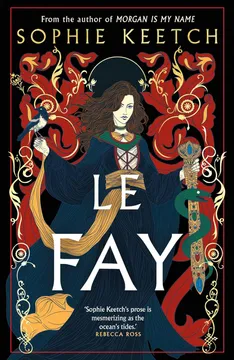
Plot Summary
Dawn Before Ruin
In the hazy golden mornings of Camelot, Morgan, newly free of her abusive husband Urien, tries to reclaim agency as both mother and woman. Her precarious security relies on her brother King Arthur's power, and the legal fiction of serving as Queen Guinevere's lady-in-waiting. Morgan is aware that this position cannot last: her freedom, her motherhood, even her sense of self are all under threat from external forces—chiefly patriarchal law and Arthurian politics. But for now, she savors the stolen time with her beloved son Yvain, her friendships with Alys and Tressa, and the quiet before the next turn of fate, haunted by the certainty that peace is only an illusion.
Shadows Across Camelot
The surface harmony of Arthur's court conceals fractures: Arthur returns after a mysterious absence; Queen Guinevere's jealousy and coldness against Morgan's independence festers; political games unravel around a coming tournament. Yvain's precarious status as Urien's son looms over Morgan, who relies on Arthur's favor against a law that values her only as a vessel. Camelot's traditions and protocols shape every relationship, trapping Morgan and the others in roles they strain against. The past—old betrayals, friendships soured, unspoken grievances—threatens the brittle fabric of the present. The kingdom's unity is shadowed by personal rivalries and legal ambiguities.
The Gaul Returns
Into the courtly tumult strides Sir Accolon of Gaul: Morgan's past lover, now a celebrated knight in Arthur's service, returns after nine years' absence. Their reunion is fraught with longing, unresolved anger, and the pain of abandonment, both pretending to be strangers while their history simmers below the surface. The reappearance of Accolon not only revives Morgan's deepest wounds but also presents a possibility of new purpose—and new danger. Around their suppressed connection swirl secrets, court politics, and the ever-present threat of discovery that could destroy them both. What begins as a traumatic encounter kindles dormant desires and old ambitions.
Old Bonds, New Fears
Tensions escalate as Morgan navigates Queen Guinevere's resentment, her own motherly grief anticipating Yvain's forced return to Urien, and Arthur's enigmatic withdrawal under Merlin's influence. Morgan's efforts to maintain dignity—through chess-like diplomacy, healing, and hidden magic—run up against the rigid structures of Camelot, as much as against her own heart. Her longing for past happiness with Accolon becomes entangled with anxiety for her child, ambitions as a healer-sorceress, and a growing sense that isolation is her only defense. The court is at war with itself, and Morgan with her own vulnerabilities.
Sword, Scabbard, Secret
Arthur reveals Merlin's mystical gift: Excalibur and its enchanted scabbard, the source of invulnerability. Entrusting Morgan with these artifacts, Arthur implicitly casts her as both custodian and exile—a trusted confidante but barred from open power. The scabbard's magic, felt by Morgan alone, becomes a symbol of hidden female strength and the cost of loyalty. She crafts a duplicate for subterfuge and wrestles with the burden: to protect Camelot, her brother, and herself from the violence of men and fate, even as the pull of her own ambitions and grievances deepens.
Yvain Torn Away
Morgan's worst fear materializes: by royal decree, Yvain is ordered back to Urien, stripping Morgan of her son. The injustice—rooted in law, sin, and gender—unites her pain with long-simmering rage against her brother's inability to save her. Although Arthur offers his love and would defy law for her, Morgan refuses to let him become his violent father, Uther. Morgan is forced to bargain with her grief, burying her pain while promising herself (and her future) that she will not endure such losses unavenged. Her sense of purpose and isolation are sharpened, and her burning ambition grows darker.
Freedom Within Constraint
With Yvain gone, Morgan pours herself into acts of forbidden healing, reclaiming her skill as a source of meaning and rebellion. She and her closest companions reflect on lost dreams of peace and intellectual fulfillment. The court and Queen attempt to confine Morgan's freedom, treating her body and mind as territory to control, but Morgan persists—defiantly healing a stableboy, staking her own identity against the suffocating boundaries of marriage, service, and royal expectation. Her clandestine healing becomes a metaphor for the ways women survive and transform societies determined to limit them.
Chess And Gamesmanship
The tournament illuminates Camelot's preoccupations: honor, spectacle, and the games people play. Morgan and Accolon dare one another into a high-stakes wager—if Accolon wins, she must advocate for him; if he loses, he must leave—and their battle of wits mirrors the tournament's drama. The contest is both literal and emotional, reviving the energy of their youthful chess games, and laying bare the passion and bitterness between them. As Accolon's star rises, Morgan is forced to reckon with what she wants: victory, vengeance, or reconciliation.
Sibling Rivalries Revealed
Morgan and Arthur's relationship—unusually deep, intimate, and foundational—begins to unravel under the pressures of Merlin's prophecies and Morgan's defiance. Arthur, beset by headaches and insecurities, leans on Morgan's healing but relies ever more on Merlin's manipulations. Both want to trust; both feel betrayed. Their bond is tested by the secrets Morgan must keep, the ambitions Arthur struggles to balance, and the looming threat that blood ties can be made perilous by the demands of fate and patriarchal duty.
Tournament of Betrayals
Accolon's victories in joust and duel bring him celebrity and offer Morgan a glimpse of renewed love—but also kindle the envy and suspicion of others, especially Queen Guinevere and the wider court. Morgan's refusal to bestow a favor on Accolon in the final brings disaster. Publicly, Accolon's success should be Morgan's, but all victories in Camelot are fraught: every joy is shadowed by a fresh round of rumor, wielded as weapon. The lines between ally and enemy, winner and outcast, become impossible to distinguish.
Dancing with Ghosts
After the dance that rekindles their intimacy, Morgan and Accolon are forced to confront the errors and wounds of the past. Old misunderstandings are laid bare; accusations, apologies, and raw honesty finally breach the gulf between them. The truth of their past—Morgan's sacrifice, Accolon's abandonment—paves the way for forgiveness, and their reunion is as painful as it is joyous. But reconciling their love with the hard realities around them remains almost impossible.
Loss, Longing, and Letters
The cost of Morgan's navigation between worlds is exile: forbidden to return to Camelot, stripped of position, love, and even her children. She retreats to Fair Guard, her ancestral manor, nursing her wounds and struggling to build a new life as others press forward around her. Grief and longing are reimagined as letters—unanswered—her only means of reaching toward Arthur and the world she's lost. Yet in her pain, Morgan discovers a kind of transformative power: in community, in self-creation, in the deliberate act of survival after devastation.
Sanctuary in Fair Guard
The rural manor offers Morgan a fragile respite. Here, she, Alys, Tressa, and Accolon attempt to make a home outside Camelot's reach, gathering community, living freely, and investing in learning and healing. Morgan's magical innovations—protection charms, elemental mastery—are woven with practical care. Yet the world's dangers still impinge: magical boundaries are tested, the scars of trauma linger, and grief is a tiger at the door. Even as Morgan fights for happiness, the past is never far behind.
Exile, Pain, Acceptance
Letters go unanswered, Yvain and a lost baby are beyond reach, the household's new joys are shadowed by frustration and guilt. Through patient support and confrontation, Alys and Tressa help Morgan confront her most corrosive beliefs: that she is only loss, only failure, only anger. Instead, Morgan begins to embrace her powers, not for revenge but for creation—of family, of place, of purpose. She claims Fair Guard, invests in community, and moves from self-destruction toward acceptance, even as the world's hostility continues.
Merlin's Bargain
Pressed by inescapable necessity, Morgan enters a binding bargain with Merlin: in exchange for a year's instruction and secrecy about her new pregnancy, she submits to his teaching, isolation, and manipulation. Through trials of power and will, she learns the secret arts: glamour, concealment, blood magic, necromancy. Merlin's obsession with knowledge and control comes into ever-sharper relief, even as Morgan's own skills outstrip his. Both are changed by the bargain, but Morgan's cost is immense—her freedom, her child, her innocence is lost once again.
Apprentice to the Enemy
Within Merlin's domain—magically-guarded, perilous, and lonely—Morgan refines her magical abilities under Ninianne's subtle guidance and Merlin's overbearing gaze. She learns to master elemental control, to heal, to transform, and finally, to resurrect—growing in power, but also discovering the price of magic, knowledge, and selfhood. Pain, moral compromise, and guilt accumulate, especially in the loss of her child delivered into anonymity as the price for her own survival. When at last she escapes Merlin's captivity, Morgan emerges changed, no longer willing to beg for the world's acceptance.
Stones, Scars, and Survival
On the run from Arthur and societal retribution, Morgan survives threats both magical and mundane. She wields her power boldly—invisibly, protectively—turning her household (and herself) into stone to escape Arthur's wrath, saving Manassen (and others) even while fiercely holding her claim to self-determination. Exile becomes an identity, and vengeance a calling. Yet at the heart of survival is community: her loyalty to her friends, her household, and the memory of love.
Love Beyond Death
Accolon's death by Arthur's hand shatters Morgan, but also catalyzes her truest resolve. In her devastation, she claims Accolon's heart—literally and figuratively—determined to bring him back through all her skill and power. Grief and love become the same force: an elemental desire for restoration that defies the world's judgment and even fate itself. In her rebellion against the narrative of suffering, Morgan vows to create her own ending, on her own terms.
Endings That Begin
As Morgan reckons with her past, she transforms her pain into action: building a life in Fair Guard, claiming her name and powers with clarity, writing her own legend. Betrayal, loss, and tragedy deepen her resolve to protect, to challenge, to guide, and to subvert. She promises vengeance against those who have wronged her, but also chooses community, compassion, and creation. Self-knowledge, choosing peace when possible and war when necessary, becomes Morgan's truest act of resistance. She is no longer only Arthur's sister, Urien's wife, or Accolon's lover: she is Morgan le Fay.
Analysis
A radical reclamation of the villainess: Le Fay reimaginedKeetch's "Le Fay" retells Arthurian legend from Morgan's perspective, radically reframing the archetype of the witch, the outcast, the "enemy" of Camelot. The novel is both feminist and contemporary in its concerns, foregrounding not only patriarchal oppression and the personal cost of law and legend, but also the psychological complexity of women negotiating trauma, political exclusion, and the hunger for self-authorship. Morgan's journey is marked by the necessity to claim her power—both magical and emotional—in a world that repeatedly tries to silence or destroy her. Against the backdrop of legend, the novel interrogates how systems (legal, familial, narrative) weaponize love, gender, and knowledge to keep women divided and displaced. It insists that healing and vengeance are not opposing forces but are required in turn for survival. Love is not redemptive in the conventional sense—in the end, forgiveness is ambiguous and fragile, autonomy a necessary solitude—but the story affirms the dignity in making one's own myth. The destruction of old worlds is not the end, but the origin of new stories: by taking the name Morgan le Fay as a banner, the heroine turns curse into claim, absence into possibility, and loss into legacy.
Review Summary
Characters
Morgan le Fay
As protagonist, Morgan stands as the story's heart—an intelligent, fiercely independent woman forced by law, custom, and betrayal to fight for her autonomy, her son, and her future. Morgan is both healer and destroyer, equally at home in the arts of care and vengeance. Psychology runs deep: years of emotional deprivation, abuse, and lost love shape her into a figure of empathy and rage, yearning and ambition. Her arc is one of carving out space for complicated womanhood: defiant enough to survive and subvert a patriarchal order, honest enough to confront her own darkness, but also capable of tenderness and hope. Her relationship with Arthur, and her bond with Accolon and her women, fuel her growth from victim to legend.
King Arthur
Arthur's reign is golden—on the surface—but his dependence on Merlin, his struggle to reconcile love and justice, and his weaknesses for prophecy and approval unravel his greatness. His trust in Morgan fractures under Merlin's manipulation and Guinevere's insecurities. Arthur wants to be different from his father Uther, yet falls into many of the same traps: violence masked as justice, loyalty undermined by suspicion. His psychological complexity is in the tension between virtue and ruthlessness, and his tragic flaw is his inability to recognize when "right" becomes "harm."
Sir Accolon of Gaul
Accolon represents both what Morgan lost and what she hopes for: their love is electric, scarred by misunderstanding and absence. He is honorable, devoted, but not infallible; pride and shame shadow his choices, as does survivor's guilt from both war and love gone awry. Their relationship is mutual recognition—each the other's mirror and wound. When they reunite, both must admit to pain, forgive, and find the courage to love beyond society's strictures. Accolon's own journey is from exile to tentative homecoming, his death perhaps the noblest and most tragic in the tale.
Queen Guinevere
Guinevere begins as Morgan's friend but becomes her chief rival and enforcer of oppressive norms. She is brilliant—a skilled chess player, social tactician, and reigning beauty—but insecurity makes her cruel, placing her own reputation and control above compassion or sisterhood. Her complicated psychology merges duty, envy, and loneliness, and in wounding Morgan she wounds herself, ensuring neither can trust or forgive.
Merlin
Merlin is both mentor and antagonist, defined by his thirst for knowledge and control. He plays fate's hand, manipulating Arthur's rise, dooming (and saving) Morgan, and shaping Britain's destiny through prophecy, moral ambiguity, and sometimes selfish cruelty. Merlin's inability to love or inspire trust outside of schemes marks his tragedy. Haunted by his own limitations and failures, he is both teacher and captor, whose lessons nearly undo his brightest student.
Yvain
Yvain is not just Morgan's child but the emotional focus of the narrative: his removal cements Morgan's deepest grief and her willingness to fight for her own. He is a character largely shaped by others, his innocence used and wounded by the adults' power struggles, and his final estrangement from Morgan underscores the cost of systemic injustice.
Alys
As Morgan's companion and intellectual partner, Alys represents loyalty, rationality, and the possibility of healing in pain. She acts as both emotional ballast and gentle challenger, urging Morgan toward self-knowledge, acceptance, and new creation. Her own love with Tressa anchors her, embodying the novel's vision of queer happiness and freedom amid adversity.
Tressa
Tressa, though less flamboyant, is pivotal as quiet support, scribe, and steadfast heart of Morgan's found family. Her practical wisdom, loyalty, and flexible morality underscore the narrative's hope that survival is collective, not solitary.
Sir Kay
Arthur's Seneschal embodies the tension between cynicism and faith in the realm's ideals. He sees through courtly falsehoods and tries to protect both Morgan and Arthur, suffering both gratitude and blame for his realism. As confidante and truth-speaker, Kay tests both loyalty and the boundaries of order.
Sir Manassen of Gaul
Manassen, Accolon's cousin, carries the weight of "doing right" and being undermined by love, accident, and war. His loyalty is often misguided and costly, but in the end, guilt and grief transform him into Morgan's ally—and possibly the hope of a new chivalry.
Plot Devices
Sword and Scabbard
Excalibur and its enchanted scabbard serve as tokens of trust, legacy, and hidden power. The sword embodies visible authority and violence; the scabbard, a woman's secret capacity to save or destroy. Their division drives the plot: loyalty given and betrayed, protection for one meaning vulnerability for another. Foreshadowing through the scabbard's properties portends the inevitability that great gifts, when misunderstood, transform into curses; the loss and recovery of these objects triggers betrayals, deaths, and redemptions.
Magical Realism and Glamour
Morgan's magic—her healing, elemental mastery, disguises, and stone circle—are not simply plot mechanics but metaphors for selfhood under pressure: the ability to make oneself invisible, become stone to survive, or heal by giving of one's essence. Glamour reflects the lies of court, transformation the cost of wielding or enduring power. The consequences of magic always mirror its use: healing drains the healer; concealment isolates; creation and destruction co-exist; all boundaries—magic or mundane—are porous, testable, and maintained only at cost.
Letters and Silent Narration
Letters become both plot device and emotional barometer; in exile, Morgan pours her longing, anger, and regret into missives, most of which go unanswered. The literary silence, unknown to her but obvious to the reader, deepens both her isolation and self-knowledge, foreshadowing that communication and recognition may never come from outside sources; meaning is constructed from within, or not at all.
Shifting Allegiances and Legal Devices
Marriage, motherhood, legal fictions, and the literal oaths of chivalry serve to both bind and betray. The law's absolute privileging of fathers over mothers, kings over queens, oaths over love, triggers loss after loss. These devices also fuel reversal: Morgan uses vows and bargains to subvert, evade, and outmaneuver. The plot's suspense is driven less by external fate than the unpredictable play of legal and magical loopholes enacted by—and on—women's bodies.
Prophecy and Self-Fulfilling Doom
The prediction of betrayal sets the stage for all suspicion—Arthur's against Morgan, Camelot's against itself. Prophecy is used to justify, but also to actively create, the disasters it foretells: by acting in fear of betrayal, Arthur ensures that Morgan becomes an enemy. The persistent uncertainty—what is fate, what is self-creation?—undercuts any easy reading of destiny. The story is shaped as much by the fear of tragedy as by tragedy itself.

Download PDF
Download EPUB
.epub digital book format is ideal for reading ebooks on phones, tablets, and e-readers.








































